Termite damage hollows wood out from the inside while leaving the surface looking almost normal, and water damage darkens, swells and stains the wood where moisture actually reached it. If you know how to tell termite damage from water damage, you can usually separate the two in a few minutes using sound, texture and a look at what is happening right next to the damage.
That matters more than it sounds. Treating termites when the real problem is a leaking pipe means paying for pest control and watching the stain grow. Fixing a roof while termites eat the framing means paying twice. Getting the cause right first is the whole game.
This guide walks through what each type of damage actually looks like, which clues are reliable, and how to inspect an area without making it worse. It is written for homeowners, home buyers and anyone who found something odd under a sink, behind a baseboard or in a crawl space.
Table of Contents
- How to Tell Termite Damage From Water Damage at a Glance
- What Does Termite Damage Look Like?
- What Does Water Damage Look Like?
- What Are the Most Reliable Differences to Check?
- How to Inspect the Area Without Making the Damage Worse
- When Should You Call a Termite or Water-Damage Professional?
- Which Type of Damage Should You Choose?
- Frequently Asked Questions
- Can termite damage look like water damage?
- How can I tell if wood damage is caused by termites?
- Does water-damaged wood always feel wet?
- Is a moisture meter enough to identify the cause of wood damage?
- Can termites and water damage happen in the same area?
- When is damaged wood a structural or safety concern?
- What to Do First
How to Tell Termite Damage From Water Damage at a Glance
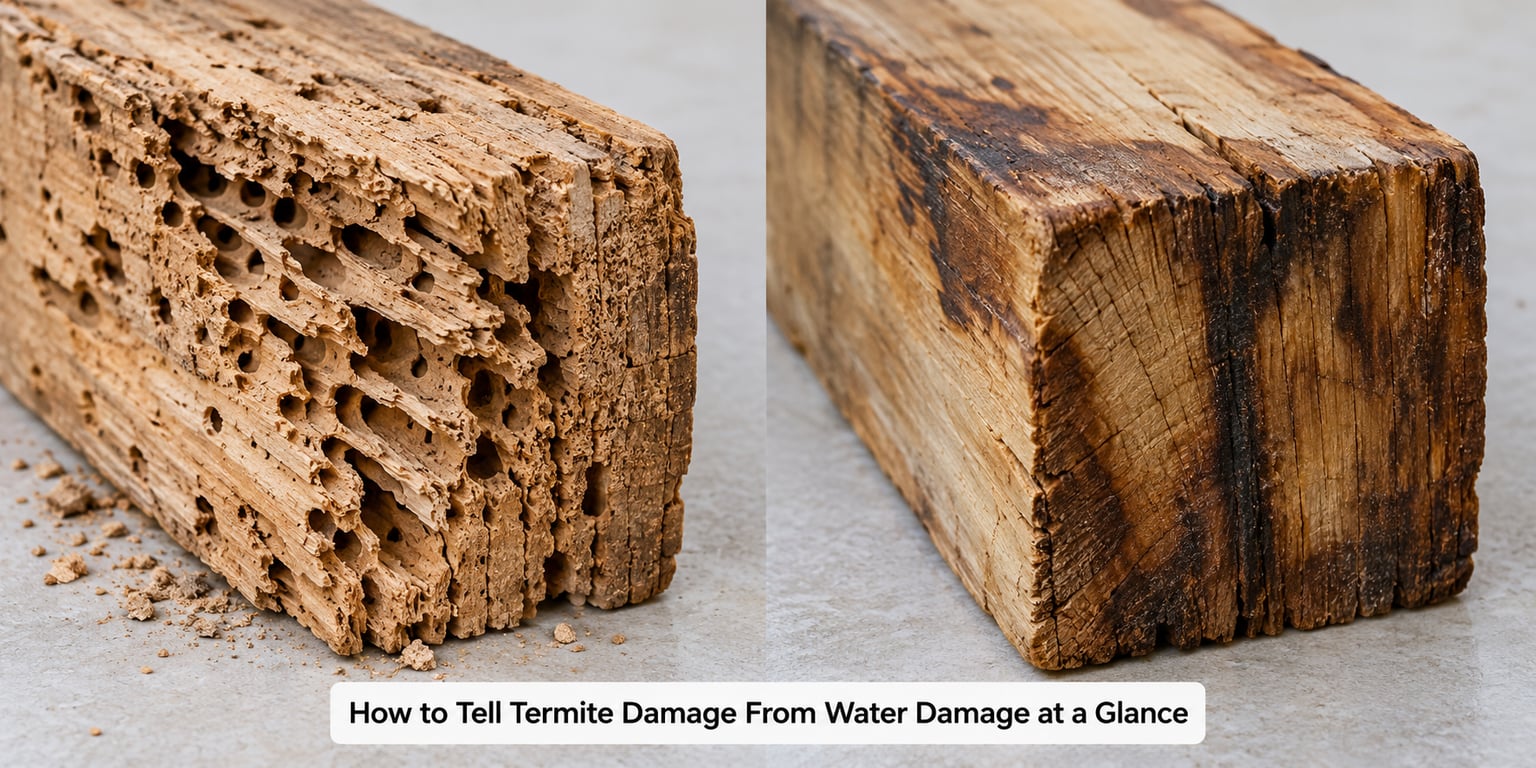
The table below is the fast version. Read across each row and ask which column sounds more like what you are standing in front of.
| Clue | Termite damage | Water damage |
|---|---|---|
| Wood surface | Looks normal, clean, or sanded smooth on the outside | Stained, swollen, darkened or bleached |
| When tapped | Hollow, echoing, like tapping a hollow shell | Dull thud, sometimes a squish or creak |
| When pressed | Surface feels solid; the inside is gone | Spongy, soft, crumbly or punky |
| Pattern inside the wood | Smooth hollow galleries running along the grain | Fibrous breakage that crumbles in cubes |
| Moisture at the site | Usually dry unless the area is also damp | Wet, damp or recently dried with a water line |
| Smell | Little or none, sometimes faint musty in a gallery | Musty, mildewy or sour odor |
| Outside evidence | Mud tubes, frass piles, wings, swarm casters | Water stain rings, mold growth, peeling paint |
| Usual location | Near the ground, wood touching soil, door frames, window sills | Under plumbing, roof leaks, windows, appliances, exterior walls |
| Common cause | Subterranean, drywood or Formosan termites | Leaks, roof failure, condensation, poor drainage, plumbing |
| Who fixes it | Licensed pest control plus a structural repair if needed | Find and stop the water source, then dry and repair |
| Typical urgency | Treat soon; damage grows colony by colony | Stop the source fast; decay continues while wood stays damp |
| Insurance angle | Usually excluded from standard homeowner policies | Often covered, depending on the source and the policy |
| Best single test | Tap it and look for mud tubes | Trace the moisture back to its source |
What Does Termite Damage Look Like?
Subterranean termite damage is the most common type in the US, and it is the reason this question comes up so often. These termites travel through the soil and enter through cracks as small as 1/32 inch, so they start at the bottom of the structure and work up.
Subterranean termite damage
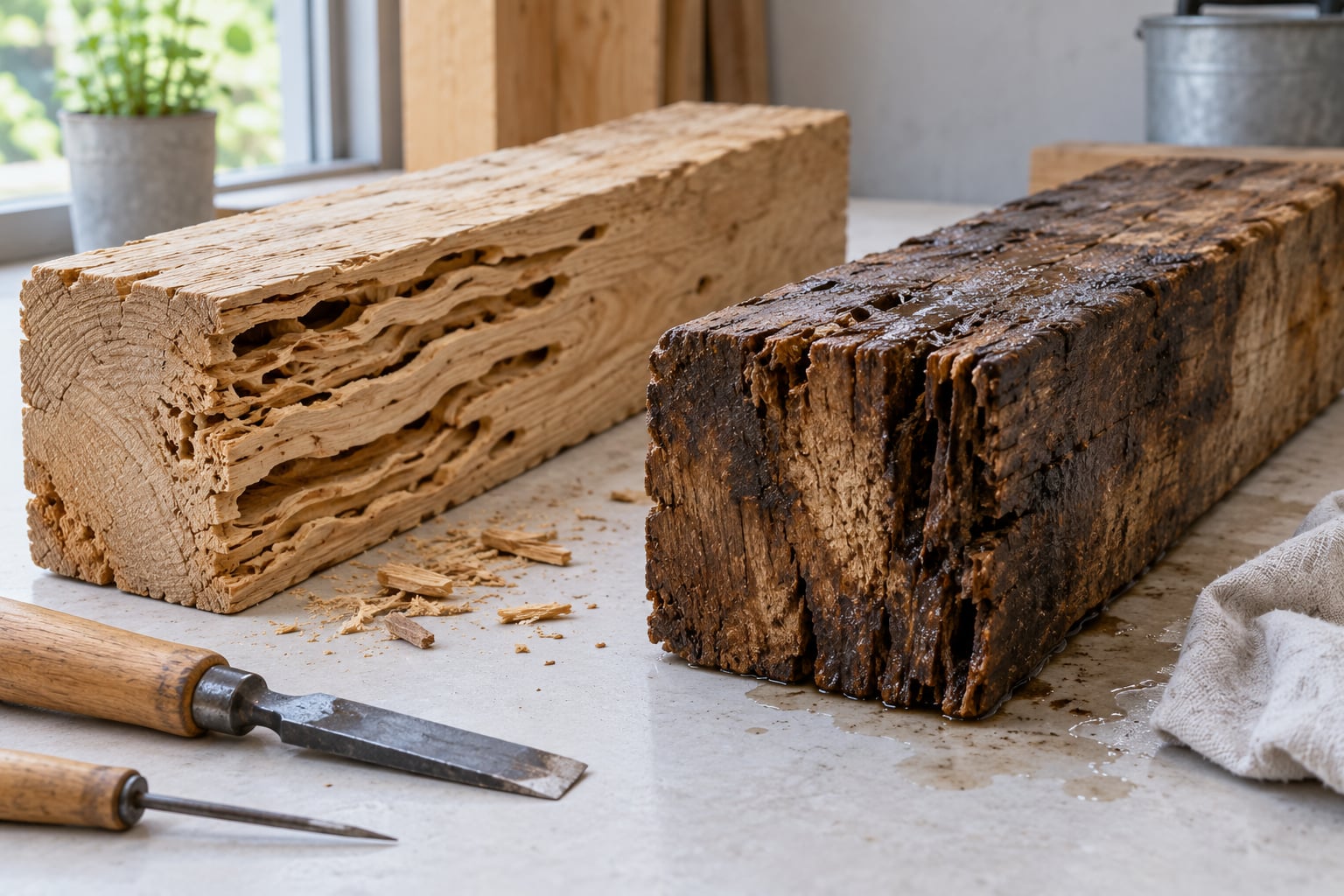
They eat the soft inner layers of the wood and leave the outer veneer holding on, which is why the board can look fine until you tap it. Inside you will find hollowed galleries that run with the grain and feel smooth and sculptured, sometimes lined with packed mud.
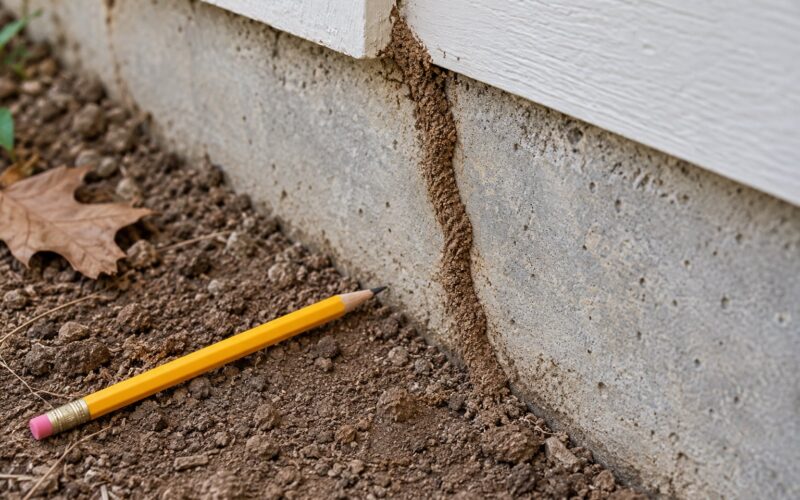
On the exterior, look for pencil-width mud tubes running up the foundation or across a slab. Those shelter tubes are the single most trusted identifier people report. If a tube is intact, the colony is probably still active. Break a section and check back a few days later: if it has been rebuilt, something is still using it.
Drywood termite damage
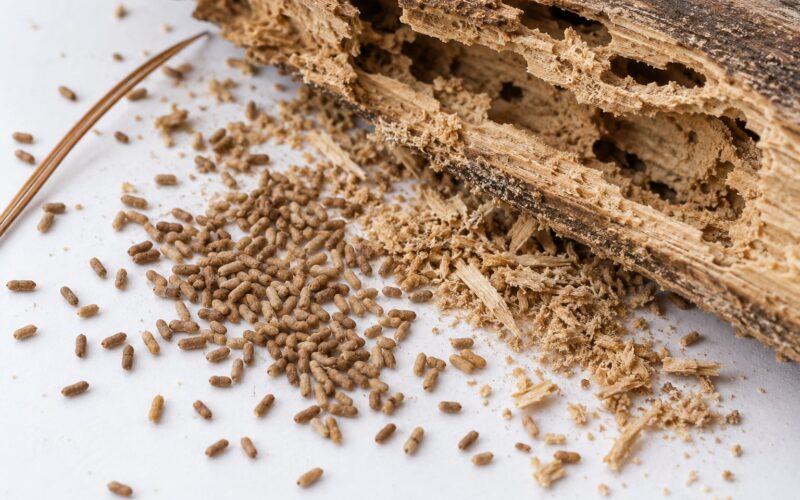
Drywood termites do not need soil contact, so they show up in upper floors, attic framing and window sills. Their calling card is frass, the small dark pellets they eject through kick-out holes in the wood. The pellets look like coffee grounds or coarse sand and collect in small piles below the damage.
The wood underneath shows layered hollowing with a somewhat patchy look rather than the smooth galleries of subterranean species. Drywood termite frass has a characteristic shape and is usually easy to tell from carpenter ant debris, which tends to be more coarse and mixed with other household material.
Formosan termite damage
Formosan colonies are larger, build mud tubes higher up the structure, and can travel through foam insulation. They are the reason a mud tube three feet up an exterior wall matters more than one at grade level. Homeowners in the South often find Formosan rather than the eastern subterranean species they expected.
One more warning sign worth knowing: termites bring moisture into drywall as they travel between wood framing and the wall surface, and that moisture makes paint bubble, peel or discolor. Bubbling paint with no pipe or stain nearby is a strong hint the source is insects, not water. Community members on r/HomeImprovement and r/Termites describe this exact confusion more than almost anything else.
What Does Water Damage Look Like?
Water damage announces itself. Wood swells, warps and darkens, and the discoloration usually maps the path the water took. The surface feels soft or spongy rather than hollow, and there is often a visible tide line showing where the wood stopped being wet.
Look for yellow-brown or dark brown staining, bubbling or peeling paint in bands, and floors that cup, warp or squeak. When the fibrous structure breaks down, the wood crumbles in rough cubes, a pattern inspectors often call cubical rot. That is different from the smooth carved galleries termites leave, and the difference is one of the clearest things you can see.
Odor is the other giveaway. A musty or sour smell in a closet, under a sink or in a wall cavity usually means moisture is still sitting in the structure even if the wood feels dry to the touch. By the time mold shows, it may have been growing behind the drywall for months.
Water damage also clusters where water clusters. Look at what sits above or beside the damaged wood: a supply line, a drain, a washing machine hose, a roof flashing or flashing detail, a window weep hole, an air conditioner condensate line, or an exterior grade that drains toward the foundation. Condensation under a cold window in a humid climate can produce the same pattern as a big leak, just slower.
What Are the Most Reliable Differences to Check?
When you are standing in front of damaged wood with no idea what caused it, work through the clues in this order. Location first, then moisture, then sound and texture, then the evidence on the surface.
How to tell termite damage from water damage in three checks
First, check the location. Termite damage concentrates where wood meets the ground, around door and window frames, along baseboards, on porch posts and near known plumbing leaks if moisture is present. Water damage concentrates near an actual water source, often higher in the wall or directly under a fixture.
Second, check moisture. Dry, crumbly wood with no nearby source points one way. Damp, stained, soft wood with a leak or stain overhead points the other. If the wood is dry now but there is a stain with a hard edge, the water probably came and went.
Third, tap and press. Tap the wood with a screwdriver handle or the side of your knuckles. Hollow means the inside has been eaten out. Press firmly but gently: soft and punky means decay, solid-but-hollow means insects. That single test settles most cases before you touch anything else.
Old damage versus active damage
Alone, empty galleries do not prove a live infestation. Dried mud inside the galleries, an abandoned tube and no frass or wings nearby all point to historic damage. That is why Mississippi State University Extension frames it as evidence with conditions rather than a verdict.
Live colonies leave fresher signs: intact or actively rebuilt mud tubes, new frass, wings near a window or light source, and swarmers indoors during or shortly after a warm rain. Homeowners often mention the same three checks when they describe old houses with a century of repair history, where both old termite damage and old leaks turn up in the same wall.
Why water damage and termites so often show up together
Damp wood is attractive to termites, so a persistent leak can invite an infestation that then damages the same framing the leak weakened. Homeowners on home improvement forums describe finding both in the same bathroom remodel or crawl space more often than finding either alone.
Moisture also changes how wood behaves, which is why a piece of termite-damaged wood in a damp spot can feel soft and stain. When both conditions are present, identify and treat both. Fixing only one means the other keeps working.
Where carpenter ants and wood rot muddy the picture
Carpenter ants excavate wood to nest inside it, leaving smooth galleries and piles of coarse debris mixed with household crumbs. Unlike termites, they do not eat the wood itself. Their damage looks similar from the outside but the frass is different, and you may see the ants themselves.
Wood rot from moisture is the same underlying process as water damage, just advanced. Wet rot darkens and softens wood; dry rot produces a gray-white, brittle surface with a cubical crack pattern. Neither one leaves mud tubes. If the pattern is cubical and the wood smells musty, the answer is moisture. If it is smooth and hollow and there are mud tubes, the answer is termites.
How to Inspect the Area Without Making the Damage Worse
A homeowner can narrow this down safely in about half an hour. The trick is to gather evidence in an order that does not destroy it and does not put you at risk.
Start by documenting the area before you touch anything. Photograph the damage with a coin or ruler in the frame for scale, note the date, and record the size of the affected area. That record matters later for treatment estimates, repairs and insurance questions.
Then trace the water. Work upward from the damaged wood and look for a source: supply lines, drain traps, washing machine and dishwasher hoses, water heater relief lines, roof penetrations, window sills, exterior grade and downspout discharge. If the wood sits below a stain on the ceiling or a paint bubble on the wall, the path is usually straightforward.
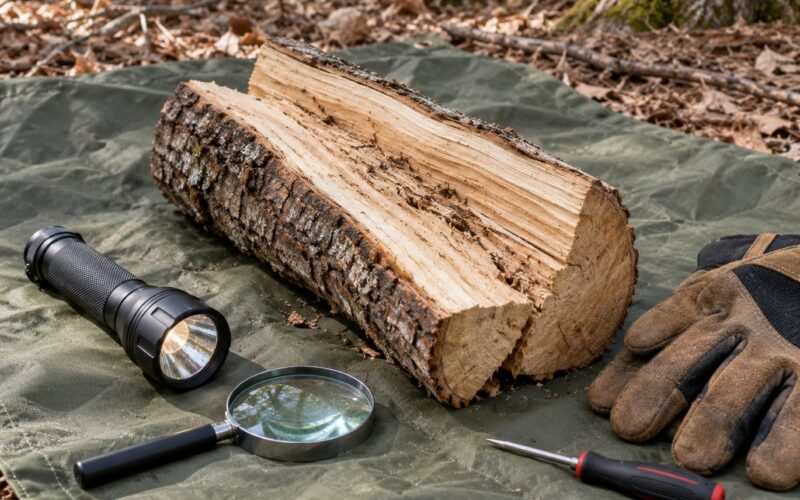
Next, look at the accessible wood. Baseboards, door jambs, window sills, crawl space joists and garage door framing are all safe to look at by hand. Wear gloves, a dust mask and eye protection when you handle frass or crumbly material, and do it outdoors or in a ventilated space.
A pin moisture meter is useful here, and it is cheap. It gives you a reading, not a verdict. Use it to compare suspect wood against sound wood in the same area and to find hidden wet zones behind baseboards or under flooring. A high reading tells you moisture is present; what caused it still needs the other clues.
What you should not do is probe destructively. Do not drill exploratory holes, pry off baseboards in a suspect wall, or pull apart crumbly joists. Each of those removes evidence a professional needs and can weaken a member that is carrying load. Avoid climbing into a crawl space with standing water, and stay clear of any surface near live wiring.
If you have a probe or moisture meter and want a guided walkthrough of what to look for, our pest identification reference covers the sign-by-sign breakdown before you call anyone.
When Should You Call a Termite or Water-Damage Professional?
Call a licensed pest control company when you find any of these: a live termite, intact mud tubes you are unsure about, frass, discarded wings, or swarmers inside the building. A single indoor swarm in spring or summer is a strong signal of an established colony nearby.
Call for water work when there is an active leak, standing water, mold growth, or a stain that has grown since you last looked. Mold in a wall cavity usually means water has been sitting behind the drywall longer than it should have.
Call a structural engineer or qualified contractor immediately, rather than a pest company first, if floors sag, joists bow, a beam looks crushed or split, a wall leans, or doors have begun sticking in ways that suggest the framing has moved. Do not walk on a sagging floor to investigate it, and keep other people off it too.
Call an electrician for any sign of damage near wiring, outlets, or a panel. Termite galleries can intersect cables and moisture can reach a junction box, and neither is a DIY judgement call.
Call someone if the diagnosis is simply not clear. Homeowners routinely get different answers from a general contractor and a pest company on the same piece of wood. Getting a second opinion before treatment is cheaper than treating the wrong problem twice. Forum threads on r/RealEstate and r/HomeMaintenance make the same point repeatedly: photos alone rarely settle it, and people wish they had gotten a second opinion earlier.
Which Type of Damage Should You Choose?
This is not really a choice between two kinds of damage. It is a choice about the first action you take, and it depends entirely on what the evidence shows.
If you found mud tubes, frass, wings or hollow galleries with a hollow sound, the cause is termites. The first action is a termite inspection and a treatment plan from a licensed company, followed by repair of the structurally affected members. Standard homeowners policies generally exclude termite damage and treatment, so check your policy before assuming someone else is paying.
If you found staining, softness, a musty smell or a wet patch with a source above it, the cause is water. The first action is stopping the source. Drying and repairing the rotted material comes after that, because anything you rebuild into a damp cavity will fail again.
If you found both, treat both, and treat the water first if there is an active leak. A wet structure cannot be reliably protected from termites, and any repair made before the leak is fixed is likely to be redone. When you are choosing a contractor, pick the one who will examine the whole area rather than only the part you noticed.
Frequently Asked Questions
Can termite damage look like water damage?
Yes. Termites carry moisture through drywall and framing as they travel, which makes paint bubble, peel or discolor the same way a leak does. On hardwood floors and solid trim, staining is uncommon, but bubbling paint on a wall with no pipe or stain nearby is a classic termite clue. Tap the wood and look for mud tubes to break the tie.
How can I tell if wood damage is caused by termites?
Tap it. Termite-eaten wood sounds hollow while its surface still looks clean, and pressing it feels solid because the outer veneer survives. Look for pencil-width mud tubes on the foundation, frass pellets for drywood species, or discarded wings near a window. Inside, galleries run with the grain and feel smooth and hollowed, not crumbly.
Does water-damaged wood always feel wet?
No. After a leak dries or a season passes, damaged wood can feel dry to the touch while still being structurally weakened underneath. Stain edges with a hard water line, dark discoloration, musty odor and cubical crumbling are the better clues. A pin moisture meter can reveal damp wood behind a surface that reads dry.
Is a moisture meter enough to identify the cause of wood damage?
No, it only confirms that moisture is present. It tells you where water is and roughly how much, which is useful for finding hidden wet zones, but it cannot tell you whether a leak caused the damage or whether termites are feeding in damp wood. Pair the reading with a tap test, a look for mud tubes, and a search for the water source.
Can termites and water damage happen in the same area?
Frequently, yes. Damp wood attracts subterranean termites, so a long-standing leak can invite an infestation into the framing the leak already weakened. Homeowners often discover both in the same bathroom or crawl space during a remodel. Fix the water source first, then have the area inspected for termites, because repairs made into a damp cavity will fail again.
When is damaged wood a structural or safety concern?
Treat it as urgent when floors sag or bounce deeply, joists bow or appear crushed, a beam is split or visibly thinned, a wall leans, or doors and windows stick in new ways. Those are signs the framing has lost structural capacity. Keep people off a sagging floor, do not probe or pry at suspect members, and have an engineer or qualified contractor evaluate it.
What to Do First
Tap the wood, then look down at the base of the wall. A hollow sound plus mud tubes means call a termite company. Staining, softness or a musty smell means find the water first.
If you have worked through the checks above and still cannot tell termite damage from water damage with confidence, that is the point to stop guessing and pay for an inspection. Either way, take photos before you touch anything, keep people off sagging material, and get a second opinion before anyone starts cutting. That is the part people regret skipping.