Checking firewood for termites before bringing it inside takes about two minutes per stack, and the single most useful thing to know is this: a termite that rides in on one log will not start a colony in your house. Subterranean termites die quickly once they lose contact with the moist soil their colony lives in. The risk worth worrying about is a woodpile stacked against your foundation, acting as a bridge straight into the framing. So inspect outdoors, in daylight, before a single log crosses the threshold.
Everything below takes about ten minutes for a full cord if you know the order of operations. The order matters: you check the storage spot, then the surfaces, then for live insects, then the hidden places, and only then do you decide.
Table of Contents
- What You Need
- Step-by-Step: How to Check Firewood for Termites Before Bringing It Inside
- Common Mistakes
- Frequently Asked Questions
- Can termites be inside firewood that looks clean?
- What do termite mud tubes look like on firewood?
- Where should I store firewood to reduce termite risk?
- Does firewood damage always mean termites are present?
- What should I do if I find termites in firewood?
- How far should firewood be kept away from the house?
- Conclusion: Inspect Before You Bring Firewood Indoors
What You Need
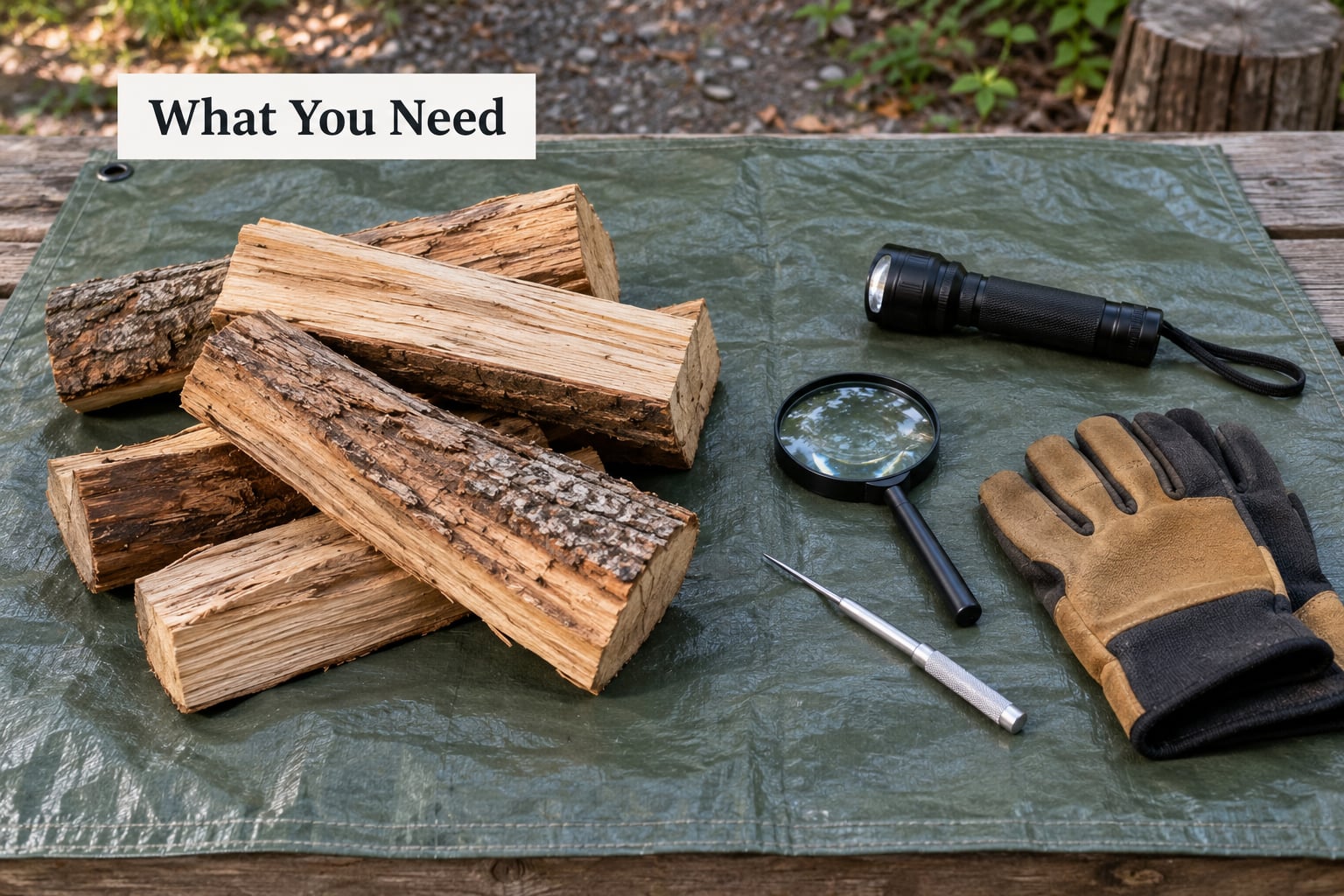
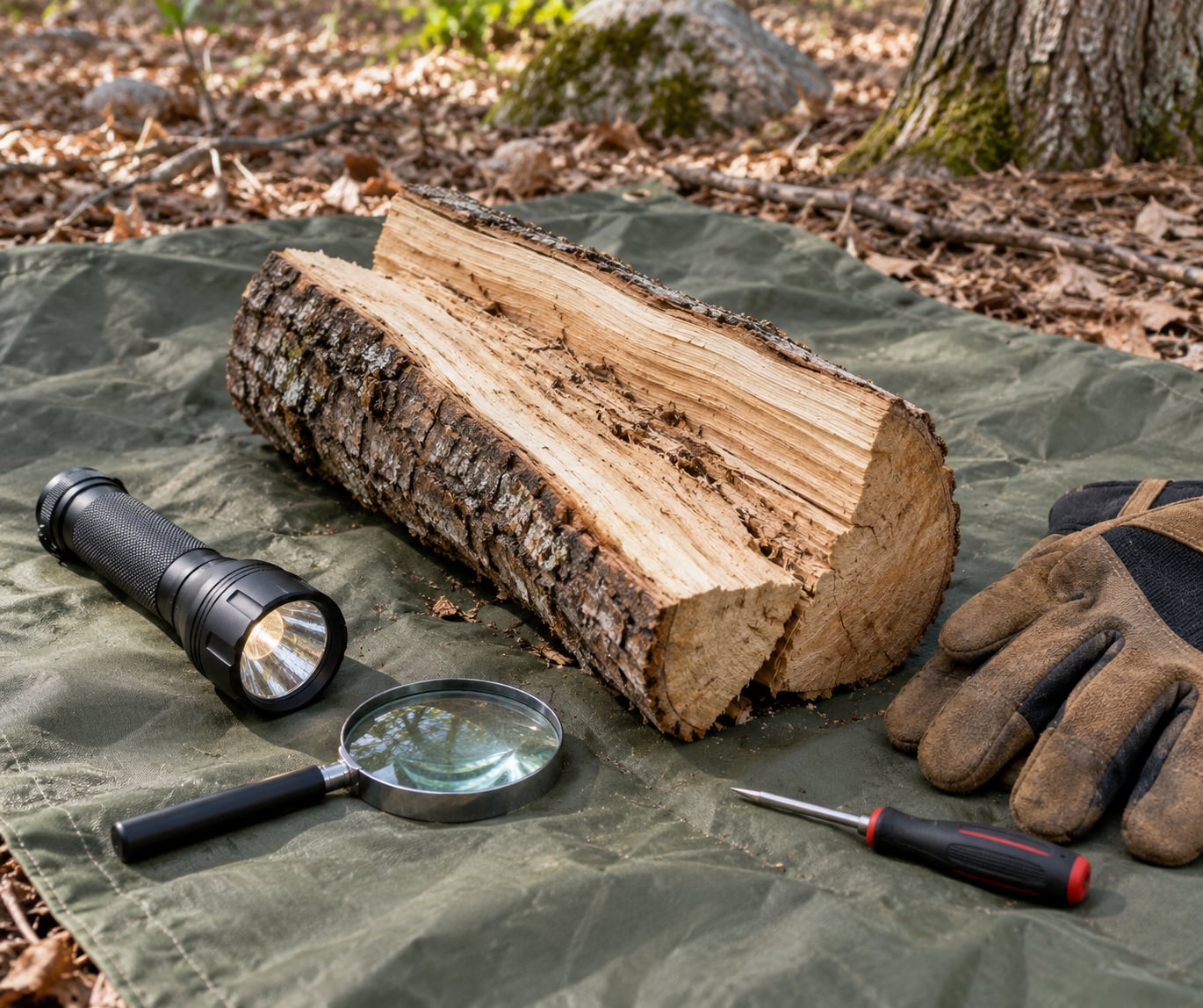
You do not need special equipment. You need five things, and four of them are already in a junk drawer somewhere.
- Work gloves. Firewood piles shelter black widows and centipedes. Leather or canvas gloves also stop splinters.
- A bright flashlight. Dark cracks and the underside of a log are where mud tubes hide, and you cannot read them in shade.
- A magnifying glass or hand lens. A pinhead hole tells you very little. Through a lens, a termite looks nothing like a beetle.
- A flat-head screwdriver, small pry bar, or stout probe. This is for splitting mud tubes open and prying bark back.
- A clean tarp or a couple of buckets. You knock the logs together over it so falling insects are visible instead of scattered into the leaves.
Add an identification reference you trust if you want a second opinion on anything you turn up. University extension entomology pages and your state agricultural agency are better places to ask than a generic forum.
Step-by-Step: How to Check Firewood for Termites Before Bringing It Inside
This is the sequence I use on my own pile at the start of heating season. Work from the bottom of the stack outward, and never carry wood indoors as you go.
1. Inspect the Wood Where It Is Stored
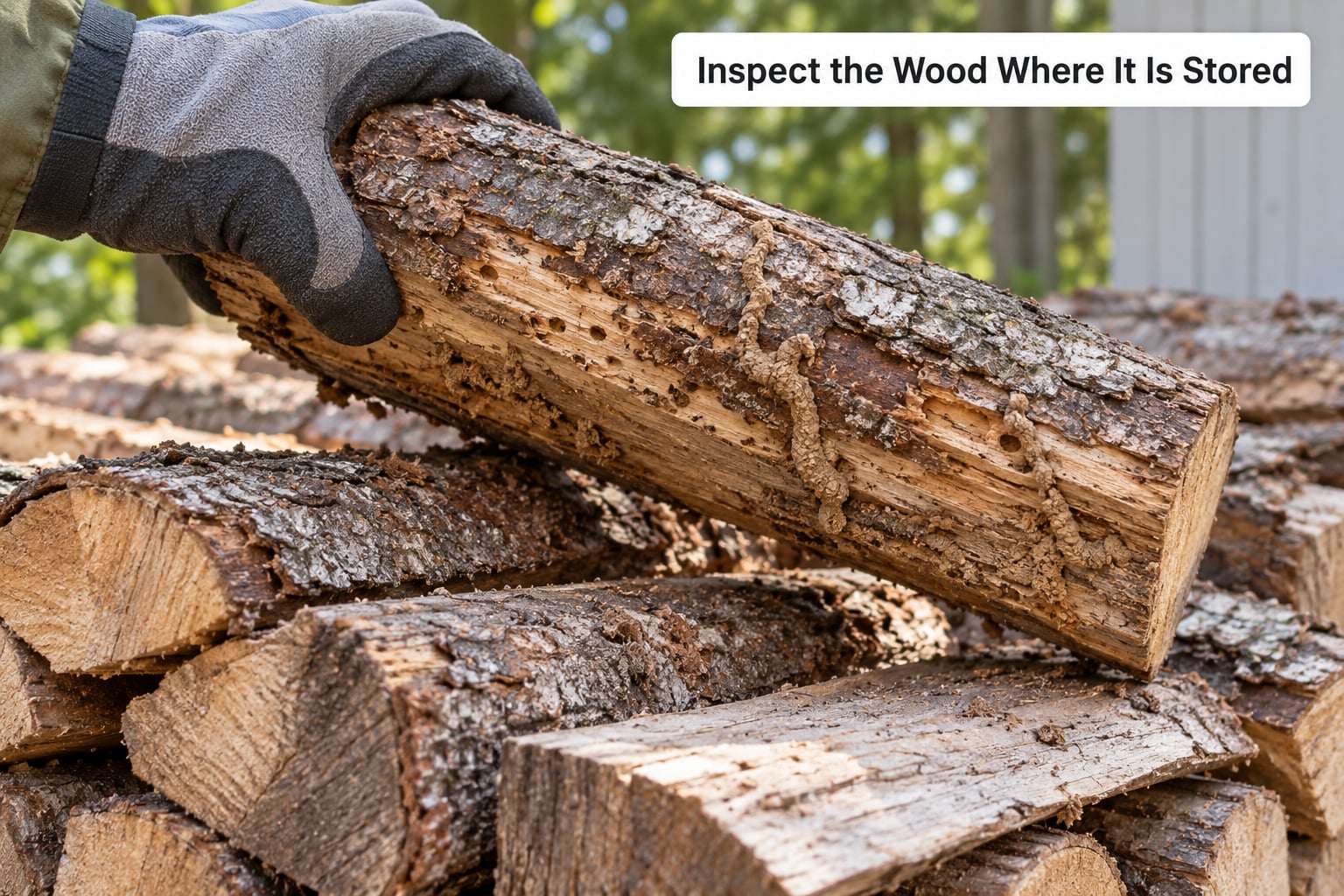
Start at the base of the pile, because that is where termites enter. Logs resting directly on soil or on a tarp laid over soil are the ones most likely to be visited, and the wood underneath stays damp long after the top of the stack dries out.
Turn over the lowest row and look at three contact zones: where the log touches the ground, where one log rests on another, and where the pile touches a wall post or the edge of a porch. Then look at the debris around the pile. Bark chips, old stumps, and a scatter of sawdust are the highway between the colony and your wood.
If that ground-level inspection turns up mud tubes or fresh galleries, stop stacking more wood next to the house until you sort out the pile. That is the one finding that changes where you store, not just which logs you keep.
2. Look for Warning Signs on the Bark and Surface
Now read the outside of the wood. Four signs matter, and they are easy to separate from ordinary damage once you know them.
- Mud tubes, also called shelter tubes. Thin tubes of soil-colored material, pencil-thick up to about the width of a dime, running across a gap between logs or climbing the side of one. These are the strongest single warning sign in a firewood pile.
- Holes in clusters. A tight group of tiny holes on one face of the log, usually about the size of a pencil eraser, is the pattern that points to termites and beetles working from inside the wood.
- Peeling bark, damp or soft wood, and dark staining. Termites need moisture, so suspect logs often feel cool and give slightly under pressure.
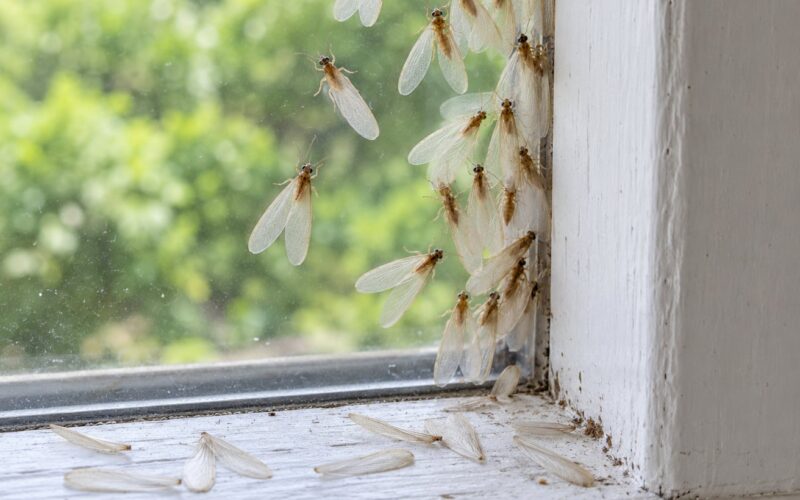
- Shed wings on the ground around the pile. Swarms drop translucent, equal-length wings that gather in drifts beneath the stack.
Not every damaged log is infested. Old beetle exit holes, fungal staining, and a year of weather checking all leave marks. Termite work looks recent: tunnels packed with brown soil material, surfaces still soft, and mud tubes that break cleanly rather than crumbling to dust.
3. Check for Live Termites or Evidence of Recent Activity
Signs tell you what could be there. Live insects tell you what is there. Pick two logs out of the pile, hold them over the tarp, and knock them together firmly, one against the other.
What falls out tells you a lot. Workers are pale cream, soft-bodied, about a quarter inch long and slow. Soldiers have a darker tan head and larger jaws, and they show up near the surface. Winged swarmers are dark, about the same size, and if you see them in spring you already know the answer.
Break a mud tube open lengthwise with the screwdriver. An active tube is solid, packed firm with soil material, and may have soft white bodies inside. An abandoned tube is hollow, brittle, and often patched shut with soil, because the colony seals the ends of routes it no longer uses. Fresh packed soil and movement mean active. Empty, brittle, and dusty means old.
Worth knowing before you treat wood incorrectly: carpenter ants are a quarter inch to half inch long, dark reddish or black, with a pinched waist and elbowed antennae, and their galleries are rough and chewed rather than smooth. Wood-boring beetles are tiny dark beetles that leave rounder exit holes and a fine powdery frass below the log. Neither an ant nor a beetle colony established in your firewood is a reason to burn the stack.
4. Examine the Ends, Cracks, and Hidden Surfaces
The visible face of a log is the cleanest face. The interesting damage hides underneath, so work through the less obvious places.
Look at the cut ends first. Ends hold moisture, and end-grain is where galleries start. Split a suspect log, or examine rounds you have already split, and read the inside of the wood. Mud-lined galleries run with the grain, are smooth on the inside, and are plastered with brown soil material. Rot, by contrast, leaves dark blotchy stain, crumbly brown fiber, and soft wet wood that smears.
Then check beneath bark on any log with loose bark, and pry apart the contact points between stacked logs where frass collects. Old, dark, smooth pinhead holes that run through years of growth mean the colony is gone. Fresh holes with pale wood around them and new soil packed in the tunnel mean it is not.
You can spot-check a full stack without dismantling it: pull three logs from the bottom, the middle, and the top of the row nearest the house, inspect those fully, and treat any positive finding on the rest of that row as a reason to work through it log by log.
5. Decide Whether the Firewood Is Safe to Bring Inside
Here is the rule to apply in under a minute.
Bring it in when you find no live insects, no mud tubes on the logs, and only old damage with no fresh soil in the tunnels. Keep it out when you find live termites, an active mud tube, or fresh mud-lined galleries, and set those logs aside alone on the tarp instead of putting them back in the stack.
For wood you are unsure about, work it from one end. Seasoned firewood burns from the outside in, so split and burn the suspect portion first and watch for insects as it goes. Then bring in only a day or two of wood at a time, keep it in a bin you can check, and never store it in a living space where you cannot see it.
One warning, because people try this: do not spray insecticide on firewood you plan to burn, and never burn treated, painted, or pressure-treated lumber. The fumes come back through the chimney into the room you were trying to protect.
If you already carried a suspect log inside, set it back out within the hour, sweep or vacuum the floor and the door threshold, and check the sill, trim, and any stacked wood in that room. One log is not an infestation, but it is worth an hour of attention.
Common Mistakes
Almost every problem people report with firewood pests comes down to one of these.
- Checking only the top of the pile. The top is the driest and least interesting. Work the bottom row and the row nearest the house first.
- Treating all damaged wood as termite damage. Rot and old beetle holes look worse than they are. Split the log before you decide.
- Carrying wood indoors first and inspecting later. The whole point of the routine is that the decision happens outside, at the pile.
- Sorting with bare hands. Gloves are cheap. Black widows build webs in exactly the gaps you are about to reach into.
- Putting suspect logs back into the stack. If you found live termites in one round, isolate it and re-check the row it came from.
- Assuming cold weather solved it. Termites ride out freezing weather inside the wood. Winter does not clear your pile.
One more, quieter habit worth building: work the pile side to side and oldest wood first, so you are always pulling from the front instead of standing on the stack and reaching over the top. It exposes the lower logs naturally.
Frequently Asked Questions
Can termites be inside firewood that looks clean?
Yes. Worker termites feed inside the wood where you cannot see them, and galleries under bark or at a log contact point can stay sealed. Clean-looking bark proves nothing on its own, which is why the check works by knocking logs together over a tarp and splitting one suspect round. Movement, fresh soil material, or an active mud tube is the real signal.
What do termite mud tubes look like on firewood?
They look like thin sticks of soil stuck to the wood, pencil-thick to about the width of a dime, running across gaps or climbing a log that rests against another. Break one open lengthwise. Solid, firm-packed soil with soft white insects inside means active; hollow, brittle, and sealed at the ends means abandoned.
Where should I store firewood to reduce termite risk?
Store it off the ground on concrete blocks, pavers, or a rack with a clear gap underneath, and keep it dry. Subterranean termites travel through damp soil, so a stack sitting flat on the ground gives them a path. Cover only the top so rain runs off while air still moves through the wood, and clear bark and debris away from the base of the pile.
Does firewood damage always mean termites are present?
No. Old exit holes from wood-boring beetles, fungal staining, and plain rot account for most damaged firewood. Termite damage tends to look recent, with smooth galleries packed with brown soil material and mud tubes nearby. Rot looks different: dark blotchy stain, crumbly brown fiber, and soft wet wood that smears under your thumb.
What should I do if I find termites in firewood?
Isolate the affected logs on the tarp, away from the house, and do not put them back in the stack. Inspect the rest of that row and the bottom row log by log. Do not spray insecticide on wood you intend to burn. Seasoned wood burns outside in, so split the suspect logs and burn them first, and bring indoors only a day or two at a time.
How far should firewood be kept away from the house?
Keep it at least 3 feet from the structure as a baseline, and much farther where you have seen mud tubes running from the ground toward the house. Never let firewood or a wood rack touch siding, trim, or the foundation. That contact is how a woodpile becomes a bridge rather than just an inconvenience, and it is worth correcting the moment you spot it.
Conclusion: Inspect Before You Bring Firewood Indoors
Start at the bottom row of the pile, knock two logs together over a tarp, and split one round from anything that looks off. That is the whole routine, and it takes about ten minutes for a full stack.
One termite on a log is not an emergency. If you find live insects, active mud tubes, or fresh mud-lined galleries, keep those logs outside on the tarp, burn them first, and bring in wood a day or two at a time so you keep checking. Call a pest professional when mud tubes run from the ground toward your foundation, when you find swarmers inside the house, or when the evidence on a log is genuinely ambiguous and you want a second set of eyes.