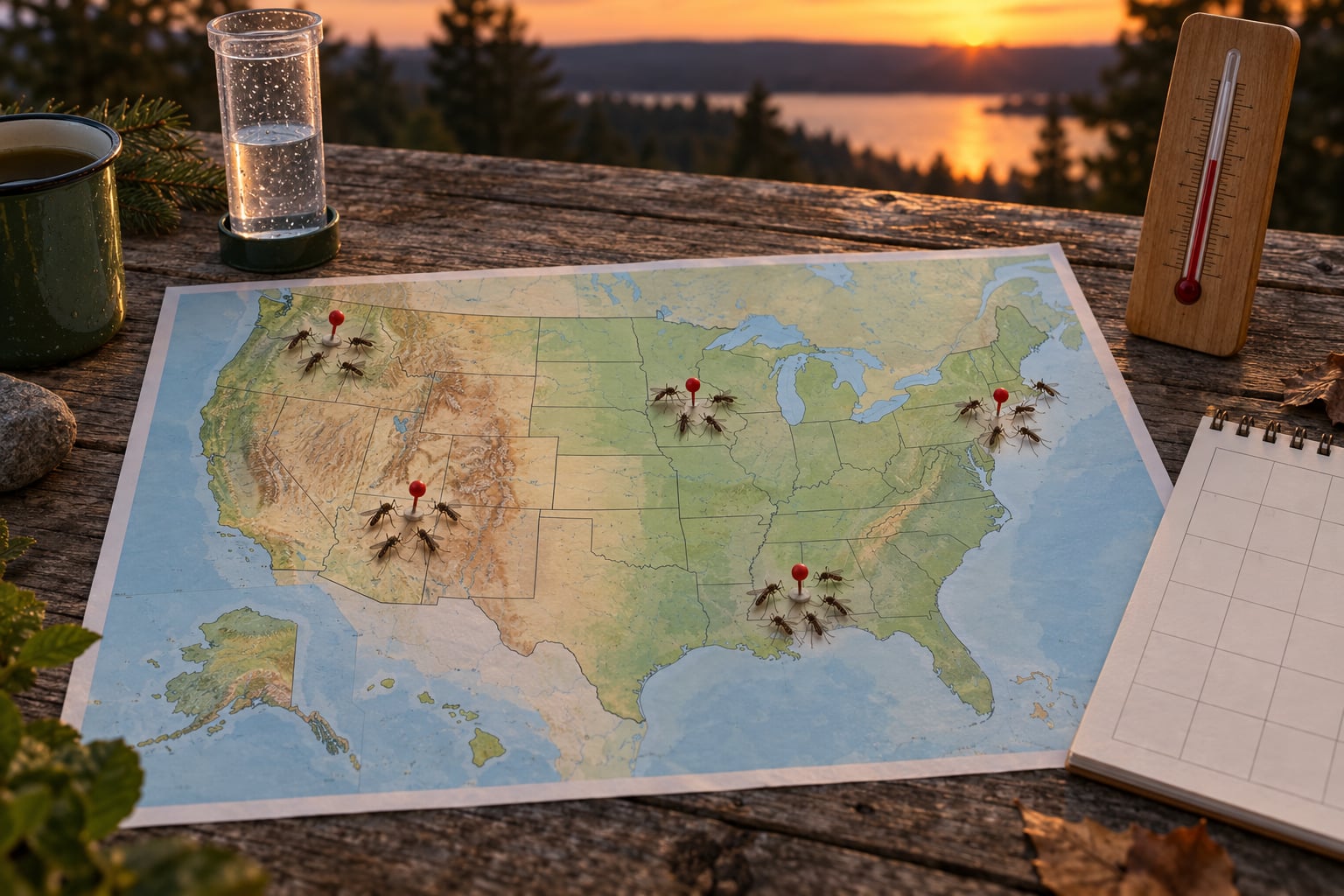
Mosquito season by region in the United States runs from early February along the Gulf Coast and in Florida and Hawaii to early May in New England, the northern Midwest, and the Pacific Northwest. There is no single start date for the country, because mosquito activity follows temperature rather than the calendar.
Before the season is properly underway you may see a single stray mosquito indoors or an early blood-feeding bird species. That is not the season. Sustained breeding and nuisance biting usually begin several weeks later, when nights stay warm and any rain has left standing water behind.
The charts below give you the typical windows, the peak months, and the mechanism behind each date, so you can adjust for your own yard instead of trusting a fixed calendar.
Table of Contents
- When Does Mosquito Season Start in the United States?
- Mosquito Season by Region in the United States at a Glance
- Mosquito Season in the Northeast and Mid-Atlantic
- Mosquito Season in the Southeast and Gulf Coast
- Mosquito Season in the Midwest and Great Plains
- Mosquito Season in the Southwest and Mountain West
- Mosquito Season Along the West Coast and in the Pacific Northwest
- How Do Rain, Temperature, and Elevation Change Mosquito Activity?
- How Can You Prepare Your Home for Mosquito Season?
- Frequently Asked Questions
- What Should You Do First?
When Does Mosquito Season Start in the United States?
Mosquito season starts once temperatures hold consistently at or above 50 degrees Fahrenheit. That threshold matters more than any date on a calendar, which is why a warm March in south Texas and a cold March in Maine can look identical on paper but feel completely different on your porch.
Above 70 degrees Fahrenheit mosquitoes thrive and breeding cycles shorten. Around 80 degrees they fly and feed at their most active, which is why mid-summer evenings produce the heaviest biting in most of the country.
Three different dates people confuse
- First activity: one or two individuals, often a species that overwinters as adults indoors. Common in the South as early as January.
- Sustained breeding: females are laying eggs in standing water and bites become routine. This is the real start of the season for practical purposes.
- Peak activity: the hottest stretch of the year, usually July and August, when adult numbers and biting rates are at their highest.
Those three dates can be two to three months apart in the South. Forum conversations about mosquitoes in October usually trace back to this gap between first activity and peak, rather than to bad information.
Mosquito Season by Region in the United States at a Glance
This is the pattern most regional guides converge on, expressed as season windows with the factor that controls each one.
| Region | Typical season window | Peak month | What sets the timing |
|---|---|---|---|
| Gulf Coast, Florida and Hawaii | February to November | July to September | Warm winters, high humidity |
| Southeast and southern Texas | March to October | July and August | Rainfall and near-constant warmth |
| Northeast and Mid-Atlantic | April to September | July | Cold winters, late spring warming |
| Midwest and Great Plains | May to September | July and August | Late warming, hot concentrated summer |
| Southwest and Mountain West | April to September | July and August | Elevation, monsoon, irrigation |
| West Coast and Pacific Northwest | April to September | July and August | Mild coastal winters, dry summers |
Treat these as averages, not appointments. A warm spring can pull the start date three or four weeks earlier, and a dry July can shut activity down before the chart says it should.
Mosquito Season in the Northeast and Mid-Atlantic
In the Northeast and Mid-Atlantic, sustained mosquito activity typically runs April through September, peaking in July. Massachusetts, Vermont, New Hampshire, Maine, Rhode Island, and Connecticut sit at the late end of that window because inland nights cool fast in spring.
New York, Pennsylvania, New Jersey, Delaware, Maryland, and Virginia usually get going a bit earlier. The Chesapeake Bay and the Delaware River hold heat and moisture that push the start earlier than inland Pennsylvania or upstate New York.
Winter cold does more than pause the season here. Many species spend winter as dormant eggs, and the first warm rain after a thaw can hatch a large cohort at once. That is the sudden bite-heavy weekend in late April or early May that feels like it came from nowhere.
Fall surprises people too. A warm September with regular rain produces a second brood of blood-feeding females, which is why bites continue well into October in some years. Users on r/Connecticut regularly report fall bites and ask whether wet weather caused them. It usually did.
Mosquito Season in the Southeast and Gulf Coast
The Southeast and Gulf Coast have the longest season in the country, generally March through October with a July to September peak. Florida, Georgia, Alabama, Mississippi, Louisiana, South Carolina, North Carolina, and Virginia all sit in this band, with Florida at the earliest edge.
Warm winters mean adult mosquitoes survive instead of dying off, so activity in south Florida can be continuous rather than seasonal. In the Florida Panhandle, southern Texas, and coastal Louisiana, there are periods with fewer bites but rarely a true stop.
Rainfall drives the rhythm here more than in the north. A dry June can hold activity down noticeably, and then a single tropical system or a week of afternoon thunderstorms can restart it hard within days. Humidity stays high enough that moderate temperatures still support biting.
Coastal South Carolina users on r/summervillesc ask whether mosquitoes are genuinely year-round and whether winter is safe for outdoor plans. The honest answer is that activity drops, but it does not disappear, and mild winters now routinely stretch what used to be a clean off-season.
Mosquito Season in the Midwest and Great Plains
Across the Midwest and Great Plains, the season is short and concentrated, usually May through September with a July and August peak. Ohio, Indiana, Illinois, Wisconsin, Michigan, Iowa, Missouri, Kansas, and Nebraska follow this pattern, with Minnesota, the Dakotas, and Montana at the late end.
Northern states start late because spring arrives late. Warm air arrives, but nights stay cold enough to stall development, so what matters is a run of warm days and warm nights rather than a single warm afternoon.
Rainfall here is erratic, which swings population size year to year. Homesteading forum users in the Upper Midwest describe mosquitoes as unbearable from June through August, which matches the chart, but the specific bad year depends on where the rain falls.
Late-season bites are common here too. A warm September produces the last strong cohort before the first hard freeze, and in areas where that freeze arrives in November the season can seem to end abruptly rather than gradually.
Mosquito Season in the Southwest and Mountain West
The Southwest and Mountain West is the least predictable region, with a typical window of April through September and a July and August peak. Texas outside the Panhandle, Arizona, New Mexico, Nevada, Utah, Colorado, Wyoming, and Idaho all fall in here, but with enormous variation between them.
Elevation matters more than latitude. A yard in the desert at 2,000 feet can have a season that starts weeks before a yard at 7,000 feet in the same county, and mountain valleys stay active later because daytime heat keeps water warm after cold nights.
Monsoon moisture in Arizona and New Mexico creates a sharp second peak in July and August, sometimes right after a lull. Before the monsoon, hot and dry conditions suppress larval production even when temperatures are already high.
Then there is irrigation. Farms, golf courses, and canal systems in the arid West create permanent water that behaves like a coastal wetland in a desert climate. A property with no standing water of its own can still be the one getting bitten, because mosquitoes travel a few hundred yards from where they emerged. This is the nuance most regional guides skip.
Mosquito Season Along the West Coast and in the Pacific Northwest
Along the West Coast and in the Pacific Northwest, sustained activity generally runs April through September, peaking in July and August. California, Oregon, and Washington fall into this window, but the internal differences are sharp.
California splits into distinct climate zones. The Central Valley and Sacramento Valley have mild enough winters that irrigation and warm valley air support activity earlier than the coast, and the southern deserts start soon after. Along the immediate shoreline, cool marine air and steady wind keep summer mosquito pressure noticeably lower than ten miles inland.
The Pacific Northwest is cooler overall. Coastal Washington and Oregon warm slowly in spring, so activity tends to begin in May rather than April, and dry summer conditions suppress production for stretches at a time. Inland valleys get hotter and drier, which behaves more like the interior West than like the coast.
Alaska is the real outlier. Mosquitoes are abundant in the state during the short summer, sometimes in dense swarms that affect animals as well as people, but the season is measured in weeks rather than months and the timing depends more on ice melt and lengthening days than on temperature alone.
How Do Rain, Temperature, and Elevation Change Mosquito Activity?
Four numbers explain most of what you see in your own yard.
| Temperature | What mosquitoes do |
|---|---|
| Around 50 degrees Fahrenheit | Activity begins. Below this, most species are dormant or dead. |
| 50 to 70 degrees Fahrenheit | Feeding and egg laying ramp up; seasons in the North start here. |
| Around 70 degrees Fahrenheit | Thriving range. Development speeds up noticeably. |
| Around 80 degrees Fahrenheit | Peak flight and biting activity in most of the country. |
Rain is the second lever. Females lay eggs on the surface of water, and those eggs need a wet period to hatch, so sustained rainfall matters more than a single storm. Sustained drought has the opposite effect, halting larval production until water returns.
Humidity and wind finish the picture. Low relative humidity and breezy conditions reduce biting, while still air and high humidity increase it. That is why a calm, muggy evening at 82 degrees can feel far worse than a windy 85 degree afternoon.
Second broods explain the other half of the puzzle. A female that blood-feeds in early summer can produce another generation weeks later, so northern seasons do not taper off gently. They run flat through midsummer and then fall off a cliff at the first cold or dry stretch, which is why September and October bites in Boston or Minneapolis are real and not a mistake in the chart.
Two local factors beat the regional map more often than anything else. Elevation shifts everything by a few weeks per thousand feet. Urban heat islands do the same thing at neighborhood scale, which is why a shaded, tree-lined street can be calmer than a treeless block two streets over with the same species count.
How Can You Prepare Your Home for Mosquito Season?
Start a couple of weeks before your region’s typical start date, not after you notice bites.
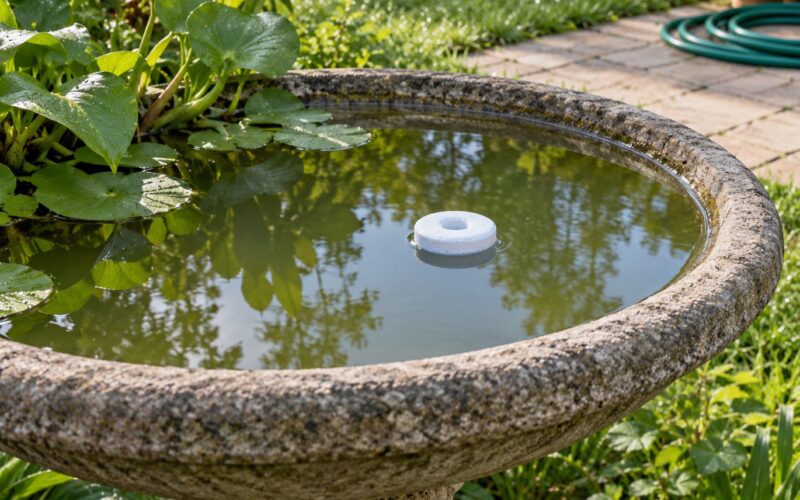
- Dump standing water weekly. Buckets, tires, planters, birdbaths, saucers, and clogged gutters are the most common breeding sites on a residential property.
- Clear drainage. Downspouts that discharge into low spots and drains blocked with leaves create water that persists for days.
- Check screens and doors. Torn window screens are the easiest route indoors, and warm regions need them checked before the first hot night.
- Trim vegetation. Overgrown shrubs and tall grass provide the resting cover adult mosquitoes use in shaded yards.
- Use registered products as their labels describe. Follow the label for any repellent or larvicide, including where and how often it may be applied.
- Shift outdoor plans around dusk and dawn. That is when most species feed, so moving a cookout to midday does more than any product.
Local health department surveillance is the most reliable signal you will get. Many counties publish weekly trap counts and spraying alerts, and users on r/CorpusChristi follow those announcements more closely than any national calendar, because the spray schedule confirms what is actually happening nearby.
If you plan outdoor events, camping trips, or travel, treat the peak column in the table above as the window to work around rather than the season boundaries. Bookings and itineraries set during peak weeks tend to cost more and are harder to change.
Frequently Asked Questions
What month do mosquitoes start to go away?
Most mosquitoes fade out in September in the Northeast, Midwest, and Pacific Northwest, and in October across the South and Southwest. In south Florida and along the Texas Gulf Coast there is no clean end date, because mild winters let adults survive and activity only dips. A warm September can also push a second brood into October well north of that.
Which states have mosquitoes all year?
South Florida, the Texas Gulf Coast, coastal Louisiana, and Hawaii are the closest thing to year-round activity. Mosquitoes never fully stop there, though winter months are usually lighter. Everywhere else has a genuine dormant period, with the shortest season in New England, the northern Midwest, the Pacific Northwest, and Alaska.
What temperature do mosquitoes become active?
Activity begins once temperatures stay consistently at or above 50 degrees Fahrenheit, which is the practical activation threshold most pest control guidance uses. Feeding ramps up between 50 and 70 degrees, thriving conditions hold around 70, and peak biting and flight activity occur near 80 degrees.
Why do I still get mosquito bites in September and October?
The first cohort of the summer produces a second brood weeks later, so activity stays strong through midsummer and then drops sharply at the first cold or dry stretch rather than fading gradually. A warm, wet September keeps producing blood-feeding females. In the Northeast and Midwest, October bites usually mean an unusually warm fall.
Does rain mean more mosquitoes?
Sustained rain does. Females lay eggs on the water surface, and those eggs need a wet period to hatch, so regular rainfall over several days produces far more mosquitoes than a single storm. Sustained drought does the opposite and halts larval production until water returns.
Are mosquitoes worse this year than last year?
Often yes, but the published dates are averages and real seasons vary a lot. Warm springs pull the start three or four weeks earlier, heavy spring rain produces a bigger first cohort, and a dry midsummer suppresses it. Users on r/Denver have noted noticeably lighter summers in recent years, so the difference is real but local.
What Should You Do First?
Find out what your weather is actually doing rather than what the calendar says. If nights in your area have stayed near or above 50 degrees, your season is running and it is running early.
Then walk the property and dump anything holding water, clear the drains and gutters that stay wet, and check your screens. That work takes an afternoon and it removes most of the mosquitoes you would otherwise be treating around the yard.
Finally, check your county health department’s surveillance or spraying page for a local signal, and plan outdoor time away from dawn and dusk during your region’s peak month.