Mosquitoes pick their targets with three signals running at once: the carbon dioxide you exhale, the heat your body gives off, and the odor cloud made of sweat and skin bacteria. Everyone’s mix of those signals is different, and most of that difference is inherited, which is why the person beside you on the patio can sit through a whole evening without a single bite. Here is what the research actually supports, and which parts you can change.
Table of Contents
- What Makes Some People More Attractive to Mosquitoes?
- What the Science Says About Why Mosquitoes Bite Some People More Than Others
- How Mosquitoes Find and Choose a Person
- Does Blood Type Make Mosquitoes Prefer You?
- Why They Target Your Ankles and Feet
- Why Children, Pregnant People and Others May Get More Bites
- Common Myths About Mosquito Attraction
- How to Reduce Mosquito Bites
- Frequently Asked Questions
- What to Do First
What Makes Some People More Attractive to Mosquitoes?
Short answer: carbon dioxide pulls mosquitoes toward you from a distance, scent decides whether they keep coming, and heat and vision finish the job. There is no single “mosquito magnet” trait, and nobody’s blood is unusually sweet or especially easy to smell through the skin.
The key factors that attract mosquitoes, strongest evidence first:
- Carbon dioxide: the constant plume from your breath and lungs, which female mosquitoes can detect from roughly 164 feet away.
- Sweat and body odor: lactic acid, ammonia, uric acid and carboxylic acids in sweat act as close-range scent cues.
- Skin bacteria: microbes on your skin digest sweat and produce most of the odor compounds a mosquito locks onto.
- Body heat: thermal sensors on the mosquito’s head help her separate you from the background at the last few feet.
- Genetics: researchers estimate about 85 percent of the variation in how attractive a person is to mosquitoes is inherited.
- Blood group: in one Aedes aegypti study, type O hosts were landed on far more often than type A, though the result does not hold across all species.
- Clothing color: dark shades such as black, navy and red attract more than pale tones, with light blue and green among the least attractive.
- Alcohol: a single 12-ounce bottle of beer was linked to more mosquitoes landing, though nobody has explained the mechanism.
- Pregnancy: studies report roughly double the number of bites, higher carbon dioxide output and slightly warmer skin.
Everything below breaks those factors down, including where the evidence is solid and where it is thin.
What the Science Says About Why Mosquitoes Bite Some People More Than Others
A female mosquito does not sniff your blood. She is looking for a warm, breathing, sweating animal, and she narrows it down in stages. Here is how strong the evidence is for each part of that process.
| Factor | How mosquitoes detect it | Evidence strength | Can you change it |
|---|---|---|---|
| Carbon dioxide | Receptors on the maxillary palp track the exhaled plume | Strong, replicated | No, but you can lower overall output slightly through pace of activity |
| Sweat and skin odor | Olfactory receptors follow the scent plume downwind | Strong | Only indirectly, by washing and changing clothing |
| Skin bacteria | Bacteria convert sweat into the compounds mosquitoes detect | Strong, species-specific | No |
| Body heat | Thermal receptors at landing range | Moderate | No |
| Blood group | ABH antigens released through skin, in secretors | Mixed, weak outside one species | No |
| Genetics | Sets the baseline chemistry you are born with | Strong on heritability, not on mechanism | No |
| Clothing color | Visual contrast and contrast-sensitive cells at short range | Moderate | Yes |
| Alcohol | Unknown, possibly metabolic or skin changes | Weak | Yes, trivially |
| Pregnancy | Higher carbon dioxide output and warmer skin | Moderate | No |
Carbon dioxide is the long-range cue
This is the anchor signal, and nothing else competes with it at distance. Mosquitoes have been shown to respond to carbon dioxide plumes at about 164 feet, following the gradient toward the source rather than flying straight at it. Exhaled carbon dioxide is the reason location and timing matter so much more than what you ate for lunch.
Your output is not fixed by some rare gift, but bigger bodies breathe more. That is the plain arithmetic behind one of the more common complaints, which is that men standing next to women in the same yard tend to get the bites.
Sweat and skin chemistry decide whether she keeps coming
Once inside roughly 20 feet, scent takes over. People release well over 300 different compounds through the skin, and mosquitoes read a mix of them. Lactic acid from working muscles, ammonia, uric acid and various carboxylic acids all feature in the odor signature that makes you recognizable.
That is why sweat-soaked clothing draws so many bites, and why a shower and a dry change of clothes cut the count noticeably in the evening. It also explains the strange, well-documented pattern that a mosquito will land on someone, probe, come up empty, and immediately move to the next person standing inches away.
Your skin bacteria produce most of that odor
Sweat itself is nearly odorless. The smell comes from what your skin microbiome does with it. People carrying fewer bacterial species but much higher concentrations of them tend to be more attractive, so more bacterial variety is not automatically better. Slightly less is, which is counter to what most people assume.
This is the part that gets skipped in most explanations: the host-seeking signal is bacteria plus carbon dioxide, not your blood type. Skin chemistry is doing the work.
Body heat and body size narrow the last few feet
Thermal receptors help a mosquito separate a warm body from warm pavement and warm rocks. Larger people give off more of everything, carbon dioxide and heat both, which is why bigger adults often collect more bites than smaller adults and children standing in the same place.
Clothing color sits in the same stage. Dark, high-contrast colors make you easier to spot against daylight, and in the lab studies that held up most reliably, black, navy and red drew the most landings while light blue and green drew among the fewest.
Genetics sets the baseline you inherited
The most useful number in this whole subject comes from a heritability analysis: about 85 percent of the difference in mosquito attraction between people is genetic. That is the honest answer to “why do mosquitoes always bite me and not my husband,” at least at the level of cause. You did not choose your baseline scent chemistry, your sweat profile or your carbon dioxide output.
That figure also explains the reverse case. A smaller share of people attract so few bites that mosquitoes seem to ignore them, and a few of them emit compounds that repel mosquitoes outright, which researchers in the UK have worked on for years as a possible route to a new repellent.
Alcohol and exercise round out the list
One study found that men who drank a 12-ounce bottle of beer attracted noticeably more mosquitoes than men who drank nothing. The honest part is that the researchers could not explain why, so it should not be expanded into a theory about ethanol or warm skin.
Exercise matters more and is easier to explain. Hard activity raises carbon dioxide output, skin temperature and the volume of fresh sweat at the same time, which is why outdoor runners and gardeners tend to collect bites that people sitting in lawn chairs nearby do not.
How Mosquitoes Find and Choose a Person
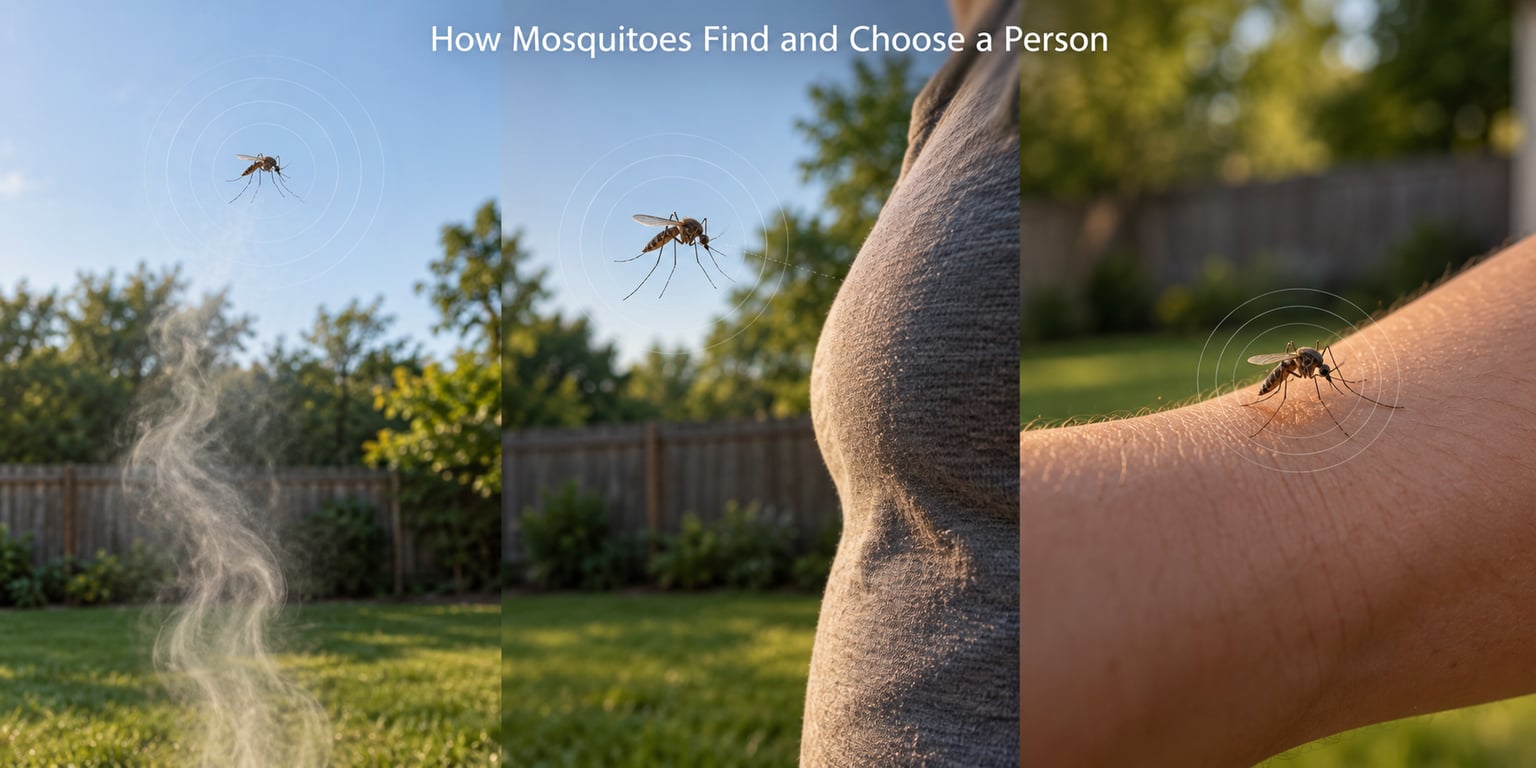
The search runs in three stages, and each stage rules out people who passed the one before it.
- Carbon dioxide, from far away. The mosquito picks up the exhaled plume on her maxillary palps and turns upwind, flying against the breeze to stay inside the plume.
- Odor and heat, close in. Inside roughly 20 feet, body scent and warmth take over, and a candidate who is cool, dry and low on odor drops out of the running.
- Vision, at landing. Within a few feet, contrast-sensitive cells on the eyes pick out movement, shape and color against the background.
Attraction is not the same as a bite. Landing is the easy part, and many mosquitoes land on someone and leave without feeding. Probing is the part where the mouthparts press into the skin, hunt for a capillary and inject the saliva that prevents clotting. Feeding only happens when she finds a usable vessel.
Most of the people who get bitten repeatedly are bitten by a series of individuals who each completed the full sequence. It is not one mosquito taking three bites out of you, though the itch that follows can easily feel that way for a week.
Does Blood Type Make Mosquitoes Prefer You?
There is a real study behind the type O claim, and it is narrower than most versions of the story. In experiments with Aedes aegypti, type O hosts were landed on substantially more often than type A hosts, close to twice as often in one report. That result has not turned into a general rule, because it does not reproduce across every mosquito species, and in the field the effect is smaller than the chemistry people imagine.
There is a second piece that is more interesting than the first. Most people, around 85 percent, are secretors: their skin glands release blood-group substances, ABH antigens, through the skin. The remaining 15 percent do not. That means for most people there is a chemical signal tied to their blood group, and for a minority there is none at all, which is a plausible part of why two people with the same blood type can get completely different results.
Two things to keep straight. First, this is a secondary and inconsistent explanation, well behind carbon dioxide and scent in explaining the bites on your own arm this evening. Second, there is no way to change your blood type by diet, and no food changes your secretor status.
Why They Target Your Ankles and Feet
This is one of the most common complaints in bite forums and one of the least explained anywhere. It comes down to four things happening at once at ankle height.
Feet and ankles carry a heavier bacterial load than most skin, and bacteria are what turn sweat into the odor a mosquito follows. They sit close to the ground, where exhaled carbon dioxide from people sitting at a picnic table or porch settles in the still air near foot level. Low movement means warm air and odor linger instead of dispersing, and thin skin with little hair offers an easy route to a capillary.
So when you spend an evening outside in a yard where mosquitoes are active, the ankles and feet get hit first and hardest. Long pants and socks work better here than almost anywhere else on the body.
Why Children, Pregnant People and Others May Get More Bites
Some of this is proven mechanism and some of it is simply exposure, and the two get mixed together online more than they should.
Pregnancy sits on the proven side. Studies report about 21 percent more carbon dioxide output and skin roughly 1.26 degrees Fahrenheit warmer, both of which are signals in the two leading stages of the search. That combination lines up with the roughly double bite rate those studies report.
Children sit on the other side. They usually get fewer bites than adults, because they breathe less and run less heat, yet parents often notice them scratching. Children are also outside more, in more yards and more water, at more hours of the day, so their total exposure is higher even when each encounter counts for less.
Adults with a larger body mass, or who exercise outdoors, run or work in the yard through the early morning and evening hours when most species feed, fall into the same pattern. More time in the plume means more bites.
Common Myths About Mosquito Attraction
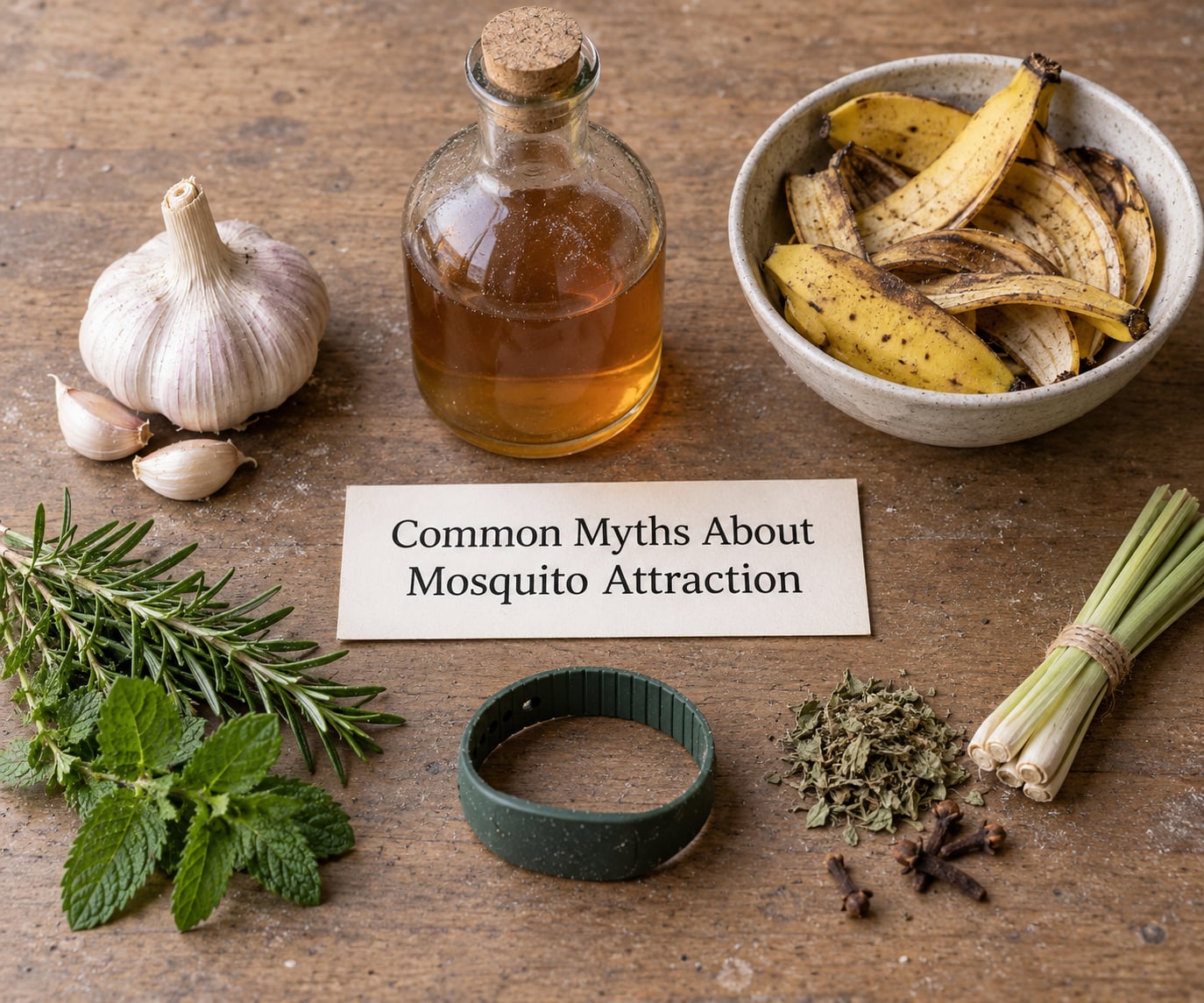
Most of what circulates about “attracting” or “repelling” mosquitoes is folklore. These come up constantly, and the evidence for each is weak or absent.
- Sweet blood. No. There is no measurement showing that mosquitoes find sweeter blood more attractive, and they cannot smell your blood through intact skin anyway.
- Garlic and apple cider vinegar. Eating garlic or drinking vinegar has never been shown to change what mosquitoes smell on you.
- Fair skin. Skin tone has not held up as an attractant in controlled work. Pale skin shows bumps more easily, which is a visibility issue, not a mosquito preference.
- Vitamins and supplements. No supplement has been shown to reduce bites. Garlic-based supplements are the most common version of this claim and the least supported.
- Wristband repellents. Bands worn on the wrist are widely reported in forums as doing nothing, and the effect in trials has been negligible.
- Citronella candles and scented products. A scented candle does not protect the person standing next to it. Body wash and scented products may mildly deter at close range at best, and can attract once the fragrance wears off.
- Personality and stress. There is no evidence that being anxious or simply irritating makes you bite bait.
The pattern in all of these is the same: people try something harmless for an evening, get bitten the next evening anyway, and blame their blood type. The fix that works is an EPA-registered repellent and removing standing water, not a change in diet.
How to Reduce Mosquito Bites
Ranked by how much each one changes your odds, starting with the thing that affects everyone on the block rather than one person.
1. Remove standing water within a few days of it appearing
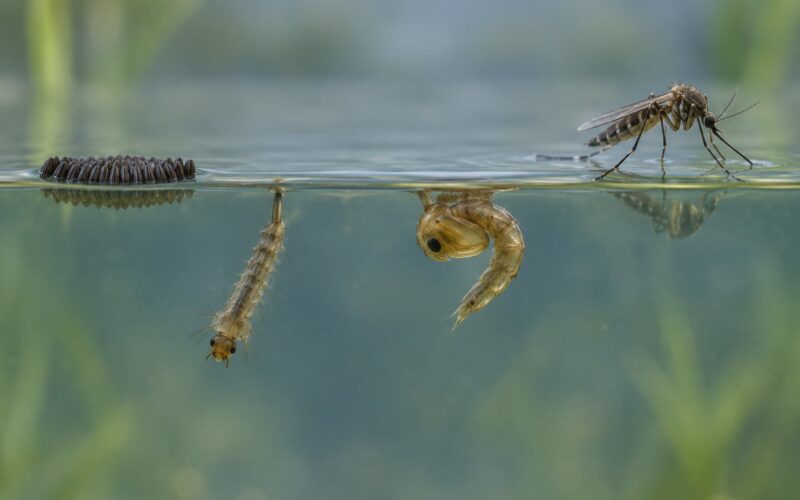
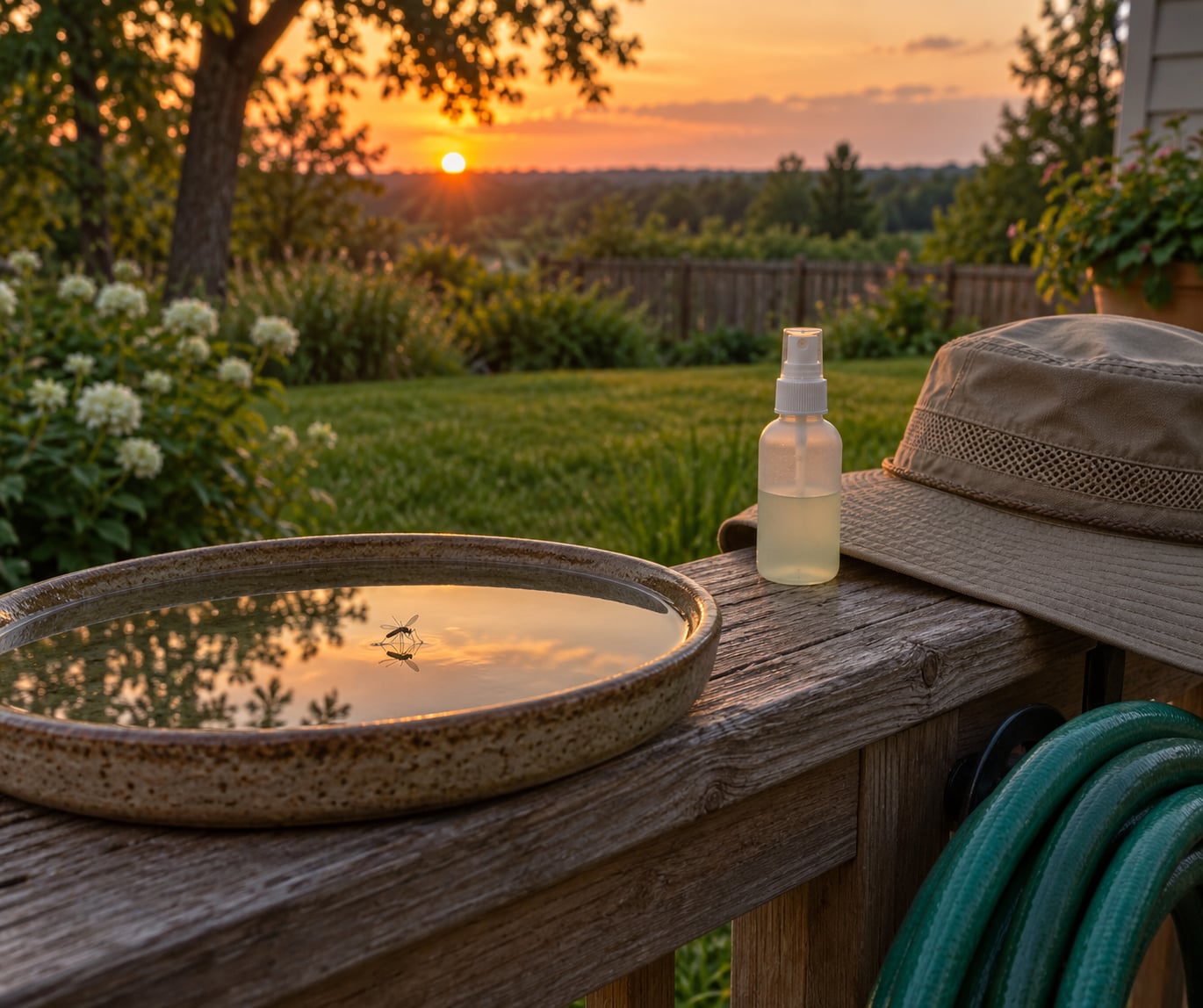
Female mosquitoes lay eggs on the water surface and the larvae develop in the container. Emptying birdbaths, buckets, gutters, plant saucers and clogged drains on a weekly schedule cuts the population that is biting you and your neighbors. This is the only step that reduces the problem at the source, and it is the one most people skip.
2. Use an EPA-registered repellent and follow the label
Look for the EPA registration number on the can, because it means the product was tested for both effectiveness and human safety. The active ingredients you are most likely to see are DEET, picaridin, and oil of lemon eucalyptus or its active component paramenthane-diol. Follow the label directions exactly, especially for children, and reapply on the schedule it specifies since sweat and water wear it off faster than most people expect.
3. Cover the skin mosquitoes actually reach
Long pants, socks and long sleeves in light colors cut exposure on the feet and ankles, which are the hardest-hit areas. Permethrin-treated clothing, bought as a treated garment and never applied to skin, adds a further layer of protection for anyone working outdoors for hours.
4. Use screens, fans and timing
Intact window and door screens keep mosquitoes outside the house. A fan pointed at yourself breaks up the carbon dioxide plume and makes landing harder, which is why people tolerate backyard seating so much better on a breezy evening. Where a species feeds in daylight, avoiding the peak hours matters more than anything you wear.
For the itch afterward, cool compresses and over-the-counter anti-itch products are enough for most people. See a clinician if a bite becomes hot, swollen, drains pus, or if you develop fever, headache or body aches after being bitten, since those can point to an infection or a mosquito-borne illness worth checking.
Frequently Asked Questions
Does blood type make mosquitoes prefer you?
Partly, and less than most people assume. In experiments with Aedes aegypti, type O hosts were landed on close to twice as often as type A hosts, though the finding does not hold across every species. Most people, around 85 percent, are secretors and release blood-group substances through their skin, which may explain part of it. Carbon dioxide and body odor remain the far stronger reasons a mosquito comes to you at all.
Why do mosquitoes bite my ankles and feet?
Four things stack up at ankle height. Feet and ankles carry a heavier bacterial load, and bacteria turn sweat into the odor mosquitoes follow. They sit in the still, low layer of air where exhaled carbon dioxide from seated people settles. Less movement means warmth and odor linger, and thin skin is an easy route to a blood vessel. Long pants and socks help here more than anywhere else.
Do mosquitoes prefer fat or skinny people?
Larger people tend to collect more bites, mostly because they exhale more carbon dioxide and radiate more heat, and both are signals mosquitoes use. That is a tendency, not a rule, and exposure overrules it constantly: a child running around a yard for an hour will meet more mosquitoes than an adult reading on the porch. Clothing color and scent still change the outcome at close range.
Is it bad if mosquitoes never bite you?
No, and it is not a sign of illness either. Low attraction usually comes down to genetics and to the size of your carbon dioxide output and skin odor signature. One study observed that people mosquitoes rarely touch produced repellent compounds of their own. If you also picked up mosquitoes easily this year and not last, that is more likely about age, season, local mosquito population and where you spend your evenings.
What smell do mosquitoes hate to bite?
There is no fragrance that reliably keeps mosquitoes away from a person. Citronella and similar plant oils work in a controlled setting and fade within minutes on skin, so scented products give weak protection at best. The nearest thing to a natural repellent is a compound some people produce on their skin that mosquitoes avoid, which researchers have studied for years but which is not available as a product yet.
Does drinking alcohol attract mosquitoes?
One study found men who drank a single 12-ounce bottle of beer attracted more mosquitoes than men who drank nothing, but the researchers could not explain why, so the mechanism is still unresolved. Garlic, apple cider vinegar and strong-smelling foods have never been shown to change your appeal in either direction. If you are outdoors and drinking anyway, repellent matters far more than the drink.
What to Do First
Start with standing water this week, not with your blood type. Empty the containers within a few days of rain fills them, and do it on a schedule you will keep, because that is the only step that reduces how many mosquitoes exist around your house at all.
Then put on an EPA-registered repellent and wear long pants and socks when you are outside near dusk or dawn, which is when most species feed. If you are bitten more than the people you are standing with, you are not unusually sweet. You breathe a little more, smell a little more or carry a bacterial load mosquitoes like, and all three are things you did not choose.