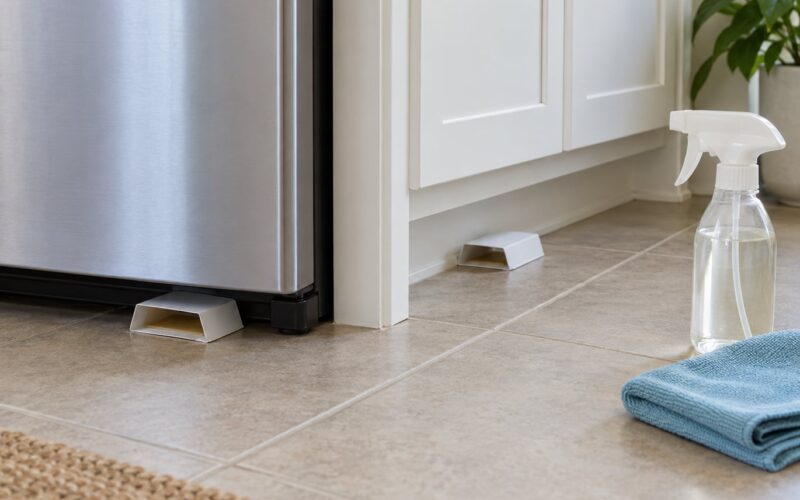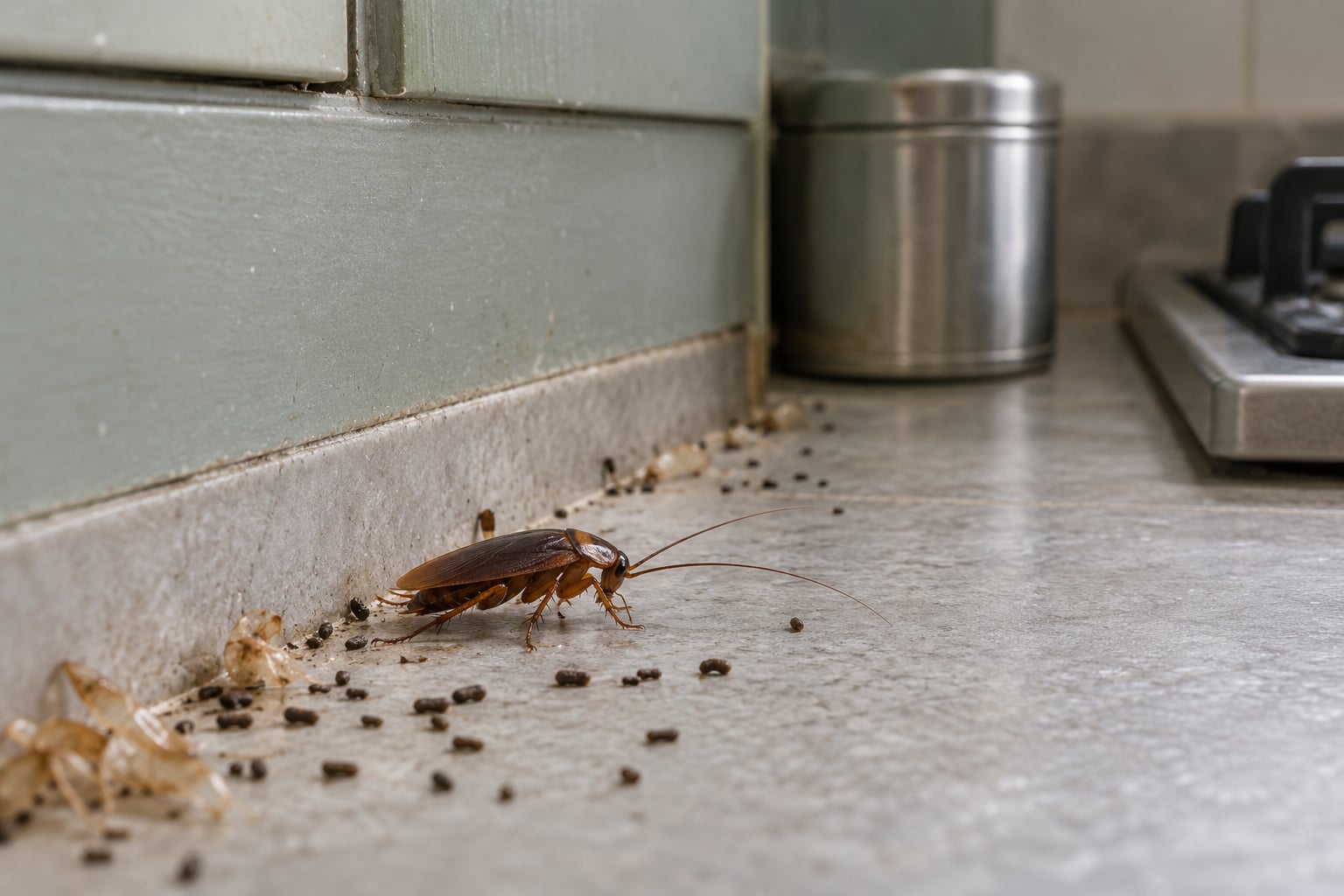
Cockroach allergy symptoms in the home explained in one line: they are an immune reaction to proteins in cockroach saliva, droppings, shed skin and egg casings, and they reach you through the air rather than a bite. Most people notice them as year-round stuffiness, sneezing, itchy eyes, and sometimes a cough that is worse in the kitchen or the bedroom.
Cockroaches do not sting and they do not bite people. The whole problem is the dust. Here is what tends to give the game away: symptoms that never let up through winter, symptoms that fade when you leave the house, and symptoms that spike the moment you move furniture or run the vacuum in a room you had ignored.
This is general information, not a diagnosis. If you are wheezing, having trouble breathing, or dealing with a child whose breathing is getting worse, talk to a clinician rather than using this page to work it out yourself.
Table of Contents
Cockroach Allergy Symptoms in the Home: What to Notice
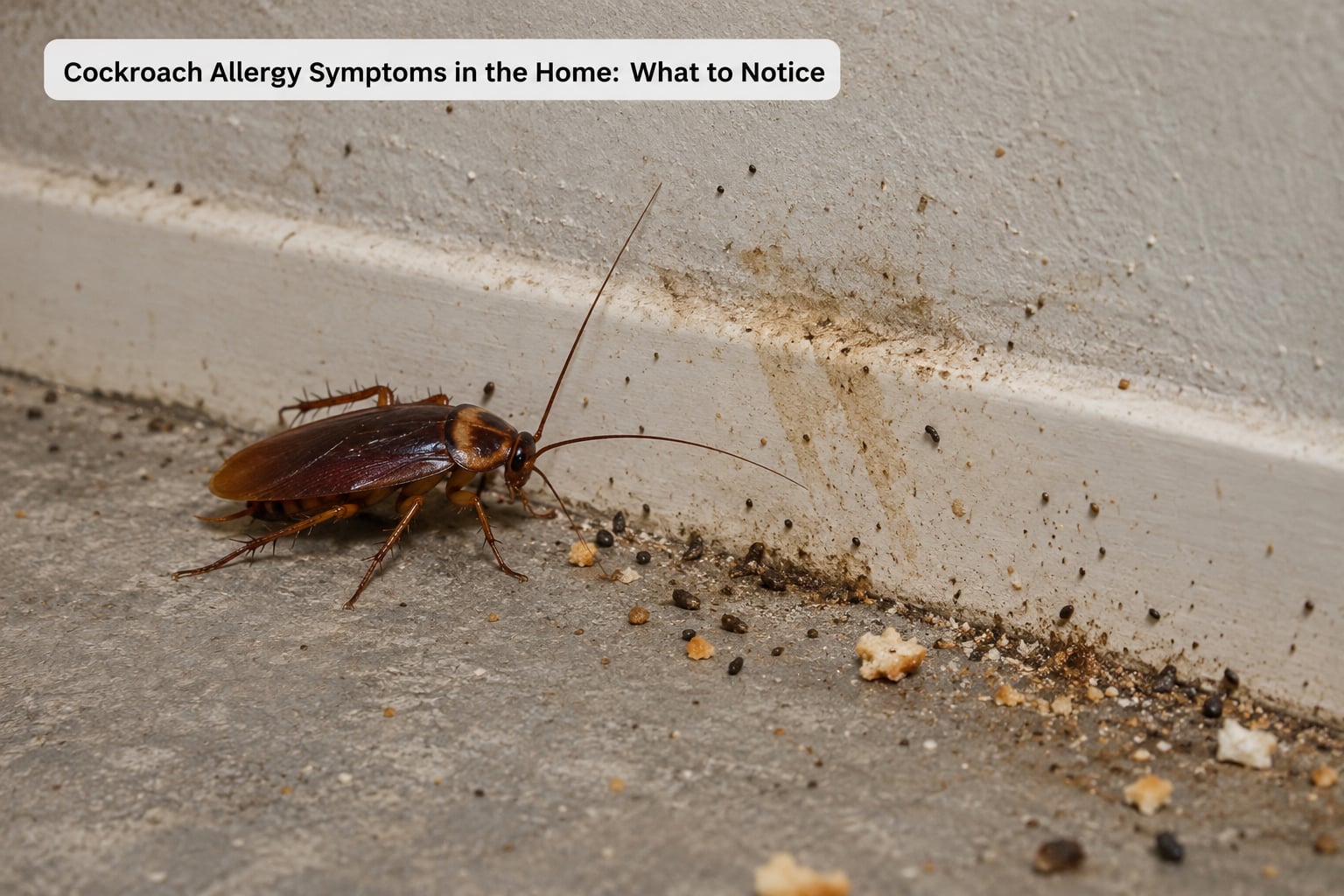
The most common pattern is perennial nasal and eye symptoms with no seasonal change at all. Pollens come and go with the weather, and dust mite levels rise in humid months, but cockroach allergen comes from an animal living in your walls, so it does not take a holiday.
Cockroach Allergy Symptoms: Where and When You Notice Them
Reaction strength varies a lot from one household to the next. A heavily infested kitchen in a warm, humid building can produce enough airborne protein to set off symptoms in a person who has never noticed a single roach, while a milder presence may only bother someone whose airways are already sensitive.
| Where you feel it | What it feels like | When it usually shows up | Often mistaken for |
|---|---|---|---|
| Nose | Congestion, runny nose, sneezing fits, postnasal drip | On waking, or after cleaning the kitchen | A cold that will not quit, or hay fever |
| Eyes | Itchy, watery, red, puffy | Alongside the nose, or after moving bedding | Contact lens irritation, screen strain |
| Chest and lungs | Cough, wheeze, chest tightness, shortness of breath | At night, on lying down, or during exercise | Asthma that seems to be drifting worse |
| Throat and ears | Itchy throat, throat clearing, ear pressure or fullness | Bedtime, and in the morning | Sinus pressure, reflux |
| Skin | Itchy rash, hives, flushed patches, eczema flare | After handling clutter, cardboard, or droppings | Contact dermatitis, detergent reaction |
| Whole-body pattern | Low-grade tiredness, foggy feeling, unrefreshing sleep | Nights spent in an affected bedroom | Stress, poor sleep hygiene |
Skin symptoms show up far less often than respiratory ones, because the airway is the surface that meets the most airborne particle. The National Pest Management Association has reported that roughly 63 percent of US homes carry cockroach allergen, with higher shares in cities, so exposure without a visible infestation is the rule rather than the exception.
How Cockroach Exposure May Trigger Allergic Reactions
Cockroaches leave behind a trail of allergen that is remarkably persistent. Their feces, regurgitated food, shed cuticles, egg cases and the bodies of dead roaches all break down into particles small enough to hang in the air and be inhaled.
What happens next is an IgE-mediated reaction, which is the same class of response as a ragweed or dust mite allergy. On first exposure your immune system makes antibodies against those proteins and attaches them to mast cells. On later exposures the antibodies recognise the protein, the mast cells release histamine, and you get rhinitis, itchy eyes, a rash or bronchospasm within minutes.
The important caveat is that symptoms prove exposure, not identity. The same pattern comes from dust mites, mold, animal dander and cleaning products, and plenty of people react to several at once. Treat a symptom list as a reason to look at your home and to raise it with a clinician, not as a verdict on the culprit.
Common Sources of Cockroach Allergens Indoors
People assume roaches mean a visible infestation. The more common reality is a low-level population living behind the fridge, under the sink and inside the wall cavity, quietly feeding and breeding for months. Here is where their allergen tends to concentrate.
- Kitchens. Crumbs under cabinets, spills, pet bowls and grease build-up give a population a reliable food supply and a damp surface to sit in. Cooking aerosolises particles, and so does wiping a stovetop.
- Bathrooms and laundry rooms. Leaks and condensation create the moisture cockroaches need. Small pellets that look like ground coffee or black specks along baseboards and in the tub are fecal pellets, and they break down when scrubbed or stepped on.
- Bedrooms. This is the one most people underestimate. Warmth, sweat, shed skin and settled dust make a mattress a reservoir, and the hours you spend breathing there are the longest stretch of daily exposure. Symptoms that climb through the night and never quite clear in the morning often trace back to this room.
- Basements, crawl spaces and utility areas. Cardboard boxes, paper storage and stored clothing give them shelter and material to chew through. Moving a box can puff up allergen you had no idea was sitting in the dark.
- Pets and litter areas. Food bowls left out overnight, and litter boxes near sleeping areas, pull roaches straight into living space. One poster on r/GermanRoaches described throat-closing episodes tied to finding roaches under a dog crate, which fits the pattern of proximity to heavy activity rather than any bite.
Species matters less than people expect, but it is not irrelevant. The German cockroach, Blattella germanica, is the most common indoor species in the country and thrives in warm, humid, crowded conditions. The American cockroach, Periplaneta americana, favours damp lower levels and drains, and the Oriental cockroach, Blatta orientalis, favours cool basements. All of them produce allergens that cross-react with each other, so a test that confirms one is not a clean answer for the others.
One more thing worth knowing: the allergen outlives the insect. In a home where the roaches are gone, dried fecal material and body fragments stay in settled house dust, under appliances and in upholstery for months. That is why symptoms can persist long after a pest professional has finished, and why the cleanup is a separate job from the extermination.
Cockroach Allergy Symptoms vs. Other Indoor Triggers
If your symptoms are year-round, the season is not going to tell you much. The room, the timing and what you were doing ten minutes earlier usually do more. Use the table below as a way to sort possibilities, not to decide anything medical.
| Possible trigger | Typical pattern | Clue that points elsewhere |
|---|---|---|
| Cockroach allergen | Year-round, no winter improvement; worse in kitchen, bathroom or bedroom; flares when moving clutter or vacuuming | Signs of activity nearby: droppings, egg cases, shed skins, a musty sweet smell in wall voids |
| Dust mites | Morning symptoms on waking, better once the bedding is changed and aired | Improves with hot-washed bedding and allergen-proof encasings even though the pest situation is unchanged |
| Mold or mildew | Persistent congestion and cough after rain, in basements or after leaks; often a musty smell | Symptoms track wet weather or a specific water event rather than a room you use heavily |
| Pet dander | Worse in rooms with an animal, especially on couches and carpets | Clear change when the pet is groomed or kept out of the bedroom |
| Cleaning products | Starts while you are spraying, wiping or mopping, clears within hours | Resolves with fragrance-free products and a ventilated room, no change in the pest situation |
| Pollen and outdoor air | Seasonal, with peaks in spring or autumn; often better indoors with windows shut | A genuine seasonal swing, and symptoms that ease on high-pollen days indoors |
Cross-reactivity complicates the picture further. The muscle protein tropomyosin in cockroach is very similar to the tropomyosin in shrimp and other shellfish, which is why some people who react to cockroach also react to crustaceans, and why a reaction to one can be blamed on the other. Dust mites are the other common overlap, and co-sensitization to both is common enough that a single positive test rarely tells the whole story.
Two patterns are worth taking seriously. First, symptoms that clearly improve during a weekend away and return on Sunday night point at something in the house rather than something in the air outside. Second, a household that suddenly develops reactions with no other change is a reason to look for a new exposure, and a warm season that brings a leak, a new pet or a new building-wide problem can be exactly that.
How to Reduce Cockroach Allergens at Home
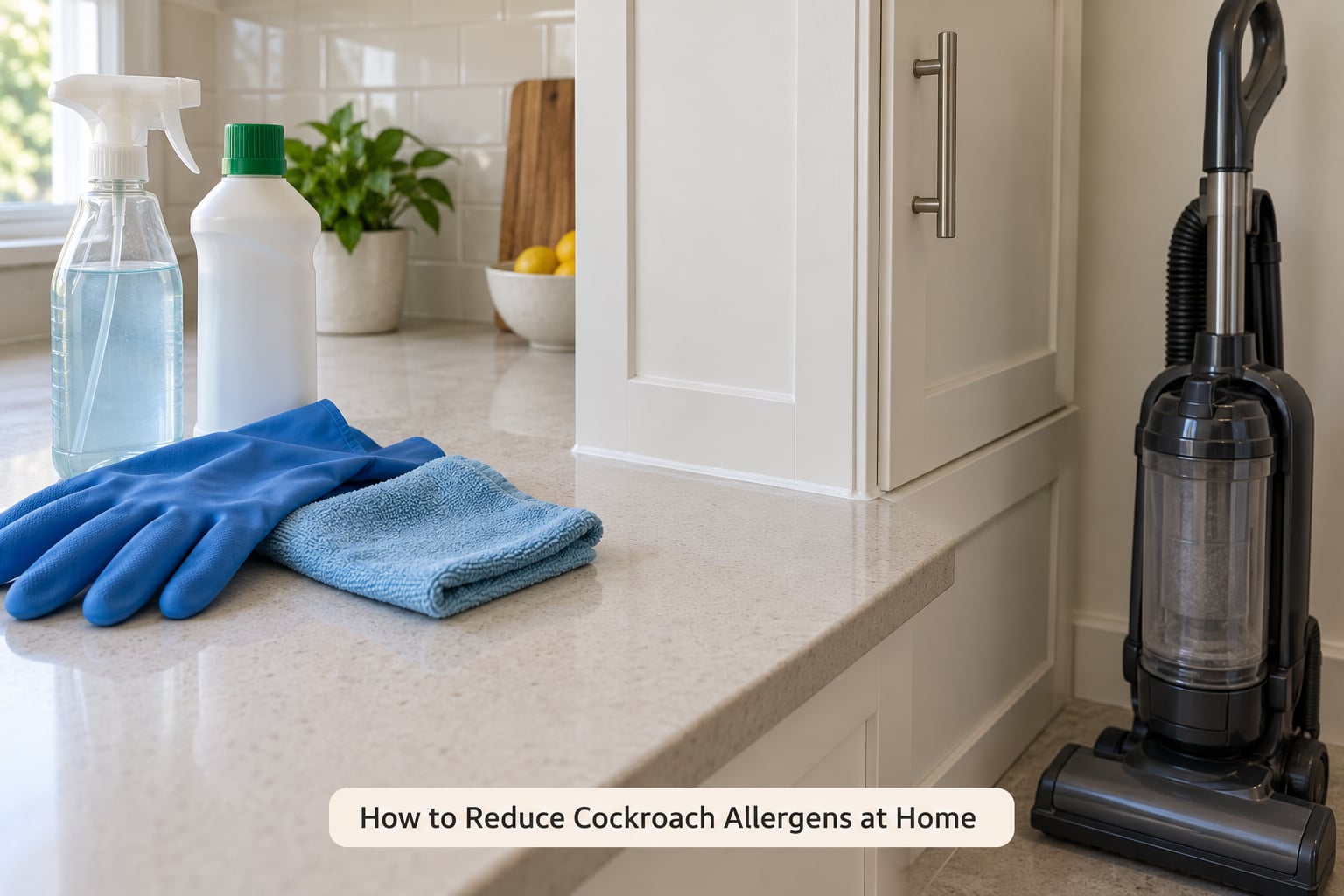
Cutting exposure works on two fronts at once: fewer roaches means less new allergen, and removing what is already settled means less of it reaches your airways. The order below is the order I would use, because sealing gaps before you clean just traps the dust you are about to disturb.
- Fix water first. Repair drips under sinks, secure washing machine hoses, run a dehumidifier in basements and keep indoor relative humidity down around 30 to 50 percent. Cockroaches and the mold that competes with them for the same damp both suffer when you dry the place out.
- Cut off the food supply. Airtight containers for flour, sugar, rice, pet food and pet bowls, crumbs wiped nightly, and a bin that is emptied before it overflows. Do not leave dishes sitting in the sink overnight.
- Seal the openings. Stainless steel mesh or copper mesh over pipe gaps, gaps under sinks, and around the edges of baseboards and where walls meet. Caulk alone gets chewed through, so treat it as a temporary seal on the smaller gaps.
- Address pest activity properly. Gel baits and stations placed along edges and inside wall voids work well and stay put. See the warning below about broadcast sprays before you reach for a fogger.
- Clean the affected areas with a damp method. Do not dry sweep or shake out dusty mats, curtains and rugs, because that puts the particles into the air you are trying to clean. A HEPA vacuum used slowly over surfaces, with the nozzle kept in contact with the floor, captures far more.
- Treat the bedroom as its own project. Wash bedding weekly on a hot cycle, dry it fully, use allergen-proof encasings on the mattress and pillows, and keep cardboard boxes out of the closet. A r/GermanRoaches thread on substrate changes made the point clearly: when the dried excrement dust went down, so did the sneezing.
- Keep the air moving while you clean and after. Open windows, run the exhaust fan, and give the room time to air out before you settle back in. Bedding and mattresses dry fastest when the air is moving.
A clear warning on insecticides. Broadcast aerosol sprays and foggers put pyrethroid particles into the air where everyone is breathing, they do not reach roaches hiding in wall voids, and they can trigger reactions in a sensitised adult or an asthmatic child. A r/Allergies poster captured the common worry perfectly, avoiding sprays around family members with asthma. Prefer bait stations, gel baits and targeted residual treatments applied by a professional who follows the label, and keep children and pets out of the room until it is labelled for re-entry.
When to call a professional. If you are seeing live roaches in daylight, finding egg cases in multiple rooms, noticing a sweet musty smell from wall voids, or seeing small black droppings along baseboards, bait alone will not keep up. At that point an integrated pest management approach, with inspection, sealing, baits and follow-up, beats another round of DIY. In a multi-unit building, put the request in writing to the landlord or building management, keep dated photos of droppings and sightings, and ask in writing what service standard applies. Shared walls mean your neighbour’s unit feeds your kitchen, and you will rarely solve that alone.
Be realistic about timing. Once the roaches are gone, the residue stays in the dust for months, so expect your cleaning routine, encasings and bedroom work to be what actually moves your symptoms.
When Cockroach Allergy Symptoms Need Medical Advice
Talk to a doctor or allergist if symptoms are persistent, if they are getting worse over weeks, or if they reliably follow a period of exposure such as a cleanup session or a night in an affected bedroom. That pattern is worth documenting before you go in, including which rooms, which activities and roughly how long the reaction lasted.
Seek urgent medical care rather than waiting for an appointment if you notice:
- Shortness of breath, or trouble speaking full sentences because of breathlessness
- Wheezing that does not settle, or chest tightness that feels constricting
- Swelling of the lips, tongue, face or throat, or difficulty swallowing
- Faintness, lightheadedness or confusion during a reaction
- Symptoms in a child who is using an inhaler more often than usual or whose inhaler is not working
Anaphylaxis from a cockroach allergen is rare, but airway swelling in someone who is already asthmatic is the reason these signs are not something to observe for a week.
Testing is straightforward. A skin prick test or a specific IgE blood test can look for cockroach sensitization, and component-resolved testing can pin down which cockroach protein is involved, which sometimes clarifies the shellfish cross-reaction question. Bring your notes about where and when symptoms happen, since that context changes how the results are read. Bring a list of everything in the household, whether anyone has asthma, and what you have already changed about the home. There is no FDA-approved immunotherapy for cockroach allergy, so a clinician is far more likely to focus on exposure reduction and standard allergy management than on a series of shots.
I can describe symptoms and household exposures, but I cannot diagnose an allergy, interpret a test result, or tell you what to take. That conversation belongs with a doctor, pharmacist or allergist.
Frequently Asked Questions
Can cockroach droppings cause allergy symptoms indoors?
Yes. Droppings are a major source of cockroach allergen, and the dried material breaks down into small particles that become part of house dust and get inhaled. Scrubbing or stepping on droppings can briefly aerosolise them, which is why some people notice a reaction right after cleaning a neglected corner. Handle heavy droppings with gloves and a damp cloth, and vacuum with a HEPA unit rather than dry sweeping.
How can I tell whether cockroaches are causing my symptoms?
Start with the pattern. Year-round symptoms with no winter improvement, worse in the kitchen or bedroom, and a flare after moving clutter or vacuuming all fit cockroach allergen. Then look for physical evidence nearby: black specks like ground coffee, brown egg cases, shed skins behind appliances, or a sweet musty smell from wall voids. Only a clinician can confirm sensitization, since dust mite and mold reactions look identical on paper.
Does reducing cockroaches get rid of cockroach allergies?
It reduces exposure substantially, but it does not end it immediately. Allergen from feces, shed skin and dead bodies stays in settled dust, under appliances and in upholstery for months after the insects are gone. That is why encasings, hot-washed bedding, HEPA vacuuming and a damp cleaning routine matter as much as the pest control itself. Some people still notice symptoms for a season or more, and many carry a lifelong sensitivity.
Should I test for cockroach allergens at home?
Home test kits exist but are not a reliable substitute for clinical testing, and a negative result does not rule out a reaction. A skin prick test or a specific IgE blood test through a doctor is the standard route, and component-resolved testing can identify which cockroach protein you react to. That extra detail helps when shellfish reactions are also in the picture, because tropomyosin is shared between the two.
Can I safely clean up cockroach droppings with a vacuum?
A vacuum with a sealed bag or canister and a HEPA filter is a good choice, used slowly with the nozzle in contact with the floor. Skip the dry broom and skip shaking out mats and curtains, because that pushes particles into the air. Do not use a shop vacuum, since the exhaust can blow fine dust back into the room. Gloves, a damp cloth for hard surfaces and ventilation during and after the job are worth the extra minute.
What to Do First
Four things matter more than the rest. Cut exposure first, which means fixing leaks, sealing food, sealing gaps and getting a proper assessment of pest activity rather than another can of spray. Clean the way you were probably not cleaning, meaning damp methods, HEPA vacuuming, hot-washed bedding, mattress encasings and real ventilation while you work. Check the bedroom and the kitchen first, since those are where most household cockroach allergen accumulates and where most of your daily exposure happens. And track your symptoms for a couple of weeks, noting the room, the activity and the timing, because that log is the single most useful thing you can bring to a doctor.
Reading another page about cockroach prevention in 2026 will not change any of this. Reducing what you breathe in, and getting tested when the symptoms keep coming back, will.