You get rid of roaches in kitchen cabinets by cutting off food and water, physically cleaning and vacuuming every shelf, corner and hinge void, then sealing the gaps they came in through. No spray, fogger or pesticide is needed for most kitchen cabinet infestations, especially if the activity is light and the cabinets are cleaned properly. Budget a couple of hours for the first pass and another few minutes each week afterward to keep it from coming back.
The part most guides skip is the part that matters: the inside of the cabinet carcass. Roaches rarely sit on the open shelf where you can see them. They breed behind hinge rails, in the gap between the back panel and the wall, and along the seam where the cabinet box meets the face frame. Treat only the visible space and you will be cleaning an empty cupboard while the colony keeps growing somewhere six inches behind it.
What You Need
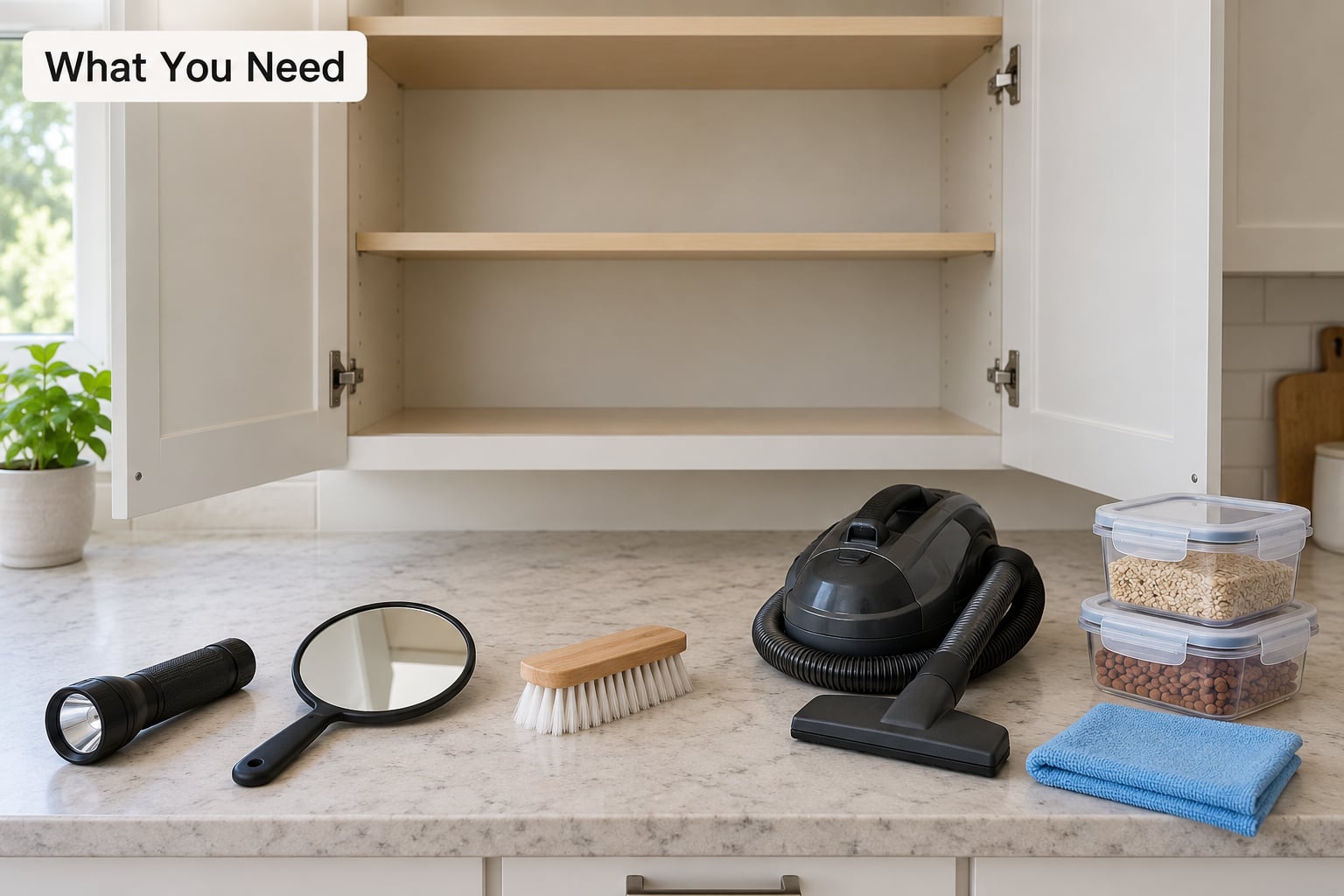
Gather everything before you start. Opening one cabinet and finding droppings halfway through a load of cereal is how half of these jobs get abandoned.
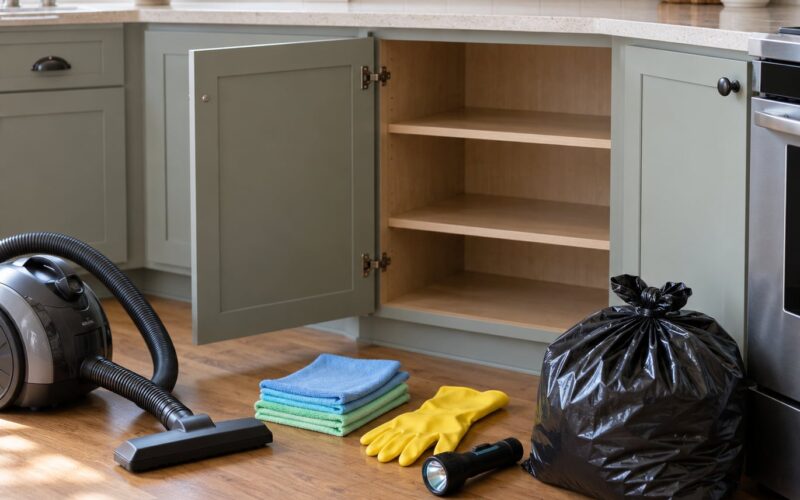
- Rubber or nitrile gloves and a paper towel roll, so you never touch droppings or egg cases bare-handed.
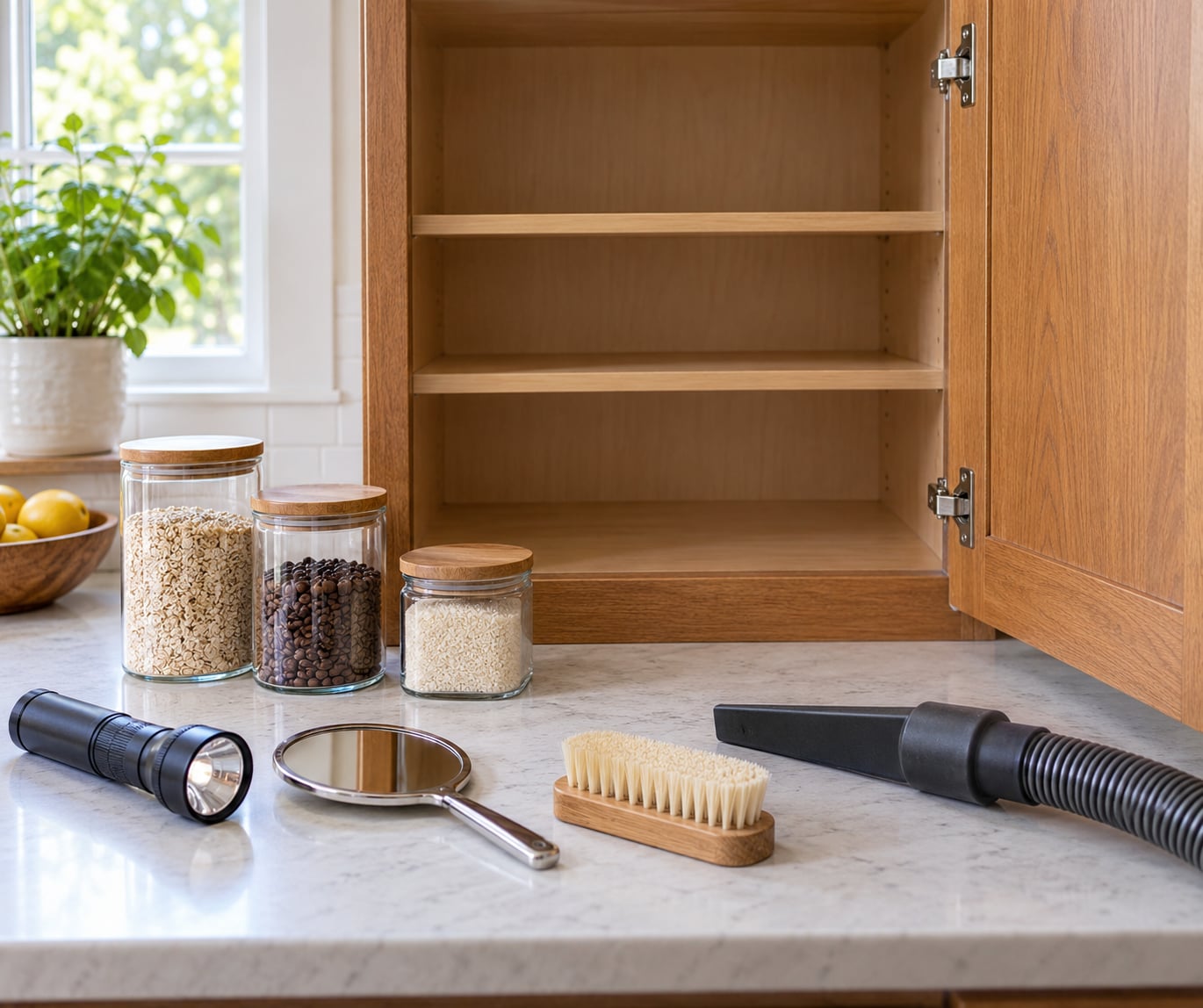
- A bright flashlight and a hand mirror. The mirror gets you a look at the back seam and under the bottom shelf where a flashlight alone gives you nothing.
- A stiff-bristled brush, an old toothbrush for hinge cups and screw holes, and a soft brush for shelf liners.
- A vacuum with a hose attachment. This is what actually removes droppings, oothecae, shed skins and dead nymphs rather than just redistributing them.
- Hot water, dish detergent and white vinegar for the wash-down, plus a clean cloth and paper towels.
- Sealed containers — hard plastic or glass with lids that snap shut — for everything that stays in the cabinet.
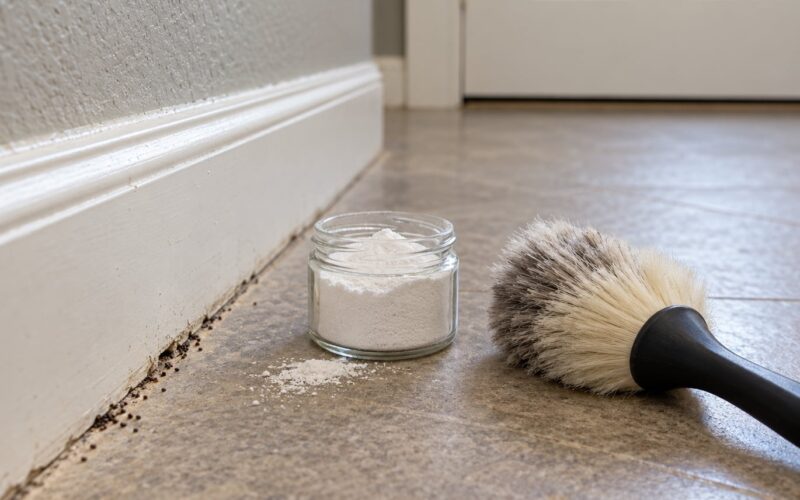
- Food-grade diatomaceous earth and, if you are comfortable with it, boric acid powder. Both work by being eaten or by drying the insect out, not by poisoning the air.
- Silicone caulk or fine-mesh insect screen, plus a caulk gun, for gaps along the back panel and around pipe penetrations.
- Sticky monitoring traps, the flat kind you slide under shelves.
If you have small children or pets, move the powders out of reach before you start and do not put any of them on an open shelf next to dry food. Store them sealed, in a labeled container, ideally on a high shelf or in a locked cabinet. DE is a drying agent that irritates lungs if it is inhaled as a dust cloud, and boric acid is toxic if swallowed, so the light dusting rule matters more in a kitchen than anywhere else in the house.
Step-by-Step: How to Get Rid of Roaches in Kitchen Cabinets Without Chemicals
1. Confirm the Pest and Locate Entry Points
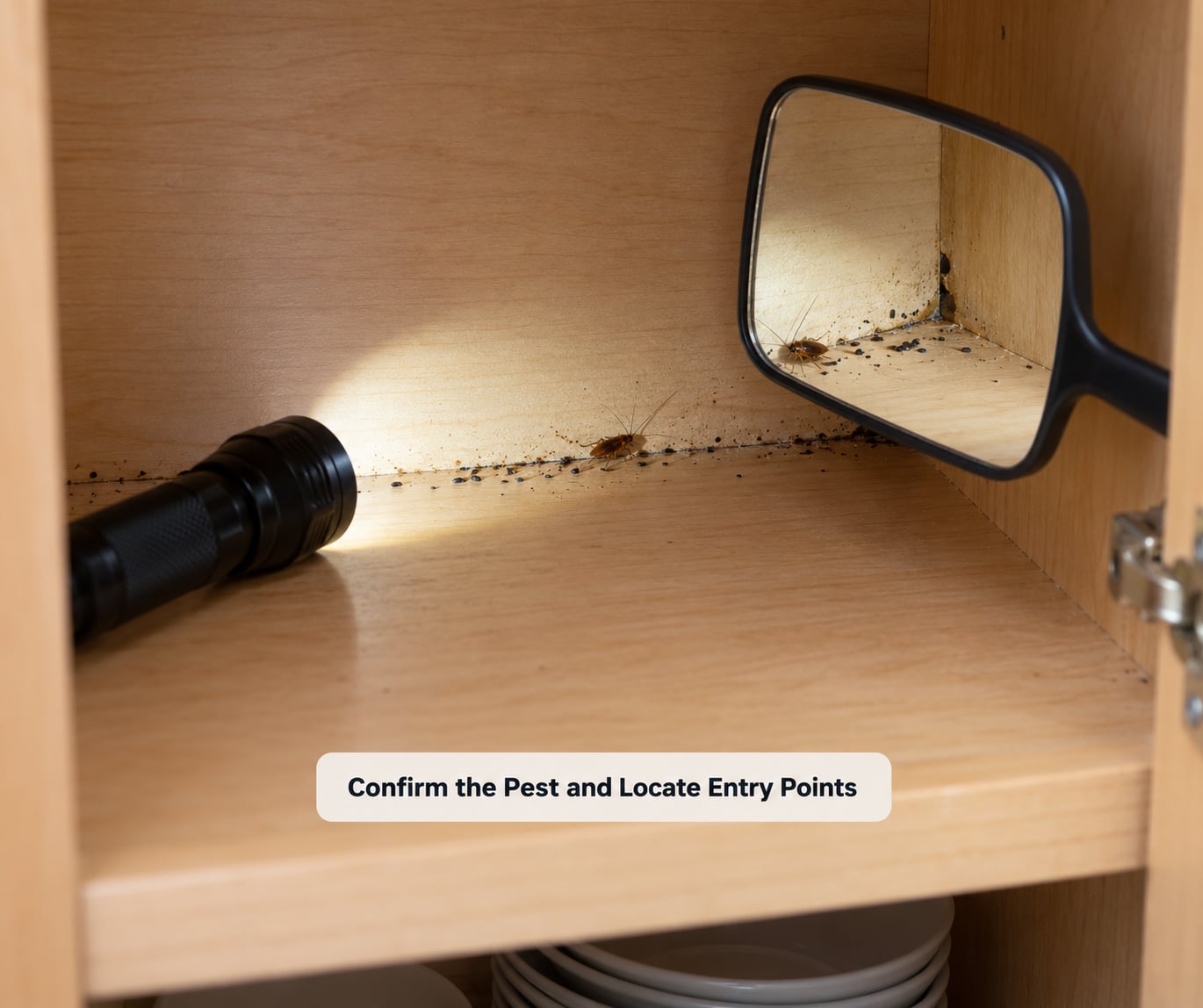
Before you move a single box, work out what you are dealing with and where it is coming from. Dark specks that look like ground coffee, pepper-like droppings, brown capsule-shaped egg cases, or a musty smell in an enclosed cabinet are the classic signs.
Look at what you found and check it against the three species you are most likely to meet indoors. German roaches are the cabinet problem, small and light brown with two dark stripes down the back. Oriental roaches are glossy black and shiny, larger, and strongly associated with damp sink areas. American roaches are big, reddish brown, and usually found in basements and utility spaces rather than cupboards.
Then trace the route in. German roaches hitchhike on grocery bags and cardboard boxes, and they travel through the thin shared walls between apartments, through the gap around the sink and dishwasher plumbing, and through the door sweep gap at the base of an exterior door. A cabinet above the fridge is a favorite because the motor housing gives off steady warmth.
Decide how bad it is before you clean. Droppings in one cabinet with no live activity nearby is usually a contained problem. Roaches in several cabinets, droppings along the wall, or roaches appearing during the day points to something bigger, and that is worth knowing now rather than in week six.
How you can tell it worked: the mirror and flashlight show no fresh droppings, no egg cases and no live roaches when you check again after two weeks of trapping.
2. Remove Food and Clutter
Take everything out of the affected cabinets and sort it into three piles: things that go back in sealed containers, things that stay out of the cabinet entirely, and things that get thrown away. Open packages of rice, flour, cereal and pasta that have been sitting open are the single most common reason a cabinet keeps feeding a colony without anyone noticing.
Throw out any food that is stale, spilled on, or has been sitting open for more than a few weeks. Vacuum the empty shelves and the cabinet floor before you wipe anything, because a dry vacuum pass picks up the loose particles that a damp cloth would smear around instead.
Move cardboard boxes and paper grocery bags out of the kitchen entirely. Egg cases travel in the corrugation, and a single box in the back of a cabinet can seed an infestation you just cleaned up. Plastic bins, glass jars with tight lids and metal containers are what goes back in — thin plastic bags and open baskets are not storage, they are an all-you-can-eat buffet.
Pet food goes into a sealed container and gets fed outside the kitchen if you can manage it. Dog bowls left out overnight in a warm room are an open invitation, and no amount of cabinet cleaning offsets that.
How you can tell it worked: sealed containers only, no open bags on the shelf, and no new droppings appearing on the clean shelf bottom during the following week.
3. Clean and Physically Remove Roaches
Mix hot water with a couple of tablespoons of dish detergent and a splash of white vinegar. Wipe down shelves, back panels, sides and the underside of the bottom shelf. The detergent cuts grease, which is what binds smells and the oily smear marks roaches leave along edges — those smear marks are how you find the routes they use, so they are worth following.
Scrub the same surfaces with the stiff brush, concentrating on shelf edges, hinge cups, screw holes, the corner where two panels meet and the seam where the back panel joins the sides. That last seam is where most eggs and nymphs are and where your hand cannot fit without a brush.
Run the vacuum over every surface once the shelves are dry. Then run it again with a sock or a piece of pantyhose stretched over the hose end, so egg cases and small nymphs get caught rather than shot around the cabinet.
Finish with a thin, even dusting of food-grade diatomaceous earth along the back seam, hinge rails and lower corners. A dusting you can barely see, applied with a shaker or a makeup brush. Piles get inhaled, get brushed away at the first cabinet slam, and end up on your food. If you use boric acid instead, put it in a shallow dish with a little sugar and place it in the cabinet corner where roaches already travel, sealed from pets and kids. Never mix the two, and never put loose powder next to open food.
How you can tell it worked: no movement on the traps you set after cleaning, and no fresh smear marks along the shelf edges.
4. Seal Gaps and Improve Cabinet Conditions
Roaches are flat enough to slip through a gap the width of a credit card, and nymphs are smaller still. Work around each cabinet with a flashlight and look for light coming through from the next room or the outside.
Run a thin bead of silicone caulk along the back panel edges, into the corners where the cabinet box meets the wall, and around any pipe or wire penetration. Steel wool packed into a gap before you caulk it gives the sealant something to grip and blocks the route long-term. For cabinet doors that do not close flush, a strip of self-adhesive foam weatherstripping along the hinge side closes the gap without glue or screws.
Under-sink cabinets deserve extra attention, since a slow leak gives them the dampness they need. Fix the leak, wipe the cabinet dry, and check the pipes entering the wall for a gap. If the panel is soft or swollen from years of moisture, sealing it is temporary — that panel has to be replaced or it stays a harbour.
Do not block a cabinet’s function while sealing. If an air vent, a gas line or an appliance connection runs into or behind a cabinet, work around it and never pack sealant into a required clearance. Gas lines in particular belong to a licensed gas fitter, not to a caulk gun.
How you can tell it worked: no light visible through the seams at night, and no new droppings appearing along the back panel after a couple of weeks of trapping.
5. Monitor and Prevent Reinfestation
Slap a sticky trap under each suspect shelf and one in the adjacent cabinet. Check them weekly and date them with a pencil. Roaches are nocturnal and edge-following, so a trap that is never touched in a week is genuinely good news, and a trap with fresh droppings tells you exactly which cabinet to re-clean.
Build a routine that keeps the conditions unattractive. Wipe the cabinet bottoms monthly, because grease collects there faster than anywhere else. Keep dry goods in sealed containers, sweep crumbs after cooking, take the trash out before it sits overnight, and wipe the sink and dishwasher rim down while the surfaces are still damp.
Check cardboard deliveries before you store them, and take recycling out rather than stacking boxes in the kitchen. If you are in an apartment building and neighbors have roaches, your own sealing will not hold on its own. Tell your landlord or property manager in writing, with dates, because a building-wide problem is a management issue rather than a cleaning issue, and tenants are rarely the ones authorized to treat shared walls.
How you can tell it worked: two consecutive months with no droppings on any trap and no live sightings.
Common Mistakes
Spraying into cracks without finding the source. Aerosol sprays kill what they touch and scatter the rest. Repeating them weekly without fixing the food, moisture and gap problems just moves the colony deeper into the cabinet voids or into the next apartment.
Cleaning only the surfaces you can see. If the cabinet is still full of open packages and you wipe the shelf, you have cleaned a display shelf. Empty it completely, vacuum the debris, then clean.
Storing food in thin plastic. A plastic bag of rice is an open food source with a zipper. Hard containers with lids that click shut are the difference between a closed pantry and a feeding station.
Sealing the cabinets while roaches are still inside. Caulking up an infested cabinet traps roaches and egg cases against your food with no way out. Clean, treat, monitor for two clear weeks, and only then seal.
Assuming one roach means the problem is small. Seeing a single adult means the other stages are already present somewhere you cannot see. Treat the whole kitchen as one unit, not the one cabinet where you spotted movement.
Expecting an overnight fix. Chemical-free methods are slow because they work by removing the reasons roaches survive there. Any source promising to clear a cabinet in one night is describing a spray, not a solution.
A few popular remedies are worth ruling out. Baking soda on its own is not an effective treatment for an established infestation — the amount a roach would have to eat is impractical. Foggers and bug bombs scatter roaches into walls and voids and leave the food sources untouched. Ultrasonic repellers do not work through cabinetry. Dryer sheets are a scented novelty. Essential oils such as peppermint or eucalyptus may make a cabinet smell less inviting, but they are not a treatment and undiluted oil near food surfaces is not something you want on a shelf.
What actually does the work is the unglamorous combination people describe on pest forums: a deep clean, a light dusting of low-toxicity powder in the voids, and sealed entry points, kept in place for several weeks.
Frequently Asked Questions
Does Dawn dish soap and vinegar kill roaches?
No, not directly. Dish soap and vinegar kill nothing on contact, but detergent in hot water cuts the grease film that roaches walk on and that traps their smell along cabinet edges, and vinegar takes that smell away. Used as a cleaning step after the cabinets are emptied and vacuumed, it removes the residue that tells new roaches the cabinet is worth living in.
Why are there roaches in my kitchen cabinets?
Because your cabinets offer three things at once: a dark sheltered hiding place, constant access to crumbs and grease, and warmth and moisture near pipes and appliances. The species that breeds indoors, the German cockroach, arrives on cardboard boxes and grocery bags, travels through shared walls in apartments, or enters through plumbing gaps and door sweep gaps. Any one of those routes ends in your cabinet box.
What can I put in cabinets to kill roaches?
Food-grade diatomaceous earth applied as a barely visible dusting along the back seam, hinge rails and lower corners is the most useful thing for a cabinet. A shallow dish of sugar mixed with boric acid, placed in the far corner where roaches already travel, works as a stomach poison. A sticky trap under the shelf is worth adding for monitoring. Keep all three sealed away from food, children and pets, and never use mothballs.
What kills roaches better, boric acid or diatomaceous earth?
Boric acid is generally the stronger option for an established indoor infestation because roaches actively eat it and carry it back to the nest, where it does the most damage. Diatomaceous earth works best on nymphs and in very dry voids, and it stops working when it gets damp or is laid down in thick piles. Many people use both: dust the seams with DE and put boric acid bait in the corner.
Do cockroaches come out during the day?
Roaches are nocturnal and avoid light, so daytime sightings usually mean the infestation is well established and crowded. Adults scatter when disturbed and the nymphs are less wary of open light than the adults are. If you are seeing them in daylight, skip the DIY plan and contact a pest control professional, especially in an apartment building where neighbors are likely affected.
How long does DIY chemical-free roach control take?
Expect progress in stages rather than all at once. In the first three days you clear food, clean and vacuum the cabinets. Over the next one to two weeks you should see traps staying empty. German cockroaches run roughly six to ten weeks from egg case to adult, so egg cases laid before you started will still be hatching during the first month. Full clearance usually takes one to three months of consistent sealing and monitoring.
Conclusion
Start with the order that matters: take every bit of food out of the affected cabinets and seal what goes back in, then clean and vacuum the shelves, back seams, hinge cups and corners so the eggs, droppings and shed skins are physically gone. Treat the voids with a light dusting of food-grade diatomaceous earth, set sticky traps under the shelves, and check them weekly. Seal the back panel edges, corners and plumbing gaps with silicone caulk once the cabinets have been clean for about two weeks.
Keep food in hard containers, take cardboard out of the kitchen, wipe cabinet bottoms monthly and keep watching the traps. If roaches show up in daylight, or if several cabinets stay active, that is the signal to bring in a pest control professional rather than keep buying powders.