Short answer: no, the evidence does not support ultrasonic pest repellers as a way to clear an infestation. They can shift pest activity for a few days or weeks, then habituation takes over and the problem returns, usually worse because you lost time. Sealing entry points, removing food and water, and trapping does more than any sound device.
That is the short version. The longer version matters, because these devices sell on a genuinely appealing idea: no chemicals, nothing to bait, nothing to dispose of, just a plug on the wall. If you are weighing one, you deserve to know exactly what the research does and does not show before you spend money on it.
The rest of this guide breaks down how the devices operate, where they fail, why some owners still report results, and what actually resolves a household pest problem.
Table of Contents
- What Are Ultrasonic Pest Repellers?
- How Do Ultrasonic Pest Repellers Work?
- Ultrasonic Pest Repellers and Whether They Work
- Do They Work for Rodents, Bed Bugs, and Cockroaches?
- Why Some Buyers Still Report Results
- What Pest-Control Methods Actually Work?
- How to Deal with a Household Pest Infestation
- Frequently Asked Questions
- What Should You Do First?
What Are Ultrasonic Pest Repellers?
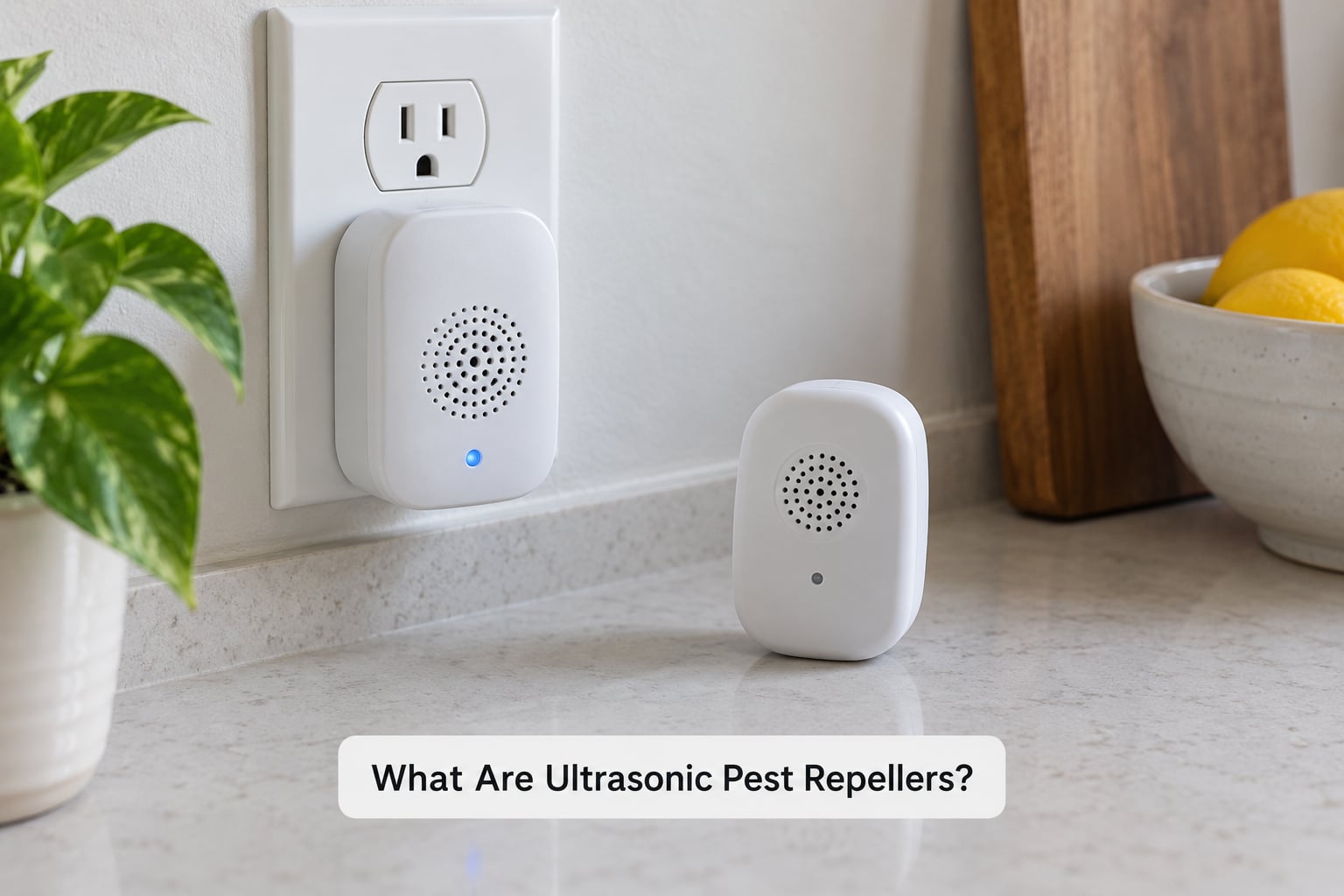
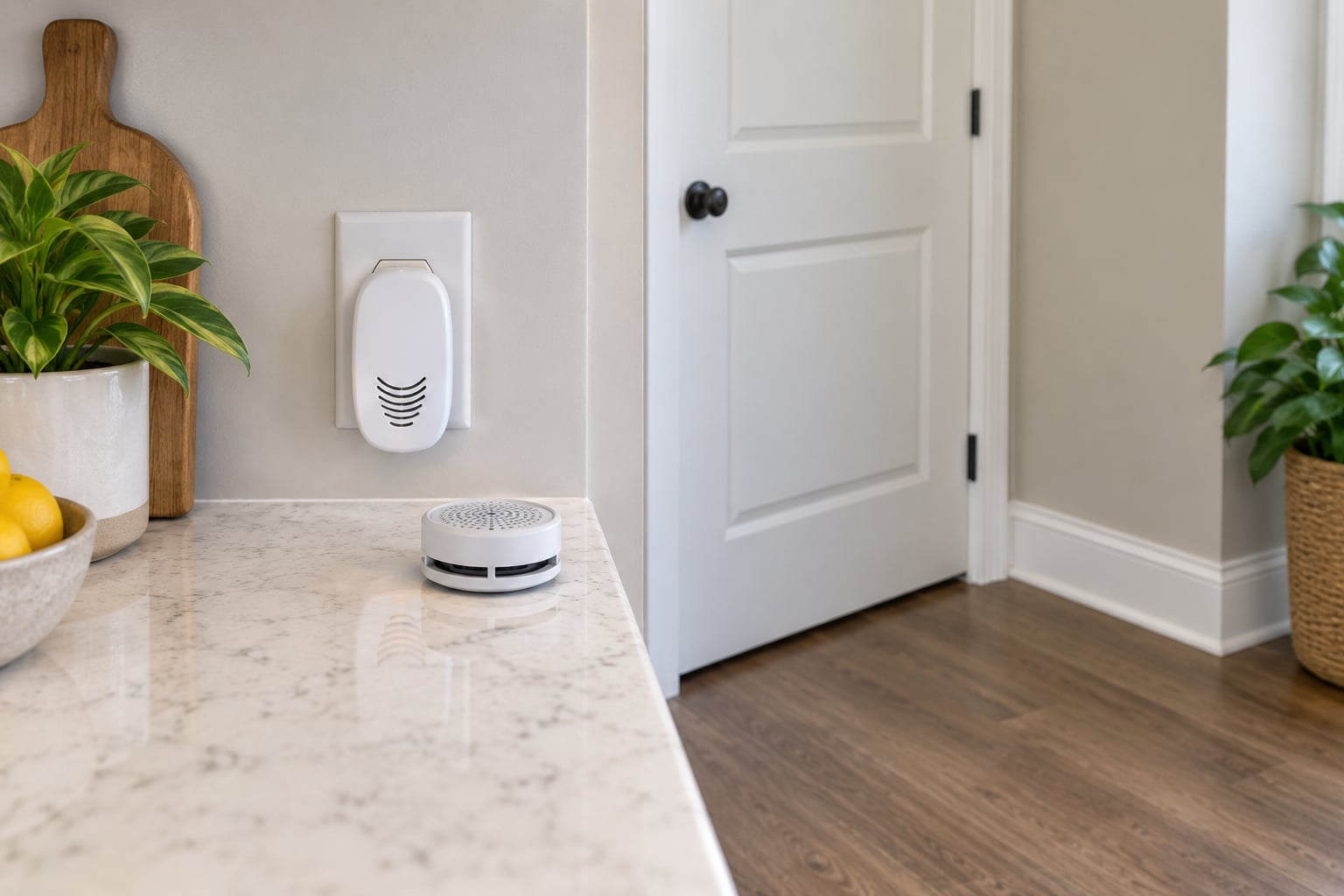
An ultrasonic pest repeller is a small plug-in electronic device that emits high-frequency sound, usually somewhere above 20 kHz, which is the practical upper limit of human hearing. The idea is that rodents and many insects can hear those frequencies comfortably, find them irritating, and move somewhere quieter.
You will see three main formats in stores and online. Plug-in units run off a wall outlet and are meant to sit in a basement, garage, attic or kitchen. Battery-powered or USB models are portable and get used in cars, sheds and storage boxes. Combination units add a flashing LED and a buzzing speaker as well, mostly so you can see that something is switched on.
They are marketed against mice, rats, crickets, cockroaches, ants, fleas, mosquitoes, spiders and, in a stretch, bed bugs. Most are sold on a single claim: a coverage radius in feet, a chemical-free promise, and a statement that nothing has to be checked or rebaited.
How Do Ultrasonic Pest Repellers Work?
The claimed mechanism is simple. The transducer pushes a tone, often a sweep that moves across a band of frequencies rather than holding steady. If the pest hears a sound it cannot get used to, the theory goes, the stress of it drives the animal out of the area, and it settles somewhere quieter instead.
Two problems sit right there. First, a device only affects what is inside its effective radius, and a pest driven out of one room simply moves into the next one, often into the wall cavity or attic where it now does more damage in complete silence. Second, nothing in the sound kills, starves or excludes anything. It cannot reach a nest, cannot remove eggs, and cannot close the gap the animal came through.
What Happens in a Typical Home?
Coverage claims are measured in open air, which is the least realistic condition in a house. High-frequency sound attenuates quickly when it passes through solid material. Insulation in an attic, a subfloor, stacked boxes in a garage or a closed interior door can each swallow most of the output before it reaches anything alive.
Placement matters as much as the room. A device behind the dryer or under a workbench is emitting into a cavity where it may reach nothing but a mouse that happens to nest there. And ambient noise makes the problem harder to judge: refrigerators, HVAC ducts, washing machines and street noise all sit in the same frequency neighborhood, which is one reason the device produces no obvious change you can detect.
Lab work that found repellency used ultrasound generators that are several grades above anything a consumer can buy, pointed deliberately at test subjects with no competing noise and no places to escape to. Reproduce that in a basement with a washer running and you get a different result, which is the standard complaint from people who have actually tested these units with cameras.
Ultrasonic Pest Repellers and Whether They Work
Do ultrasonic pest repellers work? Occasionally, for a short window, as a side effect of something else you changed. As a control method on their own, the evidence says no, and the failure has four repeatable causes.
Habituation. A constant stimulus stops registering. Rodents that encounter the tone repeatedly lose their response to it, which is exactly what pest-control professionals describe when they explain why a unit that seemed to help in week one does nothing by week four.
Obstruction. Sound does not pass cleanly through walls, floors, insulation or furniture, so the coverage radius on the box rarely matches what happens in a furnished house.
The lab-to-kitchen gap. The positive rodent aversion results come from powerful laboratory generators under controlled conditions. The consumer devices sold to homeowners are far weaker and rarely studied with the same rigor or a proper control group, so any drop in activity cannot be attributed to the sound with confidence.
Regulatory skepticism. The Federal Trade Commission has cautioned consumers for decades about electronic pest control devices that make effectiveness claims the company cannot substantiate. Sellers still promote coverage radii in feet without published field data behind them.
McGill University’s Office for Science and Society looked at this closely and concluded that these devices have never been shown to work, while noting that the popular claim they send pests away with a headache is also wrong. Sustained ultrasound exposure in lab animals has produced hyperthermia and audio-induced seizures, so the humane marketing story does not hold up either.
| What buyers expect | What actually happens | Bottom line |
|---|---|---|
| Sound drives the pest out of the house | The pest relocates to another room or the wall cavity | Problem delayed, damage continues |
| Works 24 hours a day at the stated radius | Output is blocked by doors, floors and stored items | Real coverage is a fraction of the claim |
| Effective for weeks or months | Response fades as animals habituate to a repeated tone | Effect is temporary and unmeasurable |
| Chemical-free and safe for everyone | Some people hear an audible whine and report headache and nausea | Read the safety notes before placing it near a bed |
| Replaces pest control entirely | No exclusion, no trapping, no sanitation change | Underlying entry points stay open |
Do They Work for Rodents, Bed Bugs, and Cockroaches?
The honest answer changes with the pest, mostly because the biology changes. A device that produces a tone at the low end of the ultrasonic range is more likely to bother an insect with sensitive tympanic membranes than a rat living inside a wall cavity, and that is the entire basis for the evidence below.
| Pest | Can it hear the range | Field evidence | Verdict | Better approach |
|---|---|---|---|---|
| Mice | Yes, well above 20 kHz | Short-lived disturbance, then habituation | Not reliable | Snap traps, sealing gaps over 6 mm |
| Rats | Yes | Reports of reduced activity that fades over weeks | Not reliable | Traps plus full rodent-proofing |
| Cockroaches | Yes | Weak effect, no effect on hidden nymphs | Poor | Gel bait, sanitation, sealed food |
| Ants | Limited | Trail often continues through the device | Poor | Find the entry point, use bait stations |
| Crickets and some beetles | Yes | The pest most often reported as genuinely deterred | Sometimes | Reduce food sources and entry gaps |
| Mosquitoes | Male mosquitoes respond to female wingbeat frequencies near 1.4 kHz, far below the ultrasonic band these devices emit | No reliable field result for indoor plug-ins | No | Remove standing water, fans, repellents |
| Fleas | Yes | No effect on eggs or larvae in carpet | No | Treat pets, vacuum, wash bedding hot |
| Bed bugs | Yes | Consensus among entomologists is that heat treatment is what kills bed bugs | No | Heat treatment, mattress covers, laundering |
| Spiders | Yes | No meaningful effect on existing or new spiders | No | Vacuum, remove food sources for insects |
For bed bugs the answer is straightforward. Ultrasound has never been shown to kill bed bugs at any power, and they hide in mattress seams, baseboards and upholstery where the sound barely reaches. Professional heat treatment raises the core temperature of the room and the bedding until the bugs and their eggs die, which is a physical process rather than a behavioral one.
Rats and mice generate the most device sales and the most disappointment. A food-processing facility operator described the pattern honestly: the units do tend to push rodents away at first, but efficiency drops off over a period of months. That is habituation plus the animal simply changing routes.
Why Some Buyers Still Report Results
Plenty of owners are not imagining the change they saw. Several ordinary things produce the same observation at the same time.
Coincidental control. You cleaned out the pantry, took the trash out on a schedule, or sealed a gap while you were rearranging the room. The device gets the credit because it was the new variable, when it was just the newest of several changes.
Seasonal decline. Rodent pressure rises in fall as they seek warmth and shelter, and drops in warmer months. Anyone who installs a device in November and sees fewer mice in March has not tested anything.
Temporary displacement. Real behavioral disturbance that fades is still real. Several people describe rodents avoiding a room for the first several days, which fits the habituation pattern precisely rather than contradicting it.
No competing food. The most credible positive report comes from a farming discussion where someone noted the devices work when there is no food left out and the pest has better options. That is a description of a repeller doing a small part of the job, not replacing it.
None of this is a scam accusation. The devices do emit sound. It is a small effect in a short window, which is a very different claim from the coverage radii on the box.
What Pest-Control Methods Actually Work?
Integrated pest management is less satisfying than a single device, but every part of it has evidence behind it.
- Remove the attractants. Store food in sealed containers, clean crumbs off shelves and under appliances, take trash out regularly, and wipe up grease. This single step starves more infestations than anything you plug into a wall.
- Cut off water. Fix dripping taps, empty standing water from plant trays and buckets, and keep humidity down in bathrooms and basements.
- Exclude entry points. Seal gaps larger than 6 mm with steel wool and caulk, fit door sweeps, add sweeps to garage doors, and screen vents and chimney openings. Rodent-proofing is the step that keeps them out permanently.
- Trap and monitor. Snap traps along walls, in corners and near entry points tell you where the activity is and how much is left. Monitoring is the only way to know whether a treatment is working.
- Use targeted products where appropriate. Insect growth regulators, gel baits and low-toxicity options work best when placed correctly and combined with sanitation. Always follow the label, keep products away from children and animals, and never mix pest-control products.
- Hire a licensed operator for the serious cases. Termites, carpenter ants, wasp nests inside walls and any suspected bed bug infestation are worth calling a pro. For bites, skin irritation or any health concern, talk to a doctor or pharmacist.
Wireless electronic pest repellers sit in the same aisle and deserve a mention. They claim to emit a pulse that makes the environment unpleasant for rodents. The evidence base is no stronger than for ultrasonic units, so treat them with the same skepticism and the same cost comparison.
How to Deal with a Household Pest Infestation
Follow this order and you will know more than most people do after a year of swapping devices.
- Identify the pest. Droppings, gnaw marks, grease smears, egg cases and the time of day you see activity all narrow it down quickly.
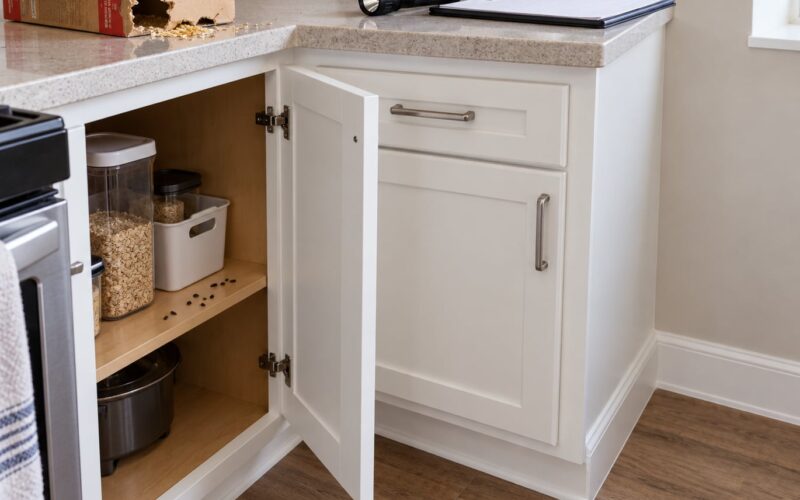
- Confirm it is an infestation. One sighting is not a problem. Look for trails, nesting material and multiple droppings in a sheltered spot like a cabinet corner.
- Remove food and water. Do this before anything else and watch activity change over the next few days.
- Seal the entry points. Work from the inside, and check the sill plates, pipe penetrations and garage door edges where most entry happens.
- Set traps and monitor. Snap traps for rodents, sticky monitors for insects. Count catches weekly so you have data rather than impressions.
- Choose a targeted treatment. Match the method to the species and follow the label exactly.
- Escalate if control fails. Two weeks of correct trapping with continued activity means something you are not seeing, and that is the point to call a licensed pest professional.
Frequently Asked Questions
Are ultrasonic pest repellers worth buying?
Usually not as a standalone fix. They are cheap and they may push activity out of a room for a few days, but habituation and blocked sound take over quickly. Spending the same money on snap traps, sealing supplies and a garage-door sweep addresses the cause instead of the noise. If you buy one anyway, treat it as a layer rather than a solution.
Do ultrasonic repellers work on bed bugs?
No. Ultrasound has not been shown to kill bed bugs at any power level, and the pests hide in mattress seams, box springs and baseboards where little sound reaches. Entomologists point to heat treatment, which raises the temperature of the room and bedding until the bugs and eggs die, plus encasements and hot laundering for localized cases.
Can ultrasonic pest repellers harm people or pets?
Most people hear nothing, but some report an audible high-pitched whine with headache, nausea and eye strain, so keep the unit out of a bedroom or nursery. Dogs and cats hear well into the ultrasonic range, roughly 40 to 60 kHz, and small pets such as hamsters and guinea pigs go higher. Place repellers where animals do not sleep.
How soon should I expect to see fewer insects?
Expect little, and quickly lose the ability to tell. Sound may disturb some insects for a few days before they habituate, and you have no feedback loop to confirm anything. Insects also hide in cracks and fabric where the tone does not reach. Counting sightings or using sticky monitors is the only way to know whether a change is real or coincidence.
Is it better to use an ultrasonic repeller or a pest trap?
Use the trap. A trap kills and removes the animal, tells you where the activity is concentrated and shows you when the problem is solved. A repeller produces no measurable feedback, pushes pests into other rooms and never touches the entry points. In practice the two are not competitors, since trapping handles the animals and sealing handles the route.
Do indoor ultrasonic repellers affect neighboring apartments?
Sound passes through walls far better than most people expect, which is how you hear a neighbor’s unit. That also means devices in adjoining units can add to the background noise a pest is already tolerating. If the whine bothers you, ask your neighbor about placement first. If you can hear it and it is painful, move your own device farther from where you sit and sleep.
What Should You Do First?
Identify the pest and look for actual evidence of an infestation before you buy anything that makes noise. Droppings, trails and nesting material tell you what you are dealing with and where it came in.
Then remove food and water, seal the gaps, and set traps you can count. That sequence handles nearly every household infestation on its own, and it tells you whether anything else is needed. Ultrasonic pest repellers and whether they work is the wrong question to start with; what gets in, and what draws them back, is the right one.