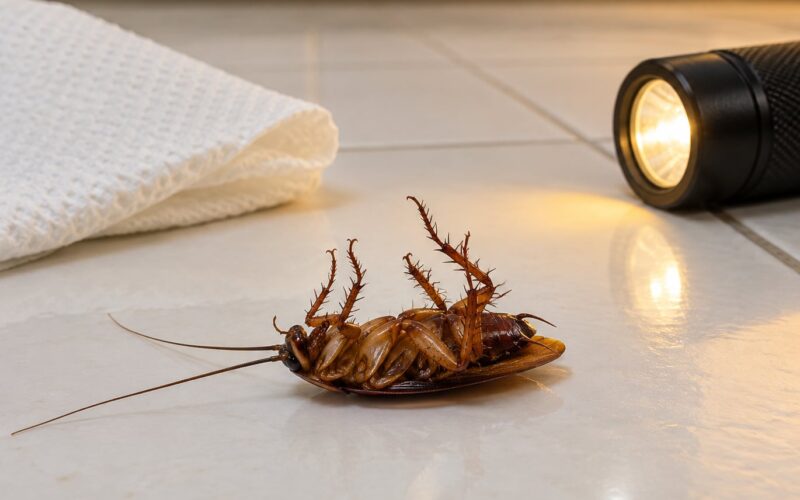
What attracts cockroaches to a clean house is rarely visible grime. Roaches follow moisture, food residue you cannot see, shelter they can disappear into, and an open route indoors — a gap as small as 1/16 inch around a pipe is enough. Spotless counters do not matter if a faucet drips or the refrigerator gasket sweats onto the floor.
That is the part that frustrates people. You wipe the counters, take out the trash, scrub the stovetop, and a roach still shows up in a sink at midnight. Cleaning removes the obvious food, but it does nothing about a plumbing leak inside a wall, a cardboard box in the hall closet, or the gap under the back door.
This guide covers the attractants that survive a spotless routine, the nine signs that tell you something is already living in the structure, and the order to work through when you find evidence. It is written for homeowners and renters in the US who are seeing roaches and assuming their housekeeping is the problem.
What Attracts Cockroaches to a Clean House?
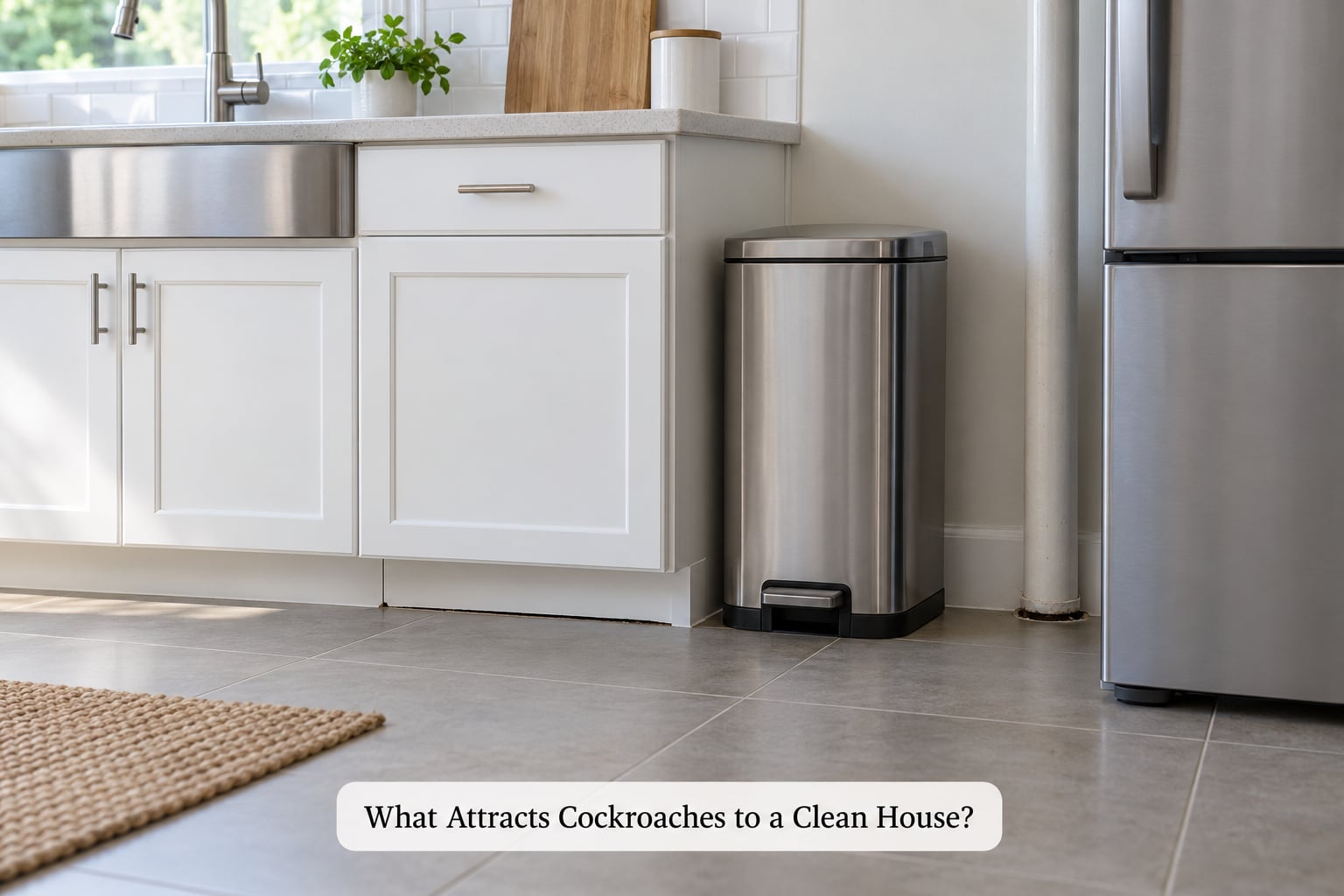
Cockroaches are attracted to a clean house by accessible food, water, shelter, warmth, and entry gaps — not by visible dirt. Tidying up leaves all five in place. A spotless home usually removes crumbs and grease film, but it still offers concealed water, undisturbed hiding places, and open cracks a roach can travel through.
Think about what a roach actually needs to keep living indoors: a drink, something to eat, and a dark protected spot near both. Cleanliness only addresses the second of those three. The first one is plumbing and condensation, and the third one is structure — wall voids, appliance cavities, cardboard, baseboards.
There is also a fourth factor people rarely think about, which is access. A roach on your porch, in a shared wall, or riding in on a delivery box does not need to find anything. It only needs a door sweep, a pipe sleeve, or a floor drain that is not sealed.
The 9 Things That Attract Cockroaches
These nine factors cover almost every case of roaches showing up in a home somebody keeps clean. You will notice the list splits into two groups: the first three are what keeps them alive once inside, and the rest is what lets them in or makes your house harder to ignore.
- Food smells and hidden food sources — grease film, crumbs, pet food, residue in cracks, cardboard glue.
- Water and moisture — drips, condensation, damp bath mats, humid basements, standing water.
- Shelter, warmth, and dark quiet spaces — wall voids, cardboard, storage boxes, appliance cavities.
- Entry gaps — 1/16 inch openings around pipes, doors, thresholds, vents, and drains.
- Clutter and stored cardboard — anything stacked that creates undisturbed harborage.
- Grease and organic residue behind appliances — the odor trail that survives a counter wipe.
- Nearby outdoor populations — mulch, leaf litter, outdoor trash cans, wood piles, sewer lines.
- Weather pressure — heat waves, the first cold snap, heavy rain pushing outdoor species in.
- Established trails and scent-marked paths — pheromone and fecal odor lines that invite others to follow.
Food Smells: What Attracts Cockroaches to a Clean House
Roaches are opportunistic scavengers with an unusually strong sense of smell, and they feed at night. If your kitchen is clean at 8pm and there is a grease film behind the stove at midnight, the kitchen is not clean by roach standards.
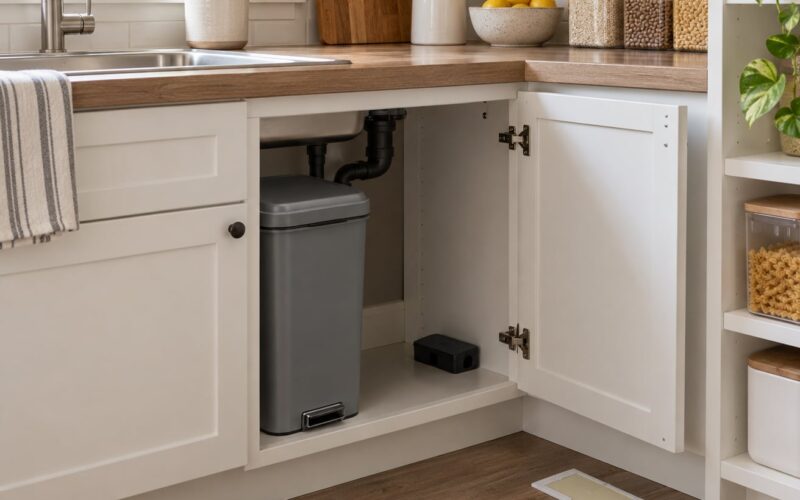
Start where food is stored and moved. Inside trash cans, even ones lined and wiped. Under the sink around garbage disposal residue. Along the lower edge of cabinet doors where a spill soaked into the wood or the caulk bead. Behind and under the refrigerator, where crumbs fall and nobody sweeps.
Pet food matters more than most people expect. A bowl left out overnight, or even a small spill of kibble in the corner of a laundry room, is a reliable food source. So is residue on a floor where the pet eats, and pet bedding that stays damp.
Brown-banded cockroaches earn their name from banding, but they are the species most strongly tied to cabinet interiors and stored product. German cockroaches focus on kitchens and bathrooms because those rooms combine warmth, water, and food in one place. American and Asian species are more often outdoors and drawn in by weather and shelter rather than by a spotless kitchen.
Water and Moisture
Water is the number one attractant in a home that already handles food well. A single dripping faucet or a plumbing leak inside a wall gives roaches a reliable drink in a house where nothing is spilled.
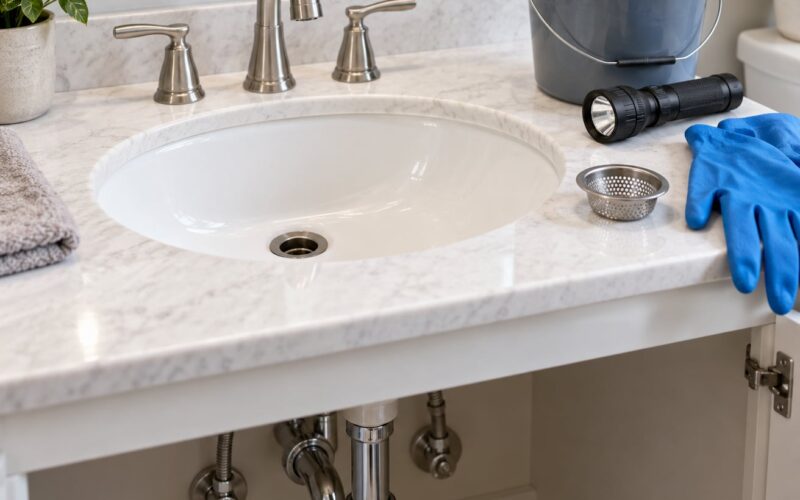
Check the obvious places first: under the sink, the base of the toilet, the water line behind the washer, and the pipe penetrations where plumbing enters the exterior wall. Then check the places that are easy to forget — a damp sponge sitting in a sink overnight, condensation running down the outside of a cold glass, a bathroom mat that never fully dries.
Appliances generate their own moisture. A refrigerator pulls warm room air across its coils and often beads water underneath, and a freezer that is opened constantly pulls in humid air that condenses along the door seal. Behind a freezer or under a dishwasher you may find pooling water and, in a bad case, a moldy crumb layer nobody has ever looked at.
Whole-house humidity plays a role too. In humid regions, and in basements or crawl spaces anywhere, elevated moisture keeps wall voids and crawl spaces damp enough to support a population year-round. Running a dehumidifier in a basement or garage does more for cockroach pressure than any amount of surface spraying.
Shelter, Warmth, and Dark Quiet Spaces
Cockroaches are thigmotactic, which is a plain way of saying they like to press against a surface. Edge-dwelling is the behavior — the gap behind an appliance, the underside of a baseboard, the interior of a hollow door. Shelters that are dark, warm, undisturbed, and touching something on more than one side are ideal, and a clean house often has more of them than a messy one.
Cardboard is the material people do not think of as shelter or food. The corrugation gives an edge to press against, and the glue and starch in the paper are edible to roaches. This is why a pile of moving boxes in a closet or garage is such a common harborage, and why secondhand furniture bought at a yard or curb sale is a genuine risk.
Warmth matters because indoor roaches breed continuously when they have food and water. Behind a dryer, next to a water heater, inside a wall cavity around a plumbing chase, and under a range are all warmer than the rest of the room. Nymphs hatch from egg cases and stay clustered in these protected spots through their early stages.
One thing worth saying plainly: roaches do not build nests the way ants do. They cluster near where they feed and breed, and they hold together through scent trails. When homeowners search for a nest and never find one, that absence is normal — the harborage is a cavity, not a structure.
9 Hidden Signs Cockroaches May Be Present
Seeing a roach is the loudest sign, and it is rarely the first. These nine indicators show up earlier and in places you are not thinking about, which is why a clean home can carry an infestation for months before anyone notices.
- Droppings that look like coffee grounds or black pepper. Look along baseboards, under sinks, on shelves, and inside cabinet corners. The specks are the strongest physical evidence, and they are worth following rather than wiping away, because the trail points back toward harborage.
- Egg cases (oothecae). Small brown or black capsule-shaped cases in sheltered spots. German cockroach oothecae are carried by the female until shortly before they hatch, so finding a case usually means the population is already breeding inside.
- Nymphs. Small, pale, fast-moving roaches are the most common sighting in daylight. Adults are cautious; nymphs are not.
- Shed skins (exuviae). Translucent brown shells left behind as roaches grow, often clustered in corner seams and behind appliances.
- A musty, oily, or stale odor. People often describe a scent like stale paper or dirty socks in a closed room. It comes from gland secretions and fecal spotting and gets stronger as the population grows.
- Roaches at night in sinks or tubs. You turn on a light and something scatters. Roaches are nocturnal, so a night sighting in a water-filled fixture means they are living close to it.
- Scratching or ticking sounds in walls. A faint rustling inside wall voids or above the ceiling, often audible when the house is quiet, usually means movement inside a cavity.
- Smears and greasy streaks on surfaces. Dark, irregular smudges along walls, under cabinets, and on walls of storage areas where roaches travel along edges.
- Repeated activity around one source. Seeing two or more in the same room, or repeatedly in the same spot, matters far more than a single roach seen once in a month.
None of these signs identifies a species on its own. If you can capture a photo or a sample in a sealed container, a pest professional can name it, and the species changes where you should start looking.
Why a Clean House Can Still Get Cockroaches
Cleaning reduces food and water on surfaces. It does not seal a hole, dry out a wall cavity, or remove roaches already living inside the structure. Those are three different problems, and treating all three with a spray is why so many people end up with an apartment that has been treated repeatedly and still has roaches.
It helps to separate three stages. Attraction is what makes your house worth staying in — moisture, food residue, shelter. Entry is the route in: a pipe gap, a door sweep, a shipping box, a shared wall with a neighboring unit. Establishment is breeding inside harborage where spray never reaches. A spotless home usually passes stage one and fails at stage two, which is why the roaches arrive anyway.
Species matters for the same reason. German cockroaches are indoor breeders carried in on groceries, boxes, and secondhand items, and once inside they prefer kitchens and bathrooms. American cockroaches and Asian cockroaches live outdoors in mulch, leaf litter, and sewer systems, so they usually arrive after a heat wave, heavy rain, or a cold snap when the outdoor population moves toward the structure. Brown-banded cockroaches are strongly associated with shipping boxes and stored goods. A roach in a clean living room on an upper floor is a different investigation than a roach next to the kitchen sink on the first floor.
In apartments and condos, roaches move through shared walls, electrical conduits, and plumbing chases, and they arrive when a neighbor moves out or when a unit next door gets treated and pushes the population sideways. Neighboring units are also the single most common explanation I hear for a first sighting in a spotless apartment, and the timing is usually unmistakable.
Repeated spraying fails because most of the population is in the structure rather than on the visible surface. Surface sprays kill what they touch, and many of them are repellent, so a population that gets disturbed scatters into new harborage instead of dying. Total aerosol foggers do the same thing at building scale and add a fire or exposure risk, which is why pest professionals generally advise against them indoors.
How to Find and Stop the Attraction
Work in a fixed order: water first, then food, then shelter, then entry points. Removing the water supply does more to slow a population down than any single treatment step, because reproduction depends on it.
- Fix every water source you can find. Repair drips and leaks, empty pet bowls and standing water, run the dishwasher and disposal on a cycle to clear the drain line, wipe down the refrigerator coil pan, and keep bath mats and towels dry.
- Store food the way roaches cannot reach it. Move pet food into a sealed container, keep dry goods in lidded canisters rather than the original bag, and take trash out before it sits overnight.
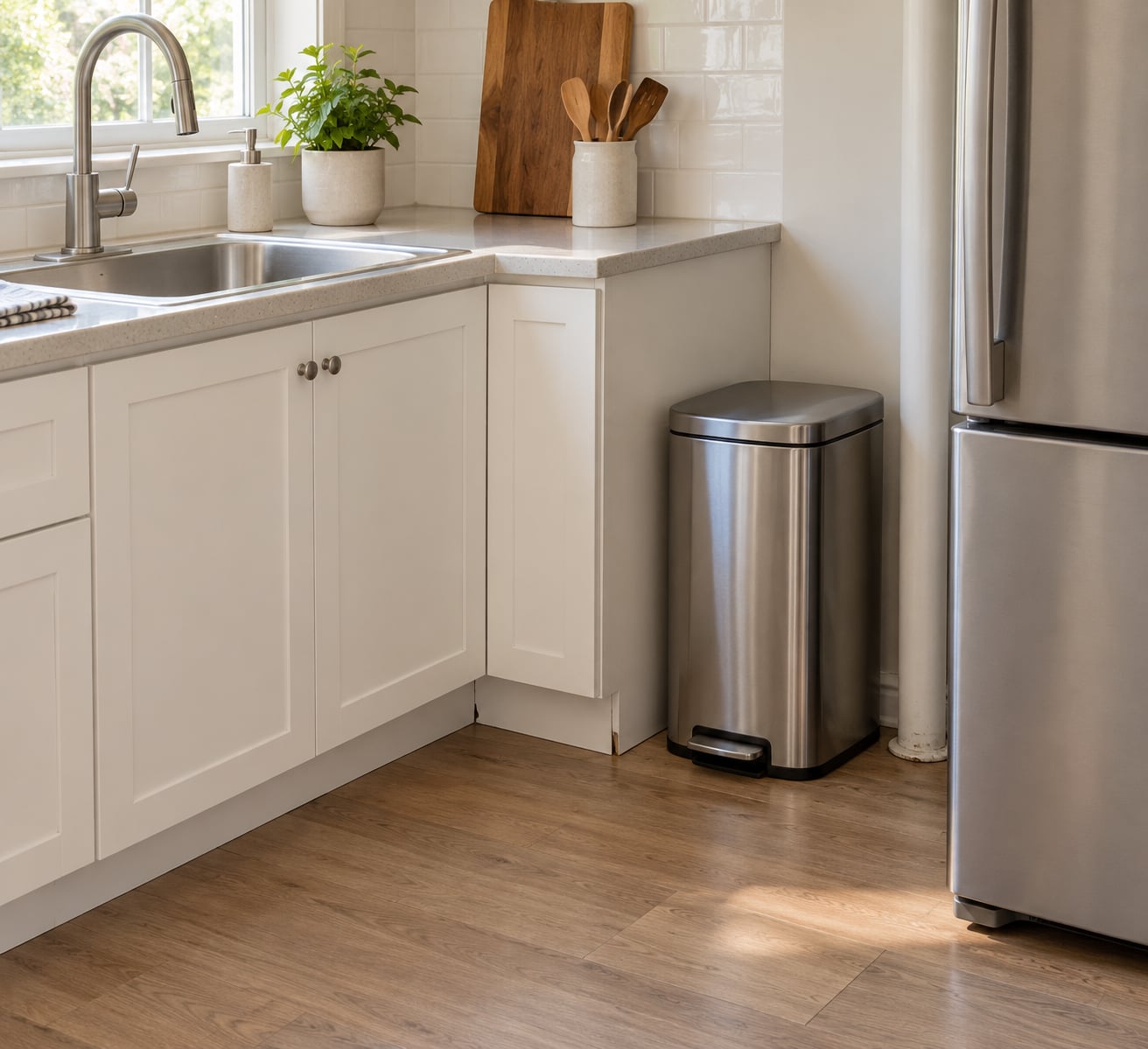
- Use lidded waste containers. A foot pedal bin with a tight lid in the kitchen and a second one outside closes off the garbage route entirely.
- Clear harborage. Cut back cardboard, move storage off the floor, and give every box and container a lift or a gap so nothing is flush against a wall.
- Seal the entry points. Focus on the 1/16 inch rule: anything a dime can slide into is large enough for a nymph. Add door sweeps, weatherstripping, and caulk or sealant at pipe penetrations, baseboards, thresholds, garage door edges, floor drains, soffits, and roof vents.
- Watch where the roaches are. Set sticky monitoring traps along baseboards, behind the refrigerator, under the sink, and in the garage or basement, then check them weekly. A trap that catches repeated sightings in one room tells you where the harborage is.
- Reduce indoor humidity where you can. A dehumidifier in a damp basement, garage, or crawl space takes pressure off the whole structure.
Here is the same audit in a single view, with the specific place to look for each attractant and the fastest check most homeowners can do without tools.
| Attractant | Where it hides | 60-second check | Fix |
|---|---|---|---|
| Hidden water | Under sink, fridge coil pan, wall cavity, bathroom, basement | Feel pipe joints and floor for dampness; look for condensation streaks | Repair leaks, dry surfaces, run drains weekly, dehumidify |
| Food residue | Trash cans, cabinet corners, behind stove and fridge, pet bowl area | Look for specks, grease film, and crumbs in corners | Lidded bins, sealed containers, clean behind appliances on a schedule |
| Shelter | Cardboard stacks, closets, wall voids, appliance cavities | Check baseboards and lift the lid off the trash can | Reduce cardboard, raise stored items, seal voids with sealant |
| Entry gaps | Pipe penetrations, doors, thresholds, vents, drains, garage edges | Run a flashlight at night along door bottoms and pipe gaps | Door sweeps, weatherstripping, caulk, mesh over vents and drains |
| Outdoors | Mulch beds, leaf litter, trash cans, wood piles, sewer cleanouts | Look 10 feet out from the foundation for debris and containers | Clear vegetation and debris, bag and remove waste, cap cleanouts |
If you rent, ask your landlord or property manager in writing about the unit next door and about any known history in the building. Coordinated treatment across a building works; treating one unit alone often just moves the problem.
When Cleaning Is Not Enough
Some situations sit outside what a routine and a tube of caulk will fix. Call a licensed pest professional when you see roaches in daylight, when you find roaches in two or more rooms, when you find egg cases or heavy droppings, or when the problem returns within weeks of cleaning and sealing.
A useful threshold people ask about constantly: whether seeing a couple of small roaches a week in winter is normal. It is not a comfortable number. Roaches are nocturnal and hide by day, so any recurring sighting means the hiding population is larger than what you see. The roaches you catch in the open are usually only a fraction of the ones living inside the structure.
Heavy daytime activity in a lit room is a stronger warning than a single night sighting. So is a musty odor you can smell from across the room, or droppings along a full wall rather than a single corner. Those point to breeding inside the structure, in a wall void or a plumbing chase, where DIY cannot reach.
Two more situations worth handing to a professional: an infestation after heavy rain or a cold snap, which usually means outdoor species are entering through the foundation, vents, or sewer lines, and a multi-unit building where roaches appear in a unit with no interior food or water problems of its own.
Frequently Asked Questions
Do cockroaches only come into dirty houses?
No. Cleanliness removes visible food and surface grime, but it does not remove water, shelter, or entry gaps. A roach can move into a spotless kitchen through a 1/16 inch gap around a pipe, live in a wall void or a cardboard box, and drink from a dripping faucet. Dirt on counters is rarely what draws it in.
How do cockroaches get into a clean house?
Most commonly through gaps at doors, thresholds, pipe and utility penetrations, floor drains, and garage edges. Many arrive as hitchhikers on shipping boxes, grocery bags, and secondhand furniture or appliances. In apartments they move through shared walls, conduits, and plumbing chases, often after a neighboring unit is treated or a neighbor moves out.
Is one cockroach a sign of an infestation?
Not by itself. A single roach is usually a hitchhiker or an escapee from a neighboring unit. Look for context: repeated sightings in the same room, small pale nymphs, droppings like coffee grounds, or egg cases. Roaches are nocturnal and hide by day, so any recurring sighting points to a larger hidden population rather than one lone insect.
Will cleaning and spraying get rid of cockroaches?
Cleaning removes the food and surface moisture that attract roaches, and sealing gaps stops new ones from arriving. Spraying alone rarely finishes the job, because most of a population lives in wall voids, plumbing chases, and appliance cavities where spray never reaches, and aerosol foggers can scatter the population into new hiding places. Combine fixing water, sealing entry points, and targeted bait or professional treatment.
Can cockroaches come from a neighboring apartment?
Yes, and it is common in multi-unit buildings. Roaches travel through shared walls, electrical conduits, plumbing chases, and elevator or utility spaces. Treatments in one unit often push the population into the next. If you see roaches with no interior food or water problems, tell your landlord or property manager in writing and ask whether the building can be treated at the same time.
Conclusion
What attracts cockroaches to a clean house is water, shelter, and a way in, not grime you failed to wipe up. Start by fixing every leak, drip, and condensation source you can find. Then secure food and garbage in lidded containers, and inspect the usual hiding and entry points: under appliances, inside cabinet corners, along baseboards, and around every pipe, door, and vent.
Act early. Droppings, egg cases, nymphs, and a musty odor mean the problem is already inside the structure, and no amount of surface cleaning will reach it. If activity keeps coming back after a serious cleanup and sealing, get a professional inspection rather than another round of spraying.