How long does it take to get rid of German cockroaches? For most homes it takes two to eight weeks of active, consistent treatment, and you will probably still see the odd roach during the first week or two. Fewer sightings is progress, not proof — the visible population is only the small part of the colony you can actually see.
That gap between “it looks better” and “it’s gone” is where most people get it wrong. They spray once, watch activity drop for a few days, and assume victory. Then a female that was already carrying eggs hatches and the kitchen fills up again, which is how a manageable problem turns into a three-month project.
The timeline depends less on the product you use than on whether the food, water and entry routes that support the colony are dealt with at the same time. Below is what each stage actually looks like, how to tell the difference between progress and a stalled treatment, and when the honest answer is that you need a professional.
Table of Contents
- How Long Does It Take to Get Rid of German Cockroaches?
- Why German Cockroach Removal Takes Time
- What Determines the Treatment Timeline?
- How to Know the Infestation Is Improving
- How to Speed Up German Cockroach Removal
- When Professional Treatment May Be Needed
- Frequently Asked Questions
- How long does it take to get rid of German cockroaches after spraying?
- Can German cockroaches come back after treatment?
- Is one German cockroach enough to indicate an infestation?
- How often should apartments be treated for German cockroaches?
- What should I do if I see German cockroaches during the day?
- Are German cockroach treatments safe around children and pets?
- Conclusion
How Long Does It Take to Get Rid of German Cockroaches?
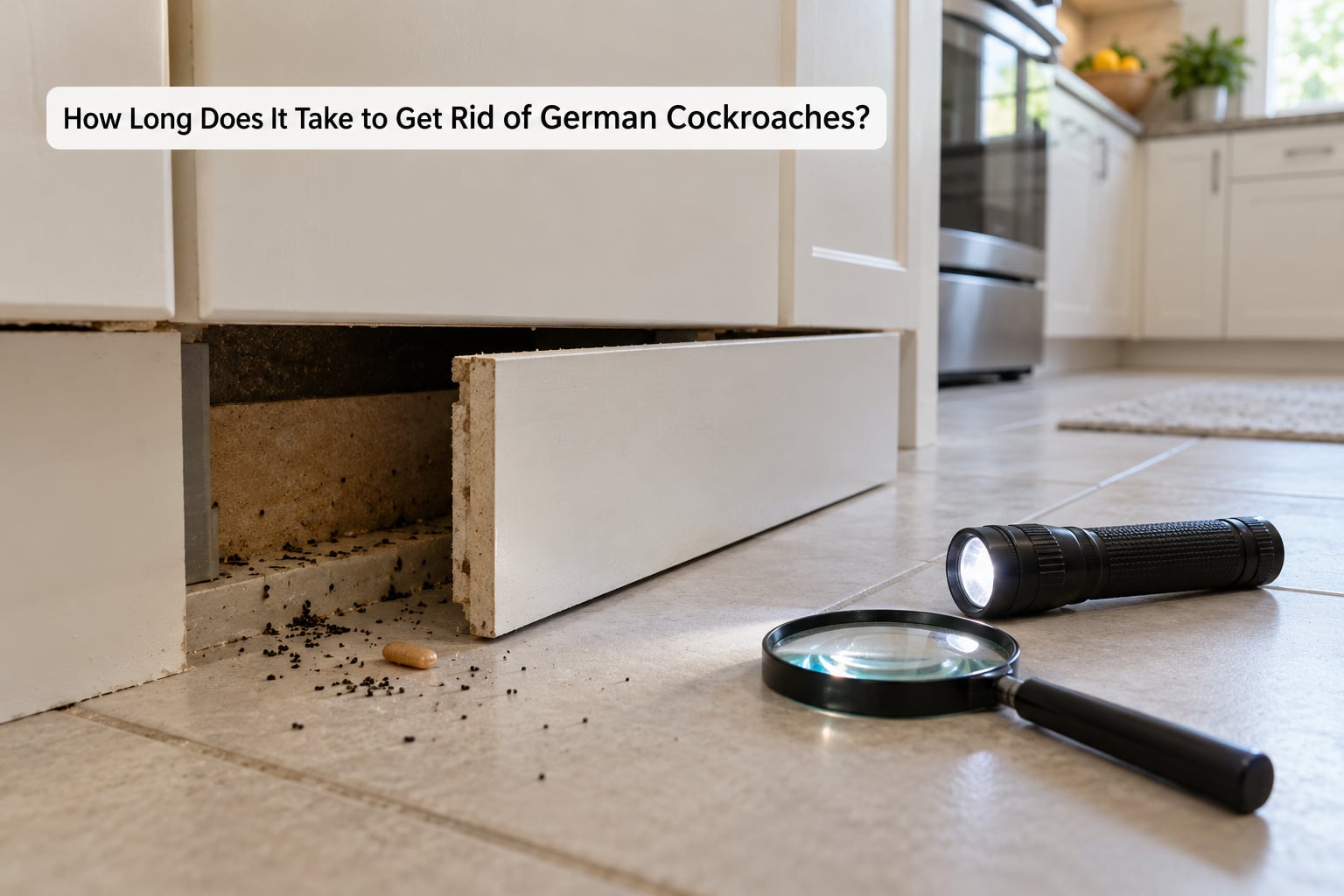
A realistic window for German cockroach removal runs from a few weeks in a clean, dry, single-unit home to several months in a heavily infested multi-unit building. The table below breaks that window into stages so you know what you are looking at week by week.
| Time after treatment starts | What you should see | What is actually happening |
|---|---|---|
| First 48 hours | Sightings may briefly increase, including during the day | Residual insecticide and bait are flushing roaches out of harborage into the open. Agitated roaches scatter to visible surfaces. |
| Days 3 to 7 | Visible adults drop noticeably; nymphs still common | Bait is working through the colony. Nymphs are more exposed than adults because they have not learned where the harborage is. |
| Weeks 2 to 4 | Sightings become occasional, often one roach a week or fewer | The first generation of eggs that was present at treatment hatches and competes with residual product. Dropping numbers are real progress. |
| Weeks 4 to 8 | Roaches seen only in harborage areas or in monitors | The second follow-up treatment hits newly emerged nymphs. This is where most infestations either end or reveal themselves as resistant. |
| After 8 weeks | No sightings for two to four consecutive weeks | Proofing. If roaches still appear at this point, something is feeding the colony — an untreated neighboring unit, a food source, or a harborage nobody has opened. |
| Ongoing | Occasional lone roach from outside the unit | New arrivals rather than survivors. Exclusion, not more pesticide, is the fix at this stage. |
Two habits make this timeline easier to live with. Put sticky monitors out before you treat, so you have a number to compare instead of a vague feeling. And do not spray a visible roach — the sudden dispersal of that one alarm pheromone is what pushes a hiding colony out into the open and makes the infestation look worse than it was.
Is it even an infestation yet?
One roach is usually not an infestation, but it is rarely an accident either. German cockroaches are nocturnal, so a single sighting at 11pm in a kitchen can genuinely be the only one you will ever see — in a dry, uncluttered home with tight food storage, that is plausible. Several roaches, or any sighting during daylight, is a different situation entirely.
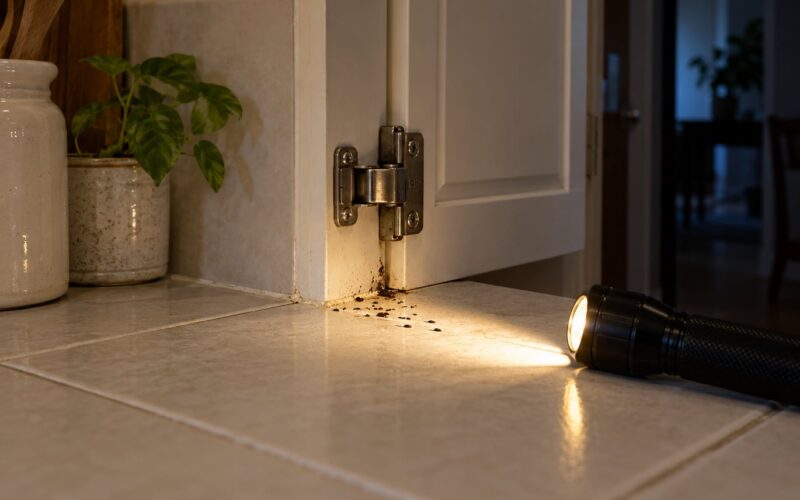
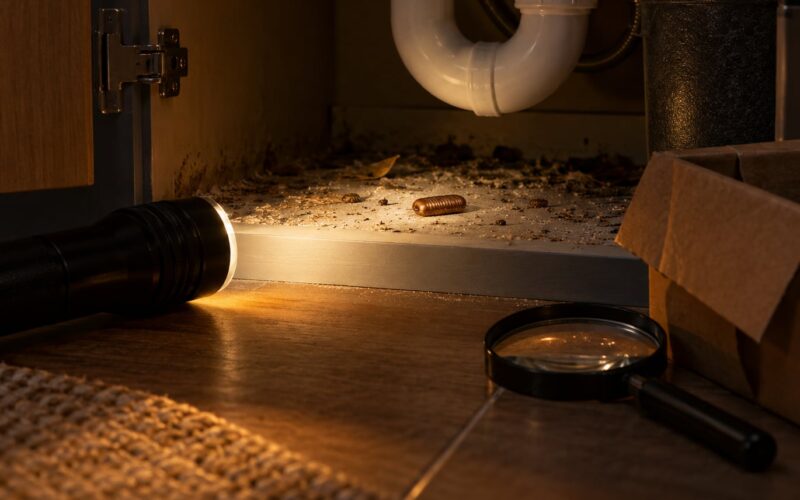
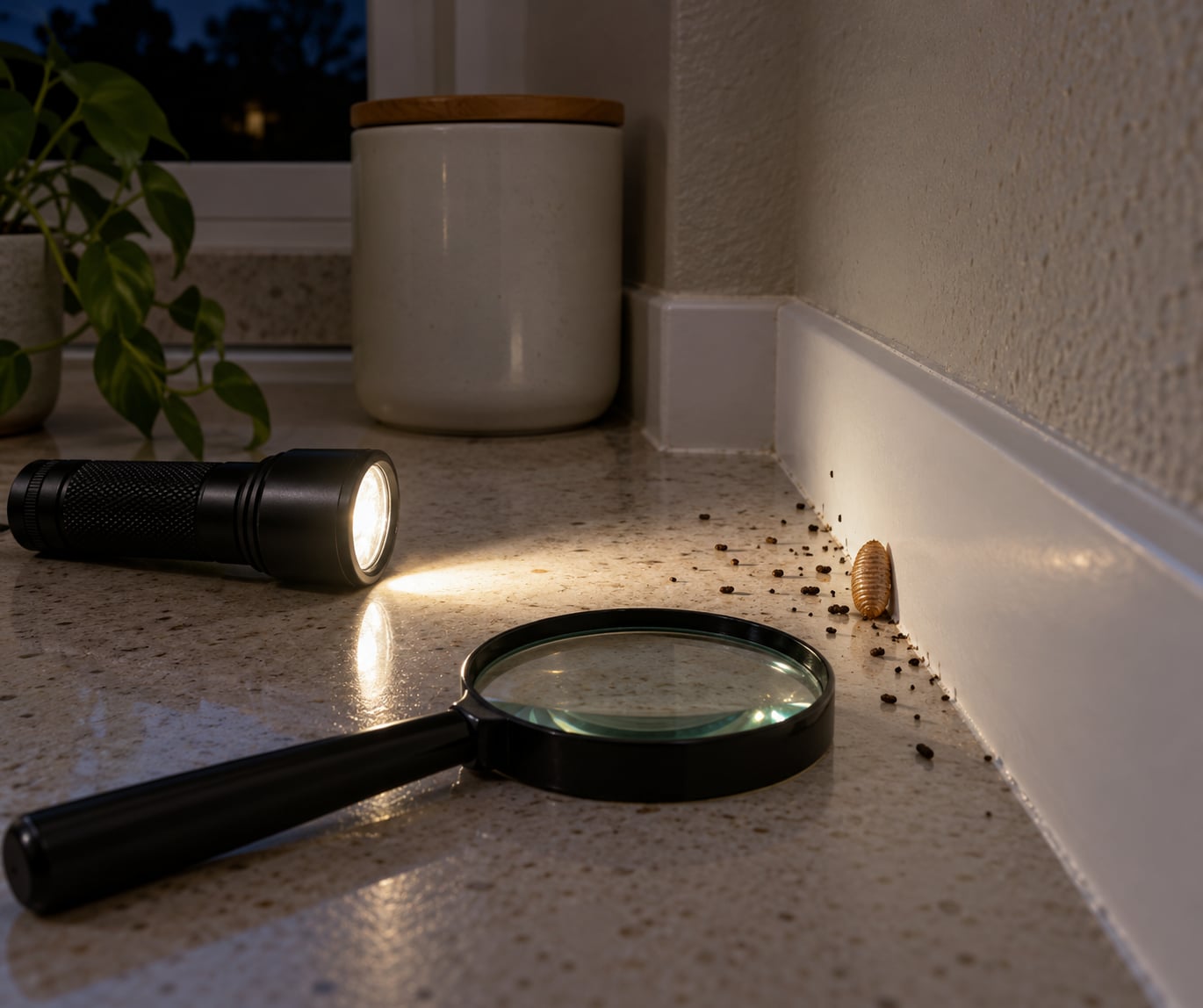
Look for the quieter evidence before you decide. Pepper-like droppings that look like ground coffee or black specks along cabinet edges, a persistent musty odor in the kitchen or bathroom, shed skins behind appliances, and egg cases tucked into sheltered spots are all signs the population is well established rather than a single wanderer.
Where they came from
Four routes account for most new indoor infestations, and knowing yours changes the timeline. Roaches arrive in cardboard boxes or second-hand appliances and furniture. They migrate from a neighboring unit through shared walls, pipes, and electrical or gas conduits. They ride in on groceries and deliveries, particularly in warm weather. And they come in with the previous occupant, because dry, warm hiding places were already established before you moved a single box.
In apartments the migration route is the one that matters. Treating your own unit perfectly and getting reinfected in three weeks usually means the wall void on the other side is still full, and no product applied inside your kitchen will fix a colony living in a shared wall.
Why German Cockroach Removal Takes Time
Understanding the biology turns an arbitrary timeline into something you can plan around. Four facts do most of the explaining.
The eggs travel with the female
A female German cockroach carries her egg capsule, called an ootheca, until just before it hatches — roughly every three to four weeks. That single behavior is the reason no one treatment works. The capsule contains 30 to 40 eggs, and while she is carrying it she is walking through your kitchen feeding on your food sources. Any product you put down is baiting her, not protecting the eggs, and the eggs are already inside the home where you will never reach them directly.
When those nymphs hatch weeks later, they emerge into a space that may already look clean. They are also more vulnerable than adults, which is the closest thing to good news in this whole mess.
Most of the colony is invisible
German cockroaches are flat, fast, and good at hiding in cracks under 1/8 inch wide. Inside a kitchen that means the void behind a wall cabinet, the gap between a fridge and the wall, the underside of a sink, the housing of a wall outlet, and the conduit running back into the wall. What you see on the floor at midnight is a small sample of a much larger population living inside the structure.
They also come out at night, stay near water, and follow edges rather than crossing open floor. That is why a room can look spotless at noon and still have a dozen roaches on the counter after dark.
Nymphs are exposed, adults are not
Adults know exactly where to hide. Newly hatched nymphs do not, so they show up in places adults never would — under a sink, on a shelf, in a bathroom. A rising count of tiny nymphs after treatment is a warning sign, not progress: it means eggs were laid after your first treatment and the cycle is still running.
Reinfestation beats elimination
German cockroaches can move through a shared wall, a drain line, or a gas or electrical conduit, and one female is enough to restart a colony. In a multi-unit building, you are rarely treating a closed system. That is the single biggest reason apartment timelines run longer than house timelines.
What Determines the Treatment Timeline?
The biological minimum is a few weeks. Everything else pushes it longer, and the factors below are the ones that matter in a real home.
How big the infestation actually is
Daylight sightings, roaches in every room including bedrooms and bathrooms, and heavy droppings in multiple locations all point to an established, overcrowded colony. Those conditions usually need a professional treatment with a follow-up visit, and they rarely respond to a single DIY application.
What kind of building you live in
A detached house with no shared walls and a dry basement is the easiest case. An apartment with shared walls, risers, and a garbage room is the hardest, because reinfestation pressure is constant and outside your control. Commercial kitchens sit somewhere in between: the food supply is enormous but so is the regulatory and operational pressure to clear it quickly, which often means a higher treatment cadence than a house would get.
Access to harborage and food
If nobody opens up the areas behind the appliances, inside the wall voids, and under the sinks, you are treating the visible margin and leaving the majority of the colony untouched. Sanitation and access do more for the timeline than the product does. Loose cardboard stacks, paper bags, and stored clothing give a colony free harborage that costs you nothing to remove.
The treatment method and the follow-up schedule
Consumer pages generally describe two treatments spaced four to six weeks apart. Technicians working heavy infestations often describe four visits at two-week intervals to break the egg cycle, sometimes with a monthly residual spray on top. Both cadences exist because they suit different situations: the spaced pair suits a low-level problem, the tighter cycle suits a high-level one where new nymphs are hatching faster than the residual lasts.
What matters is that a second treatment happens. One application is a knockdown, not a treatment. Foggers and total-release aerosol sprays are the worst option here — they scatter roaches deeper into wall voids, they leave nothing working after the fog clears, and they routinely make the problem harder for the next technician to solve.
Resistance and bait aversion
Where a species has been exposed to the same active ingredient repeatedly, some individuals survive. Repeat household use of a single product also produces bait aversion: roaches learn to avoid a bait station that gave them a mild dose but no kill. Bait that dries out in a warm dry kitchen stops working entirely, which is why professionals refresh placements during the visit rather than leaving a station from a month ago to do its job alone.
What happened before you moved in
A home with a disclosed history can be cleared on a normal timeline once the source is addressed. A home with an undisclosed problem starts the clock from zero on day one, because you spent weeks chasing a source you did not know was there.
How to Know the Infestation Is Improving
Progress is measurable if you measure it. Five checks, in order of usefulness:
- Set sticky monitors before you treat. Put them under the sink, behind the fridge, under the stove, and inside the cabinet nearest where you saw roaches. Check them weekly and count, do not estimate. Counts should fall week over week.
- Re-check the droppings. Wipe the cabinet edges and the underside of the sink clean, then look again in two weeks. New pepper-like specks mean the colony is still feeding and reproducing in that spot.
- Do a night inspection. Turn on the kitchen light, leave the room, and come back two minutes later. The roaches that scatter have been living there all along and now you know where.
- Count nymphs separately. Tiny roaches appearing after treatment are hatchlings, not survivors. They mean treatment did not reach the eggs, and they usually justify an earlier follow-up visit.
- Apply the two-week rule. No sightings in monitors, on counters, or at night for two consecutive weeks, in a home where the entry cause has actually been fixed, is the working definition of done. This is the standard pest technicians use in the field.
One caveat worth internalizing: a single roach after treatment is not proof the treatment failed. It can be a survivor from a sheltered harborage that never got contacted, or it can be a new arrival from a neighboring unit or a recent delivery. Judge the trend over two weeks, not the individual sighting.
How to Speed Up German Cockroach Removal
Everything below is safe, boring, and more effective than most of what you can buy. Work through it alongside treatment, not instead of it.
Cut off the water
German cockroaches cannot survive long without water, and this is the easiest thing on the list. Repair dripping faucets, dry out the sink and dishwasher after every use, wipe down the counter, fix a toilet that runs, and empty the bathroom bin often. A building with a dry kitchen and a dry bathroom is a bad place for them to live.
Remove the food
Store dry goods, pet food, and paper goods in sealed containers rather than the open bag on the counter. Take trash out the same night. Clean the range hood, the back of the stove, and behind the fridge, where grease and crumbs accumulate unnoticed and are often the reason a cleaned kitchen keeps feeding survivors.
Clear the harborage
Reduce clutter in and under every cabinet, and remove cardboard boxes from the kitchen and utility areas. Move stored goods off the floor, keep gaps between the fridge and the wall open, and avoid stacking items in the corners where nobody looks.
Seal the routes
Close the gap around pipes entering the wall, seal food-grade silicone or mortar where cabinets meet the wall, fit brush or mesh strips under exterior doors, and check door sweeps on entry doors. In apartments, it is worth telling your landlord about gaps around shared plumbing penetrations specifically, since those need a building-level fix.
Use products exactly as their labels say
Apply only the amount the label specifies, in crack and crevice placements, and rotate active ingredients between treatments rather than repeating the same product. Never mix insecticides or apply one product over another unless the label explicitly allows it, and keep baits and sprays apart — a repellent spray near a bait station can stop roaches from feeding on it. Follow the label, keep products sealed and out of reach of children and pets, and wash hands and surfaces after any application.
If you are treating an area where a child or pet lives, talk to a professional about product selection rather than guessing. That is a reasonable use of money even in a mild case.
When Professional Treatment May Be Needed
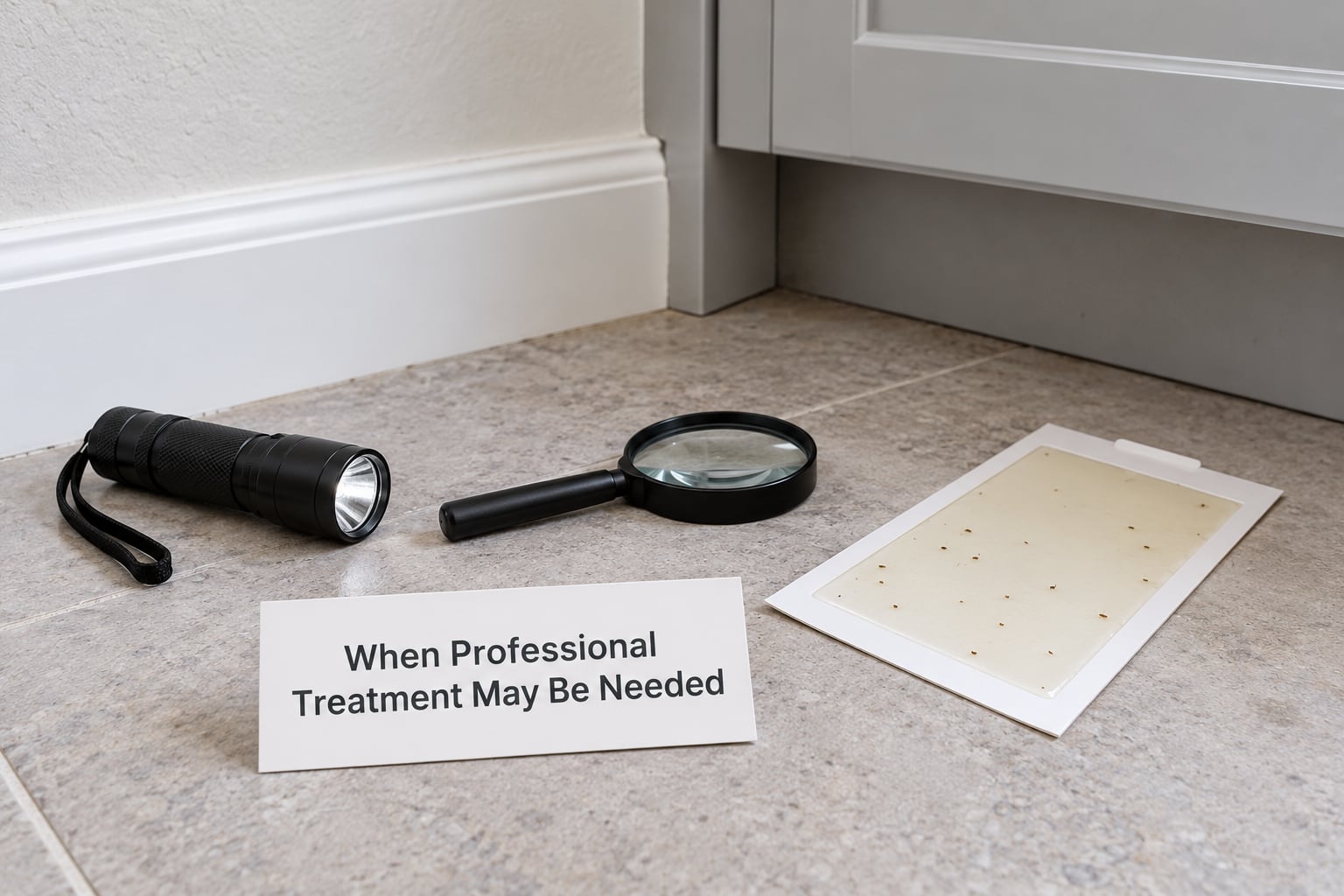
Call a professional, rather than run another cycle of DIY, when any of these apply.
You see roaches during the day. Nocturnal species appear in daylight when the population is crowded and the harborage is full. It is one of the strongest single indicators of an established infestation and one of the clearest signals that a spray bottle is not going to finish the job.
It is in more than one room, or more than one unit. Bedrooms, bathrooms, and hallways point to a spread population rather than a kitchen problem. In a building, roaches in adjacent apartments mean the source is outside your control until your landlord or property manager treats the whole stack.
You have already done two or three DIY rounds. If you have applied products and followed up and activity has not fallen week over week, more of the same is unlikely to change the outcome. Repeated repellant exposure can also make the remaining population harder to bait.
Someone in the home is vulnerable. Homes with infants, small children, pets, or anyone with asthma or cockroach allergy need product selection and placement decided carefully. That is a good reason to hire someone rather than a reason to skip treatment, and allergens do not go away on their own after the roaches do.
Ask what the plan includes before you book: an inspection, a written treatment plan with a follow-up date, monitors placed during the visit, a second treatment, and a prevention summary for the unit. Professionals working heavy infestations usually recommend treatments about two weeks apart to break the egg cycle; lighter cases often get two visits spaced four to six weeks. If a quote is a one-time spray with no follow-up, expect a recurring problem.
Frequently Asked Questions
How long does it take to get rid of German cockroaches after spraying?
Most people see a clear drop in visible roaches within a few days of spraying and a substantial reduction by week two. Complete elimination still takes two to eight weeks of consistent treatment, because capsules carried by females hatch after your first visit and nymphs are unaffected by many surface sprays. Plan a second treatment four to six weeks later, or sooner if nymph sightings climb.
Can German cockroaches come back after treatment?
Yes, and it is usually for one of three reasons: the colony was never fully eliminated, roaches moved in from a neighboring unit or a recent delivery, or the treatment has not covered an area like a wall void or behind an appliance. Months of quiet followed by a sudden return usually points to reinfestation rather than survivors, so inspect stored boxes and second-hand items that arrived in between.
Is one German cockroach enough to indicate an infestation?
Not on its own. German cockroaches are nocturnal, so a single late-night sighting in a dry, uncluttered home with sealed food storage can be an isolated wanderer. Several sightings, any daylight appearance, pepper-like droppings under cabinets, a musty odor, or shed skins all point to a breeding population already inside the structure. Judge the signs together rather than on the count of one roach.
How often should apartments be treated for German cockroaches?
For a light infestation, two treatments about four to six weeks apart usually cover the hatch cycle. For heavier cases, technicians often treat every two weeks across four visits, because new nymphs are hatching faster than a residual spray lasts. In multi-unit buildings, ask whether adjacent and vertically connected units are being treated, since untreated neighbors will simply send roaches back through shared pipes and walls.
What should I do if I see German cockroaches during the day?
Treat it as a signal of a crowded, established population rather than a single stray, because German cockroaches stay hidden from light unless harborage is full or they are being disturbed. Check droppings and egg cases in nearby cabinets and under appliances, fix water leaks and food storage, avoid spraying visible roaches, and consider a professional inspection so the treatment reaches the harborage rather than just the roaches you can see.
Are German cockroach treatments safe around children and pets?
Most properly labeled products are usable in a home with children and pets if you follow the label exactly: apply only where it specifies, keep baits out of reach, remove food and pet bowls first, and clean surfaces after application. Boric acid dust and concentrates are the ones to be most careful with around pets and small children. If anyone in the home has asthma or cockroach allergy, ask a professional to select the product.
Conclusion
Start by confirming what you have. Put sticky monitors under the sink, behind the fridge, and inside the nearest cabinet, then check droppings and egg cases in the same places. That takes ten minutes and tells you whether you are looking at a genuine breeding colony or a single stray.
Then do the unglamorous half of the job: dry the sink, seal the dry food, clear the cardboard, fix the drip, and close the gap around the pipe. Those steps shorten the timeline more than any single product, because the colony has to be living somewhere with food and water. Apply a labeled product according to its instructions, avoid foggers and repeated repellent sprays, and book the follow-up treatment before the first one finishes.
How long does it take to get rid of German cockroaches? Two to eight weeks for most homes, longer in a shared building, with a two-week no-sighting period as your finish line. Control only holds if the hidden colonies are gone and the entry routes stay closed, so keep the monitors out for a while after things look quiet.