To get rid of roaches in an RV or camper, work in a fixed order: seal food in airtight bins, pull every crumb and moisture source, seal the gaps where they travel, then bait the seams instead of spraying. Foggers alone usually fail because they kill the adults you can see and leave the colony in the wall cavities untouched. A typical infestation takes four to eight weeks of consistent work, and the job is done when you go 21 nights without a sighting.
I have talked through this with enough RV owners to know where the frustration comes from. Almost everyone has already sprayed, maybe fogged, watched a handful die, and then found them again two weeks later. That is not a failure of effort. It is the wrong tool aimed at the wrong place.
This guide covers the whole sequence, including the parts that only matter in a vehicle: the slide-out seams, the pass-through storage, the underbelly, the wheel wells, and the wall cavities behind built-in cabinetry. Most home advice stops at the kitchen sink and leaves all of that untouched.
Table of Contents
- What You Need
- How to Get Rid of Roaches in an RV or Camper, Step by Step
- Frequently Asked Questions
- How long does it take to get rid of roaches in an RV or camper?
- What is the best product to use for roaches in an RV?
- How do I find roach hiding places in a camper?
- Can I use regular household insecticide inside an RV?
- Why do roaches keep coming back after I clean my camper?
- When should I hire a pest-control professional for an RV or camper?
- Conclusion
What You Need
You can do this with hardware-store and grocery-store items. The list matters less than having everything staged before you start, because the order of operations is what makes the treatment work.
Cleaning supplies
- A vacuum with a hose attachment and a brush head for seams
- Degreaser or dish soap and warm water for cabinet and stove surfaces
- Disinfecting wipes or a food-safe cleaner for counter and table tops
- Microfiber cloths, a stiff nylon brush, and an angled brush for toe-kicks
- Trash bags that seal, plus clear sealable bins for dry pantry food
Inspection tools
- A bright flashlight, because most harborage zones are dark voids
- A magnifying glass or phone camera zoom for droppings and egg cases
- Sticky glue traps, which are the cheapest diagnostic tool you own
- Gloves and a mask
Pest control products
- Gel bait in small tubes or a bait station, labeled for indoor use
- Boric acid powder, not pellets or tablets
- Silica gel insecticidal dust for dry voids such as the underbelly
- Caulk, plus low-expansion foam for larger exterior gaps
- A residual spray labeled for indoor perimeter use, applied outdoors and to entry seams only
Safety gear
If you share the camper with a child, a dog, or a cat, add a respirator mask, keep bait in locked or elevated containers that no pet can reach, and cover any powder you place on a floor. If anyone has asthma, treat diatomaceous earth as a respiratory irritant and skip it indoors entirely. Check every label for the exact EPA registration number and follow its directions rather than any recipe you read online.
How to Get Rid of Roaches in an RV or Camper, Step by Step
Cockroaches in an RV need three things, and the treatment removes them in reverse order: water, food, and shelter. Clean and dry first, cut off the supply lines, seal the openings, then bait the travel lanes they already use. Gel bait plus boric acid powder, used together, outperforms any single product.
Step 1: Confirm Roaches and Locate the Infestation
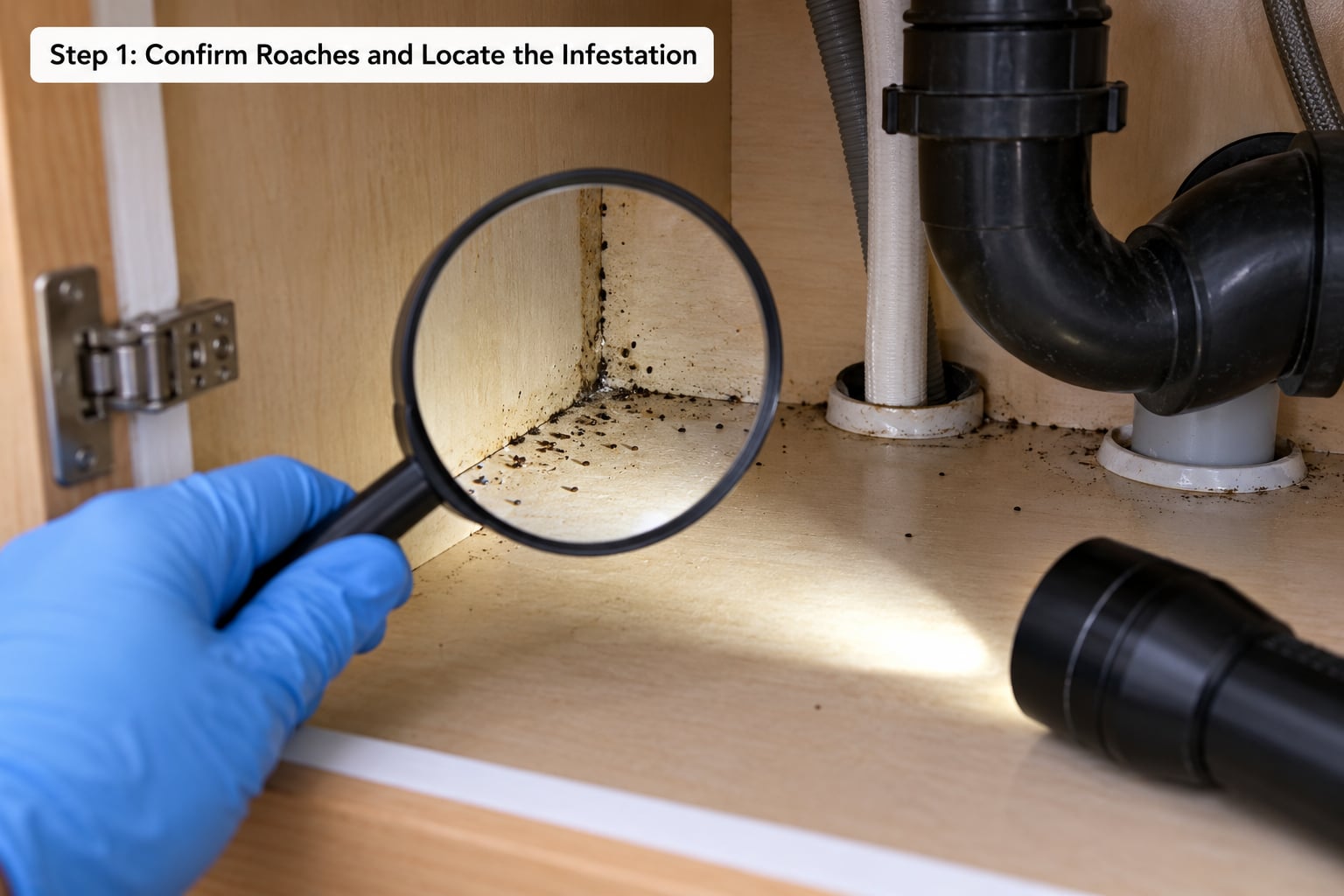
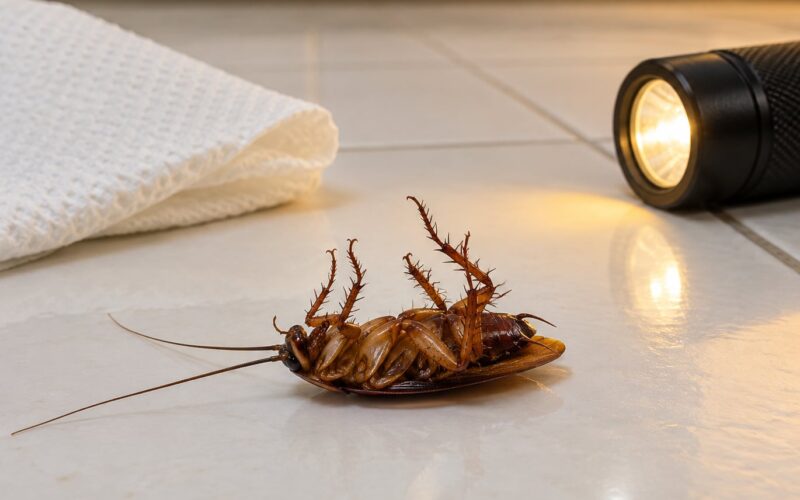
Cockroach evidence looks like black specks that resemble ground coffee or pepper, often clustered along the top edge of cabinet walls or inside hinges. Smear marks look like dark streaks, egg cases are small brown capsules with a seam along one side, and a heavy infestation carries a distinct musty odor in the cabinets.
Where you look matters more than what you find. Check the galley and under-sink cabinet, around every plumbing penetration where a pipe enters the wall, beneath seats and dinette bases, inside lower cabinets where the toe-kick meets the floor, inside pass-through storage, behind and beneath the refrigerator, and along the seals of every slide-out.
Start after dark. Turn off the lights, wait an hour, then walk in with a flashlight and look along baseboards and cabinet edges. Roaches that scatter from a light are the ones living there, not the ones that happened to cross the floor.
Do not squash what you find. A gravid female carries an egg case, and crushing her can release dozens of nymphs and smear the ootheca across the surface, which spreads the problem rather than ending it. Vacuum it, trap it, or spray a single insect directly. That advice has been repeated on the Airstream forums for years for a reason.
German cockroaches are small, light brown, and reproduce indoors, which makes them the hardest kind to clear out of a camper. American and Asian roaches are larger outdoor species that usually mean a problem outside the rig, and those are far easier to handle.
Step 2: Remove Food, Moisture, and Clutter
Water keeps roaches alive for weeks, while they can survive much longer without food. In a camper with a fresh water tank, a damp sink cabinet, and grey water under a sink, water is usually the resource that matters most.
Every open cardboard box of food goes into a sealed plastic bin or bag. Cardboard is porous and holds glue residue that females use to glue their egg cases down, which is why a stack of boxes in a storage bay can start an infestation on its own. Take pet food out of the camper entirely or lock it in a hard-sided bin.
Wipe the grease out of cabinet walls and under the stove with a degreaser, and check for a sink or water line that drips. Repair any leak you find and dry the cabinet with a fan overnight. A camper that is warm, damp, and stocked with crumbs is a hotel for them.
Step 3: Vacuum and Clean Every Hiding Place
Vacuum first and wipe second, in that order. The vacuum lifts eggs, shed skins, and droppings out of seams so they never get a chance to hatch, and the wipe removes the residue that keeps roaches coming back to the same spot.
Work in a fixed sequence so nothing gets skipped: upper cabinets and their top edges, then the seams inside each door, then the toe-kicks, then under the sink, then behind the appliances, then under the seats. Go around the perimeter of the floor last.
Use the angled brush on the hinge side of every cabinet, where debris collects, and the hose on the seam where a slide-out meets the wall. Bag everything in a sealed trash bag and take it out of the camper rather than to an interior trash can. Clean before you bait, because bait only works in a place you have not recently wiped down.
Step 4: Seal Gaps and Entry Points
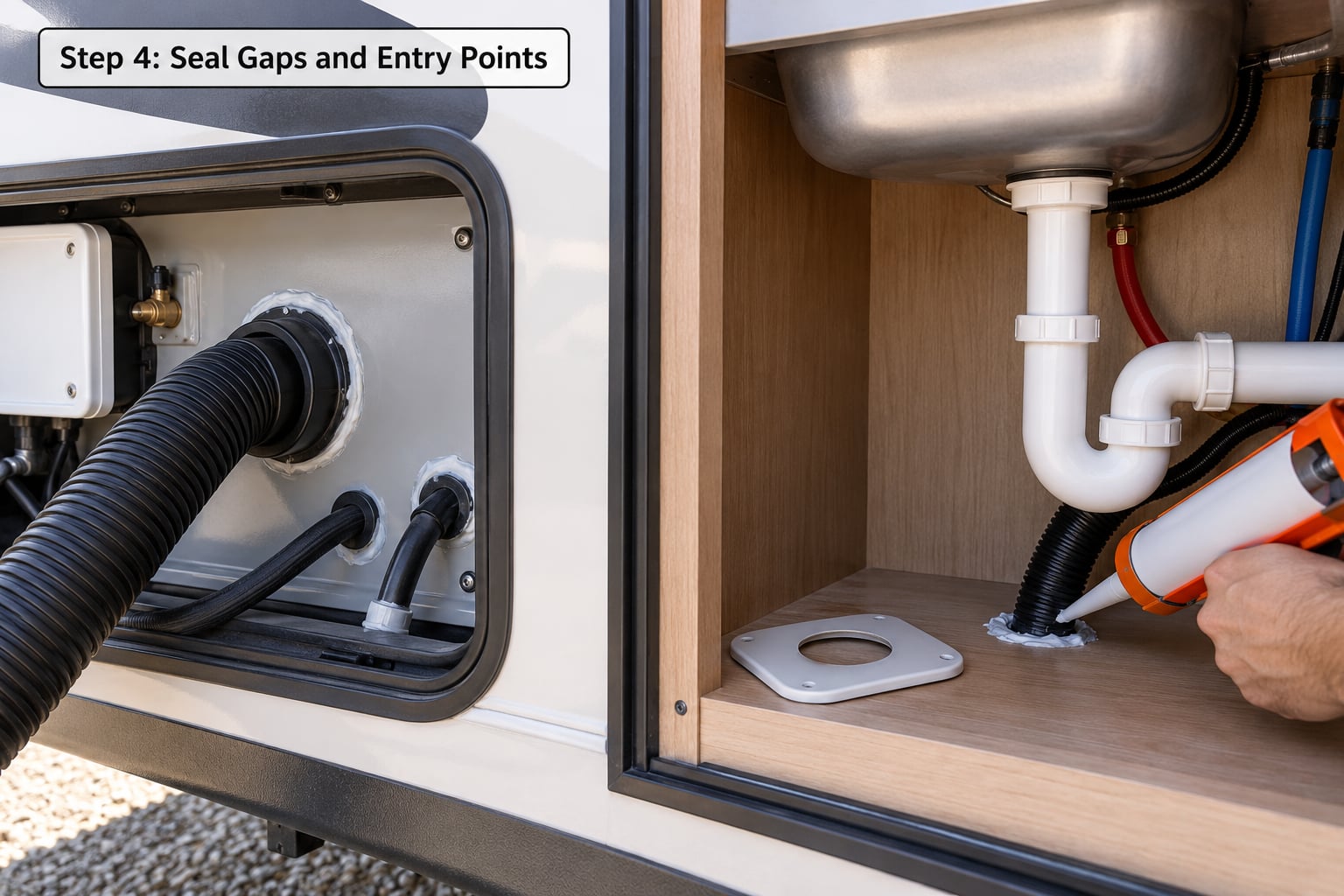
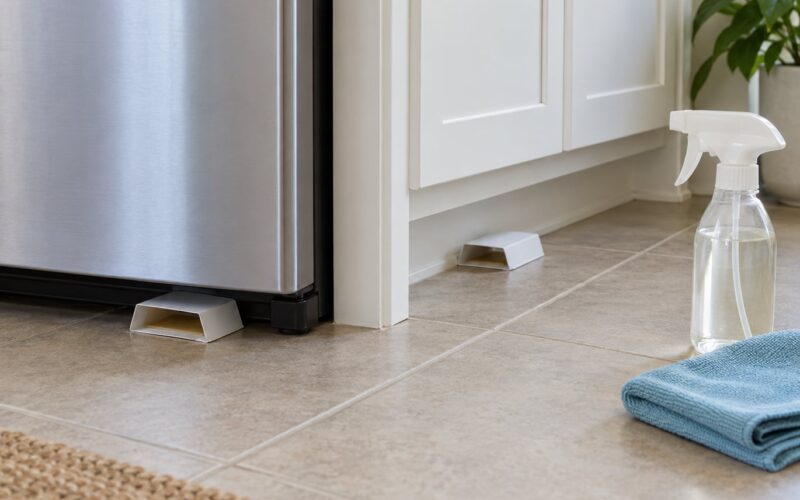
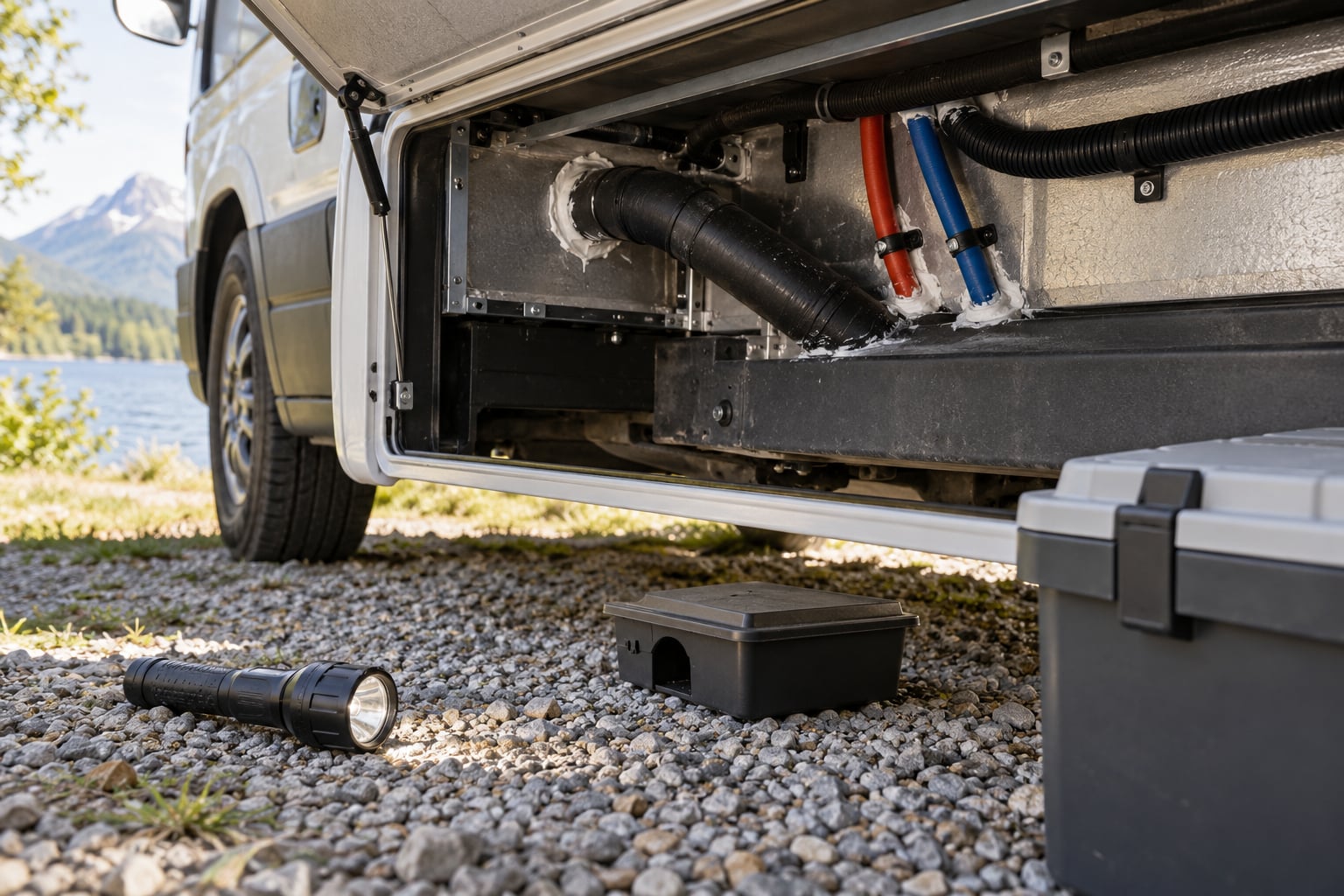
Cockroaches flatten their bodies to fit gaps far smaller than a dime, so anything they can squeeze through is an open door. Inside, seal cabinet seams, toe-kicks, pipe penetrations, and the trim around appliances with caulk. Outside, close underbelly gaps around plumbing, sewer, and water lines with low-expansion foam and exterior sealant.
Pay special attention to pass-through storage doors, the outside garbage access hatch, window and door frames, screen seams, and roof vent gaps. A mesh patch kit is a cheap fix for damaged screen. On slide-outs, seal interior seams and check the interior accordion for torn or gapped sections, but do not seal the slide-out mechanically or block the clearance it needs to move.
Never block a vent, a range hood, a fridge vent, or a combustion appliance flue. If a seal would prevent a panel, trim, or vent from opening, use removable sealant and check it before every trip.
Step 5: Apply Gel Bait or an Appropriate Treatment
For cockroaches in a camper, gel bait and boric acid powder used together is the strongest combination available to a DIY owner. Gel bait is a slow-acting poison in an attractive base, so a feeding roach carries it back to the rest of the colony, which is the mechanism that actually collapses a colony.
Place small dabs or bait stations in the seams, corners, and edges roaches already travel: inside lower cabinets, along the toe-kick line, under the sink, behind appliances, near the plumbing penetrations, and along slide-out seams. Follow the label for how much to use and how many placements it allows. In a typical 25 to 40 foot floor plan, that usually means more placements than people expect, spread across every zone rather than concentrated in the kitchen.
Then apply boric acid powder as a thin line in cracks and crevices. It works by abrasion of the exoskeleton plus ingestion, and roaches groom the powder off their legs and spread it through the colony, which is why powder outperforms pellets and tablets. It takes two to ten days to act. It stays effective only while it stays dry and undisturbed, so reapply after cleaning or rain.
Keep bait and powder away from children, pets, food, and dishes, and never put either on a surface where food is prepared or eaten. Do not apply aerosol sprays next to bait, because the repellent residue keeps roaches away from the bait station and away from the powder lines. If you use a residual spray, use it outside the rig, around wheel wells, jacks, doors, and windows, and follow its label exactly.
Step 6: Monitor and Prevent Reinfestation
Set glue traps in the galley, bathroom, under the bed or bunk area, and inside pass-through storage. Check them weekly. Traps tell you where the roaches are traveling, which is information no spray gives you, and they keep catching the ones you do not see.
Expect visible activity to increase briefly. Adult females carry eggs for up to about 30 days, so the first month rarely looks like progress, and baited roaches leave the hiding places you have been checking. Judge the treatment on trap counts and new droppings rather than on sightings alone.
A fair timeline looks like this. In the first 24 hours you see no reliable drop in numbers. By day three, baited roaches are dying and traps show heavy traffic. By week two, new droppings thin out and the count in the trap lanes falls. By six to eight weeks, activity should be gone. You are finished when you have had no sightings at night in the kitchen or bathroom for 21 days, no fresh droppings, clear traps, and no egg cases.
After that, keep it that way with the habits that stop the next hitchhiker. Store all food in hard containers, sweep weekly, wipe under the sink, check the perimeter before bed-down at a new site, and buy firewood locally instead of bringing it in from home. If you travel through the Gulf Coast, Texas, or Florida, inspect the underside and pass-through storage every time you stop.
Common Mistakes
Spraying visible roaches instead of baiting them. Aerosol kills on contact, so it removes the adults in front of you and repels everything else. The colony stays in the wall cavities and keeps producing. Switch to bait and powder and give it the two to ten days it needs.
Cleaning without sealing. If you leave the underbelly gap, the pass-through door, or the pipe penetrations open, the next campsite or the next used RV you bring alongside supplies replacements. Cleaning without sealing is a reset, not a fix.
Leaving food and damp items behind. Cardboard boxes, open pantry bags, pet food, damp towels, and a dripping sink cabinet undo the sealing and baiting work within days.
Using outdoor products indoors. Outdoor concentrates are not labeled for enclosed living space, and in 300 square feet the odor can last for weeks. Anything you apply inside has to say it is labeled for indoor use.
Running a fogger and calling it done. Total release aerosols suspend particles that settle on surfaces where you eat and sleep, and they leave almost no residual that reaches a colony inside the wall. The one case where a fogger earns its place is a heavy infestation in a rig you are not living in, with cabinets left open and four to six hours of airing out afterward. Not in a camper with a dog and a toddler in it.
Killing too many away from their hiding places. Every roach killed in the open is one less baited carrier. Vacuum them up and leave the rest alone so the bait works.
Giving up at three weeks. This is the most common reason infestations survive a full season of effort. Four to eight weeks is normal.
Frequently Asked Questions
How long does it take to get rid of roaches in an RV or camper?
Most infestations take four to eight weeks of consistent treatment, with the first three weeks often looking like nothing is happening. Female roaches carry eggs for up to about 30 days, so new activity keeps appearing early on. Judge progress by glue trap counts and fresh droppings rather than sightings. You are done after 21 consecutive nights with no night sightings, clear traps, and no new droppings.
What is the best product to use for roaches in an RV?
Gel bait and boric acid powder, used together, outperform any single product in a camper. The bait is a slow-acting poison carried back to the colony, and the powder works by abrading the exoskeleton and being groomed into other roaches. Use powder, not pellets or tablets. Keep both out of reach of children and pets and follow each label for placement and quantity.
How do I find roach hiding places in a camper?
Look along the top edges inside cabinets, inside hinge seams, along toe-kicks, under the sink, behind and beneath appliances, in pass-through storage, and along the interior seals of every slide-out. Turn off the lights for an hour after dark, then enter with a flashlight and watch the baseboards. Droppings look like black pepper specks, egg cases are small brown capsules, and smear marks streak the cabinet walls.
Can I use regular household insecticide inside an RV?
Only if the label says it is for indoor use. Outdoor concentrates and agricultural products are not labeled for an enclosed living space, and in a small camper the odor lingers for weeks. Avoid applying any spray next to gel bait or powder, since repellent residue keeps roaches away from both. Aerosols also leave a film on surfaces where you eat and sleep.
Why do roaches keep coming back after I clean my camper?
Usually the entry points are still open. Gaps in the underbelly, around plumbing penetrations, slide-out seams, screen edges, and the outside garbage access hatch let roaches move in and out of a nearby source, such as a neighboring rig or a woodpile. Cleaning removes the food that keeps them inside the camper but does not stop new arrivals. Seal the openings and treat the perimeter.
When should I hire a pest-control professional for an RV or camper?
Call a professional after two months of consistent baiting and powder with no improvement, or immediately if you see heavy activity during the day, egg cases in multiple zones, or infestation inside the wall cavities or pass-through storage. Note that many licensed exterminators refuse to service an RV, so call ahead and describe the vehicle before booking. Moving the rig to a different site often solves the problem faster.
Conclusion
Start by finding out where they are travelling, not by grabbing a spray can. Remove the food and moisture, clean every seam, seal the openings into and out of the camper, place gel bait and boric acid powder along the lanes they use, and then keep checking glue traps.
Give it six to eight weeks, judge it on trap counts and droppings, and stop the moment you go 21 nights without a sighting. Keeping the food sealed and the underbelly closed is what stops the next one from riding in with you.