Diatomaceous earth kills cockroaches by contact only, so you apply it as a thin, dry band along the routes they already use and leave it there for two to four weeks. A roach has to walk across the powder: the sharp edges abrade the wax on its exoskeleton, and the same particles pull the moisture out from underneath, until it dies of dehydration.
That single fact explains nearly every complaint about this treatment. It does not chase roaches, it does not smell, it does not bait them, and a heavy pile is worse than no powder at all. Used correctly around a small infestation, it is one of the few options with no synthetic pesticide in it. Used on a heavy one, it is cleanup with a bill attached.
Below is the routine I would follow, in the order I would follow it, plus the limits worth knowing before you open the container.
Table of Contents
- What You Need
- Step-by-Step: How to Apply Diatomaceous Earth for Cockroaches
- Common Mistakes
- When Diatomaceous Earth Is Not Enough
- Safety and Cleanup
- Frequently Asked Questions
- How long does it take diatomaceous earth to kill cockroaches?
- Is it better to apply diatomaceous earth wet or dry?
- Can I touch diatomaceous earth with bare hands?
- What kills roaches better, boric acid or diatomaceous earth?
- Will diatomaceous earth keep roaches out?
- How long does diatomaceous earth last once applied?
- Conclusion
What You Need
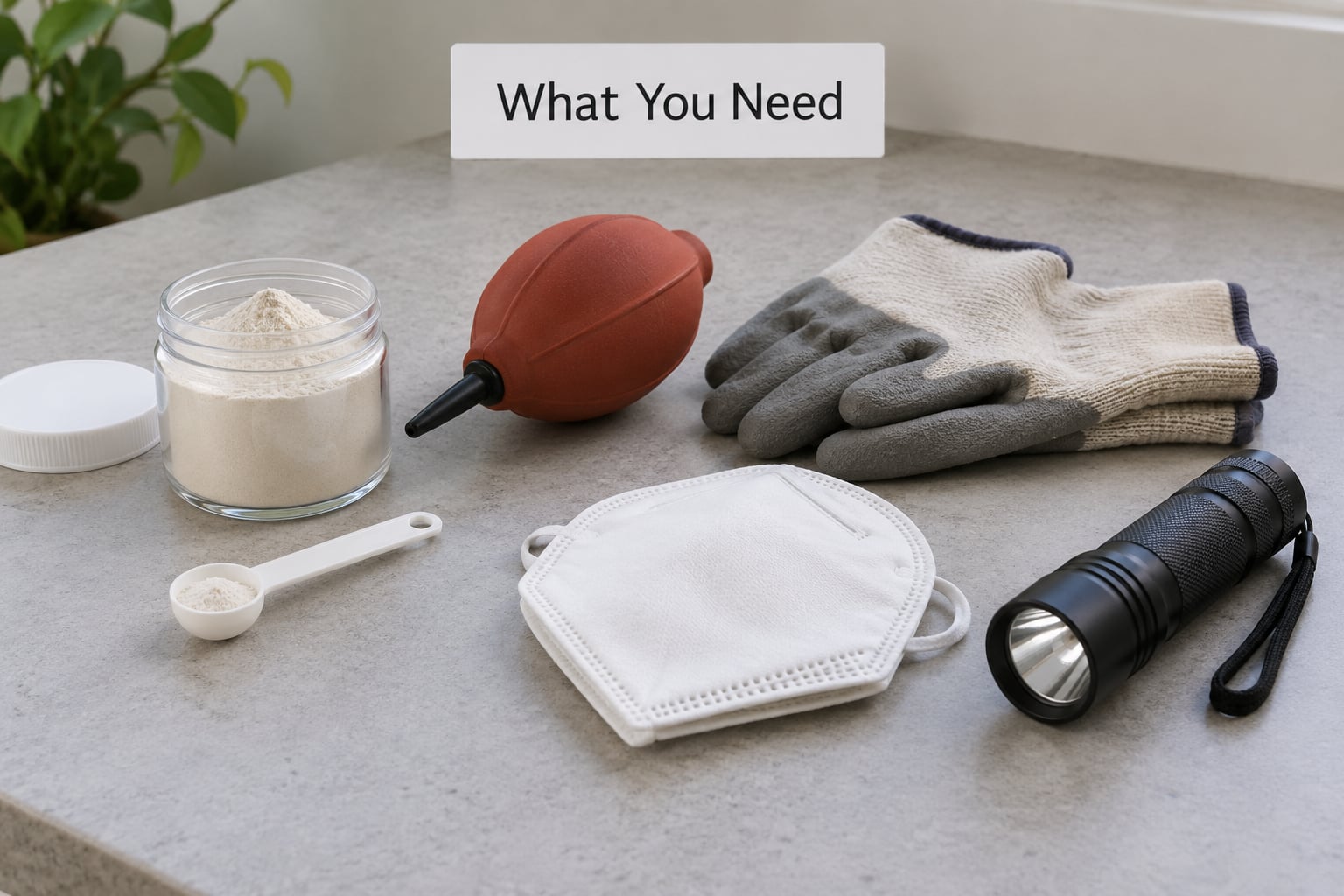
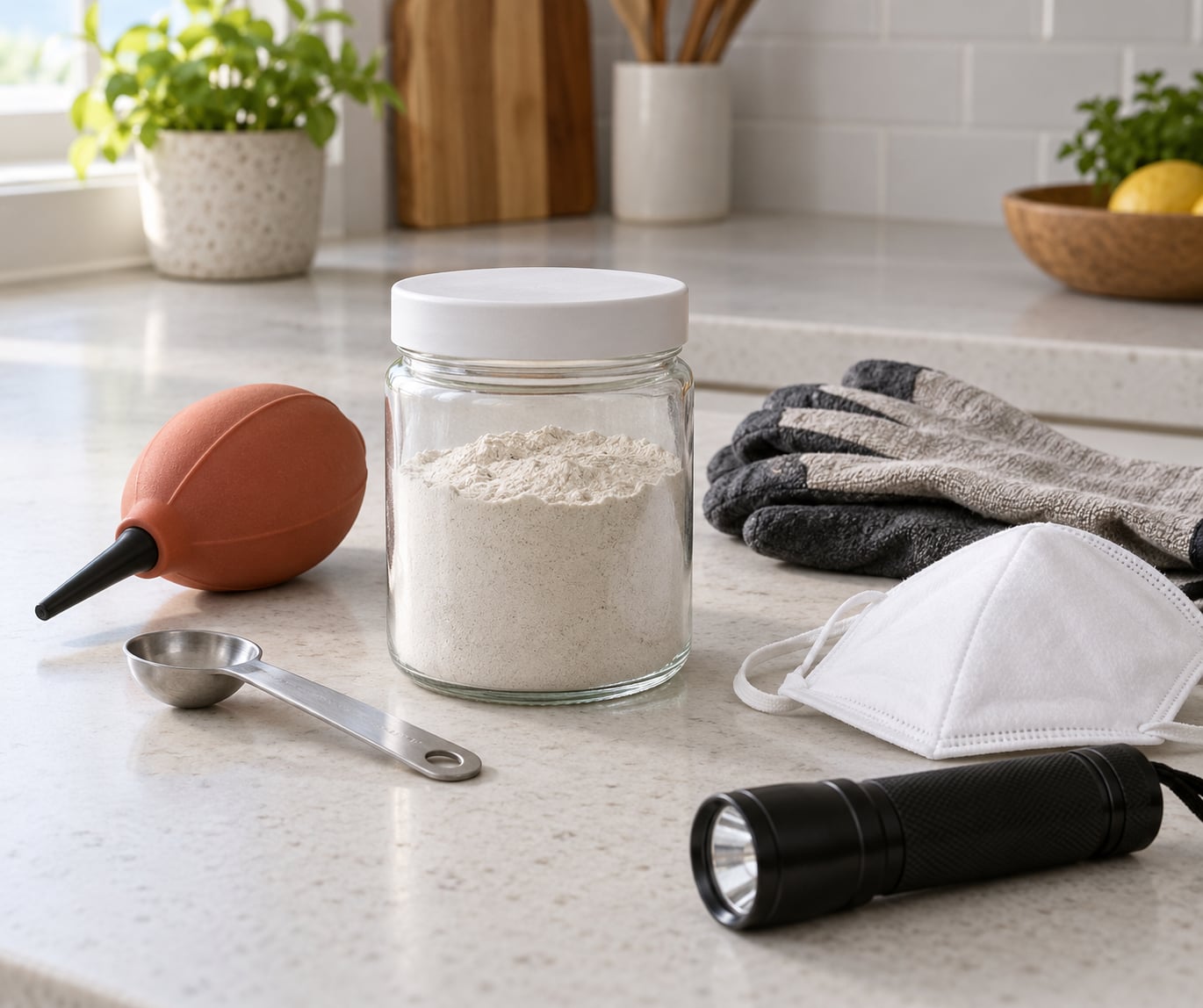
Start with food-grade diatomaceous earth, the label stating it is safe for use around food and people. Anything sold for pool filters or for industrial use is a different material and carries a crystalline silica warning you do not want in a kitchen.
For application, a pinch applicator or a rubber bulb duster is the difference between a light dusting and a mess. A small shaker works in a pinch, and a soft dry brush is fine for baseboards. You do not need a sprayer, and you should not use one.
You also need a flashlight, nitrile gloves, an N95 mask or a dust respirator, and eye protection. The dust is the entire risk here, so treat the powder like flour and you will be fine.
Finally, bring cleaning supplies: a vacuum with a HEPA filter or a shopvac, a damp cloth, and garbage bags. You will be cleaning up, and the cleanup is the step most guides leave out.
Step-by-Step: How to Apply Diatomaceous Earth for Cockroaches
1. Identify where cockroaches travel and hide
Go under every sink, behind the refrigerator and stove, along baseboards, inside lower cabinets, and around any pipe or wire that comes through a wall. Look for pepper-like droppings, shed skins, and brown egg cases tucked along edges.
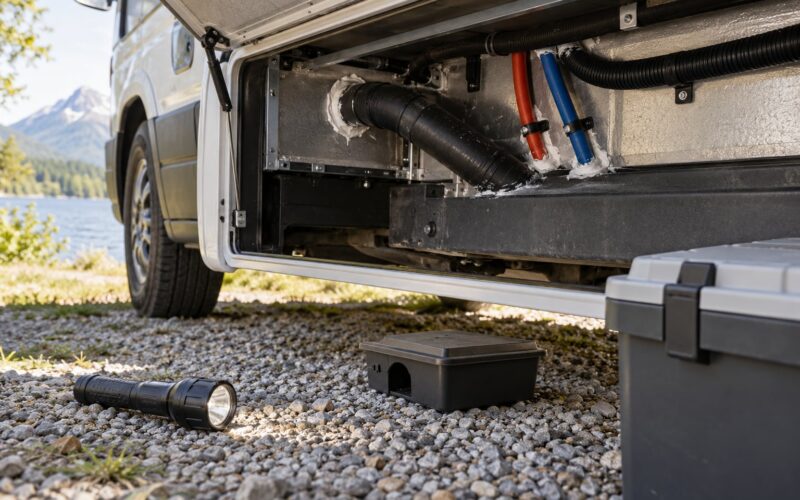
Flashlight surveys after dark tell you more than anything else. Turn the lights off, wait an hour, then walk the kitchen and bathroom with a flashlight at floor level and note where you see movement. Those are your travel lines.
You will know you found the right spots when you find droppings. That powdery grit in a corner is what you are treating around, not the visible roach you happened to kill.
2. Clean and dry the application area
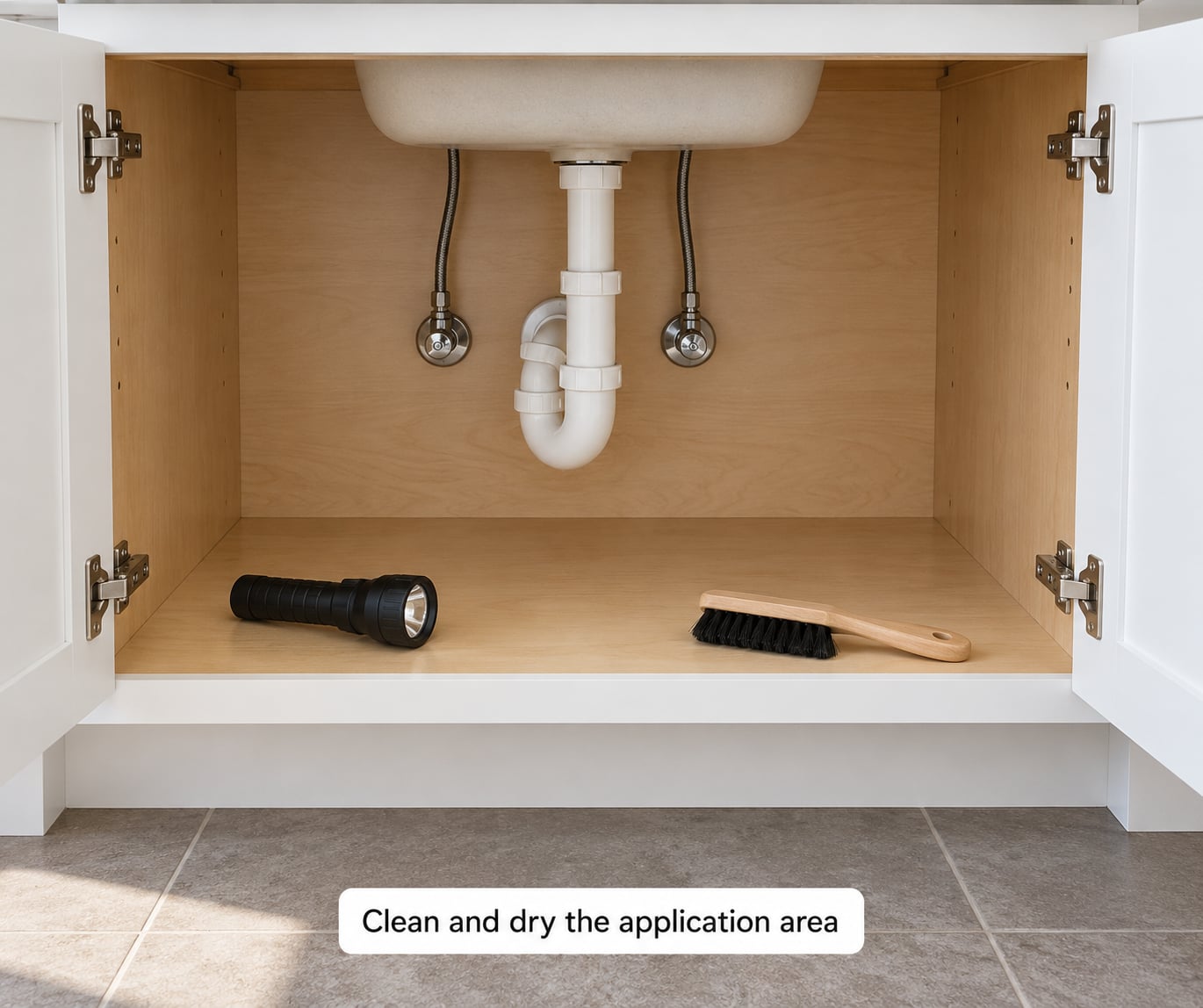
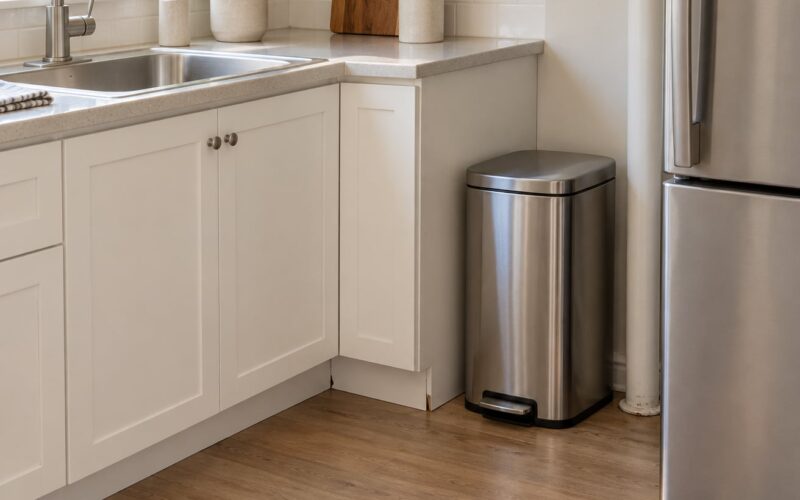
Remove grease, crumbs, spilled flour, pet food, and cardboard. The powder cannot do anything if there is a sandwich crumb two feet away, because the crumb wins.
Fix any small leak and let the surfaces dry completely. Diatomaceous earth stops working the moment it gets wet, and the bands you care most about, under the sink and along the wall-floor junction, are exactly where water collects.
Clear the clutter so you can see the floor and reach the edges. If you can get a flashlight beam into the gap, you can get powder into the gap.
3. Apply a thin, even layer
Load a small amount into the duster and puff a light, continuous band along the edges and transitions. You should be able to see the floor through it.
If you can scoop the powder back up in a pile, you used too much. Repeat reports on homeowner boards make the reason clear: too much powder becomes a barrier that roaches walk around, and it drifts into counters and cupboards within days.
Most guides on diatomaceous earth for cockroaches, how to apply it safely, land on the same instruction, and thin beats heavy every time. A light dusting also survives longer, because a thick layer shifts, cakes, and leaves the edges bare.
4. Focus on cracks, edges, and harborage points
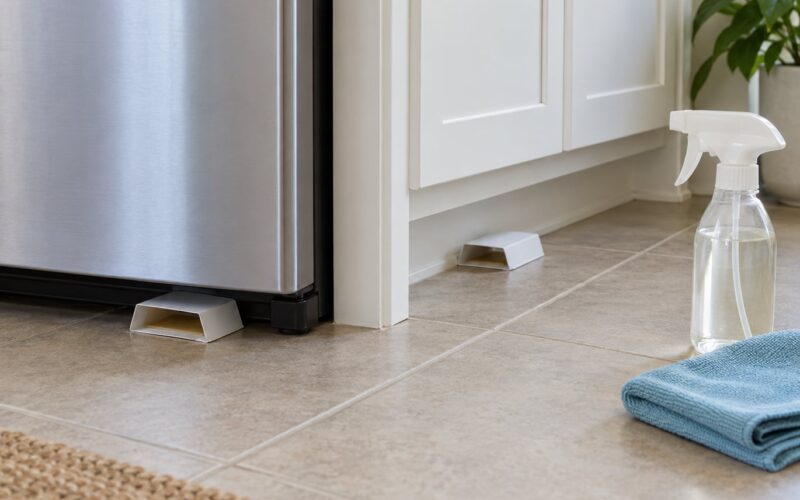
Put the band where surfaces meet: under sink cabinets, along the wall-floor junction, beside the edges of the refrigerator and stove, around pipe penetrations, and beneath furniture legs you can move.
Work into cracks along baseboards and around the edges of switch and outlet plates without opening the plates themselves. Never push powder into a live electrical outlet or switch box; that is a short and a fire risk.
Stay away from wet floors, laundry rooms with standing damp, and anywhere a dehumidifier is dumping air. If the band cannot stay dry, put the powder somewhere else.
5. Keep the powder undisturbed and monitor activity
Do not sweep it, do not blow it with compressed air, and do not let it drift toward heating or air-conditioning returns. Cover a treated cabinet only when the label allows it, and only if you can still check underneath.
Check at night with a flashlight every few days. Fewer sightings, fresh droppings disappearing, and roaches on their backs or curled against baseboards are all good signals.
Reapply a light coat according to the product label if the band has worn thin, and expect to keep at it for two to four weeks. If sightings are unchanged after a month of good technique, the powder is not your problem to solve alone.
Common Mistakes
Pouring instead of dusting. A stream of powder in a corner does nothing but create a cleaning job. Use a duster and go thin.
Applying to damp areas. Wet diatomaceous earth goes inactive, and under-sink cabinets and crawl spaces are where people most often waste a whole container.
Mixing it with water into a paste. Homeowner forums keep asking whether a slurry works. It does not, for the same reason: the powder has to stay dry to cut and to absorb.
Putting it on food-contact surfaces. Not on cutting boards, not inside a food cabinet next to the cereal, not on a counter. Use a labeled, food-grade product in thin layers and keep it out of the food itself.
Skipping the mask and gloves. The dust is the risk, and the fix costs almost nothing.
Expecting dead roaches by morning. This is a slow treatment. Anything that promises faster is doing something chemically, not mechanically.
Leaving entry points open. Powder in a cabinet does nothing about the gap in the baseboard, the pipe hole, or the door sweep that the neighbor’s roaches are walking through.
Using it as the whole program. Dusting a surface and then forgetting about food, water, trash, and cracks is the most common reason people say it is a waste of money.
When Diatomaceous Earth Is Not Enough
Diatomaceous earth only kills the cockroaches that walk across it. Adults and nymphs hiding deep inside wall voids, above a ceiling, inside an appliance housing, or in a sewer line never touch the powder you can reach, and egg cases sealed inside an ootheca are protected by design.
That is the reason users report it failed even when they applied it carefully. You treated a surface population, and the rest of the colony carried on.
So treat it as a supporting treatment. Combine it with sanitation that removes food and water, gel bait or boric acid placed in harborage areas, and entry sealing with caulk and expandable foam. If activity continues after a month of correct application, call a pest professional.
Escalate sooner in two situations. In an apartment or multi-unit building, roaches frequently arrive from neighboring units and your perimeter treatment is undone from the other side of the wall. With a heavy infestation, hundreds of roaches simply route around a light band and the population rebounds in days.
Apartment dwellers cannot reach wall voids or a crawl space, so concentrate on the edges you can access: under sink cabinets, along baseboards, behind appliances, and the hallway outside your door.
Safety and Cleanup
Confirm the product is labeled for the use you intend and follow its directions, including any EPA-registered pesticide label on the package. Food-grade diatomaceous earth is safe for people and pets when used in thin layers, but only the inhalation risk matters, so control the dust.
Wear an N95 mask or a dust respirator, nitrile gloves, and eye protection, and apply with the room ventilated. Do not breathe the powder, and do not apply it over your head. Gloves also stop the powder from drying out your hands, which it will do.
Keep it away from children and pets. The recurring question in homeowner forums is whether a cat that walks through a treated cabinet is in danger, and the honest answer is that the dust is the whole risk, so place bands where a cat will not walk or curl up. Anyone with asthma or another respiratory condition should not apply it, or should apply it while out of the room and clean up before returning.
Never apply to a food-contact surface, and store the container closed and out of reach.
For cleanup, let the powder settle if you have used a lot, then vacuum it with a HEPA-filtered vacuum or a shopvac, and wipe the surfaces with a damp cloth. Do not use an unfiltered household vacuum: fine powder can clog the motor and the filter, and the machine can then blow dust back into the room. Bag the debris and put it in the outside trash.
Keep the vacuum and cloth separate from your kitchen washing-up, and wash hands and face afterward.
Frequently Asked Questions
How long does it take diatomaceous earth to kill cockroaches?
Expect two to four weeks of consistent application, not overnight results. Individual roaches that cross a band can die within a day or two, but the noticeable drop in sightings comes as the exposed population thins out. Reapply a light coat on the label schedule, keep the area dry, and if activity has not shifted after a month, the problem is likely out of reach of surface dust.
Is it better to apply diatomaceous earth wet or dry?
Always dry. The powder works by abrading the exoskeleton and absorbing moisture, and water disables both effects, so a wet paste or slurry simply stops being diatomaceous earth. If an area stays damp, treat a different location instead, or fix the moisture source first and apply once the surface has dried.
Can I touch diatomaceous earth with bare hands?
You can, but wear gloves anyway. Food-grade diatomaceous earth is not toxic to people, and the reason gloves are recommended is practical rather than alarming: the powder draws moisture out of skin and leaves hands dry and rough. Gloves also keep you from spreading the dust into places you just cleaned.
What kills roaches better, boric acid or diatomaceous earth?
Both work the same way, by contact, and both are slow, so the better choice depends on the location rather than the powder. Boric acid tolerates damp areas such as drains and under-sink cabinets and holds up longer; diatomaceous earth is lighter, dusts into tight cracks and wall voids more easily, and works well in dry harborage and along the outdoor perimeter. For a heavy infestation, gel bait or professional treatment beats both.
Will diatomaceous earth keep roaches out?
No, it is not a barrier and not a repellent. It kills the roaches that walk across it while it is dry, but a treated band will not stop a determined column from routing around it, around your building, or in from a neighboring unit. Blocking entry is a separate job: seal baseboard gaps, pipe holes, and doors with caulk and door sweeps.
How long does diatomaceous earth last once applied?
A dry, undisturbed indoor band usually stays effective for several weeks, and it can remain in cracks and wall voids longer since little reaches it. Indoors, the band wears down faster wherever you sweep, vacuum, or touch it, and under appliances it degrades from grease and dust. Outdoors, expect days rather than weeks, and reapply after rain or heavy weather.
Conclusion
Start with the cleaning, not the powder. Find the travel routes, because you are treating a path, not a room. Once the area is clean and dry, lay a thin, continuous band along the edges and cracks you identified, keep it dry and undisturbed, and check at night every few days to see whether sightings are dropping.
Give it two to four weeks with a light reapplication. If roach activity continues, add sanitation, gel bait or boric acid, seal the entry points, and consider professional treatment, especially in an apartment or a building where roaches arrive from next door.