If you want to know how to roach proof a pantry, you have to remove the four things a cockroach needs to survive: food, water, shelter and an open way in. Seal your dry goods in hard containers, wipe the shelves clean, close every gap and pipe hole, then set traps to confirm it worked.
Most pantry problems are not caused by a dirty kitchen. They come from three small things: a bag of rice nobody closed properly, a bin of food waste that sat overnight, and a 1/8 inch gap where a pipe enters the wall. Fix those three and the rest is maintenance.
This is a renter-friendly method. Nothing here requires tearing out shelves, and the pesticide notes at the end explain which products you can use around food and which ones need a professional.
What You Need
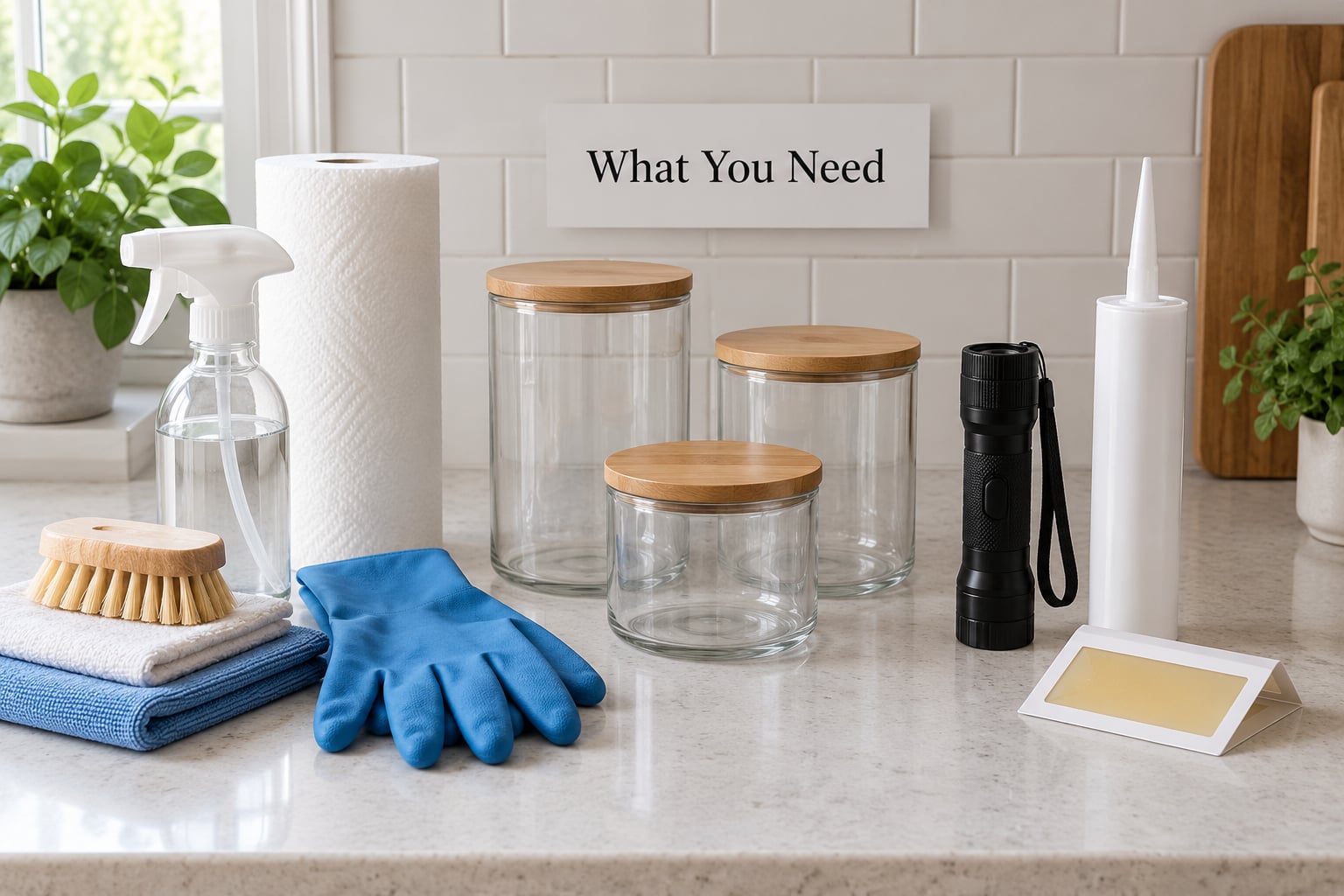
Gather everything before you start pulling food out. Halfway through a reset with no flashlight or no caulk to hand is how a two-hour job turns into a two-day one.
Cleaning supplies
- A vacuum with a hose attachment, plus a stiff brush for shelf corners
- Warm water and dish soap, or a 1:1 vinegar-and-water mix for shelves
- Paper towels, a scrub brush, and a microfiber cloth per shelf
- A flashlight or headlamp for checking behind shelving and inside wall voids
- Trash bags and a lidded bin for anything suspect you remove
Storage and sealing materials
- Glass jars with rubber-sealed lids, or hard plastic containers with tight-fitting lids
- Silicone caulk and a caulking gun for pipe penetrations and baseboard gaps
- Weatherstripping and a door sweep for the pantry threshold
- Steel wool or copper mesh for larger openings that caulk alone will not hold
- Shelf liner you can wash or replace, rather than paper or fabric liners
Monitoring tools
- Sticky monitoring traps, the kind sold for indoor cockroach detection
- A small notebook or your phone camera to date and place each trap
About pesticides
If you use a gel bait, dust or spray, read the label first and follow it exactly. Labels are the law, and most products used in a pantry are restricted to areas where food is not stored or prepared.
Keep pesticides in a locked cabinet away from children and animals. Never spray above open containers, on a shelf surface, or near a sink where dishes drain. Never put a pesticide product into a food container, no matter how thoroughly you rinse it. If a product label does not clearly allow the use, ask a licensed pest professional instead of guessing.
Most people can handle a light problem with cleaning, sealing and traps alone. You need professional help when you see roaches during the day, when you find droppings behind shelving on multiple shelves, or when a neighbour’s unit is involved, because you cannot seal your way into someone else’s apartment.
Step-by-Step
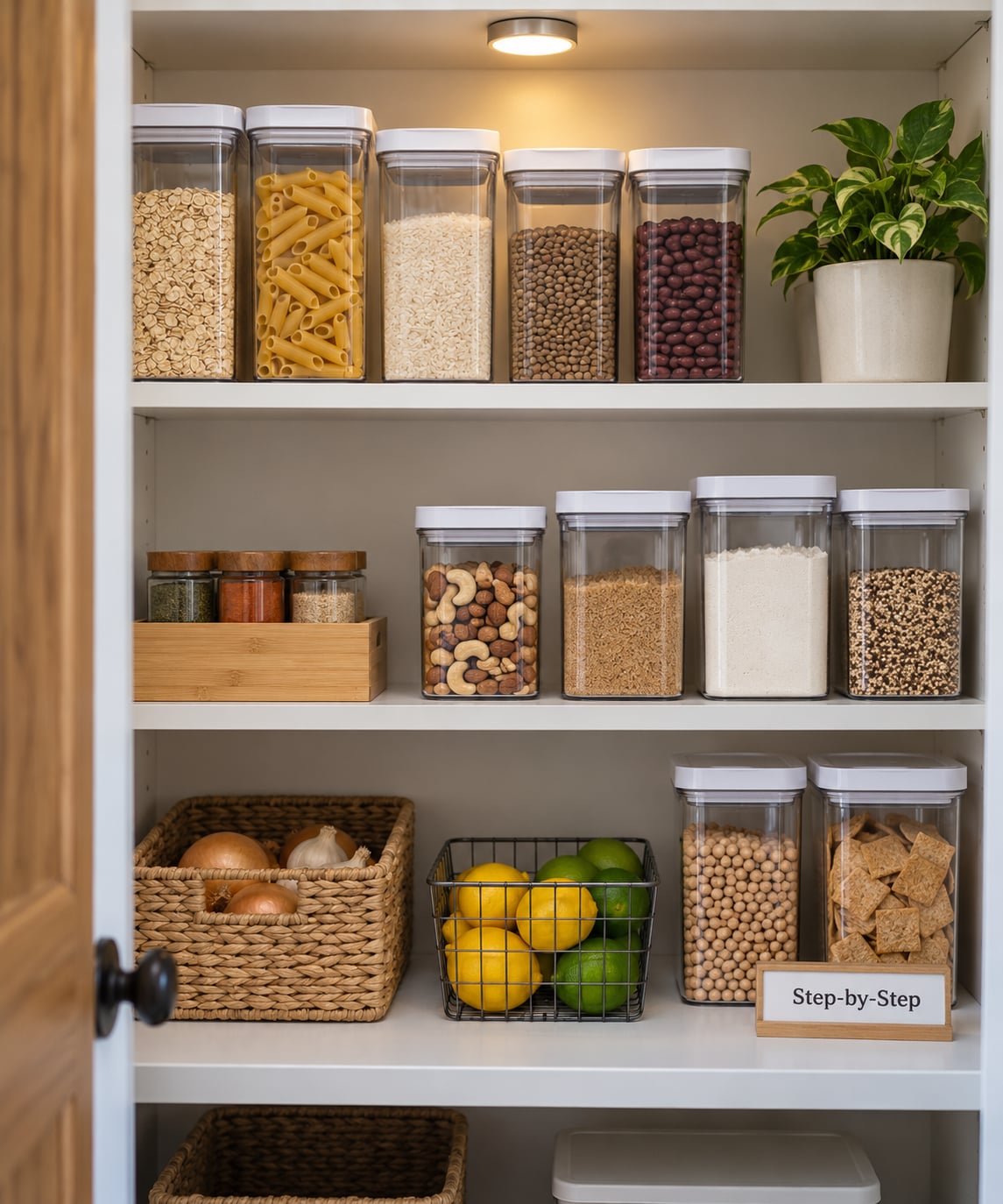
The sequence matters when learning how to roach proof a pantry. Clean before you seal, seal before you restock, and trap before you decide whether the job is done. Here are seven steps, in the order I would do them.
1. Empty and inspect the pantry
Take everything out and put it on the floor or a table you can sort. Work in categories: sealed containers, open packages, canned goods, and things you are not sure about.
Hold each item up to the light. Look for droppings that resemble coffee grounds or black pepper, smears of grease along shelf edges, shed skins, and small brown egg capsules. Discard anything open that shows any of those signs. A bag of flour with a few specks at the bottom is not worth the risk of resealing.
While the shelves are bare, inspect the structure. Run your fingers along shelf brackets, wall junctions and the base of the wall. Note every crack, old hole, and each place a pipe or wire enters the cabinet. This is the part everybody skips, and it is where the answer usually is.
You will know this step worked when you can see clean shelving, bare walls and a written list of gaps rather than a vague feeling that something looked off.
2. Clean and disinfect all surfaces
Vacuum first, wash second. Loose crumbs and dust need pulling out of corners before any liquid will reach them.
Work top to bottom: top shelf, middle shelf, bottom shelf, shelf liner, back wall, then the cabinet floor and the door frame. Use warm soapy water for the wash and a second pass with a clean damp cloth. Scrub the shelf-to-wall junctions, where grease builds up and where roaches walk.
Clean the door track and the underside of the door, both of which pick up food dust. Replace paper or fabric shelf liner. Those materials harbour crumbs and odours that a wipe-down will not remove.
Follow the label directions for any disinfectant or pesticide product. Label directions and routine cleaning are different things, and mixing them gets people into trouble.
How to tell it worked: the shelves should smell neutral rather than musty, and the flashlight should reveal no webbing-like smear, no droppings and no fresh grease film.
3. Store food in sealed containers
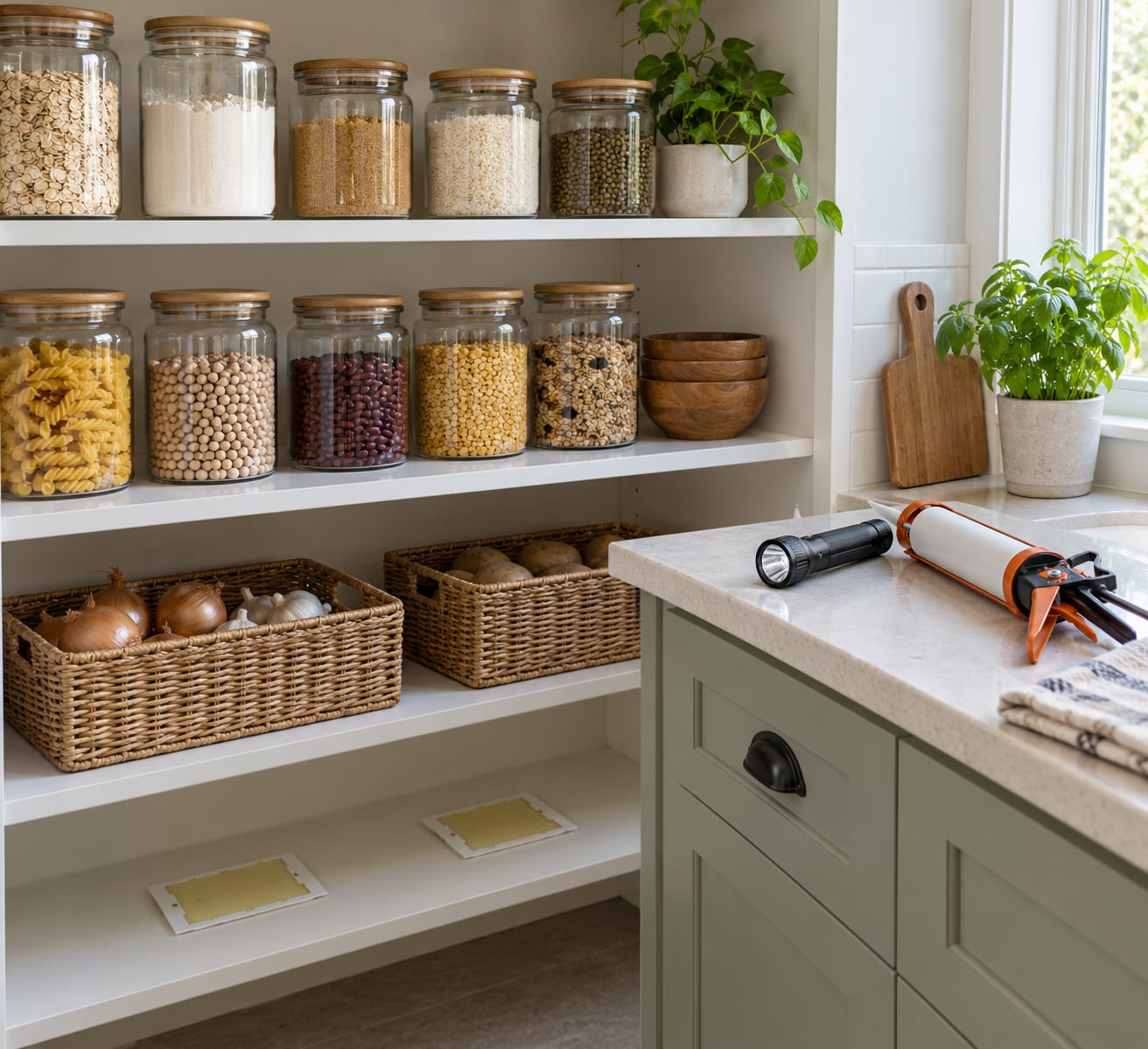
Move every dry good out of its original packaging into a hard container. Flour, sugar, rice, oats, cereal, pasta, pet food, and open bags of anything.
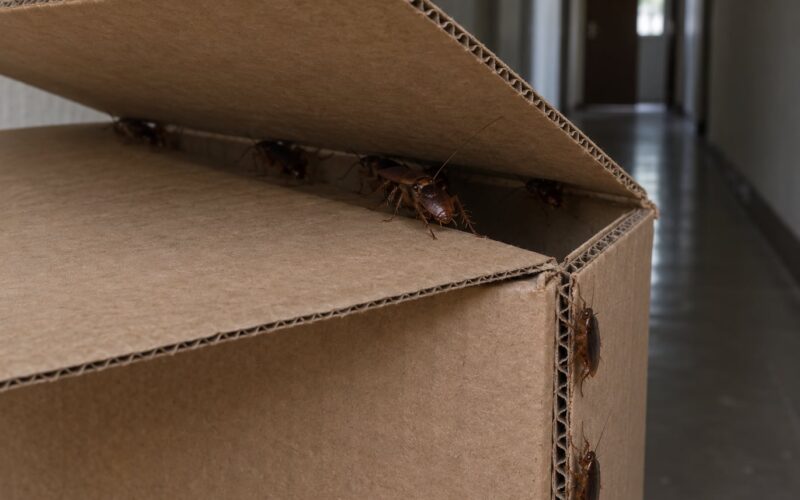
Glass with rubber-sealed lids works best. Hard plastic with a lid that clicks shut is fine. What does not work is thin plastic bags, cardboard boxes, and paper sacks. Cockroaches chew through cardboard and plastic film without much trouble, which is exactly the container the food arrived in.
Leave the original label or a hand-written label on the outside of each container. You will use it, and you can throw the compromised packaging away immediately instead of storing it back on the shelf.
Push containers to the back of the shelf so there is no gap behind them to the wall. A two inch gap along a back wall is a hallway for roaches, and anything stored in that gap gets chewed. Keep pet food in a sealed container and off the floor if you can, because it is usually the most heavily used food source in a home.
How to tell it worked: every item on the shelf can be picked up without crumbs or a loose trail of powder falling out from underneath.
4. Seal entry points and vulnerable gaps
This is the step that decides whether roach proofing a pantry actually lasts a season or three months. One roach in through a gap fertilises the whole pantry through scent trails and egg cases, so sealing gaps is more important than any product you buy.
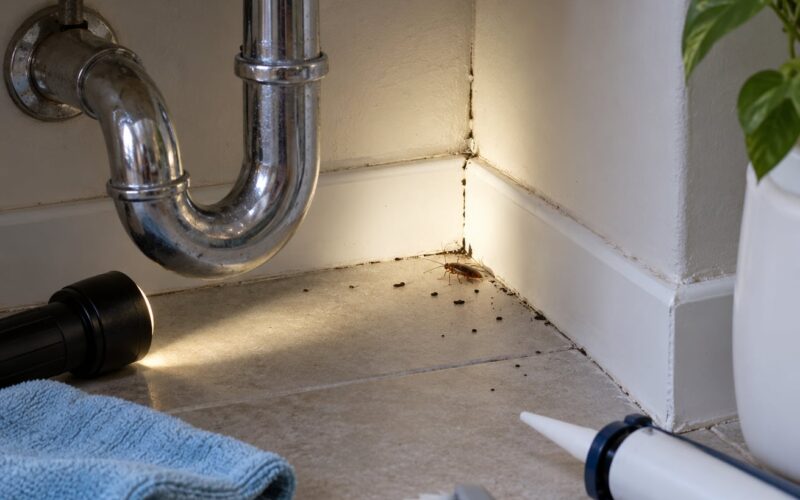
Run silicone caulk along baseboard edges, wall-to-shelf junctions, and around every pipe or wire that enters the cabinet. Use weatherstripping or a door sweep along the pantry door and threshold, which is one of the most common ways roaches reach a dedicated pantry. Fill larger openings with steel wool or copper mesh first, then caulk over it.
Fit a drain cover over the sink or floor drain inside the pantry, if there is one. Roach-proofing the pantry means covering every hole, and drains are holes.
Two cautions. Do not seal a ventilation opening, because you need airflow in a closed cabinet. Do not seal off a space you cannot inspect later, since trapped moisture behind a panel causes its own problems and gives you nowhere to check for activity.
How to tell it worked: run a flashlight along every sealed line from a low angle and look for daylight or a hairline of dark. If you see light, the gap is still open.
5. Reduce moisture and clutter
Roaches need water far more than they need food, and a damp pantry is a magnet. Look under the sink first, since a slow leak there feeds cockroaches for months without anyone noticing.
Fix drips and running toilets, wipe the sink dry after use, and dry the cabinet floor after mopping. If your pantry holds humidity, a small dehumidifier set to keep relative humidity below about 60 percent does more good than any repellent.
Empty food waste every night into a bin with a tight-fitting lid. Bags of rubbish sitting until morning give roaches an all-night meal. Then cut clutter: stacked cans, cardboard boxes and reusable bags stored in the pantry are harbourage with nothing stored in them, and removing them costs nothing.
How to tell it worked: the back wall of the pantry and the underside of the lowest shelf are dry to the touch a day after you clean.
6. Monitor for returning activity
Place sticky monitoring traps after you finish cleaning and sealing, then leave them to work. They tell you where activity is concentrated, which is information no spray gives you.
Put traps behind shelving, in corners, near pipe penetrations and under the sink cabinet. Label each one with its location and the date you set it. Check them weekly and move them if a trap stays empty for two weeks.
An empty trap is genuinely good news. A trap with a few scattered roaches means your work is having an effect but the population is still nearby. A trap holding many roaches, or nymphs, or a female carrying an egg case, means you have a real infestation and monitoring alone will not solve it.
On rented property, photograph droppings, shed skins and any live sighting before you notify anyone. Dates and pictures turn a disagreement about who is at fault into a short conversation.
How to tell it worked: four to six weeks of empty or near-empty traps after your reset. People on forums like r/Renters and r/pestcontrol describe the same pattern, where activity stops entirely after a few weeks of consistent storage and cleaning.
7. Maintain a roach-resistant pantry
Roach proofing a pantry is a rhythm, not a project. A weekly wipe-down and a monthly reset is enough for most homes, and warm months are when you pay attention.
- Weekly: wipe shelves and door frames, empty the bin nightly, check that container lids still seal.
- Monthly: pull containers forward, vacuum the back wall and corners, check every caulk line, review traps.
- Before summer: inspect grocery bags and cardboard before they go into the pantry, and check screens, drains and door sweeps.
New groceries arrive with hitchhikers. Check paper bags and cardboard boxes at the door, and freeze bulk dry goods for 72 hours if you suspect eggs came in with them. That is the same trick people use on books and other non-food items, and it works on egg cases before they hatch.
Common Mistakes
Spraying near the food you just cleaned. Aerosol sprays in a pantry kill the roach you can see and contaminate your supplies, and they scatter survivors. Use bait placed in cracks and wall voids instead, and keep sprays out of food storage areas entirely. Prevention tip: put the bait down before you restock the shelves, so it sits undisturbed.
Sealing only the biggest gap you noticed. Entry points are never one hole. A pantry with three sealed cracks and one forgotten pipe gap will get reinfested. Prevention tip: use a flashlight at floor level and check the full length of every baseboard, not just the obvious opening.
Using poison without removing the attractants. Bait kills roaches that come looking for food. If the rice stays in an open bag, the pantry keeps pulling in new ones from neighbouring units. Prevention tip: finish the full storage change before you place any bait.
Storing food in thin plastic bags and cardboard. This is the most common failure I see, and it quietly undoes all your other work. Prevention tip: buy a set of containers sized for your dry goods and decant on the day you shop.
Assuming one trapped roach means the infestation is over. A single sighting usually means dozens are hiding in a wall void or behind shelving, since they are nocturnal and stay out of sight by day. Prevention tip: judge results by trap counts over weeks, not by how many roaches you happen to see.
Believing baking soda, mothballs or essential oils solve it. Baking soda does not repel cockroaches at any concentration you can safely use around food. Mothballs are a restricted pesticide for clothing moths, not a kitchen treatment, and they leave an odour in food storage. Peppermint oil has an effect only as a short-lived surface repellent and must never touch food-contact surfaces. Prevention tip: treat scents as a supplement layered on top of airtight storage, not as the fix.
Frequently Asked Questions
How do I keep cockroaches out of my pantry?
Take away all four things a roach needs. Decant dry goods into glass or hard plastic containers with tight lids, discard cardboard and paper bags, wipe shelves and corners every week, fix leaks and empty food waste nightly, then seal pipe gaps, baseboard gaps and the pantry door threshold with silicone caulk, weatherstripping and a door sweep. Set sticky traps afterwards to confirm the result.
What is a cockroach’s biggest weakness?
Water. Cockroaches can go weeks without food but die quickly when they cannot drink, which is why cutting off water usually outperforms any pesticide you can buy. Fix the drip under the sink, dry the cabinet floor, wipe the sink after use, empty the bin nightly and keep the pantry below roughly 60 percent relative humidity. Starving them is slow; dehydrating them is fast.
What smell do roaches hate the most?
Of the natural options, bay leaves, cinnamon and peppermint oil come up most often. None of them is a real repellent, though. Roaches quickly learn to walk around a scented surface, so any effect lasts hours at most. Use them only on surfaces that never touch food, and never rely on them instead of airtight storage. They work, if at all, as a supplement.
How did the Amish get rid of roaches?
The short answer is that they did the same thing modern guidance recommends, and the story is mostly folklore layered on top. The workable parts are simple: hard containers instead of paper sacks, cardboard kept out of the pantry, a spotless kitchen, food waste taken out daily, and a dry building kept tightly shut in winter. There is no secret substance involved, and no household shortcut replaces cleaning and sealing.
Can roaches come up through the sink drain?
Yes. German cockroaches travel through drains and shared pipe chases between units, and in apartment buildings that is a common route into a kitchen. Fit a drain cover or plug the unused drain, keep the sink clean and dry, and seal the pipe where it enters the wall. In multi-unit buildings roaches also arrive through shared walls, so an infestation next door can reach your pantry without any opening on your side.
How long should I monitor the pantry after cleaning it out?
Keep traps in place for four to six weeks after a full reset, checking weekly. Empty or near-empty traps for that whole period is the signal that the pantry is holding. Activity that tapers for two weeks and then returns usually points to one unsealed entry point, so re-inspect the caulk lines before you treat again. Daytime sightings or heavy trap counts mean it is time for a professional.
Conclusion
Start with the four basics: empty and clean the pantry, decant every dry good into a hard container, seal the pipe gaps, baseboards and door threshold with silicone caulk and a sweep, cut off every drop of water, then set traps and check them weekly for the next month.
If roaches keep showing up during daylight, if droppings appear on several shelves at once, or if you live in a building where neighbouring units have active problems, call a licensed pest professional. Bugs that arrive from a neighbouring unit cannot be sealed out of your pantry by caulk alone, and treatment is cheaper and safer than losing the food you already own.
Have you already seen roaches inside the pantry, and is your storage a walk-in closet or a standard cabinet? That single detail changes where you should be sealing first.