To keep mosquitoes away from a patio, start by removing every place they can breed, then run moving air over your seating area. A fan is the single highest-return move, because mosquitoes struggle to fly in strong wind and it blows the carbon dioxide from your breath away from the table. Screens, labeled repellents and a weekly water check finish the job.
The rest of this guide walks through that order in six steps, including what to buy, how to place fans so they actually cover the chairs, and which popular fixes quietly waste your money.
What You Need
Most of this job needs things you already own. Gather them before you start so you are not making three trips to the garage.
- A ceiling fan rated for outdoor use, or a portable oscillating fan
- An EPA-registered personal repellent, either DEET or oil of lemon eucalyptus based
- A mosquito control product whose label specifically allows outdoor patio application
- A stiff scrub brush for cleaning saucers and drains
- A garden hose or, better, a shop vac for pulling water out of low spots
- A ladder with a level, stable footing, for gutter and vent checks
- Basic water draining tools: a small siphon, a wet vac, or a pitcher
Step-by-Step: How to Keep Mosquitoes Away from a Patio
No single trick holds a whole patio together. The most dependable setups combine a few low-maintenance measures, and most of the effort goes into two of them: removing breeding water and moving air.
1. Create Airflow Around Seating Areas
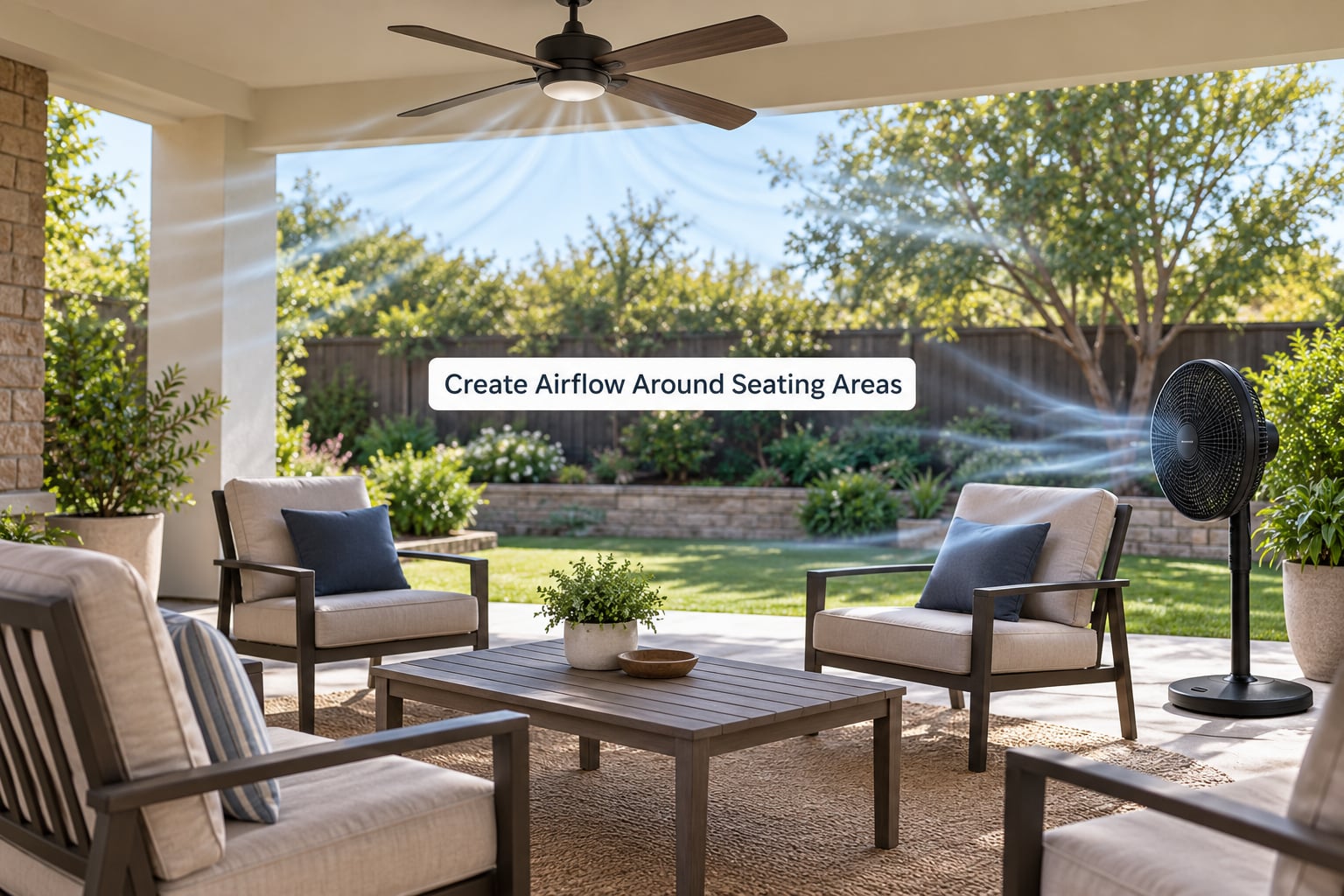
Aim a fan at the people, not at the empty yard. Mosquitoes navigate by following the carbon dioxide you exhale, and a constant breeze disperses that plume before it becomes a trail they can lock onto. Strong moving air also messes up their hovering, which is the stage where most bites happen.
Placement matters more than wattage. Put the fan upwind or to one side so air crosses the seating area within a few seconds, and keep it at table height rather than overhead. Test it by holding a ribbon near the chairs; if it barely moves, the mosquitoes will have an easy lane back in.
Route cords along the wall or under a mat so nobody trips, and use an outdoor-rated cord with a ground fault protection plug if the fan sits near a pool or planter. Never run an indoor-rated fan outside, and do not hang a fan from a pergola beam that was not built for the weight.
2. Eliminate Standing Water Near the Patio
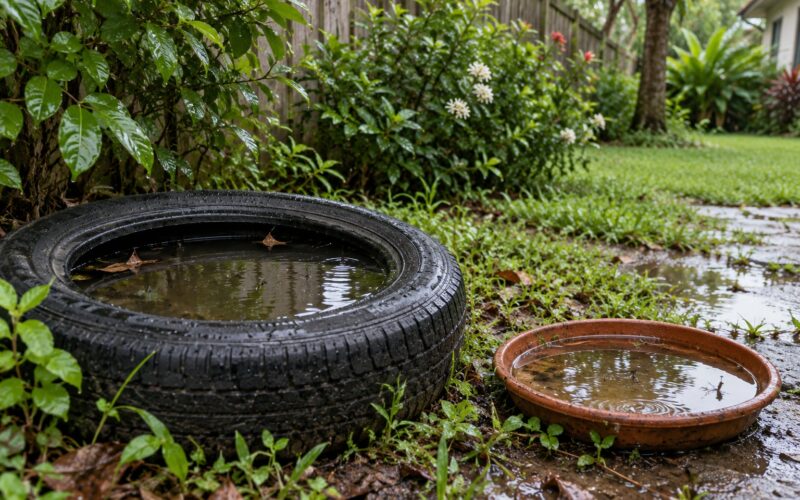
This is the layer people skip, and it is the one that determines how many mosquitoes show up next season. Do a quick audit of the areas you overlook.
- Empty and scrub every plant saucer, especially under large pots and hanging baskets
- Check the saucer under the grill, under recycling bins, and inside trash cans
- Look for toys, buckets, balls and wheelbarrows left out after rain
- Clear the patio drain and the drain in the yard, which silts up with leaves
- Check low spots between pavers where water pools after irrigation
- Empty and refill the birdbath every two or three days during a heat wave
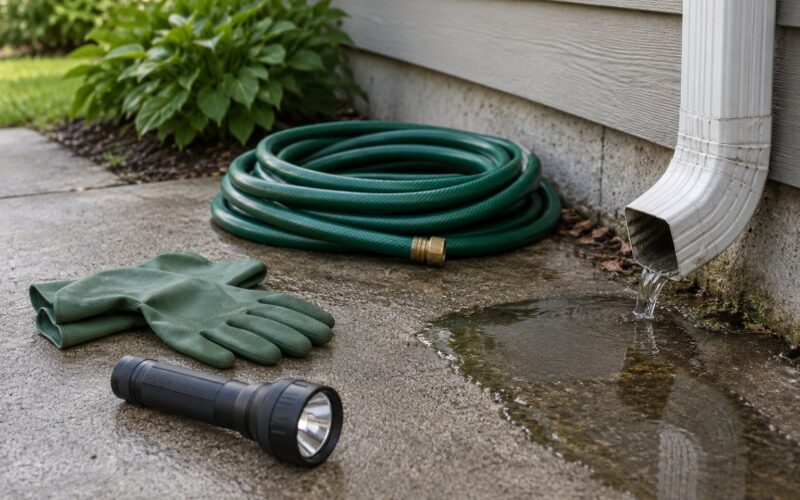
- Flush clogged gutters and downspouts, and confirm they drain away from the seating area
- Turn over or cover rain barrels, and check under any tarp or pool cover
- Refresh water in any tabletop fountain or small water feature
- Drain or refill hot tub and pool standing water after a power outage interrupts filtration
Scrub matters as much as emptying, because eggs laid on the walls of a container can survive a dry spell and hatch the next time you fill it. A weekly cadence fits the biology: eggs hatch in roughly 48 hours and the cycle from larva to flying adult runs about seven to ten days in warm weather. Adults mostly stay within a few hundred feet of where they emerged, so clearing your own yard and immediate neighbors has an outsized effect.
3. Close Off Mosquito Entry Points
Screens are the cheapest physical protection you can add. Walk the perimeter of the patio and check doors, windows and any opening larger than a coin.
Look for stretched or torn mesh, lifted edges along the bottom track, and gaps where the door frame meets the jamb. Repair small tears with outdoor-rated mesh patch and a screen spline roller, and replace full panels rather than trying to stretch a tired one back into place.
Fit door sweeps on patio doors that do not close fully, and seal small gaps with a paintable exterior sealant. Many mosquitoes in a screened space come in through an open doorway during dinner, so a self-closing screen door pays for itself in a season.
While you have the ladder out, glance at vents and weep holes, which are usually screened or should be. If you find anything involving a gas line, wiring, a junction box, or framing, stop and call a licensed professional rather than drilling your own holes.
4. Use Repellents and Outdoor Treatments Responsibly
Personal repellents and patio treatments are different tools, and mixing them is where people get into trouble. Read the label first, every time.
For skin protection, choose a product registered with the EPA and follow its protection window exactly. Most products hold for a couple of hours, and that number on the label is not a suggestion. If you are sweating by a grill or swimming, expect to reapply sooner, and reapply before you go back outside rather than after you notice bites.
For the patio itself, only use a product whose label names outdoor surfaces or the air space around outdoor seating. Apply when there is little or no wind, keep it off blooming plants that pollinators visit, and observe any water restrictions around ponds, pools and koi ponds listed on the label.
A few habits keep everyone safe. Do not apply repellent to a child under 12 months old, keep products out of reach, and do not spray near a lit flame, a hot grill, or a running ceiling fan. Skip heavy essential oil sprays around pets, since concentrated oils can bother dogs and cats, and ask a clinician about repellent choices during pregnancy.
5. Improve Lighting and Reduce Attractions
Switching to warmer bulbs, particularly yellow and amber, reduces the way mosquitoes cluster around your seating area. It is a helpful tweak, not a fix. Light color changes what they see; it does not remove what is driving them there.
Clean up more often than feels necessary. Food residue on a patio table, an overflowing trash can, and leaf litter in the planters all give mosquitoes and the insects that follow them a reason to stay close. Wipe surfaces after eating, tie off bins, and bag food waste before it sits overnight.
6. Maintain the Patio Throughout the Season
Set a recurring weekly walk that takes about ten minutes: check saucers and drains, look for new containers after a storm, and glance at the screens and doors you use most. Do the same inspection the day before guests come, since a weekend of rain can put standing water in places you would never check daily.
Track what you see so you know whether your changes are working. Note the time of day and the spot on the patio where bites land, and count them roughly. If a week of clean water and good airflow leaves you still scratching every evening, the problem sits outside your fence and the next step is different.
Contact a local pest professional when your whole yard is unusable for weeks, when neighbors are reporting the same heavy activity, or when mosquitoes are breeding in a storm drain or on a shared property you cannot reach. Local public health and extension offices can also confirm whether a West Nile or other mosquito-borne illness activity is being reported in your area, which changes how seriously to take it.
Common Mistakes
Relying only on candles. A single citronella candle in the middle of a table barely changes the air around you. If you use them, place several around the perimeter and treat them as one layer among several rather than the whole plan.
Forgetting the small containers. It is almost always a bottle cap, a clogged drain, or a saucer that nobody empties. Add the ten-point water audit above to your weekly walk and the population drops at the source.
Reapplying repellent past its labeled time. When protection expires, you are unprotected without warning. Set a phone reminder for the label’s window instead of trusting how it feels.
Pointing the fan at nothing useful. A fan pointed over the railing blows air somewhere else entirely. Aim it across the chairs and check that a ribbon held at seat height moves within a few seconds.
Applying patio treatments near water or blooms. Many labels restrict use around ponds, pools, and flowering plants for a reason. Read the environmental section, and stay inside its limits.
Treating symptoms instead of the source. Foggers and sprays chase a bite problem for an evening and do nothing about breeding sites. They also make the patio unusable right when guests arrive, which is the opposite of the goal.
Frequently Asked Questions
Does a fan actually keep mosquitoes away?
Yes, and it is the best value move on the list. Mosquitoes hover to find you by tracking the carbon dioxide in your breath, and they fly poorly in moving air. A fan pointed across your seating area disperses that plume and disrupts the hovering that leads to bites. Most people notice a difference the first evening. It works best when airflow reaches the chairs within a few seconds.
How many fans do I need on a patio?
One well-placed fan usually handles a typical four-person table. Larger patios, open-sided porches, or a dining table under a pergola tend to need two, ideally at opposite ends blowing across each other. Test coverage with a ribbon before you buy anything else, and note that an outdoor-rated ceiling fan on a covered patio does more than a portable model in the corner.
Do citronella candles work on a patio?
They help a little at close range, and much less than most sellers suggest. A candle changes the scent only in the few feet around it, so mosquitoes on the far side of a table are unaffected. Users on pest forums frequently report that candles and tiki torches did nothing for them. Treat them as a supplement, never as the main layer of defense.
Why am I still getting bitten after I removed the standing water?
Most likely the breeding site is somewhere you cannot see. Common sources are a clogged patio drain, a neighbor’s containers, a storm drain, or an upper-floor planter on a shared building. Mosquitoes also travel a few hundred feet from where they hatch, so a clean patio does not stop mosquitoes from next door. Fans and personal repellent cover the gap while you keep auditing.
How do I keep mosquitoes off an apartment balcony?
On a balcony you cannot control the source, so shift your effort to barriers and airflow. Check every saucer and drain on the balcony, close gaps under the railing where mosquitoes enter from the courtyard, and run a fan across the seating area. If mosquitoes come from above, that means breeding water in a planter or gutter on a higher floor, which is worth raising with building management.
When is it worth calling a professional for mosquito control?
Call when your own yard is clean and the problem has not eased within two or three weeks, when mosquitoes are coming from a shared source like a storm drain or a neighboring lot, or when the yard becomes unusable evening after evening. A pro can treat breeding areas and the perimeter far more evenly than a homeowner can. Ask what they are treating, where, and when, and treat pets and water features accordingly.
Conclusion
The priority order is short. Remove standing water, move air across where people sit, close the gaps, then use only repellents and treatments exactly as their labels direct. Skip the layers and you are relying on candles and hope.
Start with the two or three changes that match your patio’s worst problem. A fan from last season and a ten-minute water audit cost nothing and usually do more than anything you can buy, so do those first, then revisit the plan in 2026 when the season turns and the mosquitoes return.