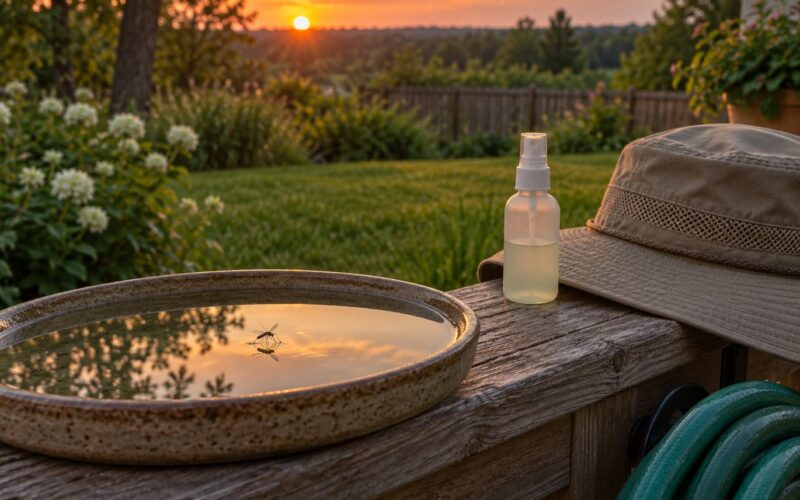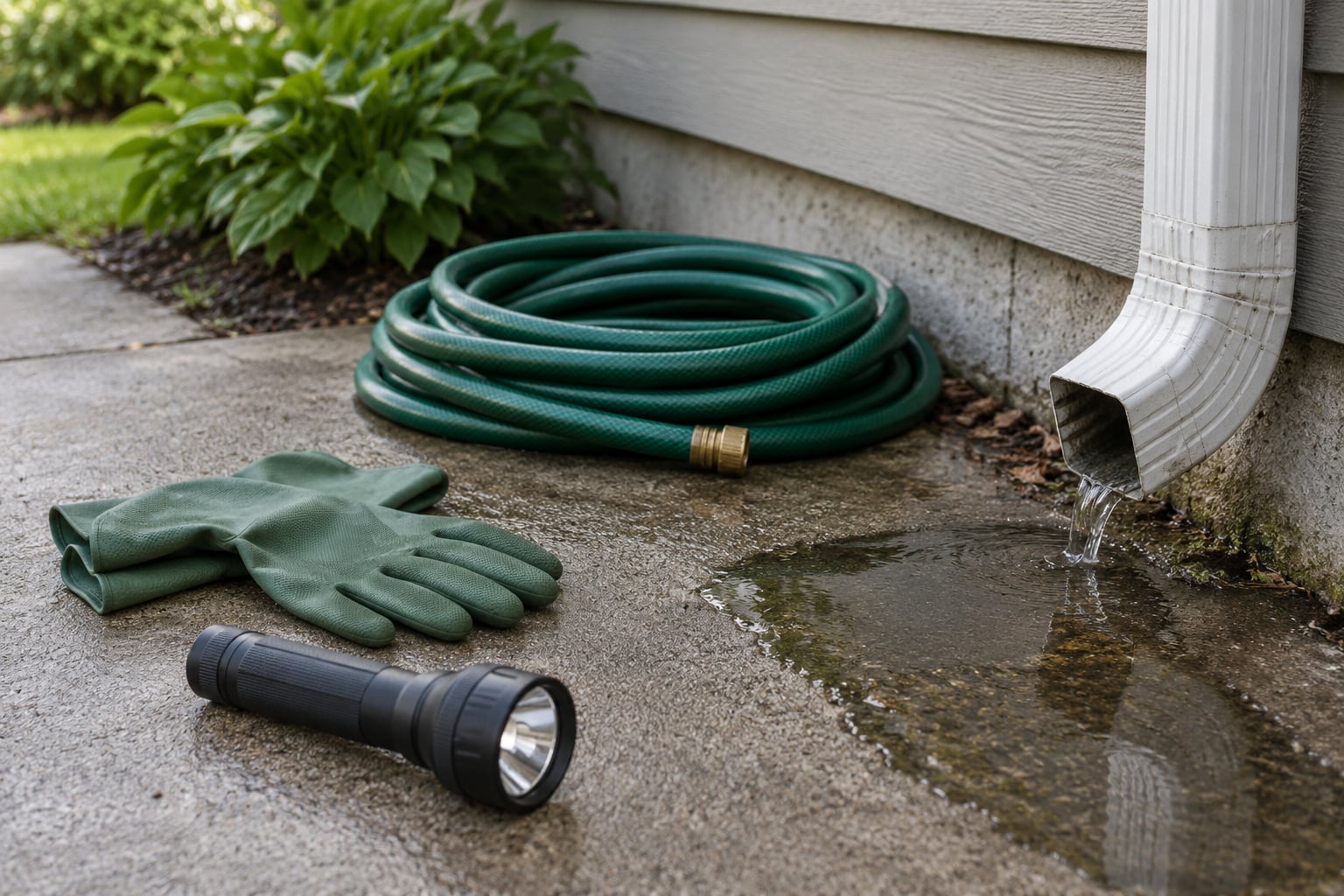
To find standing water around a house, walk the full foundation perimeter after rain, check every gutter and downspout discharge point, look for containers and yard decor that hold water, and note any low spot that stays wet after two days. Most puddles show up in the same handful of places, and an hour of checking clears them all.
The bigger reason to care is mosquitoes. A film of water in a tire track or a forgotten bucket can turn into a breeding site faster than most people expect, and this site is about pest prevention first and foremost.
Table of Contents
- What You Need
- Step-by-Step
- 1. Check Low Areas in the Yard
- 2. Inspect Gutters, Downspouts, and Drainage Channels
- 3. Empty Containers and Covers Near the House
- 4. Check Yard Decor and Outdoor Furniture
- 5. Look for Water in Crawl Spaces and Sheds
- 6. Inspect Roof, Gutters, and Building Openings
- 7. Remove or Treat Small Water Collection Spots
- 8. Prevent Standing Water from Returning
- Common Mistakes
- Frequently Asked Questions
- Where should I look first to find standing water around a house?
- How often should I check my yard for standing water?
- Does standing water have to be large to breed mosquitoes?
- What is the safest way to remove stagnant water near a home?
- Can I leave a rain barrel or water butt uncovered to prevent mosquitoes?
- How do I stop low spots in my yard from holding water?
- Conclusion
What You Need
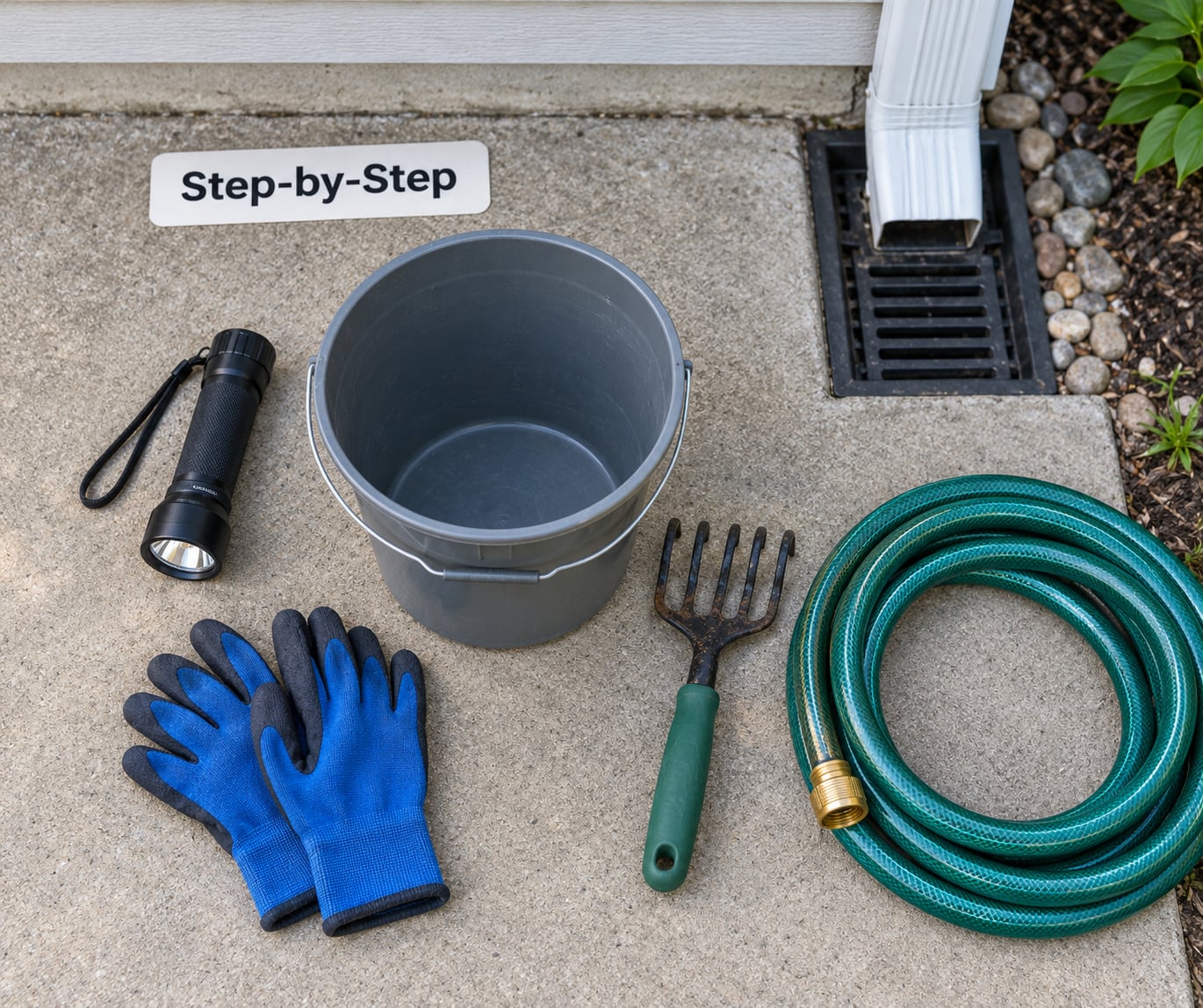
None of this requires special equipment. Wear closed-toe shoes with decent grip, because you will be walking wet grass and poking around at ground level, and pull on gloves since you are going to be scrubbing containers.
- A flashlight and a spare set of batteries, for sheds, crawl spaces, and shaded gutters.
- A hand rake, a few buckets, and a garden hose.
- A 4-foot level and a straight 10-foot board if you want to check the slope away from the house.
- A long-handled spoon or garden trowel for testing how fast water soaks into a low spot.
A ladder helps with low gutters, but only set it on level ground and never lean it against a gutter run you cannot see. Anything above a single story belongs on the roof, and the roof belongs to a roofer.
Step-by-Step
1. Check Low Areas in the Yard
Stand on the lawn an hour or two after a good rain and look for damp patches that have not gone back to normal color. Those marks show where water sat longest, which is usually the true origin of the puddle rather than the puddle itself.
Walk the ground and check the slope as you go. The ground should fall away from the foundation, dropping about 6 inches in the first 10 feet. Lay the board on the soil with the level on top and you will feel instantly whether the ground tilts toward the house or away.
For a low spot, rake away matted grass and leaf debris, then top up with a bagged soil blend and compost so water has somewhere to go. If a patch stays saturated no matter what you add, the water is coming from below, and that is a job for a drainage contractor rather than another bag of dirt.
2. Inspect Gutters, Downspouts, and Drainage Channels
Clogged gutters are the single most common source of water pooling right beside a foundation. A downspout that dumps onto the same patch of lawn every storm creates a permanent puddle in a few weeks.
Look into each gutter run from a ladder and note where leaves have packed into the downspout opening. Clear the blockage, flush the run with the hose, and check where the water actually lands. It should discharge 6 to 10 feet from the house, not at the wall.
If the water lands too close, add an extension. Rigid pipe is easier to spot and lasts longer, a flexible extension is cheaper and easy to reposition, and a pop-up emitter lifts out of the way for mowing. Whichever you choose, confirm the discharge point sits on ground that slopes away, or you have simply moved the puddle five feet over.
3. Empty Containers and Covers Near the House
Walk the property looking at anything that holds water: buckets, flowerpots, tires, kids’ toys, wheelbarrows, storage bins, recycling tubs, and the plant saucer under a patio pot.
Empty them and scrub the inside with a stiff brush and soapy water. A light film left behind is enough to support eggs, and the film is invisible until you look closely at the bottom of the bucket.
Decorative lids and trash can tops count too. Anything that fills with rain and has no drain is a container, whether you bought it as one or not.
4. Check Yard Decor and Outdoor Furniture
Birdbaths and fountains need a scrub on the same schedule as containers, and a fountain with a plugged filter or a dry basin can hold water in the pump housing for weeks. Empty the decorative tub fully rather than topping it off.
Check wicker chairs and tables, metal furniture feet that cup water, and decorative pots stacked in a pile. Anything resting on the ground traps moisture underneath, and a stack of empty pots creates a dozen small basins in one place.
5. Look for Water in Crawl Spaces and Sheds
Sheds, garages, and crawl spaces sit lower than the rest of the yard and often stay damp long after everything outside has dried. Open the door, turn on the flashlight, and check the floor for standing water, damp mats, and a musty smell.
Trace the water to its source. A blocked floor drain, a gap under the door, a leaking pipe, or a downspout aimed at the opening will all refill the same patch. Storing firewood and cardboard up off the floor keeps damp from turning into mold.
6. Inspect Roof, Gutters, and Building Openings
Rain running off a roof lands where the roof plan sends it. Scuppers, corner drains, and area drains clog with debris, and a clogged drain moves water toward the wall instead of away from it.
From the ground, use the hose on a gutter drain or downspout outlet and watch where the water goes. If the roofline itself is the problem, such as missing flashing or a failed gutter slope, the repair is above your pay grade in terms of risk. Call a licensed roofer or gutter contractor, and skip any inspection that means climbing a steep roof or leaning a ladder past the second story.
7. Remove or Treat Small Water Collection Spots
Some spots cannot be picked up and moved. A depression in the lawn, a low corner of concrete, or a planting bed under a spigot has to be drained or filled in place.
Fill shallow depressions with a soil and compost blend, then compact lightly and cover with mulch. Sweep concrete toward a low corner and back out with a broom so the water has somewhere to go, or core-drill a small drain hole in a slab that sits over undisturbed soil.
For anything that must keep water on purpose, such as a fountain or a small pond, use only a product labeled for that specific outdoor use and follow the label exactly. Household bleach, oil, and paint create problems you did not have, and they can harm plants, pets, and drainage systems downstream.
8. Prevent Standing Water from Returning
Make the walk a weekly habit, and keep doing it for at least a month after you clear everything. A weekly loop takes ten minutes and catches containers you have not noticed yet.
Add seasonal checkpoints: clean gutters twice a year, once after leaf fall and once in spring. Check the yard’s low spots at the start of each season. Store empty containers, planters, and toys indoors or under a cover in the months you do not use them, and keep an eye on the discharge points of your downspout extensions.
For a lasting fix, correct the grade first, then add drainage. A swale, a French drain, or a rain garden handles a lot of what regrading cannot, and getting the grade right is the step that keeps water off the foundation in the first place.
Common Mistakes
Checking only once, right after a storm, is the most common error. Water that should have drained in a day can still be sitting in a gutter or a low corner two days later, so revisit the property before you call it clear.
- Ignoring small puddles. A puddle shallow enough to soak your shoe holds just as many eggs as a deep one. Treat every wet spot you find.
- Turning containers upside down. An inverted pot catches rain and leaves in the same way an upright one does. Store containers indoors, covered, or on their sides.
- Using unsafe chemicals. Bleach, oil, and household cleaners protect nothing and contaminate the soil and any drain they reach.
- Skipping the scrub. Emptying a container without scrubbing leaves a biofilm that catches rain and holds eggs. Take the brush to the bottom and sides.
- Aiming sprinklers at the foundation. A head pointed at the wall waters the soil hardest exactly where you want it dry. Aim at the lawn and check for pooling after a cycle.
- Moving a puddle instead of solving it. An extension or emitter that discharges onto flat ground just relocates the problem. Check the grade at the new discharge point.
Frequently Asked Questions
Where should I look first to find standing water around a house?
Start at the foundation, not in the middle of the yard. Walk the full perimeter and watch where the ground tilts, then check every downspout discharge point and the base of each gutter run. After that come the low spots, the containers along the house, and any sheltered spot such as a shed or crawl space. Watching the yard during a storm shows you where the water actually flows, which saves most of the guesswork.
How often should I check my yard for standing water?
Walk the property weekly during warm months. Ten minutes is enough to empty buckets, scrub birdbaths, and refill a rain barrel. Clean gutters twice a year, once after leaf fall and again in spring. After any heavy storm, go back within a couple of days to catch puddles that did not drain on their own, since water sitting that long is where problems start.
Does standing water have to be large to breed mosquitoes?
No. A bottle cap, a clogged birdbath saucer, or a film of water in a tire track is plenty. Most mosquitoes lay eggs in water that looks far too small to matter and return within days for a meal. That is why the weekly scrub matters more than the volume. Clearing every small source around the house does more than any single large fix you can make.
What is the safest way to remove stagnant water near a home?
Drain it, scrub it, and dispose of the water where it will not run into a storm drain or a neighbor’s property. Wear gloves, use a stiff brush with soapy water on the inside surfaces, and skip chemicals unless a product is labeled for that exact outdoor use. If the water sits next to a wall or near an electrical outlet, do not wade into it and call a professional instead.
Can I leave a rain barrel or water butt uncovered to prevent mosquitoes?
An open barrel is an open breeding site, so keep it screened, covered, or fitted with a flap that seals against mosquitoes. Fine mesh screening works as long as it has no gaps and sits tight to the rim. Empty and scrub the barrel on the same schedule as your other containers, since a screened barrel still collects debris and biofilm on the bottom.
How do I stop low spots in my yard from holding water?
Start by removing matted thatch and debris, then fill the depression with a soil and compost blend and shape it so the ground falls away from the house. If water still sits, the soil underneath may be compacted or have a hardpan layer, and you have a choice between improving drainage with a swale or French drain and accepting slower absorption. Check the spot after the next good rain to confirm it drained.
Conclusion
To find standing water around a house, begin at the gutters and the yard’s low points, empty every container and scrub it out, and clear the drainage paths that route roof water toward the foundation. Then repeat the walk weekly until the puddles stay gone.
Ten minutes a week is the whole job for most properties. If a low spot stays wet through a dry week no matter what you add, the water is below the surface, and that is when a drainage contractor is worth the visit.