Mosquito dunks are small, donut-shaped floating tablets that release Bacillus thuringiensis israelensis (Bti), a bacterium that kills mosquito larvae. You drop one into standing water and it slowly releases Bti for roughly 30 days; larvae that swallow it stop feeding and die before they ever become biting adults. They do nothing to mosquitoes that are already flying, so if you are still getting bitten, the usual cause is a water source you have not treated.
Last updated: October 2026
Table of Contents
- What Are Mosquito Dunks?
- How Do Mosquito Dunks Work?
- Where to Use Mosquito Dunks
- Where Not to Use Mosquito Dunks
- How to Place Mosquito Dunks Safely
- How Often Should You Replace Mosquito Dunks?
- How Effective Are Dunks for Mosquito Control?
- Mosquito Dunks vs. Other Mosquito-Control Methods
- How to Tell If Dunks Are Working
- Safety and Environmental Considerations
- Frequently Asked Questions
- Start This Weekend
What Are Mosquito Dunks?
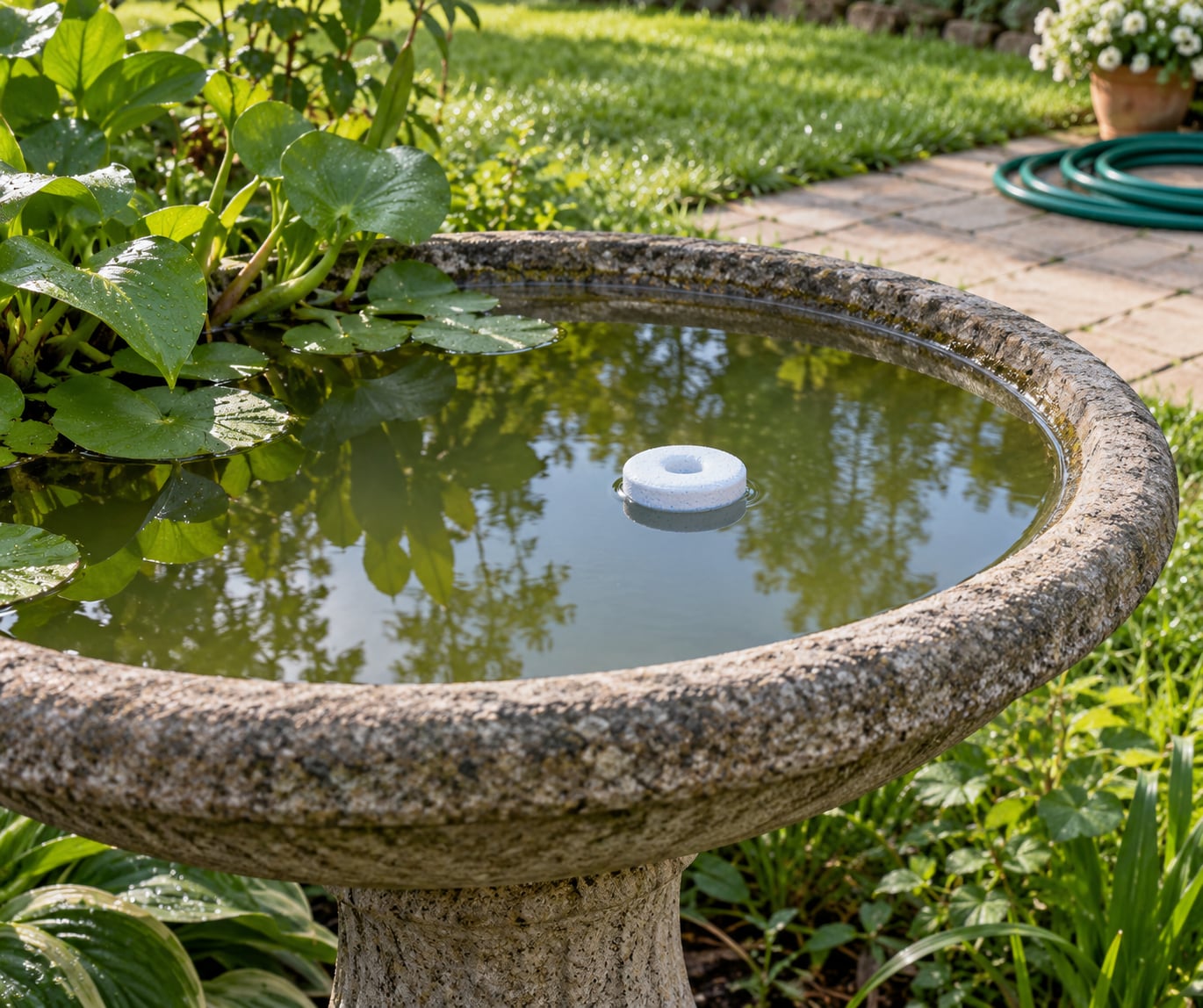
Mosquito dunks are small, donut-shaped tablets containing Bacillus thuringiensis israelensis (Bti), a naturally occurring soil bacterium used as a mosquito larvicide. They float on the surface of standing water and release the bacteria gradually, usually labeling one dunk for about 100 square feet of water surface over roughly 30 days.
That is the whole idea: interrupt the life cycle before an adult ever flies. Extension services such as the University of Georgia’s Cooperative Extension (Field Report C-1266, Mosquito Control Around the Home) treat larviciding of container water as a standard homeowner step alongside draining and covering.
What they are not is just as important. Dunks are not a repellent, so they do nothing to keep mosquitoes off you while you sit on the patio. They are not an adulticide either, so they will not kill mosquitoes that are already airborne or already resting on your fence.
They also do not kill mosquito eggs. A raft of eggs on the surface of a container can sit through a treatment untouched and hatch into larvae afterwards, which is one reason a single dunk sometimes looks like it did nothing.
How Do Mosquito Dunks Work?
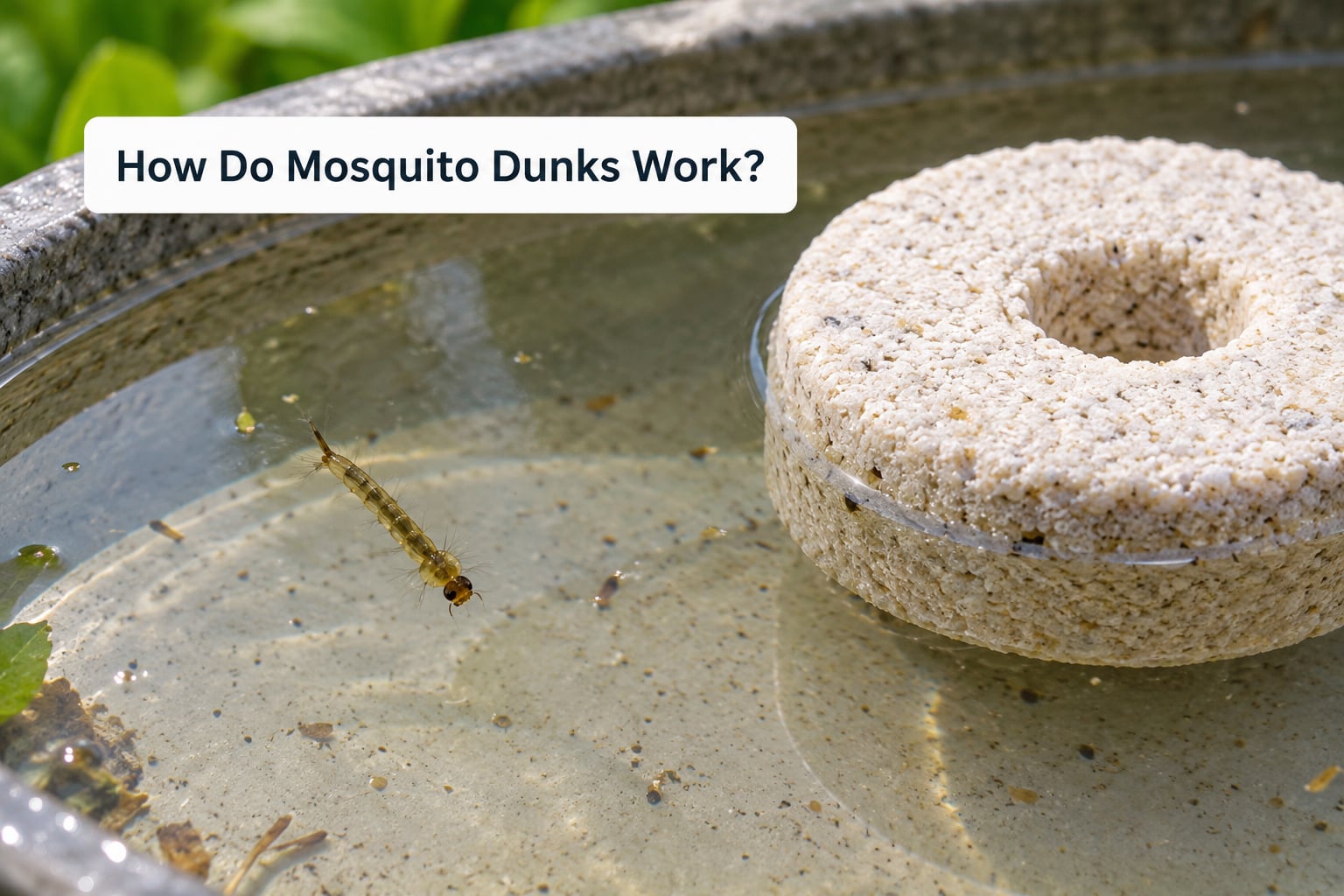
How mosquito dunks work comes down to five steps that happen over days, not seconds. Understanding the sequence is what explains both why they work and why people sometimes think they failed.
- It floats. The ring shape keeps the tablet on the surface, where it is exposed to sunlight and ultraviolet light that would otherwise break Bti down quickly.
- It releases. The compressed formulation dissolves gradually, dosing the water column at a steady rate instead of dumping everything at once and letting it wash away.
- A larva ingests it. Mosquito larvae feed on particles suspended in the water, and Bti is one of those particles.
- The toxin activates in the gut. Bti produces a protein that only becomes active in the alkaline conditions of a mosquito larva’s digestive tract, which is a large part of why it is so selective.
- Feeding stops and the larva dies. Within roughly a day or two of ingesting it, the larva is dead, usually well before it pupates and emerges as an adult.
That last step is the reason timing matters so much. In warm weather, a mosquito can go from egg to adult in about seven to ten days. Five days of standing water is the commonly cited threshold at which a container can go from harmless to productive breeding.
Which brings up the complaint I hear most often: a dunk is sitting right there in the pond, and the yard is still full of mosquitoes. Four things are usually going on. Mosquitoes that were already adults when you treated are still flying, and a larvicide cannot touch them. The adults may be coming from a neighbor’s yard, a vacant lot, a storm drain, or a creek. The treated water may be too deep, too murky, or so densely planted that larvae never reach the surface layer where the Bti concentrates. And eggs already on the water are unaffected.
None of that means the dunk was wasted. It means it was one part of a program, not the whole program.
Where to Use Mosquito Dunks
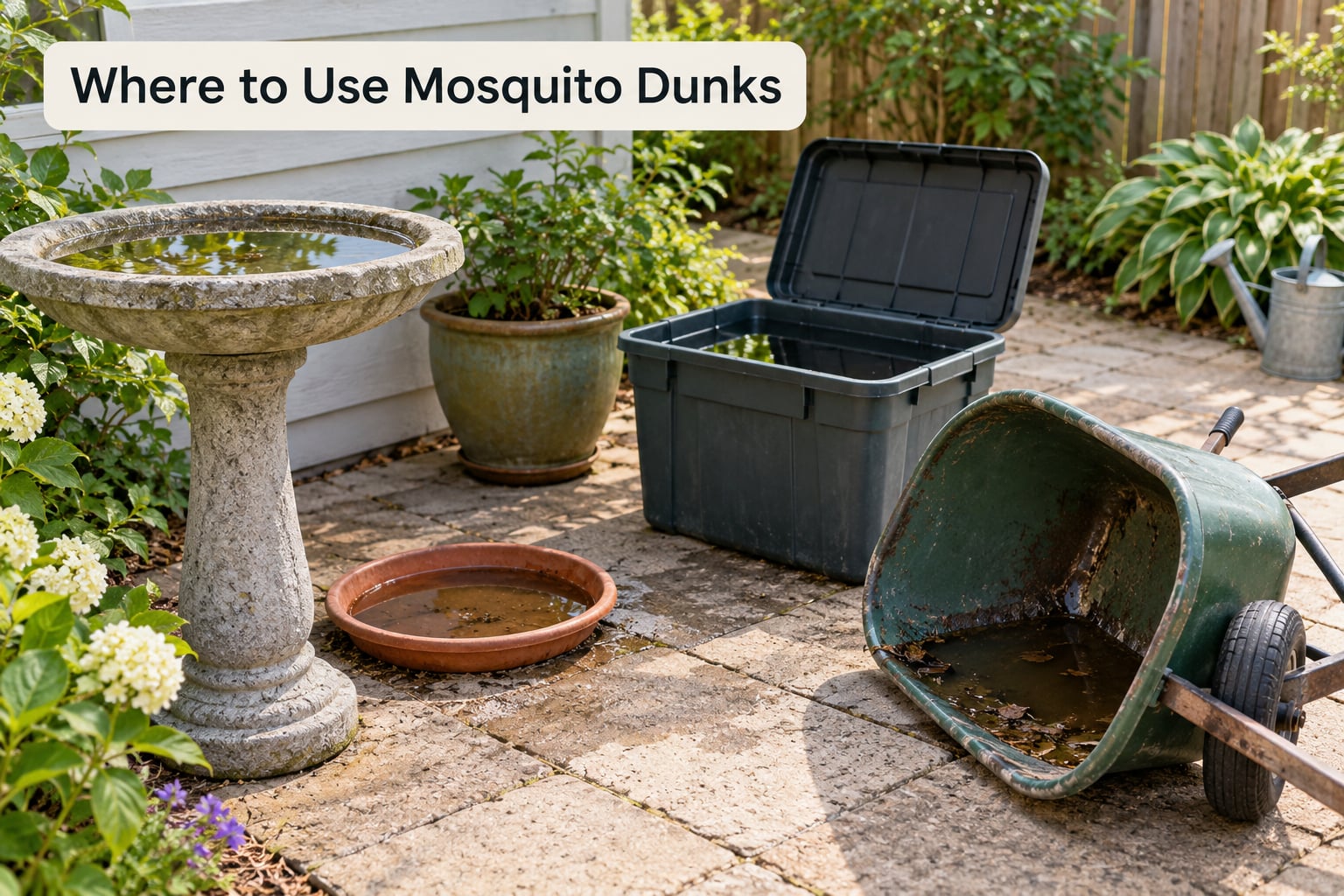
Where to use mosquito dunks comes down to one rule: any water that stays put for more than about 24 hours and that you cannot realistically drain. The best sites are the ones people forget about, because they are usually at ground level and shaded.
Small containers you drain every week
Bird baths, plant pot saucers, self-watering planters, and the little dishes under outdoor vases. These hold water long enough to produce larvae and sit within reach of a dunk, which makes them the easiest wins on the property.
Things you store outside
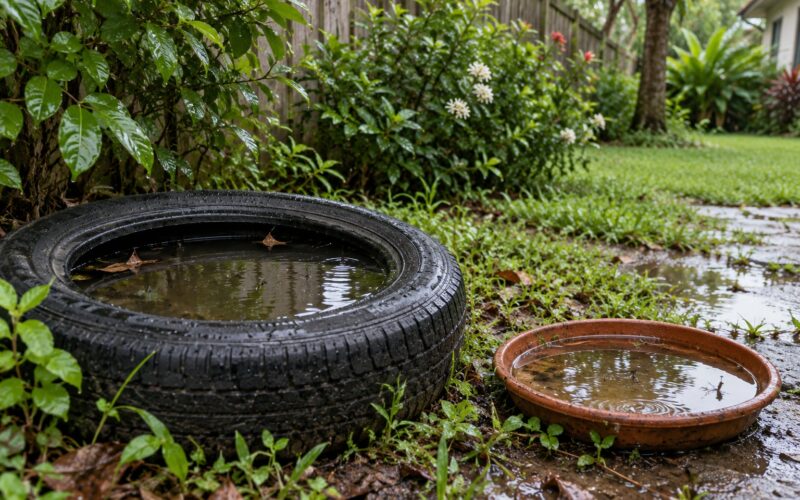
Buckets, empty cans, tarps folded on a shelf, wheelbarrows, recycling bins, and children’s outdoor toys. A tarp with a low spot holds a surprisingly productive puddle, and a tire stacked flat is close to an ideal breeding site.
Water you want to keep rather than empty
Rain barrels, cisterns, koi ponds, ornamental water gardens, fountain basins, and the standing water in a birdbath refiller. Here you are choosing a treatment over draining, because draining is not an option for water you deliberately collected.
Hard-to-reach or hard-to-drain places
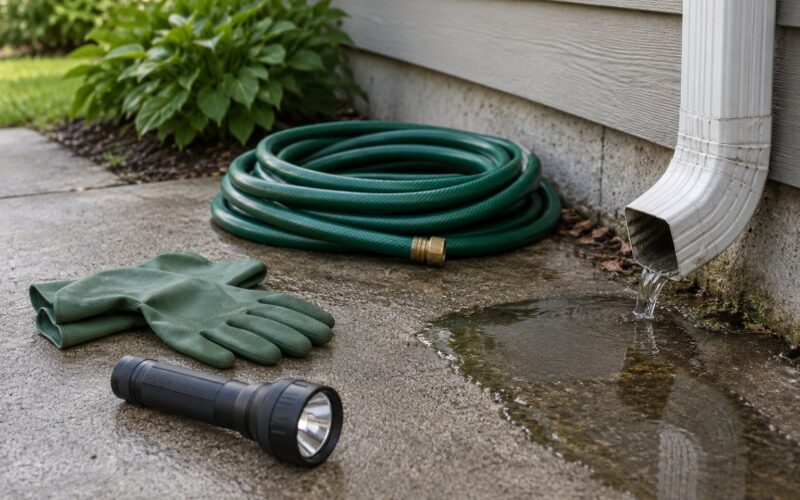
Clogged gutters and downspout elbows, low spots in a lawn that stay soggy after rain, and the sump area at the bottom of a downspout. For gutters, flushing the debris out first and then dosing the run is more effective than dropping a dunk into a clogged trough where it will simply sit under a mat of leaves.
Neighborhood-scale and event traps
A ring of buckets set out around a property attracts egg-laying females, and a dunk in each bucket catches the larvae that result. This works best as a monitoring and suppression tactic rather than as your only control, since adults already flying ignore it entirely.
| Water source | Example | Best form | Notes |
|---|---|---|---|
| Small open container | Bird bath, pot saucer | Dunk or bits | Scrub and refill weekly for the cleanest result; a dunk does not stop it refilling with eggs |
| Stored container | Bucket, bin, wheelbarrow | Dunk or bits | Check after every rain; a bucket left empty for a month is the classic missed site |
| Collected water | Rain barrel, cistern | Dunk | Keep the screen intact and dose for actual surface area, not barrel volume |
| Large open water | Koi pond, water garden | Dunk plus bits | Heavy plant density and shade reduce even exposure; use a couple of sites rather than one corner |
| Roof drainage | Gutter trough, downspout elbow | Bits after clearing debris | Clear first. A tablet buried under leaves never doses the water |
| Disposable water | Tires, tarps, toys | Best discarded | Flipping them empty beats treating them, and it costs nothing |
| Indoor potting soil | Houseplant soil, seed trays | Dissolved drench | A different problem: fungus gnats, not mosquitoes. See the safety section |
Where Not to Use Mosquito Dunks
There are a handful of places where treating water with a larvicide is the wrong call, and the common thread is that you cannot reliably follow the label or you cannot accept the environmental consequences.
- Water you or someone else will drink. Rain barrel overflow, an untreated cistern, or a well overflow next to the foundation should be fixed by screening or by not collecting that water, not by dosing it.
- Livestock troughs and stock watering tanks. Animals drink directly from these, and treated surface water sits exactly where a muzzle goes.
- Moving water. A stream, a constantly circulating fountain pump, or a waterfall pushes the treatment downstream faster than it can dose the water, and the target concentration may never be reached.
- Water you cannot reach. A submerged root ball, a deep pond corner under a shelf of rocks, or a covered container with no access means the dunk floats where larvae are not.
- Water bodies you are not permitted to treat. Some state agencies and local ordinances restrict larvicide use in open or connected waterways, including rights-of-way and municipal drainage. Check before treating anything that drains to a creek or a neighbor’s property.
- Sites with a documented resistance history. A small number of vector control districts have reported reduced susceptibility in local mosquito populations. If your district tells you Bti is not performing locally, that is a signal to rotate to a different active ingredient such as spinosad rather than to keep adding more.
How to Place Mosquito Dunks Safely
Placing a dunk takes about a minute once you know the sequence. These steps keep it effective and keep it away from anyone who might get hold of it.
- Walk the property and find the water. Look low and in shade: gutters, under deck joists, behind planters, in the low corner of the yard that stays wet a day after rain.
- Read the label before you open the packet. Not every product uses the same coverage rate, and the label is the legal instruction. If the label says something different from a general rule of thumb, the label wins.
- Dose by surface area, not volume. This is the most common mistake. The coverage figure on the label refers to square feet of water surface, which is why a large but shallow puddle may need more than a small deep container.
- Place it in the middle of the water. A dunk wedged against a wall in a corner treats a fraction of what the label describes.
- Date it. Write the date on the wrapper with a marker and leave the wrapper next to the container. This is the whole replacement reminder system, and it costs nothing.
- Handle it with dry hands and wash afterward. Wash hands before eating, and keep the opened packet out of reach of children and pets rather than leaving it on the rim of the container.
If you are treating many containers at once, set the phone reminder when you place the first one rather than when the last one dries. You will be replacing them all at about the same time anyway.
How Often Should You Replace Mosquito Dunks?
Most dunks are labeled to release Bti for about 30 days, so plan on a monthly replacement rather than a fixed calendar date. Treat that 30 days as a ceiling, not a guarantee.
Several things shorten it. Rain dilutes and displaces the treatment, and a tablet that gets pushed under debris has effectively stopped dosing. High water temperatures speed larval development, so eggs can hatch and reach the adult stage inside a single window that would have been safe in spring. Fine sediment and dense plant growth shield larvae from the surface layer where the concentration is highest.
Water volume matters too. A dunk in a barrel that is topped up every few days may never get through its full release period, because fresh water dilutes what is left.
The most reliable routine is a weekly five-minute walk with the marker in your pocket. Any container that has been emptied and refilled, or has new debris in it, gets a fresh dunk that day.
How Effective Are Dunks for Mosquito Control?
Dunks are effective at what they are designed to do, which is reducing larvae in treated standing water. That is genuinely valuable, because a single female can lay several hundred eggs in a container, and killing the larvae before emergence stops a potential population rather than a single insect.
What they cannot do is control the adults flying around your yard. Those may have emerged weeks earlier, or they may be arriving from a source entirely outside your control. If your bites peak in July and you first noticed the problem in July, dunks added in July are working a stage that already came and went.
They also do not treat every site equally. Shaded, plant-choked, deep water is the hardest case; a clean shallow birdbath is the easiest. That is why the numbers people report range from “I still get bitten every evening” to “the birds use my bath all summer and nothing bites me.”
Treated as one step in a routine, alongside draining containers weekly, covering storage, screening gutters, and using repellent on your own skin, dunks are one of the lowest-impact tools available to a homeowner. Used alone and late, they will disappoint you.
Mosquito Dunks vs. Other Mosquito-Control Methods
No single method handles every stage, which is why the useful question is not which one is best but which stage each one covers. Draining beats everything when you can actually do it, and treating beats leaving water alone when you cannot.
| Method | Stage it affects | How fast | How long it lasts |
|---|---|---|---|
| Draining or discarding containers | All stages, by removing the site | Immediate | Until the container holds water again |
| Covering and screening | Stops egg-laying | Immediate | As long as the screen stays intact |
| Mosquito dunks (Bti) | Larvae only | Larval death within about a day of ingestion | About 30 days per dunk |
| Granular bits or powder | Larvae only | Similar | Shorter; better for many small sites |
| Liquid Bti concentrate | Larvae only | Fast, even distribution | Dilutes or washes out sooner |
| Adult-targeting spray or fogger | Flying adults | Hours | Days at most, and it kills pollinators too |
| Repellents on skin or clothing | Protects the person, not the yard | Minutes | Per the label |
| Fan or airflow | Makes you harder to target | Immediate | While it runs |
| Professional or district treatment | Broad area, often aerial | Varies | Scheduled by the district |
For an ordinary yard, the order that works is: remove what you can remove, cover what you cannot, treat what you must keep, and use repellent on yourself. Adult sprays come last, because they are the option most likely to take out beneficial insects along with the mosquitoes.
How to Tell If Dunks Are Working
The most reliable check is a larval dip, not a bite count. Scoop water from the treated container into a white cup or a clear jar and look for wriggling larvae. A few larvae in a large volume of water is normal; a cup full of them means the treatment is not holding.
Two details make the dip readable. Clear the cup against a dark background so pale larvae are easier to see, and remember that pupae do not wriggle, they bob. A container that is producing only pupae has already survived the treatment stage and is nearly at the adult stage.
Adult activity is a poor measure of whether a dunk worked, for the reasons above. If you want a better read, do the dip first, then watch how many adults appear after the next seven to ten days. That interval is a much cleaner signal than counting bites tonight.
If a treated container keeps producing heavy larval counts, work through the likely causes in order: too few dunks for the surface area, murky or shaded water, heavy plant cover, or a dunk that has been sitting under debris for weeks.
Safety and Environmental Considerations
The safety profile of dunks is one of the strongest reasons to use them, but it depends entirely on following the product label. The label is the legal instruction, directions differ by product, and a product registered by the EPA for a specific use is only approved for that use.
Honeybees and other pollinators
Are mosquito dunks safe for honeybees? Yes, when used as labeled, and the reason is mechanical rather than hopeful. Bti is an ingestion-only toxin. It has to be eaten and then activated in the alkaline gut of a susceptible larva, and adult bees do not feed on standing water or filter mosquito particles out of it. Worker bees forage on flowers; they do not drink from a treated birdbath or rain barrel.
Beekeepers who have raised this question in forums generally land in the same place once the mechanism is explained. It is a real concern that turns out to be a low-risk one, which is exactly why it is worth answering directly rather than skirting.
Pets, children and fish
Bti is considered low risk to mammals when used as directed, which is why many products carry a child-resistant packet and why labels keep the same warnings as any pesticide. Keep unopened and opened packets out of reach of children and animals, do not treat water a pet drinks from, and wash your hands after handling.
Fish ponds and koi ponds are treated at label rates without harming the fish, which is well documented for Bti. The real risks in a fish pond are mechanical rather than chemical: a dunk lodged in a filter intake can block flow, and an untreated pond will get more from adding plants and moving water than from larvicide.
If someone swallows a dunk or drinks heavily treated water, call Poison Control in the US at 1-800-222-1222. Have the product label in hand, since it carries the registered ingredients and the antidote information.
Wildlife and beneficial insects
There is an honest caveat that most product pages skip. Bti is selective for dipteran larvae, but dipteran larvae include more than mosquitoes. Black fly larvae and fungus gnat larvae are affected too, and those are food for some amphibians and insect-eating birds. In a small backyard container this effect is negligible; in a large treated wetland, or if you are running many treated containers as an insectary, it is worth thinking about.
Bti also breaks down in sunlight and is not persistent in the environment, so there is no residue that carries through soil or into groundwater the way some older chemistries did. Follow the label, dispose of the container contents as directed, and stop treating water you have stopped needing to treat.
Frequently Asked Questions
Do mosquito dunks actually kill adult mosquitoes?
No. Dunks contain Bti, which only becomes active in the digestive tract of a mosquito larva. Adults that are already flying or resting are unaffected, and mosquitoes can also keep arriving from sites outside your yard. Dunks work by stopping new adults from ever emerging, so they need to be in place before larvae develop, which is why early-season treatment matters more than mid-season treatment.
Are mosquito dunks safe for honeybees and other pollinators?
Used as labeled, yes. Bti is an ingestion-only toxin that activates in the alkaline gut of a susceptible larva, and adult bees do not feed on standing water or filter particles from it. Worker bees forage on flowers, not in a treated birdbath or rain barrel. If you have a specific concern, check that the product carries an EPA registration number and follow the pollinator instructions on the label exactly.
Can I use mosquito dunks in a bird bath and a rain barrel?
Yes, both are ideal sites. A bird bath holds water long enough to produce larvae and sits within reach of a floating tablet, which makes it the easiest place to use dunks. For a rain barrel, keep the insect screen intact and dose for the surface area rather than the barrel volume, since coverage is calculated on square feet of water surface. Scrubbing and refilling the bath weekly reduces how much treatment you need.
How long does one mosquito dunk last before I need to replace it?
About 30 days, which is the release window most labels specify. Treat that as a ceiling rather than a guarantee. Heavy rain dilutes and displaces the tablet, high water temperatures speed larval development, sediment and dense plants shield larvae from the surface, and frequent refilling of a container dilutes what is left. Docking the wrapper with a marker and doing a weekly walk is the simplest way to stay ahead of it.
Are mosquito dunks safe for pets, fish and small children?
Bti has low toxicity to mammals and is widely used in fish ponds at label rates, so it is generally safe for pets and koi when you follow the directions. The precautions are about access and ingestion: keep packets out of reach of children and animals, do not dose water a pet drinks from, and wash hands after handling. If anyone swallows a dunk, call Poison Control in the US at 1-800-222-1222 with the label in hand.
Start This Weekend
Walk your property and dump out anything holding water that you can empty: tires, buckets, saucers, the low corner of the yard. Then treat what you intend to keep, dose by surface area, and write the date on the wrapper with a marker. Set a phone reminder for four weeks out and do a five-minute check every week after that. Draining gets you the biggest reduction for the least effort; dunks handle the water you cannot give up.