If you have found a thin brown ridge on a foundation wall, a narrow bridge running across a crawl space pier, or a dangling tube hanging from a basement beam, you are looking at the most common warning sign a subterranean termite colony leaves where you can see it. Subterranean termite mud tubes are pencil-width shelter tunnels built from soil particles, chewed wood, frass and saliva, and they mark a protected route between the ground and a wood structure.
That route matters more than the tube itself. Termites eat wood from the inside out, so the visible tube is rarely the worst of the damage. Most people find one by accident while moving something, cleaning a garage, or doing a spring walk around the house, and the first question is always the same: is this actually termite work, and what should I do about it?
This guide covers what the tubes look like, where to find them on a house, how to rule out the marks that get mistaken for them, and how to test whether a tube is still being used.
What Are Subterranean Termite Mud Tubes?
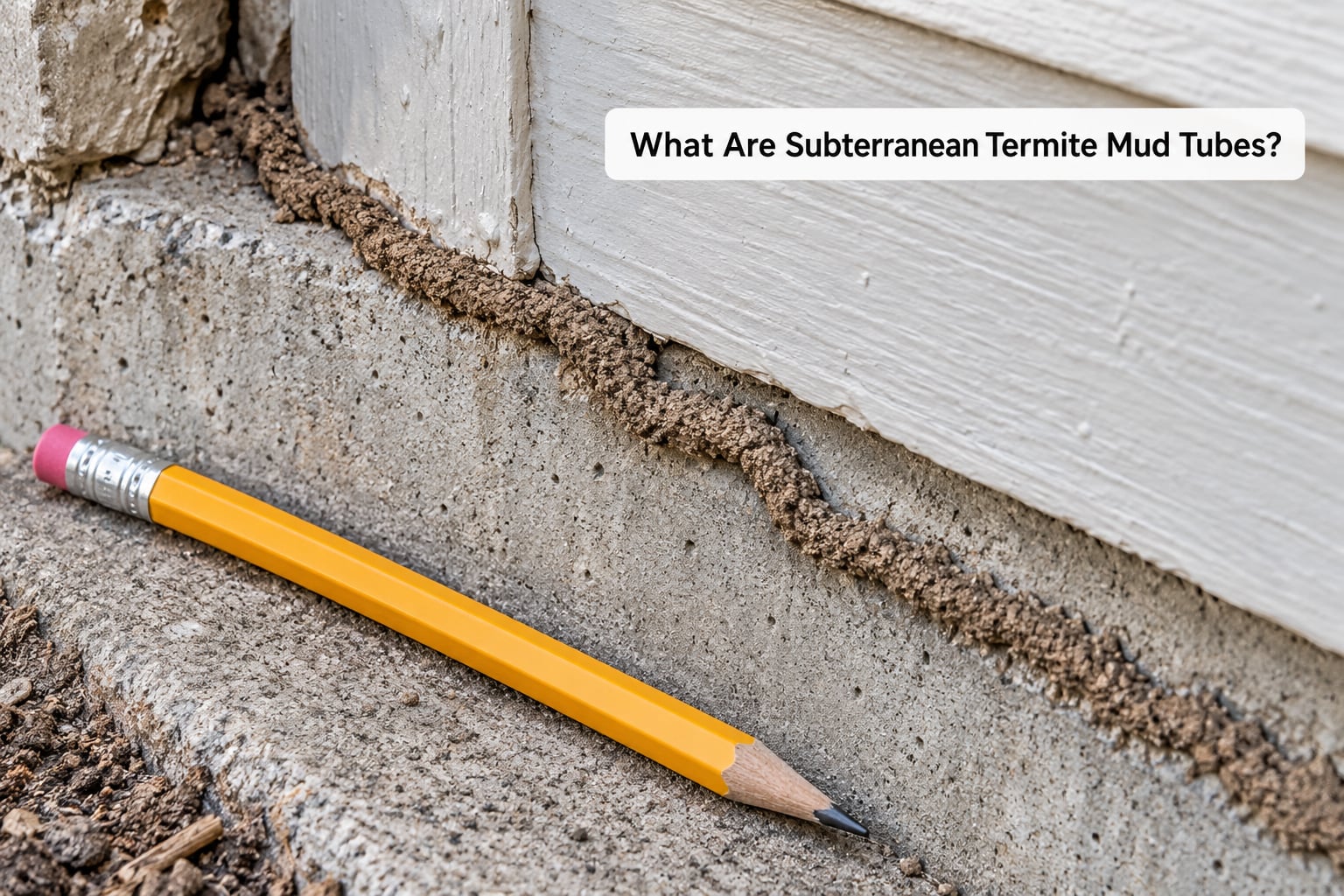
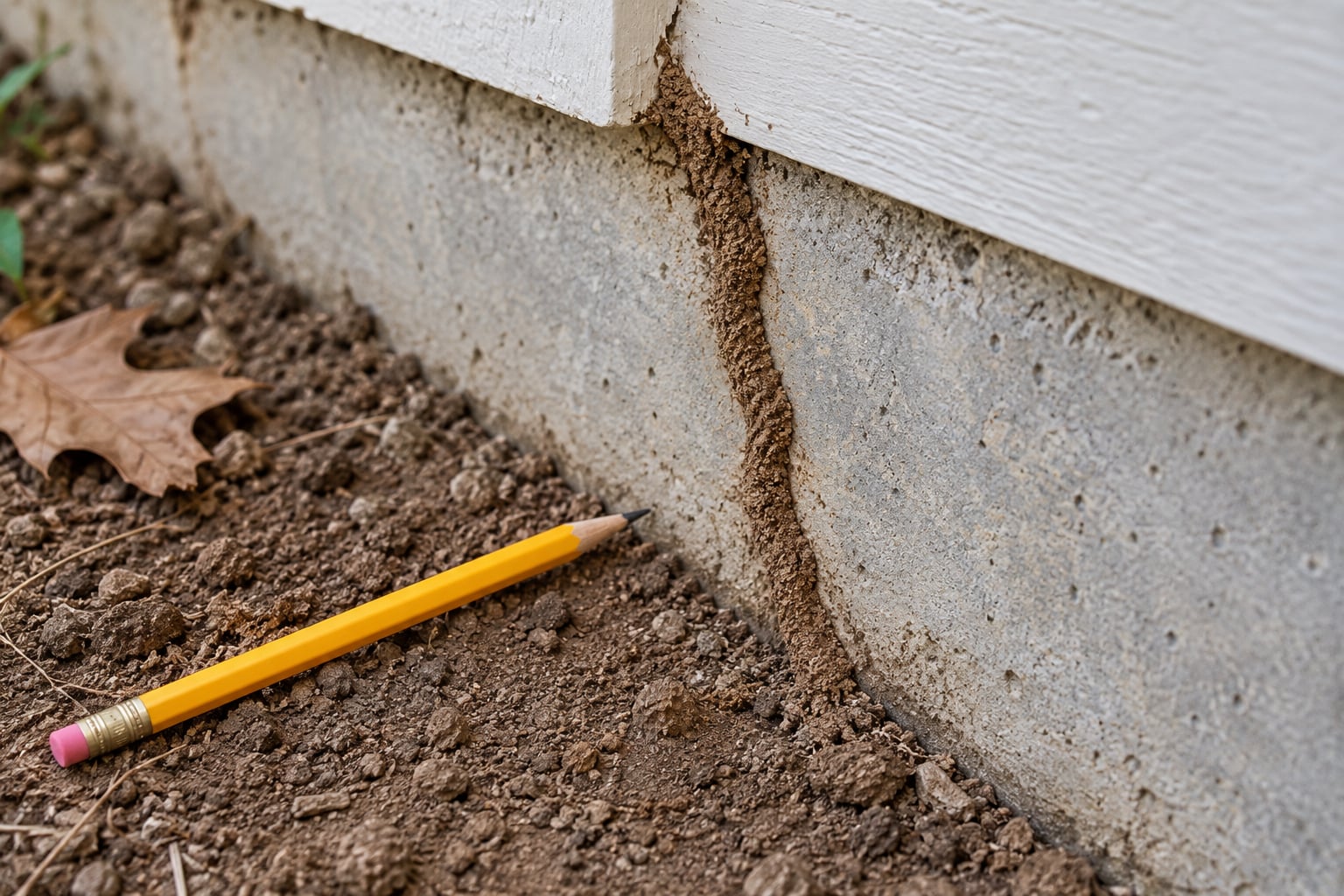
A subterranean termite mud tube is a shelter tunnel built from soil, wood particles, frass and saliva. Subterranean termites are soft-bodied, and they lose moisture fast in open air. Rather than walk across a dry, sunlit surface, they pack material from the soil into the walls of a tunnel roughly the width of a pencil and seal themselves inside a dark, humid, protected corridor.
Building the tube is expensive work for an insect. They gather soil particles, mix them with saliva and fecal material, and carry it up bit by bit. Once the tube is finished, it serves as a highway the colony reuses every time it travels between its underground nest and a food source.
Here is the part homeowners miss. Subterranean termites tunnel through wood from the inside out and leave the outer layer intact, so a wall or beam can be hollowed out while the painted surface still looks fine. The mud tube is often the only clue that any of it is happening. Finding one means termites already have a protected way in, and the damage hidden behind the surface is likely further along than the tube suggests.
You will hear mud tubes called shelter tubes or earthen tubes as well. Same structure, different word depending on who you ask.
What Do Subterranean Termite Mud Tubes Look Like?
Four traits do most of the identifying work: color, diameter, texture and shape. Get those right and the odds tilt heavily toward termite construction. Color and diameter are the fastest filters, because most look-alikes fail one of the two.
- Color: light tan or buff when freshly built, darkening to medium or dark brown as it dries and ages. Some tubes pick up a grayish or blackish cast where they pick up dirt from contact with the surface below.
- Diameter: usually around a pencil width. Working tubes on heavily used routes can thicken toward an inch, and repair sheaths over an older line can bulge wider than the original tunnel.
- Texture: grainy, packed and earthy on the surface. It should crumble or smear slightly if you press it, the way damp soil does, rather than snap like a shell or flake like paint.
- Shape: irregular, knobbly and uneven, rarely smooth or straight. It follows the contour of whatever it is attached to, with lumpy joints where pieces were added during a pause in building.
Length is worth knowing too. Many tubes run only a few inches because that is how far the colony had to travel. Others stretch a foot or more along a foundation or across an opening. They attach firmly along their whole length, and lifting one off the surface usually crumbles part of it.
| Feature | What a subterranean termite mud tube looks like | Quick reference |
|---|---|---|
| Color | Light tan or buff when new, darkening with age | Tan to dark brown |
| Diameter | Pencil width on scouting routes, wider on main travel routes | About 1/4 inch to 1 inch |
| Length | From a few inches to a foot or more | 2 inches to 12+ inches |
| Texture | Grainy, packed soil with visible wood flecks and frass | Crumbles when pressed |
| Shape | Irregular, knobbly, follows the surface it is attached to | Not smooth, not straight |
| Attachment | Firmly bonded along its length | Lifts with crumbling |
| Breakability | Fragile; knocked-down tubes collapse easily | Fragile when dry |
One more habit is worth naming. Active tubes get repaired. Break one open and an active colony will often rebuild the gap within hours, sometimes overnight in warm weather. An old abandoned tube just sits there, sometimes crumbles to loose soil when you brush it, and never gets touched again.
Where Do Termites Build Mud Tubes?
Subterranean termites are soil-first insects. They nest in the ground and build upward toward wood that sits near the soil line, so the search starts a few inches above grade and works up. These are the places I would check first, in this order.
Along the edge of a concrete slab
The slab edge is the number one place. Tubes run up the vertical face of the slab, along the joint where the concrete meets the foundation wall, and across cracks. Termites get in through expansion joints, seams that have opened slightly, and penetrations where plumbing, wiring or a hose bib passes through the slab.
Where wood touches soil
Any point where wood meets the ground is an invitation. That includes the bottom of a siding panel, a fence post, the base of a deck, the edge of a shed, the bottom of a wooden post and the sill area where a crawl space wall meets bare earth.
Crawl space piers and footings
Brick or block piers, concrete pads and stem walls in a crawl space frequently carry a tube running up the side or bridging from the pier to the beam above it. Homebuyers find these constantly during escrow inspections.
Floor joists and beams in basements and garages
Here tubes hang downward, described in one of those places as looking like stalactites. They attach to the underside of a joist or beam and may hang a foot or more toward the floor or the soil below, sometimes touching and fanning out onto whatever is underneath.
Sill plates and wall studs in wall voids
In unfinished rooms and garages you may see a tube climbing a stud or running along the bottom plate. In finished rooms, a tube sometimes pushes through a small hole in drywall or baseboard near a floor or door opening.
Above the structure
Termites also build upward and outward. Tubes have been found on roof overhangs and fascia, on attic or garage loft beams, running across pantry shelves, and even on stored furniture and wooden pallets in a garage. A tube high on a wall usually means the colony has been working through the structure for a while.
Seasonally, you are most likely to notice new tubes after rain and during warm, humid stretches, when colonies are actively foraging and soil is damp enough to build with. A tube that shows up in the middle of a dry summer stretch is easier to miss and just as informative.
| Where you found it | What it usually suggests |
|---|---|
| Slab edge or expansion joint | Foraging route from the slab toward the structure; entry through cracks or penetrations |
| Wood touching soil | Direct contact point, the easiest route of all |
| Crawl space pier or footing | Active movement under the house; worth a crawl space inspection |
| Floor joist or beam | The colony is already above the soil line and moving through framing |
| Wall stud or sill plate | Spread inside the wall or floor system, often already advanced |
| Garage, shed or deck | Often the nearest structure to the colony; may be the first sign you get |
| Attic beam or fascia | Long-term presence; inspect lower framing too |
| Stored furniture or shelving | Wood in contact or near contact with infested framing or floor |
How to Tell Mud Tubes From Other Marks
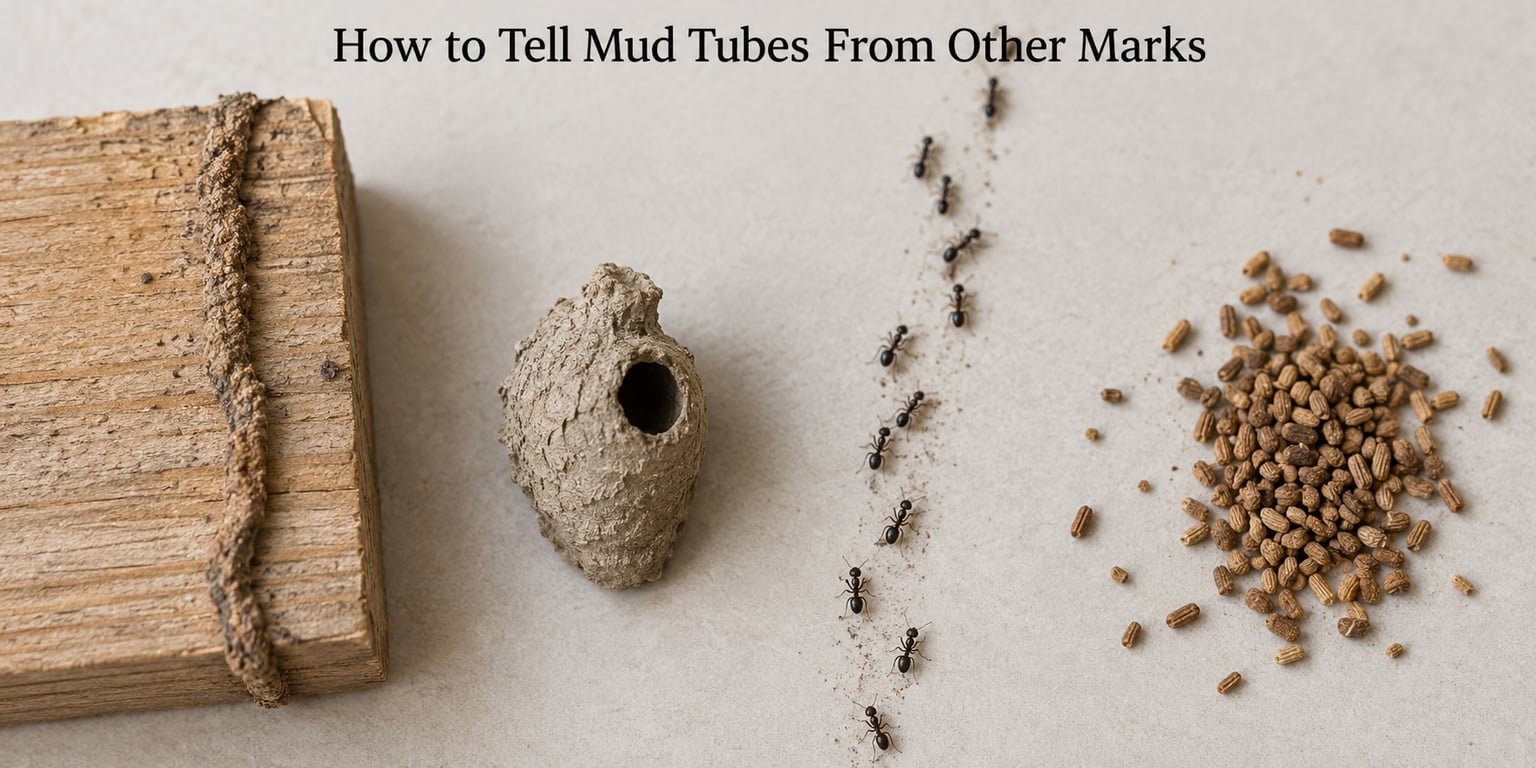
Most misidentifications happen because everything gets called a mud tube. Mud dauber nests, ant trails, stucco cracks and washed dirt all get reported as termite damage, and the fix is usually to look at the construction rather than the location. A termite tube is built material with a consistent diameter and grainy packed soil texture. Everything else is either not built, not made of soil, or not tube-shaped.
| Look-alike | How it differs from a termite mud tube |
|---|---|
| Mud dauber nest | Attached to a vertical surface or under an eave, built from mud and short wood fibers, lumpy and rounded rather than a continuous tunnel. Wasps are often still nearby. |
| Ant trail | A line of moving insects on a surface, not a constructed ridge. Ants do not build earthen tunnels along beams. |
| Dirt streak or splashback | Loose soil with no structure, no consistent diameter, no bonding to the surface. Wipes or blows off easily. |
| Stucco or mortar crack | A crack in the surface, not material sitting on top of it. Runs vertically from a stressed joint and crumbles into powder when picked at. |
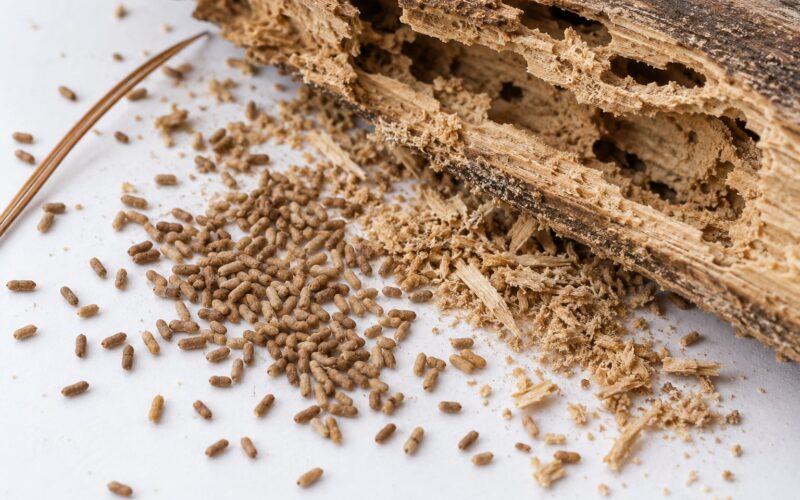
| Drywood termite frass | Scattered dry pellets, often on a windowsill, shelf or floor, with no connecting tunnel. Drywood termites do not build mud tubes. |
| Old mortar or concrete crumbs | Angular grey fragments, not the soft brown color of packed soil. |
| Spider silk or webbing | White and fibrous, not earthen and not attached continuously to the surface. |
Two more comparisons come up constantly. Carpet beetle frass is scattered dry debris of a different color and never forms a tube. And a mud dauber nest, which looks alarming, is a single nesting cell of a solitary wasp that mostly stays away from your structure; a termite tube is part of a connected underground system.
Termites or ants?
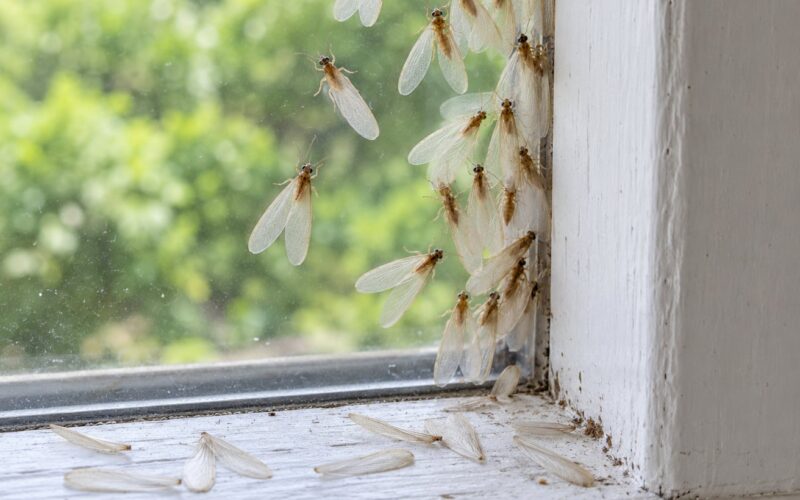
If you break a tube and something runs out, identification matters. Termites are pale, soft-bodied and straight, with straight beadlike antennae, no pinched waist, and wings of equal length that they shed at a single fracture line. Ants have elbowed antennae, a narrow waist, and wings of uneven length. Ants do not build soil tubes, so a genuine mud tube plus termite-form insects is a solid case. People mix the two up constantly, and photos of winged ants are the most common “is my house swarming with termites” post that comes up.
How to Check Whether a Mud Tube Is Active
A tube only tells you termites have been there. The useful question is whether they still are, and you can narrow that down without any equipment. What you cannot do from home is confirm the scope of the infestation, which is where a professional inspection earns its fee.
Break-and-recheck test
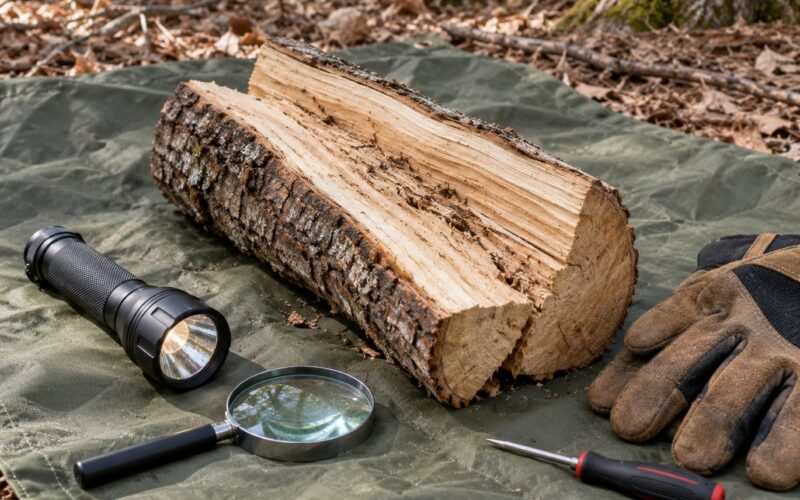
Take a small section out of the middle of the tube with a flat tool, leaving the rest intact. Mark the spot and the date, then check back in two or three days. A tube that gets patched or rebuilt is in use by a living colony. A tube that stays broken or crumbles further is likely abandoned. Some industry guidance puts repair time at a few hours when conditions are warm and moist, so a two to three day gap is a reasonable window.
What to look for
- White, soft-bodied workers moving inside the tube, roughly the size of a grain of rice
- A continuous tube running the full length, connecting the break to the soil or the wood it is heading toward
- Damp material at the break rather than dusty, powdery soil
- A tube that is rebuilt, patched or thickened after a few days
An empty tube is not a clearance. Abandoned tubes are common, particularly where soil has since dried out, a moisture source was removed, or a neighboring area was treated. Termites also build exploratory tubes that scout a route and never get used. Homeowners who open a tube, find nothing, and conclude the house is fine are the most common version of this story, and it is worth naming plainly.
Eastern versus Formosan
The two most common subterranean species behave differently enough to matter. Eastern subterranean termites, Reticulitermes flavipes, are the standard species across most of the eastern United States. Workers are roughly a quarter inch long, their tubes are typically pencil width, and colonies number in the hundreds of thousands.
Formosan subterranean termites, Coptotermes formosanus, are concentrated along the Gulf Coast, southern Texas and parts of the lower Mississippi Valley and Pacific coast. Their workers reach about three-eighths inch, their tubes are typically wider and sturdier, and colonies can run into the millions. Where both occur, Formosan colonies are generally faster to cause visible structural damage. Professionals check for species during an inspection because it changes how quickly you act.
Northern and desert-region homes can also show above-ground tubes built directly between soil and structure without a slab or crawl space in between, since some colonies forage in the surface soil rather than deep underground.
What to Do If You Find Them
The instinct is to sweep it off the wall and scrub the area. Hold off. Everything below takes a few minutes and none of it requires buying anything.
Do these things:
- Photograph the tube with a coin or pencil for scale, note the date, and mark the location on your phone map
- Check nearby wood for hollow-sounding areas, blistering paint, small cracks, or doors and windows that have started to stick
- Note every other tube you find on the same walk so the inspector gets the full picture
- Look for the moisture or wood-to-soil contact that attracted them: dripping exterior taps, a downspout dumping water at the foundation, planting beds pressed against siding, shaded and damp crawl space soil, firewood or a stack of lumber touching the house
- Run the break-and-recheck test on one tube if you want a better read on activity
Do not do these things:
- Do not knock the whole tube down. Removing the covered route exposes termites to air and light, and they frequently build a new run somewhere else instead
- Do not spray anything into it. Surface sprays rarely reach a colony that lives mostly in soil and reachable wood
- Do not seal the opening with caulk or paint before an inspection. You would be hiding the evidence and possibly trapping a live route
- Do not assume one tube tells you how bad it is. Termite damage behind paint and drywall is rarely visible from the outside
What you can fix yourself is the invitation. Slope the soil a couple of inches away from the foundation, keep mulch and planting beds off the siding, move firewood and stored lumber off the ground and away from the house, trim shrubs back from the wall, and seal gaps around plumbing penetrations. This reduces pressure without claiming to solve anything.
At that point, get a licensed termite inspection before treatment. A technician can probe the wood, open inaccessible areas, identify the species, report moisture conditions and tell you whether what you are seeing is one colony’s edge or something broader. If two companies have given you different answers, that is a normal reason to request a written report from each and to ask what evidence the disagreement rests on, not a reason to choose the friendlier opinion. Renters should report the finding to the landlord in writing rather than handling it themselves.
Frequently Asked Questions
Are subterranean termite mud tubes always a sign of an active infestation?
No. A mud tube proves termites built a protected route there at some point, but old tubes are often abandoned after soil dries out or a nearby area was treated. Break a small section from the middle and check back in two to three days. If the gap gets patched, a colony is still using it. If the tube crumbles and never changes, it may be empty. Either way, arrange a licensed inspection.
What color are termite mud tubes?
Light tan or buff when freshly built, darkening to medium or dark brown as the tube dries and ages. Tubes that have been in place for months often pick up a grayish cast from contact with the surface below. Color is one of the fastest ways to filter look-alikes: mud dauber nests are a grayer, chalkier mud, and dirt streaks have no consistent color at all.
Can you find mud tubes inside the house?
Yes. Tubes commonly show up on floor joists and beams in basements, garages and sheds, where they hang downward like stalactites. In unfinished rooms you may find them climbing wall studs or running along the bottom plate, and in finished rooms they sometimes push through a small hole in drywall or baseboard. Interior tubes usually mean the colony has been working through the framing for some time.
Should I break open a termite mud tube?
Not the whole thing. Knock a small section out of the middle and leave the rest in place, then check back in two to three days. A repaired gap means the tube is active. Pulling down the entire tube exposes termites to air and light, which often pushes them to build a new run somewhere else. Leave the evidence intact until a professional has inspected it.
How serious is a mud tube on a foundation?
Treat it as worth acting on promptly, because subterranean termites hollow wood out from the inside and leave the surface looking fine. A tube on the slab edge means they already have a route from the soil into the structure. The visible tube is rarely the full extent of the damage, so the sensible move is to reduce moisture and wood-to-soil contact now and schedule a licensed inspection before choosing treatment.
What is the best way to confirm subterranean termites?
A licensed termite inspection that includes probing, moisture readings, and access to concealed areas such as crawl spaces and wall voids. Home observations help: a tube that gets rebuilt, pale soft-bodied workers with straight antennae and no pinched waist, hollow-sounding wood, and doors beginning to stick all point the same direction. Photos can narrow it down, but only an inspection can tell you how far it has spread.
Conclusion
Subterranean termite mud tubes are pencil-width shelter tunnels built from soil, wood particles, frass and saliva, and they run light tan to dark brown with a grainy, crumbling texture. Finding one means termites have a protected route into your structure, even if that route is currently abandoned.
Do three things today: photograph it with something for scale, note the date, and look for the moisture or wood-to-soil contact that drew them in. Then leave the tube alone and book a licensed inspection. That is the only reliable way to learn whether the colony is still active and how far it has reached.