To understand how termite bait stations work, picture a slow relay rather than a strike. They intercept worker termites that are already foraging through the soil, let those termites eat a cellulose bait laced with a slow-acting ingredient, and the termites carry it back to the colony to share it. Nobody dies on contact. The colony is affected from the inside over weeks or months.
That last part is the whole idea, and it is also the part that surprises people. Homeowners often expect the wood damage to stop the day a technician pushes a plastic cylinder into the lawn. It does not. Baiting is a slow, monitored process, and understanding why is the difference between a sensible plan and a very expensive guessing game.
Homeowners on pest forums also ask the question nobody warns them about: why do I suddenly see more termites after the stations went in? That is usually the bait working, not failing. I will get to it below.
Table of Contents
- What Are Termite Bait Stations?
- How Do Termite Bait Stations Work?
- What Types of Termite Bait Stations Are Used?
- Where Are Termite Bait Stations Placed?
- How Fast Do Termite Bait Stations Work?
- How Do You Know If a Bait Station Is Working?
- Do Termite Bait Stations Kill the Entire Colony?
- Can You Install Termite Bait Stations Yourself?
- What Are the Alternatives to Termite Bait Stations?
- Frequently Asked Questions
- Are termite bait stations safe for children and pets?
- How long does it take for termite bait stations to work?
- Can termite bait stations be used in the house or only outside?
- Does an empty termite bait station mean the termites are gone?
- Why is a termite professional inspecting more than one bait station?
- What should I do before installing termite bait stations?
- Conclusion
What Are Termite Bait Stations?
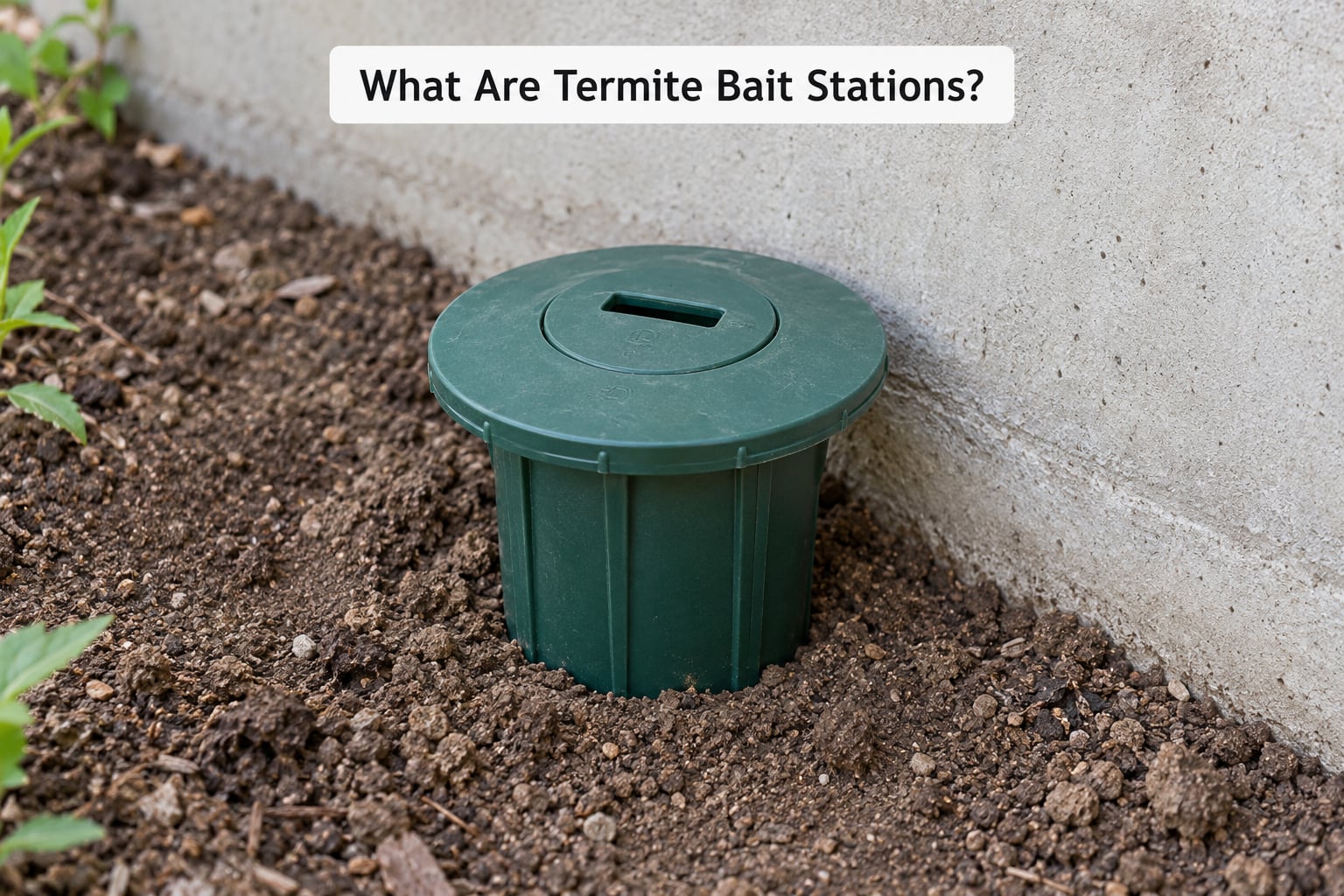
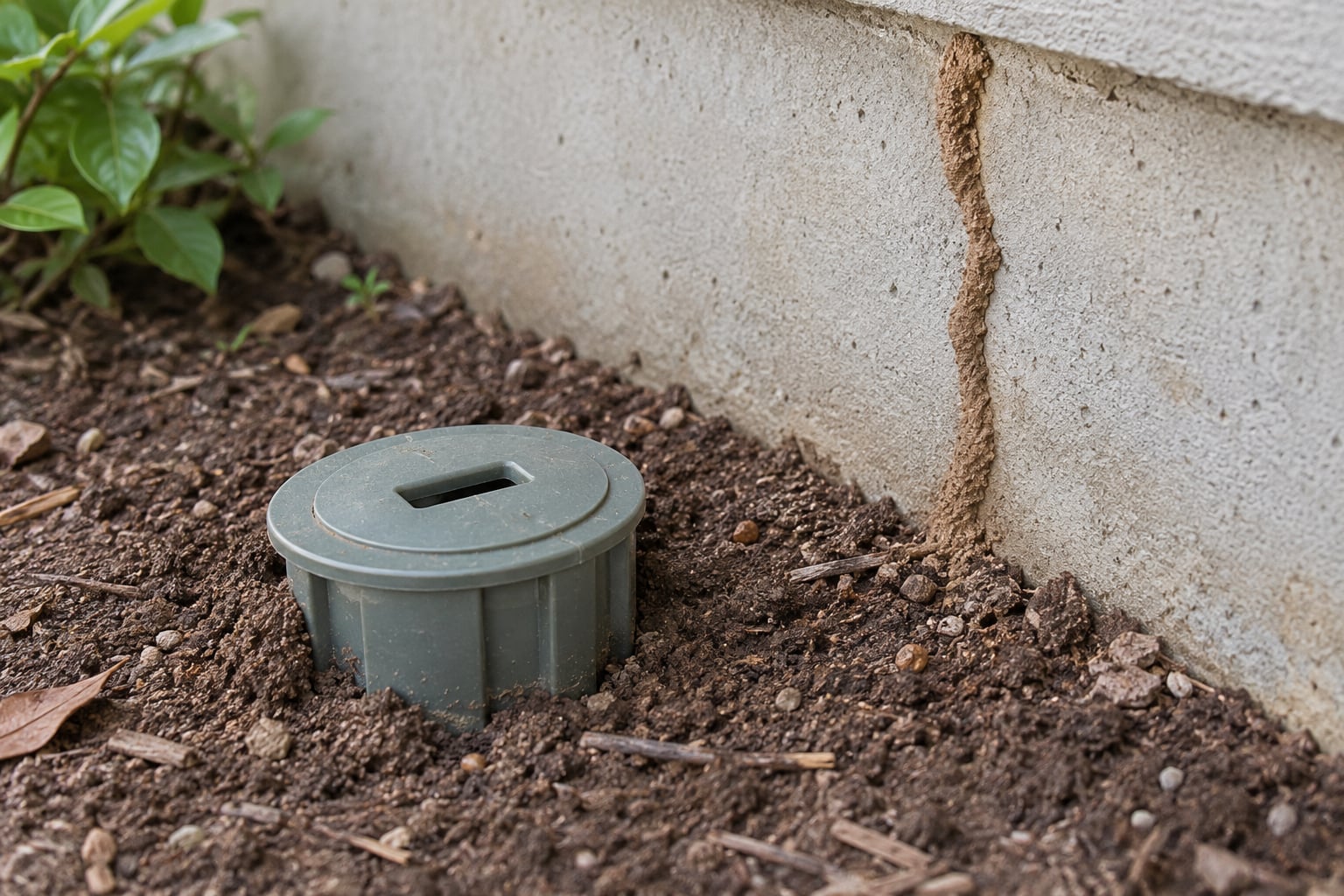
A termite bait station is a small rigid plastic cylinder, usually about the size of a soup can, installed in the ground around a structure. It has a slotted or screened opening at the top, a removable cap, and an internal chamber that holds a bait cartridge or preloaded bait tube.
The components matter more than most people expect:
- The outer shell is tamper-resistant and often locked, so curious pets, kids and weather cannot get into the bait.
- The access openings are sized so larger-bodied soldier termites cannot get in and eat the bait. Only workers pass.
- The bait itself is a cellulose-based material, which is simply the food termites already want.
- The active ingredient is a slow-acting insect growth regulator. Noviflumuron is the best known example.
- The monitoring layer is a liner or ground cover that lets a technician see, without opening the station, whether termites have been feeding.
That monitoring feature is what separates a modern station from a basic in-ground stake. You can often see activity on the station without disturbing the bait inside it.
Bait stations are one tool inside a broader termite management plan. On their own, they are not a complete answer to every situation, and they do not repair damaged wood, correct drainage problems, or seal entry points. Understanding where they fit is the first step to using them well.
How Do Termite Bait Stations Work?
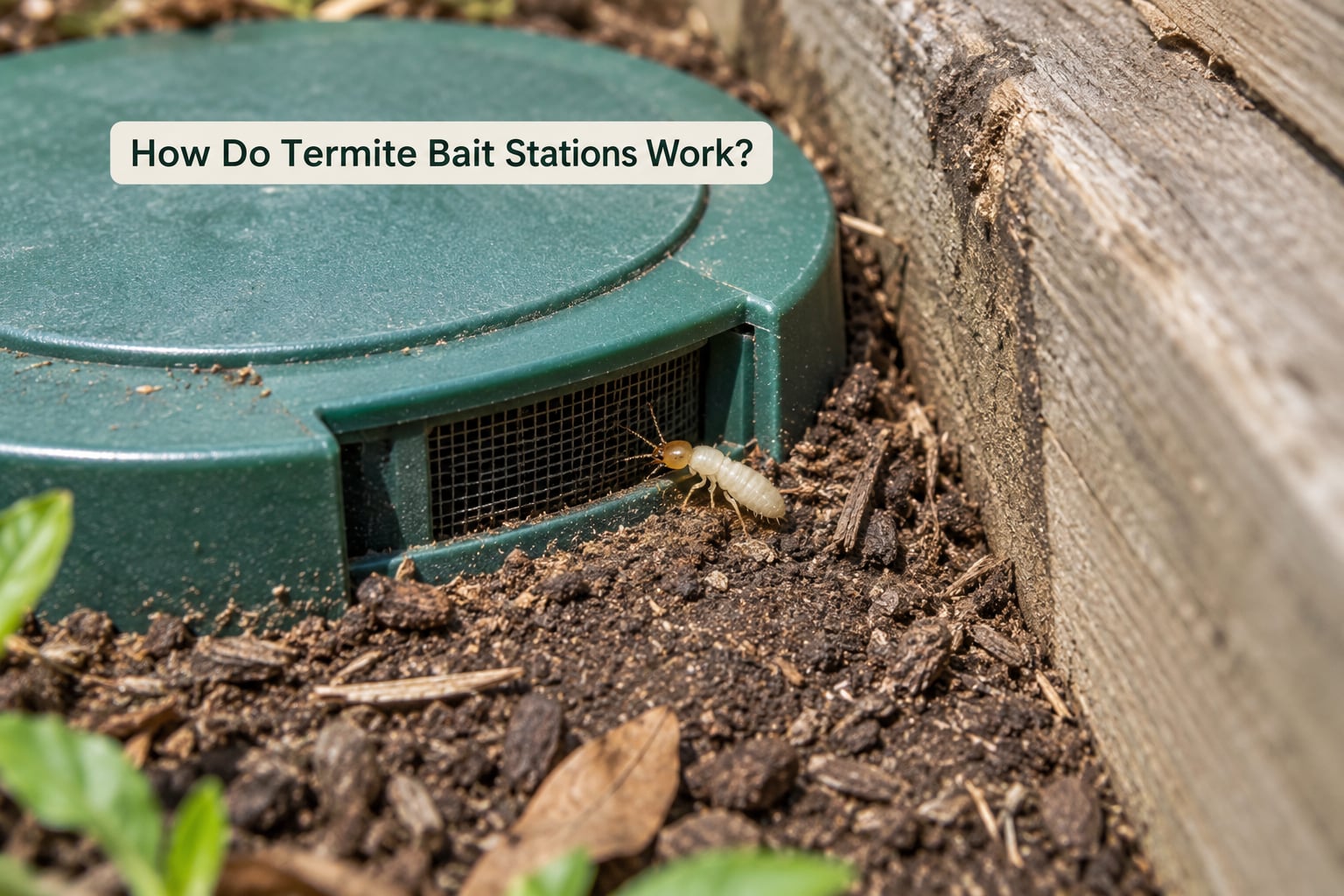
The full process runs in five stages, and each one depends on the step before it. That is why results are never instant.
Termite bait stations how they work: the five stages
1. Placement
A technician installs stations in the soil around the foundation, often near known activity, near mud tubes, or along areas of wood-to-soil contact. Stations near visible evidence are far more useful than a ring of them spread evenly around the whole property.
2. Foraging
Worker termites travel through the soil looking for cellulose. Subterranean workers can travel a long way from the nest, and they follow moisture gradients. Some species forage near the surface, others deeper, and that changes where stations pay off.
3. Feeding
A worker finds the station, enters through the access slits, and eats the bait. The cellulose attracts it, and it keeps eating because the bait is not repellent and not fast-acting. Nothing about the meal warns the termite that something is wrong.
4. Sharing
The worker returns to the nest and shares the bait with other termites through trophallaxis, which is food exchange mouth to mouth, and through grooming. This is the step the entire method depends on. Bait that kills on contact would stop the trail; slow-acting bait keeps it running all the way home.
5. Colony effect
Noviflumuron is a chitin synthesis inhibitor. It does not kill termites outright, it interferes with the molting process, so affected workers fail to produce new cuticles and die during or shortly after a molt. As more termites feed on the bait and pass it around, the colony’s ability to produce workers, soldiers and replacement reproductives degrades, including the queen.
Slow action is the feature, not a flaw. A fast-acting poison applied where termites are feeding would kill a few insects and leave the colony intact and hungry.
What Types of Termite Bait Stations Are Used?
In-ground stations are the standard choice for subterranean termites. They sit in the soil around the foundation and work best where there is moisture and undisturbed soil for termites to travel through.
Above-ground stations are used where soil is not available or would be disturbed. They mount on blocks, piers or slabs, commonly on patios, decks, porches and around concrete flatwork where you cannot easily get a tube into the ground.
Indoor stations go in living areas when activity is inside the structure. They are smaller, designed to look less conspicuous, and used more cautiously because they place bait near where people spend time. Contractors generally reserve them for specific situations, such as a known indoor foraging route.
Wood-borer or auxiliary stations address borers such as powder post beetles or old-house borers rather than termites. These are a different pest and a different chemistry, so they are worth mentioning only so you do not confuse them.
There is also a distinction between a monitoring-only station and an active bait station. A monitoring station is designed purely to detect activity, and many contain no pesticide at all. An active station holds a loaded cartridge. Ask specifically what you are paying for, because monitoring and treatment are not the same service.
Well-known systems include Sentricon with its always-active and Recruit HD technologies, the Advance Termite Bait System, HexPro, and Trelona. All rely on the same slow-acting, growth-regulating approach; they differ in cartridge design, monitoring features and how refill frequency is handled.
Where Are Termite Bait Stations Placed?
Placement is the part homeowners most often get wrong, because retail packs are placed by instinct rather than by evidence. Extension guidance from places like the University of Kentucky and NC State Extension gives useful general specs: typically one to two feet out from the foundation and roughly ten to twenty feet apart along the perimeter.
Those numbers are a starting point, not a plan. Six stations evenly spaced around a large house tell you very little. Stations concentrate where termites are already moving:
- Next to mud tubes running up foundation walls or down from wood
- Near downspouts, hose bibs, air conditioner drip lines and poor drainage
- Where wood, siding, planters or stored material touch the soil
- Close to damaged trim, window frames or deck connections
- Near the entry point of a swarm, where you found wings or sawed-off wing fragments
- Where an inspection found damaged wood or probing that gave way under pressure
Soil type changes the answer too. Loose, sandy, moist soil is where most subterranean foraging happens. In heavy clay or in very dry conditions, termites travel deeper or through tubes above ground, and in-ground stations placed carelessly may sit in soil that is never used. That is when a professional switches to above-ground stations.
Identification comes first. Asian subterranean termites and Formosan termites behave differently from eastern subterranean termites, including how deeply they forage and how fast a colony grows, and baiting results reflect that.
How Fast Do Termite Bait Stations Work?
Realistic expectations beat optimistic ones here. Installation is a single visit, but control is a monitored process that unfolds in stages, and each stage has its own timing.
| Stage | Typical timeframe | What you should see |
|---|---|---|
| Stations installed | Day one | Nothing yet. No visible change is normal. |
| Termites discover stations | Weeks to a few months | First termite or first hint of bait consumption in the monitoring layer. |
| Bait consumed and shared | One to several months | Consumed bait, insects in the station, colony foraging shifts toward stations. |
| Colony declines | Two to six months, sometimes longer | Fewer termites at stations, less new damage, quieter activity overall. |
| Follow-up inspections | Every one to three months while active | Documented station checks, refills, or a shift in strategy. |
| Clearance check | After sustained low activity | Professional confirmation, not just an empty station. |
Two honest warnings about that table. First, discovery can take much longer than expected if placement was poor or if the colony has another comfortable food source. Second, new construction and drywood infestations follow completely different timelines, because drywood termites live inside the wood itself and never travel through soil to reach a station.
How Do You Know If a Bait Station Is Working?
The clearest sign of progress is documented station activity followed by declining activity. Ask for records. A professional inspection that turns up a termite or a hollowed bait cartridge is far more useful than a technician telling you it is going fine.
Signs that baiting is reaching the colony:
- Termites inside the station, visible through the access openings
- Bait consumed down to a core or hollowed out
- Activity concentrated at a few stations rather than spread across all of them, which indicates colony rerouting
- Less new damage, smaller-sounding wood, or fewer fresh swarmers in later seasons
- Station refills happening without new infestation elsewhere
Now the anxiety I mentioned at the start. If you see more termites after installation, that is usually termites being attracted to a reliable food source. Homeowners on pest forums routinely read that as failure, when the more common explanation is that the bait finally beat the competition in the soil.
An empty station is not proof of success. It can mean termites found the bait and finished it, or it can mean termites never went near the station, or it can mean they rerouted to a different food source entirely. Only a professional reading station condition over several visits can separate those cases.
This is also where the difference between a monitoring visit and a treatment visit shows up. Monitoring is reading station condition and deciding whether anything changed. Baiting is the loaded cartridge doing the work. If your contract says monitoring, the stations may never have contained pesticide at all.
Do Termite Bait Stations Kill the Entire Colony?
They can eliminate a colony, and that is the main advantage over barrier treatments. Because the bait travels back to the nest, a bait station can reach a colony living well away from the structure, and slow-acting growth regulators can affect reproductives rather than just the foragers you can see.
Complete elimination is not guaranteed though, for reasons that are structural rather than flaws in the product:
- The colony may be feeding on wood, cardboard or other cellulose that is more attractive or more accessible than your bait.
- Termites forage through multiple routes, so removing one food source pushes others elsewhere instead of ending the pressure.
- Nests inside wall voids, under slabs or above the ceiling can keep producing workers no matter how well the outside is baited.
- Neighbouring properties and untreated structures can support reinvasion.
- Moisture problems that made the structure attractive keep making it attractive.
That is why a good plan keeps correcting moisture and wood-to-soil contact alongside baiting. Bait stations handle termites. They do not handle the conditions that invited them.
Can You Install Termite Bait Stations Yourself?
You can physically push a retail stake into the ground. Whether it accomplishes anything is a different question, and the honest answer is that a store-bought station is usually a monitoring tool rather than a treatment.
Homeowners on forums describe store-bought stakes as useful for finding out roughly where termites were active, which is real value. They are not designed for colony elimination, they hold small amounts of bait, and you have no reliable way to know what species you are dealing with or where the colony actually lives.
The problems with a DIY approach are practical rather than legal. Retail bait is less concentrated. Placement is guesswork, and guesswork placement is the single biggest reason baiting stalls. There is no way to confirm consumption, so you cannot tell the difference between a working station and a colony that walked around it. And monitoring-only packaging can look identical from the outside to a treatment system.
On safe handling, a properly installed locked station is designed to stay put, which is why they suit homes with children and pets. Loose bait in a household container is a different situation, and it is not what any of these systems are meant to be.
Call a licensed pest professional when the activity is confirmed but the location is uncertain, when damage is already visible inside the structure, when you suspect drywood termites or a Formosan colony, or when a warranty and documentation matter to you. Those are situations where expertise pays for itself.
What Are the Alternatives to Termite Bait Stations?
Baiting is one tool among several, and the right one depends on the species, the location of the colony, and the condition of the building.
Liquid barrier treatments
A liquid termiticide is applied to the soil around the foundation to create a treated zone that termites avoid or are killed crossing. Barriers work well on dry, accessible soil and give a fast visible result at the treatment line. They are weaker when soil is wet, when there is heavy irrigation, when landscaping and hardscape block application, or when the colony is established inside the structure.
Combined treatments
Many companies use both. Bait handles the colony, liquid handles immediate pressure at the perimeter. This is common where a structure has established activity plus an entry point that will keep producing new pressure.
Localized wood treatment
For drywood termites, beetles and localized damage, treating the affected wood directly or removing the infested material is more sensible than surrounding bait stations. Drywood termites never travel through soil, so an in-ground system will not reach them.
Fumigation
For severe drywood termite or beetle infestations in sealed structures, fumigation can be the only way to reach insects hidden inside the wood. It is disruptive, requires sealing and vacating, and is not the first option for a typical subterranean problem.
Moisture correction and repairs
Fixing drainage, air conditioner overflow, plumbing leaks and wood-to-soil contact is not a pesticide treatment, but it is often what decides whether a treatment holds. Removing the reason termites came keeps new colonies from starting.
Frequently Asked Questions
Are termite bait stations safe for children and pets?
Yes, when they are installed as designed. Stations are tamper-resistant, locked plastic cylinders installed in the ground with bait sealed inside a cartridge, and the access openings are sized so larger animals cannot reach the bait. Handle loose bait cartridges with the same care as any pesticide product: keep them sealed, away from food preparation surfaces and out of reach of children until installed. If you have pets that dig in planting beds, tell your technician so stations can be placed or secured accordingly.
How long does it take for termite bait stations to work?
Expect weeks to months rather than days. Discovery of the stations can take a few weeks or longer, bait consumption and sharing through the colony follows, and the visible effect on the colony typically shows up over several months. In difficult cases with poor placement or heavy competing food sources, control can take longer. The first sign is usually termites or consumed bait at a station, not a change in the building.
Can termite bait stations be used in the house or only outside?
Both are possible. In-ground stations go in the soil around the foundation, which is the standard approach for subterranean termites. Indoor stations exist and are used when activity is confirmed inside the structure, though contractors use them selectively because bait near people and pets deserves extra care. Above-ground stations cover patios, decks and other areas where you cannot get into the soil. Drywood termite problems usually need neither, since those termites live inside the wood.
Does an empty termite bait station mean the termites are gone?
Not on its own. An empty station can mean termites ate the bait, or that they never found the station, or that they shifted to another food source. That is why professionals read station condition over multiple visits and compare activity between stations rather than judging one empty tube. Ask for documented inspections with dates and what was found. A run of inspections showing steadily declining activity is the meaningful signal, not one empty station.
Why is a termite professional inspecting more than one bait station?
Because the stations tell a story only when read together. Termites often reroute toward a few reliable food sources, so activity concentrating in some stations and drying up in others shows how the colony is responding. A technician checks every station to compare conditions, note consumption, and confirm which ones still need a refill. If you ever wonder whether a visit was a real inspection, ask for the station-by-station findings.
What should I do before installing termite bait stations?
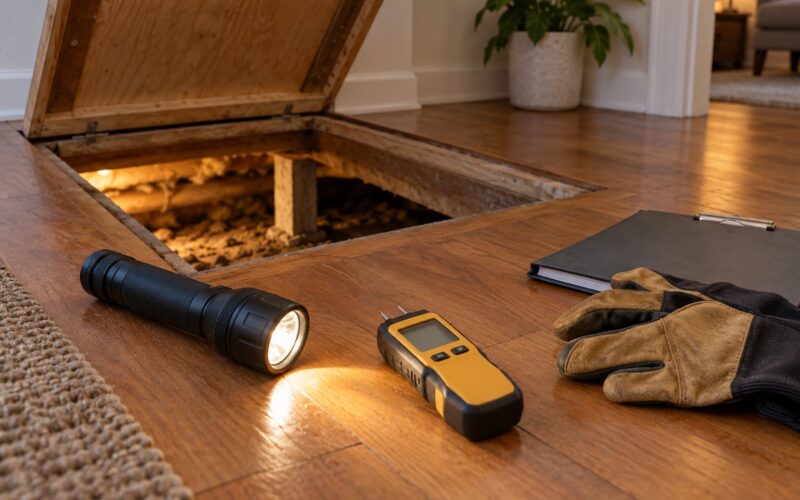
Confirm the activity is real before treating it. Look for mud tubes, discarded wings, hollow-sounding wood or blistered paint, then reduce moisture around the foundation by clearing soil contact, fixing drips and improving drainage. Leave galleries and damaged areas alone, since disturbing them can cause termites to reroute to another area of the structure. A professional inspection comes before any treatment, and it is also where you find out whether you are dealing with subterranean or drywood termites.
Conclusion
Start with confirmation, not with a can of bait. Look for mud tubes, discarded wings and wood that sounds hollow, reduce moisture and wood-to-soil contact around the foundation, and leave damaged areas undisturbed so you do not push termites somewhere new. Then get a professional inspection before choosing a method, because the difference between subterranean and drywood termites, and between a monitoring station and a treatment system, determines what happens next. Bait stations work well when they are placed where termites actually travel, loaded with slow-acting bait and monitored properly. They are one part of a plan, and the plan is what does the work.