To get rid of mosquitoes in a crawl space, you remove every patch of standing water, dry the area out, seal the openings they travel through, and only then treat what remains with a product labeled for that use. Skip the order and the problem comes back within weeks. Most of the work takes an afternoon; the drying and monitoring take a few more days.
Crawling under a house is unpleasant work in a dark, low space where exposed wiring, uneven ground, and animals are all common. If any of that describes your situation, the honest advice is to hire a pro for the entry itself. The rest of this guide works whether you crawl in or hand the access door to someone else.
One thing to sort out before anything else: mosquitoes are not the only thing living down there. Small flies that look similar often turn out to be fungus gnats or drain flies, which come from a damp organic layer on the ground rather than from standing water. Those need a different fix, so read the identification guidance before you treat anything.
Table of Contents
- What You Need
- Step-by-Step
- Common Mistakes
- Frequently Asked Questions
- How do I find where mosquitoes are breeding in my crawl space?
- Is it safe to spray insecticide in a crawl space?
- How long does it take to get rid of mosquitoes in a crawl space?
- Can I use a fan to dry out a crawl space?
- What if mosquitoes keep coming back after I remove the water?
- Should I hire a professional for a crawl-space mosquito problem?
What You Need
Most of this kit fits in one plastic tote. The expensive part is rarely the tools; it is the treatment product and the repair materials you find once you look.
- Headlamp or heavy-duty flashlight with fresh batteries. A headlamp keeps both hands free, which matters more than you expect in a crawl space.
- Coveralls, gloves and eye protection. Closed-toe boots beat sneakers. You are working in disturbed soil, insulation and animal droppings.
- Knee pads or a kneeling pad. Crawl spaces are low and the ground is gravel, mud or bare soil.
- Buckets and a wet/dry vacuum for water you cannot reach with a sponge.
- Long-handled tools such as a ladle, a flat shovel, a pry bar and a plumber’s snake for clearing drains.
- Box fan and a hygrometer. The fan moves air, the hygrometer tells you whether it worked. Aim to get the space under roughly 60 percent relative humidity.
- A crawl-space-rated dehumidifier if humidity stays high after the water is gone.
- Stainless steel mesh, 16 by 16 or finer for vents and larger gaps, plus a flexible sealant rated for damp, dirty surfaces.
- Water-resistant treatment product labeled for the intended use, such as a Bti larvicide for water you cannot drain.
Step-by-Step
1. Inspect the crawl space and locate breeding areas
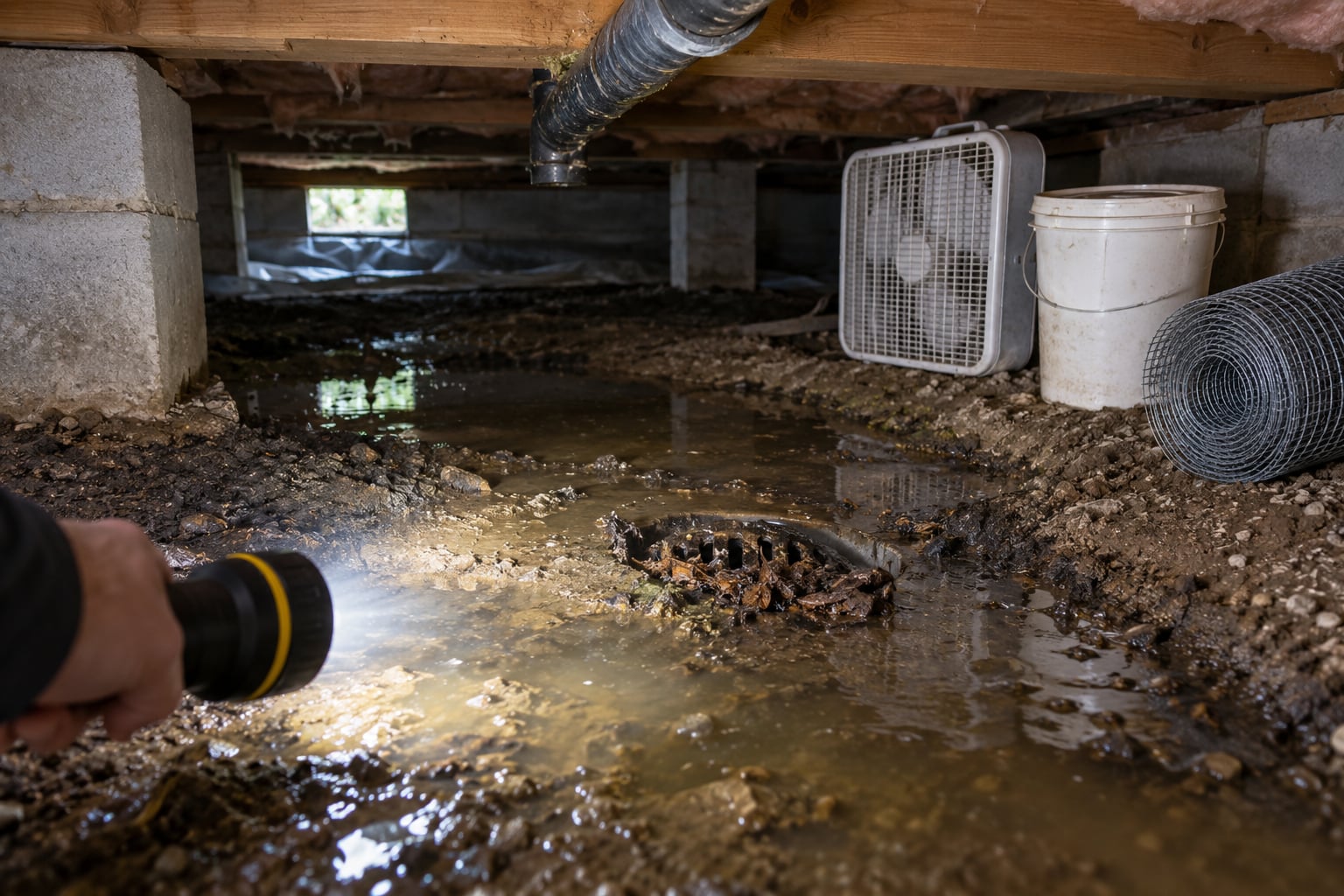
Start by looking, not spraying. Mosquitoes need standing water to breed, and that water is almost always in one of a few predictable places under a house.
- Low spots in the grade where rainwater collects after a storm
- Blocked or disconnected crawl space drains and condensate drip lines
- Dripping supply lines, a leaking pressure relief valve, or a sweating cold water pipe
- Open footings, missing pier caps and gaps in the foundation that hold wet soil
- Tarps, cardboard, insulation and stored material laid directly on the ground
- A damaged or sagging vapor barrier with wet insulation behind it
While you are down there, note hazards before you start moving anything. Look for exposed or hanging wiring, loose supports, standing water near anything electrical, mold, animal nests and dead animals. Stop and call a professional if you find exposed wiring, a structural issue, or a leak you cannot shut off.
How it worked: you should have a written list of every water source and every opening before you leave. If you cannot list the sources, you cannot confirm the fix later.
2. Remove standing water and improve drainage
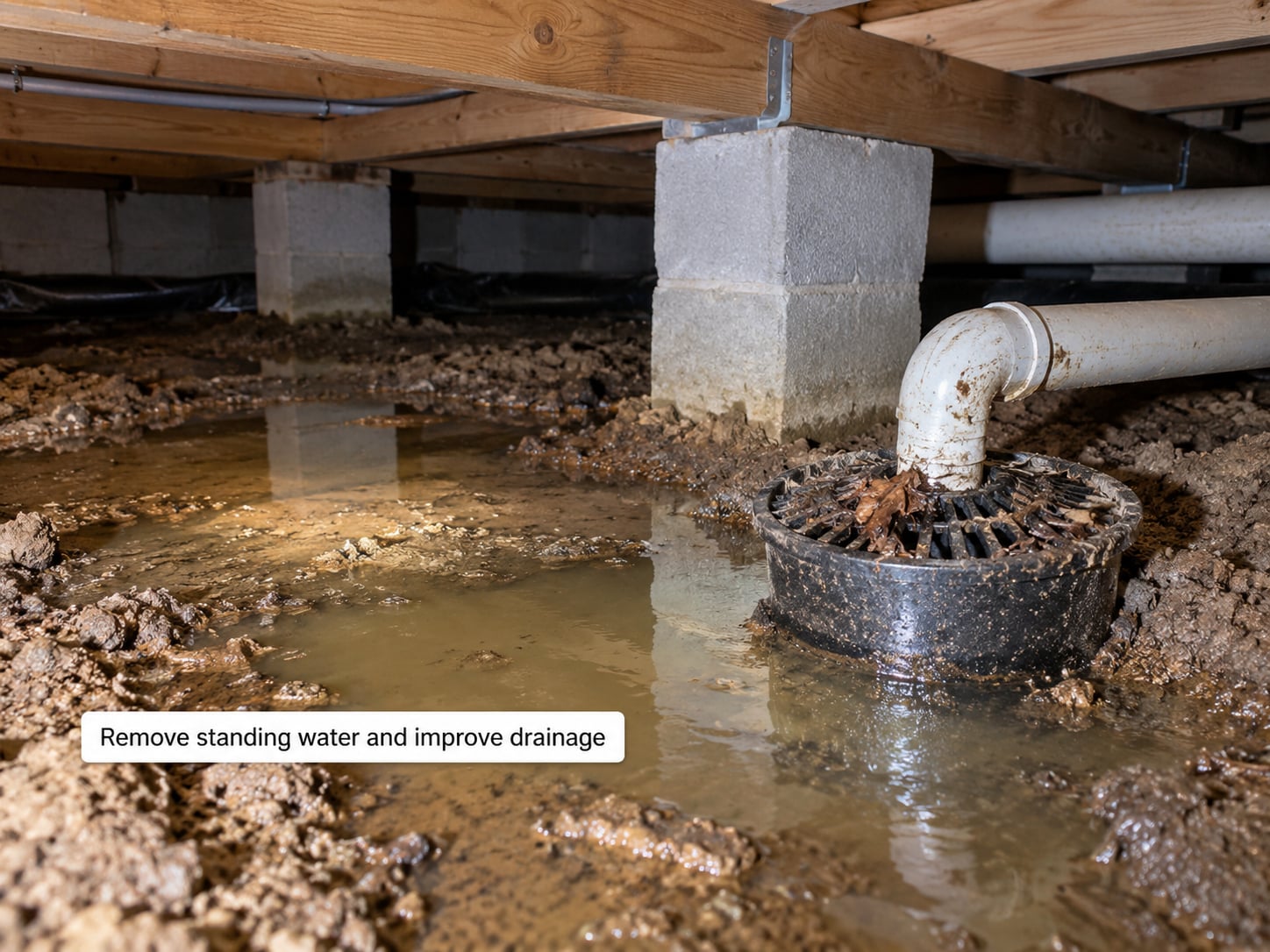
Drain first, scrub second. Mosquito larvae survive in very little water; a bottle cap holding rainwater is enough for a full brood, so any puddle you leave behind defeats the rest of the work.
- Empty water into sealed containers and carry it out, rather than pouring it onto soil beside the foundation where it will simply collect again.
- Clear leaves, silt and root debris out of drains and downspout connections so water has somewhere to go.
- Use a wet/dry vacuum to pull water from low spots and from under damaged vapor barrier.
- Fix grade where it is safe to do so, sloping soil away from the foundation.
- Repair the dripping pipe or relief valve. A plumbing leak that returns every night will repopulate the space no matter what you treat.
What not to do: do not add gravel to soak up a puddle. It just moves the water into a larger damp area that still breeds mosquitoes, and it makes the wet spot harder to find next season.
How to tell it worked: walk the space after the next rain and confirm the puddles do not come back.
3. Dry and ventilate the area
Once water is gone, move the air. A box fan set to push air along the length of the space, run for a day or two after drying, clears lingering humidity and helps you spot moisture sources you missed.
Keep fans and any electrical equipment well away from damp ground, and never run an extension cord through standing water. If humidity reads high the morning after the fan has run all night, the source of the moisture is still active and the space needs repair, not more airflow.
For persistent dampness, a crawl-space-rated dehumidifier with a continuous drain line works better than a fan alone. Sealed encapsulation with a dehumidifier is the strongest long-term setup, since it stops soil moisture from entering the space at all.
4. Seal entry points and repair moisture sources
Mosquitoes travel from the crawl space into your living space through floor gaps, vents and utility penetrations. Closing those routes is what keeps them out after the treatment wears off.
- Cover foundation vents with 16 by 16 stainless mesh or finer, fastened tightly. Keep ventilation you need for the structure, but close the mosquito highway.
- Fill gaps around pipes, wiring and HVAC ducts with a flexible sealant suited to damp, dirty surfaces.
- Replace torn sections of vapor barrier and reseat it so it seals to the piers and foundation rather than lying loose.
- Check the perimeter for entry points a mouse could fit through. Anything a mosquito can use, a mouse can use.
Do not seal a crawl space completely airtight. It needs some ventilation and drainage, and blocking all of it can trap moisture and lead to wood rot.
5. Apply targeted mosquito control
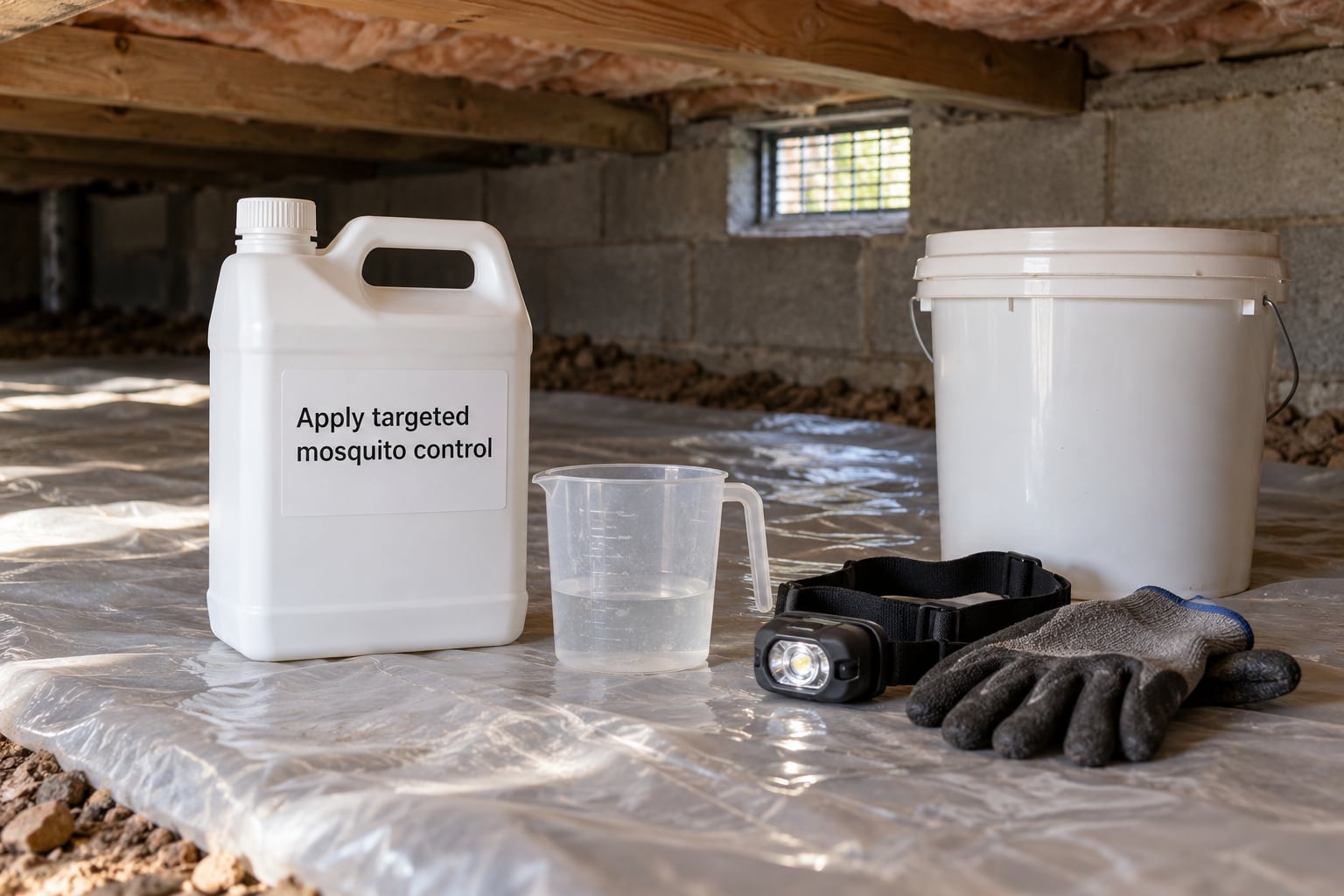
Treat water you cannot remove, not the whole space blindly. A larvicide targeting larvae in standing water does far more than a spray aimed at adults you cannot see.
- Larvicides for standing water. Bti, short for Bacillus thuringiensis israelensis, works on larvae and is a biological product. Mosquito dunks and bits are slow-release versions of similar larvicides. Follow the label on rate, water volume and reapplication, since larvae keep hatching as long as water remains.
- Adulticides only as a short-term supplement. Aerosols labeled for the space can knock down adults, but they fade quickly and do nothing about larvae.
- Fogging outdoors is not the same as treating inside. People in homeowner forums describe bug bombing a crawl space and seeing a short-lived drop in mosquitoes, then a return. In an enclosed space with no exit for air, the residue stays where you put it.
Read the label before opening any container. It tells you the site the product is approved for, and using it anywhere else is both unsafe and illegal.
Keep children and pets out of the crawl space entirely while you work and while any product is still wet. Store containers sealed and away from feed, pet water and food stored in the space.
6. Monitor for mosquitoes and repeat maintenance
Check back after a week, then on a schedule through the warm months. Mosquitoes go from egg to flying adult in under a week in warm conditions, so one quiet evening means very little.
- Weekly in warm months: look for standing water, new damp patches and live mosquitoes.
- Monthly: read the hygrometer, empty the dehumidifier tank or check the drain line, confirm vents are still meshed and sealed.
- After heavy rain: inspect drains and low points again. This is when problems come back.
- Annually: walk the vapor barrier and foundation seal while the space is dry.
How to tell it worked: no adults found during two consecutive warm weeks, no larvae in the remaining water, and humidity staying in range.
Common Mistakes
Almost every recurring mosquito problem under a house comes down to one of these.
Spraying before removing the water. Adults die, the larvae are untouched, and the next generation hatches into a space with no insecticide left. Fix: drain and dry first, then treat only what water remains.
Missing the shallow puddles. A damp footprint or a blocked drip pan holds plenty of water for a brood. Fix: check under vapor barrier, in corners and at pier bases, not just the obvious middle of the space.
Blocking all ventilation. Sealing every opening can trap moisture and lead to rot. Fix: mesh the vents you close, leave required ventilation in place, and control humidity with airflow or a dehumidifier.
Using products off-label. A product that works in a yard may not be approved in an enclosed crawl space, and essential oils, vinegar and soapy water do not clear an established infestation. Fix: check the label, and use a product registered for the site and the pest.
Ignoring the screens. Loose vent screening and floor-level gaps let mosquitoes back in the same week. Fix: 16 by 16 mesh or finer on every vent, sealed gaps at every penetration.
Treating one calm evening as the fix. The life cycle is fast enough that a quiet night is luck, not control. Fix: judge results over two weeks of warm weather with no larvae found.
Frequently Asked Questions
How do I find where mosquitoes are breeding in my crawl space?
Walk the space with a flashlight and look for any water that does not drain: low spots in the grade, clogged drains, leaking pipes, open footings and puddles behind a sagging vapor barrier. Check under barriers and at pier bases, since shallow water there is easy to miss. A bottle cap of water is enough for mosquitoes to breed, so treat every damp patch as a candidate. Remove the water, then re-check after the next rain to confirm the source is gone.
Is it safe to spray insecticide in a crawl space?
Only use a product whose label lists crawl spaces or enclosed outdoor structures as an approved site, and follow the label rate and ventilation directions exactly. Avoid foggers in an enclosed crawl space, because the mist has nowhere to go and residue stays where you put it. Keep children and pets out while the space is being treated and until everything is dry. If you cannot identify what is on the label, call a licensed pest professional.
How long does it take to get rid of mosquitoes in a crawl space?
Adult mosquitoes are gone within a few days once breeding water is removed, but existing larvae need time to die and new adults can hatch from eggs laid before you started. Expect the visible activity to drop within three to seven days in warm weather. Judge success over two consecutive weeks with no larvae found and no new puddles. If water keeps returning after each rain, the moisture source is still active and the problem is not finished.
Can I use a fan to dry out a crawl space?
Yes, a box fan moves air and clears humidity from a damp crawl space, and it helps you spot moisture sources you missed. Run it for a day or two after the water is removed and use a hygrometer to check the result. Keep the fan and all cords away from damp ground. If humidity is still high after a full night of airflow, the source is active and needs a repair or a dehumidifier rather than more air.
What if mosquitoes keep coming back after I remove the water?
Recurring mosquitoes usually mean one of four things: water is returning from an active leak or bad grade, the humidity is still high enough for larvae to develop in damp soil, entries are still open through vents and utility gaps, or neighbors have a source nearby. Check drains and plumbing after every rain, read a hygrometer, and confirm all vents are meshed. Persistent dampness usually calls for a repair to the vapor barrier or a dehumidifier.
Should I hire a professional for a crawl-space mosquito problem?
Hire a professional when the crawl space is deep or unstable, when you find exposed wiring, standing water near electrical equipment, a leaking supply line, or a damaged foundation, or when the space has heavy mold, animal nesting or structural decay. Professionals can also trace entry points you would miss and apply products correctly. If the space is dry, low and accessible, most of the draining, sealing and mesh work is well within a homeowner’s reach.
Start with the water. Everything else on this list is a second step, and treating anything out of order just buys you a few quiet evenings. Drain the puddles, fix what is putting water there, mesh the vents, and check again after the next heavy rain in 2026.