How to get rid of cockroaches in an apartment building comes down to four things: cut off their food and water, seal the cracks they travel through, place bait where they live, and get your landlord treating more than just your unit. You can do the first three yourself in an afternoon. The fourth is where most renters get stuck, and it is the only one that actually ends the problem.
Cockroaches in a multi-unit building are a building problem, not a cleanliness failing. German cockroaches squeeze through a gap about the width of a credit card and move freely between apartments through plumbing penetrations, shared walls, stairwells, elevator shafts and the garbage chute. Treat one unit in isolation and a good share of the population simply moves next door, waits, and walks back in.
Realistically, you should expect visible activity to drop within two to four weeks of good baiting and sanitation, near-elimination around six to eight weeks, and a fair reading of success as thirty consecutive days without sightings.
Table of Contents
- What You Need
- Step-by-Step
- How to get rid of cockroaches in an apartment building
- Take screenshots of signs and note where you see activity
- Clean and remove every accessible food source
- Seal gaps and fix moisture problems
- Use bait or growth regulator correctly
- Monitor the apartment and coordinate a building-wide response
- Common Mistakes
- Frequently Asked Questions
- Conclusion
What You Need
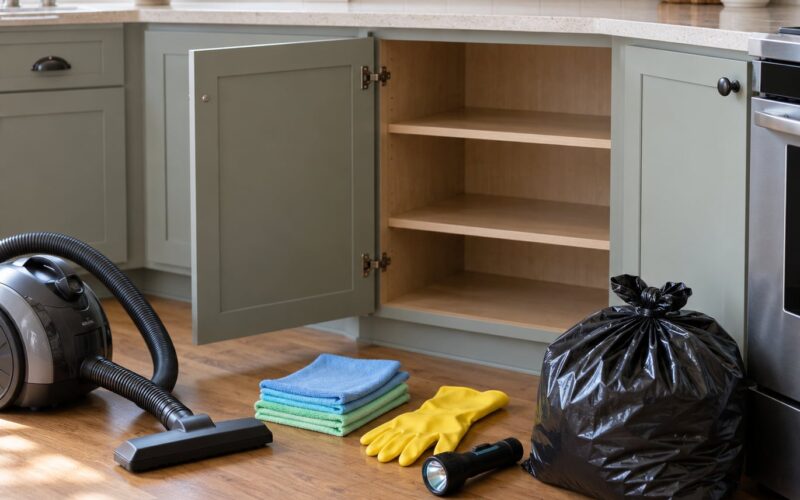
Before you start, gather the basics. Most of this list is cheap and you may already own half of it.
Cleaning supplies
- Degreaser or heavy-duty kitchen cleaner, not just dish soap
- Disinfecting wipes for counters, pulls and appliance handles
- A vacuum with a hose attachment and sealed bags for droppings and shed skins
- Committed garbage bags and a trash can with a tight-fitting lid
- Airtight containers for dry goods, one for pet food, one for trash liners
- Microfiber cloths and a clean mop head kept only for the bathroom and kitchen
Exclusion materials
- Silicone or acrylic caulk and a caulk gun
- Stainless steel wool or copper mesh for gaps too wide for caulk alone
- Door sweeps for the front door and any door that does not close fully
- Mesh drain covers for kitchen and bathroom sinks
- Outlet covers with built-in foam gaskets, or foam gaskets to fit existing ones
- Plumber’s tape or epoxy putty for larger pipe gaps
Pest kit
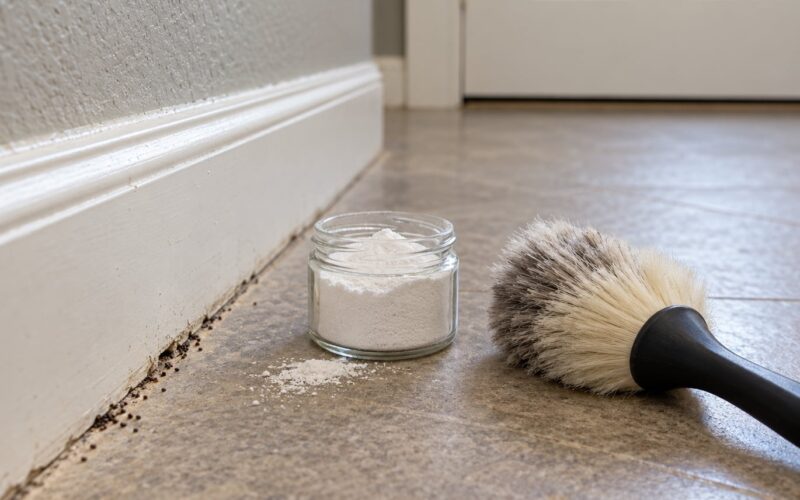
- Roach gel bait in a syringe applicator, so you can place pea-sized dots in cracks
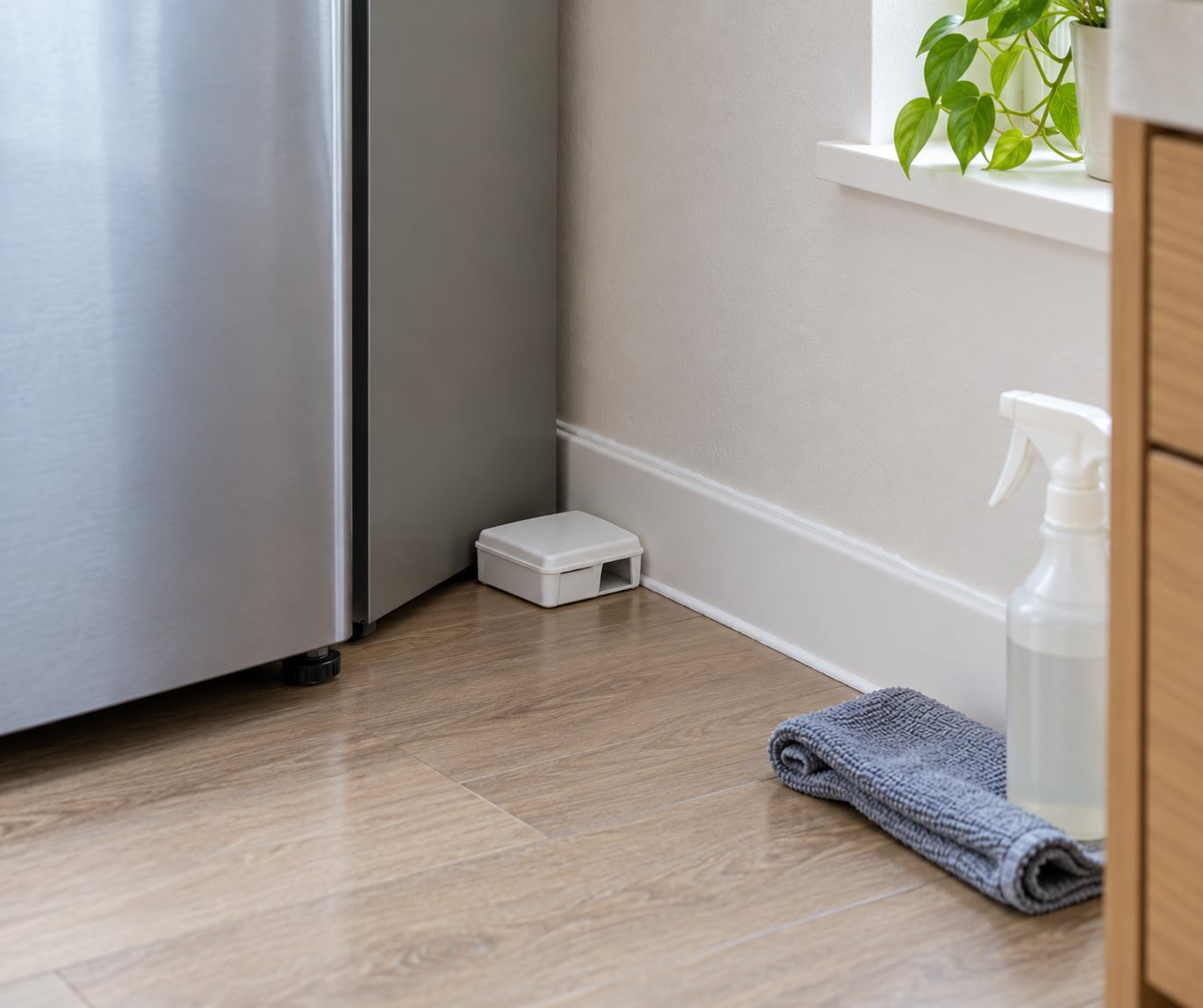
- Bait stations if you have small children, a curious pet, or shared walls you cannot reach into
- Boric acid powder for void, cabinet corner and under-sink dust applications
- A point-source insect growth regulator for harborage areas you cannot treat by hand
- Monetary glue traps or a small jar trap for monitoring
Safety gear and information
- Disposable nitrile gloves and a dust mask for handling boric acid and droppings
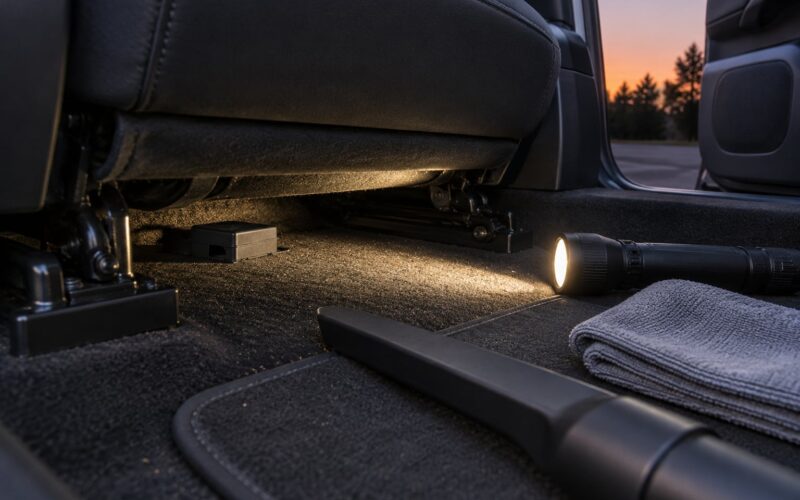
- A flashlight with a good beam for checking baseboards at night
- A notebook or your phone’s camera for dated evidence
- Your lease, and the name and email of whoever manages the building
One decision to make up front: whether you are handling this alone or asking management to bring in a licensed pest control company. If you have already cleaned thoroughly, sealed what you can reach, and baited properly for three to four weeks with no improvement, stop buying more products and request a professional inspection. In multi-unit housing, a professional is normally the only route to a building-wide fix.
Step-by-Step
The sequence matters. Work it in this order and each step makes the next one more effective, because treatment chemicals need clean surfaces and sealed gaps to stay where you put them.
How to get rid of cockroaches in an apartment building
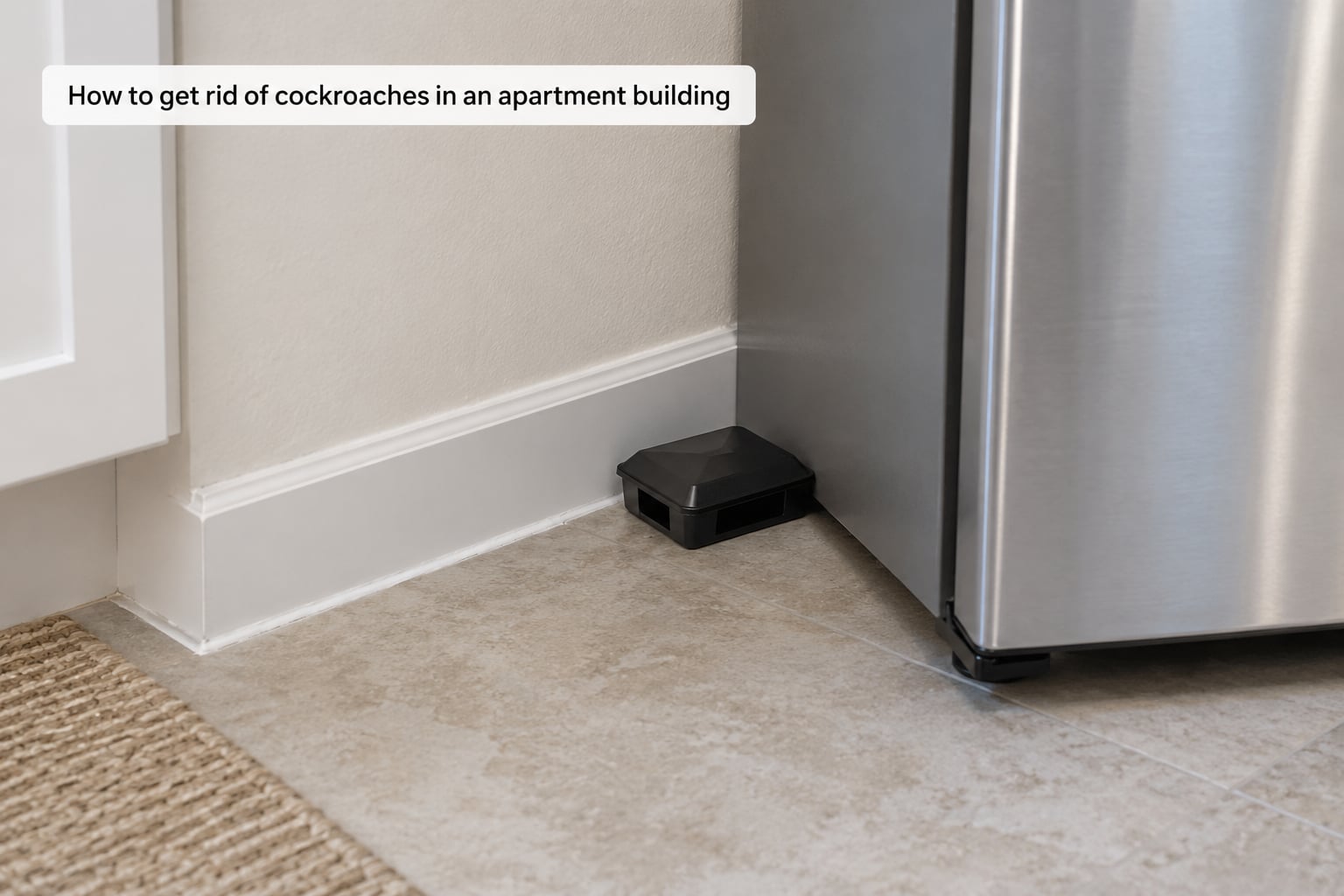
Start with the four-part treatment in the right order. First, remove every accessible food source and fix moisture. Roaches can survive weeks without eating but only days without water, so a dripping faucet or a wet sink under the cabinet matters more than you would expect.
Second, repair the cracks, the pipe penetrations and the baseboard gaps along shared walls. Purdue Extension’s guidance for multi-unit housing puts sanitation and exclusion ahead of any insecticide, because a chemical applied into an unsealed wall void simply expires there.
Third, apply bait or gel in the places roaches actually live: under the sink, behind and beneath the refrigerator, inside cabinet corners and along hinges, behind the stove, along baseboards, and in wall voids near plumbing penetrations. University of Kentucky Entomology recommends baits as the primary tool because cockroaches feed on each other and pass the bait straight to the nest.
Fourth, never spray anything over your bait. Repellent sprays drive roaches out of the treated area and into the next room, the wall void, or the neighbor’s unit. If you use any spray at all, keep it away from bait placements.
Take screenshots of signs and note where you see activity
Identification comes before treatment, because the species changes the strategy. German cockroaches are small, light tan to brown, and carry two dark stripes down their backs. American cockroaches are much larger, reddish brown, and usually arrive from outside through a ground-floor door or a utility space. Oriental cockroaches are glossy black and strongly associated with damp lower floors and drains.
Screenshot all four of these when you find them:
- Droppings — small dark specks that look like ground coffee or pepper, often clustered along baseboards, under the sink or on cabinet shelves.
- Egg cases — brown, pill-shaped capsules about the length of a grain of rice. These matter because they do not respond to spray or to diatomaceous earth.
- Shed skins — translucent shells left behind as nymphs grow.
- Live activity — and specifically whether you are seeing nymphs with no adults.
For each screenshot, record the date, the exact location, and whether it was alive or dead. Attach them to a written message to management. A dated photo log changes the conversation entirely: it establishes the timeline the treatment plan will later be measured against, and it is the difference between a landlord who is helpful and a landlord who says roaches come with the weather.
If you see nymphs but no live adults, that is progress, not failure. The bait is working and the adults feeding on it are dying before they can reproduce.
Clean and remove every accessible food source
Sanitation is the least glamorous step and the one that decides whether the other three work.
Do a full clean first, before you place any bait. Working through rooms in this order keeps you from re-contaminating what you just finished.
- Kitchen. Pull everything out of every cabinet and drawer. Wipe the empty interiors with degreaser, especially the corners where crumbs collect. Degrease the underside and back of the stove and the control panel, the top and underside of the refrigerator, and the drip tray under the dishwasher.
- Trash. Take the bin outside or into a bag every night, even when it looks empty. Rinse the bin with hot water and a drop of detergent before you put the liner back in. Flies and gnats around an overfull bin in a hallway pull roaches in from the whole floor.
- Sink. Wash dishes and put them away before bed. Do not leave a basin with a film of water in it overnight, and dry the faucet base and the rim around the drain.
- Bathroom. Scrub the tub and shower after every use and dry them fully. Keep towels on the floor rather than bunched in a hamper, and check under the sink for leaks.
- Appliances. Vacuum under the refrigerator and along the baseboards where they meet the wall. That gap collects crumbs and holds moisture and it is a favourite harborage.
- Beyond the kitchen. Declutter cardboard boxes and paper bags, and check any second-hand furniture, moving boxes or grocery bags for live roaches before they come indoors.
The test for whether an area is clean enough is simple: run a white paper towel across the shelf edge and the baseboard and look for grease marks or dark specings. You are aiming for a surface that is not just tidy, it is dry and free of crumbs overnight.
Seal gaps and fix moisture problems
Cockroaches fit through gaps around a quarter inch wide, and anything bigger is a highway. Work your way around the unit.
- Caulk where baseboards meet the floor and the wall, and where cabinets meet the wall at shared-wall sides.
- Pack steel wool or copper mesh into gaps wider than caulk can hold, then caulk over the top.
- Seal every place a pipe, wire or cable enters a wall, especially under sinks and behind appliances on shared walls.
- Fit a door sweep on the front door if daylight shows under it, and check the door actually latches.
- Put a mesh cover over every floor and sink drain.
- Replace plain outlet covers with gasketed ones on walls you share with a neighbor.
Now the moisture side. A dripping faucet, a slow shower drain and a condensate line that never dries will undo everything else. Fix the drip, clear the drain, run the exhaust fan after showers, and keep the bathroom door open afterward in humid weather. If you rent and the repair is structural or inside the walls, that is the landlord’s job, not yours.
Use bait or growth regulator correctly
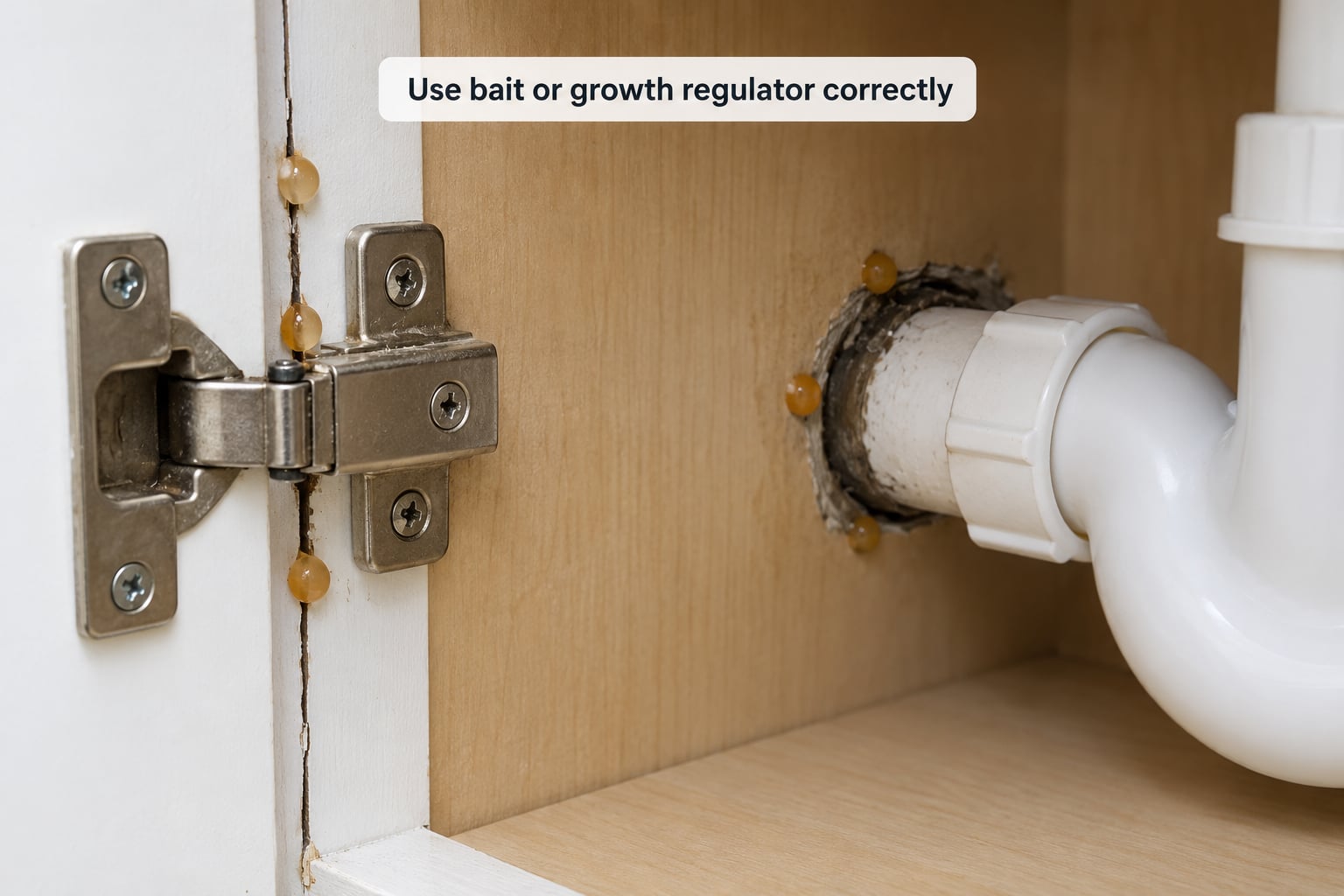
Bait is a slow-acting poison roaches eat and carry home. Because they feed each other inside the harborage, a single feeding event can take out many more than the one roach you watched eat it. That is why bait outperforms spray in apartments.
Apply gel bait as small pea-sized dots, not lines and not blobs, directly into cracks, hinge gaps and harborage edges. Too much bait, or bait smeared on an open surface, dries out and stops working.
Reapply according to the product label. In practice, fresh bait every two to three weeks as activity continues is the common cadence, and you replace it immediately if it dries out or gets disturbed. A point-source insect growth regulator placed inside wall voids and harborage areas works alongside bait by preventing nymphs from maturing into reproducing adults; plan on replacing those roughly every three months.
Boric acid dust belongs in voids and corners you cannot reach by hand, behind appliances, and along cabinet edges. It stays effective longer than spray, and a roach that walks through it should generally be left to feed rather than killed on the spot, so it can carry the dust back to the harborage. Wear gloves and a mask when you apply it, keep it away from children and pets, and never apply it wet.
Diatomaceous earth is a weaker option and comes with real limits. It works on dry surfaces only, does nothing to egg cases, and its dust is an irritant to lungs and skin. If your household has asthma, small children or pets, skip it.
Placement safety matters as much as dosage. Gel bait goes in places a child cannot reach and a pet cannot lick, bait stations are the better choice if you cannot guarantee that, and you follow the label directions exactly rather than extrapolating from an old bottle.
Monitor the apartment and coordinate a building-wide response
Set a schedule before you start so you can tell progress from noise. Check along baseboards with a flashlight once roaches are active, and set glue traps or a jar trap in the kitchen, bathroom and near the entry door. Count what you catch each week.
What to watch for:
- Visible activity dropping over two to four weeks.
- Nymphs present with no live adults, which means the bait is working.
- New droppings appearing near fresh bait or in a different room, which means the population is still roaming.
- No sightings at all across thirty consecutive days, which is the working definition of success.
Now the part that decides whether it actually stays gone. If activity shows up in your hallway, the stairwell, the elevator shaft, the utility room, or your neighbor’s unit, that is a shared source and no amount of cleaning inside your apartment will touch it.
Write to management asking for inspection of the adjacent apartments on both sides, above and below, plus the shared areas that touch your unit. Request a written treatment plan that names the units and areas to be treated, the treatment method, and the follow-up schedule. Keep a copy of every visit record and the outcome of each one.
Landlords in most US jurisdictions have a duty to address infestation that affects habitability, and your lease usually says something about it. If written requests go unanswered, that is the moment to file with your local code enforcement or housing department, and to contact a tenant legal aid service. Documentation is what makes that step work.
Common Mistakes
These are the responses that waste money and time, and most of them come from well-meaning friends.
- Mixing pesticides together. Never combine products, and never use a product in a room where another was applied recently. Follow one label at a time and never exceed what it says.
- Spraying everything at once. Total-release foggers fill the unit with pesticide mist that settles on open surfaces, never reaches the harborage, and drives roaches into wall voids and neighbouring units. Skip them entirely. This is the single most common mistake people make.
- Spraying over bait. Repellent spray contaminates bait and repels the roaches you are trying to feed it to. Keep them apart.
- Ignoring shared spaces. Cleaning your unit while the hallway, chute room and stairwell stay untreated just moves the problem around.
- Not reporting recurring activity. Three years of roaches in a spotless apartment is a habitability complaint, not a cleaning failure. Document it in writing from the first sighting.
- Replacing bait and never tracking counts. Without a record, neither you nor the landlord can tell whether the treatment worked.
Frequently Asked Questions
Can cockroaches really travel between apartments?
Yes. German cockroaches move through shared plumbing penetrations, gaps along shared walls, outlet boxes, stairwells, elevator shafts and the garbage chute, and they fit through gaps about the width of a credit card. This is why treating a single unit often pushes the population into a neighbouring apartment, where it breeds and later returns. In multi-unit housing, the reliable fix is coordinated treatment of the affected units and the common areas at the same time.
Is it possible to completely get rid of roaches in an apartment?
Usually, yes, but not through one unit alone and not in a weekend. Expect visible activity to fall within two to four weeks of consistent baiting, sanitation and sealing, near-elimination around six to eight weeks, and treat thirty consecutive days without sightings as the finish line. If your building never treats adjacent apartments or common areas, an untreated source will keep reseeding your unit no matter how clean you keep it.
How long should gel bait stay in place before I reapply?
Follow the product label, and in practice expect to refresh it every two to three weeks while activity continues. Replace it sooner if it dries out, gets disturbed, or if the label says bait attracts roaches over a set period and then needs replacing. Leave old bait in place until the fresh bait is down, since removing the old dab briefly removes the food source that is feeding the colony.
Do bug bombs or foggers work in an apartment?
No. A total-release fogger fills the space with pesticide mist that settles on open surfaces and never reaches the harborage inside walls, under appliances or in plumbing voids. It also repels roaches, pushing them deeper into wall voids and into neighbouring units where nobody is treating them. Bait combined with sanitation and sealing is the effective approach, and foggers are worth avoiding entirely in multi-unit housing.
Is it my landlord’s job to get rid of cockroaches?
In most US jurisdictions, yes. Infestation that affects health or habitability is generally the landlord’s responsibility to remedy, and most leases cover it in some form. Report the problem in writing, keep dated photos, and ask for a written treatment plan covering your unit, adjacent units and shared areas. If the landlord does not respond, your next step is local code enforcement or a tenant legal aid service, with the documentation you have kept.
Conclusion
If you want to start tonight, do five things. Document what you see with a date and a location. Take the trash out and wipe down the kitchen, then dry the sink and the tub. Caulk the baseboard gaps and the pipe penetrations along your shared walls. Put pea-sized dots of gel bait behind the refrigerator, under the sink and inside the cabinet corners. Then send your landlord a written message with the photos attached, asking for a treatment plan that covers the adjacent units and the shared areas.
Your job is the unit. Your landlord’s job is the building. When activity is still showing up in the hallway or the neighbouring unit three to four weeks into good baiting, ask for a professional inspection and escalate in writing if you get nothing back.