How to clean a kitchen after a cockroach infestation comes down to two jobs that pull against each other: strip out every crumb, grease smear and puddle of water, and leave the residual pesticide exactly where the technician put it. Work top to bottom, vacuum the treated floors and edges instead of mopping them, and take away every food source while the treatment finishes the colony off. Budget three to four hours of active cleaning for a typical kitchen, plus drying time, and you can do the whole thing without mixing a single chemical.
If the culprit is the German cockroach, expect a longer fight. Its nymphs squeeze into cracks a few millimetres wide, it breeds behind appliances and inside wall voids, and its egg cases ride around attached to the bodies of dead adults. That is also why cleanup alone never finishes the job, and why most successful kitchens here are a combination of treatment, cleaning and sealing.
Table of Contents
- What You Need
- Step-by-Step: How to Clean a Kitchen After a Cockroach Infestation
- Common Mistakes
- Mopping and scrubbing the floors too soon
- Mixing cleaning products
- Cleaning before treatment instead of after
- Cleaning only what you can see
- Keeping food in bags and bins instead of airtight containers
- Using a product that is not registered for indoor food areas
- Assuming one roach means it is over, then over-cleaning
- Leaving dead roaches and droppings where they are
- Frequently Asked Questions
- How long after a cockroach infestation should I clean my kitchen?
- Can I use bleach to clean a kitchen after roaches?
- Should I clean before spraying for cockroaches?
- How do I know if cockroaches are still in my kitchen?
- Is it safe to use bug spray near dishes and food surfaces?
- When should I call a pest control professional after finding roaches?
- Conclusion
What You Need
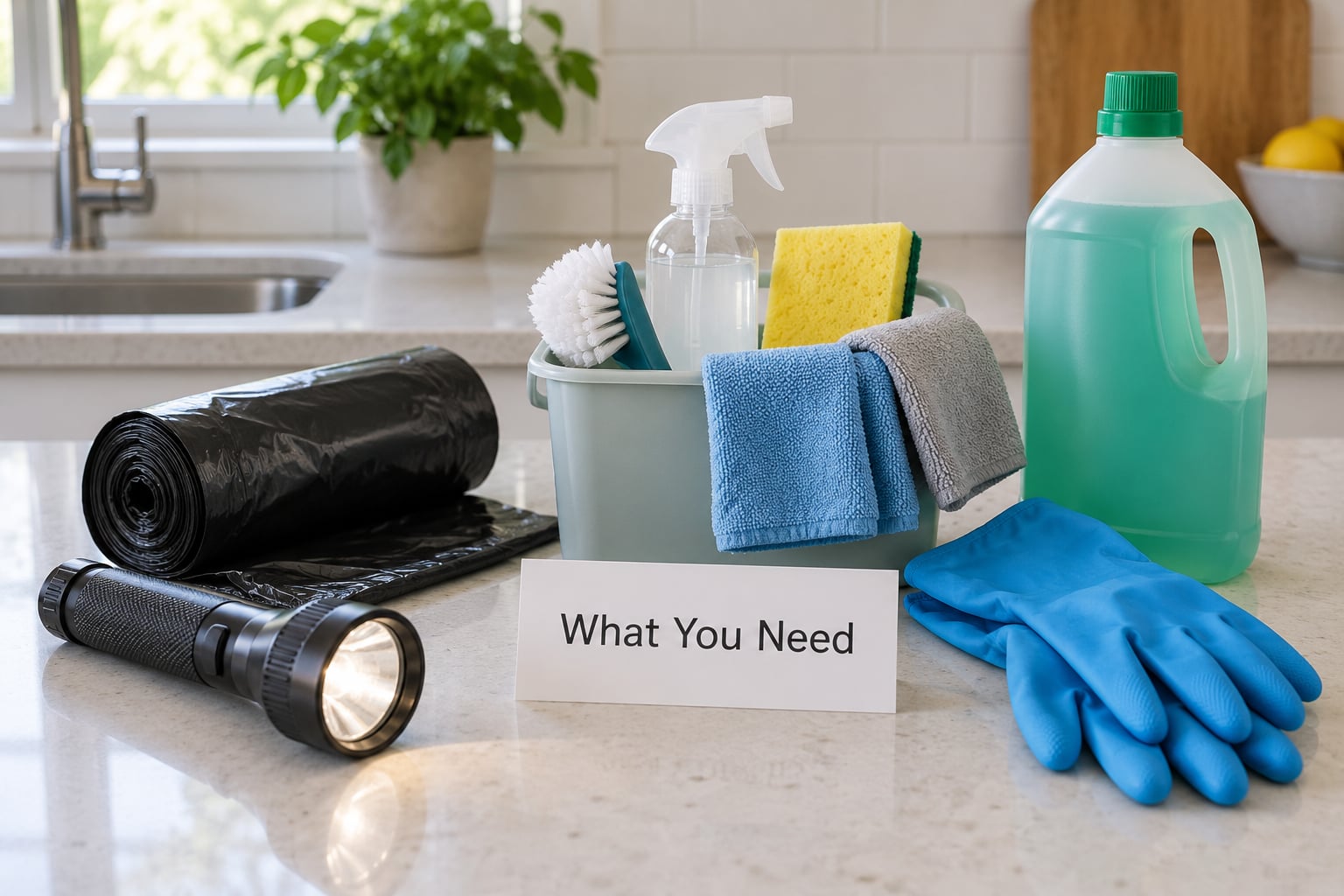
Gather everything before you start, because most of the work is repetitive and stopping halfway is how people end up re-dirtying a clean counter. Most households already own nearly all of it.
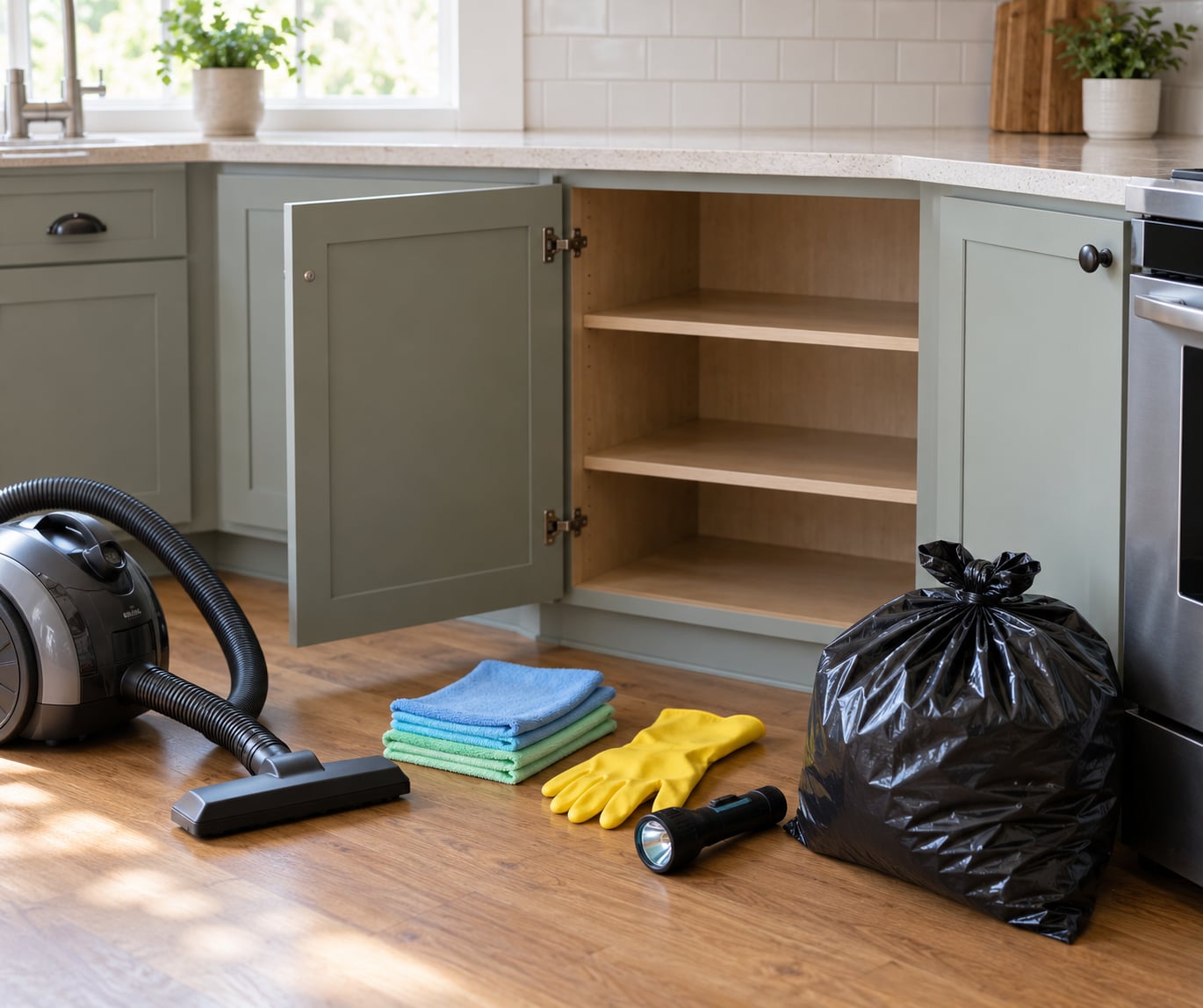
- Rubber or nitrile gloves and eye protection, for handling droppings, egg cases and dead roaches.
- A disposable N95 or P100 respirator if you will be working in a closed space or an area that still smells of treatment.
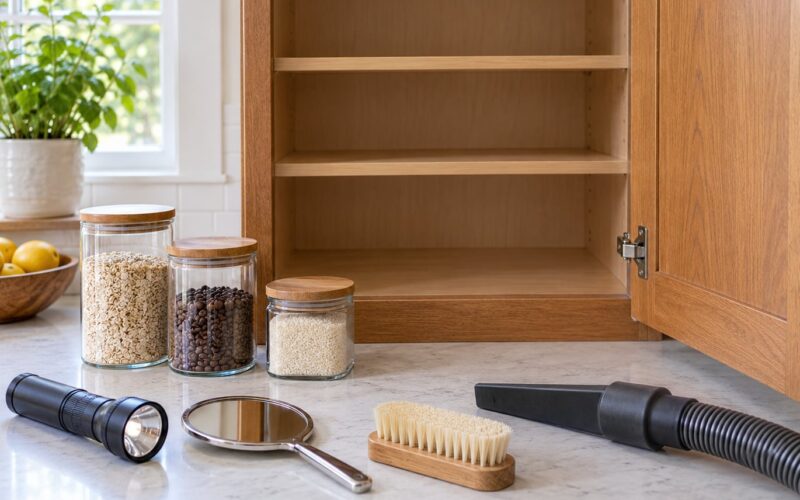
- A vacuum with a hose attachment, plus a crevice tool. This is the single most useful item on the list.
- Dish soap or degreasing detergent and warm water for cutting grease on cabinet shelves and drawer runners.
- A household disinfectant registered with the EPA and labeled for the surfaces you intend to use it on. Check the label for the required contact time.
- Microfiber cloths, a sponge, and a stiff nylon brush for corners and shelf seams.
- Heavy-duty sealed trash bags and a working flashlight or headlamp, since most harborage is in unlit voids.
- A stepladder and a long-handled duster to reach upper cabinet corners and the top of the refrigerator.
- Any pest-control products already registered for indoor use in your home, kept sealed until you know what is still active. Never buy a product off a shelf and combine it with something else.
One safety rule governs the whole job: never mix bleach with ammonia, vinegar, or any other cleaner. The gas that can form is genuinely dangerous, and it is entirely avoidable. Ventilate while you work, keep windows open, and follow the re-entry instructions on whatever product was applied, because labels are law.
Step-by-Step: How to Clean a Kitchen After a Cockroach Infestation
1. Isolate the Kitchen and Protect Yourself
Start by closing doors to adjacent rooms so you are not chasing roaches from the kitchen into the hallway. Take pets out, move children somewhere else, and take everything off the counters that does not need to be there.
You do not need to disturb every hiding place at once. Roaches that are hiding right now will still be hiding while you carry dry goods into bins, and flushing them into the open too early just spreads the problem. Vacuuming behind appliances and lifting the toe-kick of the stove later in the process is more useful.
Wash your hands and forearms with soap as soon as you finish, and take your shoes off at the door if you can. Shoes tracked through a treated kitchen can carry roaches into a room you have not cleaned yet.
2. Remove Food, Clutter, and Trash
Bag and bin every exposed food item that was in the room when the infestation peaked. Open boxes of cereal, bags of rice, bread bags and pet food do not get sealed and returned to the pantry. If a technician sprayed near or on a food item, it goes in the bin, no judgment call involved.
Empty the kitchen bin and take it out immediately. Rinse it with hot water and a detergent, wipe it, and line the new bag. Repeat the same routine with the recycling bin, which is warm and damp and therefore attractive.
Deal with the sink and the dishwasher. Scrape and wash every dish, then run the dishwasher on its hottest cycle once the label’s re-entry window has passed. Leaving a soapy film in the basin or a wet dish towel hanging on the oven handle gives the stragglers a free drink.
Now the drains. Pouring bleach down the drain does almost nothing for cockroaches, and the idea that it flushes them out is a myth. Roaches live inside the P-trap and in the warm wet film inside the pipe, and diluted bleach passes through in seconds. What genuinely helps is a drain cover, a dry sink, and fixing a dripping faucet.
3. Clean Cupboards, Countertops, and Appliances
Empty the lower cupboards completely onto a sheet you can fold and throw away. Vacuum the bare shelves, paying attention to the back corners and the seam where shelves meet the cabinet wall, where debris accumulates and where roaches carry egg cases.
Wipe every shelf with a degreaser and warm water. Do the same for drawer bottoms, pull-out bins and the inside of cabinet doors, including the hinges. Wipe cabinet interiors with a disposable cloth and let them dry fully before putting food back, because trapped moisture inside a closed cupboard is an open invitation.
Move the fridge and stove out from the wall if you can do so safely, and clean behind and underneath them. Pull them straight back and out without yanking the water line. Vacuum the floor beneath, then wipe the back of the appliance and the coils or the burner’s rear housing. Repeat for the dishwasher and any small appliance that sits on the floor.
Move the trash bin and any pet bowl out of the kitchen while you work, and clean the floor beneath them at the end rather than the start.
4. Sanitize the Kitchen After Cleaning
Cleaning and disinfecting are two different things. Cleaning removes grease, debris and droppings with detergent and friction. Disinfecting kills what is left on the surface, and only works if the surface is already clean and stays wet for the full contact time printed on the label.
Apply your product to compatible surfaces only, and give it the stated contact time. Check the label for which materials it can be used on, since some products will haze or dull stainless steel, sealed wood, or a laminate countertop if you use them on the wrong one.
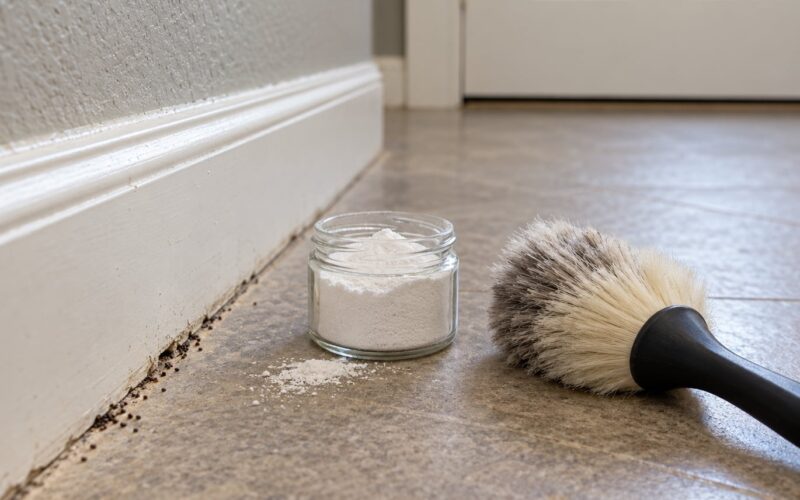
Rinse food-contact surfaces with clean water afterwards if the label directs you to, and dry them. Any residue left on a cutting board or counter where food is prepared is a reason to rinse twice rather than once. Skip disinfection entirely on any treated floor or baseboard area for now, because soap and water there can lift the residual film you are trying to preserve.
5. Inspect Hides, Entry Points, and Signs of Activity
Use the flashlight and work the edges of the room rather than the middle. Check under the sink and around the plumbing penetrations, behind the refrigerator, along the toe-kick of the stove, inside the corners of upper cabinets, along baseboards, and around any pipe or wire entering through a wall.
Know your evidence. Droppings look like coarse ground pepper or specks of rust-colored dirt, often scattered along edges and in sink or cabinet corners. Shed skins look like empty brown shells. Smear marks are dark streaks along a wall or under a shelf, and they do not wash off. Egg cases are small, brown, purse-shaped capsules with a seam along one edge.
Put sticky monitoring traps under the sink, behind the refrigerator, next to the stove and inside one lower cabinet. Check them at night, since German cockroaches are mostly active after dark. A trap with several roaches on it in the morning tells you more than ten roaches glimpsed at dusk.
Seal what you can reach with silicone caulk or similar sealant: the gap where pipes enter the wall, the gap between the countertop and the backsplash, and the gap at the base of the refrigerator. Seal only the gaps you can actually reach, and only after the treatment window has passed. If activity is still heavy in a wall void you cannot reach, that is a job for a professional, not for a tube of caulk.
6. Prevent Reinfestation
Put dry goods into airtight containers rather than the original cardboard and plastic bags. A sealed container removes the food attractant; a re-rolled bag does not. Stack nothing on the floor, and keep pet food in a sealed bin, not a feeding bowl.
Fix the water. A dripping faucet, a wet dishwasher door and an under-sink leak are worth more to a cockroach colony than any leftover crumb. Run the dishwasher and let it dry fully, wipe the sink after every use, and mop standing water under the refrigerator.
Take the trash out before it overflows and rinse the bin when you do. Keep the bin lid closed, and take the recycling out on the same schedule.
Check baits and traps every one to two weeks if you are using them, replacing anything dried out or emptied. German cockroaches carry bait back to the colony, which is the point, so more live activity in the first few days after treatment usually means the bait is spreading rather than failing.
Common Mistakes
Mopping and scrubbing the floors too soon
A hot mop with detergent washes the residual treatment out of the cracks, baseboards and corners where it does its work. Vacuum treated surfaces instead, and mop only the unsealed floor once the label’s re-entry window has passed. Homeowner forums keep repeating the same warning about soap and detergent contaminating a fresh application, and they are right.
Mixing cleaning products
Bleach plus ammonia or bleach plus vinegar can release a toxic gas. Use one product at a time, and if you are switching from one chemical to another, rinse the surface with plain water in between. Never spray an insecticide over a surface you have just treated with a cleaner.
Cleaning before treatment instead of after
Scrubbing everything down and then spraying means you will mop the fresh treatment away an hour later. If you have not been treated yet, clear the cupboards, take the food out, and let the technician in with a clear access path. That preparation is rarely communicated in advance, and it makes the difference between a targeted application and a partial one.
Cleaning only what you can see
Counters and the visible floor are the easy part. Almost all the population sits behind the refrigerator, under the sink, inside cabinet corners and in wall voids. If you clean four hours’ worth of surface and skip those five places, the infestation simply relocates.
Keeping food in bags and bins instead of airtight containers
Roaches eat through cardboard and thin plastic. Decant rice, flour, cereal and pet food into containers with gasketed lids. If you cannot close a container properly, that item does not belong in the kitchen.
Using a product that is not registered for indoor food areas
Anything applied where food is prepared or eaten has to be registered for that use, and the label is the legal instruction. Read the label for the surfaces, the re-entry time and any food handling restrictions. If a product is not registered for your use, do not use it in the kitchen.
Assuming one roach means it is over, then over-cleaning
Seeing a single live roach days later is not proof of failure, and frantic scrubbing does not help. Egg cases are resistant to many surface treatments, so nymphs can appear later as that generation hatches. Judge progress on trap counts and droppings over about ten days, not on a single sighting.
Leaving dead roaches and droppings where they are
Dead roaches are a food source for the ones still alive, so removing them is part of the treatment rather than an afterthought. Wear gloves and a mask, pick them up with a damp paper towel or a vacuum crevice tool, and seal them in a bag before it goes out. Scrub droppings and smear marks with detergent and a brush rather than dry-vacuuming alone, and never sweep droppings, because dry debris spreads into the air. Anyone with asthma or an allergy should keep out of the area until it is cleared.
Frequently Asked Questions
How long after a cockroach infestation should I clean my kitchen?
Follow the re-entry time on the product label first, which is often a few hours and sometimes overnight. After that window, clean within a day or two rather than waiting weeks. The sooner you remove food and water sources, the less the surviving roaches have to live on while the treatment works.
Can I use bleach to clean a kitchen after roaches?
Diluted bleach sanitizes a cleaned counter, but it is not a cockroach treatment and it is not what makes drains safe. Never mix bleach with ammonia, vinegar or any other cleaner. For roaches specifically, detergent and physical removal of debris and droppings matter far more than bleach.
Should I clean before spraying for cockroaches?
Do not deep clean and then spray, because your mop will remove the fresh residual treatment. Instead, empty the cupboards, remove exposed food and clear a path for the technician before the visit. That gives them access to the cracks and harborage the application depends on.
How do I know if cockroaches are still in my kitchen?
Use sticky monitoring traps placed under the sink, behind the refrigerator and inside a lower cabinet, and check them overnight. Count roaches, droppings, shed skins and egg cases in traps each morning. Fewer and older droppings over about ten days means the population is falling.
Is it safe to use bug spray near dishes and food surfaces?
Only use a product registered for indoor use on food-contact surfaces, and follow its label for rinsing and drying. Bag or bin any food item that was exposed to an application. Never combine an insecticide with a cleaning product, and keep children and pets out until the label’s re-entry time has passed.
When should I call a pest control professional after finding roaches?
Call if you still see regular live activity, droppings or egg cases after about ten days of monitoring, if roaches are appearing in the daytime, or if you cannot reach the harborage behind appliances and inside walls. In an apartment, tell the landlord early, since the source is often a neighboring unit.
Conclusion
Start by waiting out the label’s re-entry window, then bag every exposed food item, empty the trash and wipe out the grease. Vacuum behind and under the appliances, the cabinet corners and the baseboards rather than mopping them, and remove dead roaches, droppings and egg cases before you sanitize. From there it is a ten-day routine of sealed containers, a dry sink, a covered bin and traps you count every morning. If activity has not dropped by day ten, or the roaches are coming from inside a wall, call a licensed operator rather than cleaning harder.