Yes, you can treat a roach problem in a rental without the landlord, and in most places the landlord still has a legal duty to deal with it at the building level. The part you control is sanitation, water removal, sealing gaps, a small amount of labeled bait placed correctly, and two weeks of monitoring with dated notes. That work often stops a light infestation on its own.
What you cannot do alone is treat the building. German cockroaches (Blattella germanica) move through common walls, plumbing chases, elevator shafts and garbage chutes, so an untreated apartment next door can keep sending new ones into yours no matter how tidy you keep things. The University of Kentucky extension publication ENTFACT-614 makes the same point about why single-room treatments fail in apartments.
Timing matters more than most people expect. A roach that eats gel bait usually dies within a few days, visible activity tends to fall over two to three weeks, and eggs already deposited take longer still to hatch. Escalate on a schedule, not on frustration.
One note before you start: this is general information, not legal advice. Habitability standards, notice periods and repair-and-deduct rules vary a lot by state and city.
What You Need
Gather these before you treat anything, because the first work is almost all cleaning and recording. The treatment product is the smallest part of the job.
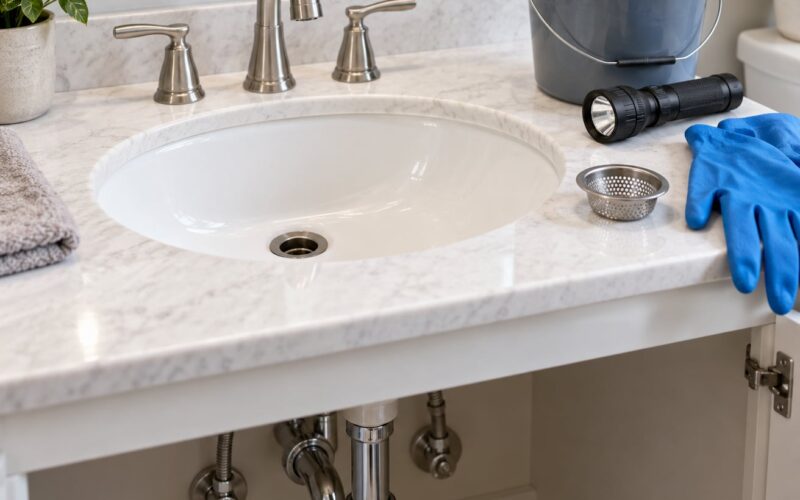
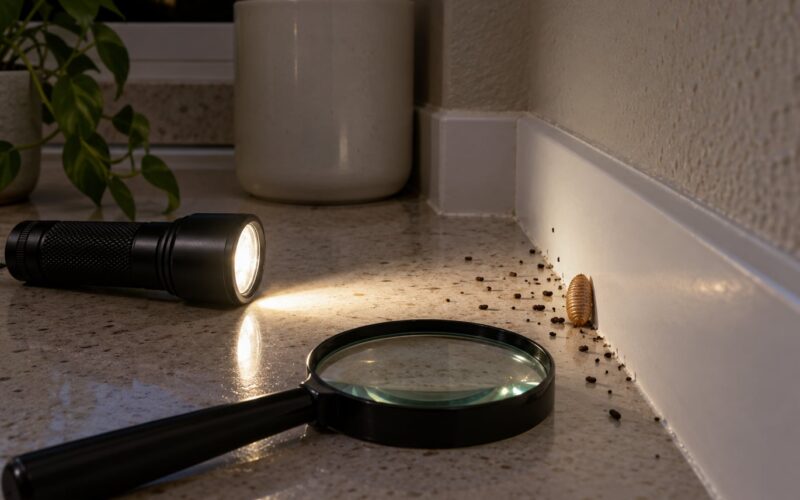
- Identification aids. A phone camera for close photos, a small flashlight, and a magnifying glass or hand lens. You need clear images of the insect, its droppings and any egg cases before you talk to anyone.
- Cleaning supplies. Hot water, degreaser for cabinet interiors and stove surfaces, a stiff brush for crevices, a vacuum with a hose attachment, and bags for sealing waste immediately.
- Storage containers. Airtight bins for flour, rice, cereal, pet food and open packages. Airtight matters more than tidy.
- Entry-point materials. Paintable silicone caulk, door sweeps for exterior and shared-hallway doors, and small escutcheon plates or rings to cover gaps around pipe stubs.
- Targeted pest-control product. One roach gel bait or a few enclosed bait stations, and boric acid dust for dry, hidden harborage like wall voids behind baseboards. Read the label before you buy anything, not after.
- Monitoring tools. Sticky monitoring traps you can place under the fridge, under the sink and inside wall voids. Cheap traps are the cheapest evidence you will ever own.
- Protective equipment. Nitrile gloves, a dust mask if you are using boric acid powder, and hand soap for washing after every placement.
- Records. A dated log — paper or a phone note — plus your lease, any landlord or property-manager email address, and the date you moved in.
Skip the foggers, the aerosol repellent sprays and the homemade sugar-borax mixes while you are shopping. They are the three purchases renters most often regret.
Step-by-Step Treatment Plan for a Roach Problem in a Rental
Seven steps, in order. The order matters more than the speed: bait placed into a dirty unit gets ignored or cleaned away before roaches ever reach it.
1. Confirm What You Are Seeing
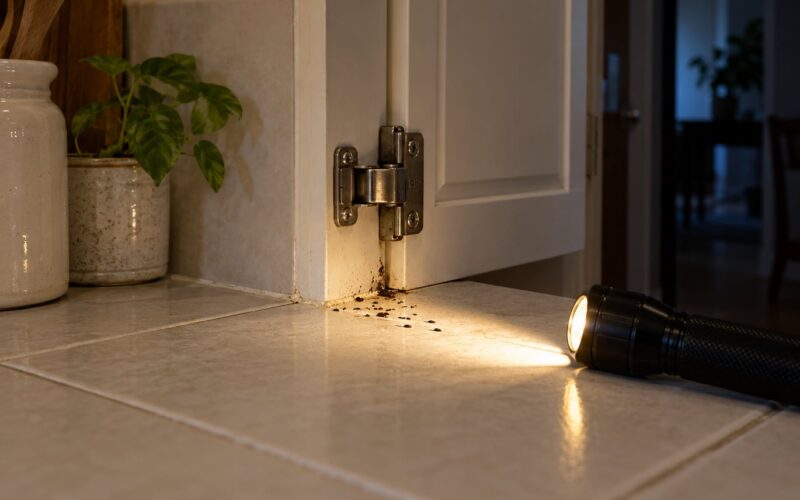
Look for the signs of an active infestation before you treat. Live roaches at night near a sink or the stove, roaches in daylight, droppings that look like ground coffee or black pepper, empty egg cases, shed skins near a wall edge, and a musty smell in a closed cabinet all point the same way.
One roach does not prove an infestation. Roaches wander in from a neighbouring unit, a hallway or a grocery bag, and a single intruder often means nothing. Daytime activity in a lit room, or droppings and egg cases behind the fridge, is the line between a stray and a population that has settled in.
Species helps you set expectations. German cockroaches are about half an inch, tan with two dark stripes, and reproduce quickly indoors. American roaches are an inch and a half or more, reddish brown, and usually come from drains and outdoor wood. Oriental roaches are glossy black and prefer cool damp areas like basements and utility rooms. Brown-banded roaches are small and banded, and they hide high up in cabinets rather than low near the floor.
2. Photograph and Document the Problem
Start a dated log the day you find the first sign. Each entry needs a date, what you saw, where, and how many. Photographs carry timestamps, so take more of them than feels necessary.
Log live sightings, droppings and egg cases, damaged or gnawed food packaging, and roaches in common areas, stairwells or the hallway near your door. Note any roaches that appear to be arriving from under the baseboard of a shared wall — that detail matters later.
Write down every contact with the landlord: the date, how you reached them, what you said, what they promised, and when they said they would come. Renters who describe a dated written notice with a deadline as the step that finally moved a landlord are not alone in saying that; a request with no deadline is easy to sit on.
Then send a written notice anyway. Keep it short: the unit, the date activity started, what you have observed, what you have already done to reduce food and water, and a specific request with a specific date. Email is better than a phone call because it creates a record you can attach later.
3. Deep-Clean and Remove Food Sources
This is the step that does the most work, and it is the one people skip because it is boring. Work one room at a time, kitchen first, then bathroom, then the rest of the unit.
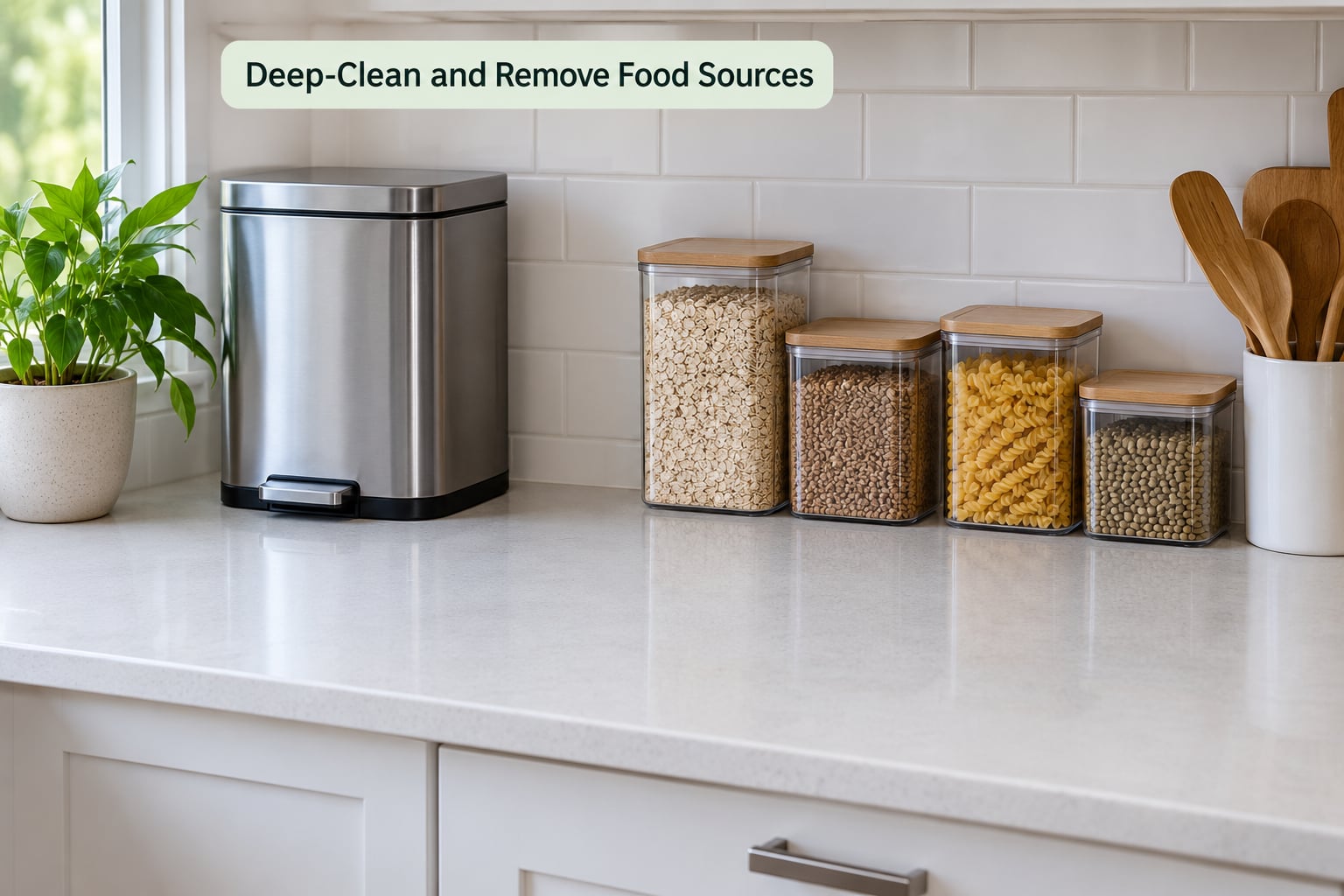
In the kitchen, empty every cabinet and drawer, discard open food and anything stale, then wipe shelves and cabinet interiors with hot water and degreaser. Pull the fridge and stove forward and clean behind and underneath them, where grease builds up out of sight. Vacuum the floor edges and under cabinets, and bag the debris immediately rather than leaving it in a pile.
Move cardboard and paper recycling out of the kitchen or into sealed bins. Roaches chew through corrugated cardboard and it gives them a sheltered path to harbourages.
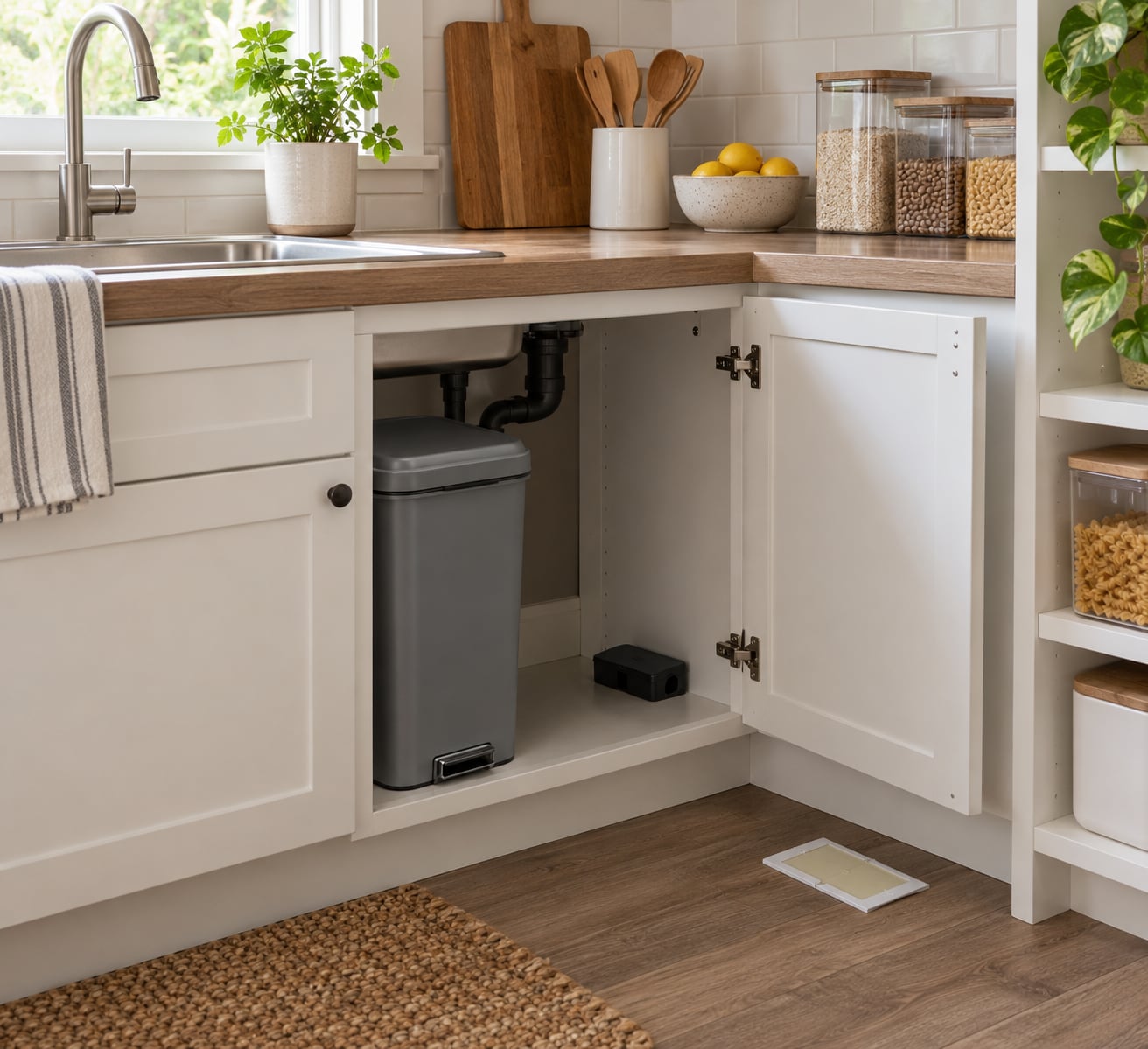
Change how you store food. Airtight containers for dry goods, pet food and open packages. A bin with a lid under the sink for food waste. Take the trash out every night rather than every other morning.
You will know the cleaning worked when cleaned surfaces stay free of fresh droppings for a week and you see fewer roaches in the sink or on the stove at night.
4. Block Entry Points Without Damaging the Unit
Seal what you can reach from inside your own unit: the gap around pipe stubs under sinks and along baseboards, the space where cabinets meet the wall, and the holes around door frames. Paintable silicone caulk works on most interior surfaces and takes paint later. Door sweeps close the gap under an exterior or hallway door.
Fit escutcheon plates over pipe stubs where the gap is wide enough. Do not drill, cut structural material, or force anything that belongs to a shared wall, a common area or another apartment. If an opening is inaccessible or looks structural, photograph it and tell your landlord in writing instead of trying to reach it.
Remember what you sealed. It becomes part of your evidence that you acted responsibly, and you will want to check those seals again after any repair work.
5. Apply Targeted Bait or Gel
Small, targeted bait beats broad spraying, and the label is the instruction manual. Put gel bait in dabs or thin lines in cracks and crevices along the edges where roaches travel, flush against a wall or corner rather than out in the open. Under-sink cabinets, the back corner of the kitchen and bathroom cabinets, the hinge side of cabinet doors and the area behind the fridge are all worth placing.
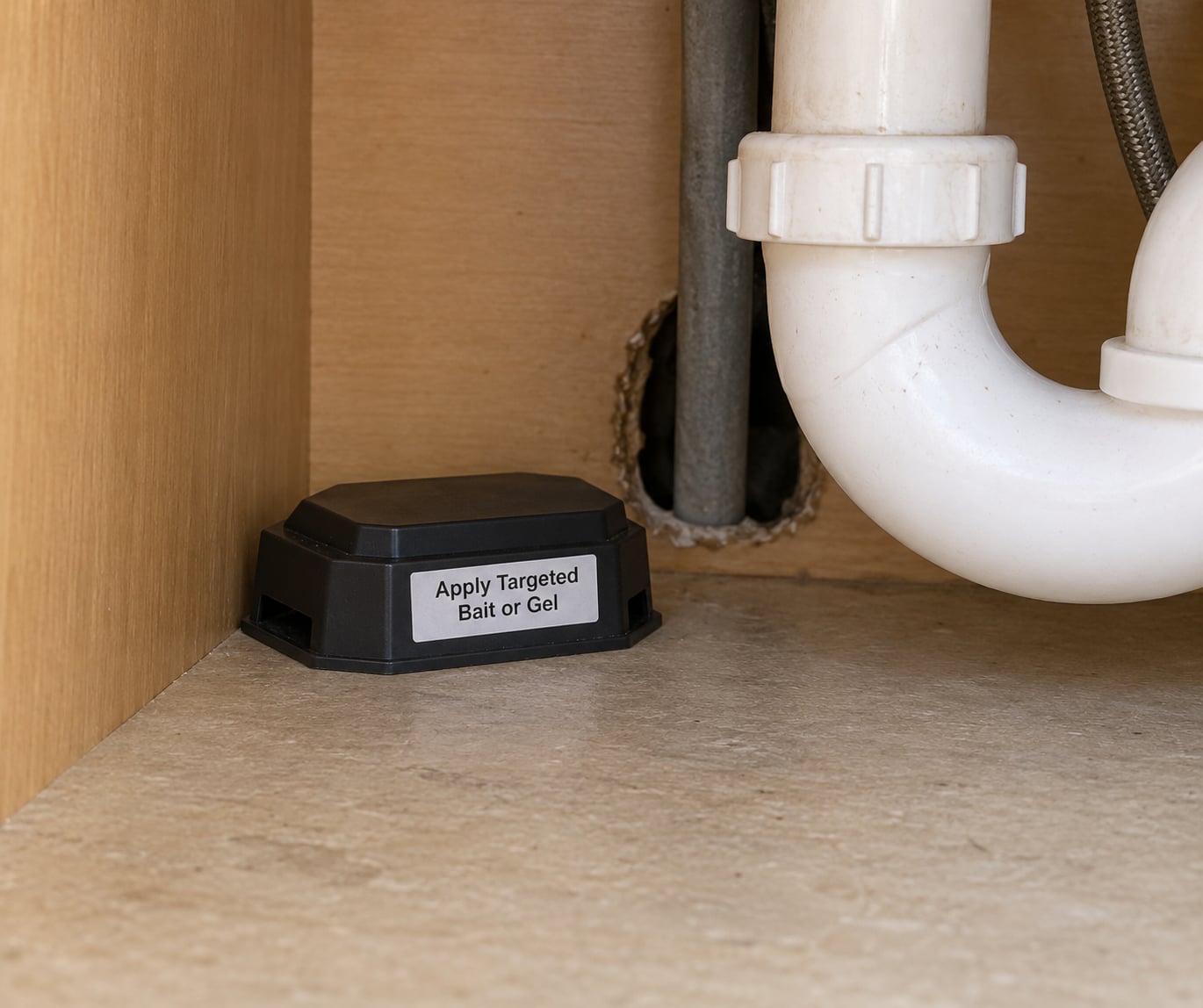
Enclosed bait stations are the better choice if you have small children or pets, because the roach eats inside and carries the bait back to its harbourage. Follow the label on quantity, spacing and placement. Boric acid dust works well as a light, even layer in dry voids such as behind baseboards, but it needs to stay dry and out of reach of children and animals.
Do not spray a repellent near bait. Repellent drives roaches away from the treated surface, so they scatter into wall voids or neighbouring apartments instead of eating. In a multi-unit building that can make the problem worse and give your landlord a reason to point fingers elsewhere. Foggers and bug bombs fall into the same category; ENTFACT-614 is blunt about them.
Treatment is working when trap counts fall, you see fewer live roaches at night, and droppings stop appearing in cleaned areas. Bait does not kill instantly — dead roaches often show up on the floor over the next few days because of the aggregating pheromone effect.
6. Protect Children and Pets and Follow the Label
The label is the law here, and it is specific: what the product may be applied to, how much, where, how often, and what protective equipment to wear. Gloves are sensible for any handling, and a dust mask makes sense if you are applying boric acid powder.
Ventilate the room after application and wash your hands and any exposed skin. Store every product in its original container, upright, locked away, and away from food, dishes and cleaning supplies. Never transfer bait or dust into a food container, and never scatter powder where it can be mistaken for food or inhaled by a curious pet.
Keep bait stations where children and animals cannot reach them, and keep fresh bait available to roaches — bait sealed in a cabinet no pest can enter does nothing. If you cannot use a product safely in your specific unit, ask the manufacturer or a licensed pest professional rather than improvising.
7. Monitor for Two Weeks and Escalate If Needed
Put sticky traps where you saw evidence: under the fridge, under the sink, inside the bathroom cabinet, and against the wall of the shared side of the unit. Check and count them the same time each evening. Write the number down. A written trap count is the single most persuasive piece of evidence a renter can produce.
Read the results honestly. Counts dropping steadily over two weeks means your plan is working. Counts flat or rising, fresh droppings in cleaned areas, or roaches appearing in daylight all mean the population is established or arriving from somewhere you cannot reach.
Then escalate in writing, one rung at a time:
- Written notice with a deadline. Send it by email, keep a copy, and ask for a specific response date. Many renters report that setting a 14-day deadline is what turns a quiet request into action.
- Local code enforcement or environmental health. Most cities and counties take pest complaints, and an inspector’s involvement changes the tone of any landlord response.
- Tenant board or housing authority. They can tell you exactly which rules apply in your area and what the landlord is required to do.
- Rent abatement or repair-and-deduct. These are different tools. An abatement is a credit for the period the unit was not fit; repair-and-deduct means you pay for the repair and subtract the cost from rent. Both are regulated, both require you to follow local procedure, and neither is a shortcut that ignores your lease.
- Moving out. Breaking a lease over an unresolved infestation is a last resort, not a first move, and it varies widely by jurisdiction.
Keep a copy of everything, including your photos and trap log, when you eventually move out. It protects your security deposit if the landlord tries to deduct for a problem you documented and reported.
Common Mistakes
- Spraying the roach you can see. Fix: place bait in the harbourage instead. The visible roach is the least important one.
- Using a fogger or bug bomb. Fix: skip it entirely. You get a short-lived kill, a sticky residue on every surface, and displaced roaches in the next apartment.
- Combining a repellent spray with bait in the same room. Fix: pick one approach per area and give the bait room to work.
- Wiping a baited area clean right after placing bait. Fix: clean first, let surfaces dry, then place bait and leave it alone.
- Putting bait somewhere visible and open. Fix: put it in cracks, corners and cabinet edges, flush against surfaces roaches travel along.
- Baiting without monitoring. Fix: traps and a dated log. Without them you have no idea whether anything changed, and no evidence for anyone else either.
- Treating without writing anything down. Fix: dated log, photos, written notice, all of it. Memory is not evidence.
- Leaving a leaking pipe, a failing fridge seal or a dripping sink alone. Fix: report the moisture in writing the same week. Water is the thing that keeps the problem alive after the roaches are gone.
Quick Tips for a Repeat Infestation
Most repeat problems come back to a habit, not a missed pesticide. A few routines close most of the gaps:
- Wash dishes every night. A sink full of dishes overnight is the easiest food source in the apartment.
- Clean the fridge and the space behind it every month. That gap is a harbourage and a water source in one.
- Check under the sink for drips. Fix a slow leak before it becomes an argument about responsibility.
- Re-check the seals you made. Caulk shrinks and pipe stub gaps reopen, especially after any repair or construction nearby.
- Wipe the stove and cooktop grease weekly. Grease residue is hard to see and easy to feed on.
- Keep traps out year-round in a building that has had a problem. They tell you activity is picking up before you see anything.
- Ask management what changed. New tenants, a renovation next door or a shared garbage chute cleanup can all shift activity into your unit without warning.
Frequently Asked Questions
Is it safe to treat roaches in a rental apartment?
Mostly, as long as you use a product exactly as its label describes. Choose an enclosed bait station if children or pets live with you, keep food covered, ventilate the room, wash your hands, and store every product locked away and away from dishes. Avoid foggers and aerosol sprays, which leave residue and displace roaches into neighbouring units. If the label instructions do not fit your unit, ask the manufacturer or a licensed pest professional.
Will roach spray or foggers actually get rid of an apartment infestation?
No. Sprays kill roaches that are directly hit and can repel the rest into wall voids or neighbouring apartments. Foggers do the same thing in bulk while coating your counters and walls with residue that interferes with later bait. Gel bait and boric acid dust in harbourages, combined with food removal and sticky trap monitoring, are what actually clear an apartment.
Should I notify my landlord before treating roaches myself?
Notify in writing even if you plan to treat it yourself, and keep treating in the meantime. The written record shows good faith, gives you a dated paper trail, and starts the clock on your landlord’s obligation to act. Include photos, what you have already done, and a specific response date rather than an open-ended complaint.
Can I legally use bug bombs in my apartment?
In most places they are legal to buy but a bad idea, and in some multi-unit buildings they may violate lease terms or building rules. Beyond the legality question, extension entomology guidance treats foggers as counterproductive: roaches flee into cracks and adjacent units, residue makes later bait less effective, and nothing addresses the food and water drawing them in. Check your lease before using one.
When is a roach problem serious enough to require professional treatment?
Seek professional help when you see roaches during the day, find droppings and egg cases behind appliances, keep getting fresh sightings after two weeks of bait and cleaning, or notice activity along a shared wall that suggests a neighbouring unit. Building-wide problems need treatment across multiple units at once, which is a landlord responsibility and something a tenant cannot do alone.
Conclusion
Start by confirming the signs and starting a dated log, because that log becomes your evidence. Then remove food and water, seal the gaps you can safely reach, place a small amount of labeled bait in harbourages, and monitor with sticky traps for two weeks.
If activity is still climbing when that two weeks is up, send a written notice with a specific deadline and escalate in order: code enforcement, tenant board, abatement or repair-and-deduct as local law allows. Keep your paperwork, and keep treating your own unit in the meantime, because a clean unit is the strongest position you can be in.