Cockroaches are drawn to chicken coops because a coop offers everything they need in one place: spilled feed and droppings to eat, damp bedding and leaky waterers to drink from, and dark cracks to hide in during the day. To keep them out, you remove the food, dry out the coop, and close every opening they use to get in.
The part most keepers get wrong is treating this as a spray problem. A fogger or a bottle of insecticide handles the roaches you can see, then a fresh cohort walks in through the same gap next week. Sealing and sanitation take an afternoon and are what actually ends it.
Table of Contents
- Keep Cockroaches Out of a Chicken Coop: What You Need
- How to Keep Cockroaches Out of a Chicken Coop: Step by Step
- Common Mistakes That Make Cockroach Problems Worse
- Frequently Asked Questions
- How do I know cockroaches are in my chicken coop?
- What is the safest way to kill cockroaches in a chicken coop?
- Can I use diatomaceous earth or boric acid around my chickens?
- Do cockroaches come out at night in a chicken coop?
- How often should I clean a chicken coop to prevent cockroaches?
- When should I call a pest control professional for a chicken coop?
- Conclusion
Keep Cockroaches Out of a Chicken Coop: What You Need
Gather everything before you start, because half-finished pest-proofing is worse than none. Most of it is cheap hardware store stuff.
- Gloves and an N95 dust mask if you plan to use any dry insecticidal powder.
- Headlamp or flashlight for night checks. A roach that never sees you is a roach you never counted.
- Stiff broom, shovel, dustpan, and a stiff hand brush for bedding and droppings.
- Spray bottle of water with two tablespoons of plain dish soap — the cheapest effective tool you own.
- Weather-resistant sealant or wood filler for cracks, plus a utility knife for widening a gap enough to fill.
- Hardware cloth or wire mesh with small openings to cover vents, windows, and gaps you cannot seal.
- Lidded metal feed container that a rodent could not chew through.
- Fresh bedding, and a spare tarp or plywood sheet for a dry-sweep work area.
- Glue traps and a notebook to map where roaches travel and to measure progress week to week.
How to Keep Cockroaches Out of a Chicken Coop: Step by Step
Work through these in order. Each step assumes the one before it is done.
1. Inspect the Coop and Run for Cockroach Activity
Look where roaches actually are, not where you expect them to be. Check the corners under roost boards, beneath the nesting boxes, along the wall where the floor meets the frame, inside feed bags, and under the run where the soil stays damp.
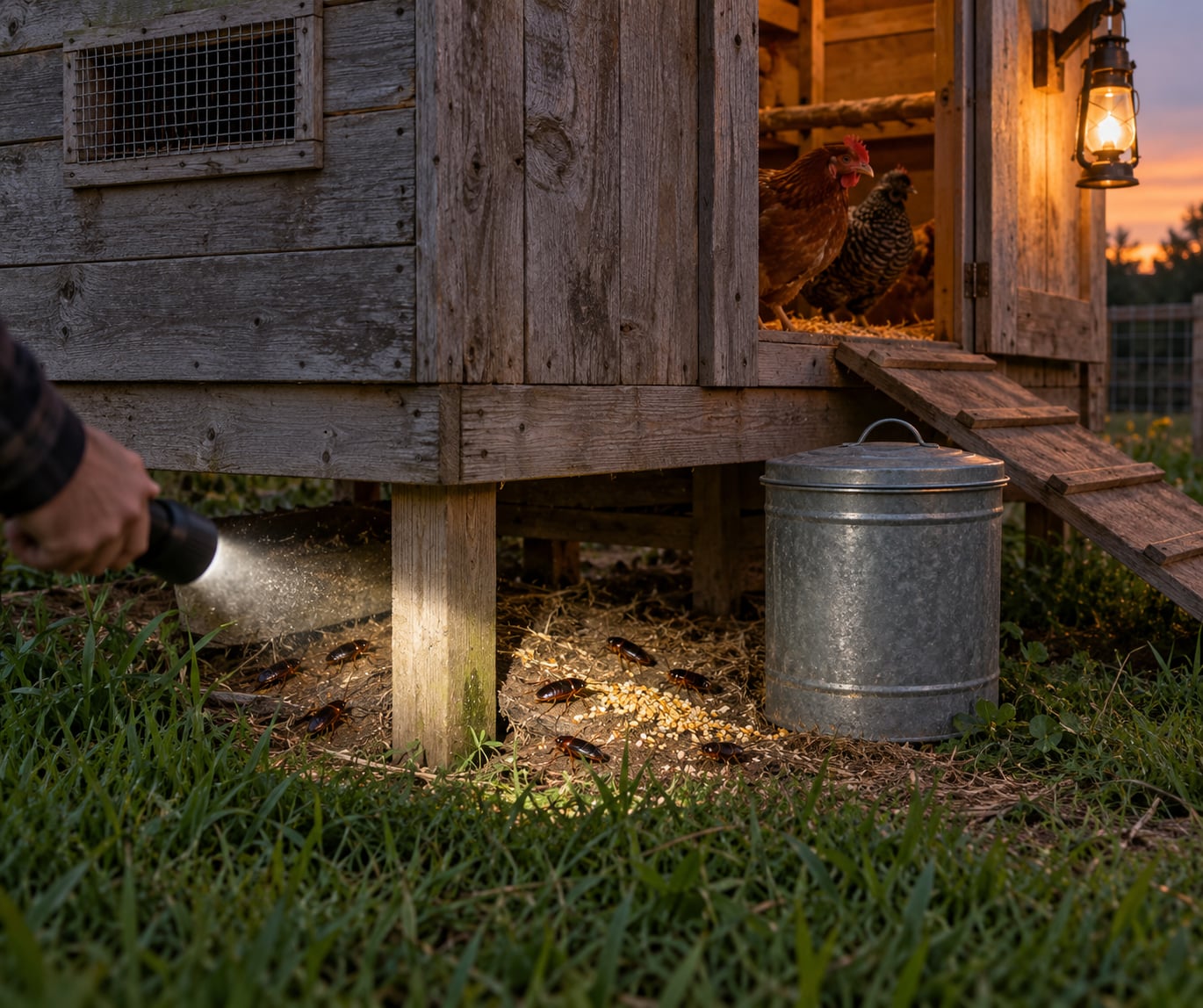
Then go back with a flashlight after dark, once the birds have roosted. Roaches are nocturnal, so a daytime inspection routinely shows a nearly clean coop and a night inspection shows a floor covered in them. This timing is the single most useful thing you learn here: any treatment you apply in the middle of the day misses the population doing the reproducing.
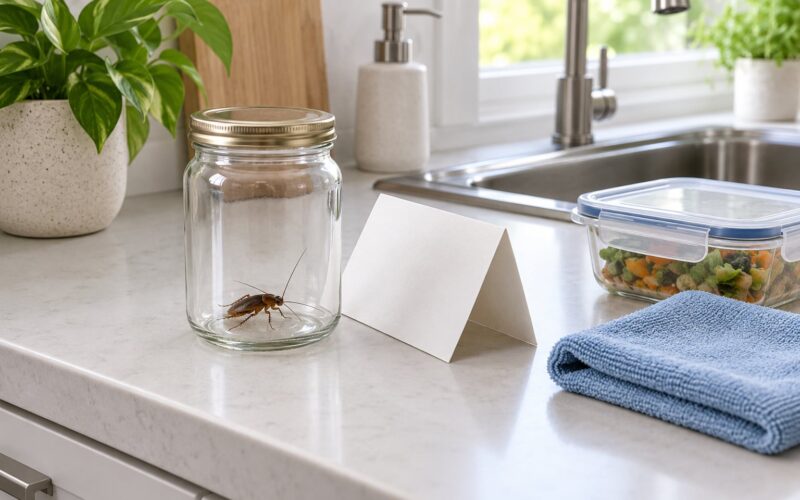
Identify the species while you are looking, because it points you at the entry point.
- German cockroach is small, light brown, and reproduces fast. It points at indoor warmth and a water source, often a leaky waterer or a house connection.
- American cockroach (the Palmetto bug in Florida) is large, reddish brown, and lives outdoors in leaf litter, wood seams, and mulch. It points at ground-level gaps and damp soil under and around the coop.
- Oriental cockroach is glossy black and favors drains and damp, cool spaces. Check for a dry drain or a hole that opens into a crawlspace.
Write down where you found them. You are mapping harborage, not collecting souvenirs.
2. Remove Food, Moisture, and Clutter
Cockroaches cannot survive long without food and water, so this is the step that does the heavy lifting. Sweep up every feed spill, including the fines that drift into corners and under feeders. A metal feeder with a lip catches most of what used to end up on the floor.
Replace wet bedding completely. Damp shavings are both a water source and a shelter, and a fresh pile is an invitation. Manure and egg debris need to go on a regular schedule, not just when the smell gets bad.
Contain water. Fix the leaking nipple waterer, keep the drinker base clean, and wipe up the puddle that forms under it. Then reduce hiding places: stack equipment and crates against walls instead of in corners, and clear the vegetation and stored items that give a roach a bridge from the mulch up into the frame.
3. Seal Gaps and Close Entry Points
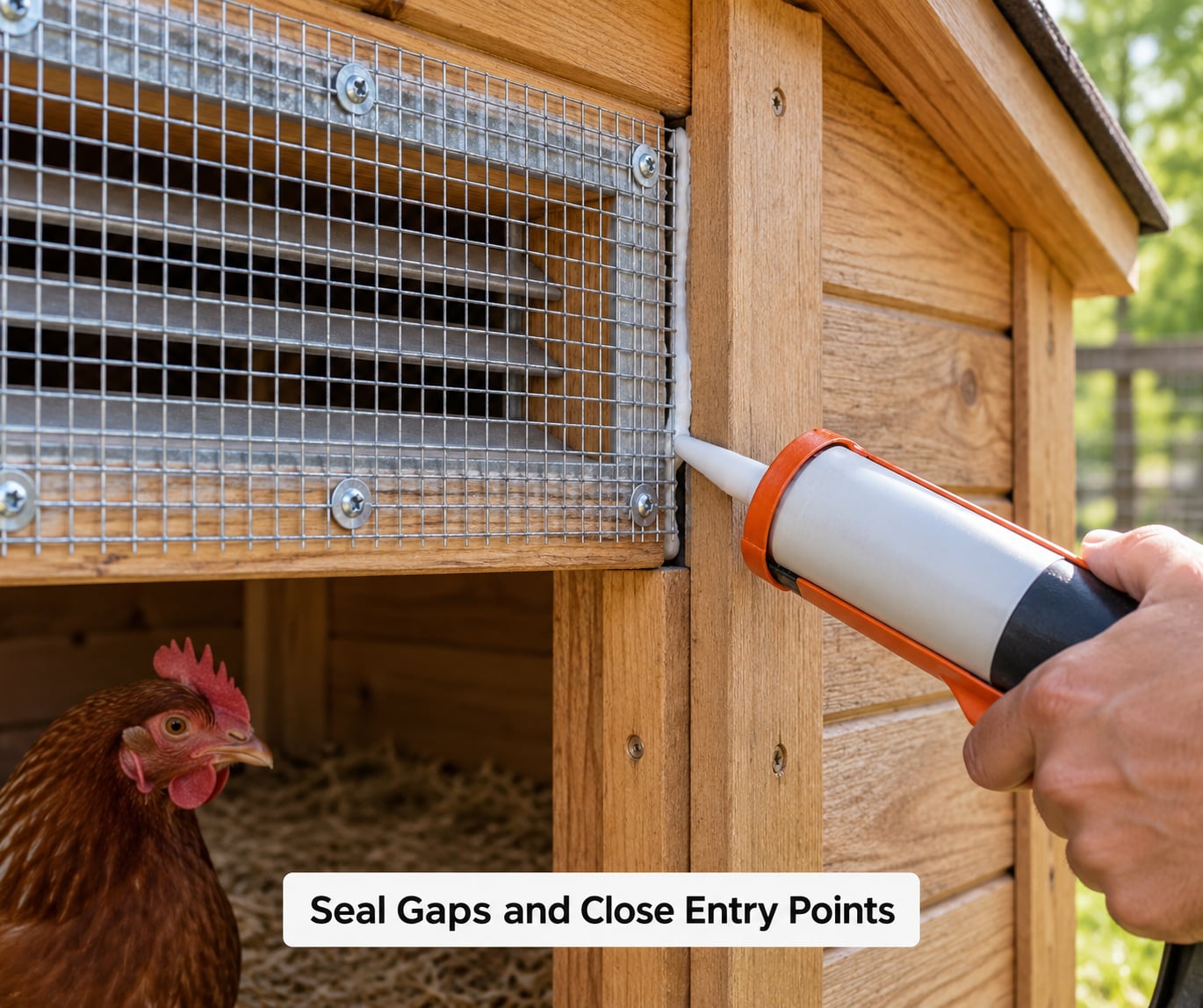
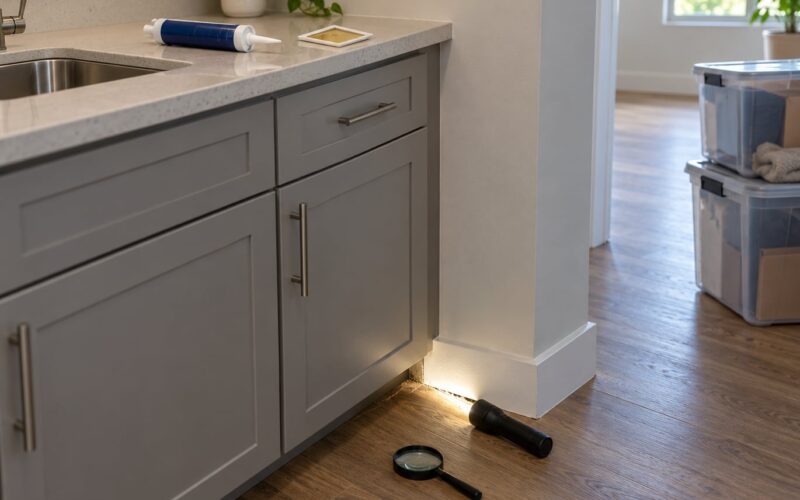
Roaches are flat, squeeze through anything about a quarter inch wide, and climb surprisingly well on textured wood. Work from the bottom up with a flashlight behind you so light comes through the gaps and shows you every one of them.
- Fill splits in siding and around board joins with wood filler, then a bead of exterior sealant.
- Seal the floor-to-wall gap and any gap where the coop frame meets the foundation or the ground.
- Fit a door sweep or a flexible flap on the pop door and the main access door.
- Cover vents and windows with hardware cloth, and leave the cut edges tight to the frame with no loose wire.
- Cover or plug any hole larger than a quarter inch, including drilled predator holes and gaps at the roofline.
Ventilation is not negotiable, and you do not have to trade airflow for exclusion. A covered vent blocks roaches and passes air. Removing a vent to solve a roach problem trades one problem for two worse ones.
Use a silencer flap on the pop door if you did not build one. It keeps the light and draft out, which makes the roost less attractive, and it stops the draft that pushes birds toward the edges of the roost.
4. Store Feed and Keep the Coop Dry
Feed is the biggest draw. Store it in sealed metal containers with tight-fitting lids, inside the coop or in a rodent-proof bin, and never in the open bag it came in. If rats can get in, roaches are already inside with them.
Sweep the floor after every feeding, and keep a broom by the door so it becomes a reflex rather than a chore. Put the feed container on a stand or a pallet so spilled food cannot collect underneath it.
Keep the ground dry. Spread gravel under the feeders and drinkers, improve drainage so the run does not hold water, and choose bedding that stays dry longer. Pine shavings absorb moisture faster than hemp, so a hemp-bedded coop usually stays drier in wet weather.
5. Clean Without Exposing Chickens to Unsafe Products
Physical removal comes first: shovel out the bedding, scrape droppings off the roost boards, wipe the walls down with a damp cloth. Dry cleaning and hand removal produce no residue at all, and they take care of a surprising share of an early infestation.
When you need more, apply insecticidal powders with care. Food grade diatomaceous earth, which is amorphous silica, kills by drying a roach out rather than poisoning it. Two things make it fail: moisture and daylight. Dust it lightly in the evening onto a dry surface, keep it away from feed and water, and reapply after rain or after wet bedding compacts. It works best on nymphs crossing open dust-bathing areas and against ants and other crawlers; experienced keepers on BackYard Chickens report it doing very little to adult roaches, and one put it under the nesting boxes with no noticeable benefit.
Boric acid works, but it carries a specific risk in a coop. It is a slow stomach poison, so roaches walk away and die later, often in a spot your chickens can reach. Skinks and other wildlife eat them too, which is why dead roaches seem to vanish from a treated area. Loose powder around birds that dust bathe is another problem.
Permethrin is the option experienced keepers reach for, and it is labeled for poultry with no egg withdrawal on products that carry that label. Read the label before you buy, confirm it names chickens, and note the re-entry interval and any egg withdrawal the label states. Follow it exactly.
Sprays work and they work at night. A spray bottle of water with two tablespoons of dish soap, applied where you saw movement after dark, kills by suffocation and leaves nothing behind. Keep the flock out of the coop while you spray and until the surfaces are dry. Never use the same spray your exterminator uses unless its label specifically covers poultry and you follow the re-entry and egg-withdrawal directions.
6. Monitor for Returning Cockroaches
Set glue traps in harborage spots, under the roost, near the feed container, and along the wall base. Write the date and the count on each one. Numbers are the only honest measure of whether this is working, and they also tell you where the population is hiding that you have not found yet.
Expect the adult population to take one to three weeks to fall after you remove the food and water, with egg cases surviving longer. Baked silica or borate products work more slowly still because they depend on roaches grooming themselves and eating the dust. If the counts are flat after a month, you have a gap somewhere, and the trap map is telling you which wall to look at.
Call a licensed pest professional when the roaches are coming from inside the house or a neighboring structure, when ootheca are visible in the bedding, when birds are picking at poisoned insects, or when a few weeks of exclusion and sanitation change nothing. Tell them you have poultry, ask what is on their label for chickens, and get the re-entry and egg-withdrawal instructions in writing.
Common Mistakes That Make Cockroach Problems Worse
Leaving the feed bag open or outside. This one keeps coming back because it feels unrelated to insects. A secure lidded container is the highest-return five dollars on this whole list.
Spraying without sealing. You kill the ones inside and the ones outside move in. Do the sealing first.
Blocking ventilation. Reducing airflow to make the coop less appealing also stresses the birds and raises moisture, which makes conditions better for roaches anyway.
Leaving bedding damp. Wet bedding and a leaking waterer give roaches the water they need, right inside the coop you just treated.
Using a product not labeled for poultry. Check the label for chickens and for egg withdrawal every time. If the label does not mention birds, keep it out of the coop.
Poisoned bait where birds forage. Dead roaches inside the run are a real secondary poisoning route. Pick up carcasses in the morning, and never place loose bait where chickens scratch.
Fogging or spraying during the day. Most of the population is in harborage at midday. Treat at night.
Five habits prevent most of this: metal lidded feed storage, sweep after every feeding, dry bedding replaced weekly, gaps sealed with hardware cloth and sealant, and a flashlight check once a week after dark.
Frequently Asked Questions
How do I know cockroaches are in my chicken coop?
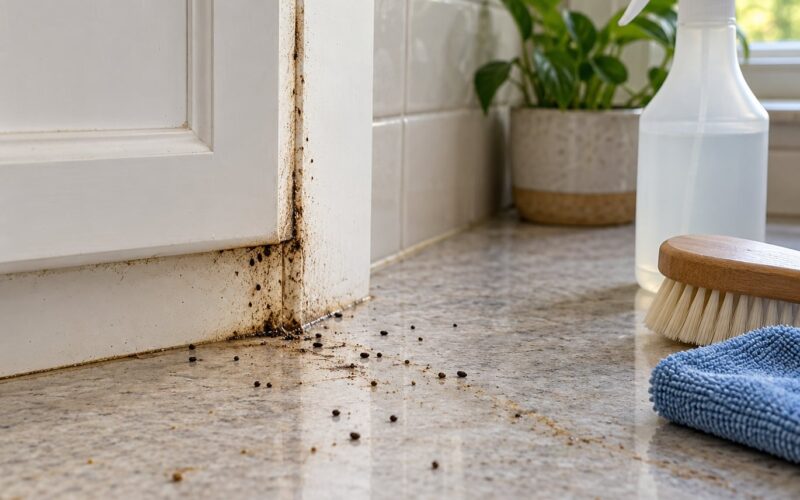
The easiest confirmation is a flashlight check after the birds roost. Look along wall bases, under roost boards, beneath nesting boxes, and inside feed bags. Signs in the day include pepper-like droppings, egg cases, a musty smell, and feed bags gnawed from the inside. Small roaches with a pale band across the back are nymphs, which means breeding is happening inside the coop, not just outside it.
What is the safest way to kill cockroaches in a chicken coop?
Start with physical removal and a water-and-dish-soap spray after dark, which suffocates roaches and leaves no residue. For residual control, use a product whose label names poultry and states whether there is an egg withdrawal, and follow the re-entry interval. Keep birds out while surfaces are wet and dry. Ask a veterinarian about anything you are unsure of, especially with laying hens and chicks.
Can I use diatomaceous earth or boric acid around my chickens?
Food grade diatomaceous earth is safe when you dust it lightly on dry surfaces, keep it away from feed and water, and reapply after damp weather. Keepers commonly report it does little against adult roaches, so it is a supporting step, not a fix. Boric acid acts slowly and roaches die away from the nest, which risks birds eating poisoned carcasses. If you use it, do not place loose powder in dust-bathing areas.
Do cockroaches come out at night in a chicken coop?
Yes. Roaches are nocturnal and hide in cracks and bedding by day, then come out after the birds settle for the night. That is why a clean-looking coop during the afternoon can be covered in roaches at midnight. Apply sprays, powders, and baits in the evening and check again before dawn, and you will find and kill far more than if you work in the middle of the day.
How often should I clean a chicken coop to prevent cockroaches?
Sweep feed spills out of the run every day and remove droppings from the roost and roost boards weekly. Replace wet bedding as soon as it stays damp, and scrub feeders and waterers on the same schedule. Daily sweeping matters more than any product, because it removes the food supply that makes the coop worth living in. Keep a broom hooked by the door so it is easy to do it.
When should I call a pest control professional for a chicken coop?
Call one when roaches are coming from inside your house, a crawlspace, or a neighboring building, when you see egg cases in the bedding, when birds show signs of eating poisoned insects, or when three or four weeks of sealing and cleaning change nothing. Tell the technician you keep poultry, ask which of their products is labeled for chickens, and get re-entry and egg-withdrawal instructions in writing.
Conclusion
If you do five things this week, do these: get the feed into a sealed metal container, pull out the wet bedding and the accumulated droppings, seal every gap you can see light through with hardware cloth and sealant, sweep after every feeding, and then check the coop with a flashlight after dark for a week. Once that count stops dropping on its own, add a labeled treatment at night and move the birds back in according to the label.