Bed bug bites in a line explained in one sentence: a bed bug bites, crawls a short distance, then bites again, so three or more welts end up spaced a few millimetres apart in a row or zigzag. That pattern is a strong clue, but it is not proof on its own, because bites alone cannot tell you what bit you.
This is the part that frustrates most people I talk to about this. They wake up with three marks on the shoulder, take a photo, run it through a search engine, and land on a page that confidently declares bed bugs. Then the inspection of the mattress turns up nothing, and they are left wondering whether they imagined the whole thing.
So here is the honest version. Bite patterns narrow things down. Physical evidence in the sleeping area confirms them. Anything less than that is a guess, and a guess is how people end up spraying a bedroom with a product they bought online that was never meant to be used that way.
This guide walks through what the pattern means, why it forms, how long reactions can take to show up, what else bites in a line, and how to inspect a room the way a pest professional would.
Table of Contents
- Bed Bug Bites in a Line Explained
- Why Do Bed Bugs Bite in Lines?
- What Does a Bed Bug Bite Look and Feel Like?
- Bed Bug Bites vs. Other Insect Bites
- How to Tell Whether Bites Come From Bed Bugs
- What to Do If You Suspect Bed Bugs
- How to Prevent Bed Bugs in the First Place
- Frequently Asked Questions
- A Simple First Step
Bed Bug Bites in a Line Explained
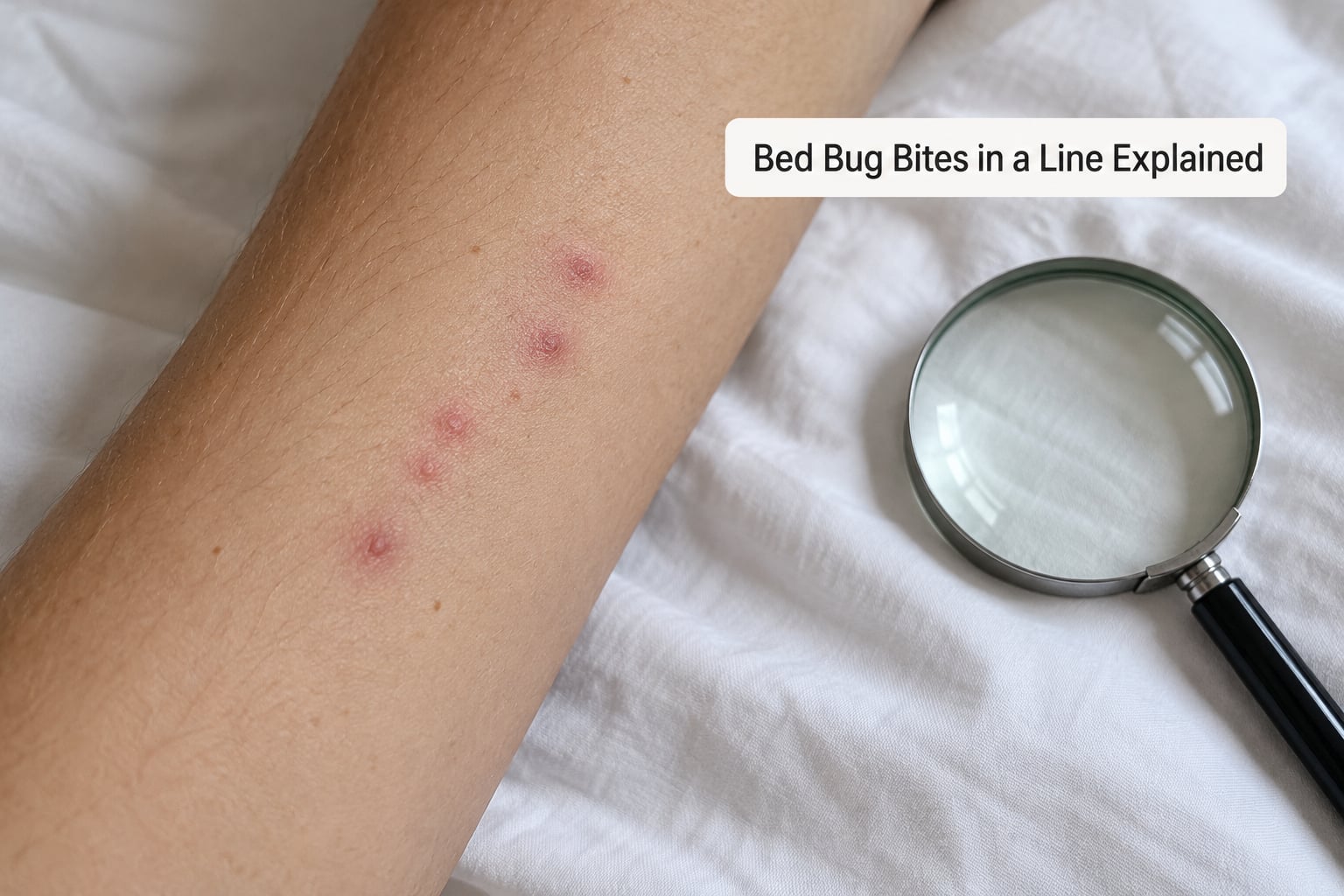
Three welts in a straight row or a slight zigzag usually mean one insect fed three times in the same small area rather than three different insects landing at once. That repeated feeding is the whole explanation.
Two bites in a row is weaker evidence. So is a cluster of welts with no spacing between them, which more often points to something else entirely. The count matters less than the spacing and the location on your body.
Why Do Bed Bugs Bite in Lines?
Bed bugs feed on exposed skin while you are still, warm and breathing out carbon dioxide, which is what they home in on to find a host. The sequence looks like this:
- Locate the host and crawl onto exposed skin.
- Test the area with sensory receptors before committing to a spot.
- Feed, usually somewhere between three and ten minutes.
- Crawl a short distance forward, often only a few millimetres.
- Feed again, sometimes several times, which is the “breakfast, lunch, and dinner” description you will read everywhere.
While feeding, the bug injects an anticoagulant and an anesthetic, which is why you usually do not feel the bite at the time.
Patterns vary with what the bug runs into. A straight line is what happens on smooth, flat skin. A zigzag appears when the bug follows a fold or a crease. A triangle shows up when it changes direction twice, which is the version of this question that comes up most often in the explain-it-like-I’m-five threads, where the honest answer is that the bug was not drawing anything and the geometry just happens that way.
Most bites land on skin left uncovered while you sleep: shoulders, neck, upper arms, hands, face, and sometimes ankles when the bedding sits low.
What Does a Bed Bug Bite Look and Feel Like?
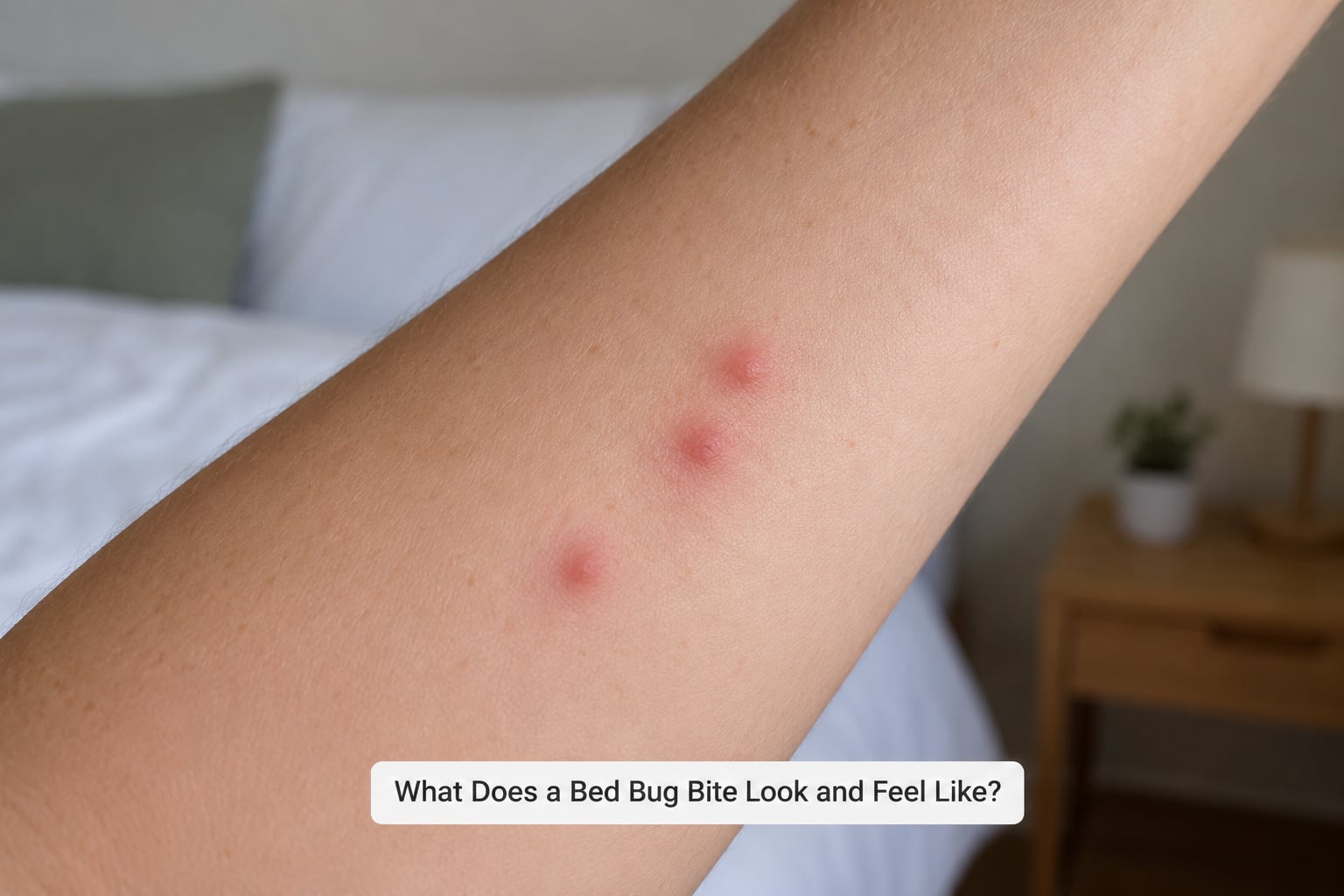
A typical bed bug bite is a small raised welt, often with a darker or deeper centre, roughly two to five millimetres across. Beyond that, appearance varies more than most articles admit.
Three reaction levels show up in practice. Some people notice nothing at all and carry the reaction without any bite marks. Others get small itchy bumps that look like a mild prickly heat rash. A smaller group develops large swollen welts that bleed or crust when scratched.
Timing matters just as much. Most welts show up within a day of the bite. On a first exposure, a delayed reaction of one to two weeks is documented, which is exactly why people cannot pin down where they were bitten. Repeat exposures tend to react faster.
One detail worth knowing: roughly three in ten people do not react visibly at all. That is why an infestation can be well established in a home where one person has marks and everyone else has nothing.
See a clinician if welts swell heavily, spread, fill with pus, run a fever, or keep appearing after a new mattress and fresh bedding have been put in place. Doctors can usually tell bed bug bites from scabies, contact dermatitis and allergic reactions, and mistaking one for another is common enough that asking is worthwhile.
Bed Bug Bites vs. Other Insect Bites
Comparing patterns side by side is more useful than staring at a photo. Here is where the common lookalikes differ.
| Insect | Pattern | Typical location | When it appears | Distinguishing detail |
|---|---|---|---|---|
| Bed bug | Line or zigzag of three or more | Exposed skin during sleep | Within a day, or up to two weeks on first exposure | Spaced welts with a darker centre |
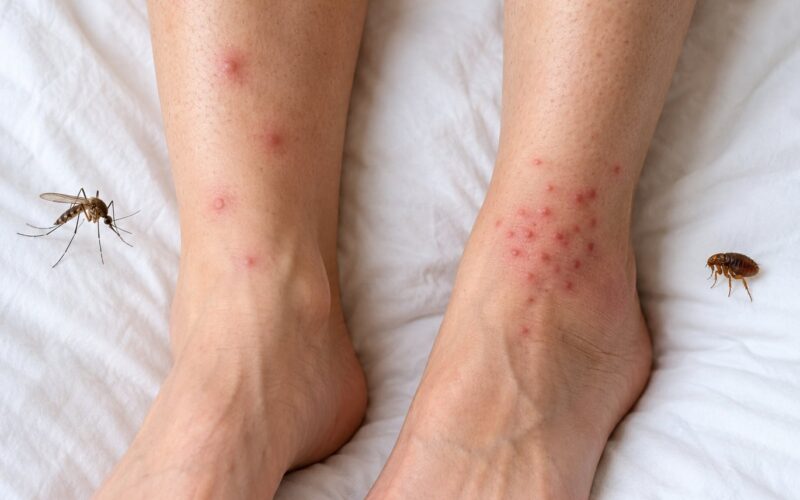
| Flea | Scattered groups of three to five | Ankles and lower legs, waistline | Quickly, often within hours | Intense itch with a red halo, bites below waist height |
| Mosquito | Isolated single welts | Anywhere exposed outdoors | Almost immediately, with fast itch | One bite at a time, sometimes a puffier welt |
| Chigger | Clusters near tight clothing | Waistband, ankles, behind knees | Hours to a day later | Very itchy welts in a cluster where clothing pressed on skin |
| Carpet beetle | Widespread rash, not distinct punctures | Arms, neck, torso | Days to weeks of ongoing exposure | Diffuse itchy rash with no individual bite marks |
| Ants | Single marks or small pairs | Feet, hands, wherever skin is exposed | Immediately | Sharp pinch followed by a white pustule in the centre |
Read across the table and one pattern stands out: only bed bugs tend to leave evenly spaced marks in a row. Fleas cluster, mosquitoes scatter, chiggers group where clothing pressed, and carpet beetles do not make punctures at all.
Still, pattern alone is not a diagnosis. Bed bugs are one of several causes of itchy welts, and medical conditions can mimic bites too.
How to Tell Whether Bites Come From Bed Bugs
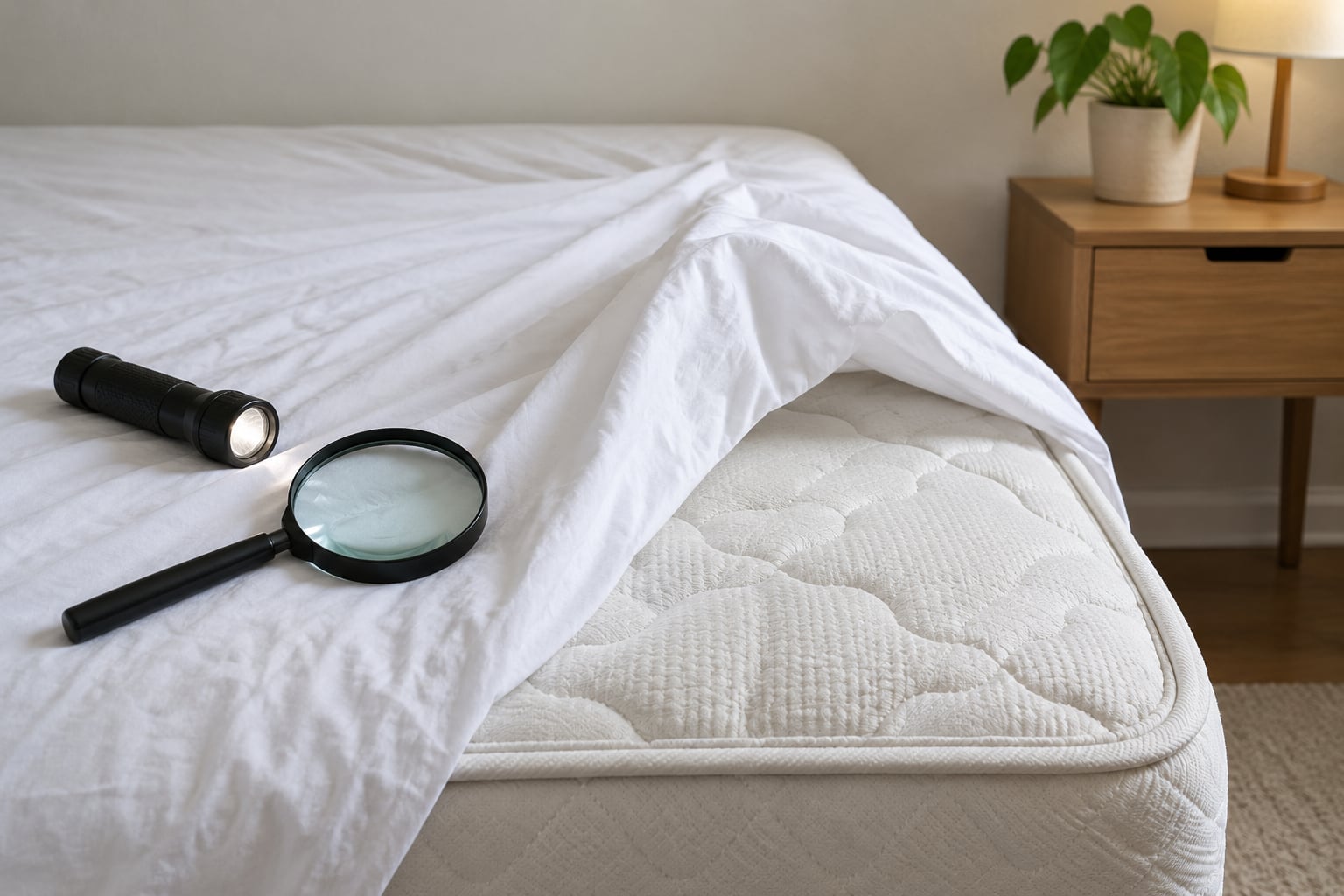
Bites are circumstantial. The room is where answers live. This is the order I would work in, and it takes about twenty minutes with a flashlight and a credit card.
- Mattress seams and piping. Run a card along every seam, fold and handle. Bed bugs hide in the shadowed edges where the fabric meets the frame.
- The underside of the mattress. Lift it if the frame allows and look along the tape and the box spring lip.
- Bed frame and headboard. Check joints, screw holes and any gap where the frame meets the wall or a nightstand.
- Nearby furniture. Bedside tables, the chair you read in, the hamper you drop clothes into. Look at legs and undersides, not just the top.
- Baseboards and outlets. Small rust-coloured smears on fabric and wall edges near the sleeping area are a common find.
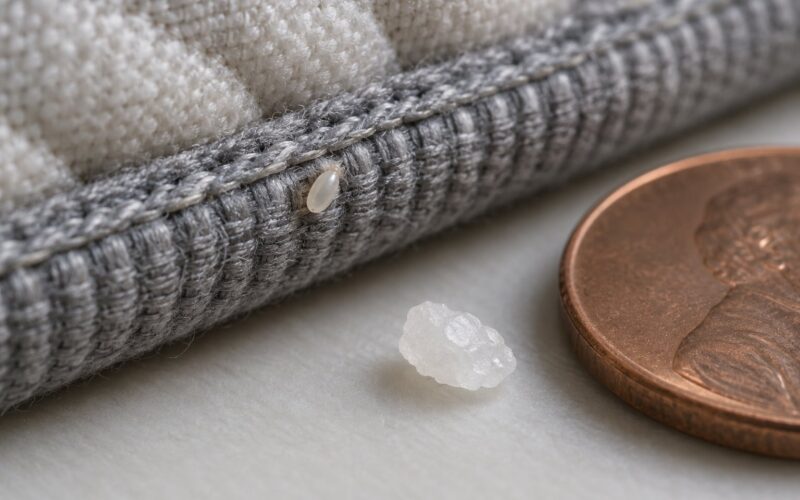
Then check what you actually found. Live bugs are flat, reddish brown, about the size of a lentil and slightly rounded. Shed skins look like pale translucent shells. Eggs are tiny and pearly white, roughly poppy seed sized. Droppings appear as dark specks that smear rusty red when dampened. Sticky residue along seams is another clue.
Two or more of those together in the sleeping area is a real case. A line of bites with a clean mattress is not, and that is when you should look harder at fleas, mosquitoes, carpet beetles or a skin condition instead.
A reputable pest management company can confirm identification, and many will photograph what they find so you have a record. That confirmation is worth paying for before you move furniture or buy anything.
What to Do If You Suspect Bed Bugs
If you think you have them, work on containment first and treatment second.
- Keep the sleeping area separate. Do not move bedding, clothing or furniture into another room, because you can carry the problem with you.
- Wash and dry on high heat. Bedding, nightclothes and towels go in the dryer on the highest setting the fabric labels allow, then get bagged. Freezing for several days in a sealed bag works on items you cannot heat.
- Vacuum slowly and close to seams. Mattress seams, box spring, bed frame joints, baseboards and under nearby furniture. Empty the bag outdoors right away.
- Photograph everything. Welts, stains, skins, and any date stamps that might matter if you stayed somewhere recently.
- Wash hands and change clothes before sitting on other furniture in the house.
If you find live bugs, more than one room is involved, or signs keep reappearing after a serious cleaning, call a licensed pest professional. Bed bugs survive well in seams and voids, and most over-the-counter foggers and sprays do not reach them, so a DIY attempt often spreads the problem and burns money.
Insecticides should only ever be applied exactly as their label states, by someone who can identify the pest first. Never mix products, and keep all pest chemicals away from children and pets.
How to Prevent Bed Bugs in the First Place
Most introductions are avoidable, and the same handful of habits cover most of them.
Secondhand furniture deserves a slow look. Anything that sat in someone’s bedroom or storage unit, especially mattresses, box springs and bed frames, is worth inspecting before it comes home.
Check the room when you travel. Look at the headboard, the seam between the mattress and the box spring, and behind the headboard. Pull the sheet back where it tucks under the mattress and look for dark specks. Keep luggage on a hard surface or in a sealed bag rather than on the bed.
Be careful in shared buildings. Apartments, dorms and group housing have more opportunities for transfer, and neighbouring units can be a source.
Cut unused clutter near where you sleep. Bed bugs need undisturbed harbourage, and a crowded bedside table gives them more of it.
If someone in the household has confirmed bugs, everyone has to be consistent. Checked luggage, hot-laundered clothing and sealed belongings, applied at the same time, make a much bigger difference than treating one bedroom alone.
Frequently Asked Questions
Does 3 bites in a row always mean bed bugs?
No. Three bites in a row is a strong clue, not a confirmation. Bed bugs feed, move a few millimetres and feed again, which is how you get evenly spaced welts. Check the mattress seams, bed frame and nearby furniture for shed skins, dark specks or rusty stains. Bites with a clean room behind them usually come from something else.
Why do bed bugs bite in rows?
Because one bug feeds several times in the same small patch of skin. It bites, crawls a short distance forward, then bites again, sometimes repeating the process a few times before returning to its hiding place. That is the origin of the breakfast, lunch and dinner description. Flat skin tends to produce a straight line, folds produce a zigzag.
How long after a bite do bed bug bites appear?
Most welts show up within about a day of the bite. On a first exposure, a delayed reaction of one to two weeks is documented, and repeat exposures often react faster. That delay is why people cannot trace bites back to a specific night or a specific room, and why a trip months earlier may still be the source.
Where should I look for bed bugs in a bedroom?
Start with the mattress seams, piping and underside, then work outward to the box spring, bed frame joints and headboard. Look at nearby furniture legs, baseboards, outlet covers and wall edges behind the bed. Useful finds include live reddish-brown bugs, pale shed skins, tiny pearly white eggs, dark droppings that smear rusty red, and sticky residue.
When should I see a doctor about bed bug bites?
Book an appointment if welts swell heavily, spread, crust or fill with pus, or if you develop a fever. Bites are commonly mistaken for scabies, contact dermatitis or other reactions, and a clinician can tell those apart. Anyone with allergies or asthma may react more strongly to bites and should ask about managing itching safely.
A Simple First Step
Put the question of bite appearance aside and inspect the sleeping area instead. Seam by seam, frame joint by frame joint, looking for skins, eggs, droppings or a live bug. That evidence tells you far more than any photo comparison.
For symptoms that worry you, talk to a clinician. For confirmed or persistent signs in the home, bring in a licensed pest professional before you move anything around.