Bed bugs are picked up by travelers far more often than most people expect, and almost everything that decides the outcome happens in the first hour after you walk through your own front door. The rule that matters: to prevent bed bugs after traveling, unpack outside your bedroom, wash and dry all clothing on the hottest settings, seal or treat anything you cannot wash, keep the suitcase away from your bed, and watch for signs for two to four weeks.
None of that takes more than an evening. The slow part, and the part nobody wants, is the two to four weeks of checking your own bed after the trip is over.
Bed bugs (Cimex lectularius) are small, flat, reddish-brown insects, roughly the size of an apple seed when full grown. They cannot fly and they cannot leap onto you from across a room. They travel by attaching themselves to luggage seams, clothing folds, shoes, backpacks and secondhand furniture, which is why the room you slept in and the bag you carried are the two things worth inspecting.
Before the list, one note on expectations. No inspection catches everything, and bed bugs are excellent at hiding in a seam you did not pull back. What the steps below do is cut the odds from reasonable to very small, and cut them fastest at the exact points where people usually lose control: dropping a suitcase on the bed, walking exposed clothes straight into the bedroom, and spraying something random at the problem.
What You Need to Prevent Bed Bugs After Traveling
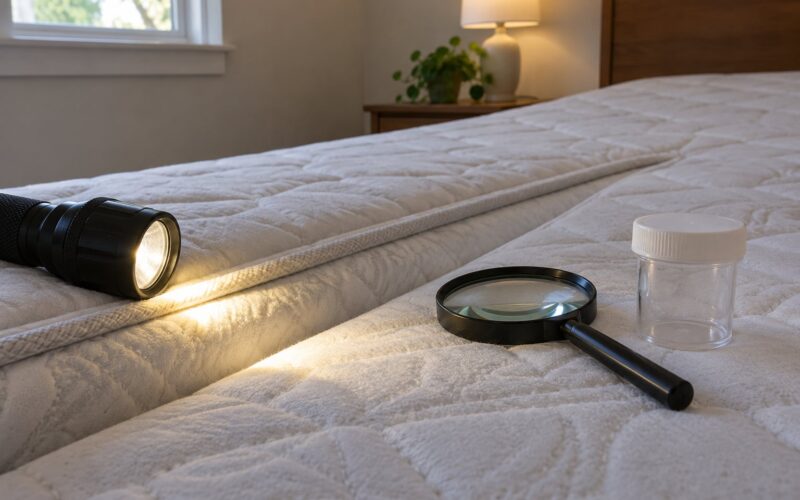
A flashlight, your phone camera, a few clear bags and a place to unpack that is not a bedroom. That is genuinely the whole kit, and you can assemble it in about ten minutes before you leave.
- A bright flashlight. A narrow beam gets into seams and under the box spring where room lighting never reaches. A phone flashlight works in a pinch.
- Your phone camera. Macro or 2x zoom is better than your eyes for spotting pale nymphs and tiny eggs on a white sheet. Photos also document anything you need to report later.
- Clear sealable packing bags in two sizes. Large enough for folded clothing and small enough for shoes, chargers and toiletries. Heavy-duty contractor trash bags are the budget version and they work well.
- One laundry bag. It becomes your holding pen for worn clothes between the door and the washer.
- A vacuum with a hose attachment, or the address of a laundromat. You want this for the suitcase lining, not the carpet.
- A hard-floor unpacking spot at home. Garage, laundry room, patio or bathroom tile. Not the bedroom, and never the bed.
If you travel to hostels, dorms or shared apartments, add one more thing: a plan for laundry that does not depend on owning a dryer. That comes up again below.
How to Prevent Bed Bugs After Traveling Step by Step
Here is the short version, the same five moves in the same order every time:
- Inspect before you unpack. Open the suitcase outside your sleeping areas, over a hard surface, and check the lining, seams and pockets before anything goes near your bed.
- Launder immediately. Wash everything you wore or packed on the hottest cycle your machine allows, then dry on high heat for 30 minutes or more.
- Treat what cannot be washed. Seal electronics, chargers, toiletries and other non-washables in clear bags, or steam them where the material can take it.
- Store the luggage away from where you sleep. Keep it closed and away from the bed, ideally on a hard surface, while you monitor for signs.
- Monitor for two to four weeks. Check mattress seams and your skin on a regular schedule, because bites and new signs can show up weeks after you get home.
Each step below explains how to actually do that one, and what the result looks like when it worked.
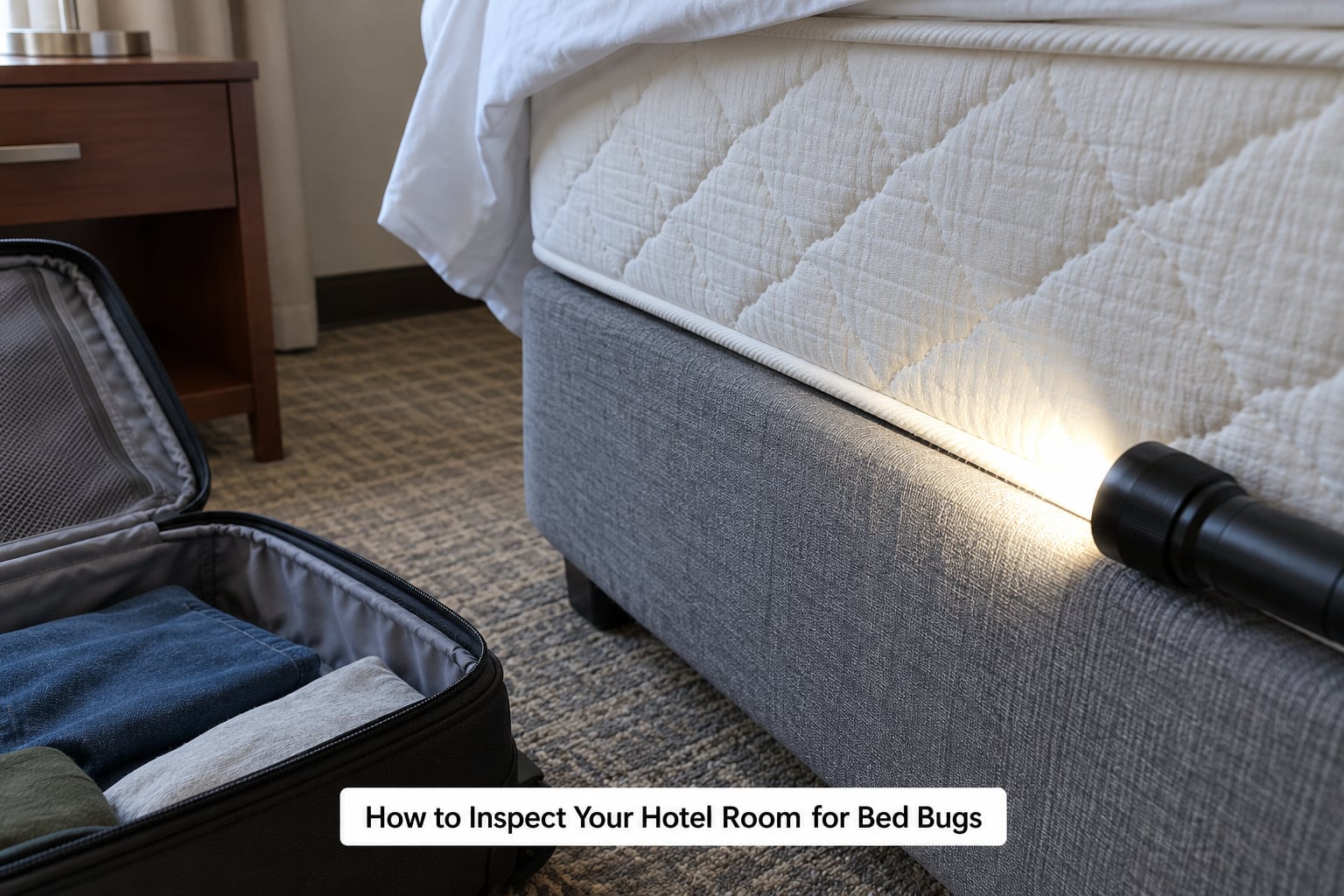
How to Inspect Your Hotel Room for Bed Bugs
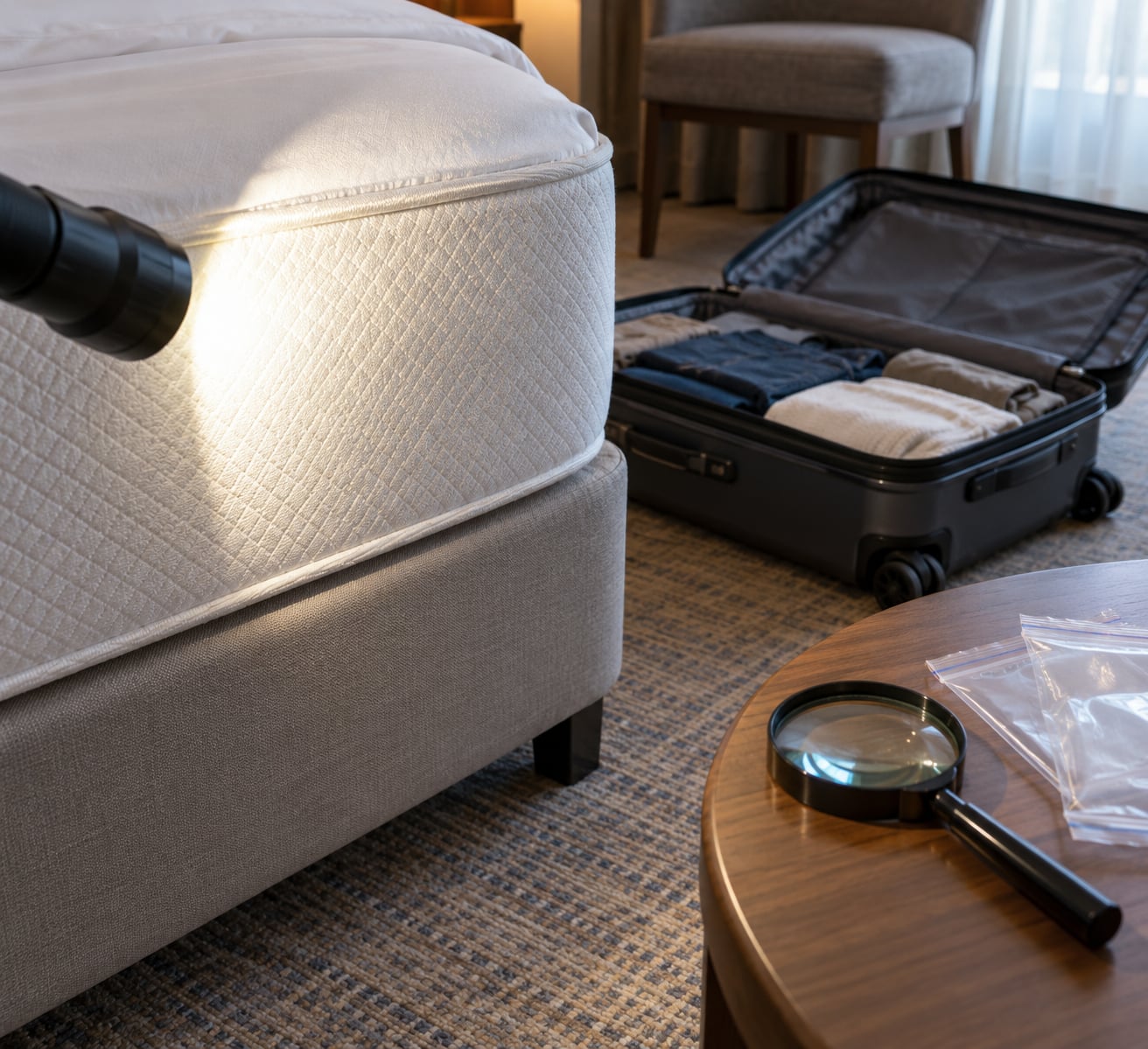
Check the bed within the first five minutes of arriving, and work in the order bugs are most often found. You are looking for evidence, not for a general feeling about the room, because a clean hotel room can have bed bugs and a tired backpacker can live in one for a week without noticing.
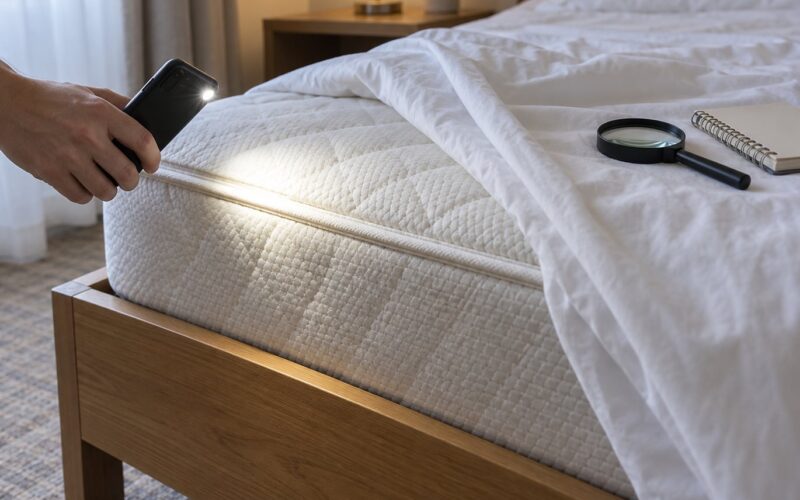
Start with the head of the bed, lift the sheets and the mattress pad at all four corners, then run the flashlight along every mattress seam, piping line, tuft and handle. Look at the box spring the same way, including the underside and the fabric label area. The headboard, bed frame joints and the gap between the bed and the wall or nightstand come next.
Then widen the sweep: baseboards, cracks in plaster, electrical outlet covers, the nightstand drawer, any upholstered chair, the back of a framed picture, and the luggage rack if you are using one. Bed bugs hug edges and seams, so the last inch where two surfaces meet matters more than the middle of an open wall.
What evidence looks like:
- Live insects. Adults are reddish-brown and flat; nymphs are smaller and paler, almost translucent, and they can still bite.
- Shed skins. Pale, hollow exoskeletons left behind after a molt, often in clusters. This is the strongest sign that an infestation is active rather than historic.
- Eggs. Tiny, pale, about the size of a grain of salt, glued to seams in clusters.
- Fecal spotting. Black or rusty reddish dots and smears on sheets, along mattress seams and on the box spring, left where a bug has fed.
- Sweet, musty odor. Some rooms have it, some people can smell it and some cannot. Never treat the absence of odor as clearance.
Bites are weak evidence. They can look like anything from mosquito bites to eczema, and some people react strongly while others react not at all. A row of three or four itchy welts on exposed skin is worth noting, but it is not a diagnosis.
If you find something, do it in this order: photograph it, call the front desk, and ask to move to a room that is not adjacent to the current one. Keep your belongings zipped, ask staff to hold them while you move, and take the new room number. Get your confirmation and any adjustment in writing, and note that compensation rules vary by property and by where you are staying. Reviews that mention bed bugs sometimes describe a room that has since been treated or closed, so weigh the date of the complaint as much as the wording.
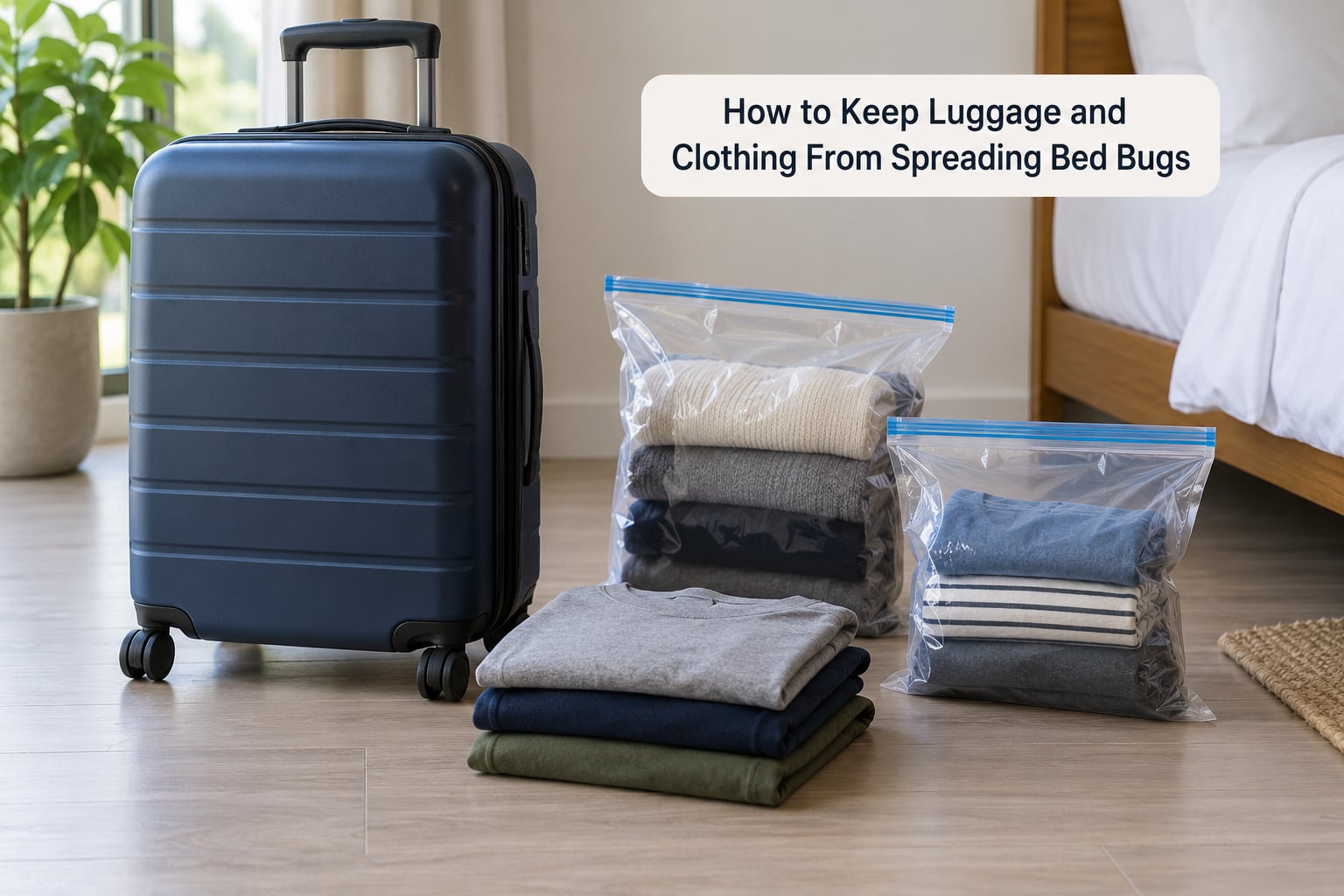
How to Keep Luggage and Clothing From Spreading Bed Bugs
Keep your belongings contained the whole trip and the problem shrinks. The single most common mistake is putting the suitcase on the bed because the floor looks dirty.
Put luggage on the room’s luggage rack, or failing that, on a hard floor covered with a sheet of plastic or paper you can throw away later. Never on the bed, never on the upholstered chair, and never on carpet if you can help it.
Keep the case closed when you are not using it, and put worn clothes straight into the laundry bag or a sealed bag rather than draping them over a chair back. Zip the bag between trips so anything inside is contained. If you are in a dorm, hostel or bunk, treat the bunk ladder and the shared under-bed area with the same suspicion you would give a hotel mattress.
Pay attention to the parts people forget: the lining of a backpack, the seam where the zipper meets the fabric, shoe interiors and shoe tongues, the hem of a coat, and the outer pocket of a laptop bag. Bed bugs are flat and thin, and a folded seam is exactly what they are looking for.
Do not shake clothing out on the balcony or in the hallway. It scatters nothing useful and it can spread an egg or a nymph into a space you were trying to keep clean. Seal first, sort later.
What to Do When You Get Home
Work through these five steps in order, and try to finish them the same day you arrive. The order is the point: containment first, cleaning second.
- Stop at the door. Have a laundry bag ready in the car or by the entrance. Put worn clothes straight in, seal it, and shower before you sit on any bed or sofa. Showering after travel is not a cure for anything, but it removes bugs and eggs that travelled on your clothing and body through airports, trains and taxis.
- Unpack on a hard surface away from the bedroom. Garage, laundry room, patio or bathroom tile. Open the suitcase there, check the lining, seams, pockets and straps with a flashlight, and keep everything off the floor, off the bed and away from any baseboard.
- Launder everything on hot. Wash clothing, bedding, towels and anything washable at 130 degrees Fahrenheit or above if your machine allows it, then tumble dry on high heat for at least 30 minutes. Heat is what kills them, including eggs, and it is why the dryer matters more than the wash.
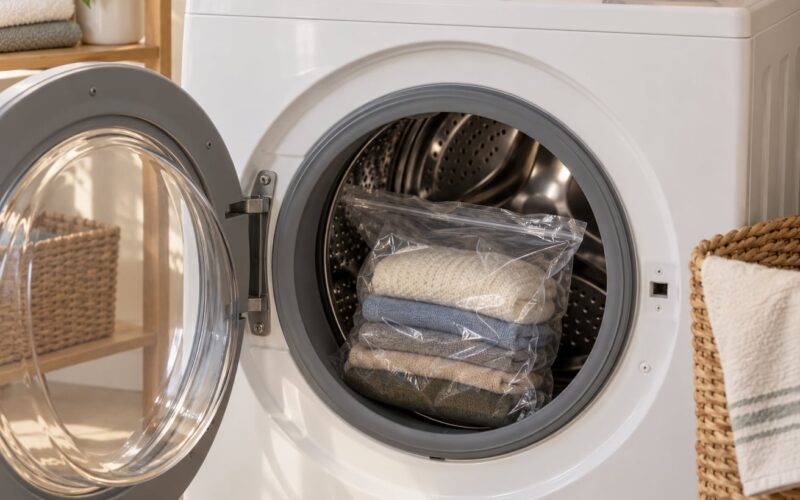
- Seal or treat what cannot be washed. Electronics, power converters, chargers, cameras, toiletries, books, souvenirs and leather shoes go into clear bags that tie shut. Where a material can take it, steam it thoroughly and let it dry fully before unsealing.
- Store the luggage closed and monitor. Keep the suitcase and the sealed bags on a hard surface away from your bed, then check your sleeping area and your skin on a schedule for two to four weeks.
Vacuum the suitcase lining, the seams and the floor around it while you are there, and empty the vacuum contents into a sealed bag that you take straight outside. A vacuum that gets bagged and binned does not become someone else’s problem. Many travelers also replace the suitcase liner entirely, which is cheap and removes the question.
No dryer? It is a real constraint in hostels, student housing and some apartments. Take the load to a laundromat and use a commercial dryer on high for 30 minutes, or rent a single-item dryer for an hour. People who travel with a portable heat treatment unit sometimes ship it home before the trip and run luggage through it on arrival; that works, but it is a real expense and a real hassle for a single trip.
Electronics specifically. Inspect them with a flashlight, wipe the casing down, and put them in a sealed bag for the monitoring period. Do not spray them. A lot of travelers reach for rubbing alcohol or lavender spray on chargers and power converters, and both are a bad trade: alcohol dissolves screen coatings and printed labels, and you still have not reached whatever is hiding in a seam.
Leather and fabric shoes. Wipe them down, put them in a bag, and use a dryer if the label allows. Steam works well on hard items but can warp leather and loosen glue, so point the nozzle at a bag and keep the pass short. Some people simply run shoes through a hot dryer on a low cycle; check the label first and expect some stiffening.
How long to keep it sealed. There is no magic number, and anyone giving you one is guessing. Keep the bag sealed, indoors on a hard surface away from where you sleep, until you have inspected and treated everything and the monitoring window has passed. Unsealing early because it is in the way is how a contained problem becomes an infestation.
The two to four week window. This is the step almost nobody explains. Bed bug bites can take one to two weeks to show, and small nymphs are hard to see for days after a single female is introduced, so the absence of signs in week one means very little. Check mattress seams, the box spring, the headboard and behind nightstands once a week for a month. Watch for new itchy welts, especially in rows or clusters on exposed skin. If month two is clean, you are in good shape.
When to Call a Pest Professional
Call a professional when you find a live bug, when you find fresh evidence near where you sleep, or when more than one room in your building is involved.
Old evidence and current evidence look different. Fecal spots and faded stains with no live insects, no shed skins and no new bites can be weeks or months old, particularly in a used hotel room or a secondhand mattress. That is a reason to inspect harder and choose a different sleeping surface, not a reason to treat a whole building.
Current evidence is different: a live adult or nymph, fresh shed skins, new stains that were not there this morning, or bites that keep appearing over several days. That warrants a prompt professional inspection, at home or in the room you booked.
Before you leave a hotel, ask to move rooms, notify the property manager or owner if you cannot get a new room immediately, keep photos, receipts and written communication, and check what your local rules say about compensation. Do not simply move to the next room yourself and spread it down the hall.
What usually goes wrong at home:
- Total-release foggers. They cannot reach bed bugs living inside mattress seams, the box spring or wall voids, and they are not effective against an established infestation.
- Spraying without identifying the pest. A product only works on the pest it is labelled for, and over-application leaves a residue that is dangerous to pets, children and surfaces without adding protection.
- Moving infested furniture or belongings. That is how bed bugs reach the next room.
- Waiting a week to see if it goes away. A single fed female can lay roughly one to five eggs a day, so a delay costs you the easy option.
In an apartment, dorm or shared house, tell your landlord or property manager in writing, today, with dates and photos. Bed bugs move between units through luggage, shared furniture and common areas, and a building-wide plan works far better than four separate private treatments. Renter’s insurance commonly excludes bed bugs, so check your policy early rather than after the first invoice. Your property manager usually has legal obligations that vary by state and city, so ask what the local requirements are rather than assuming either way.
Common Mistakes Travelers Make With Bed Bugs
Almost every bed bug story that turns into an infestation contains one of these errors, usually within the first 48 hours.
- Assuming a clean room is a safe room. Bed bugs do not live on surfaces, so spotless linens and a fresh smell tell you nothing. Inspect the seams.
- Putting the suitcase on the bed at home. The bed is the one piece of furniture you cannot treat quickly. Use the floor, the garage, or a hard surface covered in plastic.
- Walking in with exposed clothing and straight to the bedroom. Seal worn clothes at the door and shower first, even if you are sure nothing happened.
- Leaving the suitcase open in the hallway or closet for weeks. An open case is an open invitation. Close it, bag it, keep it off sleeping surfaces.
- Relying on bug bombs. Foggers kill the occasional exposed insect and nothing that matters. They also set off smoke alarms and leave a pesticide film on your belongings.
- Spraying alcohol or lavender on electronics. This is common online advice and it is wrong. It damages screens and coatings while reaching nothing inside a seam or fold.
- Shaking out clothes and letting them land wherever. Work over a bag, indoors, on a hard surface.
- Waiting to see if bites appear. Bites lag by one to two weeks, so by the time you react you are already weeks past the moment you could have done something cheap.
- Moving a suspicious mattress or chair to another room. That is a new address for the same problem.
Two more worth adding. Do not rely on hotel reviews alone; read the date of the complaint, because a review describing a treated room says little about today. And do not take advice that promises certainty. Every pest professional will tell you the same thing: you can reduce the odds to very small, not to zero.
Frequently Asked Questions
Can bed bugs spread through luggage?
Yes. Bed bugs cannot fly or jump, so they travel attached to people and their belongings: suitcase seams, backpack straps, clothing folds, hair and shoe interiors. A single bug riding home in a bag is enough to start an infestation, which is why inspecting the bag on a hard surface, treating what cannot be washed, and keeping the case away from your bed matter so much.
How do I know if my hotel room has bed bugs?
Look for evidence rather than impressions: live reddish-brown insects or paler nymphs along mattress seams and the box spring, pale shed skins, tiny eggs, black or rust-colored fecal spots, and sometimes a sweet musty odor. Fresh linens and a clean room mean very little, because bed bugs hide in seams, frames and cracks rather than on open surfaces.
Should I wash everything immediately after traveling?
Wash everything you wore or packed as soon as you can, on the hottest cycle your machine allows, then dry on high heat for at least 30 minutes. Heat is what kills bed bugs and their eggs. Washing on its own is not enough, and laundering also does not replace inspection of non-washable items or professional treatment if you find a live bug at home.
Do bed bug sprays or foggers work?
Whole-room foggers and casual spraying are not reliable solutions. Most insects in an infestation are living inside mattress seams, the box spring, cracks and wall voids where spray never reaches, and an unidentified pesticide does nothing for the problem. Use only products labelled for bed bugs and follow the label, and get a professional inspection when you find live bugs or fresh signs.
How long should I keep luggage sealed after travel?
Keep it sealed, indoors on a hard surface, and away from your bed until you have inspected and treated it and the monitoring period has passed. There is no reliable fixed number of days. Two to four weeks of weekly checks of your mattress seams, box spring and skin covers the window in which bites or new signs would show up.
Conclusion: What to Do First
If you want the whole plan in four lines: inspect the hotel bed within five minutes of arriving, keep the suitcase off the bed the entire trip, unpack on a hard surface away from your bedroom, then wash and high-heat dry everything washable while sealing what is not.
After that, spend the next two to four weeks checking mattress seams and your own skin once a week. A live bug, fresh shed skins or bites that keep appearing means you should stop DIY and book a professional inspection before anything moves between rooms. Most people who follow the protocol never get to that point, and that is the whole idea.