Ants reach your pet’s bowl because they follow scent, not because the bowl is dirty. To keep ants out of a pet food bowl, wash the bowl and the floor around it, set the bowl inside a shallow dish of soapy water or on a raised stand, and keep the rest of the food in a sealed container. The cleanup takes about an afternoon and holds for weeks.
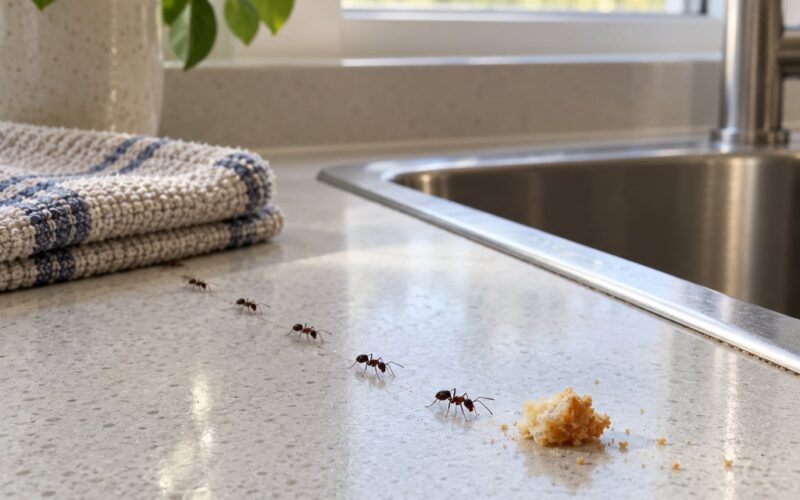
The reason most attempts fail is that a trail already exists. Scout ants leave a pheromone trail that the rest of the colony follows within hours, so wiping the visible ants away just lets the next wave follow the same route.
You do not need chemicals for this. Physical barriers and removing the food scent do most of the work, and none of the steps below put a pesticide anywhere near your pet’s dinner.
Table of Contents
- What You Need
- Step-by-Step: How to Keep Ants Out of a Pet Food Bowl
- Common Mistakes
- Frequently Asked Questions
- What is the safest way to keep ants away from my pet’s food bowl?
- How long does it take to get rid of ants around a pet food bowl?
- Can I use vinegar or baking soda around my pet’s food?
- Should I put ant bait near my pet’s food bowl?
- Why do ants keep coming back after I move the pet bowl?
- When should I call a veterinarian or pest control professional?
- Conclusion
What You Need
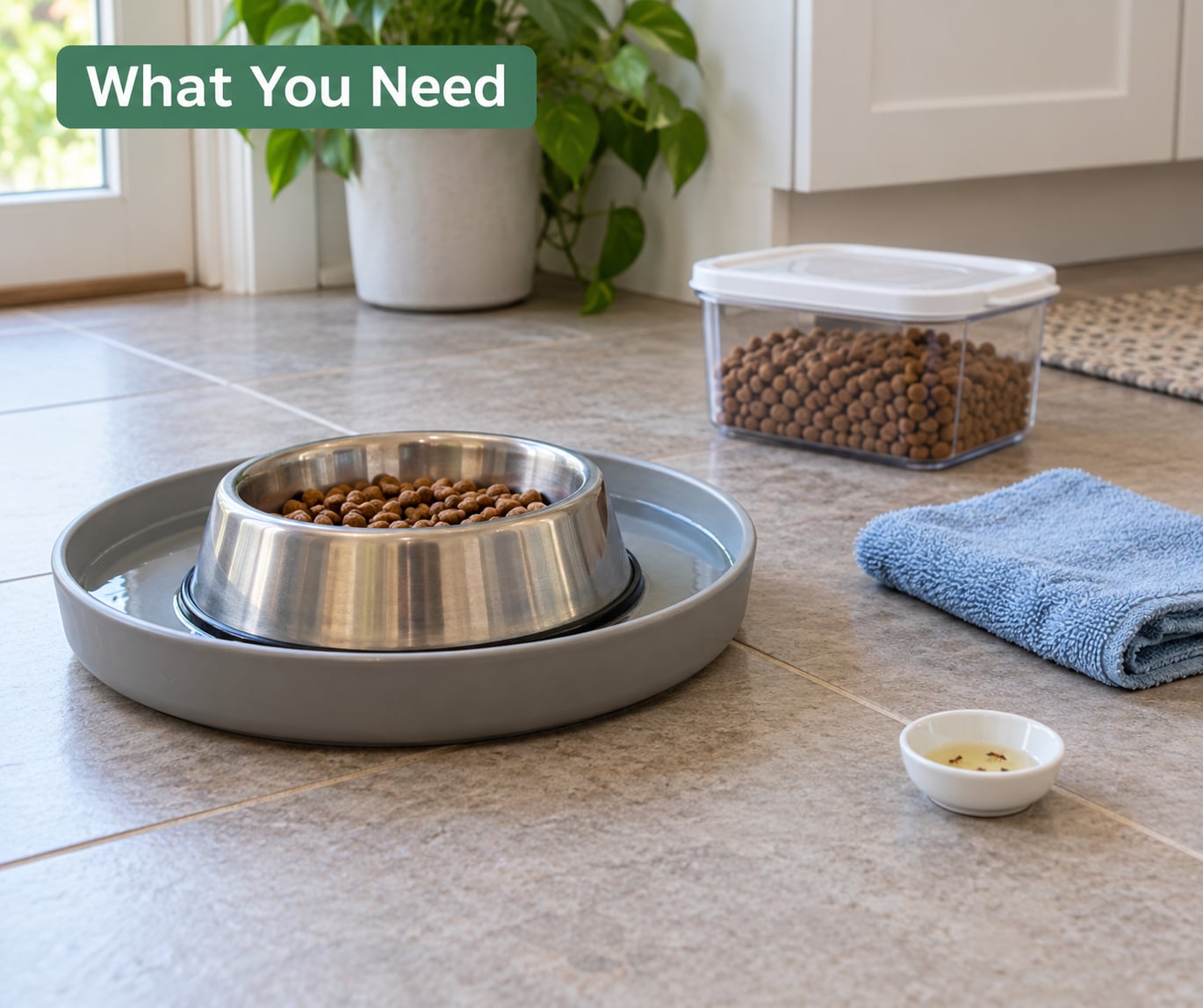
- A shallow tray or plate at least 2 to 3 inches wider and deeper than the bowl on every side.
- Dish soap for the moat water and for washing.
- Hot water, a scrub brush and paper towels for the bowl, mat and floor.
- A vacuum for crumbs in floor seams and under baseboards.
- An airtight container with a gasket or snap lid for the open bag of food.
- A raised surface such as a sturdy stool, shelf or feeding stand.
- Pet-safe bait stations only if the trail returns after a week of clean-up.
Skip aerosol sprays and liquid insecticides entirely near the bowl. Your pet will lick a wet surface, and most ant sprays are not labelled for use around animals. Keep the pet’s water bowl away from the food bowl too, because ants bridge between the two.
Step-by-Step: How to Keep Ants Out of a Pet Food Bowl
Work in this order. Each step removes something the next one depends on.
1. Remove the current ant activity from the feeding area
Pick up the bowl and set it in the sink or on a towel, away from where it normally sits. Pick up any food that has touched the floor and put it straight in the bin rather than back into the bag.
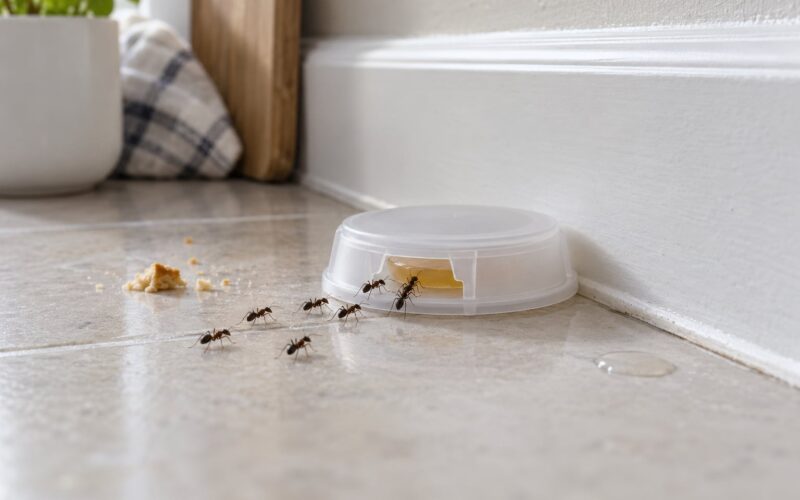
Wipe up visible ants with a damp paper towel and drop it outside. You are not trying to kill them here. You are clearing the path so the next step reaches the actual food residue.
2. Wash the bowl, the mat and the floor around it
Scrub the bowl with hot water and dish soap, including the seam where the bowl meets its base. That ring of dried fat is usually the reason a spotless-looking bowl still draws a trail.
Then clean outward from the bowl. Vacuum the floor seams, the edge of baseboards and any cracks where you can see ants travelling, and wipe those with soapy water. Finish with a dry pass, because damp corners attract other insects and the smell lingers.
You can tell it worked if the bowl stays untouched for a full day after the clean.
3. Change where and when your pet eats
Feed at the same short window each day, ideally twice, and take the bowl away as soon as the meal is finished. Free-feeding leaves food on the floor for hours, and ants will find it every time.
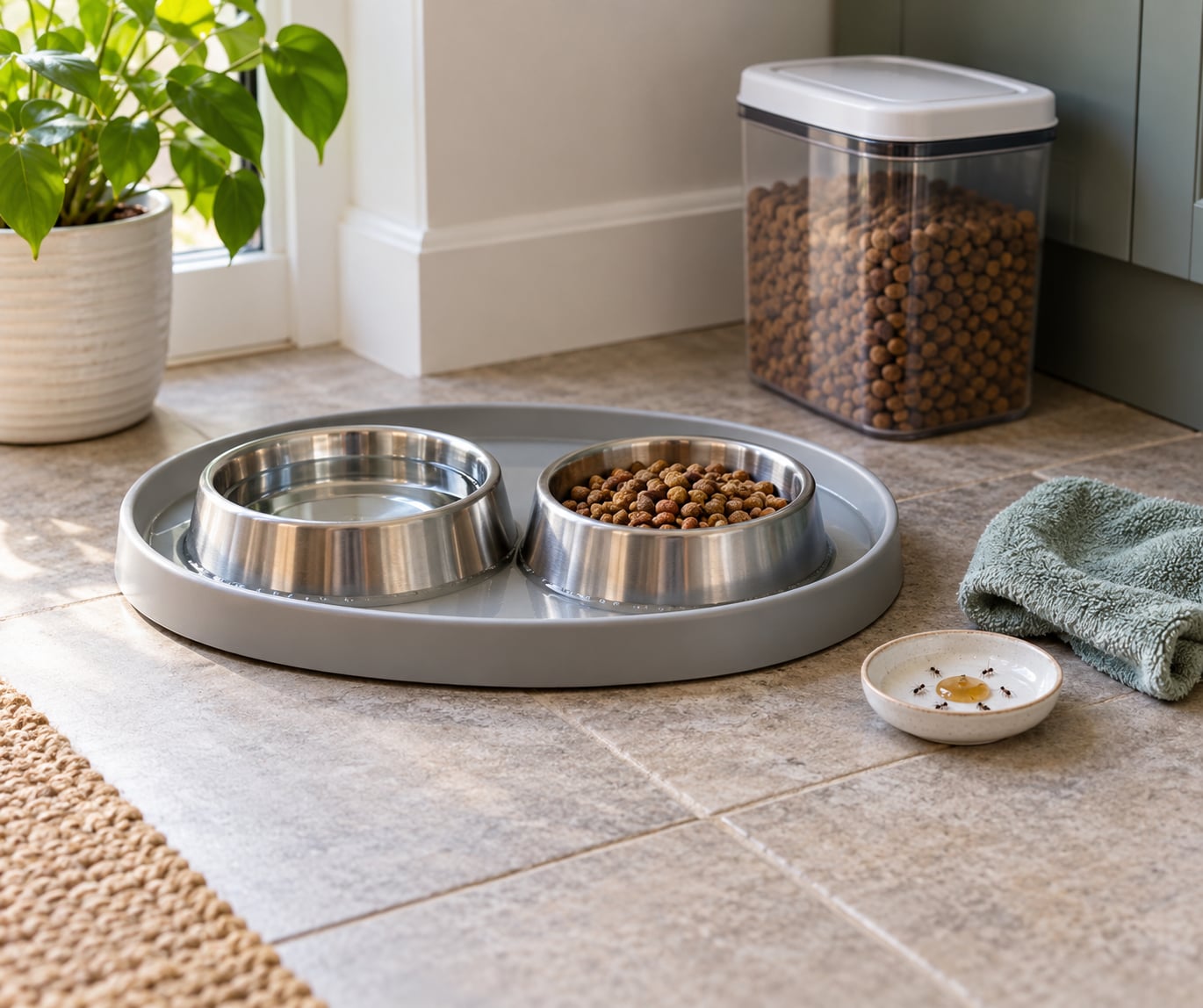
Put the bowl on a washable mat or tray rather than bare floor, so you can pick the whole feeding station up and rinse it. Move it away from walls, exterior doors, pet food storage and any trail you spotted earlier. Outdoors, keep it off the ground and off the porch edge where ants run along the rail. This routine change is the part of how to keep ants out of a pet food bowl that people skip, and it is the one that decides whether the trail comes back that week or in August.
4. Follow the trail back and break it
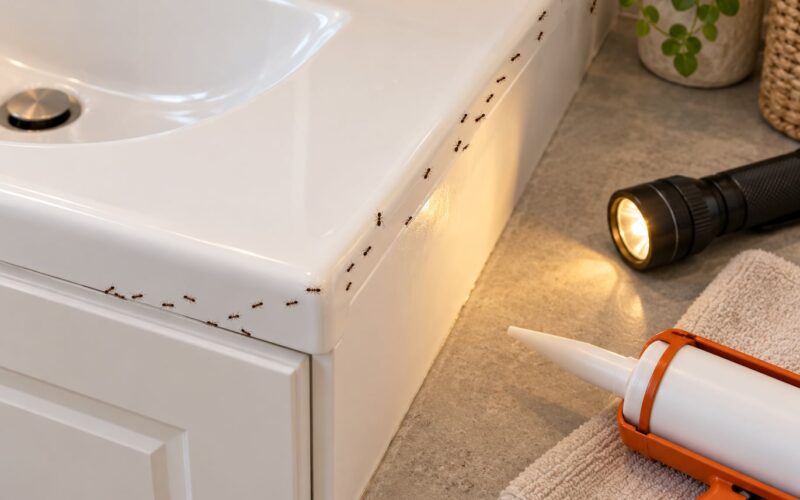
Watch the ants for five minutes and follow the line backwards. It usually runs to a gap in a baseboard, a door threshold, a crack by the fridge line or an opening to the outside.
Remove any accessible food or water near that entry point, wipe the whole route with soapy water, and close the gap with paintable caulk or a door sweep where you can. The scent on the route is the map. Once it is gone, the column breaks apart and workers wander instead of marching.
5. Use pet-safe bait only if ants keep returning
If a steady stream comes back a week later after all of that, the nest is probably outside the wall or under the floor. Use only a bait station labelled for indoor use and for households with pets, and follow the label directions for placement and quantity.
Put the station along the trail, against a wall or under the sink, well away from the food bowl, the water bowl, and anywhere a curious pet can reach it. Never spray an insecticide near the bowl, never mix bait into your pet’s food, and never use a kitchen or yard pesticide that carries no pet-safety statement on the label.
6. Prevent future access
Transfer food from an open bag into an airtight container right after you open it, and toss the bag into a lidded bin outside rather than an indoor trash can with a loose lid. A single ant that walked into the bag is enough to start the next column.
Wipe the rim and outside of the storage container, since food residue there works the same way residue in the bowl does. Sweep and vacuum the pantry or cabinet shelf on a schedule, and repair any crack ants are using before the season that brings them indoors.
Common Mistakes
Leaving wet or canned food out after the meal. Set a timer for twenty minutes after your pet finishes, then remove the bowl. Most returns start with food that sat too long.
Placing the bowl next to an existing trail. Move it across the room first, then reintroduce it in a new spot once the old route has been wiped and sealed.
Spraying near the pet or the dishes. Aerosols residue that your pet licks, and they only repel ants temporarily anyway. Wipe and remove the food instead.
Trying homemade mixtures of essential oils, dish soap or bleach. Essential oils are toxic to cats and dogs when ingested, and bleach ruins the bowl. Soapy water for cleaning is enough.
Returning food to a mat that was never cleaned. Wash the mat or tray at every feeding, not once a week. A wiped bowl on a dirty mat is still a signal.
Forgetting a moat that dried out. Shallow water evaporates in a day or two and ants then walk straight across the empty dish. Check it twice daily and refill.
Leaving a grazer or slow-feeder bowl uncovered for hours. These setups hold kibble out all day. Feed them in timed sessions on a tray you can wash, or use a feeder with a raised lip that ants struggle to climb.
Frequently Asked Questions
What is the safest way to keep ants away from my pet’s food bowl?
Use physical barriers and scent removal, not chemicals. Wash the bowl and the floor, set it in a shallow tray of water with a drop of dish soap, and keep the pet’s water bowl in a separate room. Store open food in an airtight container. These steps contain no pesticide, so nothing toxic sits near the pet.
How long does it take to get rid of ants around a pet food bowl?
A clean bowl and a wiped trail usually stop visible traffic within a day or two. If a column keeps coming back for a week after you cleaned, the nest is likely outside the visible area and you may need labelled bait. Fire ants or a fast-growing trail that ignores every physical barrier is a sign to call a pest professional.
Can I use vinegar or baking soda around my pet’s food?
A diluted white vinegar wipe on the floor and baseboards is generally fine once the surface is dry and the pet cannot lick it while wet. Baking soda is not an effective ant barrier and gives the pet something to ingest for no benefit. Skip essential oils entirely, including citronella and peppermint, which are toxic to cats and dogs.
Should I put ant bait near my pet’s food bowl?
No. Bait near food invites your pet to eat it. Place a station labelled for indoor use and for homes with pets along the trail but against a wall or under the sink, several feet from both the food bowl and the water bowl. If the only placement that works is next to the feeding area, that is a good reason to bring in a professional.
Why do ants keep coming back after I move the pet bowl?
Moving the bowl relocates the problem, it does not remove the cause. Ants follow a pheromone trail laid down by scouts, and forager ants pile onto that line until it is washed away and the food scent is gone. Clean the original spot, wipe the whole route with soapy water, seal the gap they use, and store the food sealed.
When should I call a veterinarian or pest control professional?
Call a veterinarian if your pet is stung repeatedly, especially around the nose, lips or paws, or if you notice swelling, licking at a paw, lethargy or vomiting. Call a pest professional when the trail returns after a week of cleaning, when you see carpenter ants or fire ants, or when the entry point sits inside a wall where bait cannot be placed safely.
Conclusion
Start by taking the bowl out of the room, throwing away any food that touched the floor, and scrubbing the bowl plus the floor and baseboards around it with hot soapy water. That single clean-up breaks the trail most ants are following.
Then set the bowl in a shallow dish of water with a drop of dish soap, feed on a fixed short schedule, and store the open bag in an airtight container away from the wall. Check the bowl a few times a day for a week. If a column still marches in, follow the trail to its entry point, seal the gap, and only then consider a labelled bait station placed well away from the food and water bowls. Most readers who try how to keep ants out of a pet food bowl again after the first relapse stop at step two; the feeding routine is what keeps the trail from reforming.