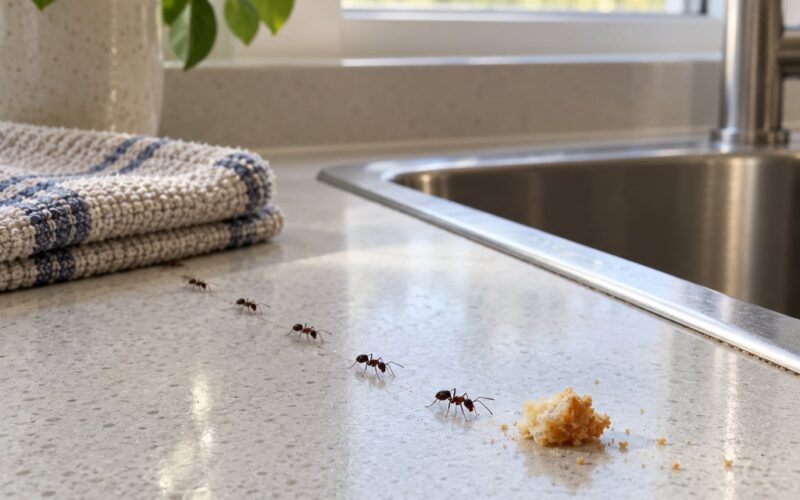
Ants carry ant bait because they think it is food. Bait is an attractive sweet, protein or grease base with a slow-acting insecticide mixed in, so a worker that eats it keeps walking, gets back to the nest, and hands the load to other ants. That hand-to-hand food sharing, called trophallaxis, is how bait reaches the larvae and the queen instead of dying on your kitchen floor.
This guide explains the mechanism step by step, then covers placement, timing, safety and the reasons bait sometimes gets ignored. Last reviewed for 2026.
Table of Contents
- How Ant Baits Work and Why Ants Carry Them
- What the Worker Ants Do With the Bait
- Which Ant Baits Work Best for Common Household Ants?
- How to Use Ant Baits for Effective Control
- How Long Does Ant Bait Take to Work?
- Why Ants Might Ignore or Avoid Your Bait
- Are Ant Baits Safe for Children and Pets?
- Ant Baits vs. sprays: Which Approach Works Better?
- Frequently Asked Questions
- What to Do First
How Ant Baits Work and Why Ants Carry Them
Ants take bait home because bait is the strongest food source they can find at that moment, and because it does not stop them. A contact spray kills a forager where it stands, which ends that ant’s usefulness to the colony. A slow-acting toxicant lets the same ant finish its errand, and the colony ends up dosing itself.
The delivery sequence takes five steps:
- A scout finds the bait. An ant leaves the nest and wanders until it hits a rich food source. Baits are formulated to smell and taste strong enough to be found quickly from a short distance away.
- Other workers are recruited. The scout lays down trail pheromone on the way back. That scent trail brings more foragers, which lay more scent, which brings more foragers. This is why ants pile onto a fresh station within hours.
- The forager stores the load in its crop. Ants have a social stomach, called the crop, that holds liquid food. A worker swallows the bait into its crop so its own stomach stays empty enough to keep working, then turns around and follows its own trail home.
- The bait is shared in the nest. Inside, the returning ant offers food to nestmates mouth-to-mouth. Nurse ants also feed it to the larvae, which convert it into adult ants. Eventually a treated worker passes it to a queen.
- The colony declines. As more workers slow down and die over the following days, fewer foragers return with food, fewer larvae are reared, and the queen is left without a functioning workforce. The nest empties out from the inside.
How Ant Baits Work Inside the Colony
Once bait is inside, it stops being a food and starts being a colony-wide problem. Ants constantly exchange food and clean each other, so a single dosed worker can pass the toxicant to dozens of nestmates within a day, and those nestmates pass it onward.
The active ingredient decides how that transfer plays out. This is why two baits with the same label can behave very differently.
| Active ingredient | How it works | Speed of action | Best fit |
|---|---|---|---|
| Boric acid / borax (sodium tetraborate) | Damages the gut lining after digestion | Slow, days | Indoor cracks, under appliances, general household ants |
| Hydramethylnon | Interrupts energy production in the ant | Slow, hours to days | Bait stations that need to keep working outdoors |
| Indoxacarb | Blocks sodium channels, causing paralysis | Hours to a day | Gel baits where a faster knock-down is wanted |
| Fipronil | Blocks GABA receptors in the insect nervous system | Slow to moderate | Perimeter and structural treatments |
| Insect growth regulators | Stops larvae from developing into viable adults | Weeks, seasonal | Prevention through spring brood season |
One thing every entry in that table has in common: the delay. A bait that kills on contact stops the forager before the trip home, and you end up killing ants one at a time while the nest stays intact.
What the Worker Ants Do With the Bait
A forager that loads its crop is running a delivery job, and the colony is structured to get the most out of it. Ants are social insects with a clear division of labour: scouts find food, foragers collect it, and nurses stay in the nest and raise the brood.
Three details explain why the carrying behaviour matters so much:
- The trail is a road, not a rumour. Pheromone laid on the way out is followed on the way back, so the carrier retraces a path it already knows works. Placing bait beside a confirmed trail simply shortens that journey.
- The crop keeps the ant functional. Liquid food goes into a separate storage sac, which means the forager is not slowed down by a full gut. It can carry a meaningful load and keep working.
- Sharing multiplies the dose. One return trip can feed several nestmates plus larvae. A single forager working through a baited colony can end up dosing dozens of ants in a day without ever meeting them outside.
That is the whole trick behind why ants carry bait. The colony’s own food-sharing habit does the distributing, and the slow toxicant is what lets it finish the job.
Which Ant Baits Work Best for Common Household Ants?
Bait choice depends on the ant species and the active ingredient, not on the color of the label or the brand name. Most failures I hear about come down to a colony that was being offered the wrong attractant for the season.
Sweet baits pull in pavement ants, little black ants, odorous house ants and sugar ants. Protein and grease baits pull in carpenter ants, pharaoh ants, Argentine ants and fire ants. The catch is that preferences shift with the brood cycle, so a colony that ignored your sweet bait in late spring may take a protein bait in summer when larvae are being reared.
Format matters almost as much as the chemistry.
| Format | Best for | Watch out for |
|---|---|---|
| Gel bait | Cracks, under appliances, along baseboards, indoor walls | Dries out in heat or direct sun; ants can walk over it without feeding |
| Liquid bait | Vertical surfaces, window tracks, drain areas, hard-to-reach spots | Dries quickly, so it needs frequent refreshing |
| Granular bait | Outdoor lawns, cracks in pavement, fire ant mounds | Wind and rain move it; children and pets are more likely to find loose grains |
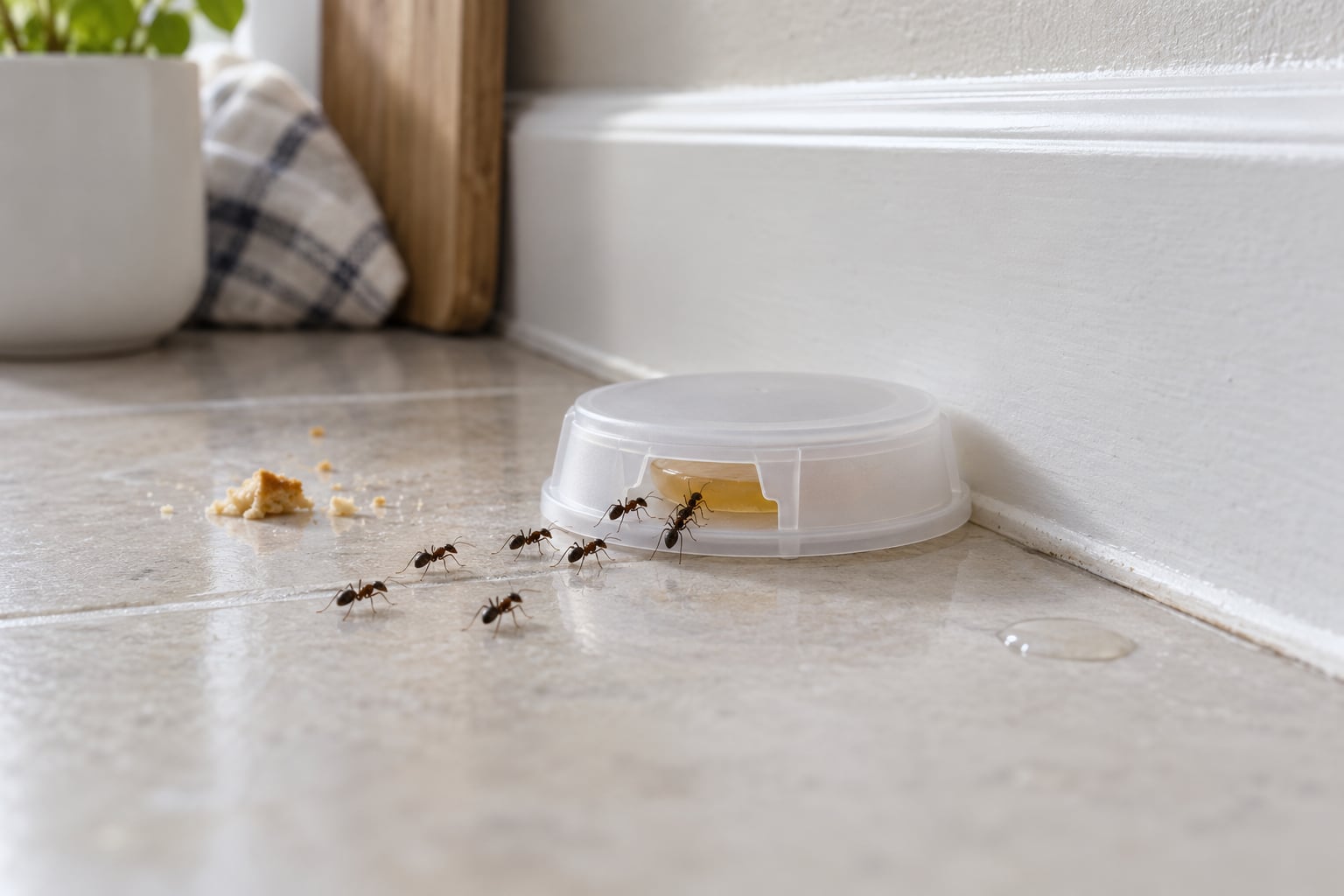
| Bait station | Homes with kids or pets, and any spot that needs to stay baited for weeks | If the station dries out, the colony abandons it |
One useful rule: use the strongest bait that stays baitable rather than the strongest bait on the shelf. A concentrated formula often kills the carrier before it gets home, and it also dries out faster.
How to Use Ant Baits for Effective Control
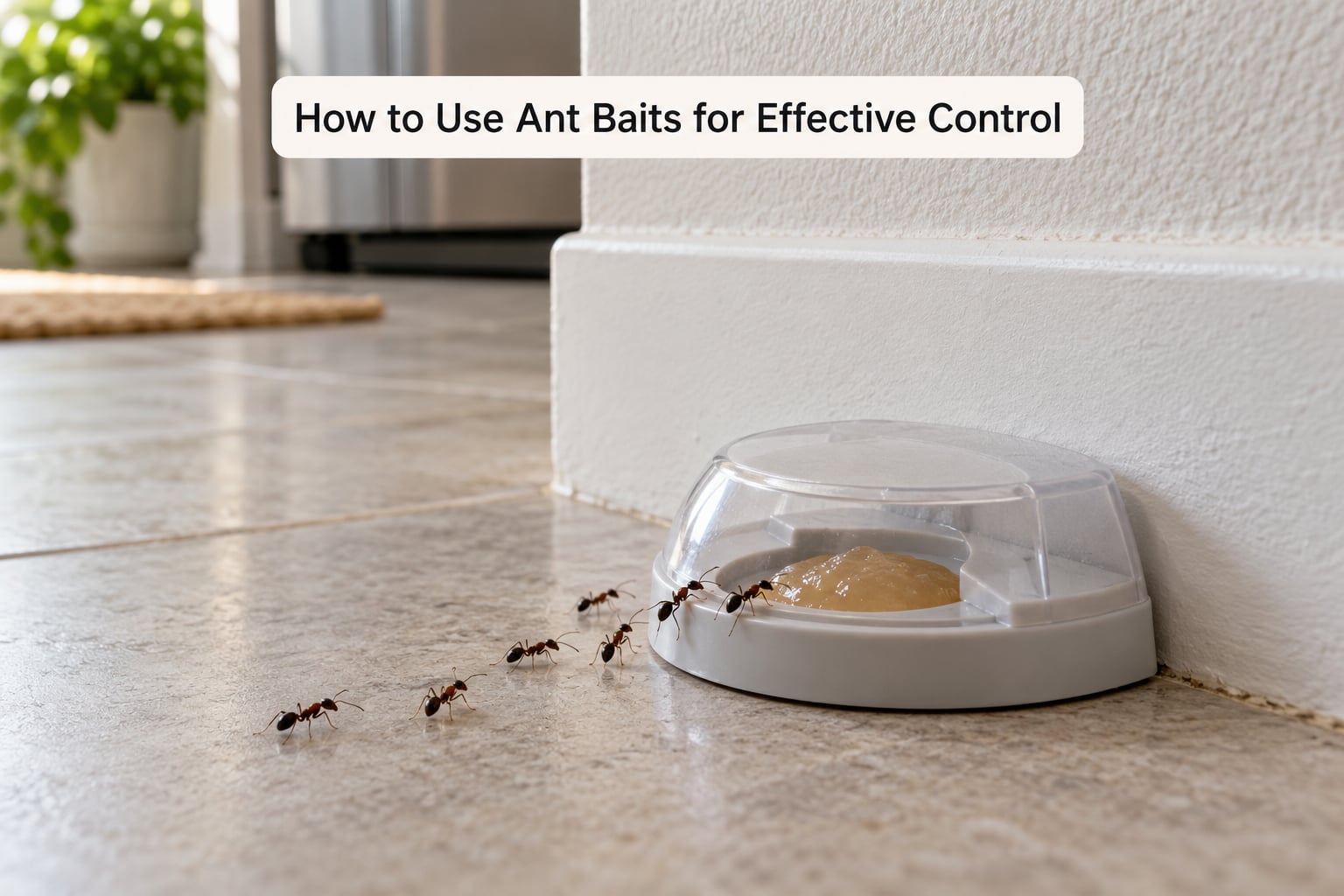
Baiting works best when you set it up along a route the ants are already using, rather than in the room where you happen to see one ant.
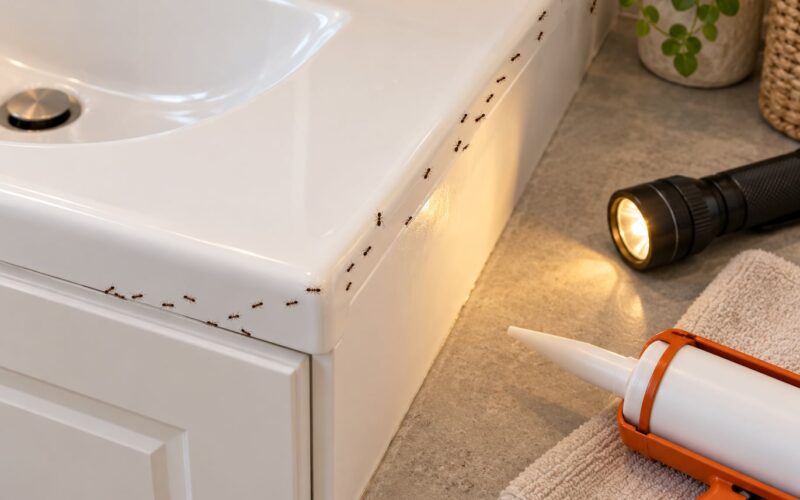
- Follow the trail. Wipe a damp cloth along the line of ants to find where they enter the room and where they are going. The entry point matters most.
- Read the label before you place anything. Check which rooms and surfaces the product is cleared for, how long it must dry, and how often it needs replacing.
- Place bait along the trail and at the entry point. Put a small amount on the path where ants are walking, plus a station at the point they come in. Outdoors, work along the foundation line and around mounds.
- Cut the competition. Wipe surfaces, take out trash, move pet food, fix a dripping tap, and store food in sealed containers. An ant has to take the bait if there is nothing better.
- Leave it alone. Do not clean, move or cover the bait, and do not kill the ants feeding on it.
- Refresh and watch. Replace bait as the label directs when it dries out or is used up, and keep stations out past the point where activity stops so stragglers keep finding it.
How Long Does Ant Bait Take to Work?
Most people give up during the window when bait is working hardest. Expect visible traffic to increase for a day or two, then thin out over the following week, with full collapse often taking several weeks. Treat any timeline below as a range, not a promise.
| Stage | What you may see | Typical range |
|---|---|---|
| After placement | More ants than before, clustered on the bait | Hours to 1 day |
| Worker mortality | Troops at the station thin out; some ants slow or stagger | 1 to 4 days |
| Brood impact | Fewer new ants emerging; trails look patchy | 1 to 3 weeks |
| Colony collapse | Traffic stops; occasional stray scouts | 2 to 6 weeks indoors, longer outdoors |
Outdoor colonies take longer because cold, rain and dry ground all slow foraging. Ant metabolism drops in cool weather, and that slows how fast the toxicant moves through the colony. Indoor heating in winter keeps workers active, so indoor bait can move faster than you would expect.
Why Ants Might Ignore or Avoid Your Bait
When bait stops working, the cause is usually one of a handful of things you can check yourself.
- A better meal is nearby. A crumb, a spill, an unwiped counter or a pet bowl outcompetes the bait every time. Fix the food source before judging the bait.
- The bait dried out. Gel and liquid baits harden within days in a warm kitchen. Ants walk across dry bait without eating it.
- Placement is off the route. Bait set beside the trail, or in a spot a few inches away from where they walk, may sit untouched.
- The colony does not share food much. A few species feed more individually, so bait spreads poorly through them. If a station sits untouched for a week, try a different attractant type.
- The dose is too small for the colony. A large colony may simply not collect enough bait to reach the queen. More bait placed along the trail helps more than stronger bait.
- You are also spraying. A contact insecticide near the bait kills carriers and repels the rest, and in multi-queen species it can split the colony into several satellite nests.
Are Ant Baits Safe for Children and Pets?
Ant bait is designed to be attractive to ants and only accessible to them, which is what makes bait stations preferable to loose powder. Safety still comes down to following the label exactly, since labels differ between borate products and between household and professional strengths.
Low-concentration borate baits and enclosed stations are the safer choice around kids and pets. Concentrated borate powders intended for professional application are a different category and do not belong in a home where a child could reach them. Keep bait away from food preparation surfaces, dishes and pet bowls, and place stations where they cannot be pulled open.
If a child or pet swallows bait, contact a poison control center or a veterinarian rather than trying to work out the dose yourself, and take the product label with you.
Call a licensed pest professional when ants are inside a wall void, when you suspect carpenter ants, when repeated baiting over several weeks changes nothing, or when fire ant mounds keep reappearing in a play area or a walking route.
Ant Baits vs. sprays: Which Approach Works Better?
Bait is better for solving the colony. Spray is better for removing the ants you can see right now. For a recurring indoor problem, bait wins because it works inside the nest and reaches the queen.
Sprays are contact insecticides, often pyrethroids, that kill on touch and leave a residue. They work fast on a visible line of ants, but they cannot reach a nest, and many of them are repellent, which pushes ants away rather than drawing them in. That rejection can trigger budding, where a colony with several queens splits and sends queens out to found new nests. Homeowners often see this as the problem spreading to the kitchen after they sprayed the pantry.
There are situations where spray is the right tool: stinging ants where you cannot set bait near people, a nest you have located and can reach, or a perimeter barrier applied outside where ants enter. The common approach is bait inside the home plus a non-repellent exterior barrier, keeping the two products well away from each other so nothing repels ants away from the bait.
Frequently Asked Questions
Do ants carry ant bait back to their nest?
Yes, and that is the entire point. Worker ants treat bait as food, swallow the liquid portion into a storage sac called the crop, and walk it back along their pheromone trail. Inside the nest they offer it mouth-to-mouth to other workers, larvae and queens in a behaviour called trophallaxis. A slow-acting ingredient is what allows the carrier to survive long enough to make that trip.
Why do more ants appear around bait after I put it out?
More ants means the bait is being found. The first scout lays down a scent trail on the way home and recruits nestmates, and because the bait is a rich, concentrated food, more workers switch their search toward it. Traffic on a fresh station often climbs for a day or two before it falls. If that rising number never drops after a week, check for competing food or dried-out bait.
How soon should ants stop coming to ant bait?
Expect the number of ants on the bait to fall within a few days, and expect the trail itself to look patchy within one to three weeks. Full colony collapse usually takes two to six weeks indoors and can run longer outdoors, where cold weather slows foraging. Keep bait available past the point where activity stops, because stray scouts from satellite nests can keep finding your kitchen for a while.
Should I spray ants before using ant bait?
No. Spraying near bait kills the foragers you need alive, and repellent residues can drive ants away from the station or split the colony into new nests. The same goes for crushing the ants feeding on it. Leave the station undisturbed, remove competing food and water instead, and let the workers take the bait home on their own.
Do I need to find and treat the ant nest?
Usually not, and that is the advantage of bait over spray. Nesting sites are often inside wall voids, under slabs or underground where you cannot reach them. Bait is carried back to wherever the colony already lives, so it reaches the nest without you finding it. Carpenter ant activity in a wall, or a colony that ignores bait for weeks, are the two cases where locating and treating the nest is worth having a professional handle.
What to Do First
Start by finding where the ants are coming in, then take away everything they would rather eat or drink. Put fresh bait directly on their trail and at that entry point, and leave it completely alone. Watch the station daily: traffic should rise briefly, then fall over the following days and weeks. If four weeks pass with no decline, change the attractant type, check for a competing food source, and consider having a professional look for the nest.