Chigger bites identification and prevention comes down to three things: recognizing the itchy welts within a day or two of being outdoors, knowing which spots on your body tend to get bitten, and cutting off exposure before the mites ever find you. The good news is that chiggers are outdoor-only pests, they do not live in your house or burrow into your skin, and most bites clear on their own within about two weeks.
The bad news is that the itch is famously worse than the bite. People describe cluster after cluster of red bumps around the waistband and the tops of their socks, with an itch that builds for a day or two and then sticks around long after the culprit is gone.
This guide covers how to tell chigger bites from other itchy bites, where chiggers live, what actually works for prevention, and which warning signs mean a visit to a clinician. It is general information, not a diagnosis. For anything that spreads, swells, or lands near your eyes, talk to a doctor or a pharmacist about your specific situation.
Table of Contents
- Chigger Bites Identification and Prevention: What to Know
- What Do Chigger Bites Look Like?
- How Can You Tell Chigger Bites Apart From Other Insect Bites?
- Where Do Chiggers Live and Where Do People Get Bites?
- How to Prevent Chigger Bites Outdoors
- How to Reduce Chiggers in Your Yard
- How Long Do Chigger Bites Last and How Do You Stop the Itch?
- When Should You See a Doctor for Chigger Bites?
- How to Remove Chiggers and Avoid Scratching
- Frequently Asked Questions
- What to Do First
Chigger Bites Identification and Prevention: What to Know
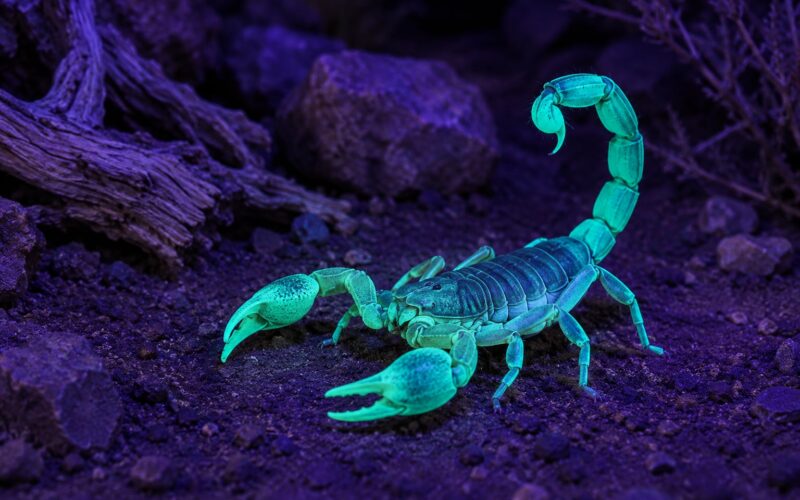
Chiggers are not insects in the everyday sense of the word, and they are not the red mites many people picture. A chigger is the larval stage of a trombiculid mite, an arachnid related to ticks and spiders. Adults are harmless. It is the larva, roughly the size of a grain of dust and about 0.3 millimeters long, that finds you.
The larva crawls onto your skin, usually from vegetation, then walks to a place where your clothing presses tight. It injects digestive enzymes that liquefy skin cells, then feeds on that fluid through a hardened feeding tube called a stylostome. Think of the stylostome as a tiny straw left behind in the skin: your immune system reacts to that foreign structure, which is why the itch often outlasts the feeding itself by many days.
Two facts clear up most of the confusion people have about chiggers:
- They do not burrow into skin. The feeding tube forms in the top layer of skin, and the mite drops off once it finishes feeding.
- They do not stay in your bed or your house. They need ground-level vegetation and moisture, so bites on someone who never went outside usually point to a different cause.
What Do Chigger Bites Look Like?
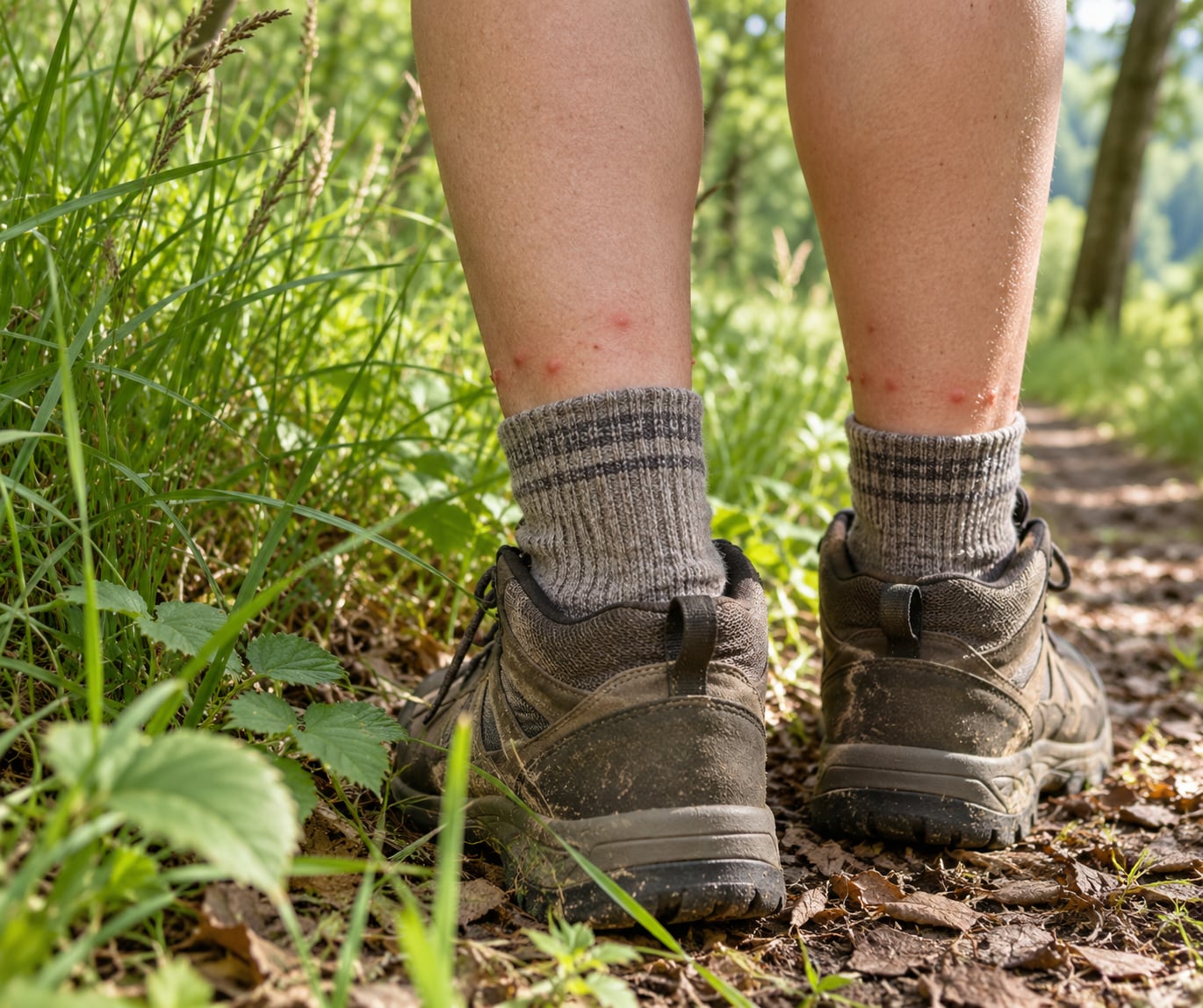
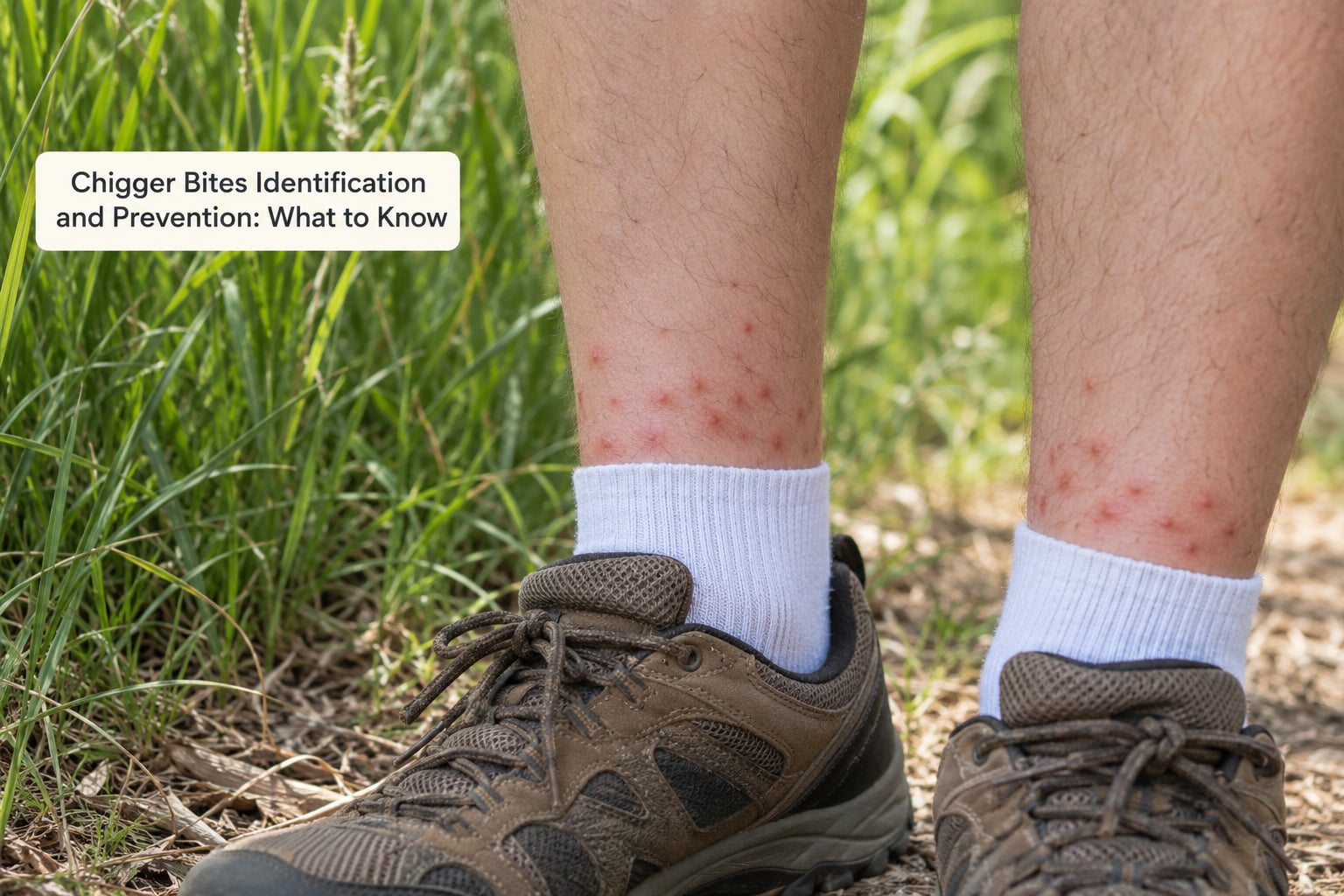
Chigger bites show up as small, red, raised welts, often around the size of a pencil eraser, with an intensely itchy center. The welts usually appear in clusters rather than scattered singles, and they tend to form in a line that follows where clothing rubbed or fit snug.
Timing is a big clue. You usually feel nothing at the moment of the bite. A few hours later, sometimes within one to three hours and sometimes much later, the area starts to itch and swell. The itch often peaks somewhere around the 24 to 48 hour mark, which is exactly why people assume something is still crawling under their skin.
Common locations, roughly in the order I hear them described, are:
- The sock line and ankles where pant legs meet footwear.
- The waistband and belt line, especially where a belt or tight waistband presses against bare skin.
- The waist, under a belt or a bra strap, and the groin area where skin rubs skin.
- Behind the knees and inside the elbows, where skin stays warm and damp.
- The armpits and other skin folds.
Reactions vary person to person. Some people get a large flare around each bite, some get barely a small dot that only itches when touched. A few people develop fluid-filled blisters at the bite site. Scratching breaks the surface, and that is where a secondary infection can start.
How Can You Tell Chigger Bites Apart From Other Insect Bites?
Appearance alone never settles it. Exposure history settles far more of these cases than a photo does, so answer one question first: was there recent outdoor time in grass, brush, or leaf litter?
| Criterion | Chigger | Flea | Mosquito | Bed bug |
|---|---|---|---|---|
| Typical appearance | Red raised welts, often with a bright red center dot | Small red papules, sometimes with a dark center | Flat red or dark raised bumps | Flattened red welts, often in a line of three |
| Where they land | Sock line, waistband, skin folds | Lower legs, ankles, waist | Anywhere exposed, including face and arms | Exposed skin while sleeping, often neck, shoulders, arms |
| Pattern | Clustered along a clothing line | Scattered or in small groups | Random singles | Linear rows, often three in a row |
| Onset | Delayed, hours later | Delayed, hours later | Almost immediate | Delayed, often a day or more |
| Itch intensity | Very intense, peaks at 24 to 48 hours | Itchy, sometimes intense with pet allergy dermatitis | Moderate | Itchy, sometimes severe |
| Usual duration | Up to two weeks | Shorter, unless sensitized | One to three days | Several days to a week |
| Indoors or outdoors | Outdoors only | Both, especially homes with pets | Both | Indoors only |
| Exposure clue | Recently sat, hiked, camped or gardened in grass or brush | New pet, flea dirt found on bedding | Standing water nearby, evening outdoor time | Travel, second-hand furniture, shared walls |
Spider bites get mislabeled most often. True spider bites are uncommon in the US, and most marks labeled “spider bite” turn out to be something else, frequently a brown recluse reaction. Those tend to appear on exposed skin rather than at a clothing line, and they often blister and darken in the center over several days. If you never saw the insect and the mark starts turning necrotic in the middle, get that one looked at.
Where Do Chiggers Live and Where Do People Get Bites?
Chiggers need moisture, warmth and a food source, so they cluster in vegetation close to the ground. The habitat to think about is damp grass and low weeds at the edge of woods, creek banks, lakeshores, overgrown fields, and brushy fence rows. That edge where tall grass meets woods is often the worst of it, because it stays shaded and holds humidity.
Activity runs from late spring through early fall, peaking in warm, humid weather, and it drops off sharply once mornings turn cold. A heavy rain followed by a warm week often means a surge, because rain keeps the ground damp and the larvae stay active.
The exposure moments that matter are the quiet ones. Sitting on the ground, on a log, or on a picnic blanket. Kneeling in the garden or pulling weeds. Hiking through tall grass at the edge of a trail. Camping, hunting, fishing, mowing, and playing in the yard. Anyone who spends time low to the ground in summer is a candidate, including children playing outdoors and dogs, which can pick up larvae and carry them in on fur.
How to Prevent Chigger Bites Outdoors
Prevention works in layers, and no single layer is enough on its own. Clothing handles most of it, repellent handles the skin, and a shower after you get home handles whatever got through.
Chigger bites identification and prevention in four layers
Layer one: clothing. Wear long pants and long sleeves, and tuck pant legs into socks or gaiters. That single habit closes off the sock line and ankle, the spots where most bites land. Light-colored fabric helps too, since you can spot a mite on it before it moves in.
Layer two: treatment. Treating clothing and boots with permethrin is the most durable protection, and permethrin-treated shirts and pants stay effective through many washes. Treat gear according to the product label, and never apply permethrin to skin.
Layer three: repellent. Apply an EPA-registered insect repellent containing DEET, picaridin, IR3535, or oil of lemon eucalyptus to exposed skin. Follow the label on duration and reapplication, and be careful around the eyes and on the hands of small children.
Layer four: timing. Take a shower or bath and wash your clothes soon after getting in from grassy or brushy areas. Washing soon after exposure clears off the larvae before they can settle in.
Permethrin vs. DEET: which one to use when
| Criterion | Permethrin | DEET |
|---|---|---|
| Where it goes | Clothing, socks, boots, gear | Exposed skin, and clothing per label |
| How it works | Kills mites on contact | Repels biting insects |
| How long it lasts | Through multiple washes on fabric | Label-dependent, a few hours typically |
| Best for | Hiking, camping, yard work, hunting gear | Everyday outdoor use, exposed skin |
| Key caution | Never on skin; follow label drying time | Wash off when you shower; follow concentration guidance |
On seating and sleeping: camp on high, dry ground rather than in low grass, and sit on a folded blanket or chair rather than directly on the ground. Don’t pitch a tent in short grass if you can find bare or gravelly ground instead.
On scents and powders: sulfur powder worked as an old-school socks-and-boots trick, and strong scents like eucalyptus, citronella, and garlic are popular. Evidence for these is limited compared with labeled repellents and permethrin-treated clothing, so treat them as a bonus layer rather than your main defense.
Pets deserve a mention. Dogs and cats can pick up larvae outdoors and carry them into the house on fur, though chiggers do not establish indoors. Talk to your veterinarian about a product made for your animal before you treat anything yourself, and never apply human repellent to a pet.
How to Reduce Chiggers in Your Yard
You cannot eliminate chiggers from a property where grass grows, but you can make the areas you use a lot much less appealing to them. Chiggers live in low vegetation and thatch, so the fix is about how short and how tidy you keep it.
- Mow grass short in the areas near your house, decks, and play areas.
- Cut weeds and brush back from the edge of the lawn, especially along fence lines.
- Trim low branches and thin dense shrubbery that creates a shaded, damp band at ground level.
- Clear leaf litter and grass clippings from the pile-up zones where vegetation is thickest.
- Drain standing water and fix areas that stay damp through the summer.
- Keep pet bedding and outdoor furniture surfaces clean, and wash blankets and pet blankets regularly.
If you have a severe, recurring problem in a specific part of the yard, licensed pest control companies can apply targeted treatments to that area. For most households, mowing and trimming along with personal protection handles the problem without chemicals.
How Long Do Chigger Bites Last and How Do You Stop the Itch?
Most chigger bites stop itching within one to two weeks. Some people clear in a few days, and some carry an itchy welt for longer because their skin reacts harder to the stylostome. A few can go a full two weeks before settling down.
General comfort measures people find useful, all of which you should check with a pharmacist or clinician for your own situation:
- A cold compress held against the area for short periods numbs the itch and cuts swelling.
- Over-the-counter anti-itch creams such as hydrocortisone or calamine lotion, used per label.
- Oral antihistamines for itch and swelling, following the label and checking with a pharmacist about drowsiness or interactions.
- Cool baths and loose, breathable clothing over the irritated spots.
- Home remedies people try: diluted white vinegar on a cotton ball, witch hazel, or rubbing alcohol. These may cool the skin briefly for some people, but none is well studied for chigger bites.
What does not work is worth saying plainly. Nail polish on a bite does nothing, because there is nothing under the skin to suffocate. That is the single most persistent myth on the internet, and it keeps coming back on hiking and homestead forums season after season.
When Should You See a Doctor for Chigger Bites?
Most bites need nothing more than comfort care. Book an appointment if any of the following show up:
- Redness that spreads outward beyond the original bite over a day or two.
- Warmth, swelling, increasing pain, or a hard tender area in the skin.
- Pus, drainage, or crusting from a scratched site.
- Fever or chills alongside an infected-looking bite.
- Bites near the eyes or on the face, or on the genitals.
- Difficulty breathing, swelling of the lips or tongue, or widespread hives, which can signal a serious allergic reaction and warrant emergency care.
- A mark that digs in, blisters, or turns dark in the center over several days, which may point to something other than a chigger, such as a recluse reaction.
- Bites that keep appearing over weeks with no outdoor exposure, which is a reason to have something else evaluated.
A clinician can also prescribe or recommend a stronger topical or oral corticosteroid for severe reactions, which is not something to manage on your own.
How to Remove Chiggers and Avoid Scratching
There is nothing to remove. By the time you notice the itch, the larva has already fed and detached, and the only thing left in your skin is the stylostome, which your body clears on its own. That is why searching your legs with a magnifying glass at midnight will turn up nothing but your own frustration.
What does help:
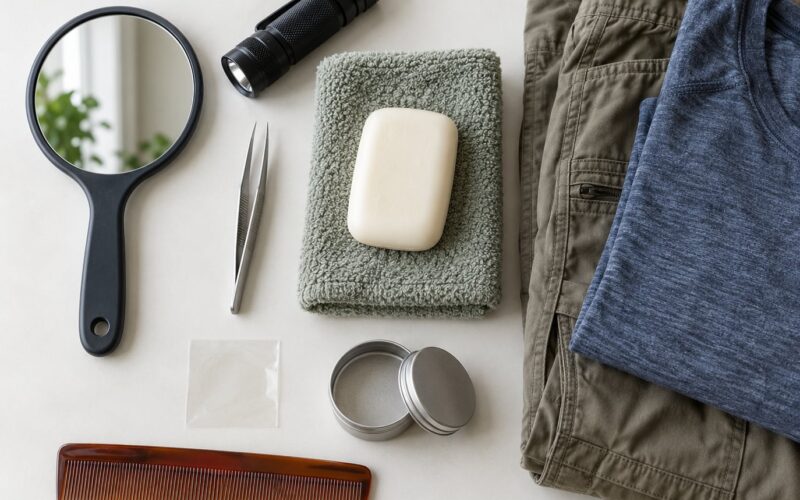
- Wash exposed skin promptly after outdoor time in grass or brush, ideally within the same day. Soap and water clears larvae before they settle.
- Wash or dry clean the clothes you wore, and don’t shake them out indoors over furniture or your bed.
- Trim nails short and put a cold compress on the worst spot when the itch peaks. Breaking the skin is how a simple bite turns into an infected one.
- Cover irritated skin while you sleep if scratching happens unconsciously at night.
On the question nobody asks out loud: no, you do not need to fumigate your house, wash your sheets in hot water, or treat your mattress. Those steps make sense for fleas or bed bugs, which live indoors. Chiggers cannot.
Frequently Asked Questions
Are chiggers visible to the eye?
Barely. The larval stage that bites is about 0.3 millimeters long, smaller than a pinhead, and pale yellow to orange, which is where the old name red bugs comes from. You are not going to spot one on your arm in normal light, but you can sometimes see them moving on light-colored fabric if you look right after brushing through grass. That is why light clothing is a practical habit rather than a fashion choice.
Can chiggers live inside the house?
No. Chiggers need ground-level vegetation and moisture, so they are an outdoor problem. They cannot survive long indoors, they do not reproduce in a house, and they do not hide in bedding. If someone who never went outside has bites, something else is the likely cause. Fleas and bed bugs live indoors and behave very differently, so cleaning the whole house for chiggers is wasted effort. Washing your sheets after a yard day is still worth doing for general hygiene.
How long do chigger bites stay itchy?
Most chigger bites stop itching within one to two weeks, with the worst of it in the first two days. The itch peaks around 24 to 48 hours after the bite and fades slowly, because your skin is reacting to the feeding tube the larva left behind rather than to the mite itself. People who react strongly can itch longer, and the marks can linger as faint discolored spots for weeks. Seek medical advice if the itch is severe, spreading, or accompanied by fever or pus.
Do chigger bites look like mosquito bites?
They can, which is why photos alone often lead to the wrong answer. A chigger bite usually arrives with a delay of a few hours, forms a raised red welt with a brighter red center, and clusters along a clothing line such as the sock line or waistband. Mosquito bites show up almost immediately and appear as scattered singles on exposed skin. The clearest clue is not the mark at all but the story: did you sit in grass, brush, or leaf litter in the past day or two?
Can chigger bites spread from person to person?
No. Chiggers bite each person individually, and the bites are not contagious in any way. You cannot catch them from someone else, and there is nothing to pass around within a household. Your own itch can make welts look like new bites appearing over several days, but that is a delayed reaction in skin that was already bitten, not an infection or a spreading pest. If new marks show up on someone who stayed indoors, look for a different cause.
What should I do if a chigger bite becomes swollen or infected?
Stop scratching and keep the area clean and dry. A cold compress and an over-the-counter anti-itch product used per label may help with ordinary swelling, but infection is a different situation. See a clinician if redness spreads, the area becomes warm, painful, or hard, if you see pus or crusting, or if you have a fever. Worsening swelling near the eyes, or any trouble breathing or swelling of the lips or tongue, needs emergency care rather than home care.
What to Do First
Start with your clothing lines, because that is where the answer usually hides. If the itch is concentrated at the sock line and waistband and it started a day or two after you sat in grass or worked in the yard, treat it as a chigger bite and start prevention today rather than next season.
Then do two things today: wash the clothes you wore outside, and buy a permethrin treatment for your hiking pants and boots. Permethrin-treated clothing plus long pants tucked into socks stops most bites before they start, and it keeps working through washes. That single habit does more than any spray applied after you are already itchy.
If a bite is spreading, blistering, or showing pus, book a clinician visit instead of trying another home remedy. And if a bite shows up on someone who did not go outside, stop blaming chiggers and start checking for fleas or bed bugs instead.