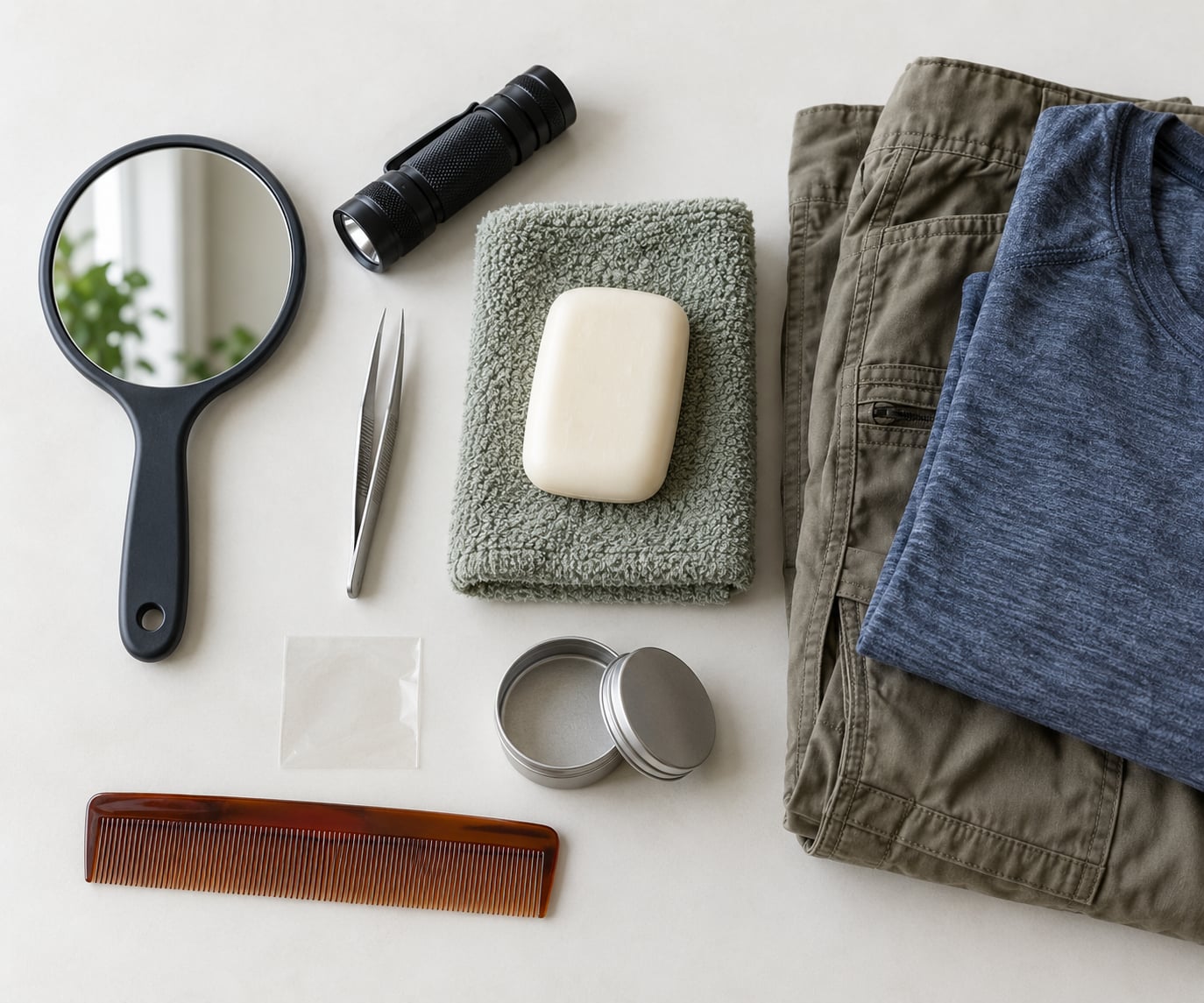
To check for ticks after being outside, strip off your outdoor clothing, put everything through a hot tumble dry, then inspect yourself from the hairline down to your toes looking for a small dark bump that was not there this morning. Budget 10 to 20 minutes, and do it the same day you get back.
Ticks do not jump and they do not fly. They brush onto your clothes or your dog’s fur and then walk upward until they find warm, thin skin, which is why they end up behind the knees, along the hairline, in the armpits and around the waistband. Because most of them arrive on fabric first, checking your gear separately catches more than a body-only inspection.
Here is the reassuring part, and the CDC is the source for it: Lyme disease and most other tick-borne illnesses are generally only transmitted after a tick has been attached and fed, usually for 24 to 48 hours or longer. A tick you find and remove the same afternoon is very unlikely to have passed anything on. The real enemy is delay, not the tick itself, which is exactly why a systematic check beats a panicked one.
What You Need
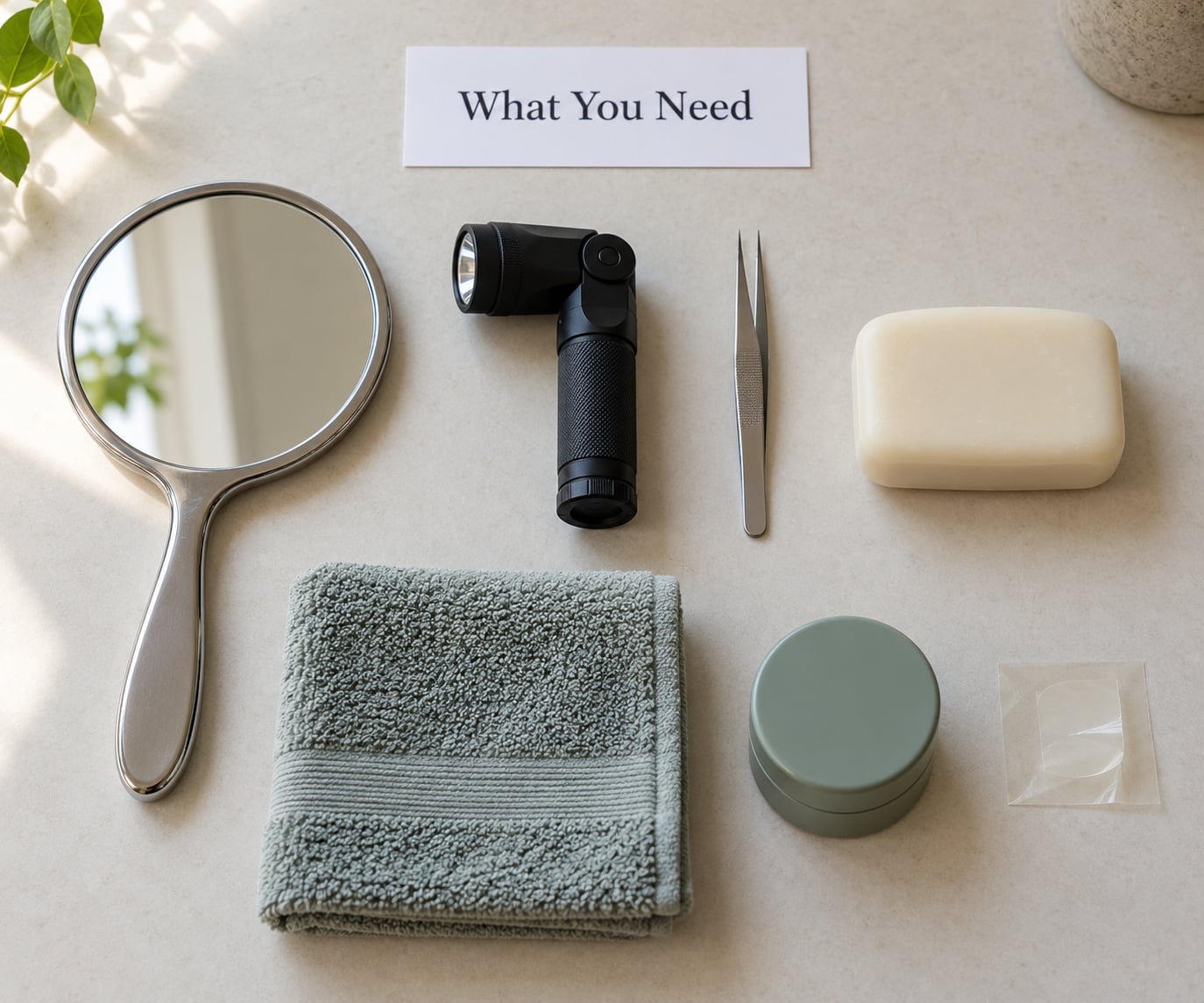
You need very little, and most households already have all of it. The goal is to have everything within arm’s reach so the check does not stall halfway through.
- Your outdoor clothes, kept separate. Do not sit down on the couch in hiking pants still wearing them.
- A mirror. A full-length mirror handles your back and legs; a hand mirror handles the scalp and behind the ears.
- A flashlight. A cheap folding one is enough. Hair hides things, and light moving through the strands finds them.
- Fine-tipped tweezers. The narrow, pointed kind, not the wide cosmetic pair with a slanted jaw.
- Soap and running water. For washing your hands and the bite site afterwards.
- A small container or a strip of clear tape. For holding a removed tick if you want to save it for identification or testing.
One more thing that costs nothing: a note of where you were and when. Two weeks later, when you are trying to remember why you were itchy last Tuesday, that note is worth more than any memory.
How to Check for Ticks After Being Outside: Step-by-Step
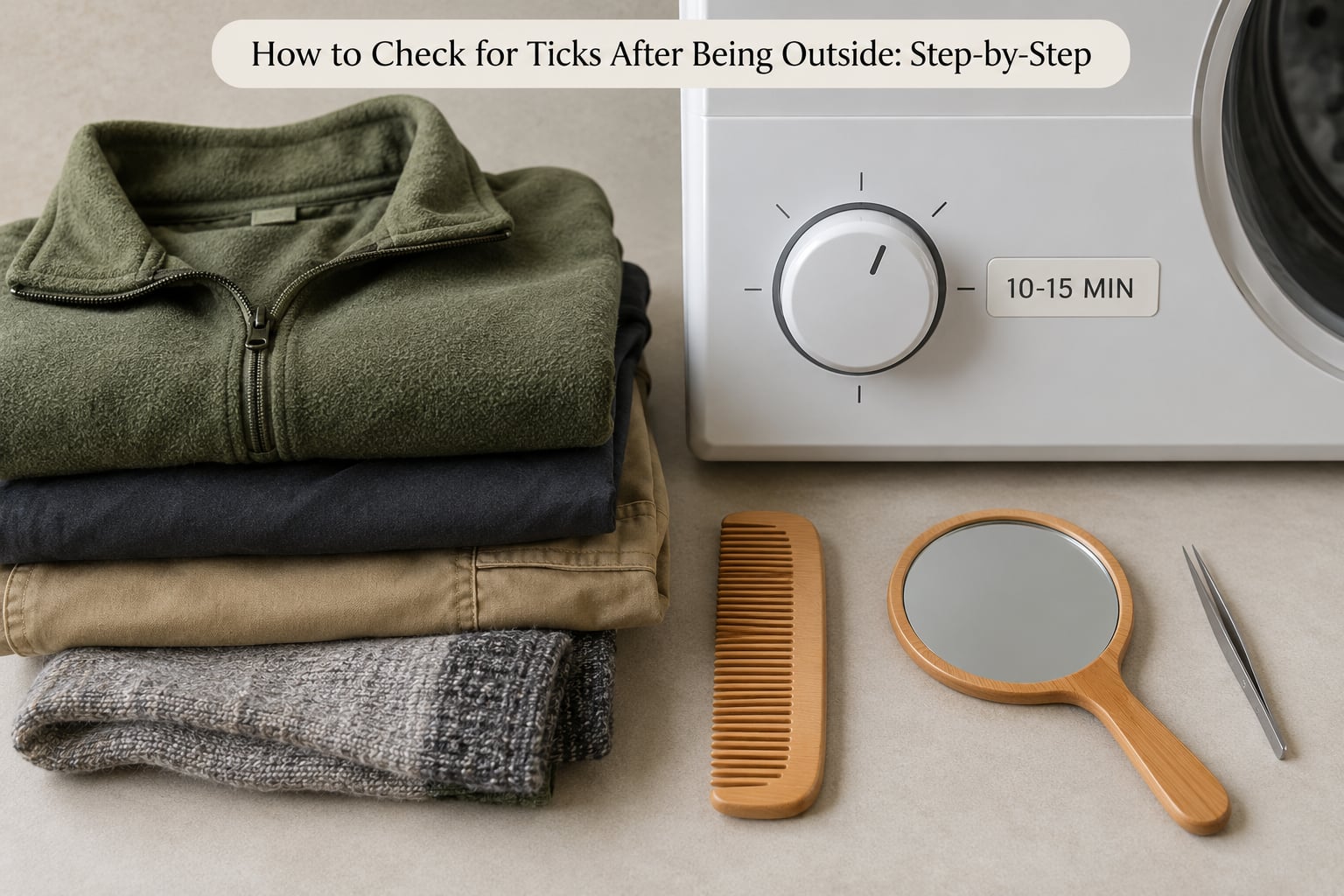
This is the sequence that works. Hikers on r/CampingandHiking who take it seriously report spending 15 minutes or more with a flashlight and a mirror, and honestly that sounds about right for wooded terrain in the northeast and midwest.
Change Clothes and Keep the Outdoor Gear Separate
Take the clothes off before you sit down, and put them straight in the dryer on high heat for 10 to 15 minutes. Ticks are heat-sensitive, and a hot tumble cycle is the reliable way to kill the ones riding in on your pants.
Here is the correction most people miss: washing alone does not do it. A standard wash cycle, even a warm one, is not dependable for killing ticks, so if you have no dryer or you did not run that cycle, put the clothing through the hot dryer anyway before it goes back into the wardrobe.
While the dryer runs, shake out your boots, inspect the boot lining and the tongue, and check the seams of anything that was touching bare skin. That waistband and those pant cuffs are where the ride-alongs concentrate.
Check Your Hair, Scalp and Neck First
Start at the top, because the scalp is the most commonly missed area and the hardest one to see. Stand in front of a mirror with a second mirror or your phone camera, and use the flashlight to push light through your hair rather than shining it straight on.
The technique that works is touch, not sight. Run your fingertips slowly across your scalp and along the hairline, then behind each ear and down the back of the neck. You are looking for one thing: a small bump that was not there yesterday. A nymph feels like a tiny raised grain that is not part of your skin.
If you have long hair, use a fine-toothed comb. People on the camping forums comb it in sections from the front to the back, checking the skin of the scalp between each pass, because a poppy-seed-sized nymph in dark hair is genuinely hard to spot with eyes alone.
Inspect Your Body From Head to Toe
Move down the body in one direction so you do not skip a section. Face, ears and the crease behind the ear. Neck and collarbone. Armpits. Elbows and the crease at the inner elbow. Waistband, where ticks climb under tight clothing. Belly button. Under the breasts and along the bra line. Groin and between the legs. Behind the knees. Between the toes, and around the ankles where socks sat.
Warm, dark, creased skin is the pattern. A nymph is about the size of a poppy seed, an unfed adult is closer to a grain of coffee, and an engorged tick can look like a small bean. That size range is why a lot of people find nothing, find a freckle and stop, or simply do not register a dot as anything worth a second look.
The way to tell a nymph from a freckle or a speck of dirt is mechanical, not visual. Ticks have legs. Scrape the spot gently with a fingernail or the edge of a credit card while watching it, and a freckle stays put while a tick moves or shifts. Wipe the area with a damp cloth and look again, because a speck of dirt comes off and an attached tick does not.
Use clean, dry hands and move slowly. Most rushed checks are visual sweeps that skip the creases.
Check Children, Pets and Outdoor Equipment
Children need an adult to do the checking, and the same body map applies with one adjustment: check the hairline, behind the ears, the neck and the lower legs first, because kids are lower to the ground and their heads are where the ticks land. Long hair gets the same comb treatment. The USDA Forest Service specifically calls out parents doing a full-body check on their children rather than relying on the child to self-check.
Pets need a different approach. Rub your hands over the coat in the direction it grows, parting it down to the skin in short strokes, and check the ears, between the toes, around the tail base and under the collar. If your dog is on a monthly preventive, that still does not stop every tick from riding in, and dog owners on r/dogs have found dropped ticks on bedding after short-haired dogs walked in tick habitat. A veterinarian handles anything embedded or attached on an animal.
Then check the environment: the sleeping bag, the dog bed, the couch cushion and the car seats. A tick that came off indoors is a real possibility and it takes one tick off a pet or a jacket to seed a room.
Remove an Attached Tick with Fine-Tip Tweezers
This is the CDC method, and it is short. Wash your hands, grasp the tick as close to the skin as you can with the tips of the tweezers, pull upward with steady even pressure, then clean the bite area with rubbing alcohol or soap and water.
What not to do is the important half. Do not twist. Do not burn it with a lighter or a hot match. Do not smother it with petroleum jelly, oil or nail polish, do not crush it with your fingers, and do not try to dig the mouthparts out afterwards. Those methods either fail to remove the tick or cause it to regurgitate into the bite, which is exactly the outcome you were trying to avoid. Any small resistance when pulling is normal, so keep the pressure steady and straight.
If you want the tick identified or tested, drop it into a sealed container or a folded strip of tape with the date on it. Otherwise, flush it or throw it away. Note the date of removal and the location of the bite, because that is what a clinician would ask for.
Decide Whether You Need Medical Advice
A tick found and removed the same day, on its own, with no symptoms, is not an emergency and usually does not need a clinic visit. Watch the bite site and how you feel for the next few weeks rather than reacting in the moment.
Contact a healthcare professional if you cannot remove the tick, if the mouthparts broke off, or if you develop symptoms afterwards. Symptoms that warrant a call include fever, chills, headache, fatigue, muscle or joint aches, and a new rash that expands over a few days. Tell them you were outdoors and give them the date of removal.
Ask a clinician about preventive antibiotics if the tick was on long enough that transmission is plausible, and let them decide. I am not going to tell you whether you need medication, whether a rash means Lyme disease or what to take. That call belongs with a clinician who can look at the bite and your history.
Common Mistakes
Almost every missed tick comes down to one of these, and each one has a simple correction.
- Rushing. A 30-second look at your legs is not a tick check. Forum users consistently blame speed more than anything else. Fix: set a timer for 10 minutes and work the body map in order.
- Checking only what you can see. Your back, your scalp and behind your knees are the gap. Fix: two mirrors, a phone camera, or a second person.
- Showering and stopping. A shower washes off loose ticks but does nothing for the one already attached. Fix: shower, then check, and dry the clothing on high heat for 10 to 15 minutes.
- Assuming every dark spot is a tick. Nymphs are genuinely tiny, and the opposite mistake also happens. Fix: use the fingernail test and a damp wipe rather than eyeballing it.
- Crushing, burning or smothering the tick. Petroleum, oil, lighter flame and nail polish can cause regurgitation into the bite. Fix: fine-tipped tweezers, straight up, no twist.
- Skipping kids and pets. They are lower to the ground, in the tall grass more often, and nobody checked them for you. Fix: check the child and the dog in the same session.
- Not washing your hands or the bite. Simple, but it gets skipped when the tick was small. Fix: soap and water immediately after removal.
One seasonal note, since it matters right now: ticks are most active in warm months across the northeast, midwest and south, and in many places adult activity peaks in autumn. You can find one in almost any month in a mild climate, which is the case for doing the check in 2026 whenever you have been in grass or woods, not only in summer.
Frequently Asked Questions
How soon after being outside should I check for ticks?
Check the same day, ideally within a few hours of getting indoors. Ticks start moving upward from your clothing and searching for skin soon after they land, so an early check catches them before they settle into a crease or burrow into hair. Change first, dry your clothes on high heat, then do the body check before you sit down or start unpacking the car.
How small can a tick be before you can see it?
A newly hatched larva is smaller than a pinhead, but the stage people actually encounter is usually the nymph, about the size of a poppy seed. An unfed adult is closer to a grain of coffee and an engorged one can look like a small bean. Nymphs are the hardest to see and the stage most often responsible for Lyme disease transmission.
Can ticks jump or get into the house?
No. Ticks cannot jump or fly. They walk, and they often arrive on your clothes, on a pet or on gear, then climb upward until they find skin. That is how one ends up in a bed, on a couch or in a car, so check your sleeping surface and your pet after outdoor time. If a tick gets indoors, remove it the same way you would one on your skin.
Do I need to see a doctor after every tick bite?
Usually not. A tick found and removed the same day, with no symptoms and nothing stuck in the skin, is very unlikely to cause illness because most tick-borne diseases need a tick attached for roughly 24 to 48 hours or longer. Contact a clinician if you cannot remove it, if symptoms appear, or if you want to talk about preventive antibiotics.
What if I cannot get the tick out with tweezers?
Do not keep pulling or twist, and do not try to dig the mouthparts out with a needle. Clean the area, then contact a healthcare professional, especially if part of the tick broke off. Leaving a small fragment is far less risky than repeatedly squeezing or heating the site, which can push fluid into the bite. A clinician can remove what is left and advise on watching for symptoms.
Conclusion
Start with the clothes. Get out of them before you sit anywhere, run them through the dryer on high for 10 to 15 minutes, and shake out the boots and the seams. Then work your body in order from the hairline down, using touch as much as sight, and remember that the nymph you find is the size of a poppy seed and probably will not look like much.
Pull any attached tick straight up with fine-tipped tweezers, clean the bite, and write down the date. Then keep an eye on how you feel for the next few weeks and pick up the phone if symptoms show up, if the tick will not come out, or if you are simply unsure. That is the whole job, and doing it properly takes about a quarter of an hour.