If you are seeing large, shiny, metallic flies hanging around trash cans, pet waste, or your kitchen counter, you are almost certainly looking at blow flies — a group of filth flies in the family Calliphoridae that breeds in decaying organic material. Blow fly identification comes down to three things: a body noticeably larger than a house fly, a hard metallic blue, green, bronze or black sheen, and behavior that keeps the fly parked over waste, manure, or a carcass.
They are not biting you. They are shopping for a meal, or for somewhere to lay eggs.
Blow Fly Identification: What to Look For
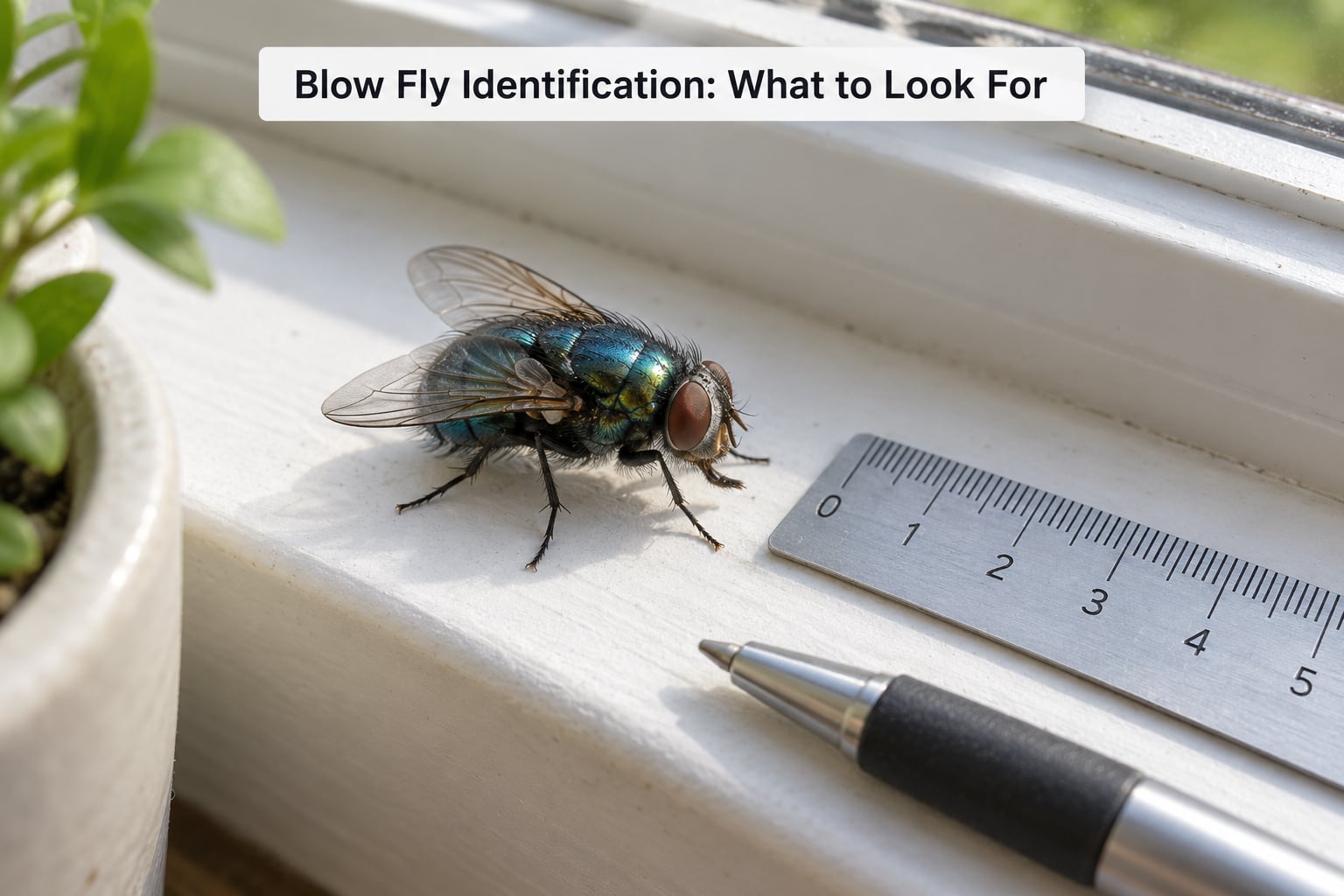
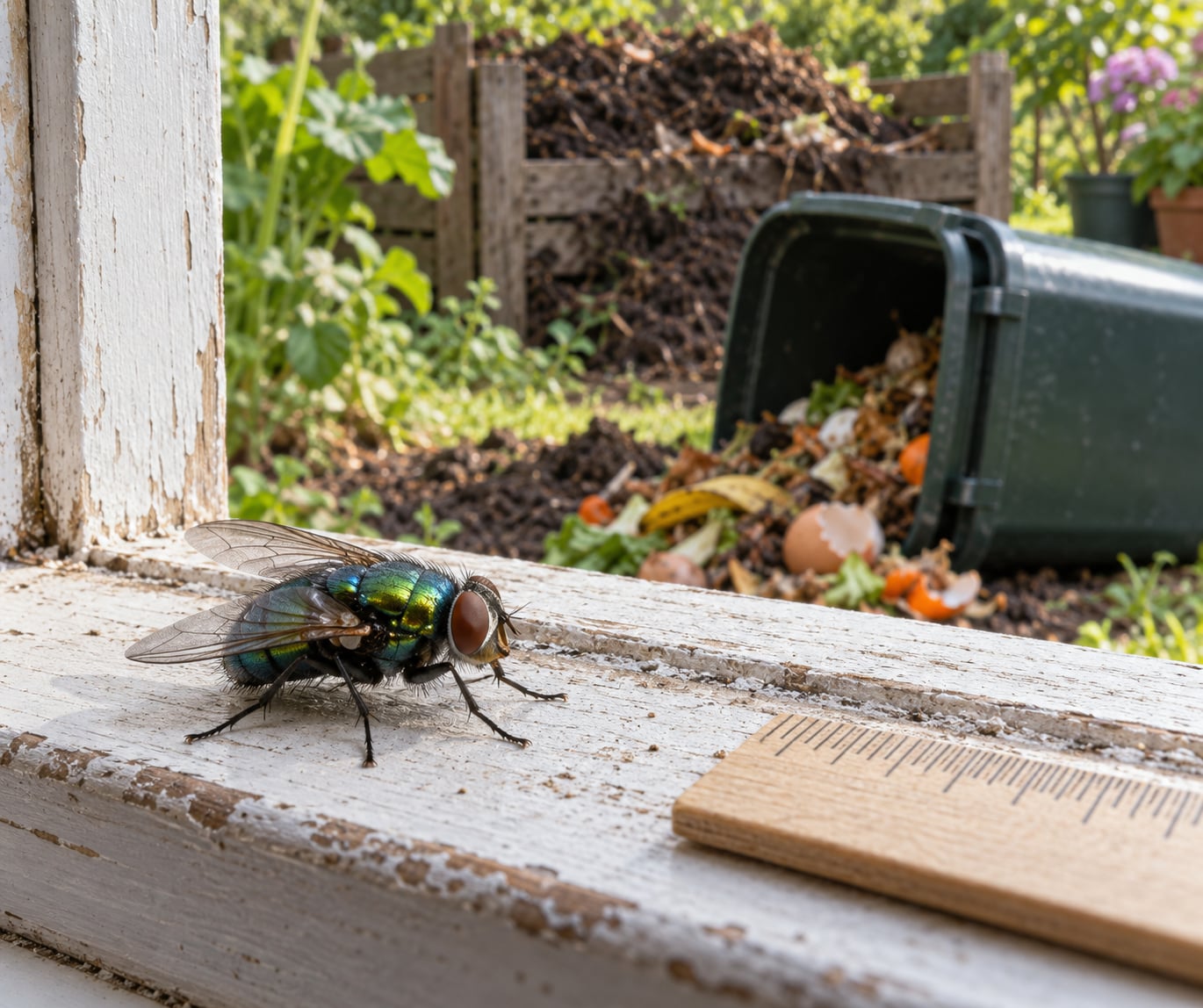
Blow flies are stocky flies in the family Calliphoridae, usually 1/8 to 5/8 inch long, with a hard metallic body color that ranges from blue and green through gold and bronze to shiny black. That reflective, almost polished-looking shell is the single most reliable field clue you have, and it separates them from the dull grey-brown house fly almost every time.
Adults have six legs, one pair of clear wings held out from the body at rest, short antennae, and large reddish or dark eyes that dominate the head. They run in a jittery, stop-start pattern across a surface rather than walking smoothly, and they spend far more time hovering over a smelly spot than a house fly does.
Appearance alone is still not proof. Several other flies share the metallic look, and a photo taken from the wrong angle can turn a black blow fly into a grey smudge. Treat color and size as a strong first filter, then confirm with behavior and habitat.
Blow Fly Identification in 30 Seconds
Run through this checklist in the order below, and you will usually have your answer before you get back inside:
- Size: noticeably bigger than a house fly. Put it next to a ruler or a coin before you judge.
- Color: metallic blue, green, gold, bronze, or glossy black. Dull grey with black stripes is a house fly instead.
- Wing position: wings spread slightly open at rest, not folded flat along the body.
- Behavior: hovering and darting over one specific smelly spot rather than roaming the whole room.
- Maggots: pale, legless, eyeless, tapered larvae nearby, usually on the same decaying material.
That last item is the clincher for blow fly identification. If you find legless, eyeless, worm-like larvae with a tapered head and hook-like mouthparts feeding in soft decay, the adult fly you caught is almost certainly the source. Note that a photo-based identification works well for size, color and pattern, but exact species often needs the tiny anatomical details — bristle positions, for example — that only a specimen under magnification shows, so a county extension office or a specialist can confirm a hard case.
How to Tell Blow Flies from Similar Flies
Most ID mistakes come from confusing a blow fly with a house fly or a cluster fly. The table below sets out the differences in size, coloration, behavior, habitat, and whether you are likely to see maggots.
| Fly | Size | Color | Behavior | Where you find it | Maggots |
|---|---|---|---|---|---|
| Blow fly (bottle fly, Calliphoridae) | 1/8 to 5/8 inch | Metallic blue, green, gold, bronze or black | Hovers and darts over decay | Carrion, garbage, compost, manure, pet waste | Yes, legless and eyeless |
| House fly | About 1/8 inch | Dull grey with dark stripes on the thorax | Constant walking and probing | Near food, bins and warm indoor spaces | Rarely seen indoors |
| Cluster fly | Slightly larger than a house fly | Dull grey, no metallic sheen | Enters buildings in loose clusters to overwinter | Attics and upper rooms in late autumn | No, breeds in soil and bird nests |
| Flesh fly | About 3/8 inch | Black with bold checkerboard markings | Decks eggs on carrion and waste | Necrotic material, feces | Yes, in the same material |
| Hoverfly | About 1/2 inch | Yellow and black bands, often wasp-like | Hovers in place, completely harmless | Flowers, gardens, aphid colonies | No |
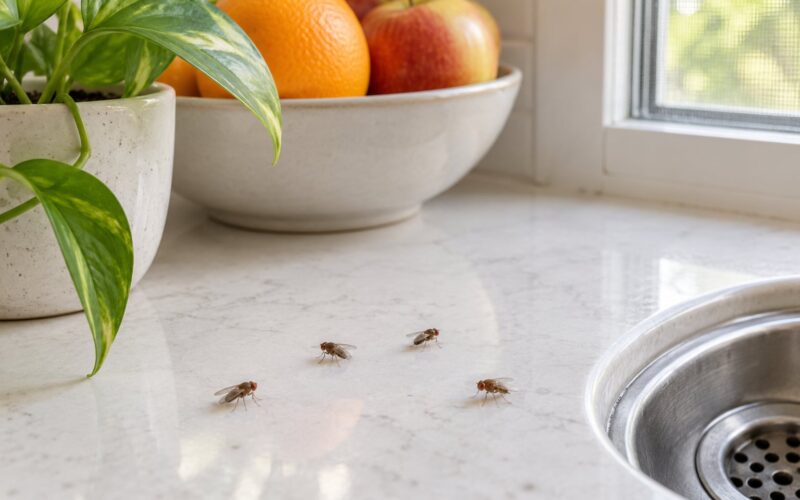
| Drain fly | Very small, under 1/8 inch | Pale grey or tan, fuzzy | Weak, hovering flight near drains | Slimy drain biofilm and sink traps | No, larvae live in the film |
The short version: metallic means blow fly, striped grey means house fly, and a fly in a flower bed is probably a hoverfly doing harmless pollination work. Nobody can pin down a specimen to species from a casual photo in every case, and that is fine — species level is not needed to find the source.
What Attracts Blow Flies
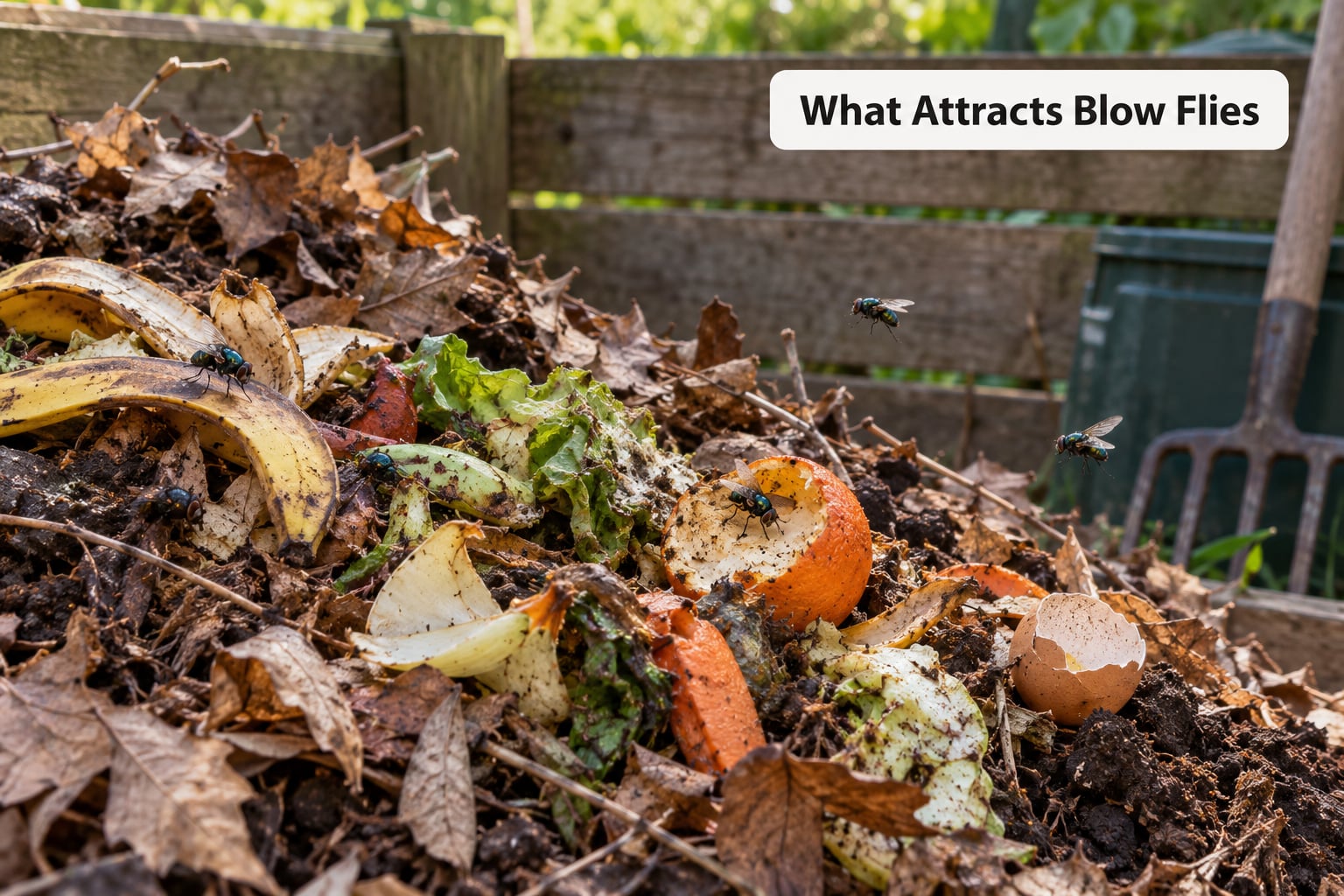
What attracts blow flies is moisture plus organic matter in active decay. Females find a breeding site almost entirely by smell, and they also read movement and dark shapes at close range, which is why a warm, damp pile of any kind of waste can pull in flies within hours.
Ranked by how reliably they pull flies, the usual suspects are:
- Dead animals — rodents, birds, bats, fish. The strongest attractant there is, and the reason flies show up in numbers you did not expect.
- Garbage and food waste — especially bins with a loose or failing lid, and anything meat or dairy related.
- Pet waste — a single unattended pile in a yard can keep a steady population alive through warm months.
- Animal manure — in barns, stables, chicken coops, and around livestock.
- Compost — a warm, wet pile is close to an ideal nursery, particularly if it holds kitchen scraps.
- Fallen fruit and vegetables — windfall apples in the yard or a spoiled crop in the garden.
- Drain and sewer residue — the sludge film in floor drains, sink traps, and garbage disposals.
- Dead insects — a nest of dead wasps or a tray of dead crickets is plenty to sustain a small brood.
Notice what is missing from that list: your home itself. Decaying organic material is the requirement, not the building.
Where Blow Flies Lay Eggs and Develop
Blow flies lay eggs directly on suitable organic material — a carcass, a bin, a manure pile, a drain film — in clusters that look like tiny white grains. The eggs hatch into pale maggots that feed on the decay, pass through three larval stages, then form a dark, hard pupa. In warm, humid weather the whole run from egg to adult can finish in about 7 days.
That short clock explains the pattern pest control forums keep describing: nothing for weeks, then a sudden wall of adults, then silence again. One brood, one mass emergence, and then the flies find the source already gone or inaccessible. Adults also feed on nectar and pollen, so seeing blow flies on flowers or milkweed is normal and not a sign of infestation.
Why Blow Flies Suddenly Appear Indoors
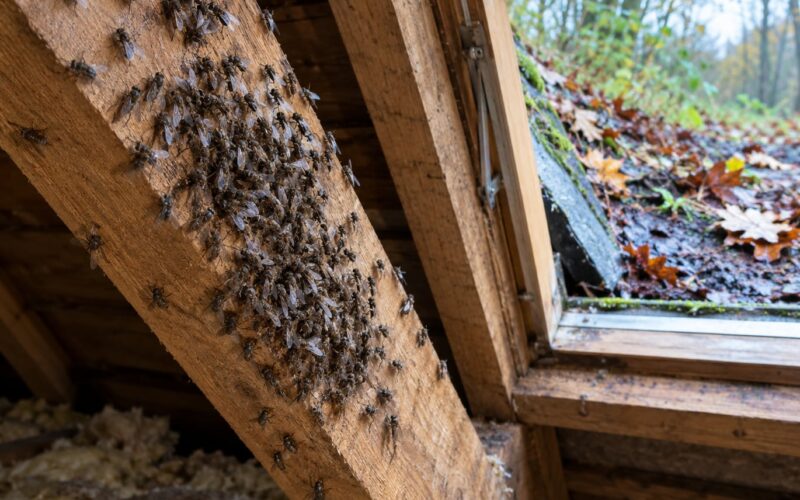
A sudden indoor cluster of blow flies almost always means one breeding site nearby, not that flies are reproducing inside your room. Adults travel — sources commonly cite ranges up to about 12 miles from the source — and they enter through whatever is open or broken.
Typical routes and sources, roughly in the order I would check them:
- An open door or window, or a window screen with a torn corner or a gap around the frame.
- A floor drain with a dried or broken trap seal, which lets odor and flies straight up from the plumbing.
- Garbage taken indoors, including a bin that has been sitting in a warm garage or utility room.
- A dead rodent or bird inside the structure — in a wall void, attic, crawl space, or under an addition. This is the most commonly missed source, and it often produces no odor at all to the people living there.
- Wet organic debris under a deck, in a mulch bed, or behind an appliance.
- A breeding site next door or across the street, which is where the flight-range figure starts to matter.
Light plays a small role too. Artificial light can pull flies toward an open door or window and away from the source, which is one reason they end up gathered on a lit porch or under a porch light at dusk. Switching off outdoor lights near entry points, or fitting warmer yellow or amber bulbs, takes some of that pull away.
On the health side, blow flies do not bite and they do not sting. They carry bacteria and pathogens picked up while feeding and walking through filth, and they deposit those organisms on counters, food, and pet bowls. That is a contamination risk worth taking seriously, especially around anything you eat.
How to Prevent Blow Flies Without Guesswork
Sprays and foggers almost never solve this, because they kill adults while the source keeps producing more. Work the source in order instead, and the problem usually ends quickly.
- Identify the fly first. Confirm the metallic sheen and the size. If you are seeing cluster flies in late autumn, the fix is sealing the attic entry points, not cleaning a bin.
- Hunt the source by smell and by fly behavior. Follow the flight path: the flies are moving between the source and your house, so watch where they land before they head indoors. Check the attic, crawl space, wall voids behind appliances, trash and recycling bins, compost, pet waste, and the yard for fallen fruit.
- Remove the attractant completely. Bag and discard carcasses, waste, and pet waste rather than moving it nearby, and clean the surface underneath so no moisture and no residue is left behind.
- Clean drains. Flush floor drains and sink traps regularly with hot water, and keep a layer of water in rarely used floor drains to preserve the trap seal.
- Manage waste. Use bins with tight-fitting lids, empty them before they fill, and rinse the container when you wash it out.
- Seal entry points. Repair screens, close the gaps around doors and windows, and screen off dryer vents, kitchen hoods, and attic fans.
- Use sanitation products only as directed on their labels, and keep children, pets, and food covered when you apply anything near a kitchen or eating area.
- Monitor for a week. If flies stop appearing after the source is gone, the identification was right. If they keep coming, the source is still there and you have not found it yet.
Call a pest professional when the material is somewhere you cannot reach or cannot safely handle — inside a wall void, in a crawl space, in an attic, or in a sealed structure. The same goes for carcasses of animals of unknown origin, sewage or drainage problems, a commercial food-handling site, or an infestation that survives two weeks of honest source-hunting. You would be dealing with confined-space hazards and potential pathogens, not a fly problem.
Frequently Asked Questions
Do blow flies bite people?
No. Blow flies do not bite and they do not sting. They have no mouthparts built for piercing skin, and they are not interested in blood. What they do carry is bacteria and pathogens picked up while feeding on decay, which they then deposit on food, counters, and pet bowls. That contamination risk is real, so the reason to deal with them is hygiene, not bites. If you have an actual bite, you are looking at a different insect such as a mosquito, a stable fly, or a biting midge.
Do maggots mean the adult blow fly laid eggs inside my home?
Not necessarily. Maggots only develop where an adult female laid eggs, so the larvae are almost always on the original material rather than on the adult fly. The adult can then be anywhere, including your kitchen, far from where it emerged. What maggots do tell you is where the breeding site is: follow the larvae back to their source and you have found the answer to what is attracting the flies.
Is one blow fly a sign of an infestation?
One adult fly is not a sign of anything. Adults also feed on nectar and visit flowers, so a single blow fly on a plant or near a window is normal. Trouble starts when you see repeated visits to the same spot, dozens at once, or maggots. Warm humid weather in late summer also brings a natural rise in numbers. Judge the situation by whether flies keep returning to the same location, not by the count of a single sighting.
How long does it take to get rid of blow flies after cleaning?
Once the breeding material is removed, adult numbers usually collapse within a few days to a week or two, because there is nothing left to produce the next generation. Adults already flying around will also move on once the odor is gone. Seeing a few stragglers for a week is normal. If flies keep returning after that, the source has not been found, and it is worth repeating the search in the attic, crawl space, and wall voids rather than reaching for another spray.
When should I call a pest control professional for blow flies?
Call a professional when the source is somewhere you cannot reach or cannot handle safely, such as inside a wall void, attic, or crawl space, or when a carcass of an animal of unknown origin is involved. Sewage and drainage problems, commercial food-handling sites, and any infestation that survives two weeks of serious source-hunting also qualify. Those situations involve confined spaces and possible pathogens, and they are not worth risking a household over.
Conclusion
Identify the fly first, then find and remove what is feeding it. Blow fly identification rests on three signals: larger than a house fly, a metallic sheen, and hovering over something that is decaying.
My three-step plan never changes. Inspect, using the size, color and behavior checklist plus a check for maggots. Clean or remove the source completely, including waste, pet waste, drain residue, and any dead animal. Then monitor for a week and seal screens and drains so nothing walks back in.