To get rid of springtails in a house, you dry out the damp spot that is attracting them, remove the ones you can see, then seal the gaps they came through. Springtails are 1-2 mm wingless insects that breathe through their skin and die when they dry out, so moisture control does most of the work. The whole job usually takes an afternoon of cleaning plus a few days of drying, and it costs very little.
The reason people get frustrated is that spraying kills the ones in front of you and nothing else. In r/Springtail and r/pestcontrol, the same pattern repeats: someone fixes one damp spot, the bugs quiet down for a week, then come back because a second moisture source was never found.
Here is the short version before the detail. Find the water. Get the room under 50% relative humidity. Vacuum and wipe. Seal. Watch for three to five days.
Table of Contents
- What You Need
- Step-by-Step
- Common Mistakes
- Frequently Asked Questions
- Do springtails bite people or damage the home?
- Why am I suddenly seeing springtails indoors?
- What is the fastest way to reduce springtails in a house?
- Are springtails a sign of a serious pest problem?
- Do sprays or foggers get rid of springtails?
- When should I call a pest control professional about springtails?
- Conclusion
What You Need
None of this is expensive, and you probably own half of it already.
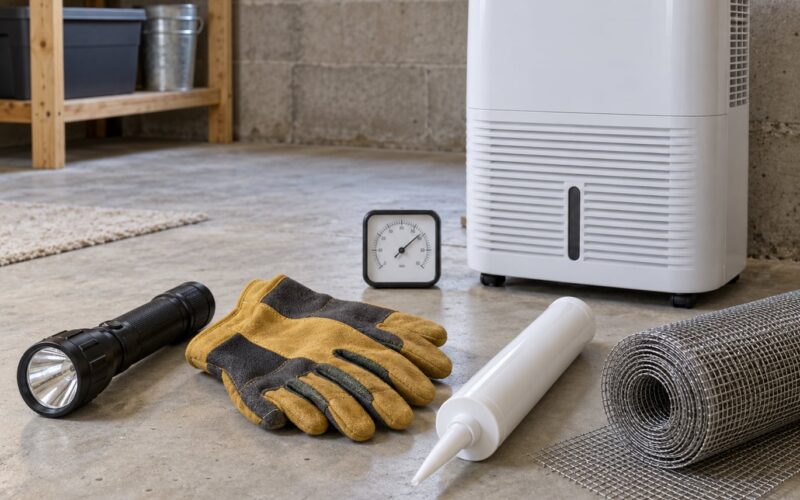
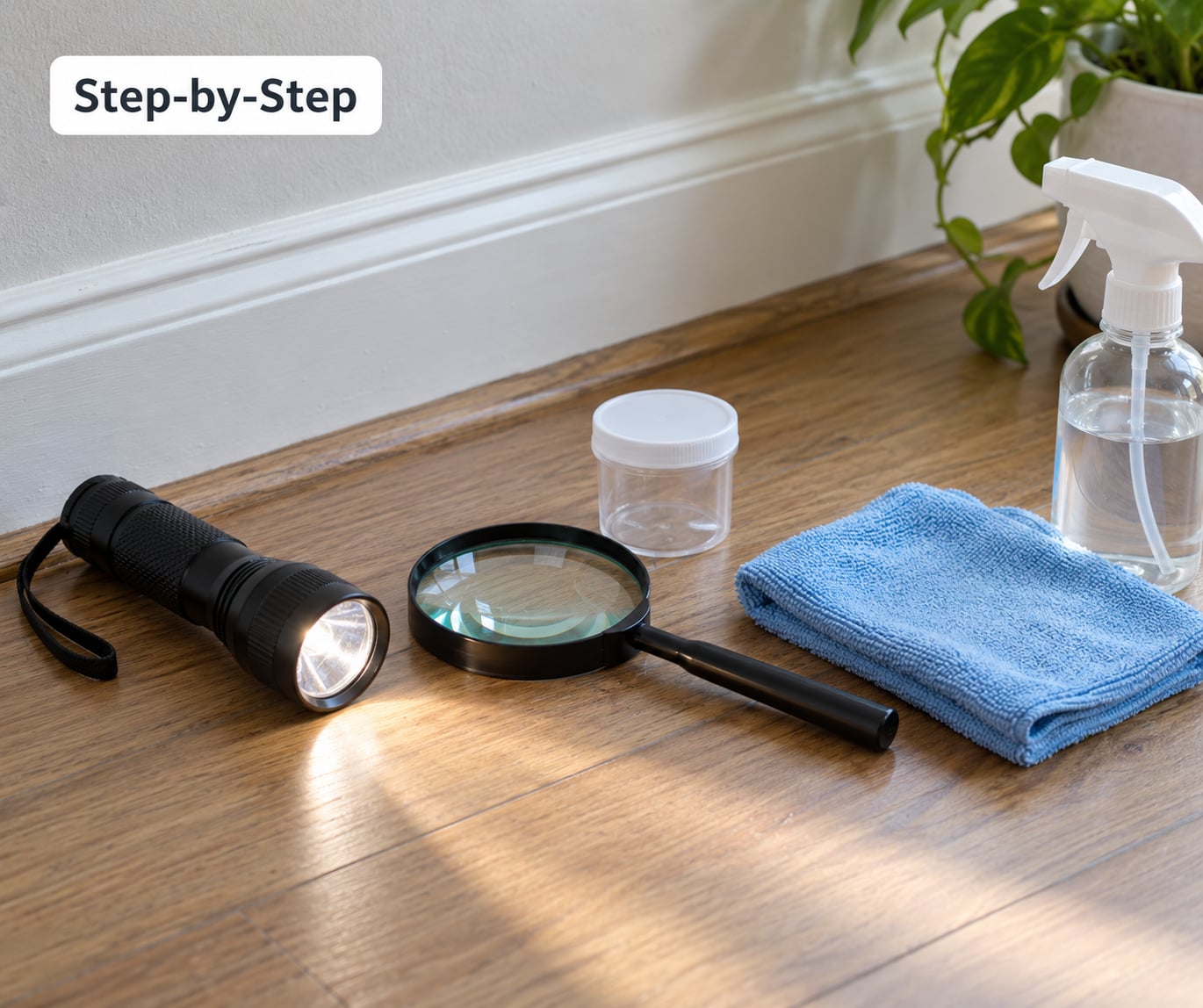
- Gloves and a dust mask. Springtails are tiny and they scatter when disturbed.
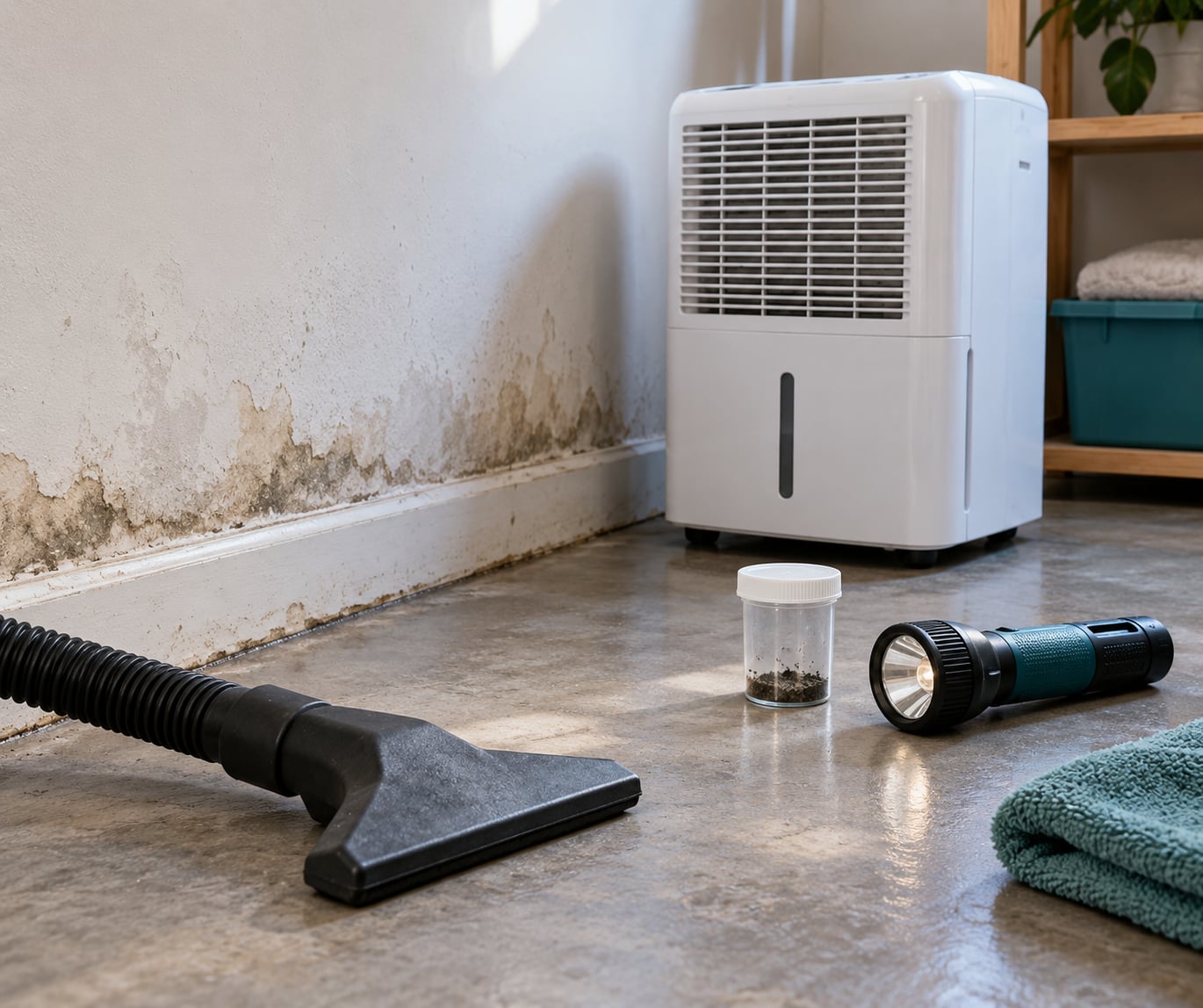
- A flashlight and a magnifying glass or hand lens. Most of what people catch is too small to identify without one.
- A vacuum with a hose attachment. The single most effective tool in this whole job.
- A digital hygrometer. Cheap enough that guessing is pointless. Put one in the affected room and read the actual number.
- A dehumidifier or a box fan. Essential for basements, crawl spaces and post-rain periods.
- Cleaning supplies. All-purpose cleaner, a stiff brush for baseboards and grout lines, and a bucket you can seal wet debris into.
- Food-grade diatomaceous earth. Only the food-grade kind. Pool grade is a different product and is not treated the same way.
- Caulk, mesh or steel wool, and door sweeps. For sealing entry points later.
- Small sealed containers or a plastic bag. So you can capture a specimen instead of guessing what it is.
Step-by-Step
Step 1: Confirm springtails and find their source
Springtails are 1-2 mm long, wingless, usually white, gray or mottled, and they jump when they land. The jump comes from a forked appendage tucked under the abdomen called a furcula, which snaps into the ground and launches them. If what you are seeing moves in smooth flight or on a wall, it is something else.
People constantly mistake them for fleas, and the confusion drives most of the panic in these threads. Fleas are dark, wingless, roughly 1-3 mm, they do not jump more than a few inches, and they bite. Springtails are pale, they jump a foot or more across a room, and they do not bite. Bed bugs are wider than they are long and roughly 5 mm. Fungus gnats are true flies with wings, about the same size, and they hover rather than hop.
Once you are confident, work backwards from where you saw them. Check the bathroom floor and shower pan, the underside of the kitchen sink and the P-trap, the base of houseplant pots, window sills and door jambs, and the lowest corner of a basement or garage.
Look for the water, not the insects. A dripping supply line, a failed sump pump, a cracked sewer lateral, an outdoor hose bib left open all winter, a shower pan with a soft spot, or a plant pot sitting in a saucer of water will all do it. One r/pestcontrol user cleared an entire outdoor problem simply by pulling mulch back off the foundation, which told them where the damp was coming from.
Step 2: Reduce moisture where they appear
This is the step that actually ends the problem, and it is the one people skip. Springtails lose water through their exoskeleton and cannot survive in dry air. Below roughly 50% relative humidity they dehydrate and die within days.
- Run a dehumidifier in the affected room and set it to pull the reading down. A basement is where this earns its keep.
- Run the bathroom exhaust fan during and for 20-30 minutes after every shower. If the fan is quiet or the duct is disconnected, that is a finding.
- Fix the leak you found. Bucket and towel is a stopgap, not a repair.
- Move houseplants away from the affected wall, and let the top 1-2 inches of potting soil dry between waterings.
- Replace wet towels, bath mats and area rugs. Do not just move them somewhere else damp.
- Run a box fan across a damp crawl space or garage after rain, pointed at the dry side.
Check the hygrometer the next day. If the room still reads above 55%, keep going. Spraying into a room that sits at 70% RH is throwing money away.
Step 3: How to get rid of springtails you can see and their hiding places
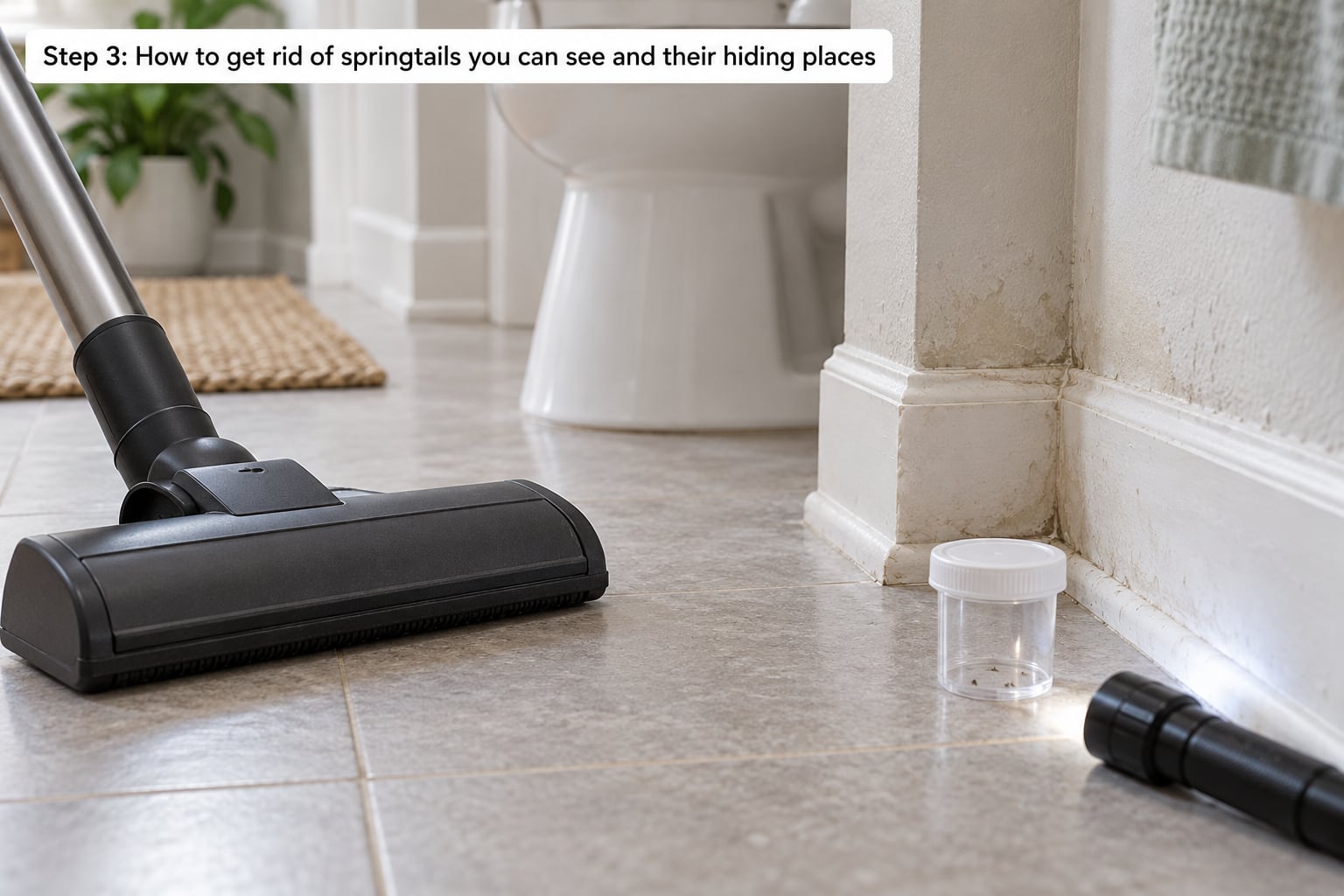
Once the room is drying, physically remove what is there. Vacuum baseboards, the edge of flooring, under cabinets, window sills, the shower pan curb and around plant pots. Seal the vacuum bag or canister and take it out immediately, because the live ones inside it will not stay put.
Wipe down hard surfaces with soapy water, then follow with a vinegar and dish soap solution in a spray bottle if you want something for visible clusters. Wipe them out of the cracks of baseboards and grout with a stiff brush. Wash out sink drains and clean the P-trap, and remember that springtails breed in the damp void around the drain pipe rather than inside the PVC, which is why pouring bleach down the drain does nothing useful.
Lightly dust food-grade diatomaceous earth along baseboards, in cracks and under appliances. It works by abrading the exoskeleton, so it needs dry contact for 24-48 hours and it stops working entirely once it gets damp. Keep it away from children and pets while it is down.
Step 4: Seal entry points and outdoor sources
Springtails are tiny and arrive in damp air and on damp soil. Give them fewer roads in.
- Add door sweeps to exterior doors and weatherstripping around door jambs and the garage entry.
- Caulk gaps around plumbing penetrations, foundation cracks and where siding meets trim. Do not seal the weep holes at the bottom of siding. Those drain the wall and blocking them causes rot.
- Check the crawl space. A torn or missing ground vapor barrier over bare soil is one of the most common reasons people say springtails keep coming back.
- Pull mulch and landscaping beds back 12-24 inches off the foundation and make sure the ground slopes away from the house.
- Stir compost and leaf litter away from the siding, and fix any exterior hose bib that drips.
Step 5: Monitor the home and escalate only if needed
Put a couple of sticky traps in the affected rooms. They are a cheap way to tell whether the population is still there after a week, and they double as a catch method in a bathroom.
Once the water is gone, expect the visible population to fall away within three to five days. If it has not dropped by day five, the moisture is not gone. Go back to Step 1.
Call a professional if you cannot find the water source, if the affected area is inside a wall, under the subfloor or in a crawl space, if there is actual rot in wood, or if there are other signs of pests such as carpenter ant frass or mud tubes. Springtails themselves never damage structure, but they are reliable indicators of damp, and damp is worth fixing on its own terms.
Common Mistakes
Spraying first and fixing moisture later. Contact sprays kill what they hit. The population comes back because the conditions never changed.
Using foggers or bug bombs. They do not reach springtails, which live in cracks, on surfaces and in soil, and they leave pesticide residue in every room of the house.
Pouring bleach down the drain. The water is in the wall void around the pipe, not in the pipe. Clean the trap and fix the moisture instead.
Leaving the moisture in place after sealing gaps. Exclusion without drying just traps the population indoors until it disperses on its own.
Assuming every small jumping insect is a springtail. If you see bites, go up the ladder to fleas, bed bugs and mites. Treating springtails will not help you and it will delay finding the real problem.
Dousing houseplant soil with pesticide. It kills the springtails along with everything else living in that pot, and it usually makes the conditions worse. Let the top inch or two dry and repot into a better-draining mix.
Using concentrated essential oils. Lemongrass and cedar are popular household deterrents, but undiluted essential oils are toxic to cats and dogs. Never apply them near an animal that grooms itself.
Frequently Asked Questions
Do springtails bite people or damage the home?
No. Springtails have no biting or chewing mouthparts aimed at people, and they do not bite, sting or burrow. They also do not damage wood, drywall, insulation, books or fabric. Their only real effect on a home is as a signal: where you find them, there is damp. That signal is worth taking seriously, because the same moisture that draws them in can grow mold and rot wood over time, but the insects themselves cause nothing.
Why am I suddenly seeing springtails indoors?
Usually because the moisture balance changed, not because anything new moved in. Common triggers include heavy rain raising outdoor humidity, a sump pump that failed or a pipe that started dripping, rain-soaked framing in a new build, a shower pan with a soft spot, a plant pot sitting in water, a laundry dryer vent or hose bib that discharges against the foundation, or a crawl space with a torn vapor barrier. Find what changed and the insects follow.
What is the fastest way to reduce springtails in a house?
Drop the humidity, then remove what is visible. Run a dehumidifier and exhaust fans until a hygrometer in the affected room reads under 50% relative humidity, then vacuum baseboards, sills, under-cabinets and the shower pan curb. Most people see the visible population collapse within three to five days once the room stops being damp. Contact spray on visible clusters buys you an afternoon, not a fix.
Are springtails a sign of a serious pest problem?
They are an indicator pest, which means they point at a condition rather than causing a problem themselves. Damp wood on a sill or a floor joist can invite carpenter ants, and sustained moisture can produce mold and rot. So the sighting deserves a look at the structure around it, especially in a basement or crawl space. But springtails on their own do not mean you have termites, carpenter ants or an unsanitary home.
Do sprays or foggers get rid of springtails?
Foggers are the wrong tool entirely. Springtails live in cracks, on damp surfaces and in potting soil, all of which a fogger cannot reach, and the residue is left behind for people and pets to breathe. Insecticidal soap or a vinegar and dish soap spray will kill springtails it actually touches, which helps with a visible cluster on a surface. Treating individuals only works when the moisture that is producing them is removed at the same time.
When should I call a pest control professional about springtails?
Call someone when the water source is out of reach or out of sight: inside a wall cavity, under the subfloor, in a crawl space or in an unfinished basement. Also call if you see rot in wood, carpenter ant frass, mud tubes along a foundation, or evidence of termites, since springtails can reveal damp that supports larger pests. If you rent, your landlord is responsible for structural moisture, and it is worth having it documented in writing before you spend anything on equipment.
Conclusion
Start with the room where you see them. Find the water, dry the room below 50% relative humidity and remove what is there, then seal the gaps and watch for three to five days. If the count does not drop after five dry days, the moisture source is still there, and that is worth finding before anything else.