To get rid of silverfish in a bathroom, cut the moisture first, then clear out cardboard and paper, seal the gaps around pipes and drains, and only reach for traps or a labeled insect product once the room no longer suits them. Silverfish need sustained humidity to breed, so a bathroom that dries out between showers loses the one thing they came for.
Most bathroom infestations are solved in a weekend and a bathroom of average size. Silverfish never bite, they do not carry disease, and they are not a sign of a dirty home, so this is an annoyance rather than a health emergency.
What You Need
The first half of this plan is drying and exclusion, not spraying. Gather these before you start.
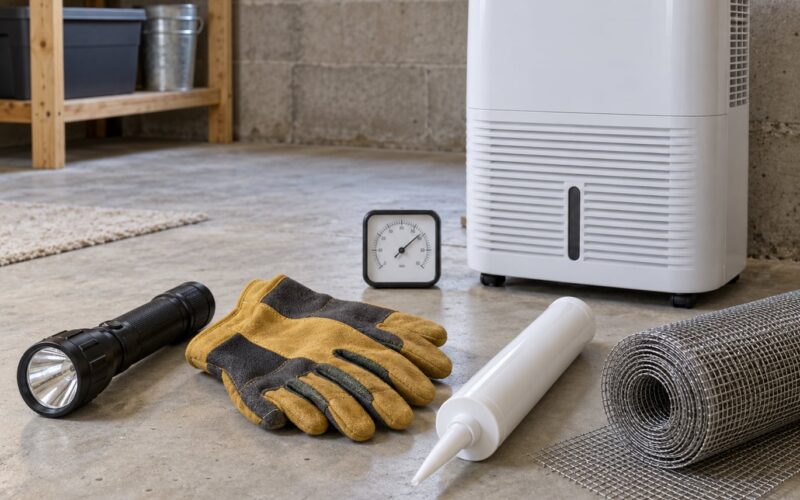
- A flashlight for night inspections, when silverfish are most active and easiest to spot.
- Gloves, a small container with a lid, and a stiff brush or a vacuum with a crevice attachment.
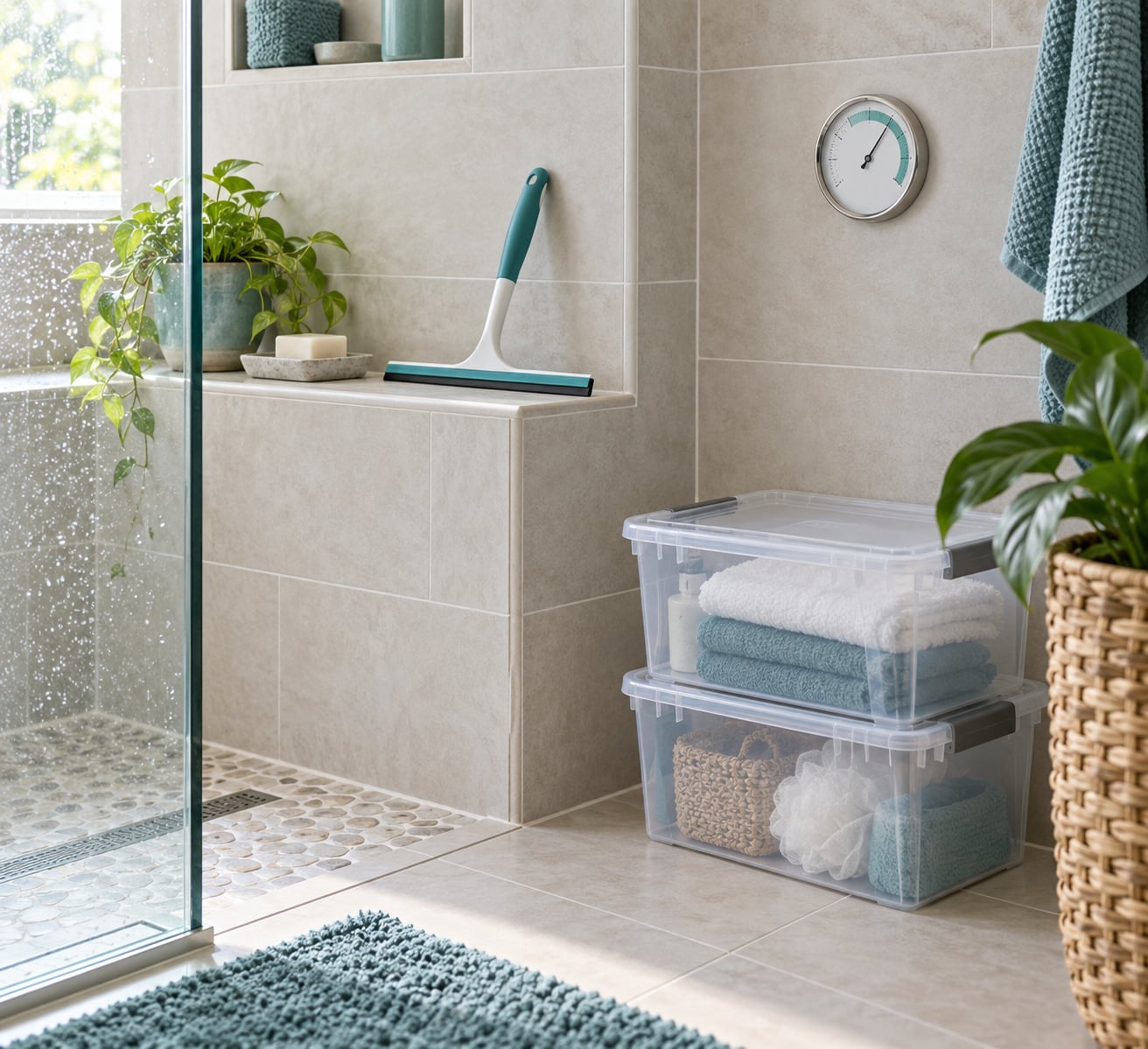
- Sealed plastic storage bins to replace any cardboard boxes under the sink.
- Silicone sealant or acrylic caulk, plus copper mesh for larger openings around pipes.
- A squeegee, microfiber cloths, and a mop you use only on wet bathroom floors.
- A hygrometer, the cheap dial kind is fine, to measure humidity before you spend money on anything else.
- Optional: sticky traps, gel bait stations, or a labeled indoor insecticide for cracks and crevices.
A bottle of isopropyl alcohol and a paper towel handle the kill-and-dispose step once you catch one. Skip the foggers; more on that below.
Step-by-Step: How to Get Rid of Silverfish in a Bathroom
Work through the six steps in order. Each one changes the conditions silverfish need, and each one leaves you with a way to check whether it worked.
1. Confirm silverfish activity and locate hiding places
Silverfish are small, wingless, silvery-grey insects, usually under half an inch long, with a tapered body, long antennae, and three tail filaments. They dart away from light in quick bursts, which is why most people only notice them at night or right after a shower when they leave the pipes.
Check baseboards, under the sink, inside wall and tile cracks, behind the toilet, along the tub and shower edge, and around damp corners. A flashlight inspection after a shower or late at night is the accepted way to confirm they are living there rather than wandering in from a neighbouring unit.
How to tell this worked: you have found shed skins, small pepper-grain droppings, or pale egg cases. Their presence confirms breeding inside the room, which means you have time to fix conditions rather than one lone insect wandering past.
2. Reduce bathroom moisture
Silverfish need roughly 75% relative humidity or more to breed well, and they start to struggle as the air dries. Aim to hold your bathroom under 60%, ideally under 50%. Put the hygrometer on the wall near the tub, not in the corner on the floor where readings run high, and read it in the morning before anyone showers.
Repair a dripping faucet or a running toilet, dry wet tile and shower walls with a squeegee after each use, and wipe the underside of the sink cabinet dry. Run the exhaust fan during the shower and for 20 minutes after you finish. Leave the bathroom door open to the drier part of the home while the fan clears it.
Hang wet towels on a rack that spreads them out rather than folded in a damp heap, and empty the bath mat onto a hook to dry. In a basement or ground-floor bathroom with no fan, a small dehumidifier set to pull the room down toward 50% does more than any spray you can buy.
How to tell this worked: the hygrometer reads 50-60% and stays there. Sightings that used to follow every shower should stop within a week or so.
3. Remove food, paper, and clutter
Silverfish feed on carbohydrates, starches, cellulose, and glue. In a bathroom that means towels, tissues, cardboard boxes, wallpaper paste, book bindings, paper packaging, and pet food or litter stored in the room.
Empty the vanity and the cabinet under the sink, then move everything into sealed plastic bins. Get rid of cardboard entirely rather than just relocating it; it is the single most-repeated recommendation in homeowner reports about this pest, because the glue on the flutes is exactly what they eat. Keep paper products in a closed bin, take trash out regularly, and store pet food and cat litter in a lidded container outside the bathroom if you can.
Cut a little breathing room around the outside of the vanity and along baseboards so you can inspect them later. Clutter is what turns a small sighting into an infestation you cannot find the end of.
How to tell this worked: you can run a hand along every surface in the cabinet without pulling anything out first.
4. Seal cracks and entry points
This is the step most people skip, and it is the step that explains why bugs keep coming back after a spray. Silverfish live inside wall voids, pipe chases, and drain systems, not on the surface you were aiming at. People on homeowner forums repeatedly describe treating baseboards and then seeing the same insects appear again near the sink days later.
Work around the room in this order:
- Pipe penetrations under the sink and behind the toilet. Fill the gap with silicone, and push copper mesh into any opening wider than a pencil before sealing.
- The tub and shower edge, where old caulk has pulled away from the tile.
- Baseboard gaps along walls, especially where the board meets the floor and at outside corners.
- Drain and overflow openings. Put a strainer or drain cover over the sink and tub drains, and check that the P-trap under the sink is fully assembled with no loose slip nut.
- Wall joints, towel-rail fixings, and any gap where drywall meets the tub surround.
Ventilation grilles and any opening in a ground-floor or basement bathroom are worth a close look too. In apartments, they often come through the shared stack from a neighbouring unit, which is why sealing your own gaps still matters.
How to tell this worked: run a flashlight along the baseboards after dark. You should see no gaps you could slide a coin into.
5. Vacuum, clean, and monitor the bathroom
Vacuum behind the toilet, along baseboards, in the vanity corners, and around pipe penetrations. The nozzle crevice attachment gets into the tight spots, and the suction removes eggs as well as adults. Empty the canister or bag outdoors straight away so nothing captured inside can walk back in.
Wipe surfaces to remove the food film, especially under the sink and along the backsplash where crumbs and toothpaste collect. Then watch for a week or two instead of spraying and hoping. Two sticky traps under the sink and behind the toilet tell you where the activity is, because the trap that catches insects is the trap you want to keep in place.
How to tell this worked: traps stay empty and you go two weeks without a sighting. You are not seeing every last individual at that point; you are seeing that the room is no longer producing new ones.
6. Use a targeted pest control product only if needed
If sightings continue after the moisture, food, and sealing work is done, use a product labelled for indoor use in a bathroom. Aerosols work best sprayed directly into cracks, baseboard gaps, and along pipe penetrations rather than sprayed across open surfaces, where they land on the floor and do nothing. Gel bait stations placed in the vanity, behind the toilet, and under the sink are often better in a bathroom because the bait is carried back to where the rest of the population is living.
Follow the label exactly, and treat the label as the instruction manual rather than a suggestion. Keep children and pets out of the bathroom until the product has dried and the room has been aired out, which is why gel bait in an enclosed cabinet is easier to live with than an aerosol sprayed in a small room where someone just showered.
Be honest about what does not work. Foggers and total-release sprays cannot reach silverfish inside walls or drains and are not registered for this job. Cedar blocks, cedar balls, citrus peels, and essential oils smell pleasant but do not kill anything, at best they push activity away from one spot to another. Household disinfectants such as Lysol will not kill them either; they survive contact and keep moving. Boric acid and diatomaceous earth do work when dusted thinly and evenly into dry cracks, crevices, and under appliances, but both need to be kept out of reach of pets, and diatomaceous earth has to stay dry to be effective.
How to tell this worked: bait stations get picked over and need replacing. That is the signal the population is declining.
Common Mistakes to Avoid When You Get Rid of Silverfish
- Spraying without fixing the moisture. You kill the ones you can see and the room goes right back to producing more. Fix the humidity first, treat second.
- Using a fogger or total-release bomb. It fills the air with pesticide that lands on surfaces and does nothing to insects living in walls, pipe chases, or drains. It also leaves a residue in a room where people breathe.
- Killing the one you saw and calling it done. A single sighting can mean one insect or a breeding population. Look for shed skins, droppings, and egg cases to tell the difference.
- Cleaning without removing the attractants. Wiping a surface does nothing while a cardboard box full of paper glue sits under the sink feeding them.
- Sealing only the big obvious gaps. The coin-sized holes around pipes and the pull-back in the tub caulk line are the ones that matter.
- Mixing pest-control products or spraying near an open toilet or sink. Never combine products, and never spray where runoff can reach a drain or where a child or pet might still be in the room.
- Reading one insect as a severe infestation. Silverfish are common indoors in many homes, especially older buildings and ground-floor bathrooms. Frequency and location matter more than a count.
To keep them out afterwards, keep the humidity number low, keep cardboard out of the bathroom, store paper products in sealed bins, dry towels fully between uses, and re-check the pipe gaps each season. That is the whole maintenance routine.
Frequently Asked Questions
What do silverfish in a bathroom look like?
They are small wingless insects, usually under half an inch, with a metallic silver-grey or pale banded body, long antennae, and three tail filaments at the end of the abdomen. They move fast in short bursts and immediately run away from light, which is why most people spot them at night or right after a shower. Shed skins and small pepper-grain droppings near baseboards often tell you they have been living there rather than passing through.
Do silverfish bite people or pets?
No. Silverfish are not biting or stinging insects and they do not feed on blood or skin, so neither adults nor pets get bitten. What they do chew is paper, book bindings, wallpaper paste, cardboard glue, and natural fabrics. In a bathroom that damage usually shows on cardboard packaging, towels stored for a long time, or documents kept in a drawer.
Why am I seeing silverfish in my bathroom?
Bathrooms give them everything they need in one room: steady humidity, dark sheltered cracks, and starchy materials to eat. Sightings spike right after a shower because the humidity jumps and the insects come out of the wall voids and pipes to move around. If you see them in the bathroom and nowhere else in the home, that usually points at local conditions rather than a whole-house infestation.
How long does it take to get rid of silverfish?
Expect fewer sightings within one to two weeks of drying the room out and removing cardboard, and a full clear-out in roughly four to eight weeks because the life cycle runs one to two years. The speed depends almost entirely on humidity. If the hygrometer stays under 60%, they stop breeding and the population collapses on its own; if it stays high, treatment alone will not hold.
Are silverfish dangerous to children or pets?
The insects themselves pose no health risk to either. They do not sting, bite, or carry disease. The caution is with the products used to treat them, so keep children and pets out of the bathroom until any spray has dried and the room has been aired out. Boric acid and diatomaceous earth are low-toxicity but should still be stored sealed and away from anything curious enough to lick a floor.
Conclusion
Start with the hygrometer. Read the bathroom in the morning, fix anything pushing it above 60%, get the cardboard out from under the sink, and seal the pipe gaps and the tub caulk line. That is how to get rid of silverfish in a bathroom for good, and it costs less than a single can of spray.
Most bathroom problems settle once the room stops being a good place to breed. If you are still seeing several a week after two or three weeks of dry, clear, and sealed, call a pest professional and ask them to check the shared walls and drain stack, because at that point the entry route is somewhere you cannot reach from the inside.