The easy way to remove a wasp nest from under eaves is to find the single gap the wasps use, treat that gap at dusk with a long-stream wasp aerosol while you stay on the ground, and seal the gap once the colony is inactive. The whole job takes about 20 minutes of treatment plus a week of waiting, and no ladder is needed if the nest is within reach of a spray stream.
That method only works on a small, reachable nest with no allergy risk in the household. A nest inside a boxed-in soffit void, one above a doorway, or anything you cannot reach from the lawn is a job for a licensed pest professional. Updated for 2026, this guide covers both paths so you can tell quickly which one you are looking at.
Table of Contents
- What You Need
- Step-by-Step: How to Remove a Wasp Nest from Under Eaves
- 1. Identify the insect and inspect the nest from a safe distance
- 2. Decide whether the nest is active and whether DIY removal is safe
- 3. Protect yourself and prepare the removal area
- 4. Treat the nest at the right time of day
- 5. Remove the emptied nest and inspect the eave
- 6. Prevent wasps from rebuilding near the eaves
- Common Mistakes
- Frequently Asked Questions
- Conclusion
What You Need
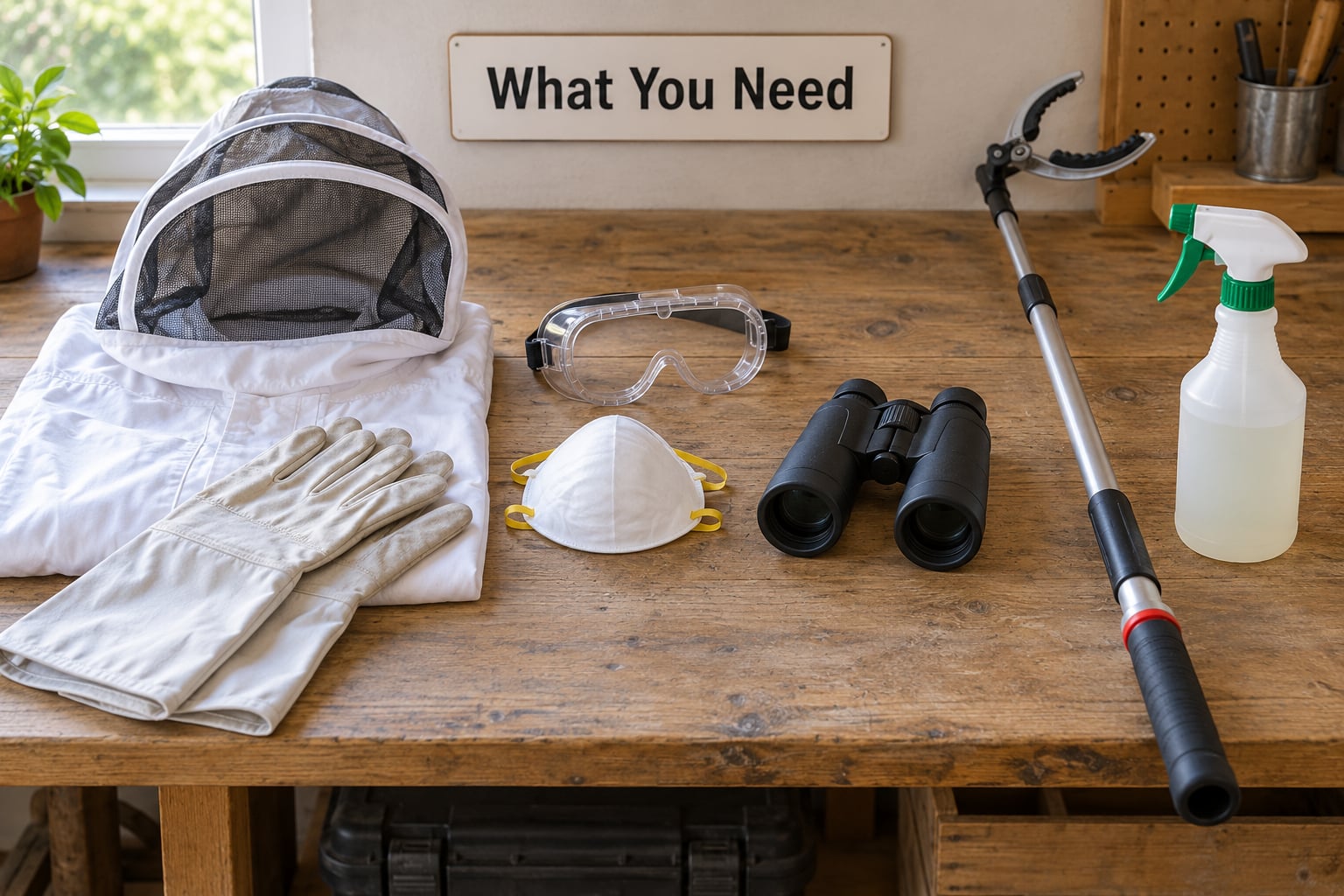
Most of the kit is ordinary household and safety gear. What you cannot improvise is clear access to the entry point, and a decision about whether the nest is in your range.
- Protective clothing: closed-toe shoes, long sleeves, long trousers, eye protection and thin work gloves.
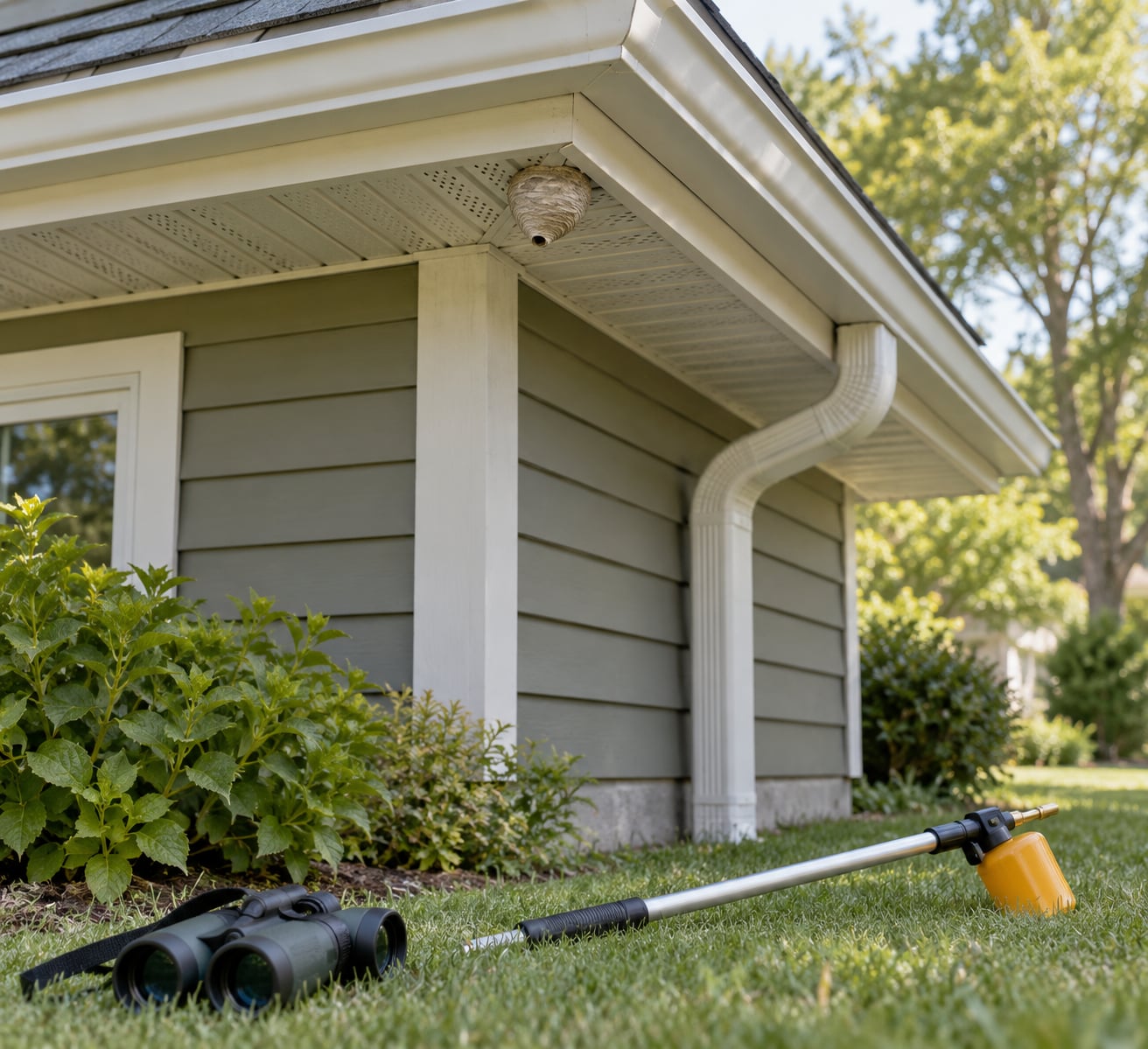
- Observation tools: binoculars or your phone camera zoom, plus a flashlight for the soffit joints.
- Treatment product: an insecticide labeled for wasps, with either a long aerosol stream or a dust applicator.
- Sealing supplies: paintable exterior sealant or caulk, plus metal mesh or steel wool for wider gaps.
- Containment: a large bin bag and a dust sheet for nest debris that falls after treatment.
Skip scented products before you go out. Perfume, scented sunscreen, sweet drinks and even floral-smelling cleaning products draw foraging wasps toward whoever is carrying them.
Before buying anything, assess four conditions honestly. Call a pest professional instead if the nest sits above about 20 feet, if it is inside the soffit void rather than hanging in open air, if you have found more than one nest, or if anyone in the home has a known wasp or bee allergy.
Step-by-Step: How to Remove a Wasp Nest from Under Eaves
1. Identify the insect and inspect the nest from a safe distance
Confirm what you are dealing with before you spend money. Wasps, carpenter bees and honey bees all turn up in eaves, and killing the wrong one wastes a treatment while costing you a protected colony or a repair bill.
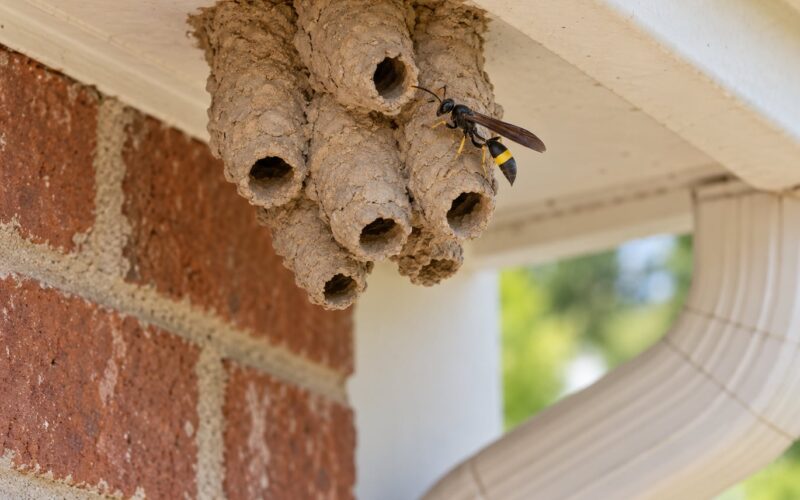
- Paper wasp or yellowjacket: slim body, long dangling legs, narrow waist, and a tan or grey paper envelope nest. Treat it or leave it based on size and location.
- Carpenter bee: larger, stockier, shiny black with a yellow face, boring a round hole into bare timber. Leave the hole alone; wood repair, not pesticide, is the fix.
- Honey bee: fuzzy, amber-brown, moving as a steady crowd, with the smell and shape of honeycomb. Do not kill it; contact a local beekeeper or apiary.
- Bald-faced hornet: large, black and white face, grey paper nest, often high up or in a tree. Treat from the ground if it is reachable, otherwise call a pro.
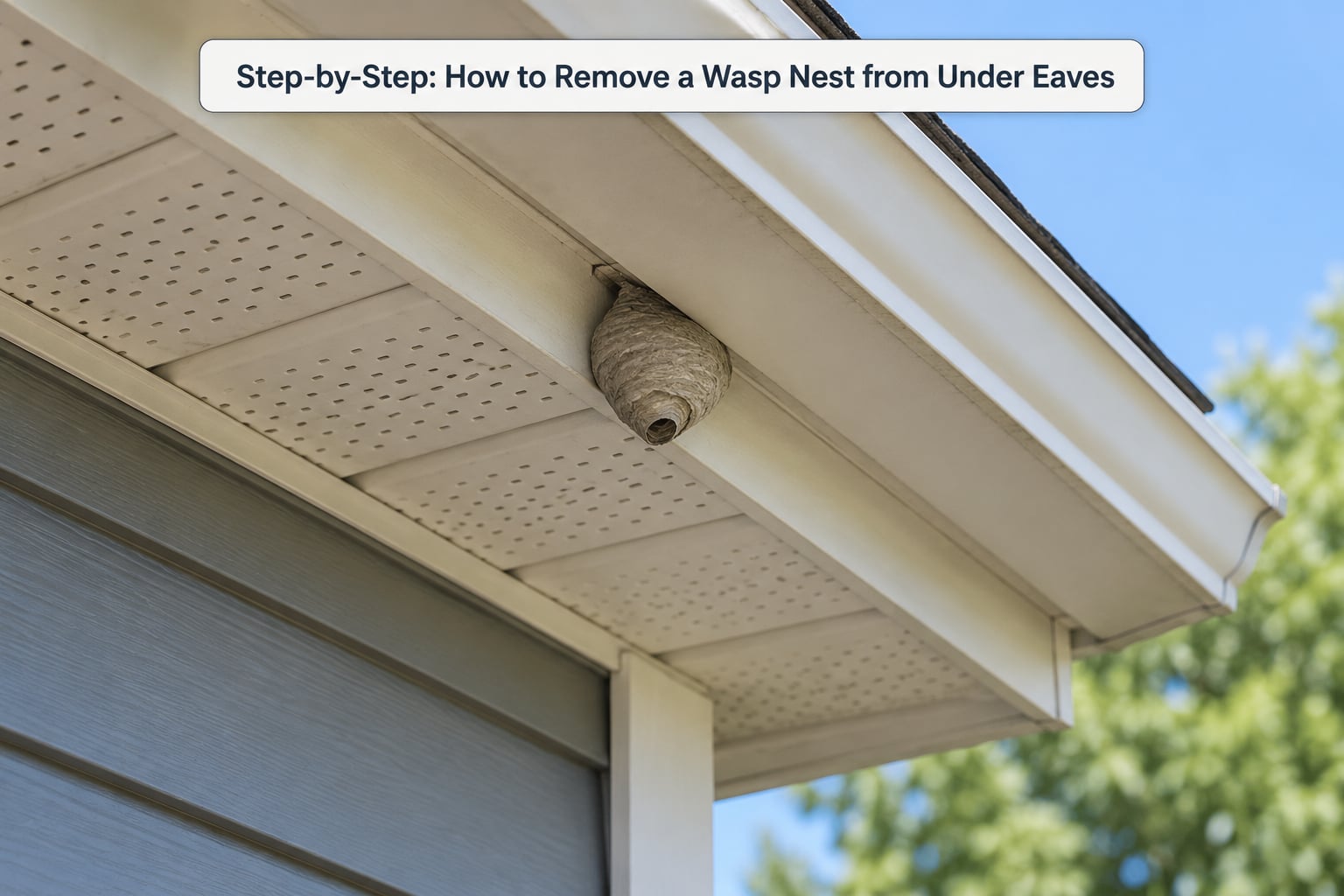
Then find the entry point by watching, not climbing. Stand back at least 15 feet and watch the eave line for two or three minutes. A soffit nest gives itself away as a steady stream of wasps arriving and leaving one specific spot, usually a soffit vent, the corner where the soffit meets the fascia, or a gap where the soffit meets the wall.
Match what you see to a likely gap:
- Wasps converging on a grille or louvre: an open soffit vent. Look for worn paper or traffic stains around the vent frame.
- Traffic at an outside corner: the fascia-to-soffit junction. Shine a flashlight up into the joint from a step stool, never a ladder.
- Wasps under the gutter line: a soffit-to-wall gap or a failed gutter clip. Follow the trail with your eyes, then check the gap width with a ruler.
- Activity above a bay window: the flat-roof junction where the bay meets the wall. Check the small triangular gap on each side.
- Wasps near a light fixture or vent grille: a second, satellite nest inside the void. Check every fixture and grille in the same soffit run, not just the first one you found.
That last one is the mistake almost everyone makes. Job that ignores satellite nests comes back in two weeks, because the second nest was sitting behind a light fixture the whole time.
2. Decide whether the nest is active and whether DIY removal is safe
An active nest has traffic at the entrance, fresh pale paper at the opening, and a low defensive buzz when you stand a few feet back. An inactive nest is grey weathered paper, silent, and often empty, because most colonies die off naturally by the end of the season in much of the US.
Use the community rule of thumb for the DIY ceiling: about tennis-ball size, four inches or smaller. Anything larger means a bigger colony, more foragers, and a nest heavy enough to drop debris on you when it comes down.
Then check reach and risk together. If a long aerosol stream reaches the gap from the lawn, you are in range. If not, the answer is not a taller ladder, it is a professional with lift equipment.
3. Protect yourself and prepare the removal area
Clear the ground below the nest before you start. Move bins, toys, drying laundry, pet water bowls and anything a wasp might investigate, then bring children and pets indoors and shut the nearest doors.
Wear the gear listed above, keep a clear route away from the nest, and decide your exit before you spray. Wasps can coordinate attacks and sting repeatedly, unlike honey bees, so getting cornered with no way out is the scenario to design against.
Keep out of the picture entirely if someone in the house has a known allergy, or if the nest is over a walkway, a door you need to use, or a play area.
4. Treat the nest at the right time of day
Dusk and early evening are the usual choice because returning foragers are slower to react and the spray has time to work before they reach the opening. Early morning on a cool day is the other option people report working well for knocking down a half-built nest with no stings at all.
Read the product label before you pick a time, because the label is the legal instruction, not a suggestion. Labels specify the pests, the sites, the dose and often the time of day, and no single treatment suits every nest. Use the product exactly as its label describes and nothing else.
Apply from the ground, standing upwind, aiming into the entry gap rather than at the whole nest. If the paper envelope hangs in open air, a mist that coats the surface is enough. If the gap disappears into the soffit, a jet that reaches 20 to 30 feet does the job, and an insecticide dust works for people who prefer powder because returning wasps carry treated particles back inside.
5. Remove the emptied nest and inspect the eave
Wait the period the label specifies before touching anything. Wasps are often inactive within a few hours, but a colony inside a protected void can keep working longer, and poking a living nest is how people get stung on the one day they meant to be safe.
Check for stragglers with the flashlight from the ground, then remove the dead nest with a long pole, gloves and a bin bag. Put the dust sheet down first, because a nest the size of a football comes down in one piece and it lands straight down.
Walk the whole eave run while you are there. Check other soffit voids, gutter-line gaps, every light fixture and any grille on the same run, because secondary nests are common and they are the reason a treated eave goes quiet for two weeks and then starts up again.
6. Prevent wasps from rebuilding near the eaves
Seal the gap, but only after the colony is confirmed dead. Fill it with exterior sealant and back it with metal mesh or steel wool if the gap is wide enough to squeeze through, then paint or stain to match once the sealant cures.
Do not block ventilation to solve a wasp problem. Vented soffits exist to move moisture out of the roof, and sealing them traps water in the rafters. Use vent covers designed to exclude wasps and keep the airflow path open.
Cut the other things that make an eave attractive: remove standing water, clear fallen fruit and pet waste near the eaves line, and cover garbage bins. Then watch the same spot from the lawn every week in spring. A queen scouting is a single wasp patrolling the area for several minutes, and catching that early means a much smaller nest the following month.
Common Mistakes
Spraying from directly underneath
This is the most common way people get stung, and the mistake with the clearest fix. Wasps leave a nest pointing downward, so anyone working from a ladder ends up standing in the flight path with no way to back off quickly. Move sideways, stand upwind, and treat from as far back as your reach allows.
Pulling an active nest down by hand
Even a small nest handled bare-handed will defend itself. Professionals knock down only inactive nests and treat active ones first. Follow that order.
Climbing an unsupported ladder for a better angle
A fall puts you in a worse position than the wasps ever would. A ladder plus an aerosol plus an agitated colony is a three-part problem. If the gap is out of stream reach, call someone with lift equipment.
Using an off-label product or a household chemical
WD-40 and similar products are not labeled insecticides and carry no residual. They coat and suffocate on contact, which tells you nothing about a colony inside a void. Use a product labeled for wasps and follow its directions.
Sealing everything shut in the soffit
Blocking a vent to stop a queen entering can trap moisture in the roof structure. Exclude wasps with mesh and vent covers, and keep the airflow path exactly where it was.
Treating a bee nest as a wasp nest
Carpenter bee holes in cedar eaves look exactly like a wasp entry until you look at the insect. Honey bee colonies are protected by most local rules, and killing one costs the pollination and can bring a swarming complaint. Identify first, then treat.
If you are stung during any of this, wash the area, use a cold pack, and watch for anything beyond local swelling. Trouble breathing, swelling of the tongue or throat, widespread hives or dizziness is an emergency, and antihistamines are not a substitute for emergency care.
Frequently Asked Questions
Is it safe to remove a wasp nest under eaves at night, and what time of day is best?
Dusk or early evening is the usual answer because returning foragers react slowly and the treatment has time to work before they reach the opening. A cool early morning works well on a half-built nest too. Treat from the ground, stand upwind, and check your product label first, because the label sets the legal time of day. Never spray from a ladder.
What kills a wasp nest immediately, spray or powder?
A labelled aerosol with a long stream is the fastest option for a nest you can reach, and a 20 to 30 foot jet usually covers a soffit gap from the lawn. An insecticide dust works better when the nest sits deeper inside the void than the visible hole, because returning foragers carry treated particles back in. Choose based on where the nest actually is, not on preference.
If I remove a wasp nest under my eaves, will they come back?
They will come back to the same spot unless you close the entry point. Residual treatment wears off within weeks, and scouting queens find an open soffit gap the following spring. Kill the colony, confirm it is inactive, then seal the gap with exterior sealant and mesh, and check for satellite nests in the same soffit run.
What does WD-40 do to wasps, and does it work?
It is a lubricant and water displacer, not a labeled insecticide. It can kill a wasp by coating it, and that works on a single unlucky insect, but it leaves no residual, reaches nothing inside a soffit void and gives you no control over the colony. Use a product labeled for the pest you have and follow the label exactly.
What should I do if wasps are inside my attic?
Do not go in and do not seal the entry from the inside, because trapped wasps inside a loft is a worse problem than wasps outside it. Find the entry point from the attic hatch area, check for a connection to the soffit void, and have a licensed pest professional treat it. Wasps entering a soffit vent or a gap at the wall plate are the usual route in.
Conclusion
Start by watching from 15 feet away. Confirm it is wasps rather than carpenter bees or honey bees, find the one gap they are using, and check for a second nest in the same soffit run.
If the nest is small, within spray reach from the ground and no one in the house is allergic, treat the gap at dusk with a labeled product, wait until it is inactive, remove it and seal the entry without blocking any ventilation.
Call a licensed pest professional when height, a nest inside the soffit void, more than one nest, uncertainty about what the insect is, or any electrical or structural risk makes DIY removal unsafe. That is a short list, and it covers most of the cases where people get hurt.