Ants land in a dishwasher because they walk in through the door seal gap, the drain hose, or the space under the toe kick, and the appliance is the easiest food source in the house: a warm, damp tub with a film of grease on every surface. To learn how to get rid of ants in a dishwasher, you have to do three things in order — cut off the food, dry the interior, and go after the colony from outside the appliance. Never spray insecticide inside, because the residue transfers straight to your plates.
I have cleaned more infested dishwashers than I care to count, and the pattern is almost always the same. Somebody sprays, the ants scatter for a day, then come back worse, because the spray killed the foragers you could see and left the colony intact. A dishwasher is a symptom. The colony lives in a wall cavity, under the sink, in the crawl space, or in a neighboring apartment, and it sends scouts out every few minutes.
The good news is that most of this is a one-afternoon job if you work in the right sequence. Allow about 45 minutes for the deep clean plus another 3 to 7 days of monitoring, because bait does its real work after you stop seeing the ants.
Table of Contents
- What You Need
- Step-by-Step
- Step 1: Turn off the dishwasher and protect the food
- Step 2: Find where the ants are coming from
- Step 3: Remove dishes and scrub away food residue
- Step 4: Clean the filter, sump, and drain
- Step 5: Let the interior dry completely
- Step 6: Seal nearby entry points and remove attractants
- Step 7: Use bait carefully if ants keep returning
- Step 8: Confirm the ants are gone
- How to get rid of ants in a dishwasher for good
- Common Mistakes
- Frequently Asked Questions
- Conclusion
What You Need
Almost everything is already in your house. Pull this together before you open the door.
- Dish soap, the kind you wash dishes with. A drop in a bowl of warm water makes a contact solution that kills on contact.
- A soft nylon brush or an old toothbrush. The toothbrush is the better tool for the rubber door seal and the grooves around the spray arm.
- Rubber gloves. You are about to touch a filter that has been sitting in warm water, and nobody enjoys that.
- A flashlight. The sump is a shadow pit, and you will not see what is happening in there without one.
- A drain-cleaning tool sized for your appliance. Either a flexible drain brush or a small wet vacuum hose. Do not use a chemical drain opener.
- A wet vacuum, if you have one. It is the fastest way to pull standing water out of the sump and lower basin.
- Liquid or gel ant bait, kept in its labeled station. You may not need it tonight, but having it on hand saves a second trip.
- Your dishwasher manual. Filter removal, spray arm removal, and cleaning warnings all vary by model, and the manual settles every question.
Add food-safe silicone sealant if you already own it. If not, pick some up before you seal anything, because you want to close the gaps on the same visit.
Step-by-Step
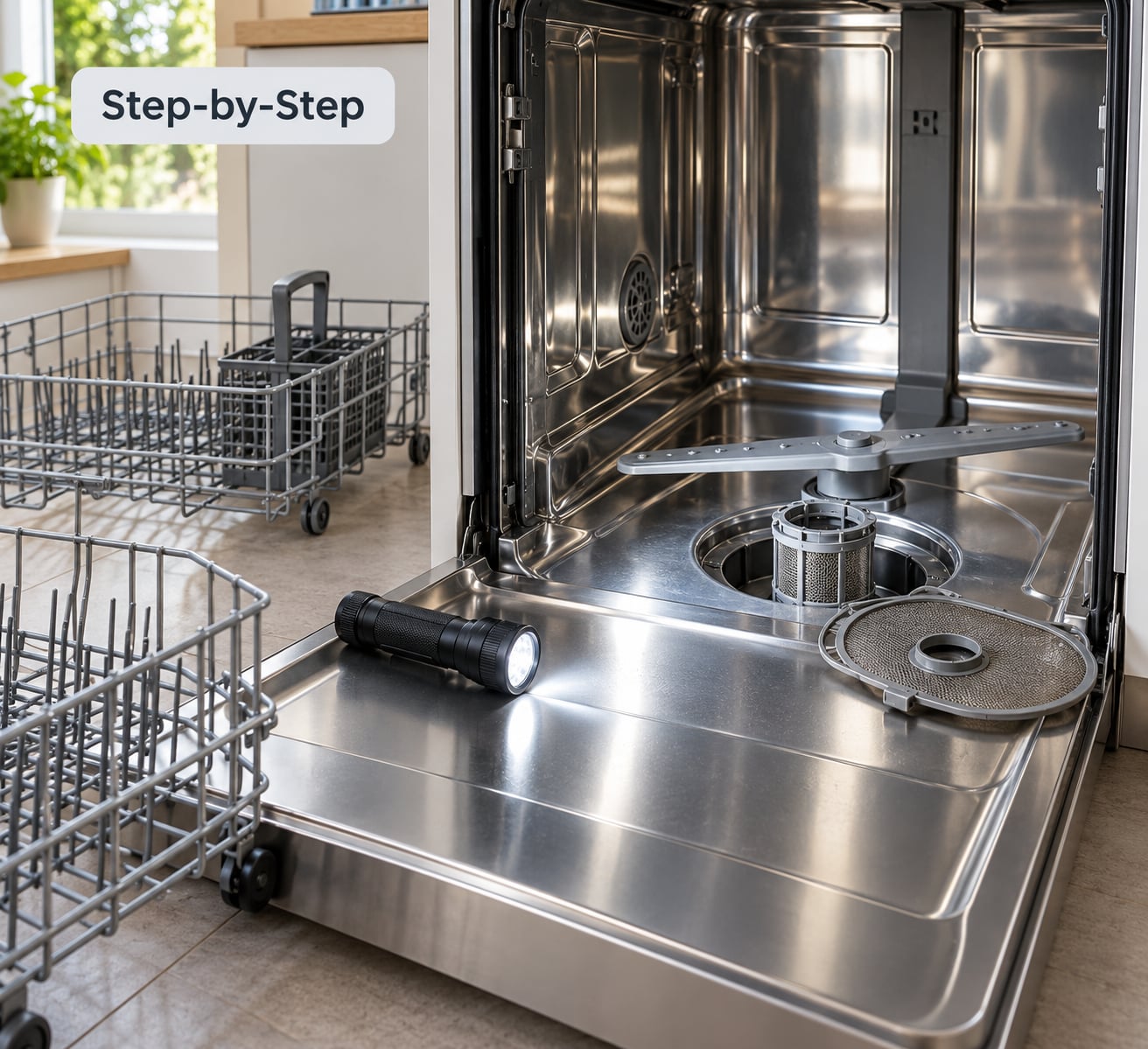
Step 1: Turn off the dishwasher and protect the food
Let the current cycle finish or cancel it at the control panel, then switch the appliance off so nothing starts while your hands are inside. If your manual allows it, cut power at the breaker for the cleanest and safest teardown.
Take every dish out and wash it by hand with hot soapy water. I am not being precious about this — the entire point of Step 1 is that nothing edible stays near the work area while you are cleaning a pest habitat.
You know it worked when: the racks are empty, the control panel is dark, and there is no food left anywhere in the kitchen.
Step 2: Find where the ants are coming from
Ants are almost never nesting inside the appliance. The dishwasher is a cafeteria; the home is somewhere else. So look for the route in rather than the nest out.
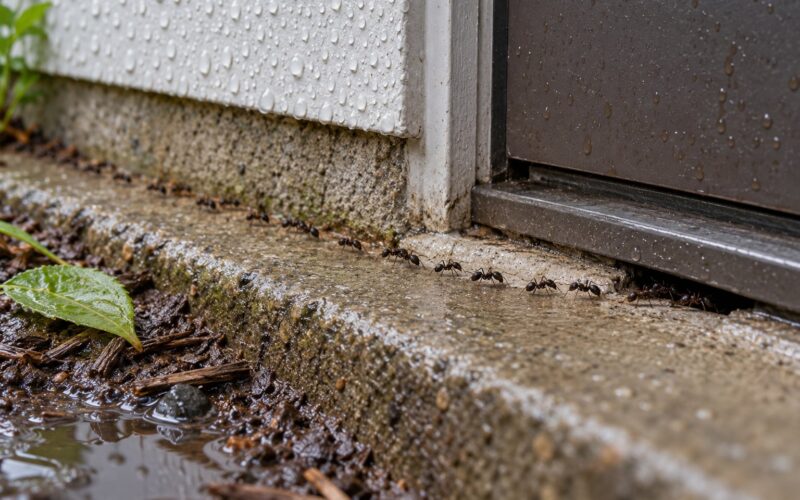
Pull the racks and check the door seal, the tub floor, the underside of the spray arm, and the area behind the appliance. Then get low with your flashlight and follow the trail outward. Look at the toe kick, the gap where the hot water line and drain hose pass through the cabinet, the baseboard behind the unit, and any crack where the floor meets the wall.
Ants use scent trails, so the busiest trail is the most useful clue. Wipe one section of it with a damp cloth and check back in an hour. Where the traffic thins out, look for a gap about 1/16 inch wide — that is the size an ant colony actually passes through.
You know it worked when: you have found one specific gap or hose penetration where the trail crosses, not just ants wandering indoors.
Step 3: Remove dishes and scrub away food residue
With the racks out, wipe down every interior surface with warm water and dish soap. Then scrub the parts that hold grease: the back wall, the tub corners, the door gasket, and the flat underside of the lower rack.
Grease film is the whole reason ants picked your machine over the neighbor’s. You do not need to strip the appliance to bare metal — you need the sheen gone. Wipe a flat surface with a paper towel afterward, and if the towel comes away greasy, keep going.
You know it worked when: a paper towel run over the tub walls comes back clean, and the door seal no longer smells greasy when you touch it.
Step 4: Clean the filter, sump, and drain
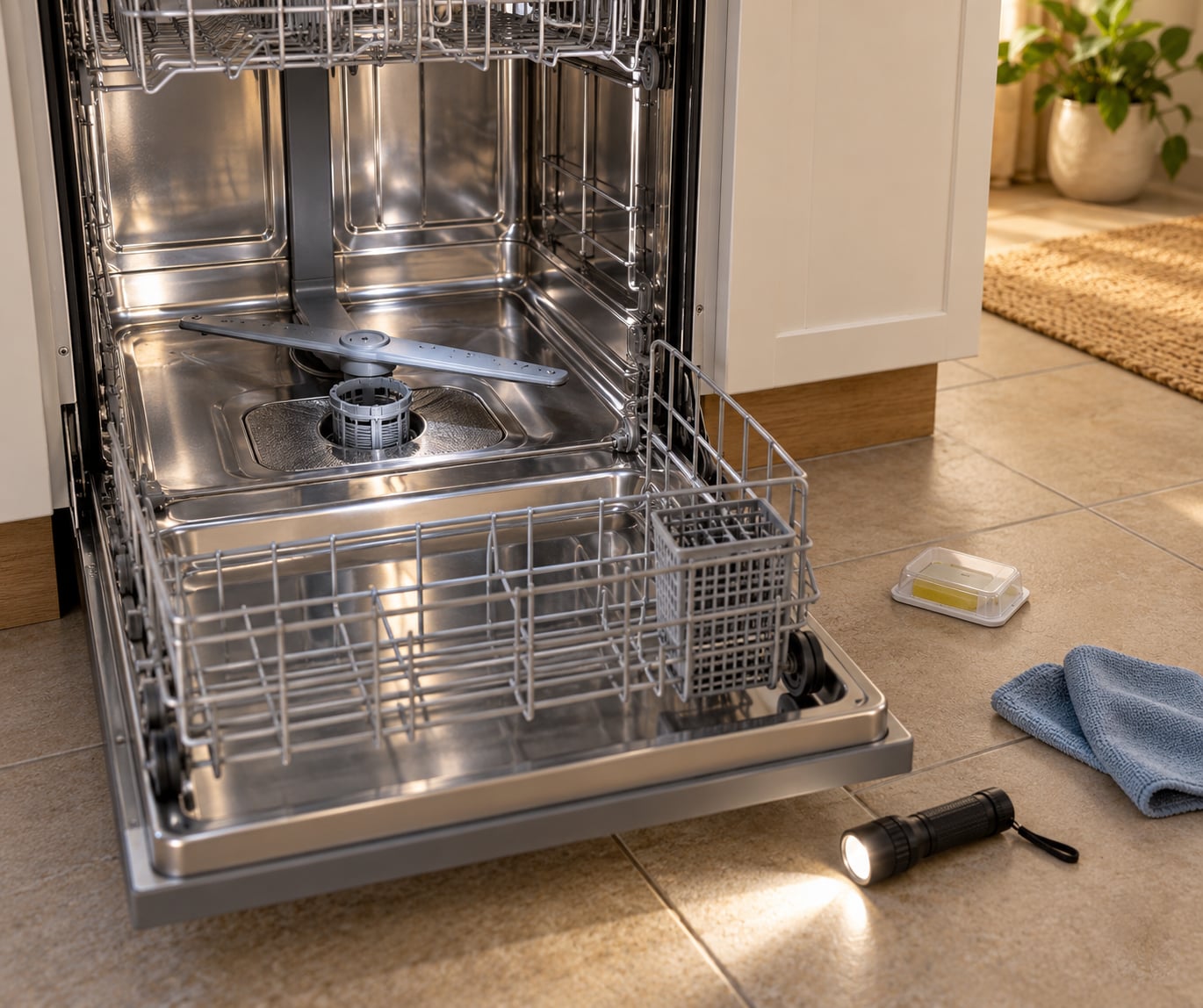
This is where most people stop short, and it is the step that decides whether the ants come back. Remove the filter according to your manual, rinse it under hot water, and work a soft brush through every mesh opening until nothing comes out.
Then attack the sump. Pull standing water with the wet vacuum, wipe the basin dry, and scrub the spray arm and the area around it. Clear debris you can reach with the drain brush — glass shards, food particles, bottle caps. Never pour bleach, ammonia, or a chemical drain opener into the dishwasher, and never use a drain snake inside the tub.
You can flush the drain hose, but do it gently. Disconnect the hose at the sink tailpiece if your manual permits, flush it with hot water, and push the last of the gunk through with a few seconds of running water.
You know it worked when: the filter looks like new, the sump is dry, and there is no debris sitting in the bottom of the tub.
Step 5: Let the interior dry completely
Leave the racks and the filter out and exposed to air, and prop the door open for several hours. Moisture is a second attractant after food, and a damp dishwasher keeps calling ants back even when the grease is gone.
If your running water is the problem, fix the leak rather than trying to out-dry it. Once everything is bone dry, rerun a short hot rinse cycle with no detergent and no dishes only if the manual permits it. Skip the detergent. A residue of it in the sump is a food source you just created yourself.
You know it worked when: you run a dry hand along the tub floor and there is no cool damp patch under your palm.
Step 6: Seal nearby entry points and remove attractants
Fill the gaps you found in Step 2 with food-safe silicone sealant. Work around the toe kick, the water line penetration, the baseboard gap, and any cabinet hinge gap facing the wall. Keep air vents and the drain line open.
Then work outward from the appliance. Wipe the floor, the cabinet toe kick, and the counter under and beside the dishwasher. Check under the sink for a leak and repair it. Make sure the garbage can has a lid and empties before it fills, and store food in sealed containers rather than the original packaging.
Sealing the gap before the food is gone locks ants in with a reason to fight their way out. Clean first, then seal.
You know it worked when: a flashlight finds no open gap wider than a pencil around the appliance, and the floor stays clean between washes.
Step 7: Use bait carefully if ants keep returning
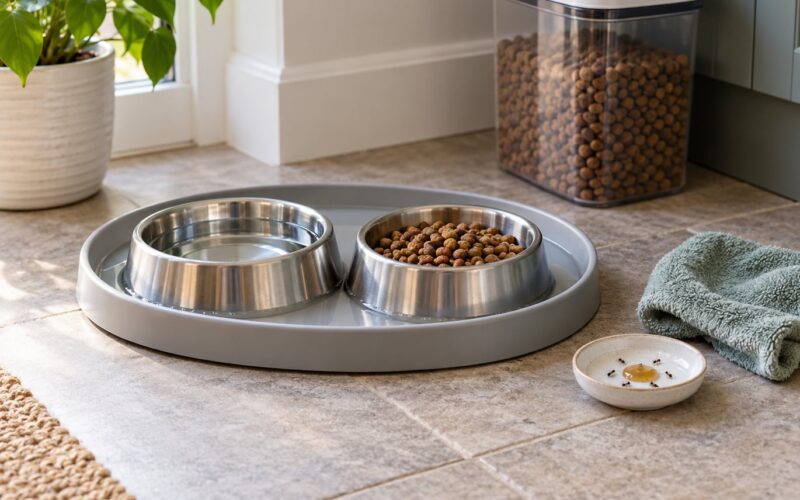
Place a labeled bait station beside the appliance, along the trail, or at the entry point — outside the dishwasher, never inside it. Keep it where children and pets cannot reach it.
Follow the label directions exactly. If you mix your own bait, the recipe most homeowners report is about half a cup of sugar, half a cup of water, and roughly 1.5 tablespoons of borax poured over cotton balls. That concentration matters. Stronger bait kills foragers on the spot, they never carry it home, and the colony survives to send out the next wave.
Do not spray near a bait station, and do not combine bait with a spray or with a different active ingredient. Do not put borax in the dishwasher. It is not a dishwashing product, and residue on dishes is exactly what people are trying to avoid.
Expect more ants around the station for the first two days, not fewer. That usually means the bait is working and the foragers are carrying it back to the nest.
You know it worked when: bait is visible in the station and traffic around it thins out over the following week.
Step 8: Confirm the ants are gone
Watch the cleaned appliance and the surrounding kitchen for several days. Recheck the toe kick and the baseboard after heavy rain, when ants are more likely to move indoors, and after every wash cycle.
Renewed trails that always reappear in the same place mean you missed an entry point. Trails that appear in several directions at once usually mean more than one colony or a neighbor’s unit feeding the same food source.
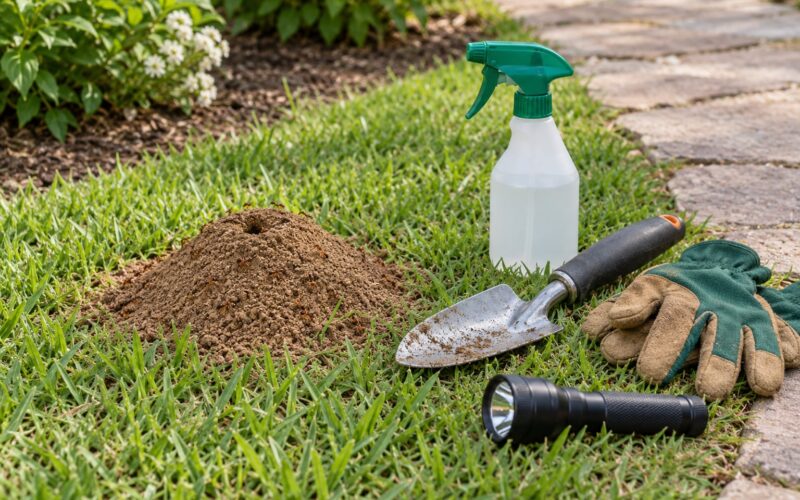
If the ants are large, dark, and headed into damp wood, stop treating this as a nuisance ant problem. That pattern points to carpenter ants, which follow moisture and can damage structural wood. Repair the water source first, and get the wood looked at.
You know it worked when: seven days pass with no live ants and no fresh scent trail.
How to get rid of ants in a dishwasher for good
A clean dishwasher stays clean only if the maintenance is boring. Rinse plates before loading them so grease never enters the tub, and scrape leftovers off rather than pushing them in.
Keep the filter clean on the schedule in your manual, which for most models means weekly. Wipe the door seal every couple of weeks, since that is where the first gap usually forms. Leave the door cracked open after a cycle so the interior dries, and run the appliance hot rather than cold when there has been any sign of pests.
If you rent, tell your landlord before you seal anything. Ants behind the dishwasher in an apartment usually means activity in the wall cavity shared with the apartments next door, and a single tenant patching one toe kick just resets the clock.
Common Mistakes
Almost every failed attempt I have seen comes down to one of these.
- Spraying insecticide inside the appliance. The residue sits on every surface and transfers to your dishes. Fix: remove the dishes, clean the tub and sump thoroughly, and treat from outside with bait instead.
- Mixing bleach with vinegar, ammonia, or dish soap. The first two produce toxic gas, and soap plus bleach is a needless risk. Fix: one cleaner at a time, and never pour bleach into a dishwasher.
- Leaving detergent in the sump after a rinse cycle. That sweet-smelling film is an ant buffet. Fix: rinse with water only, or leave the door open to air-dry.
- Skipping the filter. If you clean everything except the filter and the sump, you have cleaned the parts the ants do not use. Fix: remove and scrub the filter every time.
- Sealing gaps before removing the food. You trap workers inside and give them a reason to chew out. Fix: clean, dry, then seal.
- Making bait too strong. Foragers die before they reach the nest, so the colony survives and returns. Fix: follow the label, or use the dilute borax and sugar ratio.
- Ignoring the trash and the under-sink leak. Ants will keep coming to a kitchen that is easy to forage in. Fix: lidded bin, sealed food, no standing water.
One more worth naming: spraying the visible ants with dish soap water and calling it done. Dish soap kills on contact, which is genuinely useful for the ants inside the tub right now, but it does nothing to the colony sending them.
Frequently Asked Questions
Can I put ant spray or insecticide inside my dishwasher?
No. Aerosol or spray insecticide leaves a residue on the tub, spray arm, and door seal, and that residue transfers to whatever you wash next, including plates and cutlery. Take the dishes out, clean the interior with dish soap and warm water instead, and place a labeled bait station outside the appliance. If someone already sprayed inside, wash everything by hand and run an empty hot rinse cycle before you load clean dishes again.
Is it safe to run a dishwasher after ants have been inside it?
Yes, once the appliance is clean. Ants themselves are not a food safety hazard in the way that raw meat residue or mold is, and a hot cycle with detergent will remove the film that attracted them. Rinse your dishes by hand first, scrub the filter and sump, then run a full hot cycle and air-dry the interior. What makes dishes unsafe is pesticide residue, not the ants, so skip sprays entirely.
Why are ants coming back after I cleaned my dishwasher?
Four usual reasons. You cleaned the tub but not the filter or the sump, where the grease sits. The interior stayed damp, and moisture draws ants as much as food. You never found the entry point, so foragers walk back in through the same door seal gap or drain hose. Or you killed the visible ants only, and the colony outside kept sending new ones. Cleaning, drying, sealing gaps, and baiting outside the appliance is the combination that holds.
What is the best way to kill ants near a dishwasher?
Bait placed outside the appliance, along the trail or at the entry point, does more than any spray because foragers carry it back to the colony and queen. Expect traffic to increase around the station for about two days before it drops. Wipe the trail with a vinegar-and-water solution to remove the scent path, fix any leak under the sink, and seal gaps wider than 1/16 inch. Never place bait or borax inside the dishwasher.
When should I call a pest control professional for ants?
Call a professional after two full weeks of consistent baiting and cleaning with no drop in activity, or sooner if you see carpenter ants foraging in damp wood, if the infestation appears in several apartments at once, or if the nest is inside a wall cavity you cannot reach. Ants that are large, dark, and heading into wet framing need a moisture repair and a structural look, not more bait. Renters should notify the landlord first so the whole building gets treated.
Conclusion
Stop the appliance and get the dishes out. Scrub the tub, take the filter apart, clean the sump, and let everything dry fully. Wipe down the floor and counter around the machine, seal the gaps you find under the toe kick and at the water line, and set a labeled bait station outside the dishwasher if the trail keeps coming back.
Then give it a week. Seven days with no live ants and no new scent trail means the problem is behind you. Two weeks of baiting with no change, or carpenter ants in damp wood, is the signal to bring in a professional.