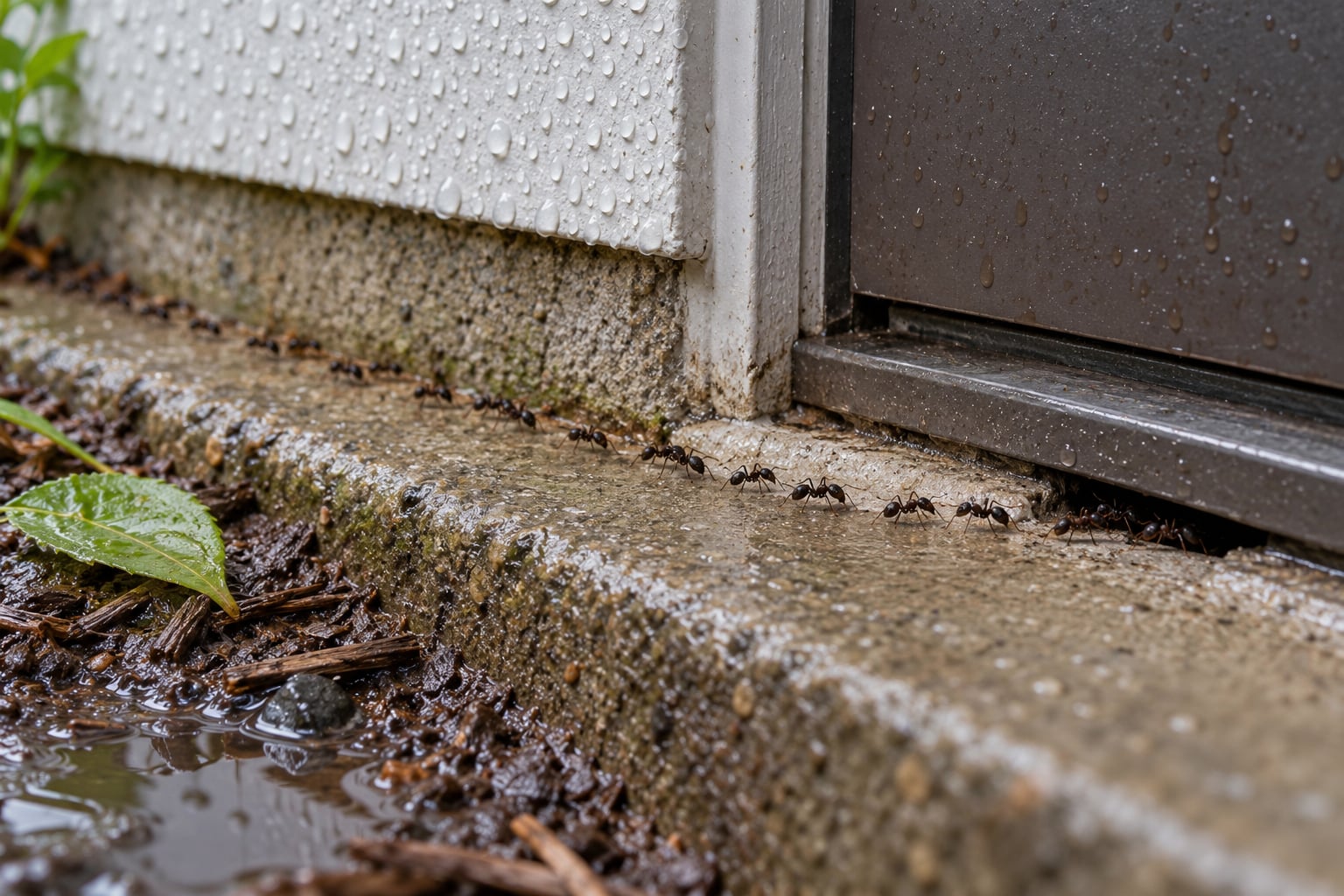
Rain floods the underground tunnels and nest chambers where an ant colony lives, so workers flee upward looking for dry ground. Your house offers warmth, stable temperature, water and food, which is why ants come inside after rain in large numbers rather than a stray few.
They are not looking for your snacks first. They are escaping water, and your foundation cracks, door thresholds and utility penetrations become highways once a scout ant finds one.
Last reviewed for 2026. Species behaviour and sealing products change over time, so check the current label and local guidance before treating.
Table of Contents
- Why Ants Come Inside After Rain
- What Rain Changes About Ant Behavior
- Which Ants Often Appear After Rain
- How to Tell If Ants Are Nesting Inside
- How to Find and Block Ant Entry Points
- How to Stop Ants Returning After Rain
- How Rain-Related Ant Problems Differ by Location
- Frequently Asked Questions
- What to Do First After the Next Heavy Rain
Why Ants Come Inside After Rain
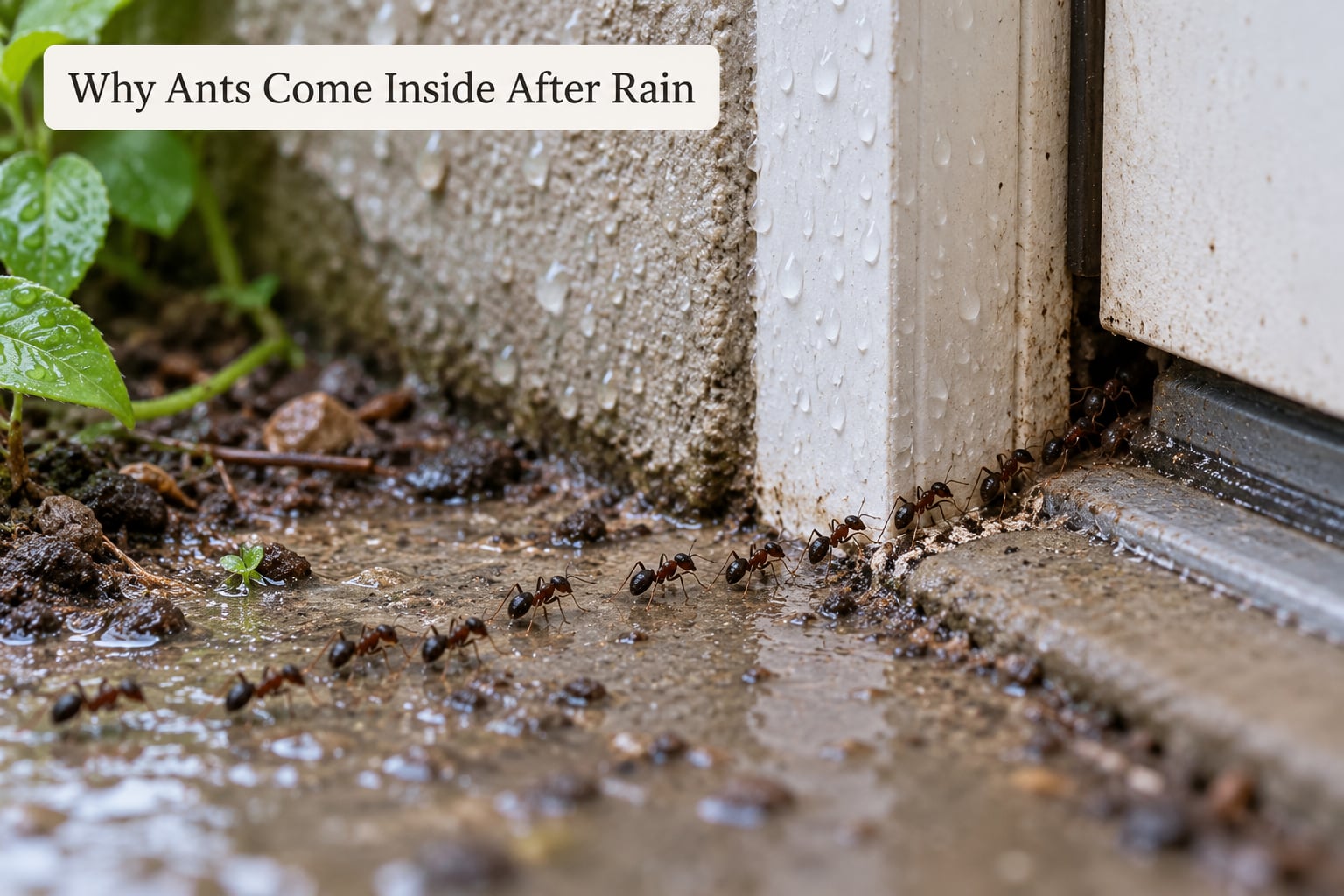
The short answer: heavy rain fills the nest, the colony relocates, and a scout ant finds the first dry opening it can reach. The rest of the colony follows the pheromone trail it leaves behind.
Five things drive the influx, and more than one is usually at work.
- The nest chambers fill with water. Underground nests are built in soil with a limited drainage rate, and a few hours of rain can turn tunnels into a flooded network.
- Foraging routes wash out. Ants cache and follow scent paths to food outside. Rain dissolves those trails, so scouts go out to find a new route and their exploration brings them to your walls.
- They move up, not out. When the ground is saturated, the driest available space may be the sill of a window, a crawl space, or the wall void behind a baseboard.
- Indoor moisture rises. Rain raises humidity and fills pet bowls, drip pans and plant saucers. Ants need water, and a house is now wetter on the inside than the yard is on the outside.
- Food is suddenly easy. A kitchen floor, a pet bowl or a garbage can gives a colony more than a soaked lawn would. Scouts test whatever is available.
Why ants come inside after rain is usually about water first, food second
This distinction decides your whole approach. If water is the driver, sealing one crack moves the traffic to the next gap, which is why homeowners who patch the first visible gap find ants two weeks later along a different wall.
It also explains why the same house gets ants every time it rains heavily and none during a dry week, even though nothing inside changed.
What Rain Changes About Ant Behavior
Rain does not simply add more ants. It rewires how the ones nearby behave, and the timing of their appearance does not always match the forecast.
Ants can arrive before the storm
Humidity rises before the rain hits, and barometric pressure drops. Colonies often increase foraging ahead of a storm because insect activity rises in the damp air, so a trail can show up on a still, grey afternoon.
Homeowners on r/sandiego describe this pattern clearly: ants come in one door and leave out another, and they vanish once the rain stops. That in-and-out traffic is a relocation, not an established colony.
During and just after heavy rain
Flooding is the strongest trigger. Workers move en masse, colonies split rather than die, and some species shift their whole nest to a nearby satellite site above the water table. In clay-heavy soil that drains slowly, that elevated relocation window can last for days.
After the soil dries
The pressure drops fast. Many colonies walk back to a sound spot outside, and indoor activity fades within two or three dry days. But if a nest settled into a wall void, cabinet or under a subfloor, drying the weather does not send them home.
The opposite case worth knowing
Drought sends ants indoors too, for a different reason: they are looking for water, not shelter. A trail that appears during a hot dry spell usually points at a leaking pipe, a drippy faucet or a humid bathroom rather than a flooded nest.
Which Ants Often Appear After Rain
Species matters because the nesting location, the entry point and the risk level are all different. Identifying the ant is the fastest way to know whether you have a temporary visitor or a structural problem.
| Ant | Identification clue | Where it nests | After rain | Risk level |
|---|---|---|---|---|
| Odorous house ant | 1 to 3 mm, dark brown to black, strong chemical smell when crushed | Under sink, wall voids, window sills | Relocates indoors readily and trails along counters | Low, nuisance |
| Pavement ant | Brown with pale legs, nests in cracks in concrete and pavers | Under patio slabs, driveway cracks, foundation | Flooded cracks push workers up through garage floors | Low to moderate |
| Fire ant | Reddish, with a cluster of stiff hairs on the head | Open soil, lawns, sometimes under pavers | Mounds wash out and colonies relocate to higher ground | Moderate, stings |
| Carpenter ant | Large, 12 to 25 mm, dark, with a reddish thorax | Moist wood, window sills, wall cavities | Follows damp framing near leaks; can already be indoors | High, wood damage |
| Argentine ant | Small, pale brown, fast-moving in long lines | Soil, under pavers, sometimes wall voids | Large supercolonies push through many small gaps at once | Low, hard to contain |
| Ghost ant | Very pale, almost translucent, with dark abdomen tips | Warm sites, tree trunks, mulch beds | Follows damp mulch and vegetation touching the house | Low |
The clue homeowners search for most is the smell. Tiny ants that release a sharp chemical odour when crushed are almost always odorous house ants, and a poster on r/AusRenovation described exactly that after east-coast rain, finding them behind furniture rather than in the kitchen.
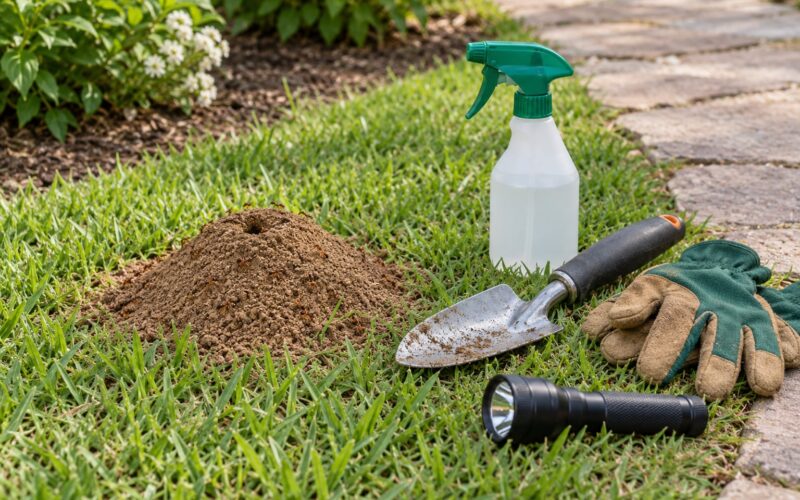
Fire ants are the one to treat as urgent. If you are seeing a mound that swells after rain and the ants sting on contact, keep children and pets away from it and call a licensed technician rather than trying to flood the mound yourself.
How to Tell If Ants Are Nesting Inside
Most rain-related ant activity is a passing influx. Fewer cases are an indoor colony, and the difference is obvious once you know what to look at.
| Sign | Passing rain influx | Established indoor colony |
|---|---|---|
| How long it lasts | Clears within two or three dry days | Still there weeks later with no rain |
| Traffic pattern | Trail in one place, out another | Several scattered trails converging on one area |
| Where you see them | Along one threshold or window sill | Kitchen counters, bathroom, laundry, multiple rooms |
| Structural evidence | None | Mud tubes, frass, damp wood, hollow sounding timber |
| Behaviour | Scouts exploring, trail appears and fades | Steady flow carrying food back to a fixed point |
Warning signs of a colony inside
Look for carpenter ant damage: frass that looks like fine sawdust piled beneath a window, damp or swollen timber near a plumbing leak, or a hollow sound when you tap wood. Mud tubes running up a foundation crack are a subterranean species working inside the wall.
Another tell is caste. Tiny workers wandering aimlessly are scouts. If you see winged adults indoors in spring or autumn, or a noticeably larger major worker, a nest is likely already in the structure.
If ants trail under a baseboard and disappear into a wall void, that void may now hold a satellite nest. Sealing the baseboard without treating the void just moves the traffic to the kitchen.
How to Find and Block Ant Entry Points
Ants cross gaps far smaller than people expect. Most species manage a hole about the width of a pencil, and larger carpenter ants manage considerably more. Work through this in order.
- Find the trail before you seal anything. Look outside at dusk along the foundation line, the door threshold and under patio slabs. Ants are easiest to see moving in the cooling air.
- Follow the trail to the exact opening. Mark it with tape or a pencil before touching anything. Sealing first hides the entry point permanently, which is the single most common DIY mistake.
- Check thresholds and door sweeps. The gap under an exterior door is often the largest one on the house. Replace the sweep, and check that the door closes fully.
- Inspect windows and weep holes. Homeowners on r/Seattle report ants entering through every crack in a heavy spring season. Window frames, weep holes above windows and torn screens are all common paths after storm rainfall.
- Seal and monitor. Fill gaps with exterior-rated sealant or hardware cloth, then watch that spot through the next heavy rain to see whether the traffic moved.
Call a licensed pest professional if the trail leads into a wall void, you suspect carpenter ants, you have repeated trails in several rooms, or you have stacked firewood, mulch or stored items against the foundation giving ants a highway up.
How to Stop Ants Returning After Rain
Rain will not stop, so the fix is to make the house less useful and harder to reach. Work in this order and the effect compounds.
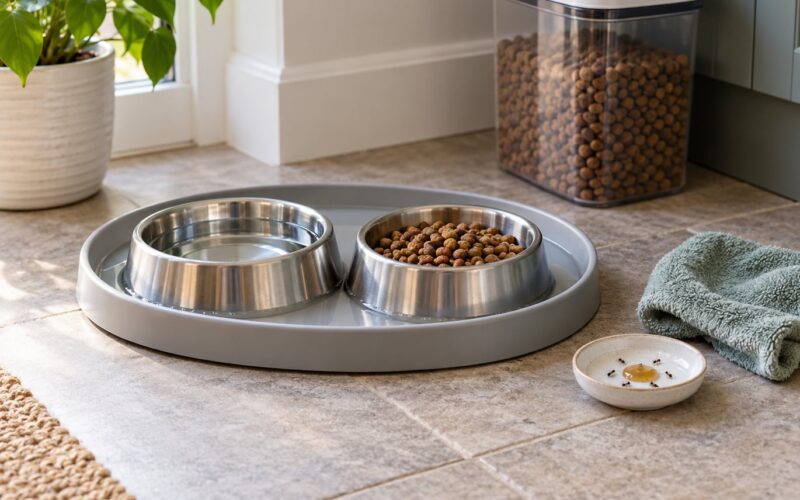
- Cut off water. Fix dripping taps, dry standing water in plant saucers and pet bowls, wipe up bathroom moisture, and run a dehumidifier in a persistently damp basement.
- Store food properly. Move pet food into a sealed bin, use airtight containers rather than open bags, and take rubbish out before it becomes a buffet.
- Remove the outdoor forage. Sweep away fallen fruit, clear spilled pet food, trim vegetation away from the siding, and lift stored items off the ground by 12 inches.
- Correct drainage. Grade soil away from the foundation, clear gutter downspouts, and make sure patio slabs and driveway cracks are not holding water against the house.
- Interrupt the trail. Wipe ant paths with a damp cloth and soapy water so the pheromone route is erased. This works on a passing influx because it forces scouts to re-search.
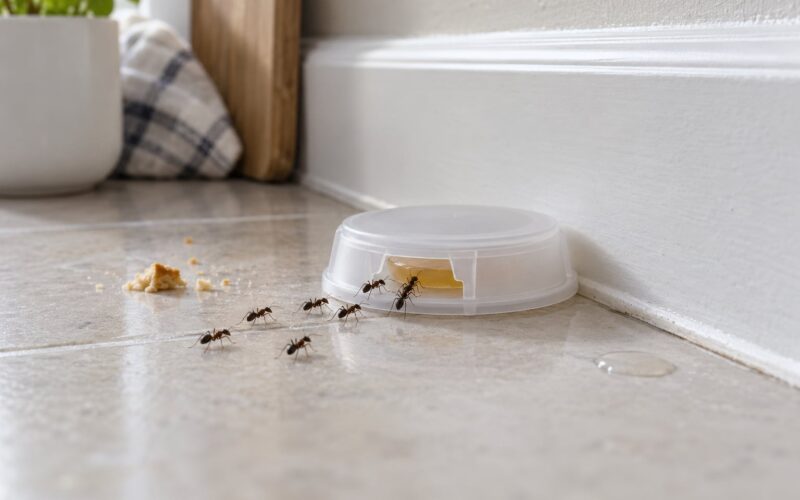
- Use bait where there is a colony. Set ant bait near the trail rather than spraying it. The workers carry the bait back to the nest, and the colony declines from the inside. Keep it away from children and pets.
Why spraying and squishing ants backfires
Killing workers does almost nothing to a colony. A crushed ant releases an alarm pheromone that makes nearby workers flee, and repeated surface spraying can split a colony into multiple satellite nests, which multiplies your problem rather than ending it.
A poster in a Facebook group described spraying chemical along a bedroom windowsill every time it rained, then vacuuming the floor daily. The barrier held the line but never fixed the source, because the nest was still outside in the wet soil.
Skip the homemade vinegar and dish soap sprays, and skip mixing bleach with ammonia or other cleaners, which can produce dangerous gas. Plain soapy water for wiping trails and a labelled commercial bait are the two tools worth having on hand.
How Rain-Related Ant Problems Differ by Location
The same rain event looks different depending on your house and your soil.
Garage and basement flooding
Pavement ants nest in cracks under slab floors, so water rising through those cracks pushes workers into the space as it dries. If water came into the basement, check the perimeter joint after it dries and treat from the bait rather than the standing water.
Patio, driveway and pool decks
These surfaces are paved with cracks and are the most common ant real estate in a yard. Rain fills them. Keep the gaps sealed, keep the slab sloping away from the house, and avoid stacking anything that bridges the gap between patio and siding.
Kitchen food trails
Ants after rain in the kitchen usually mean a trail from an outside entry point rather than a kitchen nest. Trace it back. If a column runs from the wall to the crumb under the toaster, seal the wall end and clean the trail, and the counter stays clear.
Wood damage concerns
Carpenter ants in damp framing are a wood-damage problem, not a nuisance problem. They excavate soft, moisture-damaged wood and rarely attack sound dry timber. Fix the water source first, because a new colony will return to a wet wall.
Apartments and shared walls
In a multi-unit building, the ants may come from a neighbouring unit or a shared service corridor, which means you may never find the origin. Building management should be involved, and sealing your own unit only reduces your share of the traffic.
Clay-heavy regions
Slow-draining clay soil holds water against foundations for much longer after a storm. Expect indoor ant activity for several days rather than a few hours, and focus on grading and drainage work where the payoff lasts.
Frequently Asked Questions
Will ants go away when it stops raining?
Usually yes, if the ants are fleeing a flooded nest. Give it two to three dry days and check the same threshold and counter. If the trail is still there with no rain in the forecast, they have likely nested inside a wall void, cabinet or under a floor, and you need bait rather than more sealing. Ants that came in one door and left by another are relocating, not settling in.
Why should I not squish ants?
Crushing an ant releases alarm pheromones that make nearby workers scatter and reinforces avoidance of that spot, but the colony carries on. Repeated killing also encourages colonies to split into more satellite nests, which makes the problem larger. Wiping trails with soapy water and using bait near the trail is more effective because the workers deliver the bait back to the colony itself.
How do I permanently get rid of ants in my house?
Work in order: fix every water source, store food in sealed containers, remove rubbish, wipe pheromone trails with soapy water, and place ant bait where you see traffic rather than spraying the trail. Then seal the entry point you traced and marked. Sealing before treating leaves a nest feeding on bait somewhere you cannot see, so the ants return once the bait is gone.
How do I get rid of tiny ants that smell bad when crushed?
Small ants that release a sharp chemical smell when crushed are almost always odorous house ants. They nest in damp spots indoors and outside, including under sinks, window sills and wall voids, and they move readily when their outdoor nest floods. Keep counters dry and crumbs off, wipe trails with soapy water, set bait near the trail, and check under sinks and around pipe penetrations for the entry gap.
Are ants after rain a sign my house is dirty?
No. Rain-related ant activity is about water, not housekeeping. Ants are fleeing a flooded nest and following scout trails to the driest shelter available, which is your building. A spotless kitchen with a gap under the back door will still get ants. Cleanliness reduces how much they carry home, but the fix is moisture control, sealed entry points and bait if a colony has moved in.
Is it a bad year for ants in my area?
Ant pressure tracks rainfall and soil drainage more than the calendar. In regions with heavy seasonal rain, or clay-heavy soil that holds water against foundations, ant activity indoors spikes after every large storm. Dry years often push ants indoors for water instead, which shows up near bathrooms and leaking pipes. Watch your own local pattern across two or three rains rather than relying on a national forecast.
What to Do First After the Next Heavy Rain
Step outside at dusk and find the trail before it fades. Follow it to the exact gap, mark it with tape, and leave it open overnight so you can confirm it is the route before you seal it.
Then fix water first, bait second, sealant last. Most rain-driven ant problems end on their own once the ground dries, and the ones that do not are the ones with a gap you never found.