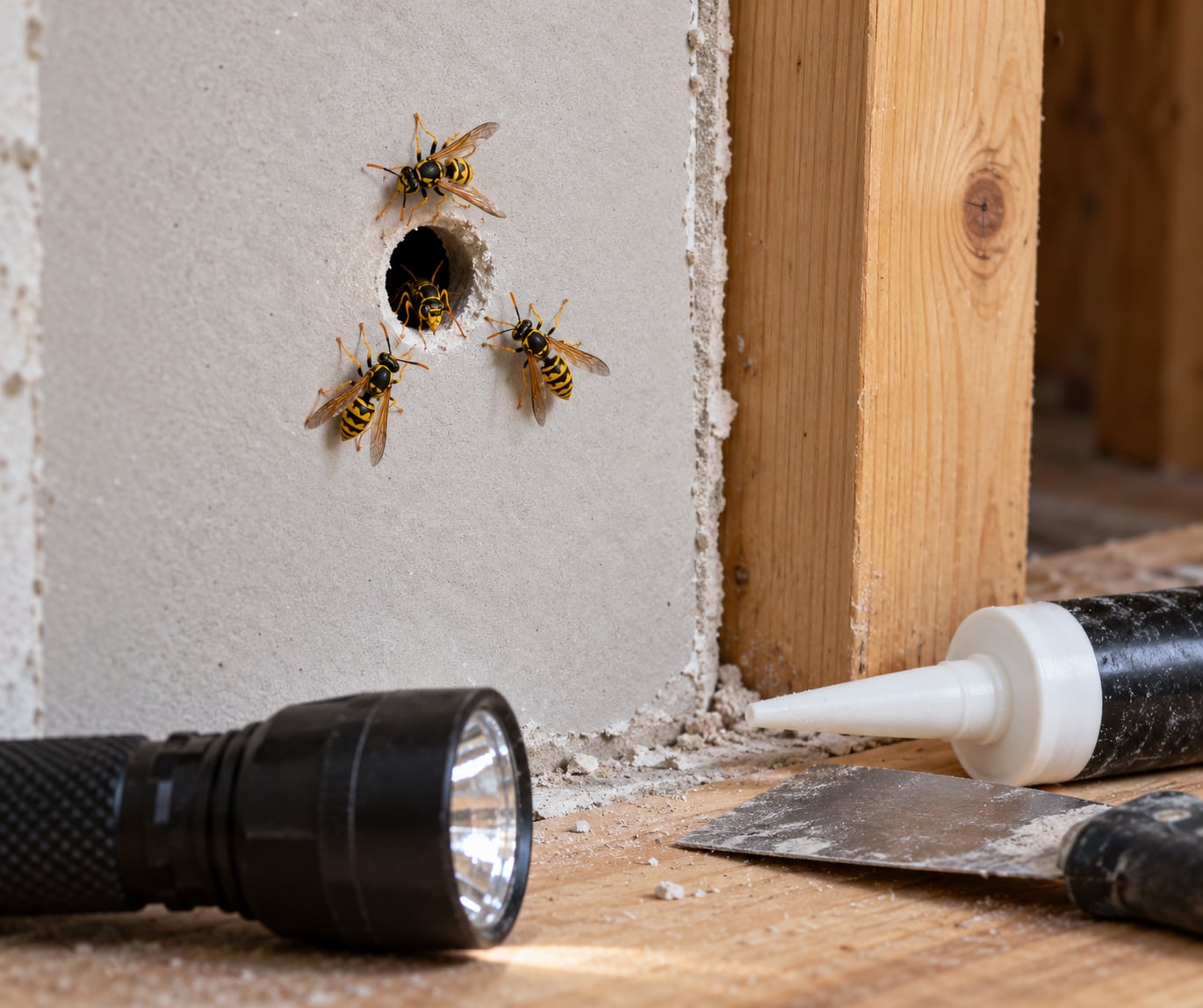
What to do when a wasp nest is in a wall comes down to one rule: do not plug the hole first. Seal the entry while wasps are still inside and they look for another way out, usually sideways, through the drywall and into your living space. Assess the nest from a distance, deal with the colony, then close the opening.
The hard part is that a wall void is the one place you cannot see what you are dealing with. Everything below is built around that limitation.
Table of Contents
- What You Need
- Step-by-Step
- Common Mistakes
- Frequently Asked Questions
- Can I seal a wasp nest in a wall?
- How can I tell if a wasp nest in a wall is active?
- Should I remove a wasp nest before selling or renting my house?
- What if the nest is inside a finished wall?
- Can wasp spray or insecticide get rid of a nest inside drywall?
- How long after a wasp nest is gone can wasps still appear?
What You Need
Before you go anywhere near the wall, gather a few things that let you judge the situation without touching it.
- Protective clothing. Long sleeves, long pants, closed shoes, gloves, and a hat if the nest is overhead. Light colours make it easier to spot a wasp that has landed on you.
- A flashlight for checking gaps and soffits after dark, when most wasps are inside the nest rather than outside it.
- Binoculars or a camera with a zoom lens. Useful for reading paper comb at a distance without getting within stinging range.
- Caulk, mortar, or another sealant matched to the surface you will eventually patch — vinyl siding, brick, stucco, wood trim and metal flashing each take something different.
- A wasp-killing product, but only if the label permits the location you intend to use it. Some products are restricted to outdoor use on exposed nests and say nothing about injecting them into a wall cavity.
- A dust mask and a vacuum with a hose for clean-up once the nest is confirmed dead and you decide to open a small access hole.
Now be honest about three things: a ladder, opening a wall cavity, and applying a pesticide. If any of those three are part of your plan and you are not experienced with them, that is the moment to stop and call a licensed pest professional.
Step-by-Step
What to Do When a Wasp Nest Is in a Wall
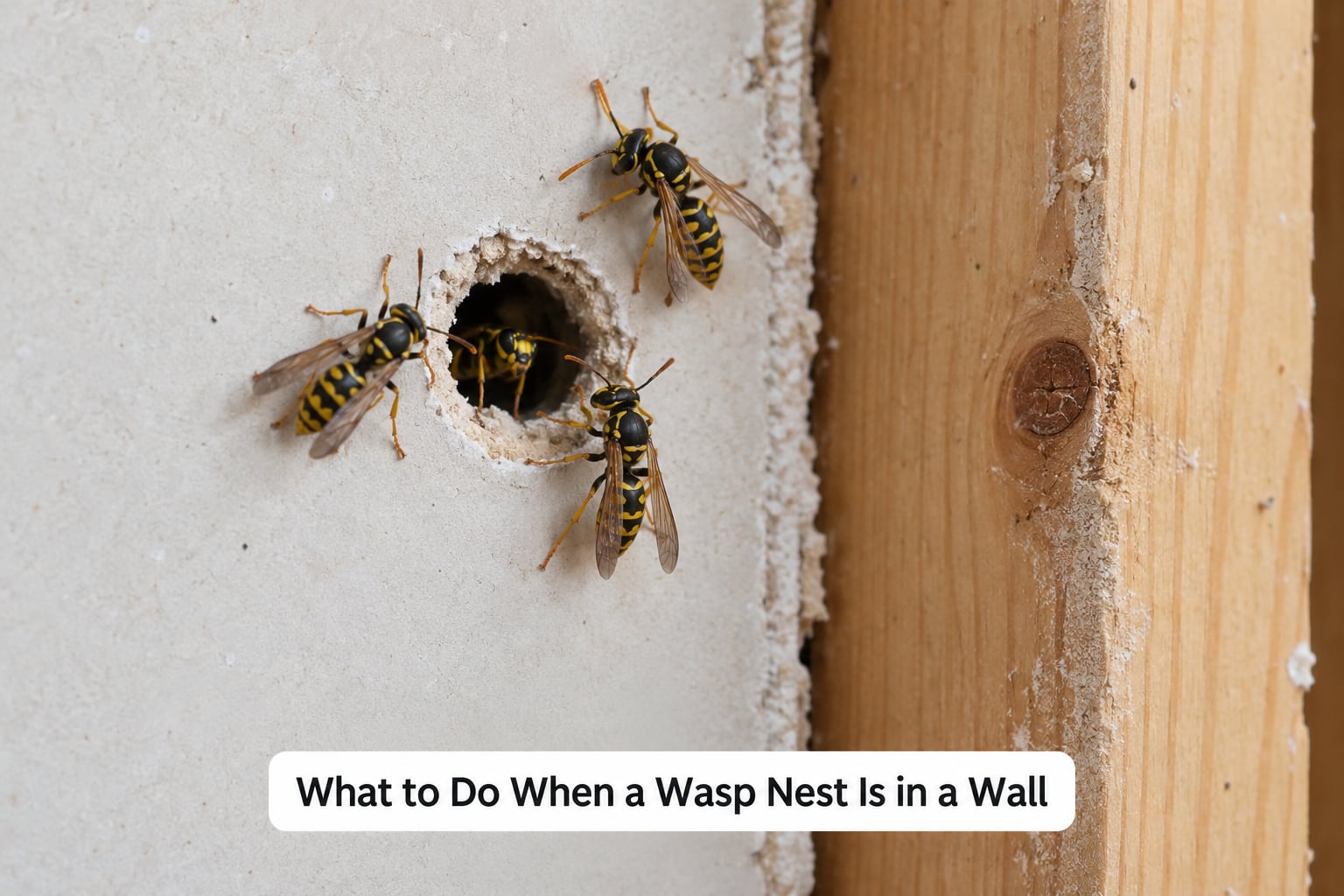
Start by keeping everyone away from the opening and watching it from well back, at least 15 to 20 feet. What you are looking for is whether anything is moving in and out of the gap.
During the day, in warm weather, active colonies run steady traffic. Just after sunset the traffic drops off because most of the colony is back inside. Neither view tells you everything, which is exactly why step two matters.
If the opening sits somewhere you cannot observe safely — high on a two-storey wall, above a stairwell, near a service panel — skip straight to a professional. So does a nest near a door, a walkway, a play area, or a porch where people pass.
1. Confirm That It Is a Wasp Nest
Look for the structure, not just the insects. A wasp nest is layered paper comb under a smooth, papery outer envelope, and it hangs or sits inside the cavity with a single entrance hole that the wasps use in both directions.
A honey bee colony in a wall cavity looks different: bees cluster in a mass at the opening, the flight is slower and more deliberate, and the sound is a low hum rather than the sharp, angry buzz of yellow jackets. Carpenter bees bore a small round hole into bare wood, often leaving pale frass below it, and they nest one insect per tunnel rather than in a colony.
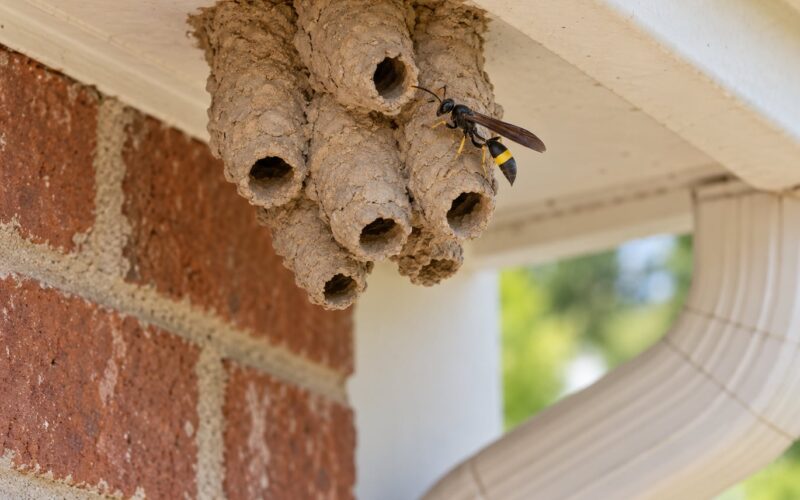
You are also ruling out a nest that is already empty and a wasp that is simply using the gap as a shortcut to somewhere better. Wasps do not reuse old nests, so last year’s paper hanging in the wall is an abandoned nest, not a problem. The same goes for a mud dauber or cicada killer hunting near the wall.
Do not cut into the wall to check. If you cannot tell from outside, treat the uncertainty as a reason to bring in someone who can open it safely.
2. Check Whether the Nest Is Active
Watch from a distance during daylight, in warm weather, and count what goes in and out of the opening. Repeated entry and exit over 15 to 20 minutes is a strong signal. Faint rustling or humming inside the wall adds to it.
Leave the wall alone otherwise. Do not tap on it, do not spray near it, and do not knock anything loose — disturbance at the entrance sets off defensive flight and you have no way to know how many are inside.
A quiet nest on a cool or rainy day is not proof of anything. Wasps slow down in cold weather and cluster on the comb, and a colony can look quiet for hours and then return to normal activity.
3. Decide Between Waiting and Professional Removal
Observation may be enough when the opening is remote, high traffic is low, nobody in the house has ever been stung, and you can watch from indoors or from far away without approaching.
Hand the job to a licensed technician when any of these apply: the opening is on the inside face of a wall, it is above the second storey or over a walkway, someone in the household reacts badly to stings, the activity is aggressive and increasing, the nest sits near wiring, a light fixture or a plumbing penetration, or you are not certain what lives inside the wall.
Waiting is genuinely reasonable in one narrow case. In late fall, a colony dies off and the queen leaves to overwinter elsewhere, and what remains is an empty paper shell nobody reuses. If you are well past the end of the season and the nest has been quiet for weeks, you can plan the repair rather than the removal.
4. Remove an Inactive Nest or Have the Active Nest Treated
For a confirmed empty nest, open a minimal access hole, pull out the paper material, and patch. Wear a mask, work slowly, and expect a little grit falling out of the cavity.
For an active nest inside a wall, this is technician territory. The usual approach is to inject an insecticidal dust or an expanding foam through the exterior entry point so it coats the comb, then seal that opening. Opening the wall is the fallback when the nest cannot be reached that way.
Two things to hold onto. Read the label for any product you use and follow it exactly — never move a pesticide to a different location or use pattern than the label allows. And do not spray a household aerosol into an open wall cavity in the hope the wasps drown; that pushes agitated insects into the room rather than out of the wall, which is the outcome most people are trying to avoid.
5. Seal the Entry Point
Seal only after activity has stopped. Watch the gap and listen at the wall for a few days first; a seal applied over a live colony is the single most common costly mistake here.
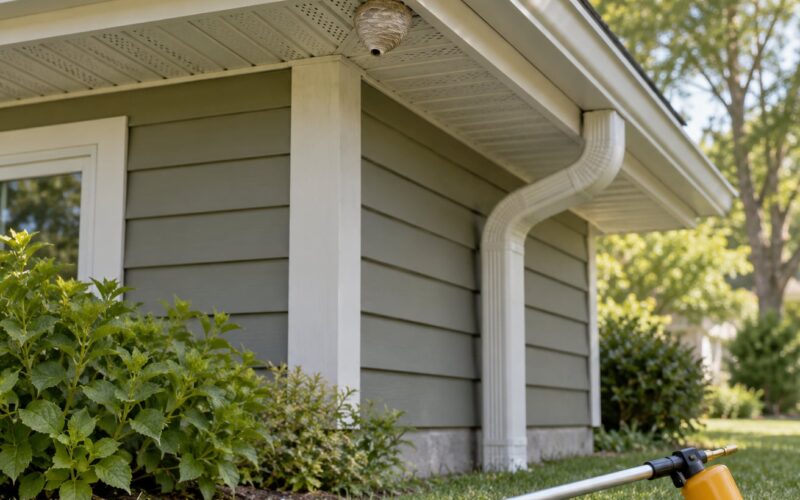
Then work outward with a material suited to the surface. Caulk and paint for wood trim, mortar or mortar-compatible sealant for brick, matching sealant for siding seams. Pay attention to the usual weak points: the gap between fascia and soffit, siding seams and laps, weep holes, roofline edges, and penetrations around plumbing, wiring, hose bibs and exterior lights.
Never block ventilation, soffit or gable vents, dryer or kitchen flues, or emergency egress windows. And if the gap came with damp wood, soft sheathing or a stain on the interior wall, the opening is telling you about a moisture or structural problem that deserves its own look before you close it up.
6. Monitor and Prevent Another Nest
Keep watching the wall for several weeks. Traffic that builds again after treatment means wasps are still alive inside or found their way back, and it is a signal to stop and reassess rather than seal.
Outside, cut off what draws them in: uncovered food and pet bowls, standing water in saucers, planters and gutters, and trash that is not sealed. Wasps also read the landscape for entry points, so the spring exclusion sweep — siding seams, soffit gaps, roofline, weep holes, vents, utility penetrations, porch lights — is worth repeating every spring after this one.
A second nest in the same wall next season usually means a nearby colony sent a queen looking for the same sheltered cavity, not that your repair failed. Wasps do not remember the place; they just like the same kind of spot.
Common Mistakes
Sealing an active nest. This is the big one. Fix: confirm the colony is dead over several days of observation, then seal.
Spraying an opening you have not identified. You do not know what is inside, how many, or what they will do. Fix: identify first, and treat an unidentified opening as a job for a professional.
Using a product in a way its label does not describe. Fix: read the label, match the location and the target, and never transfer a pesticide to another use or another part of the house.
Working alone on a ladder or reaching into a wall cavity. Falls and stings rarely happen together on purpose. Fix: two people, stable footing, and no lone ladder work.
Blocking ventilation or a structural opening while sealing. Fix: seal the gap you found, and only that gap. Leave flues, vents and egress clear.
Assuming the one hole is the whole problem. A colony often uses two or three entrances, and utility penetrations run a long way. Fix: walk the whole wall, top to bottom, before you call it finished.
If the nest is inaccessible, high up, or comes back after treatment, stop reading and call a licensed pest professional. That is the correct answer, not a cop-out.
Frequently Asked Questions
Can I seal a wasp nest in a wall?
Only after the colony is dead. Sealing an active nest traps the wasps, and they look for another exit, often chewing sideways through drywall into a room. Confirm no traffic at the opening and no sound in the wall for several days first, then seal with a material suited to the surface.
How can I tell if a wasp nest in a wall is active?
Watch the opening from 15 to 20 feet back during daylight in warm weather. Repeated entry and exit, plus faint humming or rustling inside the wall, suggests an active colony. A quiet wall on a cold or rainy day means little, because wasps cluster on the comb when temperatures drop and activity resumes later.
Should I remove a wasp nest before selling or renting my house?
Removing it first avoids inspections, complaints and disclosure questions, and it is far easier while the walls are intact. If you are a tenant, do not drill, cut or spray anything; report it to your landlord in writing instead. What to do when a wasp nest is in a wall you rent is a conversation, not a weekend project.
What if the nest is inside a finished wall?
Leave the wall closed. A technician treats most wall voids by injecting insecticidal dust or foam through the exterior entry point and then sealing it, so the drywall stays intact. Opening an interior wall is the fallback option when there is no reachable exterior opening, and it means drywall repair afterward.
Can wasp spray or insecticide get rid of a nest inside drywall?
Spraying an aerosol into an open wall cavity is the most common harmful shortcut, because agitated wasps driven out of the comb end up in your living space. If a product is used at all, it should be applied by someone trained, following the label for that location. Never move a pesticide to a use the label does not describe.
How long after a wasp nest is gone can wasps still appear?
Several weeks. Wasps that were away from the nest when the colony was treated keep returning until they are gone or until the sealed entry blocks their route, and foraging wasps can wander for a while after a nest is removed. Wasps do not reuse an old nest, so rising activity means survivors or a new queen, not the nest coming back to life.
The first thing to do is simple: watch the hole from a distance, decide whether the colony is alive, and treat it before you seal anything. If the nest is high, hidden, or near anything you would rather not have stung, a licensed technician is the faster and cheaper path.