Earwigs are the small, dark reddish-brown insects with a pair of pincers at the back of the abdomen, and they do not crawl into ears or burrow into anything. Learning how to identify earwigs and what they do takes about five minutes of reading: check the tail-end pincers, the flattened body, the antennae and the color, and you have your answer. Most people who find one indoors only need to know that it is harmless and where it walked in from.
The panic around earwigs is almost entirely about the name and the pincers. Neither one is a fair measure of the risk. Here is what the insect actually is, what it does in your yard and house, and which steps are worth taking if you keep seeing more than one.
Table of Contents
- What Do Earwigs Look Like?
- How to Tell an Earwig Apart from Other Insects
- What Do Earwigs Do?
- Are Earwigs Dangerous to People, Pets, or Plants?
- Why Are Earwigs Coming Inside My House?
- How to Get Rid of Earwigs Without Risky Chemicals
- When Do You Need Professional Pest Control?
- Frequently Asked Questions
- Conclusion: Start with a Closer Look and Drier Conditions
What Do Earwigs Look Like?
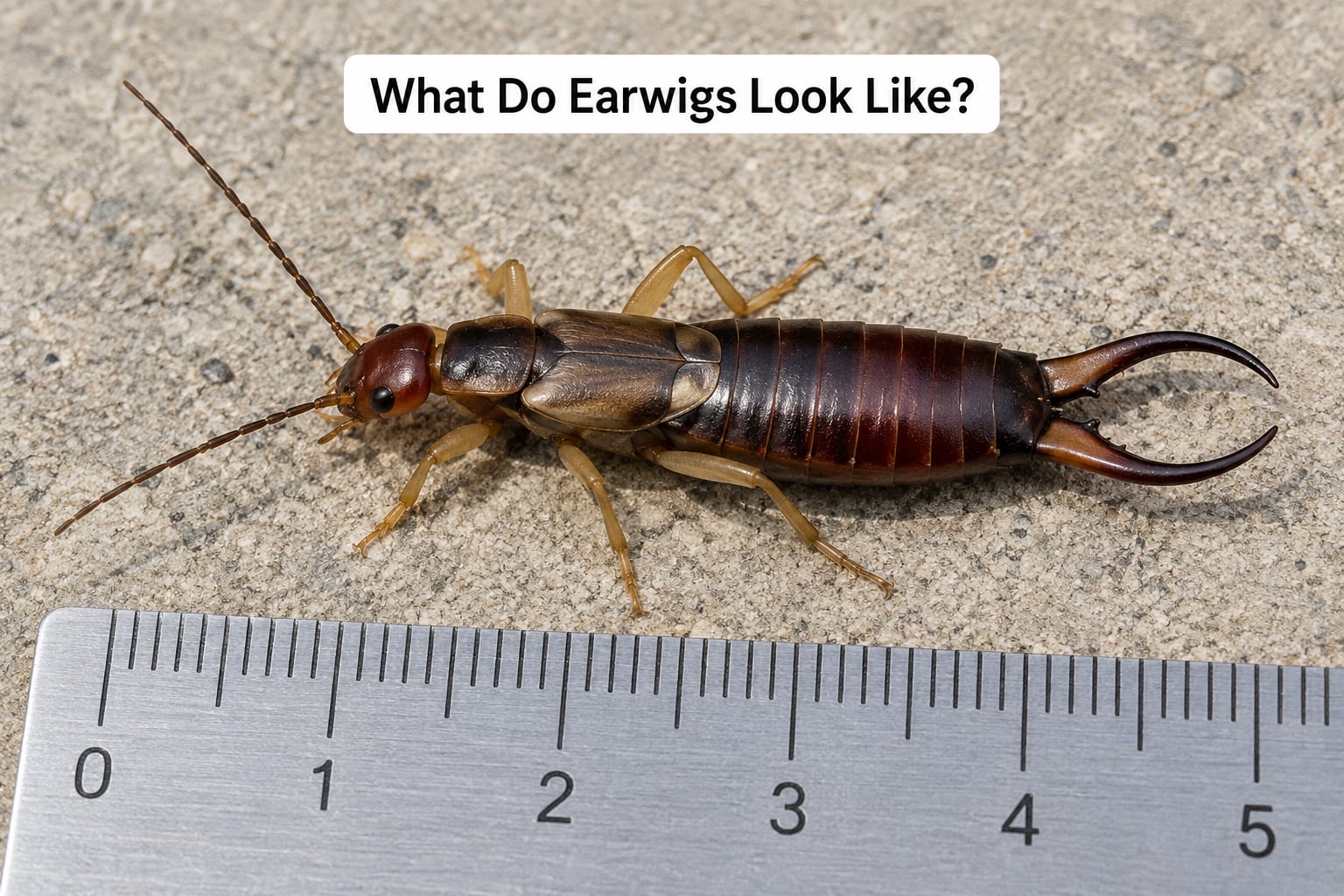
Compare these features in order, and you will almost certainly confirm the insect on the first pass. The rear pincers, called cerci, are the giveaway: a pair of curved, claw-like appendages at the very tip of the abdomen. Nothing else common in a home has that.
- Rear pincers (cerci): a matched pair, curved like a small pair of tongs, at the end of a flattened abdomen. Males have strongly curved pincers; females have straighter, narrower ones held closer together.
- Body shape: long, narrow, and noticeably flat, tapering toward the rear. Crawling quickly under a leaf or across a wall, it reads as a long oval rather than a round beetle.
- Color: reddish-brown through dark brown to nearly black. A few species in warmer regions have pale markings on the wing covers.
- Size: roughly half an inch to one inch, with most indoor sightings landing in the middle of that range.
- Antennae: two thin, segmented antennae, about as long as the body, with many more segments than a beetle’s clubbed feelers.
- Legs: six, with no visible swollen hind legs for jumping, which sets earwigs apart from crickets.
- Wings: some adults have two pairs, folded under short leathery wing covers. Plenty of earwigs never fly at all, so finding one indoors is not proof it came in through an open window.
Size varies, so measure when you can
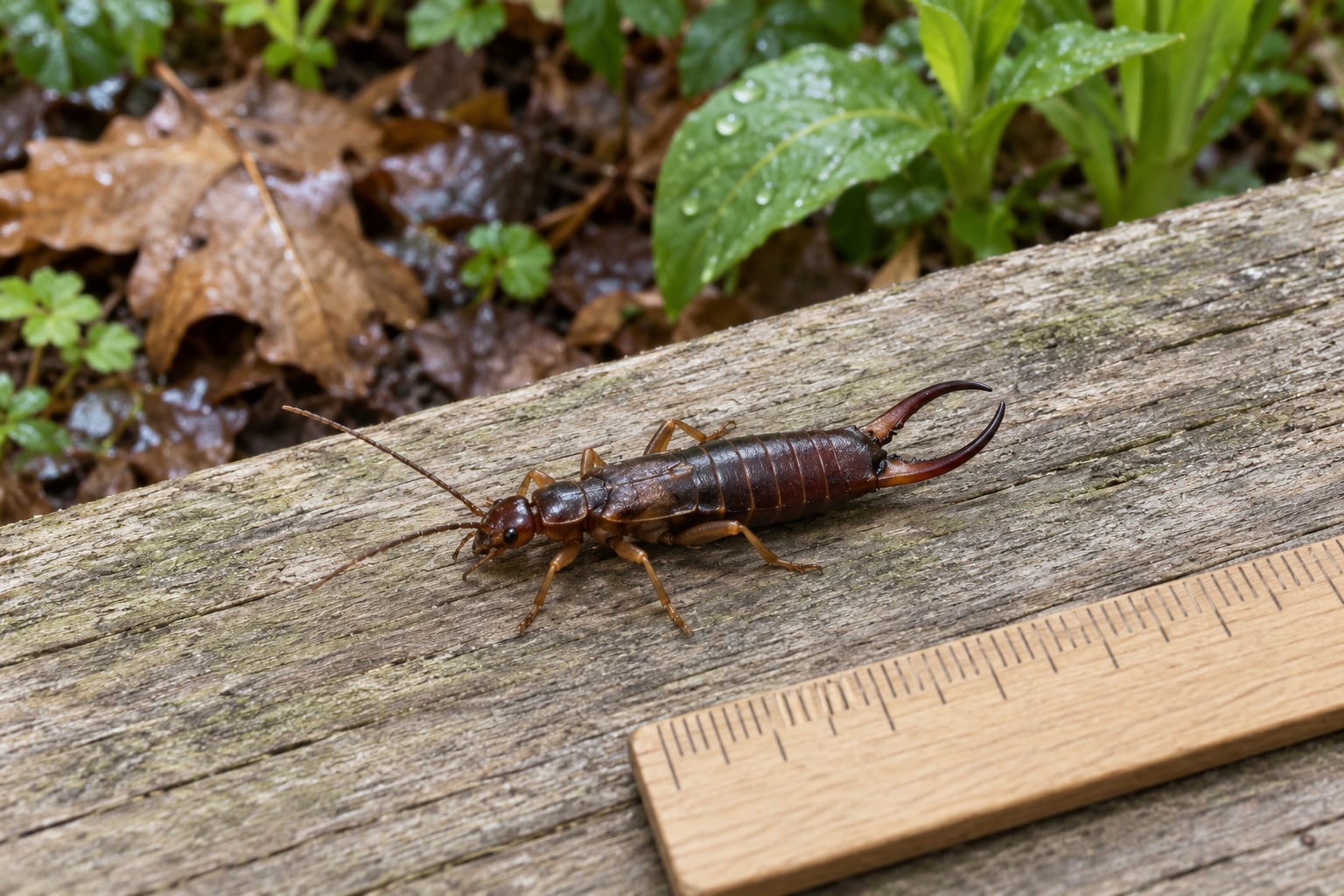
The range is wide enough that a phone photo next to a ruler settles most arguments. If the body measures around three-quarters of an inch and the pincers curve inward like a crescent, you are looking at the most common home species, the European earwig (Forficula auricularia). If it is much longer, thin, and the body is stick-straight, you may be looking at a walkingstick instead, which is harmless in a different way.
Nymphs are worth knowing about too. Earwig nymphs are smaller, paler, wingless versions of the adult, with slimmer and less developed pincers. That combination trips people up more than the adults do.
How to Tell an Earwig Apart from Other Insects
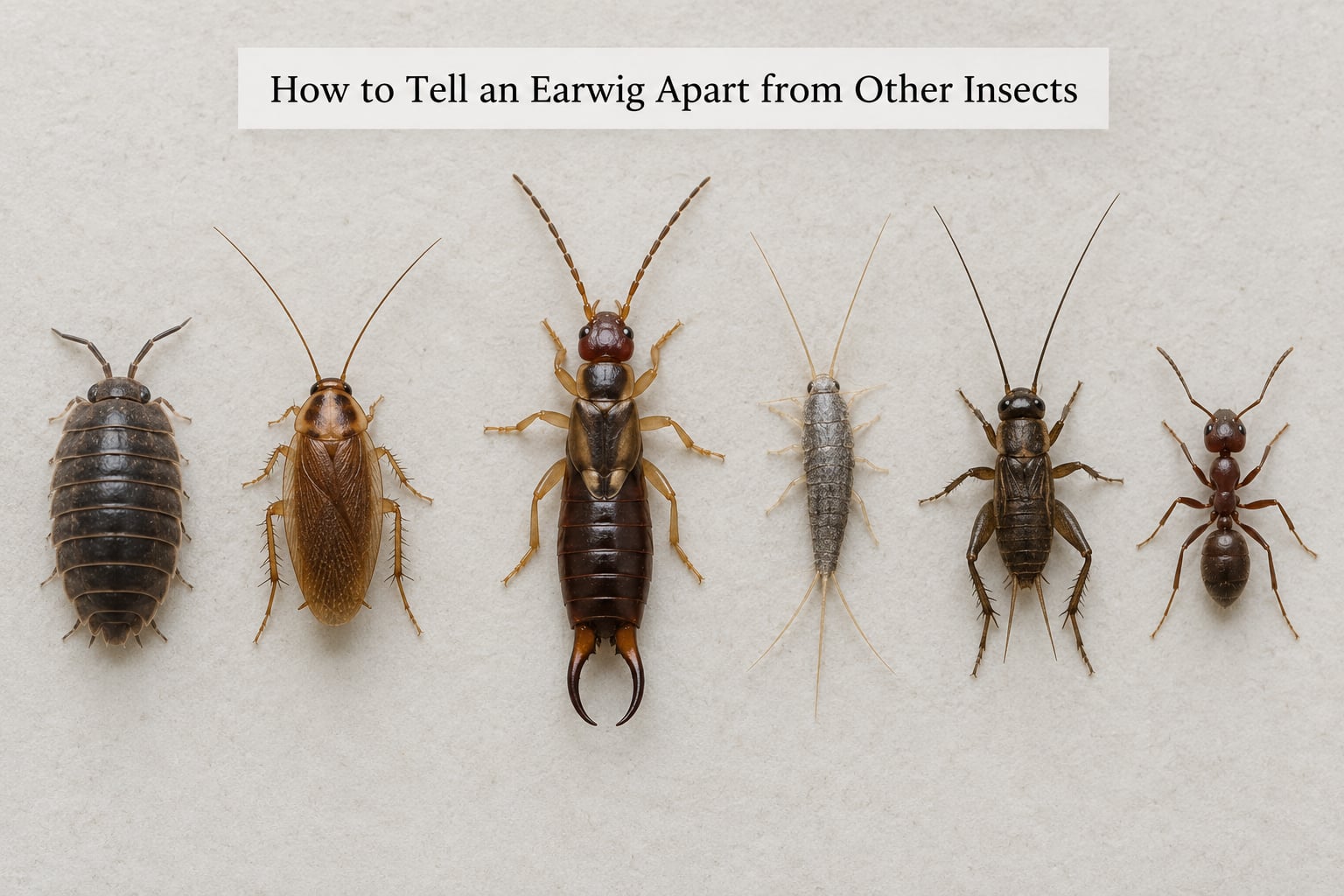
Look for two things at once: a narrow flattened body and a paired pincers at the rear. Harmless look-alikes usually have one or the other, never both. If there is no matched pair of curved forceps on the back end, it is not an earwig.
| Insect | What it looks like | The decisive difference |
|---|---|---|
| Earwig | Flat, narrow, reddish-brown to black, with a pair of curved pincers at the abdomen tip | Paired rear pincers plus a flattened body |
| Rove beetle | Shiny black or red-and-black, with very short wing covers and a flexible abdomen that curls upward when it runs | No rear pincers; the abdomen bends up instead of ending in forceps |
| Field cricket nymph | Dark, with long hind legs built for jumping and long antennae | Enlarged hind legs; no rear pincers |
| Walkingstick | A thin brown stick-like body that can exceed several inches, with long legs and a narrow head | Far longer and more slender, with legs that fold alongside the body |
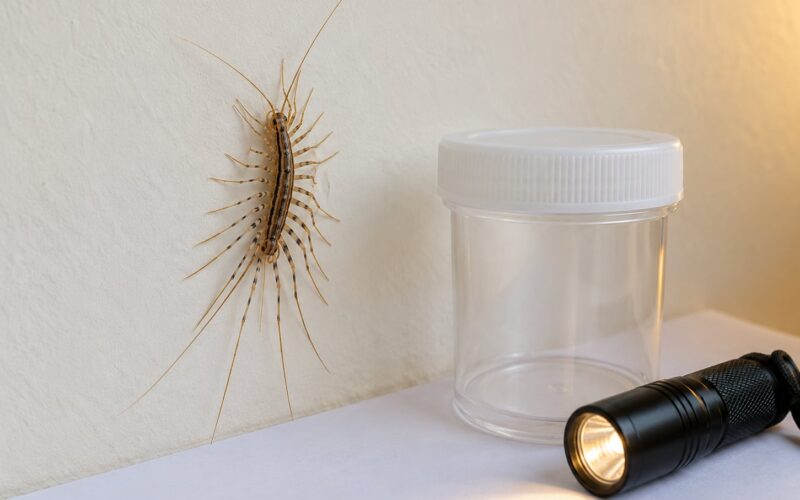
| House centipede | Flattened body with many pairs of legs running along both sides and long antennae | Many more than six legs, and no pincers |
| Ear mite | Microscopic, only visible under magnification, living inside the ear canal of a person or animal | Not a free-roaming insect at all; never visible to the naked eye |
The last row matters because ear mites and earwigs get confused constantly. If your concern is a dog shaking its head or a child complaining of an earache, you are dealing with a different subject entirely, and it needs a veterinarian or a doctor rather than a sweep of the baseboards.
What Do Earwigs Do?
Earwigs are nocturnal scavengers with a predatory streak. They spend daylight hours hidden in damp, dark harborage such as mulch, leaf litter, woodpiles, stacked pots and grass clippings, then come out after dark to feed on decaying plant material and to hunt small insects, including aphids, mites and insect eggs. That diet is the single best reason to think twice before treating them as a problem.
They are most active in warm, humid months, which is why a calm household can suddenly see several in a week after a rainy stretch. Once the outdoor population is high and the weather turns hot and dry or cold and wet, earwigs move. If there is a gap under the back door, that is the doorway they use.
Female earwigs are unusually attentive parents for an insect. They guard their eggs through the winter in a shallow nest in the soil or in compost, cleaning them and nudging them back into place, and the young hatch as pale, wingless nymphs in spring. Adults live roughly one year, and most of the population you see in a single summer was born that year.
The uncomfortable-looking pincers get used for defense, for holding prey, and for males to grip a female during mating. They are not a stinger and not a drill.
Why you should probably not kill them
One earwig working through aphids on a rose bush is doing more for that plant than most of the insecticides sold for it. Gardening forums are full of people who put the found insect outside instead of killing it, and that instinct is sound. Wiping out every earwig around a home removes a predator of aphids, mites and eggs while leaving the damp conditions that produced the pests in the first place.
Are Earwigs Dangerous to People, Pets, or Plants?
Earwigs are not dangerous. They are not venomous, they do not sting, and they do not bite people as a feeding behavior. A large male can pinch the skin of a finger that handles it roughly, which stings for a moment and leaves a small red mark, and that is the worst case in normal household contact. Children and pets are not at any real risk.
They do not chew through wood, drywall, insulation or structural members, and they do not breed in the house. On gardens they do real but limited damage: irregular holes chewed in seedlings and flower petals, and feeding on corn silk and soft ripening fruit. Helpful diagnostic detail: that feeding damage looks a lot like slug or caterpillar damage, but earwigs leave no slime trail behind them.
The bigger signal in a sighting is usually not the insect. A steady supply of earwigs indoors points to excess moisture, leaf litter or mulch piled against the foundation, or a damp crawl space or basement. Treating the insect while leaving those conditions alone is why the sightings come back.
Why Are Earwigs Coming Inside My House?
Earwigs come in because they are wandering and because something near your foundation is damp and sheltered. Common entry routes include the gap under an exterior door, worn weatherstripping on windows and doors, cracks around utility penetrations, gaps where siding meets the foundation, and vents or screens that do not sit flush.
The attractants are less varied: mulch and leaf litter banked against the wall, stacked firewood or stored outdoor furniture nearby, a damp crawl space, and plumbing or condensation that keeps a bathroom or laundry room humid. Potting soil carried in on a plant pot is a reliable way to bring a handful indoors without opening a door at all.
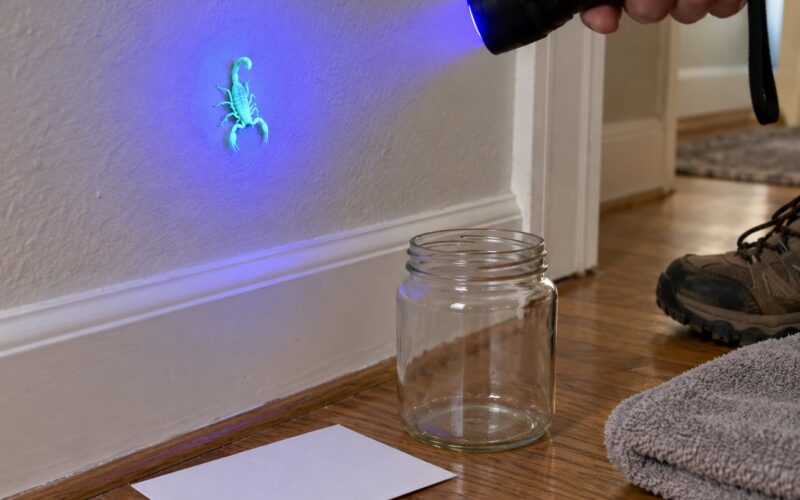
Check those spots in daylight with a flashlight before treating anything. A layer of leaf litter mounded four inches up the siding, a wet section of crawl space, or a door sweep that no longer touches the threshold will usually explain the whole sighting. It is a quick look, and it takes ten minutes.
How to Get Rid of Earwigs Without Risky Chemicals
Work from the outside of the house inward, and most of the results come from drying things out rather than from spraying. Start by clearing mulch, leaf litter and stored items away from the foundation and out of the entry zone. Fix the damp source next, whether that is a leaking hose bib, a dryer vent into the crawl space, or a dehumidifier running in a basement. Then close the obvious openings with weatherstripping, door sweeps and sealant on cracks around pipes and vents.
Inside, catch and relocate rather than spray. A glass or a jar with a cardstock ramp lets you carry one out. A soap-and-water spray in a spray bottle knocks them off surfaces and is a mild irritant rather than a hazardous pesticide, but keep it out of reach of kids and pets and never spray near a pet’s face, eyes, or water bowl.
Trap and bait methods exist for people who want to reduce numbers in a garden bed: shallow dishes of soapy water, or a low-sided container buried level with the soil and filled with a little bait or old bread. Use them where children and pets cannot get at them. Outdoor lighting helps too, since bright lights pull earwigs and other insects off the ground and away from doorways.
Insecticides labeled for earwigs are a genuine last resort, and only where earwig damage to plants is real and ongoing. Follow the label exactly, keep people and pets out of treated areas for the interval the label specifies, and prefer a product applied to the soil line and mulch rather than a fogger or a blanket spray of the indoor living space. Fogging a room for a stray earwig does nothing useful at all.
When Do You Need Professional Pest Control?
A few earwigs over a season is a nuisance, not an emergency, and one inside a bedroom is not a reason to call anyone at all. It is worth contacting a licensed pest professional when you are seeing earwigs every week across several rooms, or finding clusters in the building rather than scattered individuals. It is also worth a call if you are seeing damage you cannot explain, if a crawl space or basement stays wet through multiple seasons, or if the insects appearing indoors are not earwigs at all.
Getting the identification right matters more than the number. A rove beetle population and an earwig population get different recommendations, and species in your region may behave differently from the European earwig described in most identification guides.
Frequently Asked Questions
Do earwigs crawl into ears?
No. The name is a folk label from the body shape, not a record of behavior. Earwigs are not attracted to ear canals and they cannot burrow into the skin. The rare stories you hear involve an insect that wandered onto a sleeping face, not one that entered an ear. If a person or pet has ear pain, drainage or head shaking, see a doctor or veterinarian, because the actual cause is usually something else entirely.
Do earwigs bite people?
Earwigs do not bite as a feeding behavior and they carry no venom. A large male can pinch a finger with its cerci when handled, and that pinch stings briefly and leaves a small red mark, but it is not a wound and it does not swell like a spider bite. Children and pets are not at risk. The more sensible caution is gentle handling: pick up a small earwig with a cup rather than reaching for the pincers.
How long do earwigs live?
A single earwig lives roughly one year. Most of what you see around a home in a summer is a generation born that spring from eggs the female guarded through the winter in soil or compost. The nymphs hatch pale and wingless, then darken and develop their wing covers through a series of molts, and the adults pair up in late summer. That short life span is why a heavy season ends on its own.
Why do earwigs suddenly appear in my house?
Outdoor populations rise in warm, humid months, and a rainy spell followed by hot or cold weather pushes earwigs toward shelter. If a door sweep, weatherstripping, or a crack near a pipe or vent is open, they walk in. Potted plants, firewood, and stored furniture can carry them indoors too. Sudden appearance usually means pressure from outside plus a gap you already had, not a nest inside the walls.
How many earwigs in a house count as a real problem?
One to a few across a season is normal and needs no treatment at all. Begin paying attention when you are finding them repeatedly in several rooms over weeks, or when you see chewed holes in seedlings, flower petals, corn silk or soft fruit. Because earwigs cannot reproduce indoors and do not damage the structure, persistent indoor numbers point to persistent outdoor conditions around the foundation. Fix the moisture and harborage before anything else.
Is there a natural way to reduce earwigs around a home?
Yes, and it works better than spraying. Move mulch and leaf litter away from the foundation, dry out damp crawl spaces and basements, and seal gaps under doors, around pipes, and where siding meets the foundation. Lower outdoor lighting near entryways reduces how many earwigs gather there. Shallow traps of soapy water and buried containers with a little bait lower garden numbers. Leaving some earwigs alive helps, since they eat aphids and mites.
Conclusion: Start with a Closer Look and Drier Conditions
Confirm the insect by its paired rear pincers and flattened body, then stop worrying. Earwigs cannot bite, cannot reach your ears, cannot damage the structure of a home, and cannot breed inside it, so a single finding is a curiosity rather than a threat.
Take the next three steps outside rather than inside. Pull mulch and leaf litter back from the foundation, look for the damp spot feeding them, and close the gap under the door or around the pipe they came through. Leave a few of them alive in the garden, since they eat aphids and mites, and reach for a labeled product only if plant damage keeps happening after the conditions are fixed.