To get rid of clothes moths in a closet, empty it completely, wash or freeze every natural-fiber item, then deep-clean the shelves, baseboards and carpet before storing the clean clothes in airtight containers. The whole job is a weekend of sorting and vacuuming, and the part people skip — carrying the vacuum debris out of the house — is the part that decides whether it comes back.
The reason clothes moths are stubborn is that the moth you see is not the thing eating your sweaters. Adults only mate and lay eggs. The larvae do the damage, and they hide in seams, folds and crevices, and they can survive for months without eating while the adult stage lasts only days. Wiping down a shelf and hanging a cedar block does almost nothing about them.
You need this guide if you store wool, cashmere, silk, alpaca, fur or feathers, if you buy second-hand clothing or vintage rugs, or if you have already found holes, webbing or small larvae and want to stop the damage instead of watching it spread.
Last reviewed: October 2026
Table of Contents
- What You Need for Clothes Moth Removal
- Step-by-Step: How to Get Rid of Clothes Moths in a Closet
- Common Mistakes
- Frequently Asked Questions
- What are the signs of clothes moths in a closet?
- Can clothes moths damage wool, silk, and other natural fabrics?
- How long does it take to get rid of clothes moths in a closet?
- Are moth traps enough to eliminate a closet infestation?
- Should I use foggers or sprays to kill clothes moths?
- How can I prevent clothes moths from coming back?
What You Need for Clothes Moth Removal
Nothing here is exotic, and you can assemble the whole list in one trip around the house. The vacuum and the bags matter most; the rest is detail work.
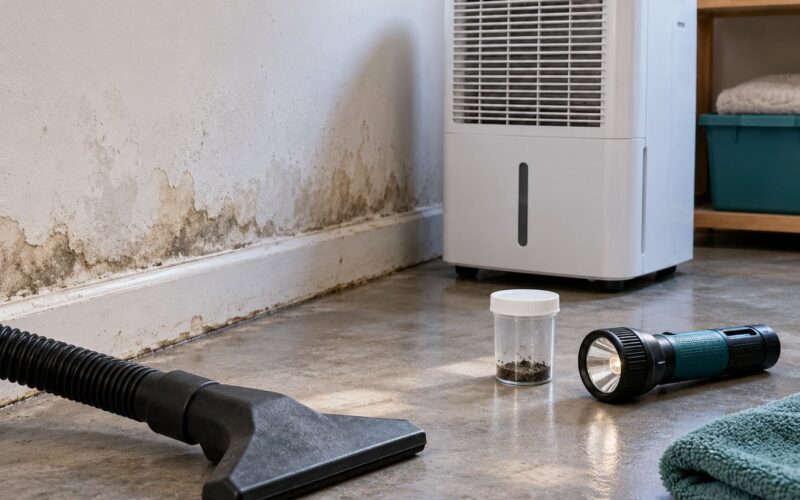
- A vacuum with a crevice tool and a dusting brush. A bare floor head misses the corners where larvae spin their cases.
- Flashlight and a small loupe or magnifying glass. Eggs are pinhead sized and pale; you will not spot them in a lit room.
- Heavy-duty trash bags or large zip bags for isolating suspect items, plus a roll of tape.
- Access to hot laundry — a washer and dryer, or a dry cleaner for structured garments.
- Freezer space if you own dry-clean-only wool, silk, a wool coat or a rug. Block off one shelf or a drawer for 72 hours, or longer.
- White vinegar and water, plus clean cloths for shelves, baseboards and the back panel.
- Old newspaper or paper towels for wiping, and a mask if you are sensitive to dust.
- Sticky or pheromone traps for monitoring after the cleaning is done.
- Optional: cedar blocks, cedar hangers or a lavender sachet for deterrence, and an insecticidal aerosol whose label specifically lists clothes moths and says it is safe for the surfaces you plan to spray.
Step-by-Step: How to Get Rid of Clothes Moths in a Closet

1. Confirm you have clothes moths, not pantry moths or carpet beetles
Two species cause almost all clothing damage. The webbing or common clothes moth (Tineola bisselliella) spins fine silken webbing over the surface of the fabric as it feeds. The casemaking or case-bearing clothes moth chews a tube it carries with it, and you find the damaged fibers inside a brown, sausage-shaped case lying on the garment.
Evidence in a closet looks like small holes, webbing on a sweater, furrows brushed into a knit, brown pupal cases stuck to a wall or shelf corner, or creamy white larvae with dark heads up to about three-quarters of an inch long. Adults are small, pale buff moths that fly out when you open the door on a warm evening.
Pantry moths (Plodia interpunctella) are a different job. Adults have a two-tone wing with a coppery band, and the larvae live in grain, cereal, pet food, chocolate and birdseed. If you are seeing larvae in the pantry, sorting the closet will not fix anything. Check the dry goods first.
Carpet beetles are the other look-alike. Their holes resemble moth holes, but the larvae are bristly and brown with banding, not smooth and creamy, and the adult beetle eats the edges of carpet and upholstery near baseboards and under furniture. Our pest identification guides cover how to tell beetle damage apart from moth damage before you buy a treatment.
2. Find and remove the infestation source
Take everything out of the closet, including the rug, the hangers, the storage boxes and anything stored on the top shelf. Do the sorting somewhere else — a bed, the floor of a spare room, the middle of the living room. Sorting inside a closed closet spreads eggs and larvae across the only space you are trying to protect.
Inspect anything that holds keratin or body oils: wool sweaters and coats, cashmere, silk, alpaca, linen, furs, feather items, stuffed toys, and stored clothing that has been worn and not laundered. That last one is the most-missed reservoir. As people in the r/lifehacks thread on combating clothing moths keep repeating, moths go for the scent of worn clothes, so a wool sweater worn once and shelved is a buffet.
Shake each garment hard over a tarp or outdoors. Active larvae and loose eggs drop onto the sheet, and you can sweep them into a bag instead of shaking them into the carpet. Then bag the suspect items separately: double-bag them, tape the necks shut, and keep that bag out of the bedroom and out of the closet.
Work outward from the closet. Check the bedroom, the hall closet, upholstered chairs and headboards, wool rugs in adjoining rooms, and under-furniture edges of carpet. Vintage or thrifted clothing, an antique rug, a wool blanket from a market stall and wool insulation in an attic are all documented entry routes, and the moth does not care that you brought it in on purpose. If damage turns up in a second room, that second room is part of the treatment.
Decide item by item what happens next. Anything washable goes to the wash. Anything dry-clean-only goes to the cleaner. Anything you would not replace can be bagged for donation only if the damage is cosmetic; hole-ridden sweaters rarely sell, and moths ride home inside the box. Heirlooms and sentiment go to step 4 before you give up on them.
3. Clean the closet and nearby surfaces
Vacuum before you wipe. Dry debris holds larvae in place, and cleaning over it just redistributes them.
Run the vacuum slowly over the floor, the back panel, each shelf, the underside of the hanging rod, the corners and the baseboards, using the crevice tool at every join. If there is carpet, use the edge nozzle along the tack strip and under furniture, and check the closet floor for a second layer you forgot was there.
Then deal with the debris properly. This is where most repeat infestations begin. Seal the vacuum bag inside another bag, carry it out, and put it in an outside bin. If your vacuum has a canister, empty it outside and wipe it with soapy water before returning it indoors. Running the vacuum over the carpet a week later, with the old bag still attached, plants the problem right back where it started.
Wipe down every hard surface with a cloth dampened with a one-to-one mix of white vinegar and water: shelves, the back panel, baseboards, the door and its track, the interior of every drawer, and any painted wall the closet touches. Let wood dry fully rather than soaking it. Launder the wiping cloths in hot water and throw the paper towels away sealed.
Look for pupal cases while you are down there. Those brown casings glue themselves to vertical surfaces in corners, and a casual wipe often leaves them in place. Pick them off by hand and bag them. Check for mouse nests or stored food in the closet at the same time, since anything edible will pull pantry moths straight back into your wardrobe.
4. Treat affected clothing and textiles
Heat and cold do the real work here, and the method depends on what the garment is. The table below is the honest comparison of the options, including what each one fails to reach.
| Method | Time it takes | Eggs and larvae | Adults | Best for |
|---|---|---|---|---|
| Hot wash at 120°F plus dryer | 1–2 hours | Kills both | No | Washable wool, cotton, sturdy synthetics |
| Freezing | 72 hours for larvae, 7–14 days for eggs | Kills both | No | Dry-clean-only wool, silk, coats, rugs |
| Dry cleaning | Same day or next day | Kills both | No | Structured coats, lined garments, vintage pieces |
| Vacuuming | 30–60 minutes | Removes them, does not always kill | Removes them | Closet, carpet, upholstery, shelving |
| Pheromone or sticky traps | Days to weeks | No | Catch some | Monitoring and cutting off mating |
| Cedar, lavender, sachets | Scent fades within weeks | No | No | Deterrence only, never a treatment |
| Labeled insecticidal aerosol | As directed | Surface only | Kills | Adults on shelves, in corners, along baseboards |
| Professional heat or fumigation | 1–2 days | Kills both | Kills | Infestations in carpet, upholstery or attic insulation |
For the freeze, this is where the advice in most guides contradicts itself. 72 hours at 0°F or colder reliably kills active larvae, which is the stage doing your damage. Eggs and pupal cases are tougher, so if the item is still getting holes after the first freeze, or if you are freezing a bag of unknown history, give it 7 to 14 days sealed. Leave the bag closed the whole time; opening it halfway to rearrange things warms the core. Freezing works in an ordinary home freezer, and it is the most trusted DIY method in the pest forums for good reason.
For washable items, heat does the work twice. Wash at 120°F or the highest setting the label allows, then run 30 minutes on high heat in the dryer, and dry clean anything that cannot go in a machine. A second look at the garment after drying tells you whether larvae survived: fresh holes, new webbing or a new case means another round, not a different product.
For holes, decide honestly whether the piece is worth saving. A cashmere sweater with two small holes can be darned invisibly and worn for years, and r/Anticonsumption readers regularly freeze and keep sentimental knitwear for exactly that reason. A coat eaten across the shoulder panel is usually a casualty, and moths return to it as long as the fibers are there.
On sprays: use an aerosol whose label names clothes moths, and follow that label to the letter on surfaces, ventilation and drying time. Do not use foggers or bug bombs indoors — they flood the air, kill only the adults you could already see, and leave every larva in a fold untouched. Do not spray clothing unless the label says the product is safe for fabrics, and keep all insecticides away from children and pets. Our home pest prevention guidance covers safe storage and use.
Rugs, upholstery and mattresses need a different approach. Vacuum them thoroughly, then steam them if the material tolerates steam, and treat anything with widespread damage as a professional job rather than a closet project.
5. Protect clean clothing so clothes moths in a closet never come back
Launder before you store. Not fresh out of the dryer — freshly laundered, and never worn-and-unwashed. Body oils and lint are what make a closet attractive in the first place.
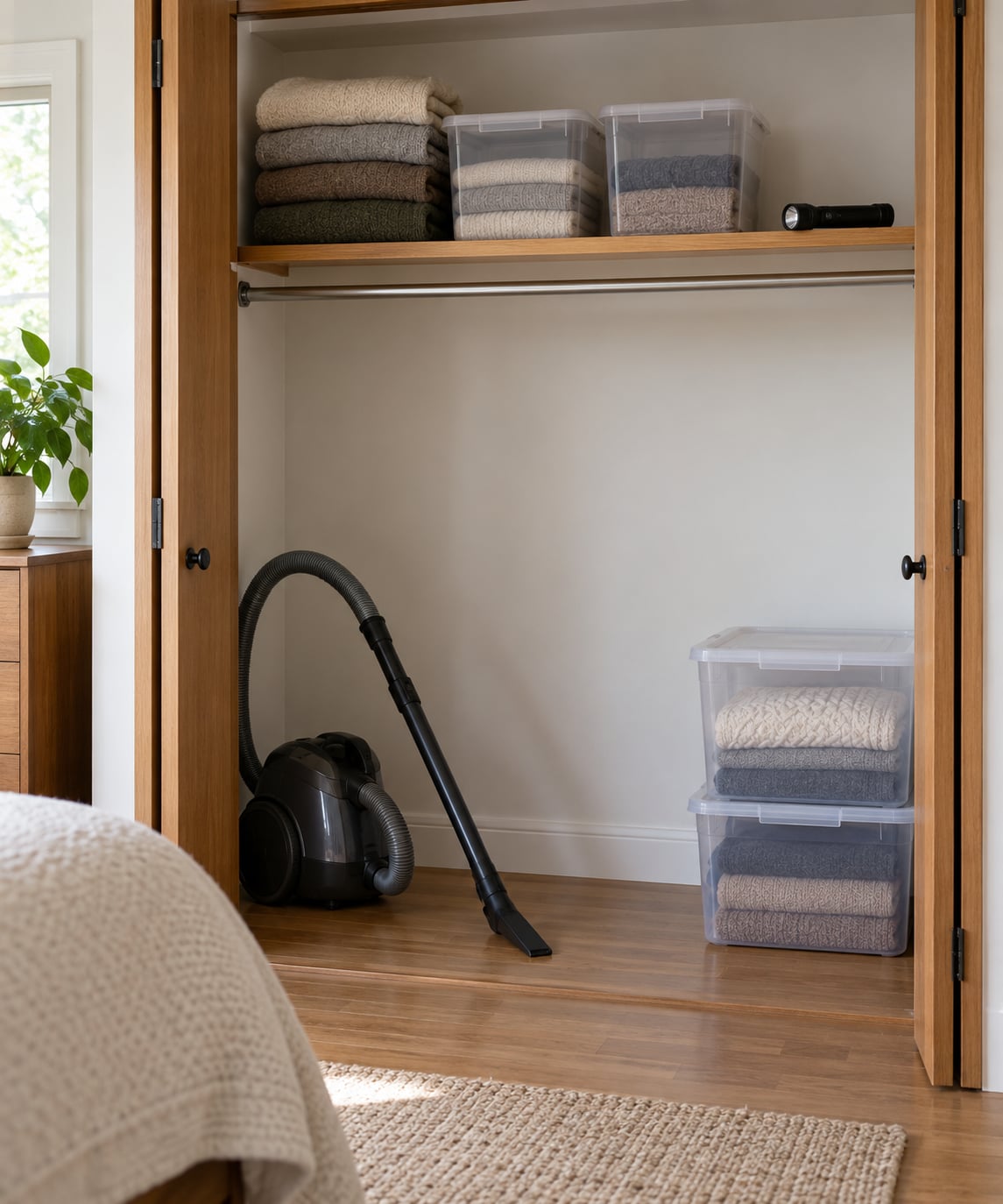
Store in airtight plastic bins with gasketed lids, or in vacuum-sealed bags. Cardboard boxes are not sealed, cardboard edges are an edge to chew, and breathable cotton garment bags keep dust out while giving moths a straight path in. Hang long garments such as coats and dresses on sturdy hangers, fold knits loosely, and do not stack wool on wool in a bare corner.
Keep a monthly rhythm: vacuum the floor, baseboards and carpet edges, and wipe the shelves. Adults emerge in the highest numbers in April and May and again in late August, so those two windows are when a quick inspection is worth the five minutes it takes. Larvae in the larval stage can drag on for two years, which is why a closet that seems quiet in January can be full of damage by June.
Set traps after the cleaning, not instead of it. Pheromone traps lure males so you can confirm moths are still active and interrupt mating; sticky traps give you a weekly count. Neither touches an egg or a larva, and a trap sitting next to a pile of sweaters can pull adults toward the food. Use one per closet as an alarm and check it every week or two.
Be honest about the natural options. Cedar has a real scent that deters adults, which is why cedar hangers and blocks are popular, and sanding a block refreshes the aroma — but as the r/pestcontrol thread puts it, cedar and mothballs are deterrents, not killers, and once eggs are laid the scent does nothing. Lavender, thyme and rosemary sachets are weaker still and fade in weeks. Treat all of them as a background deterrent in a closet you are already keeping clean.
Mothballs and naphthalene are a separate conversation. Naphthalene and paradichlorobenzene are restricted by the EPA in the US and were banned for many household uses in the EU in 2008, because the fumes are toxic to children and pets and the odor soaks into clothing. The one thing they do well is kill moths and eggs inside a sealed container, and that is the only situation where a properly labeled product is reasonable — sealed, away from children, never loose in an open closet.
Finally, hold a 30-day watch after the cleanup. Look inside two or three containers each week, check the traps, and look for new holes or webbing. Adults appear within days if anything survived, so six weeks with no sightings and no new damage means the source is gone rather than merely quiet.
Common Mistakes
Almost every failed removal attempt is one of these eight.
- Spraying before identifying. Aerosols kill adults and nothing else, so people assume the treatment failed. Fix: confirm clothes moth evidence, then treat the larvae in the fabrics and the adults on the surfaces separately.
- Emptying the vacuum indoors. The bag or canister goes right back on the floor, and the larvae ride along. Fix: seal the bag in a second bag and carry it to an outside bin.
- Storing freshly treated clothes beside untreated ones. You clean half the wardrobe, repack it, and leave the infested sweaters hanging nearby as a re-infestation source. Fix: keep the cleared clothing in sealed bags off-site until the closet has been vacuumed and wiped.
- Using foggers or bug bombs indoors. They cannot reach a larva inside a knit, they taint the air, and they leave you with a false sense of a job done. Fix: remove them from the plan entirely.
- Assuming traps, cedar or mothballs will do the work. A moth in a trap is evidence, not a treatment. Fix: use them for monitoring and deterrence, and do the heat, cold and vacuuming work yourself.
- Hanging the clothes back up and calling it done. Hanging does nothing; the eggs and larvae are still in the fabric. Fix: wash or freeze first, then store airtight.
- Throwing away heirlooms before trying the freezer. Sentimental garments get binned on sight, and most would have survived. Fix: bag and freeze for 7 to 14 days before deciding.
- Storing clean clothes in cardboard boxes or breathable bags. Neither keeps moths out, and both make the next inspection harder. Fix: gasketed plastic bins or vacuum bags, opened briefly and resealed.
Frequently Asked Questions
What are the signs of clothes moths in a closet?
You are looking for small holes in wool, cashmere or silk, fine silken webbing on the surface of a sweater, brown sausage-shaped larval cases, furrows brushed into a knit, and creamy white larvae with dark heads up to about three-quarters of an inch long. Adults are small, pale buff moths that flutter out when you open the closet door on a warm evening.
Can clothes moths damage wool, silk, and other natural fabrics?
Yes. The larvae feed on keratin, so wool, cashmere, alpaca, silk, fur and feathers are all fair game, and any fabric holding body oils or lint can carry an infestation. Cotton and denim rarely get eaten. A larva can put holes through a sweater in weeks, while silk more often shows as thinned, weakened patches than neat holes.
How long does it take to get rid of clothes moths in a closet?
Most closets are clear within one to four weeks of starting, because adults are short-lived once the food source is gone. Expect two to three weeks of monitoring after the cleaning, longer if the larvae are in a wool rug, an upholstered chair or attic insulation. If you still see adults after six weeks with no new damage, suspect a reservoir outside the closet.
Are moth traps enough to eliminate a closet infestation?
No. Pheromone traps lure adult males so you can confirm moths are present and interrupt mating, and sticky traps give you a cheap weekly count. Neither kills eggs or larvae inside a garment. Use traps as an alarm that tells you whether the clearing worked, never as the treatment itself.
Should I use foggers or sprays to kill clothes moths?
Skip foggers and bug bombs indoors. They fill the air with insecticide, kill the adults you can already see and do nothing for larvae and eggs inside fabric, folds or a rug pile. An aerosol whose label names clothes moths, sprayed on shelves, baseboards and corners and used exactly as directed, is a useful addition after vacuuming, not a replacement for washing, freezing or cleaning.
How can I prevent clothes moths from coming back?
Launder everything before it goes into storage, then use airtight plastic bins with gasketed lids or vacuum bags rather than cardboard boxes. Vacuum the closet floor, baseboards and carpet edges on a monthly rhythm, and inspect in April and May and again in late August, when adult moths emerge in the highest numbers. That cadence catches a new generation before it reaches your sweaters.
Start tonight with three things, not a shopping cart. Take the closet empty and bag every natural-fiber item separately. Wash what you can at 120°F and finish with 30 minutes on high heat; freeze the rest for 72 hours, longer if you are unsure. Then vacuum the closet down to the corners, wipe the shelves with a one-to-one vinegar and water mix, and carry the vacuum bag out to the outside bin.
Give it 30 days with traps in place before you put the wool away. If the traps stay empty and no new holes appear, the source is gone rather than sleeping. And if the damage is in a rug, an armchair or the attic insulation, that is a separate and bigger job — call a professional rather than reliving this in eight weeks.