If you are trying to work out how long bed bugs can live without a host, the short version is this: a healthy adult can go roughly six to twelve months without a blood meal in an ordinary home, and laboratory studies have kept adults alive past 400 days in cool, damp conditions. Nymphs, the immature stages, run out far sooner. Eggs never feed at all.
Those numbers are why an empty apartment is not a solved problem. A unit that sat vacant for a year can still hand live bugs to the next tenant, and a house that looks clean on moving day can produce a sighting months later.
Table of Contents
- How Long Can Bed Bugs Live Without a Host?
- Bed Bug Survival by Life Stage
- What Conditions Help Bed Bugs Survive?
- How Long Do Bed Bugs Survive in an Empty House?
- Why Is There No Single Survival Time?
- Signs Bed Bugs Have Been Feeding Without You
- What to Do If You Suspect Bed Bugs
- Frequently Asked Questions
- What Should You Do First?
How Long Can Bed Bugs Live Without a Host?
The honest answer is a range, because bed bug survival without a host depends on three things at once: how much fat the bug is carrying, what life stage it is at, and how warm and humid the room stays. A bug that just finished a heavy meal is in a completely different position from one that has been starving for months.
| Life stage | No blood meal, typical indoor conditions | Best recorded conditions |
|---|---|---|
| Egg | Does not feed at any point | Hatches in roughly 6 to 10 days |
| Newly hatched nymph (1st and 2nd instar) | About 20 days | Little margin at all; feeds as soon as it can |
| Older nymphs (3rd to 5th instar) | About 1 to 3 months | Longer in cool, humid, sheltered cracks |
| Adult, recently fed | 6 to 12 months | More than 400 days reported in cool laboratory conditions |
Read that table as a range, not a countdown. The 400-day figure comes from laboratory work at low temperatures, which is useful for understanding the species in the abstract but is not what most households will experience.
Bed Bug Survival by Life Stage
Adults, nymphs and eggs each carry a different amount of stored energy, and that difference decides how long each one can wait. A single sighting tells you almost nothing about the age of the infestation, because the stages look similar at a glance and hide in different places.
Adult Bed Bugs vs. Nymphs
Adults are flat, oval and reddish-brown, roughly 4 to 6 mm long, and they can take a blood meal weighing up to six times their own body weight. When a host is available, females feed about every three to seven days and males every seven to ten days. One good meal is enough for a female to produce a large egg batch, and users on pest forums report individual well-fed females surviving a year or more and then laying on the order of 200 eggs afterwards.
Nymphs are smaller versions of the adult, and they go through five nymphal instars before reaching maturity. A first or second instar nymph has very little stored fat, which is why the roughly 20-day figure shows up so often. Later instars are bulkier and tougher, and older nymphs can wait one to three months.
That gap matters when you are judging an infestation. If you only find tiny pale nymphs, the population is likely recent and active. If you find a scatter of adults, the colony has had time to grow, which usually means more hiding places than a first inspection will reveal.
Do Bed Bug Eggs Survive Without a Host?
Eggs do not feed, so the question of survival without a host applies to whether they stay viable and hatch, not to how long they can go hungry. Under typical indoor conditions they hatch in about 6 to 10 days, and a female lays roughly one to five eggs a day, with some sources putting the lifetime total near 500.
The part people get wrong is treating unhatched eggs and hatched nymphs as the same thing. A batch of eggs can sit through a vacancy and still produce nymphs afterward. What dies fast is the moment those nymphs emerge with nobody to feed, because a first instar nymph cannot bridge a long gap without a meal.
This is the practical reason a treated room can look fine for a few weeks and then produce new sightings. It is not necessarily reinfestation from a neighbour. It can be eggs that were never reached by the treatment hatching into a generation that then starved or, more often, found a sleeping person down the hall.
What Conditions Help Bed Bugs Survive?
Temperature is the biggest lever, and it cuts both ways. Around 70 to 90°F (21 to 32°C) bed bugs feed and develop fastest. Below roughly 70°F (21°C) activity slows and they enter a dormancy-like state, cutting metabolic rate by as much as 90 percent and living off stored fat.
| Condition | What it means for survival |
|---|---|
| 70 to 90°F (21 to 32°C) | Fastest feeding and development |
| Below 70°F (21°C) | Feeding slows, dormancy begins |
| Near 46°F (7.6°C) | Adults recorded alive in protected cracks; development stops |
| Above 95°F (35°C) | Survival time shortens noticeably |
| About 120°F (49°C) sustained | Lethal heat, used in professional heat treatment |
Humidity is the second lever, and you will see conflicting figures online for a good reason. Sources quote 40 to 50 percent relative humidity as a typical indoor range and also quote 75 to 100 percent as favourable. Both are describing the same biology from opposite ends: the lower figure reflects the dry heated air most homes actually have, while the higher figure reflects the damp, protected cracks where eggs stay viable and nymphs develop.
What this means for you is that a warm, dry, well-ventilated room with forced heat running is close to the worst environment for bed bugs, and a basement bedroom with a damp corner and no air movement is close to the best. Neither is a strategy. Nobody has ever cleared an infestation by adjusting the thermostat alone.
Shelter matters too. Bed bugs are flat enough to squeeze into gaps around 1/8 inch wide, and they usually stay within about six feet of where people sleep. That behaviour matters in a vacant property, where the sleeping surfaces are empty but still offer shelter, and it also explains why moving furniture out of a bedroom is one of the more useful things a person can do.
How Long Do Bed Bugs Survive in an Empty House?
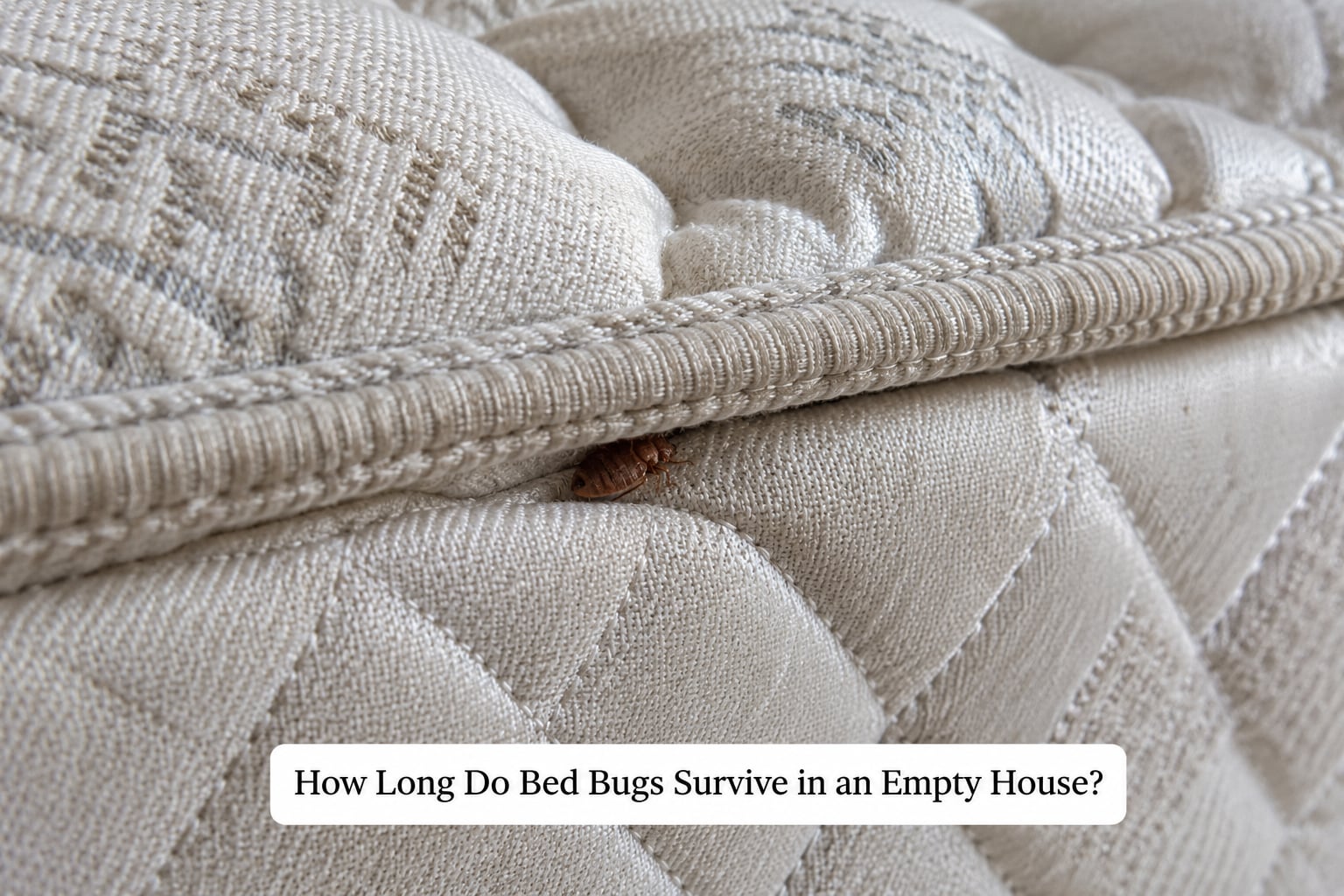
Bed bugs survive in an empty house, and the vacancy itself barely changes their arithmetic. Adults that were well fed before the tenants left keep drawing on those reserves for months, and a cool, damp vacant property can push that out even further.
Three things break the maths for a vacancy, and each one breaks it only partially. The first is freezing, which is not as useful as people expect. Bed bugs tolerate cold in protected cracks at around 46°F, and a typical American interior will not hold a lethal temperature long enough or uniformly enough to reach every hiding place. The second is cleaning, which removes the clutter bugs use as shelter but does nothing to eggs embedded in mattress seams or baseboards. The third is heat, which is the only version of “empty room” that genuinely works, and it needs roughly 120°F sustained through a long hold period across the whole unit.
There is also the animal-host problem. A house that is empty of people is not necessarily empty of blood. Rodents, birds and bats will all feed bed bugs, and someone on a pest forum traced an infestation in an empty unit to a cold air return vent, with the bugs moving toward the only remaining food source in the building. In apartments, the neighbour’s unit is the food source, and a vacant flat next door is a safe harbour rather than a dead end.
Bagging and moving belongings out does not help either, unless you are careful. Unsealed items can carry bugs into a vehicle, a storage unit or the new place, and that is one of the most common ways people carry an infestation into a home that was previously clean.
Why Is There No Single Survival Time?
Any source that gives you one clean number is simplifying something real. The most-repeated range on the internet, 20 to 400 days, mixes young nymphs with adults in cool laboratory conditions and puts the two ends of it next to each other as though they were the same animal in the same room.
Four variables account for nearly all of the variation. Life stage sets the ceiling, because a first instar nymph and a fat adult are not comparable. Prior feeding status sets the starting point, since a bug that just ate can weigh several times more than one that has not eaten in weeks. Temperature and humidity then push the metabolic rate up or down for the whole waiting period. Shelter decides whether the bug is in a protected mattress seam or an exposed baseboard.
Laboratory work is also good at producing extremes and poor at describing a normal living room. A bug at 46°F in a sealed crack in a lab container is not the same animal as a bug in a baseboard in a heated house in February. Treat the extreme figures as proof that starving a population out is not a control method, not as a schedule for your own unit.
Signs Bed Bugs Have Been Feeding Without You
Look for live bugs first, because that settles the question. Adults are flat, rust to mahogany brown, about the size of an apple seed, and they give off a sweet almond-like musty smell at higher populations. You are also likely to find pearly white, pinhead-sized eggs along mattress seams and in the folds of sheets, plus translucent shed skins left behind as nymphs grow.
Rust or mahogany-coloured spots on linens are dried blood from previous feedings, and they do not wash out with laundering. The bites are the least reliable evidence on this list. Reactions show up anywhere from a few hours to well over a week after the bite, and plenty of people react little or not at all, so a bite pattern is useful as a reason to look rather than as a diagnosis.
What to Do If You Suspect Bed Bugs
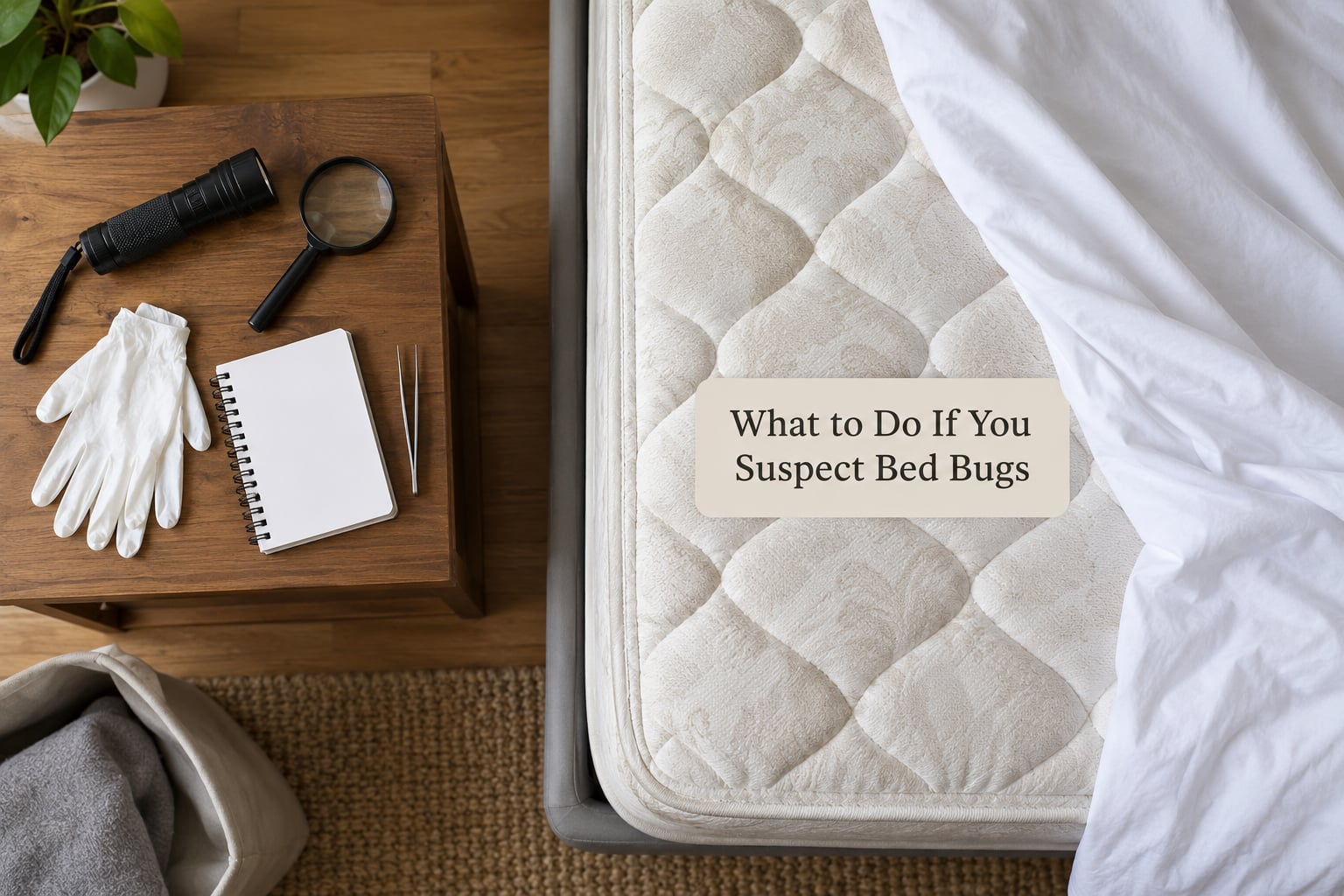
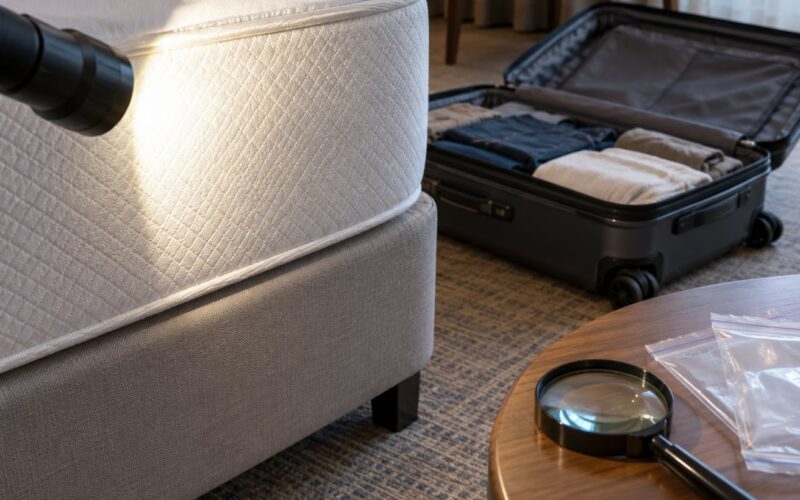
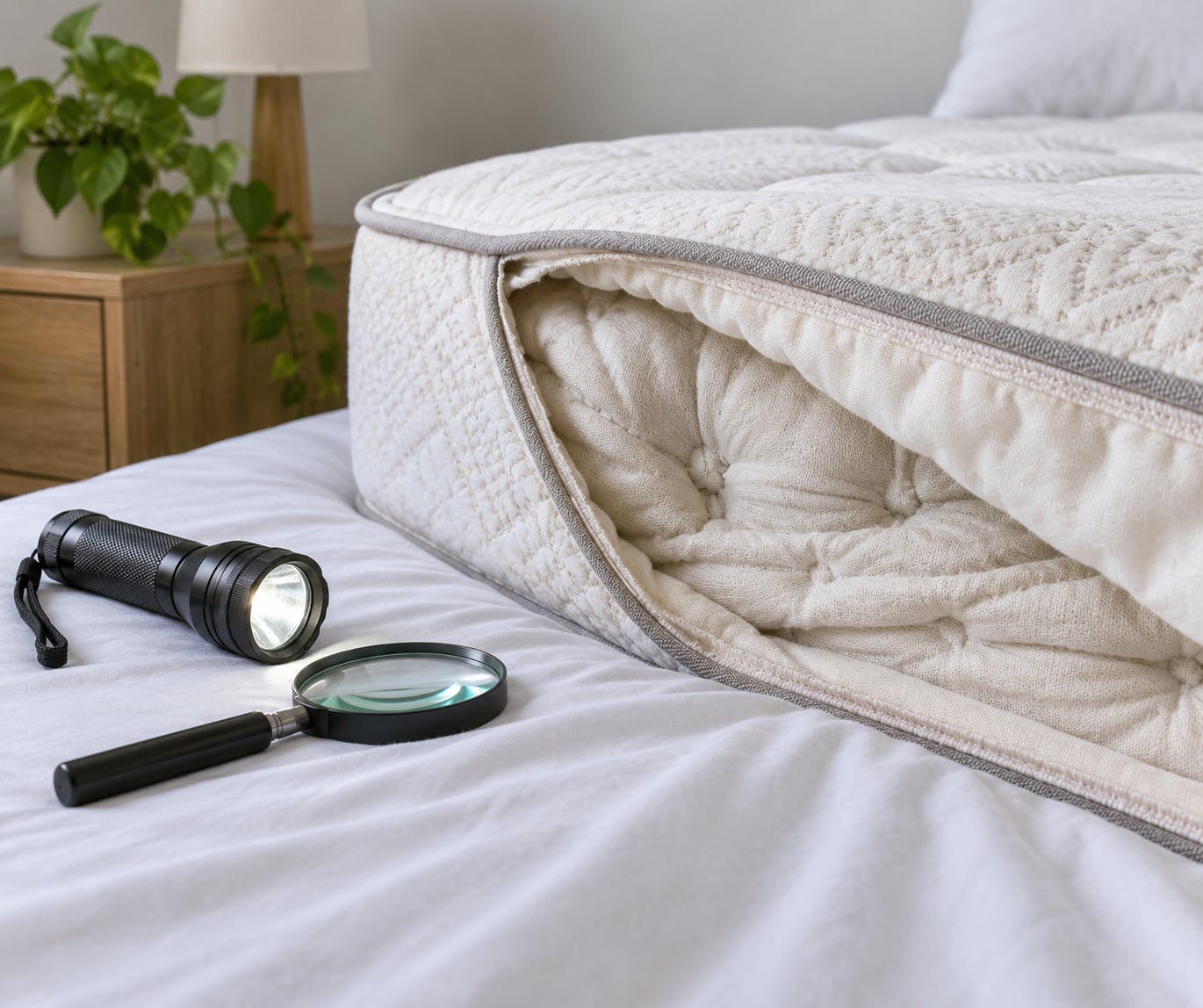
Start with a deliberate inspection rather than a spray. Pull the sheets and comforters off, check the mattress seam all the way around, then look at the box spring, the bed frame joints, the headboard, and the baseboards within about six feet of the sleeping surface. Work with a flashlight and something narrow to probe the seams. A picture of a live bug or a bug in a sealed bag beats a week of guessing.
Bag what comes off the bed, seal it, and label the bag with the date. That one habit does more for tracking an infestation than anything else in this article, because it gives you an honest timeline when you talk to a professional. Keep belongings out of other rooms, and do not move furniture into the rest of the house for a few weeks, since that spreads the problem faster than any bug could.
Skip the indiscriminate can of bug spray. Over-the-hopper aerosol sprays kill the bug you spray and can drive the rest of the population out of the bedroom and into the wall voids next door. If you want passive monitoring, interceptor traps under each bed leg will tell you whether activity continues without adding chemicals to the mix. If you find live bugs in more than one room, or in a multi-unit building where a neighbour has confirmed bugs, contact a qualified pest management professional rather than treating it yourself. Heat treatment and targeted insecticide work, but only when the whole unit is addressed at once.
Frequently Asked Questions
Can bed bugs live for a year without food?
A healthy adult can. Under typical indoor conditions adults survive roughly six to twelve months without a blood meal, and laboratory studies have kept them alive beyond 400 days in cool, damp conditions. Nymphs cannot match that. A first or second instar nymph lasts about 20 days, and older nymphs about one to three months, so a year without food is an adult-only outcome.
How long do adult bed bugs survive in an empty room?
Roughly the same as they survive in an occupied one, because vacancy removes the meal but not the bug. A well-fed adult carries enough stored fat for months, and cool, damp empty rooms extend that further. Bed bugs also stay within about six feet of sleeping surfaces, so an empty bedroom still gives them shelter in mattress seams, the box spring, bed frame joints and baseboards.
Do bed bugs die if the person they were biting leaves?
No, and that is exactly why moving out is not a treatment. Adults survive many months without a host, and an empty property is often easier for them, not harder. Two caveats matter: mice, birds and bats will feed bed bugs if they are present, and in apartments an infested neighbouring unit keeps supplying the blood that sustains the local population.
How long can baby bed bugs live without eating?
Newly hatched nymphs are the least durable stage. A first or second instar nymph generally manages about 20 days without a meal, because it has almost no stored fat to draw on. Later instars, from the third to the fifth, hold considerably more and can survive one to three months. Size is the clue: if what you found was tiny and pale, the infestation is probably young and active.
Are bed bug eggs dormant if there is no host?
Eggs never feed, so they do not need a host to survive, but their viability still depends on temperature and humidity. In typical indoor conditions they hatch in about six to ten days, and damp, protected cracks give them the best chance. The danger comes after hatching, not before: a first instar nymph emerging into an empty room has only days to find a meal.
Does vacuuming or freezing get rid of bed bugs?
Neither on its own. Vacuuming reduces the numbers you can reach, particularly on mattress seams, baseboards and furniture joints, but it does not reach cracks and eggs. Freezing is limited by the same biology: bed bugs survive around 46°F in protected cracks, and typical home conditions do not stay cold enough for long enough. Heat treatment near 120°F sustained across the whole unit is what actually kills them.
What Should You Do First?
Strip the bed and inspect the mattress seam, the box spring, the bed frame and the nearby baseboards with a flashlight. Photograph anything you find, bag and date any bedding that has evidence on it, and keep it out of other rooms.
After that, judge the scope. Bugs in one bed and one room are a contained problem you can monitor with interceptor traps and follow-up inspections. Bugs in several rooms, or in a building where a neighbour has confirmed an infestation, need a qualified pest management professional, because heat and targeted treatment only work when the whole unit is covered at once. Leaving a unit vacant to starve them out is the one option the biology rules out.
For further reading, the extension resources from UC IPM, the U.S. Environmental Protection Agency and university entomology departments are the sources I trust over pest service blogs, because they separate the laboratory numbers from what happens in real bedrooms.