Knowing how to stop roaches from coming up the drain comes down to three things at once: a physical blocker over the opening, a P-trap holding a full pool of water, and biofilm scrubbed out of the pipe. Seal drains that go unused, keep every trap topped up, and roaches lose the highway they were using.
I know how unsettling that is. You turn on a bath tap or pull back the shower curtain and there it is. Most people find roaches in the same three places: a rarely used guest bathroom, a bathtub nobody drains after a soak, or a basement floor drain.
Here is the order I’d work in. It takes about an hour for one drain, and the same routine repeated across every drain in the house is what actually holds.
Table of Contents
- What You Need
- How to Stop Roaches from Coming Up the Drain: Step-by-Step
- Common Mistakes
- Frequently Asked Questions
- What can I pour down my drain to keep roaches away?
- Why are roaches coming up through my drains?
- Does pouring bleach down the drain help with roaches?
- Can I put boric acid down the drain for roaches, and how long until it works?
- Does a rubber stopper stop roaches coming up the sink drain?
- When should I stop DIY and call a pest control professional?
- Conclusion
What You Need
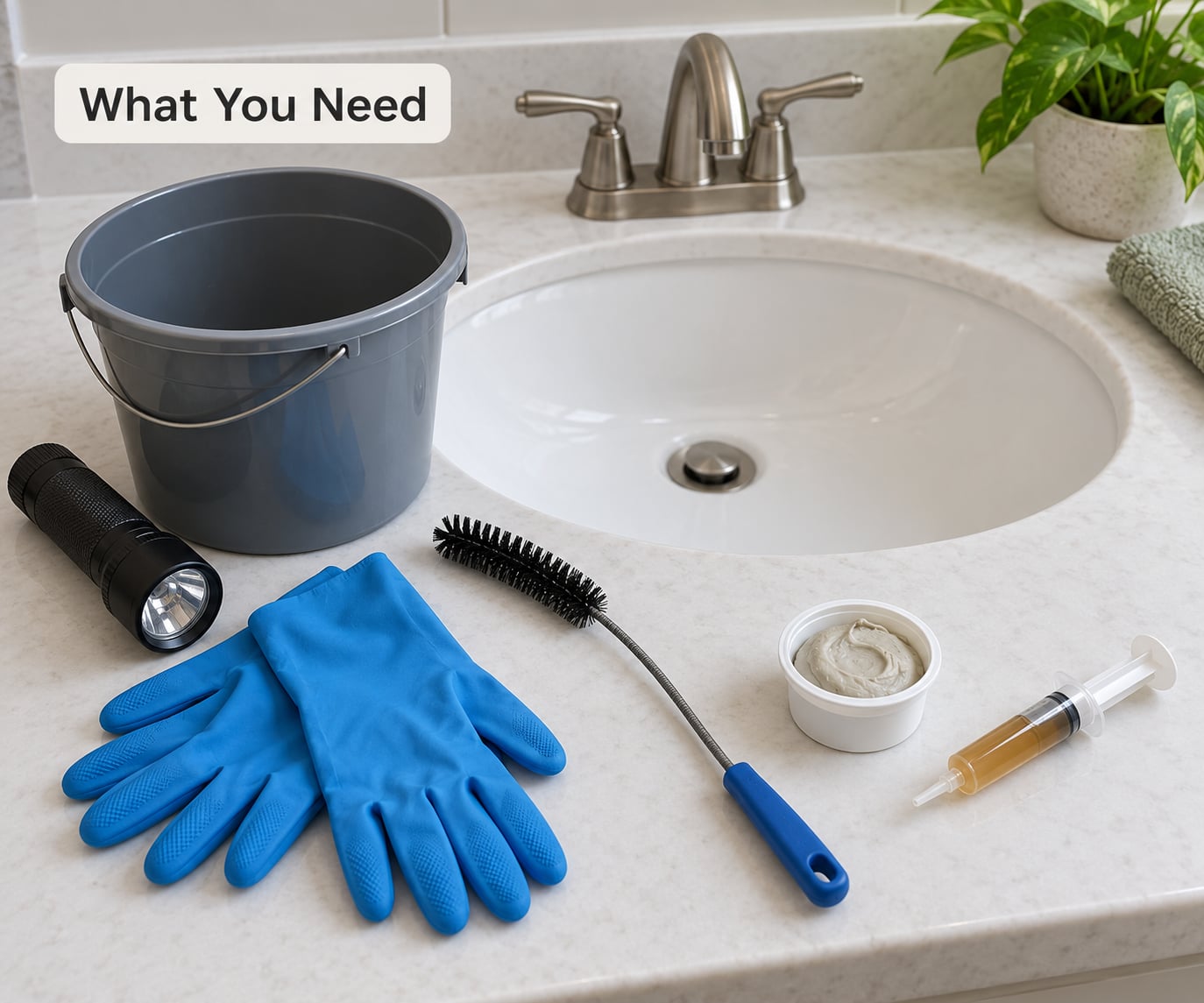
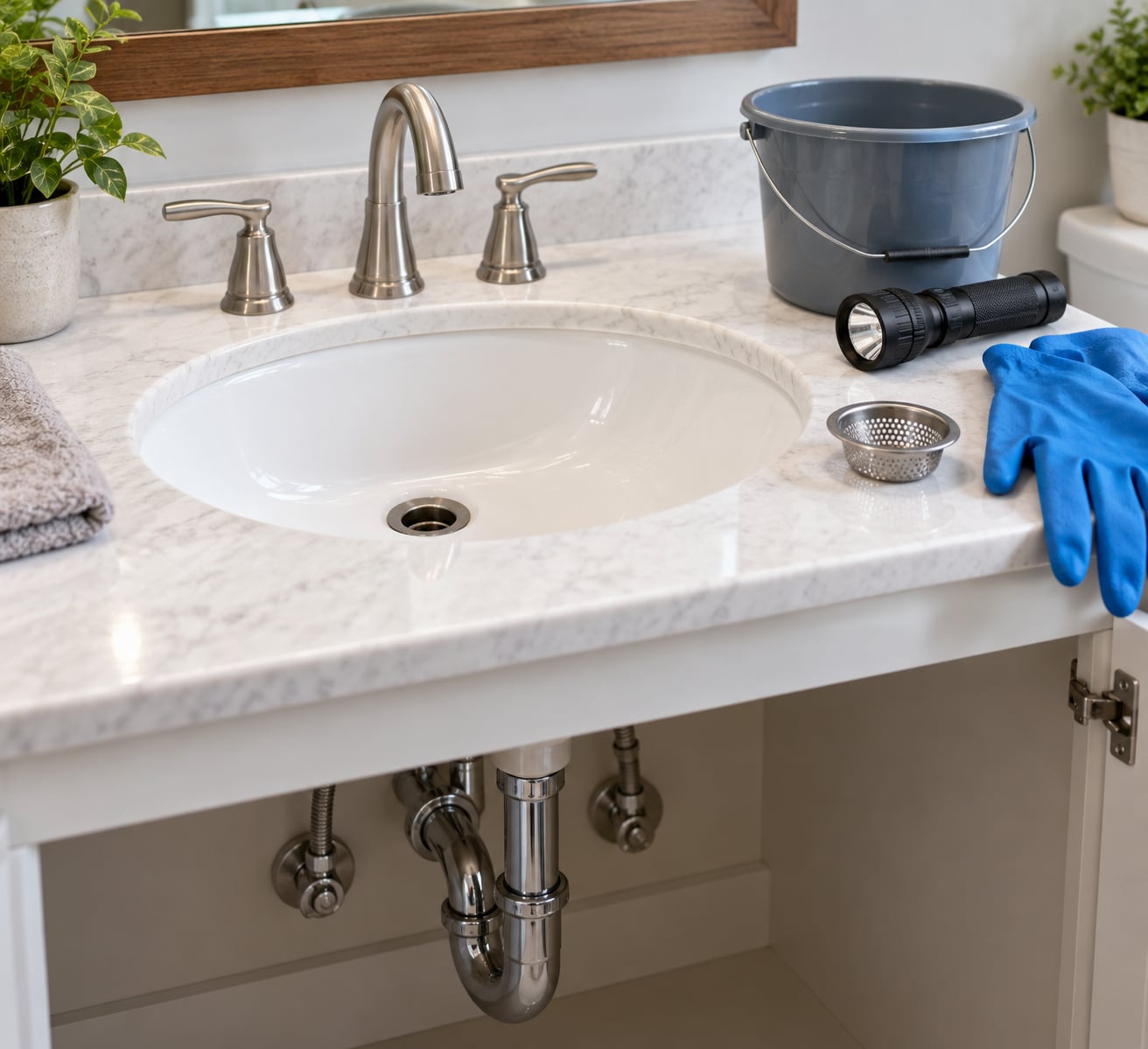
Gather these before you start, so you are not halfway through a wet trap with no way to catch the drips.
- Rubber gloves — you will be pulling hair and slime out of a drain by hand.
- A drain tool or curved drain brush — a flexible brush with a hook, or the plastic auger types sold for sinks.
- A bucket — the trap holds water and sludge, and it will come out fast.
- Old towels or rags — for the cabinet floor and for wrapping the trap nut if it won’t budge by hand.
- A flashlight — for night inspections and for seeing into the overflow opening.
- Plumber’s putty or 100 percent silicone sealant — for gaps where a pipe enters a wall or floor.
- Gel bait or boric acid tablets — for cracks and entry points, not sprayed over open floor.
Optional but useful: a wet-dry vacuum or shop vac for the floor around the drain, a painter’s plastic sheet to protect the cabinet base, and a bottle of bio-enzymatic drain cleaner if the drain has heavy biofilm.
One warning before you disassemble anything. If you have never taken apart a P-trap before, or the drain is in a wall you cannot see, stop and call a plumber. A trap is a simple slip-and-slip joint, but tubs and some older floor drains use threaded fittings that crack if you force them, and a cracked drain fitting turns a roach problem into a water damage problem.
How to Stop Roaches from Coming Up the Drain: Step-by-Step
1. Confirm Whether Roaches Are Coming From the Drain
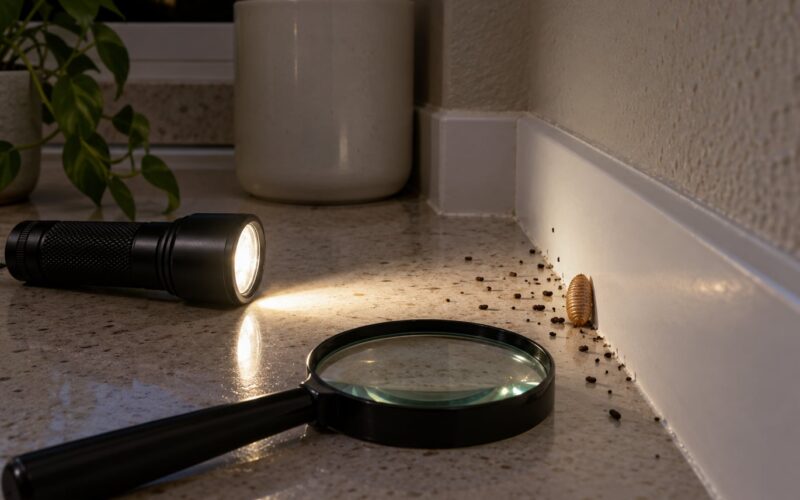
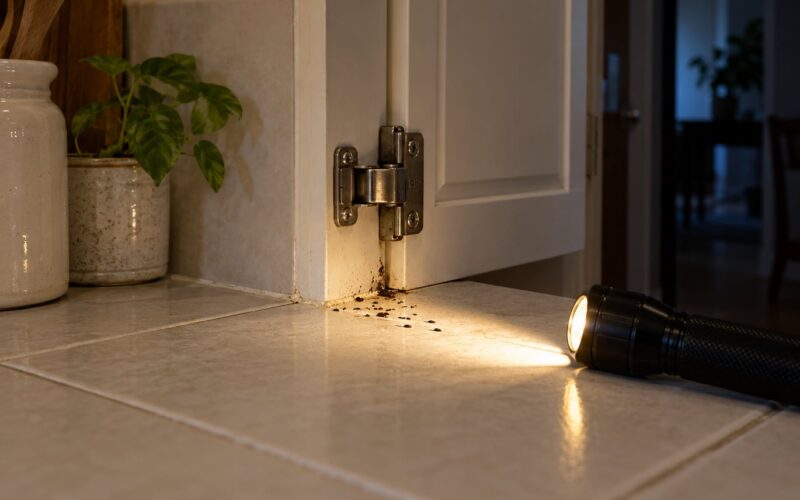
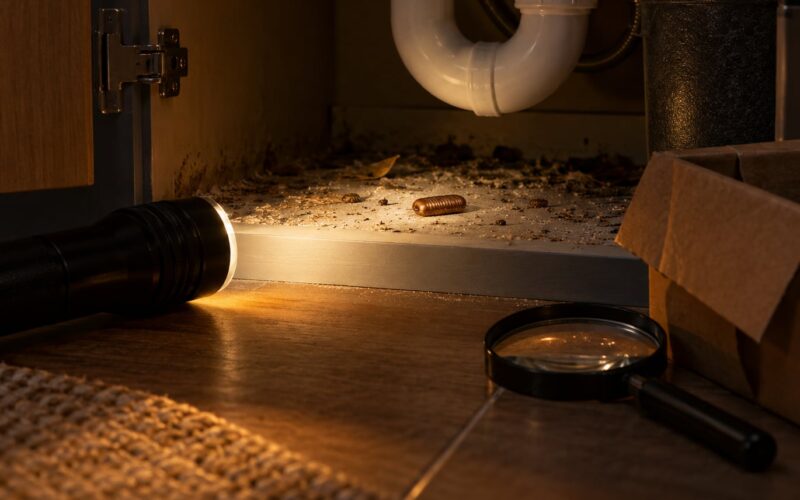
Not every roach near a sink came from that sink. Watch for the signs: a roach that appears and then vanishes back down, a musty sewer smell that comes and goes, droppings that look like scattered coffee grounds, and shed skins near the drain rim.
The simplest test is a piece of clear tape across the drain opening, pressed down at night, checked in the morning. Live roaches, droppings or skins caught under the tape mean the drain is an active route, not just a place they walked past once.
Never do this inspection around a light fixture, a ceiling fan or an outlet near the sink. Water in a sink with electricity nearby is how people get hurt.
2. Remove Food, Hair and Organic Buildup
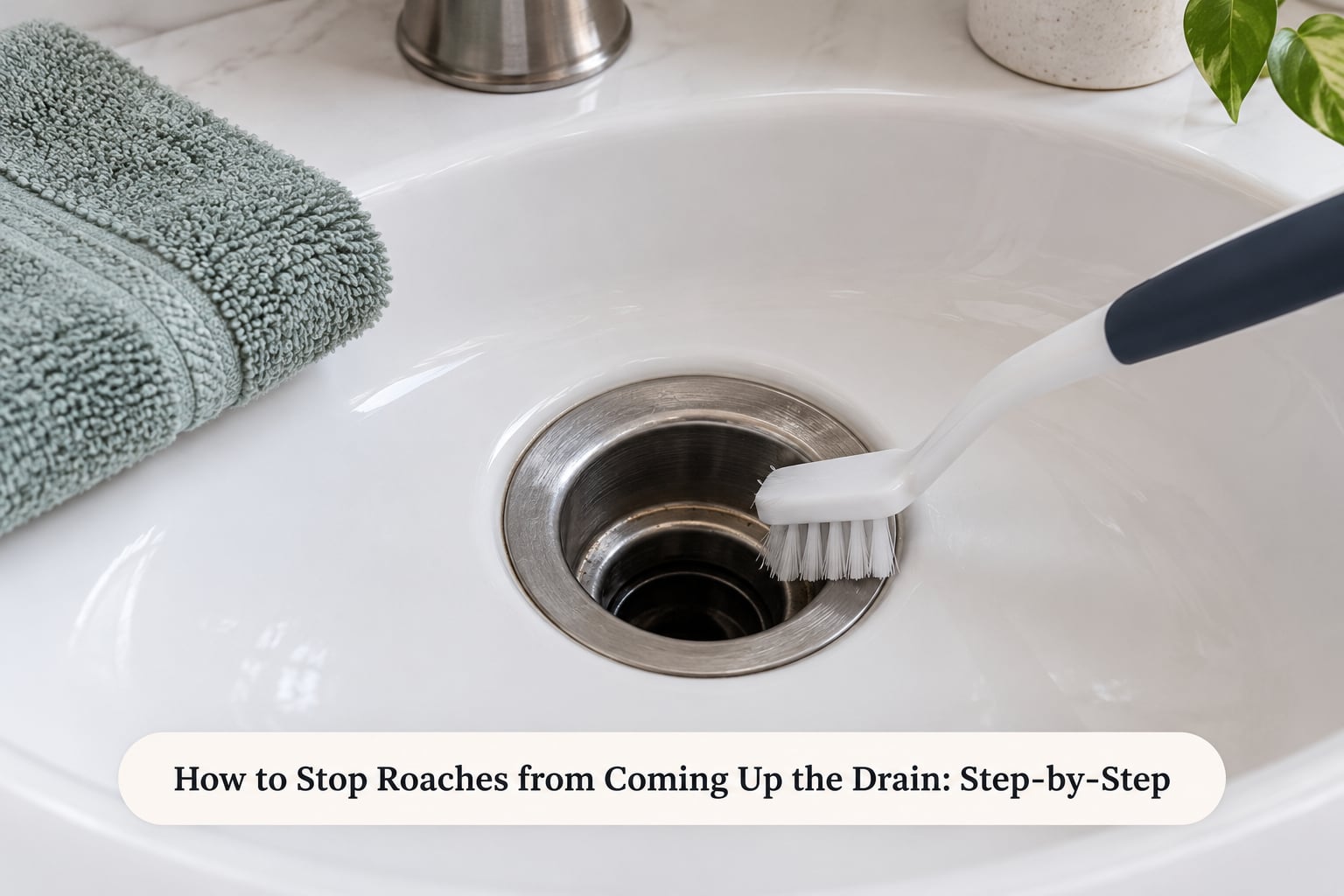
Put on the gloves, remove the stopper, and pull out what is in there by hand: hair, soap scum, toothpaste sludge, food particles from the disposal chamber. This film is the food source that makes a drain worth returning to, so removing it matters as much as blocking the opening.
Flush with hot tap water until the runoff runs clear. Then use a drain brush or auger to pull the residue out of the branch pipe rather than pushing it deeper.
Avoid stacking drain products. One enzymatic gel cleaner, used per its label, is enough. Mixing a bleach product with an acidic cleaner or an ammonia-based product can release dangerous gas, and two harsh products together do nothing for roaches that two products failed to reach anyway.
3. Clean and Disinfect the Drain and Trap
Scrub the drain opening, the underside of the stopper, the overflow hole on the back of the sink and the inside of the trap with the brush and a little dish soap. That overflow opening is the one most people forget, and it is exactly the gap that makes a rubber stopper useless on its own.
Wipe with a disinfectant labeled for the surface, following its directions for contact time, then dry the area completely. Moisture in a cabinet is what rebuilds the conditions you just cleaned.
Skip the folklore here. Boiling water can crack porcelain or soften old vinyl fittings, bleach is a thin liquid that washes straight past a roach, and baking soda with vinegar fizzing away is a drain-cleaning trick that does nothing to roaches.
4. Treat Nearby Cracks and Entry Points
Place gel bait or boric acid tablets in small cracks, along the base of under-sink joints, behind the clean-out panel and near where pipes meet the wall. Small tight placements along travel routes work far better than a wide fogging spray that misses every surface a roach touches.
Keep every bait placement where children and pets cannot reach it, and follow the hazard label exactly. Borax-based gel and boric acid tablets are widely preferred by homeowners over aerosol foggers for that reason, but they are still a label-directed product, not something to scatter.
You will know it is working when activity drops over several nights and you start finding dead roaches away from the bait station rather than near it. Feeding is happening, and the roaches are carrying it back to where they shelter.
5. Seal Gaps Around Pipes and Drains
Every point where a pipe enters a wall, floor, cabinet base or tub flange is a hole. Fill gaps around sink pipes, tub edges, floor drain rims, wall penetrations and cabinet openings with plumber’s putty or 100 percent silicone, pushing material into the gap rather than smearing it across the surface.
Do not fill a gap that has to flex. Where a pipe will move with thermal expansion, use a flexible sealant and leave the movement available, or you will crack the joint later and create a worse leak.
For drains nobody uses, a trap primer is the permanent answer. It is a small fitting that automatically adds water to a dry trap, which means the seal restores itself. In a guest bath or a utility sink you only use twice a month, this beats remembering to run the tap.
6. Fix the Conditions That Attract Roaches
Run through this list once a month and you remove most of the reason they come back.
- Store food in sealed containers, not open bags or cardboard boxes.
- Take trash out before it sits overnight and close the lid every time.
- Wash dishes instead of letting them stack with food residue.
- Wipe grease off counters and stovetops, then sweep up crumbs.
- Run hot water down the kitchen drain after dishes, and clean the disposal chamber.
- Fix dripping faucets and dry out the cabinet under the sink.
- Mop floors instead of sweeping dry dust into corners.
Flush the guest bath, utility sink and basement floor drain once a week so the traps never dry out. That single habit is the cheapest protection there is, and it costs a minute.
7. Monitor the Drain for New Activity
Check the suspect drains with a flashlight after the house has been quiet for an hour or two, ideally just after midnight. One visit tells you little. A week of checks tells you whether your work held, and that week is where most people find out whether they actually know how to stop roaches from coming up the drain or only delayed them.
Place sticky monitoring traps under the sink, near the floor drain and in the cabinet corners, out of reach of children and pets. Keep a short note of the drain, the date and what you found.
Repeated sightings after a full week of clean drains, sealed gaps and bait mean the problem is coming from outside the drain, often a shared sewer line in an apartment or condo. That is the point to stop and call a pest control professional, because in a multi-unit building the route runs through plumbing you do not control.
Common Mistakes
Spraying insecticide straight down the drain. Most aerosol sprays cannot get past the trap bend, and the residue sits where it can irritate whoever opens the cabinet. Fix: place gel bait in cracks along travel routes instead.
Mixing drain chemicals. Bleach plus an acidic cleaner or an ammonia product can produce toxic gas. Fix: pick one enzymatic cleaner and use it as directed.
Pouring boiling water down fragile plumbing. It softens old rubber gaskets and can crack porcelain fittings. Fix: hot tap water and a brush, and save boiling water for tough buildup in a metal drain line you know the condition of.
Assuming a rubber stopper blocks the sink. The overflow hole on the back of the basin lets roaches and sewer gas in around it. Fix: block the main opening and plug or screen the overflow too.
Sealing a drain without looking at the plumbing underneath. If you see a trap you cannot identify, a corroded joint or a drain that smells like sewer gas, you are past the DIY stage. Fix: plumber first, sealant second.
Cleaning one drain and ignoring the rest of the home. If food, trash and moisture remain elsewhere, roaches keep coming back through whichever opening is easiest. Fix: work through the whole-house checklist, not just the tub that startled you.
Frequently Asked Questions
What can I pour down my drain to keep roaches away?
Hot tap water, a bio-enzymatic drain cleaner used per its label, and borax or boric acid placed in small amounts are the practical options. Enzymatic cleaners break down the biofilm roaches feed on. Boiling water only helps with light buildup. Skip baking soda and vinegar, which fizz and rinse away without affecting roaches.
Why are roaches coming up through my drains?
Most often the P-trap under the drain has dried out. That U-shaped bend holds a small pool of water that blocks sewer gases and pests, and drains in guest baths, utility sinks and floor drains evaporate over weeks of disuse. Once dry, the trap becomes an open tunnel from the sewer line into the house.
Does pouring bleach down the drain help with roaches?
Not really. Bleach is a thin liquid that flows past a roach rather than killing it where it travels, and it can corrode metal pipe fittings and degrade rubber gaskets with repeated use. It also does nothing about the biofilm roaches feed on. Clean the pipe mechanically, then block the opening and restore the water seal.
Can I put boric acid down the drain for roaches, and how long until it works?
Yes, but placement matters more than quantity. Small amounts of boric acid or borax-based gel in cracks and under-sink joints, sealed and left undisturbed, keep working over days and weeks as roaches carry it back to their shelter. Expect gradual change over roughly a week or two, not an instant kill, and keep it away from children and pets.
Does a rubber stopper stop roaches coming up the sink drain?
Only if you also close the overflow hole on the back of the basin. Roaches and sewer gas bypass a stopper through that opening, which is why people cover the sink and still find them. A fine mesh screen over the main drain plus a plugged or screened overflow gives you a real barrier.
When should I stop DIY and call a pest control professional?
Call a professional if activity continues after a week of cleaned drains, sealed pipe gaps and bait placed in cracks, or if roaches appear in more than one drain. In apartments and condos, roaches travel through shared sewer lines, so the source may be a neighbor’s unit and outside what you can treat on your own.
Conclusion
If you remember one thing about how to stop roaches from coming up the drain, make it this: start with the drain that gave you the most trouble. Pull the stopper, remove the buildup, scrub the trap and the overflow hole, and dry the cabinet out. Then block the opening with a mesh screen or a one-way trap seal and seal the gaps where pipes enter walls and floors.
Keep doing that for the other drains in the house, and flush the unused ones weekly so the water seal never disappears. Check the suspect drains at night for another week. If you still see roaches in more than one drain after that, it is time for a professional, particularly in a multi-unit building where the sewer line connects you to your neighbors.