To treat mosquito bites that swell up, wash the area with mild soap and cool water, hold a cold compress against it for about 10 minutes, then apply 1% hydrocortisone cream. An over-the-counter oral antihistamine such as cetirizine or loratadine can take the edge off both the itch and the swelling. Most bites improve every day and settle within a week.
A big swollen lump is alarming, especially on a child, and the honest answer is that it is almost always an immune reaction rather than an infection. Getting help now, though, matters if you see spreading redness, red streaks, pus, increasing pain, or a fever.
This is general information, not medical advice. Anything more than a shrinking welt — or anything that worries you — is a call to your doctor, a pharmacist, or urgent care.
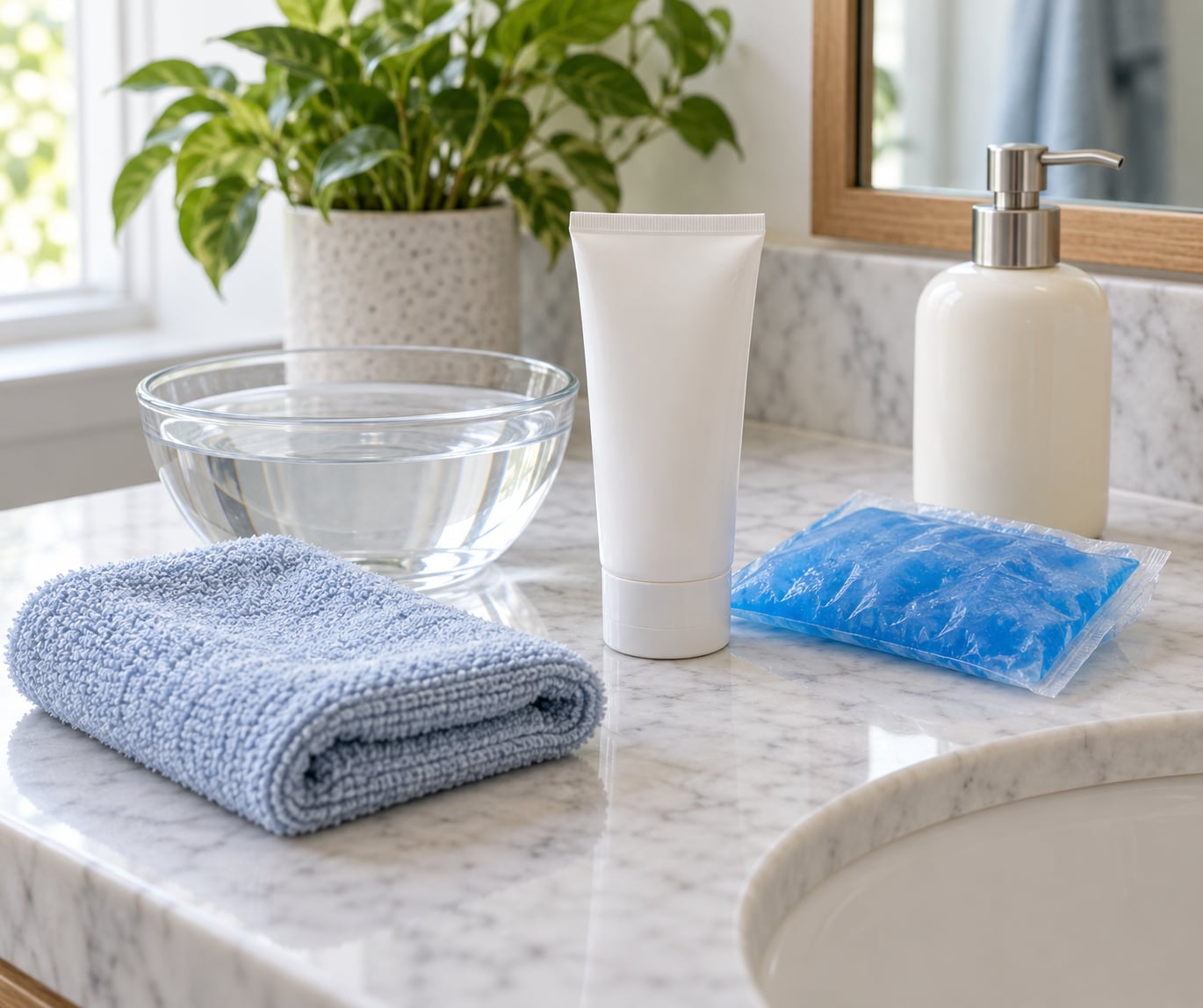
What You Need
Everything for this sits in a bathroom cabinet or the kitchen sink. You want cool, not frozen; fragrance-free, not perfumed.
- A clean washcloth and a bowl of cool water — for rinsing and for cooling the bite in short spells.
- Mild soap — plain, unscented body soap is enough. You do not need a degreaser or an antibacterial dish detergent.
- A wrapped cold pack or a few ice cubes in a cloth — the barrier matters, since ice straight on skin is uncomfortable and can bother delicate tissue.
- Fragrance-free moisturizer or plain aloe vera gel — a thin layer stops the skin from getting dry and cranky as the welt shrinks.
- 1% hydrocortisone cream — the over-the-counter option most pediatric clinics name first for a plain itchy welt.
- An oral antihistamine — optional, but useful if itching is keeping someone awake. Use it exactly as the label says, and ask a pharmacist which product suits your age group.
A dated photo on your phone and a soft marker pen turn out to be the two most useful items later, because they let you answer the only question that really matters: is this getting smaller or bigger?
Step-by-Step: How to Treat Mosquito Bites That Swell Up
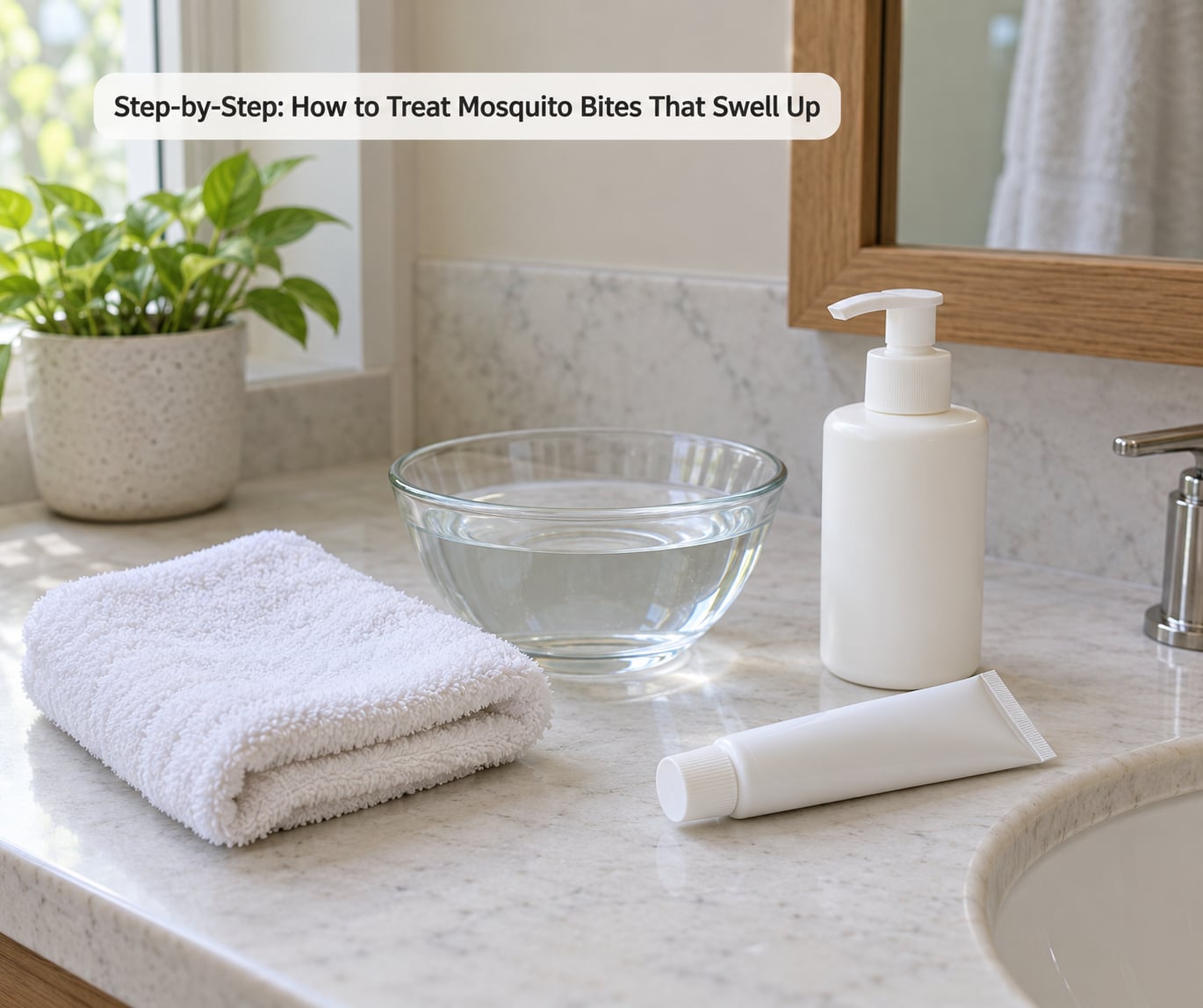
1. Clean the area gently
Wash the bite with mild soap and lukewarm or cool water, then pat it dry. This clears off dirt and whatever the bite picked up, which stops an already-angry welt from getting angrier.
Pat rather than rub. A quick rinse takes ten seconds and most people skip it, which is a waste when the whole job is keeping the skin calm.
2. Use a cool compress for swelling
Hold a clean, cool compress against the bite for about 10 minutes at a time, then leave the skin uncovered for a while before repeating. Coolth eases the heat and the itch and takes the edge off a swollen welt.
Never put ice or a frozen pack straight onto skin. Wrap it in a cloth, and if the area starts hurting from the cold, stop that round rather than pushing through it.
3. Soothe the skin and avoid scratching
Apply a thin layer of fragrance-free moisturizer once the skin is dry. A dry welt itches more, and dry skin itches more, which is a loop nobody needs.
Scratching is the single behavior that turns a harmless bump into a problem, because it breaks the skin and lets bacteria in. Keep nails short, cover the bite with a small round bandage if the spot is reachable, and cut nails if a child is the one itching.
On parents’ forums, the most common report is the same one: the itch is worst at bedtime. A cool compress just before bed does more good than any product applied at six o’clock.
4. Ask a pharmacist about itch relief
A pharmacist can point you to an over-the-counter antihistamine or a topical itch product and check it against anything else you take. Cetirizine, loratadine, and diphenhydramine all work on the itch-scratch cycle; they differ mainly in how drowsy they make you.
Take them as the label directs and follow the label’s own warnings about driving or alcohol. For a child, tell the pharmacist the age and weight rather than scaling an adult dose yourself — the adult label is not a child label. The American Academy of Pediatrics is firm on that point, and so is any pediatrician’s office.
Hydrocortisone cream is a topical corticosteroid, and those are not the same thing as oral steroids. A doctor may prescribe a short course for a severe reaction; that is their call after they look at it.
5. Monitor the bite and prevent more bites
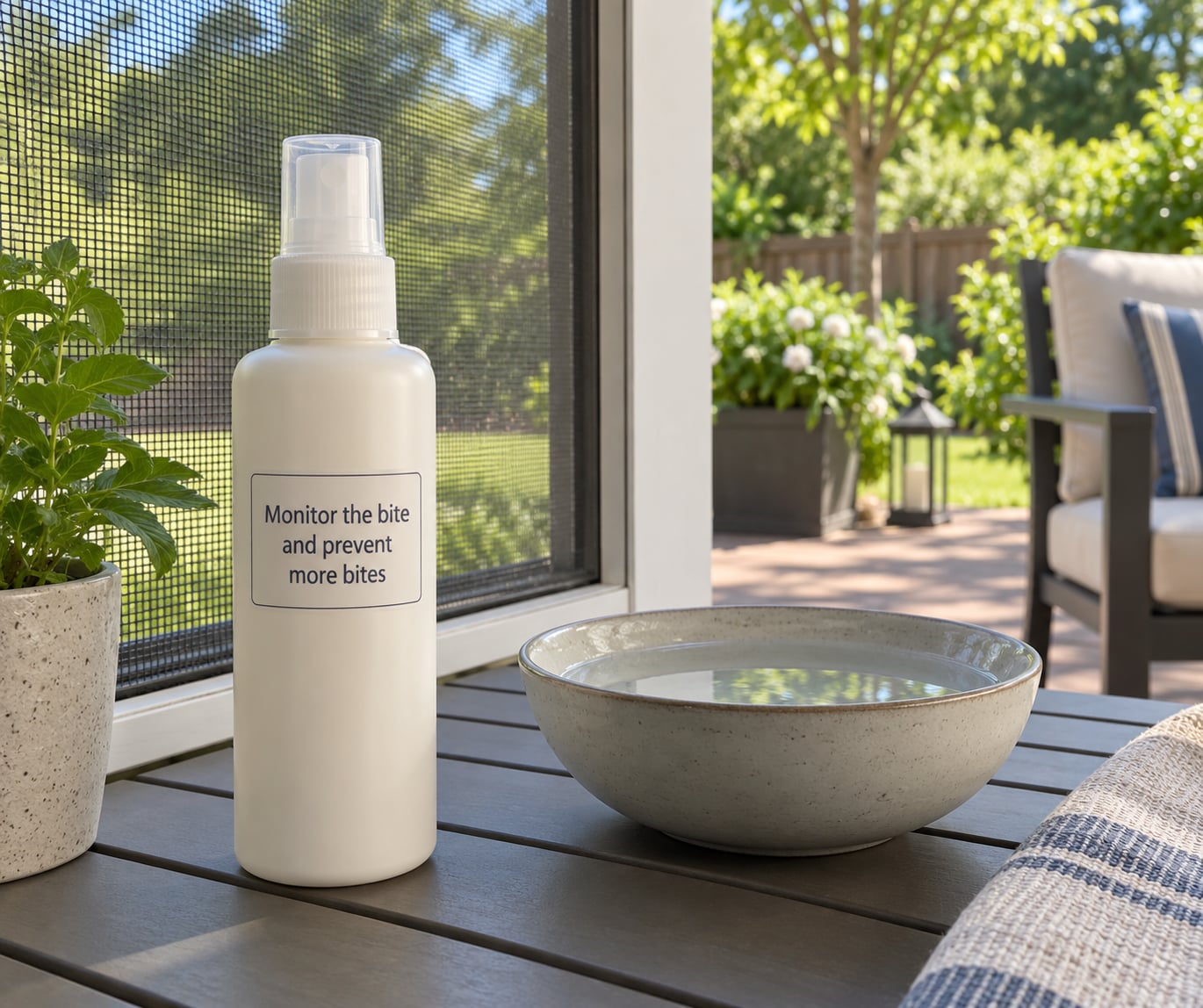
Mark the outer edge of the redness with a soft pen, or take a dated photo with a coin next to the welt for scale. Then check again every 12 to 24 hours. The direction of travel is the diagnostic: a normal reaction stops expanding within a couple of days and shrinks from there.
While you are watching it, reduce the odds of a second bite. The U.S. Environmental Protection Agency registers the repellents it considers proven effective, including ones containing DEET, picaridin, IR3535, or oil of lemon eucalyptus. Follow the label, wash repellent off kids’ hands after outdoor play, and check window and door screens for gaps.
Then empty anything holding water — buckets, planters without drainage, tires, gutters, birdbaths. The CDC notes that the mosquitoes biting in your yard usually breed within a short flight of it, and container-breeding species travel surprisingly poorly. Dusk and dawn are their busy hours, which is when the CDC recommends concentrating your repellent effort.
Common Mistakes
- Scratching to “let the poison out.” There is no poison in a mosquito bite to release — the itch comes from your own immune response. Scratching damages the skin barrier and is the most common route from a welt to a real infection. Cool compress instead.
- Ice directly on the skin. It can cause a painful cold burn on top of the itch. Wrap it in a cloth and keep sessions to about 10 minutes.
- Harsh or degreasing products. Dish detergent, bleach, rubbing alcohol, and undiluted essential oils have no clinical evidence behind them on bites and strip or burn skin that is already inflamed. Soap and water do the cleaning job.
- Picking or popping the welt. If it blisters, leave the blister alone. A clinician can drain it safely if it needs it.
- Assuming every expanding red patch is normal. Itch that improves with a cool compress and redness that stops spreading are reassuring. Redness that grows, streaks, drainage, rising pain, or fever are not — get same-day advice.
Two more worth knowing: a swollen bite rarely scars, though picking at it can leave a mark that lasts months. And an old bite that heals cleanly can start itching again weeks later — that is a delayed hypersensitivity to leftover saliva proteins, not a new bite and not an infection.
Frequently Asked Questions
How long does a swollen mosquito bite usually last?
A plain mosquito welt usually fades within 3 to 7 days. A large local reaction, sometimes called skeeter syndrome, tends to run longer, commonly 3 to 10 days, and may be accompanied by a low fever. The useful measure is not the calendar but the direction: it should stop expanding by about day two and look slightly better each day. If it is still growing on day three, or redness, pain, or streaking is building, have a clinician look at it.
Why do mosquito bites itch so much?
When a mosquito feeds, it injects saliva containing anticoagulants and proteins. Your immune system recognises those proteins and releases histamine, which makes nearby blood vessels leak fluid. That leak produces the redness, swelling, and itching you feel within minutes to hours. The itch is your immune system working, not a signal of anything dangerous — which is why cooling and an antihistamine help, and scratching only makes it worse.
Does cold or heat work better on a swollen bite?
Cold works better. A cool compress held against the area for about 10 minutes at a time eases both the itching and the swelling, and repeating it a few times a day is well tolerated. Heat does the opposite: it brings more blood flow to the area and usually cranks the itch up. Keep ice in a cloth rather than on bare skin, and stop a session if the cold itself starts to hurt.
When should I see a doctor for a swollen mosquito bite?
Get same-day medical advice if redness spreads beyond the marked edge, red streaks appear, the area becomes hot, hard, or increasingly painful, there is pus or drainage, or you develop a fever. Also get checked if swelling limits movement, sits near the eye, or lands on a joint. Emergency help is needed for trouble breathing, throat tightness, faintness, or swelling of the lips or tongue — that pattern points to a systemic allergic reaction rather than a local welt.
Can a swollen mosquito bite spread to other parts of the body?
The swelling itself should stay local, and one bite does not turn into a chain of new welts elsewhere on the skin. Hives that appear away from the bite, on both arms or across the trunk, are a different pattern and mean a systemic allergic response, so call a doctor. If a scratch broke the skin, a bacterial infection can develop in that spot and spread along the tissue. That shows up as increasing pain, warmth, streaks, drainage, and fever, and it needs antibiotics.
Bites near the eyelid deserve a phone call to your doctor rather than home care. Cleveland Clinic recommends medical advice for any bite on the eyelid or face, and the American Academy of Ophthalmology treats swelling in that area as a real eye concern — the skin there is thin and any swelling reads as bigger than it is. Cold compress on a closed eye for a few minutes is fine while you wait.
Conclusion
Start with four moves: wash the bite with mild soap and cool water, hold a cool compress on it for 10 minutes, put on 1% hydrocortisone or a fragrance-free moisturizer, and leave it alone. Add an over-the-counter antihistamine if the itch is winning, and check the label or ask a pharmacist first if that is a child.
Then watch the direction, not the size. A welt that stops growing within a day or two and shrinks from there is normal, even when it looks dramatic. Redness that spreads, streaks, drainage, rising pain, or a fever deserves same-day medical advice, and breathing trouble or swelling of the lips and tongue needs emergency help.