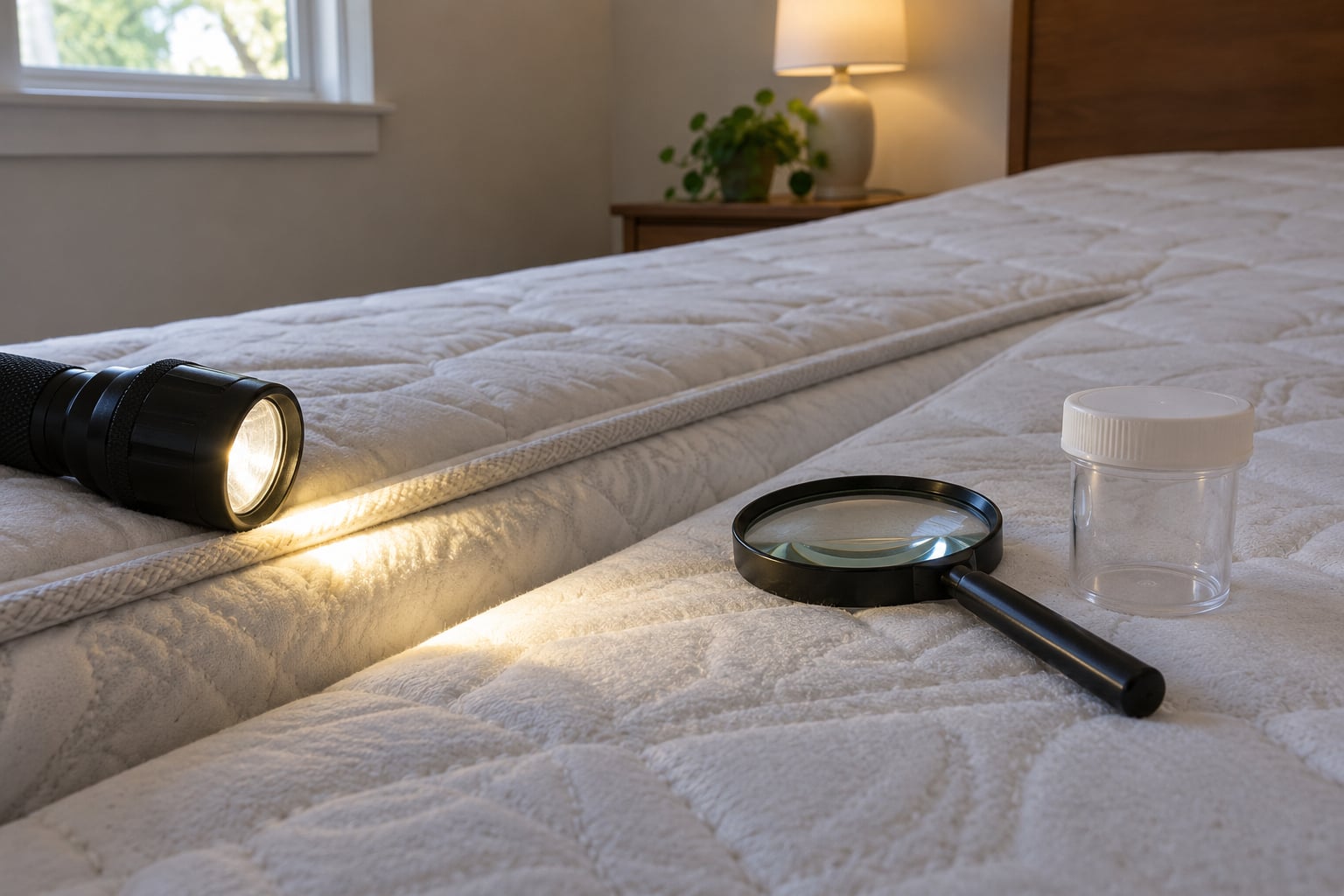
If you know how to find a bed bug infestation early, you are looking for evidence, not the bugs themselves. Bed bugs hide in mattress seams, box springs, bed frame joints and the baseboard behind the head of the bed, and they leave rust-colored stains, dark fecal spots, shed skins and tiny white eggs behind long before anyone sees a live adult. Most people who catch it early found one of those signs on a single focused inspection, not after weeks of wondering.
That is good news, because the window matters. Bed bugs work through an egg, five nymphal stages and an adult, and every step of that path needs a blood meal. The immature stages are smaller, paler and far easier to deal with than a settled adult population. Catch it in the first room and you are usually managing one bedroom. Wait a season and you may be managing the whole apartment.
Below is a ten-minute routine, run in a fixed order, plus what each piece of evidence actually tells you. Read the evidence table before you decide anything.
Table of Contents
- What You Need for a Bed Bug Inspection
- Step-by-Step: How to Find a Bed Bug Infestation Early
- Common Mistakes
- Frequently Asked Questions
- Can bed bug bites confirm that I have an infestation?
- Where do bed bugs hide when they are not on the bed?
- Does finding one bed bug mean I have a large infestation?
- How long does it take to inspect a bedroom for bed bugs?
- Should I spray after I find a suspected bed bug?
- When should I contact a pest control professional?
- Conclusion
What You Need for a Bed Bug Inspection
You need almost nothing, which is the nice part. The whole job is a light, a magnifier, something white to catch a specimen on, and the discipline to work in order without moving things first.
- A bright flashlight, ideally with a narrow beam you can angle along a seam. A phone light works, but it is harder to keep steady.
- A hand lens at 10x or higher. Bed bug eggs are roughly sesame-seed sized and pale; without magnification you will miss them more often than not.
- Clean white paper or clear tape for picking up a specimen without crushing it.
- Gloves and a couple of labeled bags or a specimen container. Two labels matter: one on the container, one on the note.
- A notebook or your phone to record the room, the date, the exact spot and what you saw.
Two conditions matter more than the gear. Inspect before you make the bed, because making a bed redistributes exactly what you are looking for. And do it in a quiet, reasonably uncluttered room, working one area to completion before moving to the next. On the r/ADHD forum, people asking how to manage a thorough inspection land on the same fix: give it a timer and a checklist, because a bounded ten-minute task is far easier to start than an open-ended search of the bedroom.
If anyone in the household traveled recently, bought second-hand furniture, or stayed in a shared accommodation, check the bed that was used on the trip first. Bed bugs travel in luggage and in used furniture, and the room where someone slept last is the highest-probability starting point.
Step-by-Step: How to Find a Bed Bug Infestation Early
Work top to bottom and outward: bedding, mattress, box spring, frame, headboard, then the wall and the furniture around the bed. Keep the order even if you find something, because where you find it tells you how far this has spread.
How to Find a Bed Bug Infestation Early in the Bed
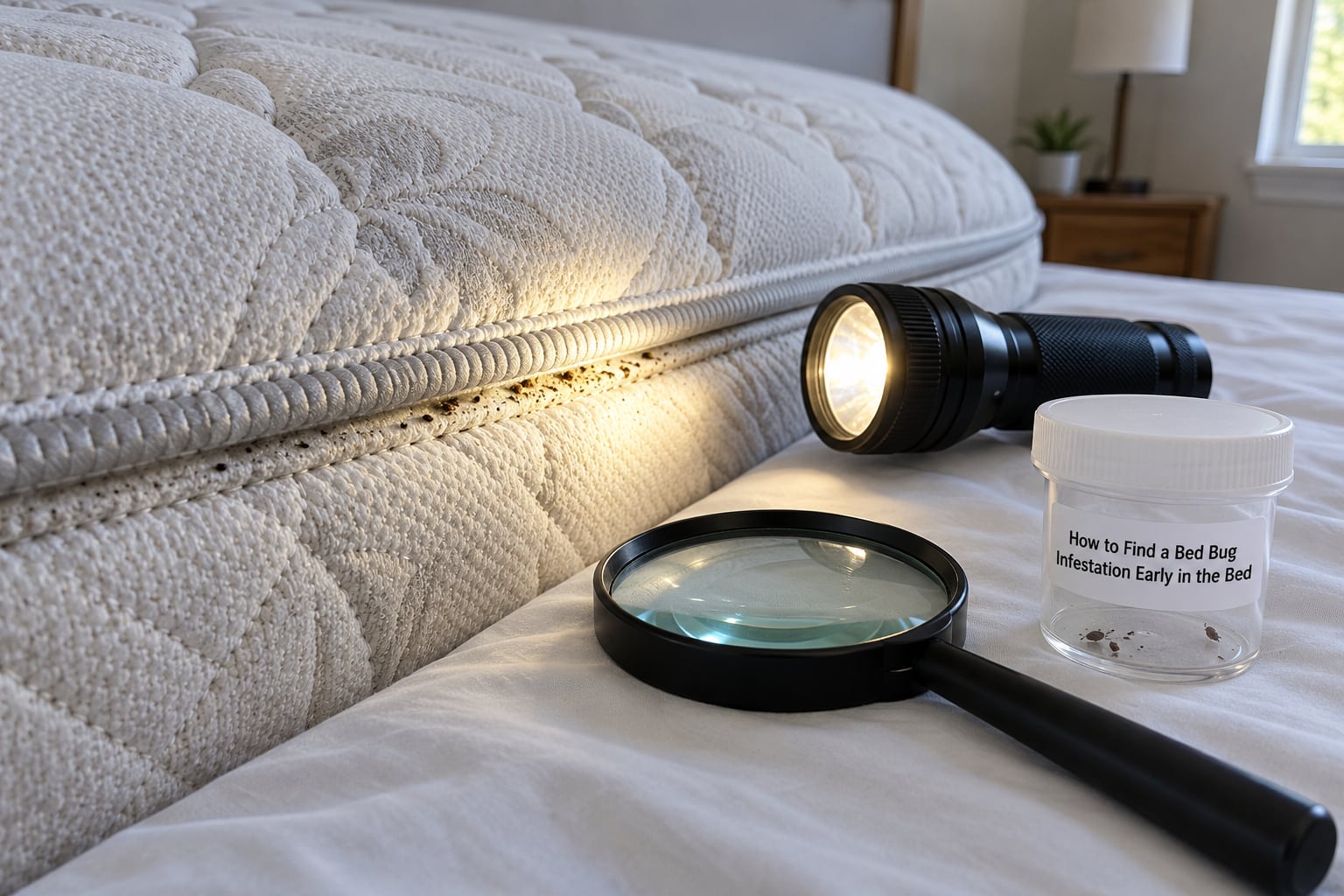
Start with the bed itself, because an early infestation is concentrated there long before it reaches the rest of the room. Strip the sheets, pillowcases and any mattress pad, and put the bedding straight into a bag or the dryer on high. Do not shake it into the room; that spreads whatever is in the folds across the floor you are about to inspect.
Then work the mattress in this order:
- Piping and the top edge seam. Run the flashlight along the whole perimeter where the ticking is sewn to the panel. Bed bugs flatten into the stitch line, so you are looking for movement, a pale oval body, or a dark dot.
- Tufts, buttons and quilted indentations. Press each tuft in and release it. Anything hiding in a dimple often shifts as the fabric moves.
- Folds and handles. Check the carry handles and any side gusset where two panels meet.
- The underside. Flip the mattress if you can, and check the bottom panel, the corner labels and the tape seams.
- Box spring. Look along the top edge, the fabric dust cover, the venting holes and the tape seams holding the box together. Small black dots on the box spring fabric are one of the most cited finds in r/Bedbugs threads.
- Headboard, frame and joints. Unscrew nothing yet. Check the underside of the headboard, the screw heads, the brackets where rails meet legs, and the ends of the slats.
When you find a live bug, do not squash it. A crushed bug cannot be identified, and identification is the only thing that ends the argument. Scoop it onto white paper, slide it into a container, seal it, and label it with the room and date.
What you are likely to see, and how much weight each clue deserves:
| Clue | What it looks like | Size | Where you find it | Confidence |
|---|---|---|---|---|
| Live adult | Flat, reddish-brown, oval, antennae visible | Apple seed | Seams, frame joints, baseboard | Confirmed |
| Nymph | Translucent to pale rust-brown, much smaller than adult | Pinhead to match head | Seams, folds, headboard underside | Confirmed |
| Egg | White or pearly, glossy, upright in a cluster | Sesame seed | Seams and folds, stuck to fabric | Confirmed |
| Cast skin (exuviae) | Hollow, translucent shell, often crumpled | 1 to 5 mm | Along seams, near where nymphs feed | Likely |
| Fecal spot | Dark brown to black, ink-like, spatters or streaks | Pinhead | Mattress seams, box spring, sheets, baseboard | Likely |
| Rust stain | Orange to rust-colored smear, on sheets or pillowcases | Up to an inch | Bedding where you sleep, not on the frame | Possible |
| Sweet musty odor | Heavy, sweet, almond-like in a closed room | Not measurable | Small, unventilated rooms with many bugs | Possible |
Read that confidence column carefully. A live bug, a nymph or an egg is confirmation. A cast skin or a cluster of fecal spots is strong but circumstantial, because carpet beetles and other insects leave marks too. A rust stain on its own proves very little, since fresh blood from a cut or a period can look identical.
One more trick worth knowing. A mattress encasement is both a test and a treatment. Seal the stripped mattress in a zippered bed bug encasement, leave it closed for several weeks, then inspect the encasement seams themselves. Anything trapped inside cannot reach a seam, and what survives ends up visible on the outside surface where you can see it.
How to Find a Bed Bug Infestation Early on the Body
Bites are the sign that sends most people searching, and the least reliable one. A bed bug feeds on exposed skin while you sleep, so marks show up on the neck, shoulders, arms and hands, often in a line or a small cluster of three. The problem is that a large share of people react to nothing at all, and those who do react can take anywhere from a few hours to several days to show marks.
That delay causes the single most common false alarm: old bites flaring up weeks later get counted as new activity. People on r/Bedbugs describe a second wave of panic this way, tearing the bedding apart again for signs that were never new. If a mark appears on a spot that was already itchy last month, it is not fresh evidence.
| Insect | Pattern | Typical location | How long marks last |
|---|---|---|---|
| Bed bug | Line or cluster of 3, often in a row | Exposed skin that touches the bed | Days to two weeks |
| Flea | Scattered, grouped in threes or fours, often lower leg | Legs, ankles, waistband | About a week |
| Mosquito | Single, isolated welts anywhere | Anywhere exposed outdoors | Two to ten days |
| Carpet beetle | No bites at all; fuzzy brown skin castings, holes in fabric | Near carpets, upholstery, closets | Not applicable |
| Spider | One or two spots, often with a visible puncture | Wherever the spider was sitting | Several days |
Carpet beetle damage is the number one false positive in bed bug forums, and the table above shows why: carpet beetles do not bite people, so if you never actually felt anything and the marks are fuzzy brown debris rather than welts, you are probably looking at debris. Bites make you look for bugs. Debris should make you look for a different insect entirely.
Record what you react to, but do not treat the reaction as proof. Note the date, where the marks appeared, and whether you have any other explanation for them, such as a new detergent or a recent outdoor evening.
Check Bedside Furniture and Nearby Rooms
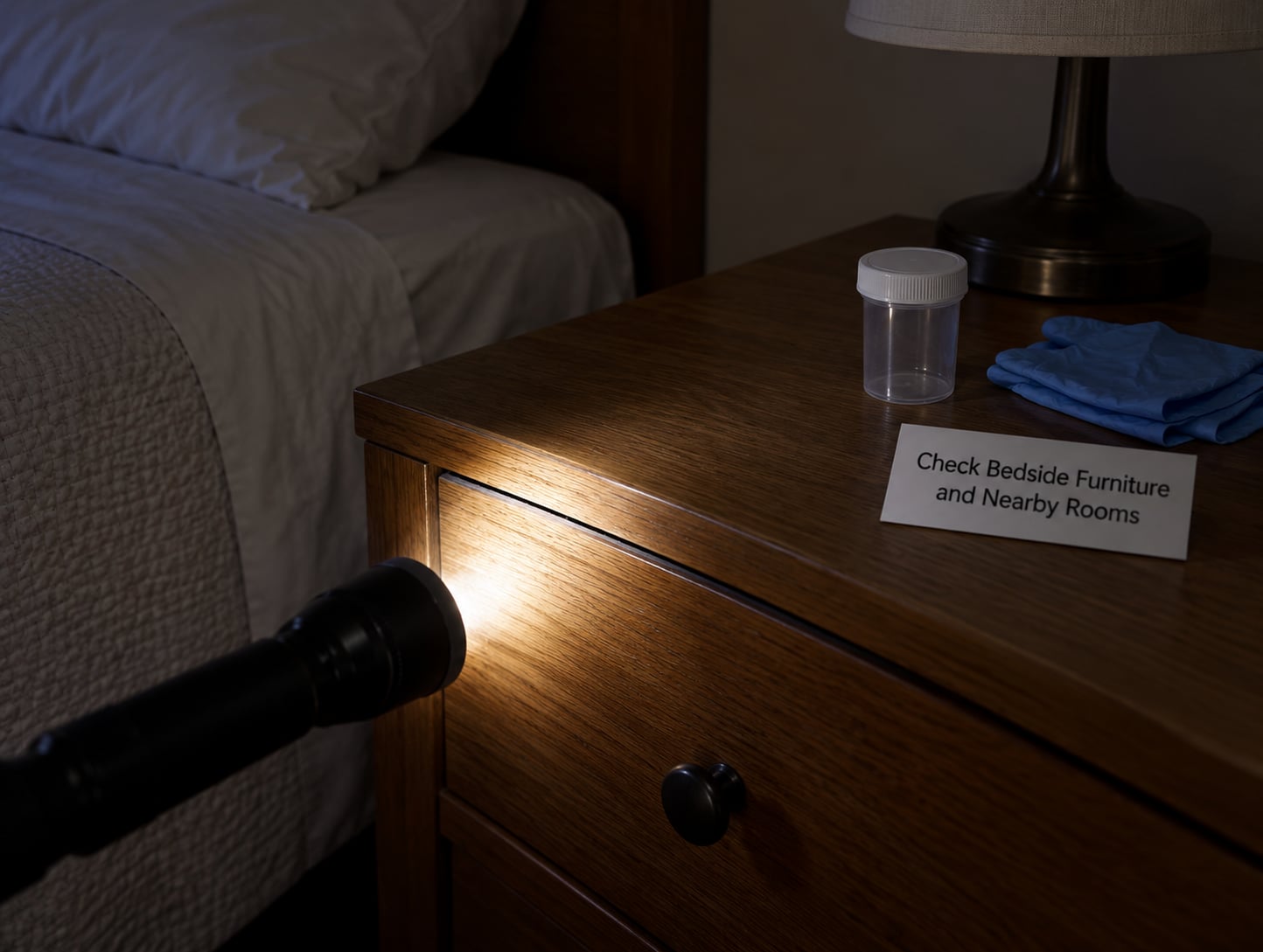
People search the bed and stop. The wall behind the head of the bed is the step most guides skip and the one experienced inspectors insist on, so give it real time. Check the baseboard and the wall surface within roughly a foot of the headboard and along the sides of the frame for small black spots, rust smears and shed skins. Bugs leave the mattress to feed and follow the wall back to their hiding place after a meal, which is why the wall around the bed is such a productive place to look.
Then work outward in this order:
- Nightstands and side tables. Drawers out and to the bottom, the underside, the back panel and the legs. Bugs avoid the open middle and hide at the edges.
- Outlets, switch plates and picture frames. Cracks in these are standard hiding places. Check the gap around the plate, not just the face.
- Upholstered furniture within about six feet of the bed. Sofa cushions, chair skirts, the underside of seat cushions and the seam where cushion meets frame.
- Clutter on the floor. Cardboard boxes, stacked laundry, paper bags give bugs cover near the baseboard.
- Luggage and second-hand items. Anything that came back from a trip, and any furniture or mattress that did not come from a store.
- The room next door. In an apartment, check the sleeping surface next door and the shared wall between rooms. In a house, check every bed, including children’s rooms and guest beds.
A dark spot only means something in context. A mark in a protected seam, close to other signs, is meaningful. The same mark in the middle of a bare wall with nothing else nearby is usually dirt, shadow or an old paint nick. Look for clusters and combinations rather than single marks.
Confirm and Document Suspect Signs
Write it down before you act on it. For each finding, record the room, the date, the exact location in plain language (right side of the headboard, underside) and the type of evidence. Photograph each one with a coin next to it for scale. This takes a minute and it is the difference between a conversation and an argument with a landlord, a neighbor or a pest company.
If you collected a specimen, keep it sealed and dry, and compare it against identification guidance from the US Environmental Protection Agency’s bed bug materials or your state university extension service. Those two sources are the ones I trust over anything written by a company selling treatment, and neither costs you anything to check.
Before confirming, understand the timeline. A female lays a small number of eggs, and an egg hatches into a nymph that needs a blood meal before each of five molts before it becomes an adult. Under good conditions that whole run takes roughly five to seven weeks. In that window, a small problem stays a small problem. The reason people notice late is that the signs are tiny and the first visible evidence often arrives after the population has already multiplied.
Two things to hold off on until you have confirmed something:
- Do not move belongings between rooms. A box carried from bedroom to living room moves the infestation with it, and now you have two rooms instead of one.
- Do not spray or fog off one uncertain sign. Over-the-counter foggers reach almost none of the cracks and seams where bed bugs actually live, and a failed spray can scatter bugs into new hiding places while you believe the job is done.
Also worth knowing: a shower does nothing. Bed bugs live in seams and furniture, not on your skin, and washing removes neither the bugs nor the eggs.
If you rent, put your findings in writing. A dated email to the landlord or property manager with your photos and the room, plus a request for a professional inspection, creates a record. In apartment buildings and other shared housing, early reporting matters more than almost anything else you can do, because the neighbors on both sides are exposed to whatever you are dealing with.
Common Mistakes
Nearly every failed inspection comes down to one of a handful of recurring mistakes. Each one has a simple correction.
- Assuming bites prove bed bugs. Fix: bites are a reason to inspect, not a diagnosis. Only physical evidence on a surface confirms.
- Checking only the mattress. Fix: work the box spring, the frame joints, the headboard and the wall behind the bed. Infestations spread outward from the bed well before they are obvious.
- Reading lint, carpet fibers or carpet beetle skins as fecal spots. Fix: fecal spots are ink-like and absorb into fabric, while fibers and skins sit on top and brush or flake off.
- Sampling a single dark spot and stopping. Fix: one mark is a prompt to keep looking in the same seam, not a verdict.
- Spraying on suspicion. Fix: preserve the evidence, document it, and get a professional opinion before treating.
- Skipping adjacent sleeping areas. Fix: check every bed in the home, and in an apartment, the place next door as well.
One final tip: make a documented inspection before you buy pesticides, replace belongings, or call an exterminator. A ten-minute routine with photos and a dated log costs nothing, and it is the thing that makes every later step faster, cheaper and harder to argue with.
Frequently Asked Questions
Can bed bug bites confirm that I have an infestation?
No. Bites are suggestive, not diagnostic. Reactions vary enormously between people, some never react at all, and marks can take days to appear, so a fresh-looking welt may be days old. Fleas, mosquitoes and even carpet beetle activity get mistaken for bed bugs regularly. Only physical evidence on a surface, a live insect, a nymph, an egg, or a consistent pattern of fecal spots and cast skins in seams, confirms an infestation.
Where do bed bugs hide when they are not on the bed?
Bed bugs are nocturnal and stay close to where people sleep, but they spread outward from the bed over time. Check the baseboard and wall within about a foot of the headboard, nightstand drawers and undersides, cracks around outlets and switch plates, the seams of nearby upholstered furniture, and clutter on the floor near the wall. In apartments, the adjacent unit and shared walls matter. Within a few weeks they can reach a sofa, a headboard across the room, and eventually other rooms.
Does finding one bed bug mean I have a large infestation?
One confirmed bug does not tell you the size of the problem, but it does change what you should do next. Because every life stage needs a blood meal to advance, a population caught early can be contained, and one bug is far easier to deal with than a settled infestation. Treat the single find as a reason to get a professional inspection promptly rather than as a reason to panic or to assume the worst.
How long does it take to inspect a bedroom for bed bugs?
A focused bedroom inspection takes about ten minutes once you know the order: bedding, mattress seams, box spring, frame joints, headboard, then the wall and nearby furniture. A more thorough sweep of adjacent rooms and the rest of the home takes longer, often another twenty or thirty minutes. The value is in working methodically rather than quickly. A rushed ten-minute pass that follows a fixed checklist beats an hour of pulling furniture around at random.
Should I spray after I find a suspected bed bug?
Hold off until the evidence is confirmed. Consumer foggers and sprays reach very few of the cracks and seams where bed bugs live, and repeated failed treatments can scatter the population while leaving you convinced the room is handled. Keep the specimen sealed, photograph the spot with a coin for scale, and ask a licensed pest professional or your state extension service to identify it first. Do not move belongings between rooms in the meantime, since that spreads the problem.
When should I contact a pest control professional?
Contact a professional as soon as you have one of three things: a confirmed live insect, a nymph or an egg, or a clear cluster of fecal spots and cast skins in the same seam or area. Professionals can confirm the identification, which matters for landlords and neighbors, and can plan treatment for the life stage present. In an apartment or multi-unit building, report early even if you are not certain, because the surrounding units are exposed to whatever is in your unit.
Conclusion
Anyone learning how to find a bed bug infestation early starts at the sleeping area and works in a fixed order: bedding, mattress seams and piping, box spring, frame joints, headboard, then the wall and baseboard behind the bed and the furniture around it. Look for physical evidence rather than bites, and treat one mark as a reason to keep looking rather than as a verdict.
If you find a live bug, a nymph or an egg, seal it in a container, photograph the area with a coin for scale, and write down the room, the date and the exact spot. Then get a professional confirmation before you treat anything or throw anything away. Most infestations that get expensive were the ones where somebody moved belongings around for six weeks without a record of what they had found.
Last updated: October 2026.