The flea life cycle has four stages: egg, larva, pupa and adult. A female flea lays 40 to 50 eggs a day on your pet, the eggs fall into carpets and bedding, and the whole process from egg to breeding adult takes anywhere from about two weeks to several months depending on warmth and humidity. Understanding each stage is what makes treatment actually work.
Most people only ever see the last stage. Fleas jump onto the sofa, you treat the dog, and two weeks later the dog is scratching again. Nothing went wrong with the treatment. The problem is that adult fleas are only about 5% of an infestation, and the other 95% are eggs, larvae and pupae living in your home, out of reach of anything you put on the animal.
Below is what each stage looks like, how long it lasts, where it hides, and what actually kills it. Once you can picture the whole flea life cycle explained stage by stage, you stop treating symptoms and start breaking the loop.
Table of Contents
- Flea Life Cycle Explained for Pet Owners: Four Main Stages
- How Each Flea Life Stage Works
- How Long Does the Flea Life Cycle Take?
- Where Fleas Live Between Stages
- How to Spot a Flea Infestation on Pets and at Home
- How to Break the Flea Life Cycle Safely
- When You Need Veterinary or Professional Help
- Frequently Asked Questions
- What to Do First
Flea Life Cycle Explained for Pet Owners: Four Main Stages
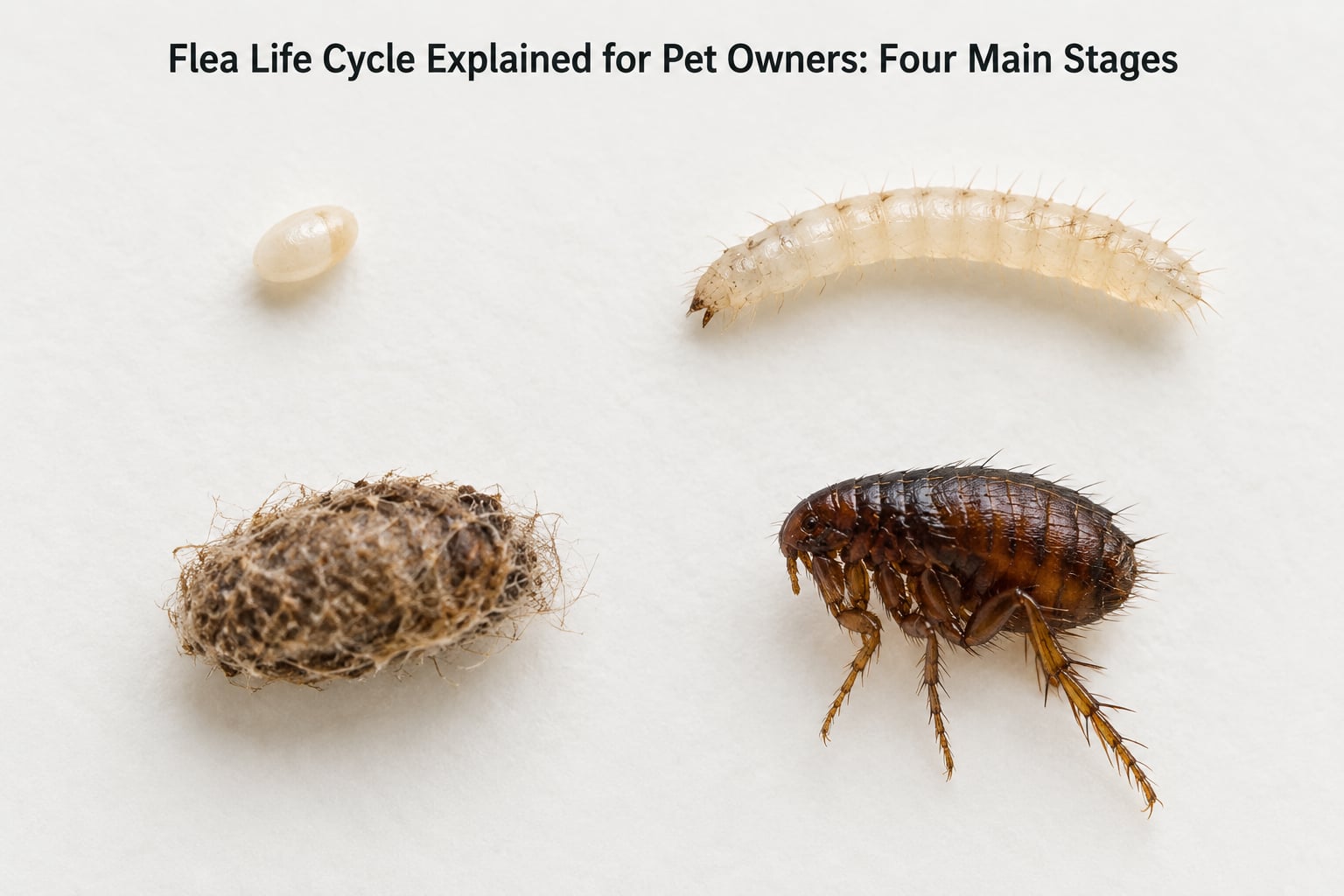
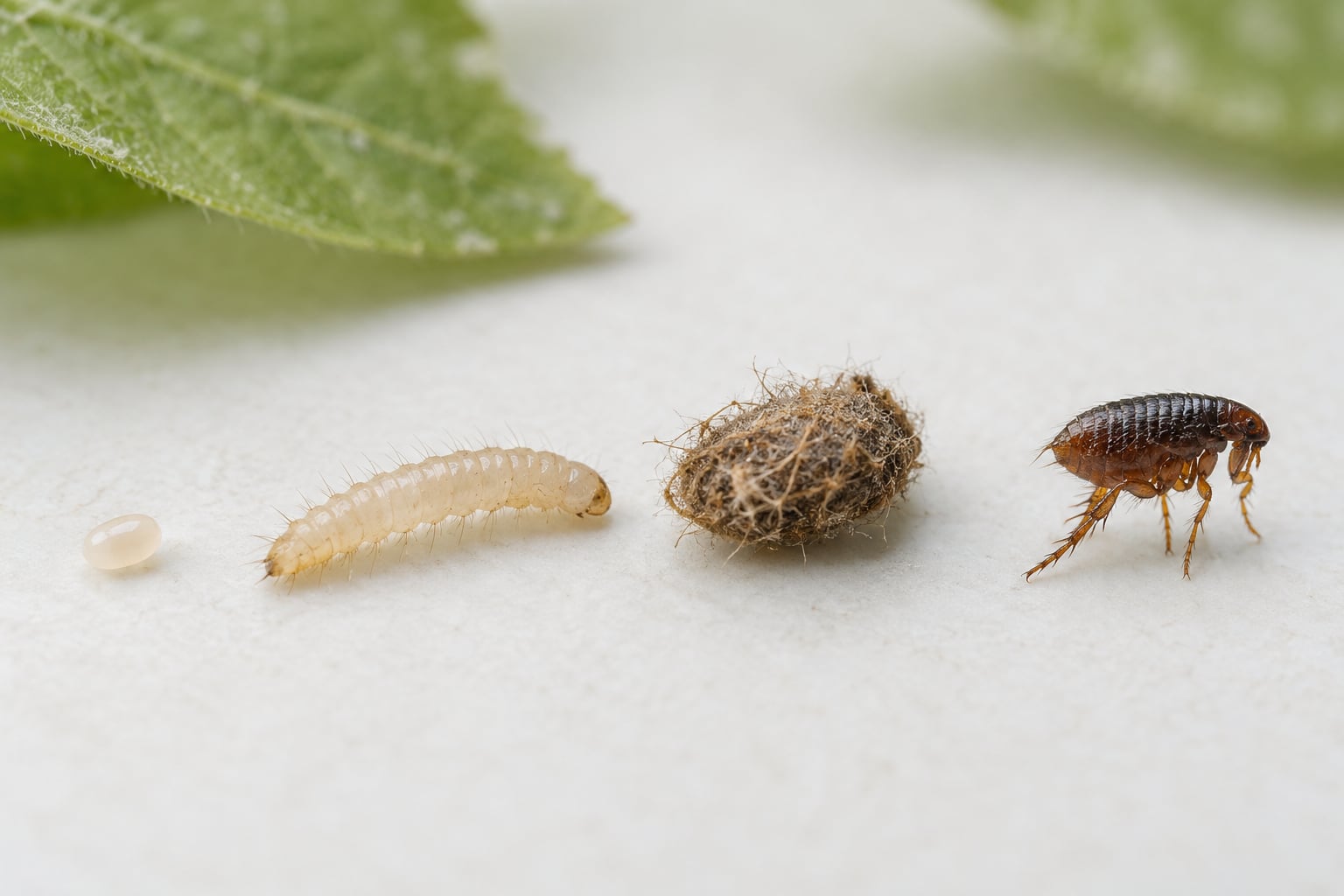
Four stages, one of which is completely hidden. The egg is laid on the host and falls almost immediately into the surrounding environment. The larva hatches, feeds on dirt and debris in carpets or bedding, then molts twice. The pupa spins a sticky cocoon and waits, sometimes for months. The adult finally emerges, finds a warm body, feeds on blood, and starts laying eggs within a day or two.
That structure explains the thing that frustrates everybody: a treated pet looks clean and the fleas come back anyway. Dormant pupae were already in the room before you started, and they are the toughest stage to kill. When they finish, new adults jump onto the pet and the counting begins again.
Complete metamorphosis like this means fleas are extremely sensitive to their surroundings. The whole cycle runs on warmth, moisture and the presence of a host, which is why an unheated empty house behaves very differently from a warm carpet with a dog on it.
How Each Flea Life Stage Works
Flea Life Cycle Explained for Pet Owners: The Four-Stage Timeline
| Stage | Appearance | Where it lives | Typical duration | What kills it |
|---|---|---|---|---|
| Egg | Pearl-white, sand-sized, sticky | Falls off the host into bedding, carpets, upholstery, floor cracks | 1 to 10 days to hatch | Heat, thorough cleaning, some sprays and larvalicides |
| Larva | Worm-like, pale, about the length of a grain of rice, with bristles | Deep in carpet fibers, bedding, sofa seams, under furniture | 5 to 20 days | Vacuuming, heat, cleaning, insect growth regulators |
| Pupa | Whitish-brown cocoon, about 2 mm, sticky and covered in debris | Same sheltered spots, often bonded to fibers or under baseboards | Weeks, sometimes months | Very resistant; mostly caught by emergence and targeted adulticide |
| Adult | About 1/8 inch, dark brown, six legs, flattened side to side | On the pet, and on people, furniture and rugs nearby | About 2 to 3 months on a host | Pet treatment, targeted sprays, combing |
Stage 1: The Egg Stage
Flea eggs are tiny, oval and pearly white, roughly the size of a grain of salt. A female produces them in batches after feeding, and she can lay 40 to 50 in a single day. They are coated with a sticky secretion, which is how they cling to fur and fabric for a few hours before dropping.
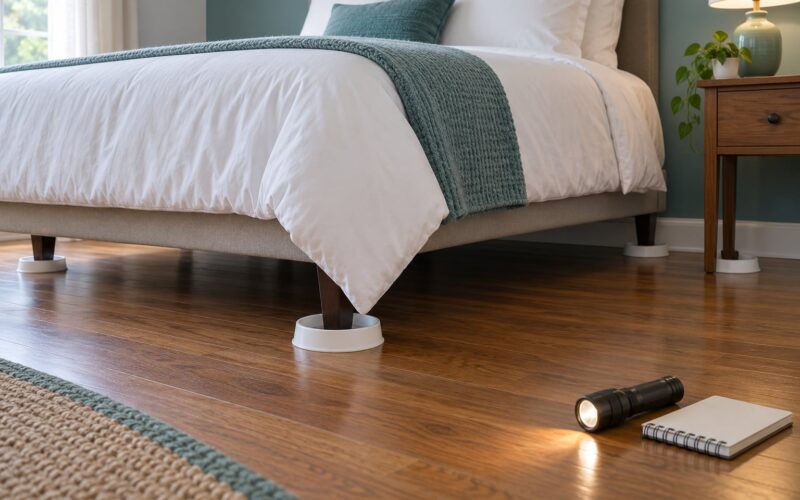
That drop is the important part. Where do fleas lay eggs in a house? Everywhere your pet rests, sleeps or walks: pet bedding, carpets, rugs, upholstered furniture, sofa seams, and the cracks where baseboards meet the floor. A pet that spends most of the day on one spot can concentrate thousands of eggs in that one spot.
Eggs hatch in about one to ten days, faster in warm, humid conditions. Heat kills them outright, which is why washing pet bedding on a hot cycle and drying it thoroughly genuinely helps.
Stage 2: The Larval Stage
Larvae are blind, pale, worm-shaped and covered in fine hairs. They avoid light, so they burrow into carpet fibers, bedding folds and sofa crevices rather than crossing open floor. What do flea larvae eat? Mostly flea dirt, which is the digested blood that adult fleas excrete, along with skin flakes, hair and organic debris.
Yes, fleas molt. The larva passes through two larval instars, shedding its skin once between each, and the second molt is the one that turns it into a pupa. This answers a question almost every flea page leaves unanswered, and it matters because the molting process is why larval growth tracks food availability rather than a fixed clock.
Warm, damp conditions with plenty of host activity make larval development run its full 5 to 20 days. Dry, cool, clean conditions can stall it. Vacuuming works well here for two separate reasons: it physically removes eggs and larvae before they mature, and the vibration triggers dormant pupae to emerge into adults, where they are exposed and vulnerable.
Stage 3: The Pupal Stage
The pupa is the reason flea control is frustrating. The larva spins a silk-like cocoon that turns sticky, then collects dust and carpet fibers until it looks like a speck of grit. Pupae are resistant to many conventional insecticides, and they can survive in a protected spot for weeks to months. Under some conditions pupal persistence has been reported for as long as a year.
Emergence is triggered by warmth, vibration, carbon dioxide and the general sensory signature of a host. Do fleas crawl or jump? Both. Adults move awkwardly on foot and reserve jumping for the moment they need it, launching themselves onto passing animals with a leap many times their own body length.
The practical consequence is a window. Treat your pet and your home, then keep the schedule going for two to three weeks. New adults will keep appearing out of old cocoons during that period, and that is expected rather than a sign that the treatment failed.
Stage 4: The Adult Flea
Adult fleas are about 1/8 inch long, dark brown to black, with six legs and bodies flattened side to side so they can slip through hair. They feed on blood and stay on the host, which is where the itching starts: a small amount of saliva goes in with each bite, and it is the saliva, not the bite itself, that triggers flea allergy dermatitis in sensitive animals.
Females begin laying eggs within about 24 to 48 hours of their first blood meal and can produce several thousand over a lifetime. Males are smaller, cannot lay eggs, and tend to wander off the host rather than staying attached.
Adult fleas locate a host using carbon dioxide exhaled in breath, body heat, footfall vibrations and skin odors. That is why a flea can cross an empty room and land on you, and why fleas find pets that never go outdoors.
How Long Does the Flea Life Cycle Take?
The honest answer is a range. In ideal warm, humid conditions a generation can complete in roughly two to three weeks. Purdue Extension puts typical cat flea development at about 21 to 28 days. In cool, dry or food-poor conditions the same cycle stretches across many months, and University of Florida figures run from a couple of weeks to well over a year in unfavorable environments.
Temperature and humidity do most of the work. Fleas develop fastest in warm, humid weather, which is why infestations peak in late spring and summer. An adult flea on a healthy pet lives roughly two to three months, but a pre-emerged flea sitting undisturbed in a cocoon in an empty house can sit far longer than any living adult.
That gap between the living adult lifespan and the dormant pupal lifespan is what confuses people who move into a vacant property and suddenly see fleas. Owners have posted exactly this on pet forums: fleas in a home whose cats had already been rehoused, and jumping insects in an empty house with no pet present at all. In those cases the source is environmental, not a pet.
Where Fleas Live Between Stages
For about 95% of the flea life cycle, your pet is not involved at all. Eggs, larvae and pupae live in the environment, and they cluster in the same places: pet bedding and blankets, carpets and rugs, upholstery and sofa seams, beneath furniture, along baseboards and in floor cracks, and anywhere dust collects.
Three quarters of a flea larva’s world is floor-level, which is why carpets deserve more attention than hard flooring. Upholstery is the sleeper hit. A sofa cushion can hold a sealed population that no floor treatment reaches, and moving a blanket or cushion between rooms spreads pupae with it.
Second-hand furniture, a newly adopted pet, a visit from a neighbour’s dog, a squirrel in the attic or a rodent in the wall can all introduce fleas to an otherwise clean house. Indoor-only pets are not exempt. Fleas arrive on people, on other animals and on things carried through the door, and once a female is indoors she has no reason to leave.
Timing follows from this. One pass over the carpet on the day you treat your pet catches far fewer immature fleas than vacuuming every few days for two to three weeks, because each pass removes eggs and larvae and keeps nudging pupae into the open.
How to Spot a Flea Infestation on Pets and at Home
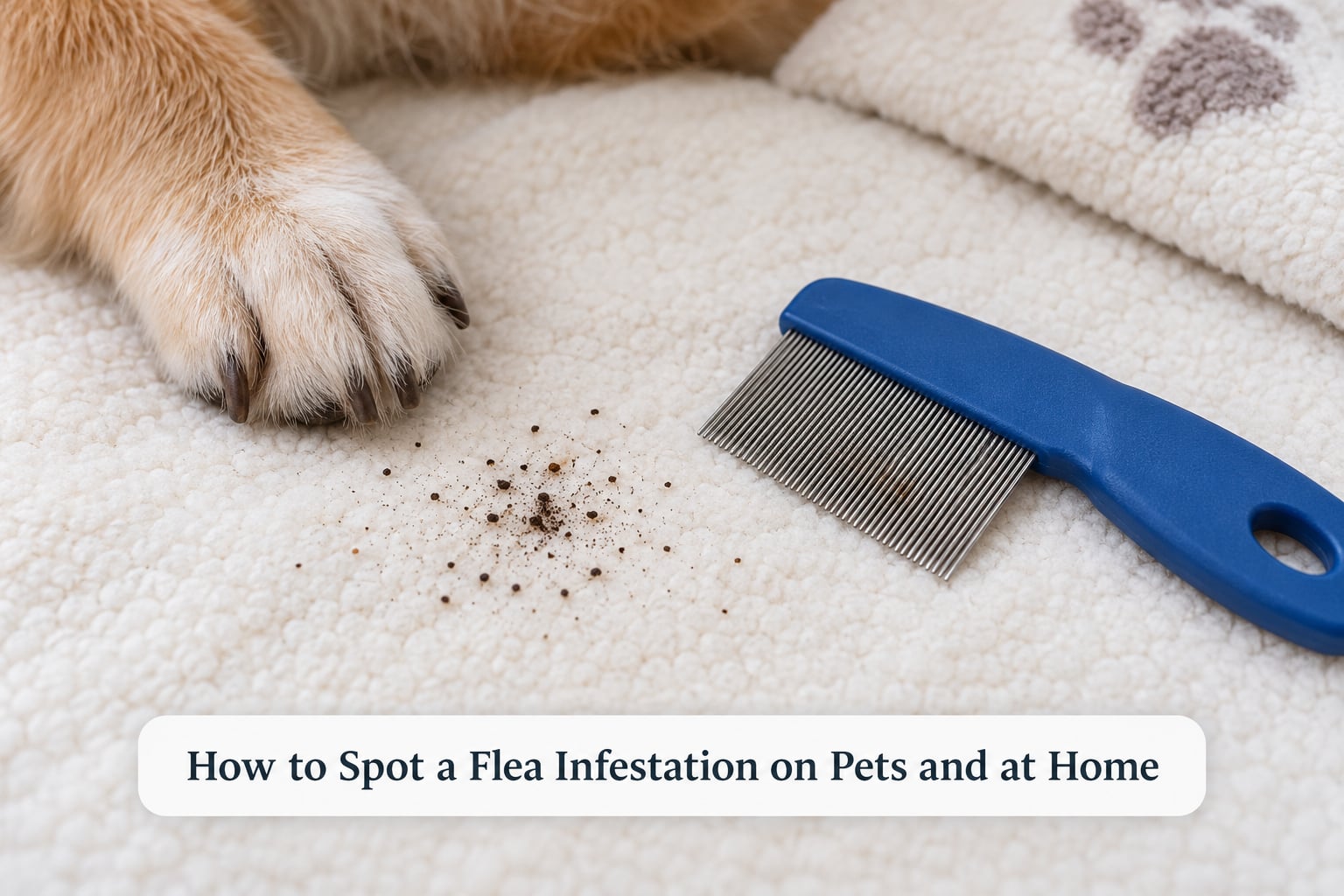
Reliable signs include live fleas moving quickly through the coat, black specks of flea dirt, bites, and persistent scratching or skin irritation. Check the neck, the base of the tail, the belly and the inside of the hind legs, where fleas settle first.
The flea dirt test takes a minute. Comb your pet over a white paper towel or a damp white tissue, then look at what falls off. Reddish-brown flecks that smear into a red halo when wet are digested blood, which confirms an infestation even when you never catch a moving adult.
One caution: don’t crush a flea between your fingers to identify it. Squeezing can eject flea dirt onto your skin and surfaces, which spreads material rather than removing it. Drop it into soapy water instead and see if it still jumps.
Jumpers are not always fleas. Springtails, psocids and carpet beetles also move in a way that makes people suspect fleas, and owners on pest forums frequently ask for help telling them apart. Fleas are laterally flattened, move in quick bursts, and prefer pets and warm spots; springtails are pale, tiny and usually found near damp areas.
Contact your veterinarian if your pet is scratching constantly, has raw or thinning skin, is biting at their feet or flanks, or seems uncomfortable. Flea allergy dermatitis can look like a skin infection and needs proper diagnosis, and heavily infested young or frail animals can become seriously unwell.
How to Break the Flea Life Cycle Safely
Treating the pet is about 5% of the job. Here is the framework that actually works.
- Ask your veterinarian which product fits your pet. Species, weight, age and pregnancy status all change the safe choice, and some products made for dogs are toxic to cats.
- Treat every eligible pet in the home on the same schedule. An untreated dog or cat becomes a reservoir, and untreated pets in the same building can put the household back to zero.
- Vacuum carpets, rugs and upholstery thoroughly and often. Dispose of the contents immediately in a sealed bag, outdoors, rather than leaving them in the house.
- Wash pet bedding and blankets on a hot cycle and dry them fully. Heat kills eggs and larvae that sprays often miss.
- Use an environmental product suited to the surface, following its label exactly. Insect growth regulators target immature stages; many sprays do almost nothing to pupae.
- Keep the schedule running for two to three weeks after the last dose. That covers the pupae that were already in the room when you started.
- Move to year-round prevention. Consistency through winter matters because heated indoor homes keep developing fleas even when outdoor activity drops.
Do not mix products or combine a spot-on with a household spray, collar or flea comb without checking first. Overlapping insecticidal ingredients can overwhelm a small animal, and a permethrin product intended for dogs can cause serious illness in cats.
Where you are done is defined by the cycle, not by the sight of a single flea. Success looks like no itching, no flea dirt in the comb, and no new adults appearing after the emergence window closes.
When You Need Veterinary or Professional Help
Call a veterinarian for persistent skin problems, suspected allergy reactions, open sores, hair loss, or any sign your pet is unwell. Puppies, kittens, pregnant animals, very old pets and animals with existing health conditions need product selection done by a clinician, and no medication meant for humans should ever be used on a pet.
Bring a licensed pest professional when the infestation is severe, when the source appears to be the yard or structure rather than a pet, when there is no pet in the home at all, or when a careful plan has been running for several weeks with no change. Wildlife entry points, rodents in the walls and heavy upholstery saturation all fall outside what household products reliably fix.
Frequently Asked Questions
How long does a flea live from egg to adult?
In warm, humid conditions a flea can go from egg to breeding adult in roughly two to three weeks, and Purdue Extension puts typical cat flea development at about 21 to 28 days. Cooler or drier conditions stretch it out. Adult fleas live two to three months on a host, but pupae in cocoons can wait many months before emerging.
Can flea eggs and larvae be found in my pet’s bedding?
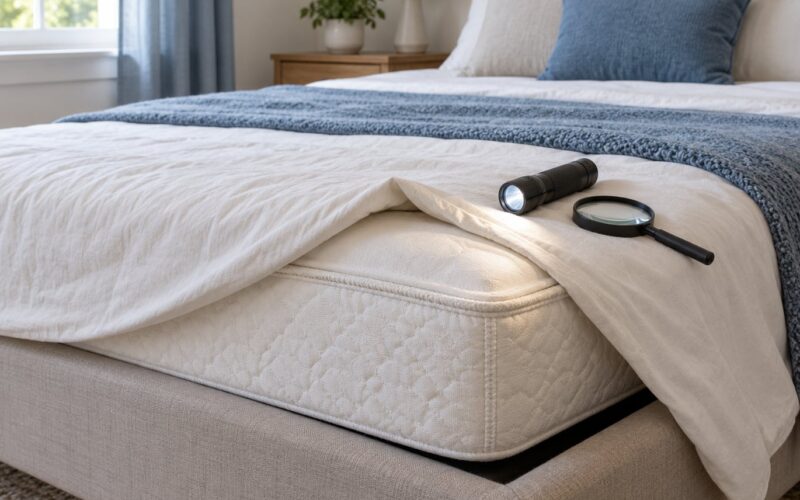
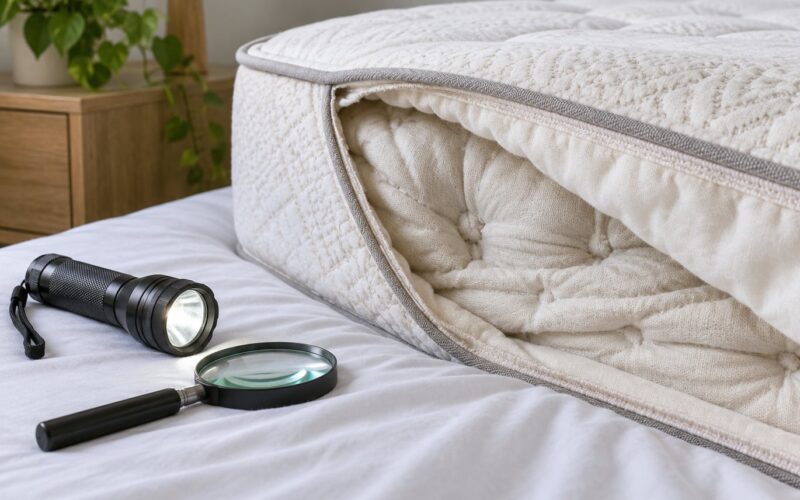
Yes, and bedding is one of the worst places to look. Flea eggs fall off your pet where it settles, and larvae burrow into bedding folds and seams where they feed on flea dirt and skin debris. Washing bedding on a hot cycle and drying it fully kills most eggs and larvae, and vacuuming the mattress and frame removes the rest.
Do indoor pets still get fleas?
They do. Fleas arrive indoors on people, on visiting animals, and on second-hand furniture or belongings carried through the door. Once a breeding female is inside she has no reason to leave. Indoor pets are also protected from the cold, so development does not pause the way it does outdoors.
What is the safest flea treatment for puppies, kittens, or pregnant pets?
Ask your veterinarian. Age and pregnancy change which products are appropriate, and a dog flea product containing permethrin can seriously harm cats. Very young animals may need a different dose or an age-approved formulation. Never split an adult tablet for a kitten or puppy, and never use any human medication on a pet.
Why do fleas keep coming back after treatment?
Usually because of the pupal stage. Pupae are resistant to many insecticides and can wait weeks to months before emerging, so new adult fleas keep appearing for two to three weeks after you treated. Untreated pets in the home, untreated carpets and upholstery, and vacuum contents emptied back inside all restart the cycle.
What to Do First
Start by checking your pet and your living spaces: comb for fleas and flea dirt, then look at bedding, carpets and upholstery. If fleas are present, contact your veterinarian before choosing any treatment, especially with kittens, puppies or pregnant pets.
Treat every eligible pet consistently, vacuum and discard the contents outdoors, wash bedding hot, and keep the schedule going for two to three weeks so the dormant pupae emerge into a home that is already treated. Year-round prevention is what stops the whole flea life cycle from starting again.