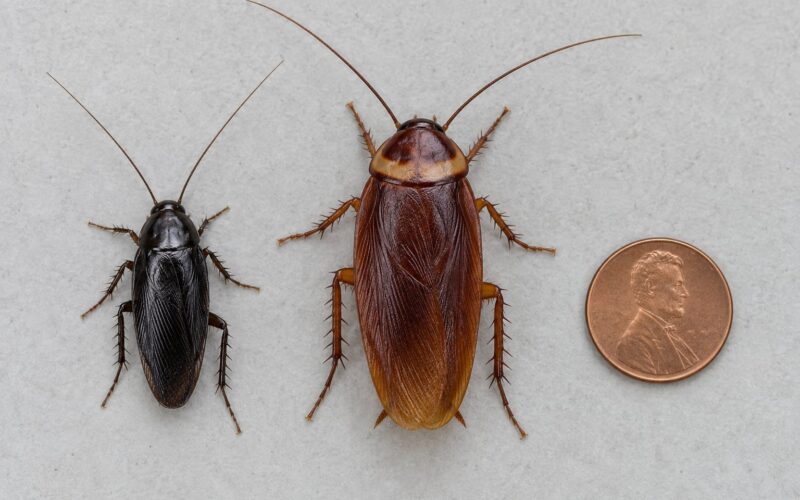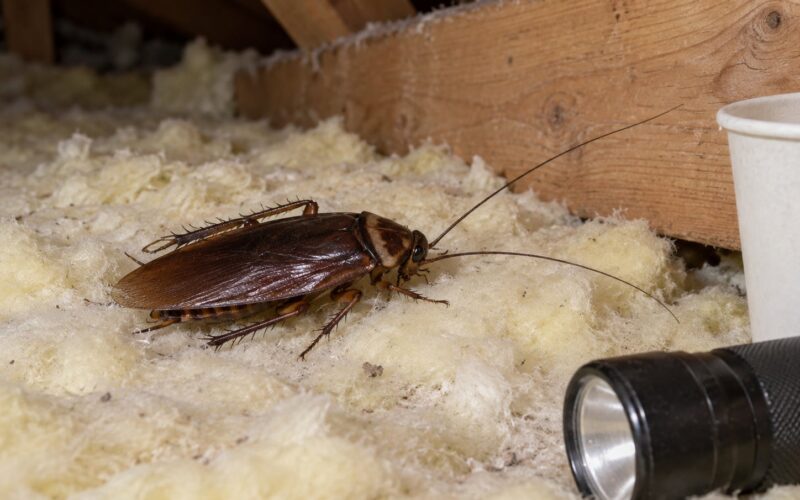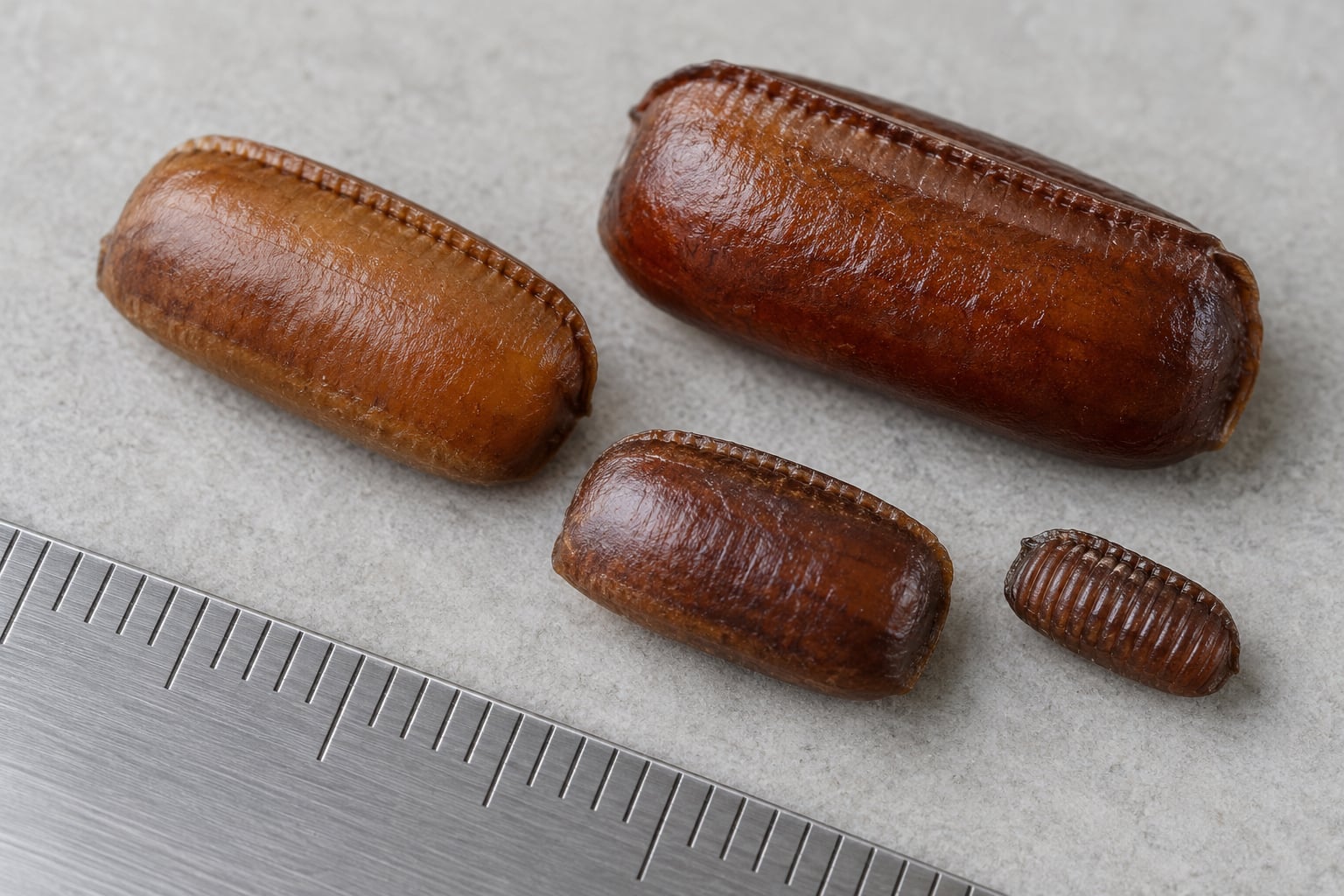
An ootheca is a hardened, capsule-shaped egg case that a female cockroach either carries for most of her life or glues down in a protected crack before it hatches. This guide covers roach egg case identification by species so you can tell a 6 mm German case from an 8 to 10 mm Oriental one, judge whether it is still active, and know where each species tends to hide them.
Color alone will not get you there. Two species can look identical and still differ by ten degrees of climate, and a case darkens as it dries, so a fresh pale capsule and a month-old one can read as different bugs entirely. Size first, surface texture second, location third is the order that actually works.
Most people find a single capsule with no ruler and no adult nearby, which is exactly the situation where a printed guide helps. Below I lay out what each species’ ootheca looks like, what it gets confused with, and what your next ten minutes should be.
Table of Contents
- Roach Egg Case Identification by Species at a Glance
- What Does a Roach Egg Case Look Like?
- German Roach Egg Case Identification
- American Roach Egg Case Identification
- Smokybrown Roach Egg Case Identification
- Oriental Roach Egg Case Identification
- Asian Roach Egg Case Identification
- How to Tell Roach Egg Cases Apart When Color Is Unreliable
- What Bugs Are Commonly Mistaken for Roach Egg Cases
- Where to Find Roach Egg Cases in the Home
- Does Finding One Egg Case Mean You Have a Roach Infestation?
- What to Do After You Identify a Roach Egg Case
- Frequently Asked Questions
- Can I identify a cockroach species from an empty egg case?
- How big is a German cockroach egg case compared with other species?
- Are cockroach egg cases harmful to touch?
- How long does it take a cockroach egg case to hatch?
- Should I crush a roach egg case or leave it for identification?
- Why do cockroach egg cases appear in a sealed box?
- Conclusion
Roach Egg Case Identification by Species at a Glance
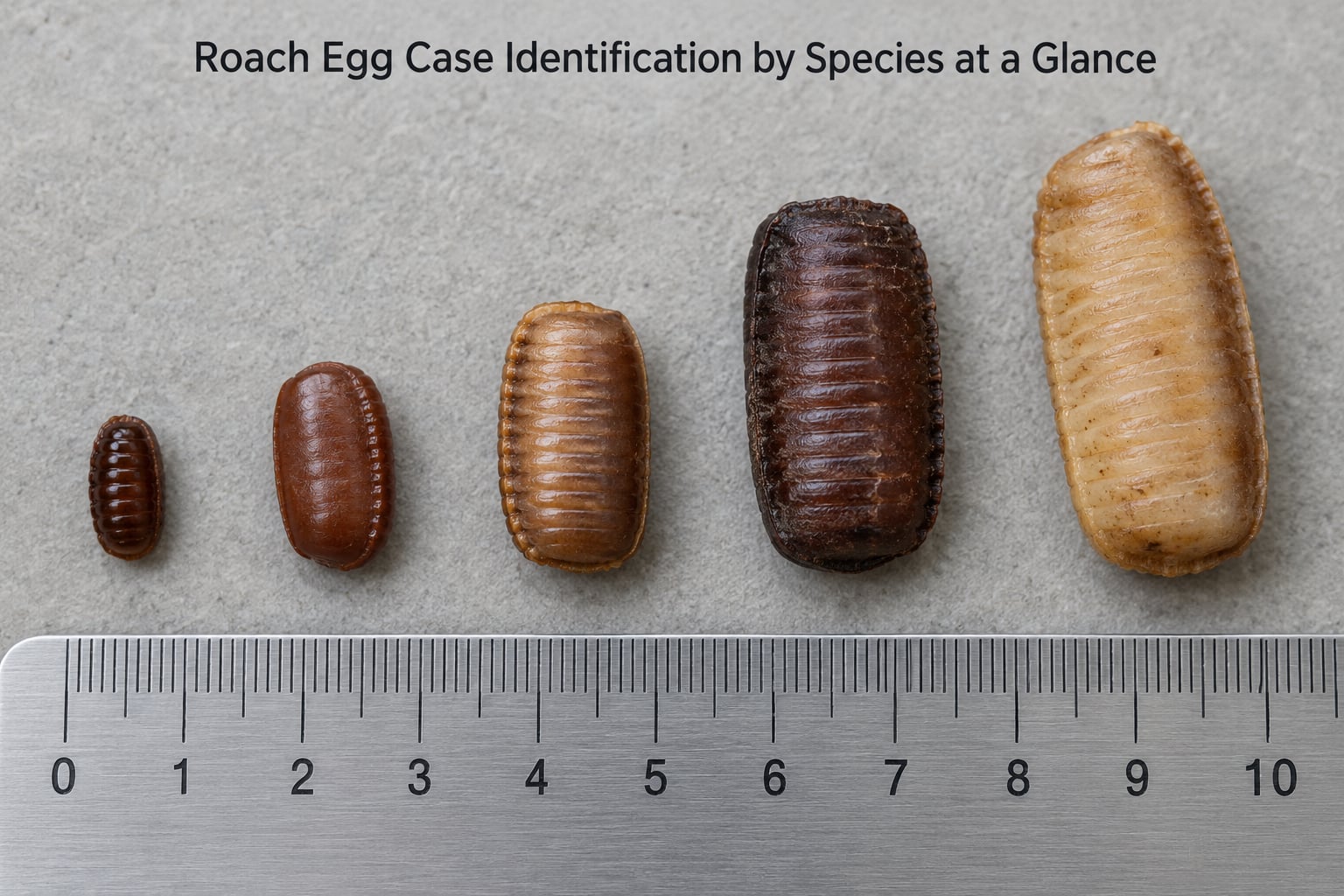
Here is the short version. All figures below are ranges seen across US household and commercial settings, so treat them as a ruler rather than a promise.
| Species | Length | Color | Surface | Eggs per case | Case is |
|---|---|---|---|---|---|
| German | 6 to 9 mm (about 0.25 to 0.35 in) | Light tan, darkening to medium brown | Ridged along one edge | Up to 50 | Carried by the female until it hatches |
| American | About 8 mm (about 0.3 in) | Dark reddish-brown to black | Rounded ends, prominent raised keel | About 16 | Deposited in protected shelter |
| Oriental | 8 to 10 mm (about 0.3 to 0.4 in) | Dark reddish-brown to black | Smooth, blunt ends, faint ridges | About 16 to 18 | Deposited in cool damp areas |
| Brown-banded | About 5 mm (about 0.2 in) | Light brown with darker banding | Smooth, rounded | About 14 to 18 | Carried, then glued near food |
| Smoky brown | Similar to German, roughly 7 to 9 mm | Dark reddish-brown to black | Scalloped edges, faint central marking | About 24 to 28 | Deposited in sheltered outdoor debris |
| Asian | Similar to German, roughly 6 to 9 mm | Brown, often with a pale margin | Very close to German in texture | About 14 to 16 | Deposited near ground level |
German and American cases are close enough in length that size alone will not separate them, and the Asian case is a genuine near-copy of the German one. That is normal. Location and adult evidence carry the weight when the capsule is ambiguous.
What Does a Roach Egg Case Look Like?
An ootheca is a protein-based casing that holds a batch of embryos in two neat rows, roughly eight per row in the cases most people find. It is not a shell in the beetle sense. It is a molded, sealed purse with a seam that runs the length of one face.
Four things are worth checking on any capsule you find:
- Shape. Most are elongated, slightly flattened ovals with blunt or rounded ends. Asian cases run a little narrower than German ones.
- Seam and keel. Look along the long face for a ridge, a folded seam, or scalloped edges. This tells you more than color does.
- Weight. A viable case feels firm and heavy for its size. An emptied one is light, thin-walled, and often split along the seam.
- Color. Fresh cases are pale tan or amber. They darken to brown, reddish-brown, or near-black as they dry, so an aged case can look like a different species.
For scale without a ruler: a dime is about 17.9 mm across, a penny about 19 mm, and a pencil eraser about 6 to 7 mm. A case that fits snugly against a dime edge is in German range. One that would cover most of a dime’s width is closer to Oriental.
What hatches out is called a nymph, which is the juvenile stage. Nymphs look like smaller, lighter, wingless versions of the adult and start eating almost immediately, which is why timing matters more with roaches than with most household pests.
German Roach Egg Case Identification
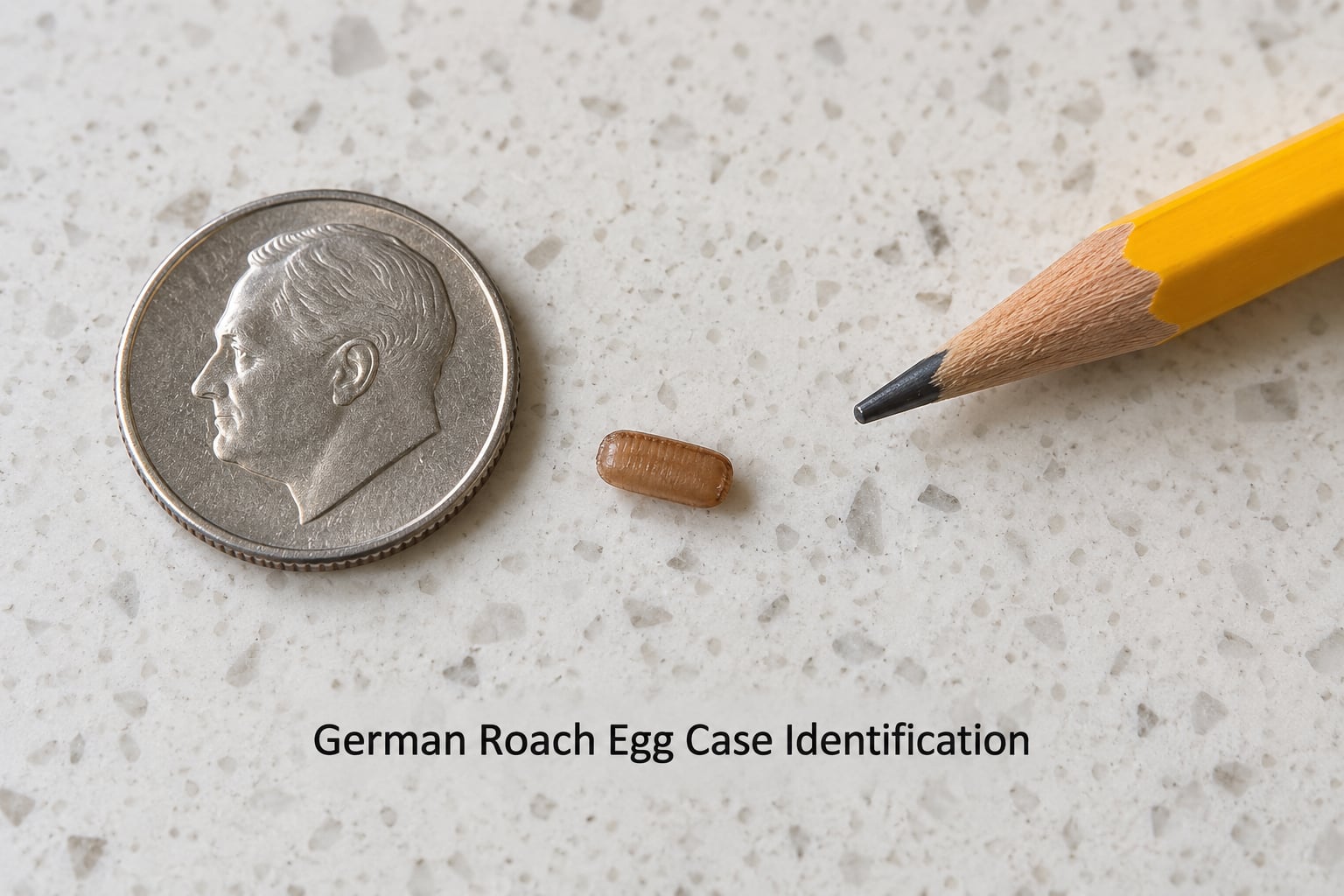
The German case runs 6 to 9 mm, sits at the small end of the range, and is usually light tan or amber when fresh, darkening to a medium brown. It is noticeably narrower than an American case of the same length, and it carries one clear longitudinal ridge along a long face.
Two things make the German easier to deal with than the numbers suggest. The female carries her ootheca with her retracted ovipositor, holding it until it is close to hatching, so you will rarely find a deposited German case on a counter. And a single German female will produce several cases over her adult life, so one capsule in a kitchen means the population is already reproducing inside.
The catch: an Asian case looks nearly the same. If you are in the Southeast, treat a German call as provisional until you have seen an adult. Forum threads on cockroach and entomology boards repeat the same point constantly, that a case on its own proves reproduction but not which species produced it.
American Roach Egg Case Identification
The American ootheca sits around 8 mm and is darker, usually a deep reddish-brown that can look nearly black once dry. Its signature is the shape: blunt, rounded ends and a pronounced raised keel running down the center of one face, which gives it a slightly angular profile in profile view.
Where it was placed matters as much as how it looks. American cockroaches deposit cases in sheltered, warm, damp spots: under sinks, behind the refrigerator, in garage and utility areas, near floor drains, and under mulch or leaf litter outdoors. Finding one in a warm indoor space with visible droppings nearby fits the pattern well.
Adult American cockroaches are strong fliers and males do fly readily, so an indoor case of this type often comes with adults you will see at night rather than hide all day. That is a useful confirmation, since the case shape alone is easy to over-read.
Smokybrown Roach Egg Case Identification
Smoky brown cases are dark reddish-brown to black, roughly German-sized or a touch larger, and the edges are scalloped rather than smoothly rounded. Many people describe a subtle darker line or marking along the center of one face. None of that is reliable on its own.
Habitat does far more work here. Smoky brown is a tree and leaf-litter species that flourishes in warm, humid places, and it is common across the South and in coastal areas. Cases show up in leaf litter, mulch beds, woodpiles, crawl spaces and attics, and sometimes indoors in a garage or near an entry point after heavy rain.
Users in the American South frequently report smoky brown nymphs after storms and struggle to tell those cases apart from German ones, and the confusion is understandable. If the case came from outdoors, near a shrub bed or a woodpile, smoky brown is the better bet than German.
Oriental Roach Egg Case Identification
Oriental oothecae are among the largest, at 8 to 10 mm, and range from dark reddish-brown to black. They are blunt-ended and noticeably plumper and smoother than a German case of similar length, with ridges that are faint rather than sharp. Those are the two differences people rely on most: length plus a smooth surface.
The Oriental cockroach prefers cool, damp, sheltered ground-level shelter, so cases cluster in basements, crawl spaces, under sinks, near water heaters, in garages, and in stairwells. Summer heat pushes them outdoors into mulch and shaded areas, and you can find deposited cases there after a spell of good weather.
One useful clue beyond the case itself: Oriental nymphs and adults move fast and scatter when exposed, and adults are noticeably glossy and hard to crush. Combine the capsule with that behavior and you have a reasonably confident answer.
Asian Roach Egg Case Identification
This is the one people argue about most, and honestly the limits deserve to be stated plainly. The Asian ootheca is roughly 6 to 9 mm, brown, and so close to the German case in size, color, and texture that the two are routinely confused in the field, including on entomology boards.
What does separate them is context. Asian cockroaches are outdoor insects that live in leaf litter and low vegetation along building edges, and they enter structures mainly at ground level through doors, garages, and utility penetrations. Cases are deposited low and often come in or near the perimeter, not deep inside a kitchen cabinet. They can also carry a paler margin along the case edge, which is a weak but real clue.
My practical rule is to treat geography first. If you are outside the Asian range, the default read for a small tan ridged case is German. Inside the range, weight the nymph and adult evidence over the capsule.
How to Tell Roach Egg Cases Apart When Color Is Unreliable
Color is the first thing people check and the least reliable. Fresh and aged cases of the same species can look like two different species, and lighting changes everything at 5 pm on a kitchen floor.
Work in this order instead:
Step one: measure against a coin
Place the case next to a dime, a penny, and a pencil eraser in turn. Under about 5 mm points toward brown-banded. Between 6 and 9 mm is German, American, Smoky brown, or Asian. Eight to 10 mm with blunt ends points to Oriental.
Step two: read the surface with a fingertip
Run a finger lightly along the long face. One crisp ridge means German. A smooth, slightly inflated face with soft or absent ridges means Oriental. Rounded ends with a hard central keel means American. Scalloped edges suggest Smoky brown.
Step three: check where you found it and when
Location and season break the remaining ties. German cases turn up inside warm, dry kitchens and are usually carried rather than deposited. American cases sit in warm damp indoor spots or in garage mulch. Oriental cases sit in cool damp basements. Smoky brown and Asian cases come from outside, near leaf litter and building edges, and show up more in warm months.
That third step is where most real answers come from. A case alone is suggestive; a case plus a location plus a nymph you actually saw is close to conclusive.
What Bugs Are Commonly Mistaken for Roach Egg Cases
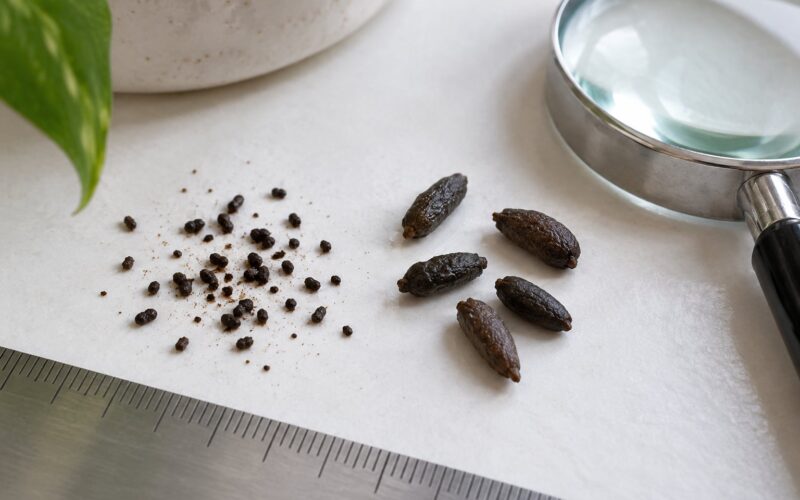
The single most common misidentification, by a wide margin, is cockroach droppings. Beyond that come a handful of look-alikes that trip people up in kitchens and basements.
- Droppings. Small, dark, irregular flecks with ragged edges, scattered in clusters near harborages. An ootheca is a single smooth capsule with a defined seam, and there is one of it rather than a scatter.
- Mantid ootheca. A foamy, layered, ridged dome that looks like layered paper or a small brown meringue. Mantid cases come in one piece with a whorled top, whereas a roach capsule has a longitudinal ridge.
- Beetle eggs. Usually much smaller, laid in clusters or singly, and often darker and rounder. Some household beetles lay cylindrical eggs that can pass for a small capsule at a glance, but they lack the keel.
- Pillbug or roll-segment cases. Tiny, translucent, curled structures, usually in leaf litter outdoors rather than on a kitchen shelf.
- Debris. A dried blob of food, a piece of pet food, a bit of frass, or a bit of spackle can look remarkably like a case under low light. The seam is the give-away: real oothecae always have one.
If it breaks open and releases a foul smell, most people assume it is debris. An actual cockroach case tends to have a distinctive smell when crushed, and that is a hint worth noting rather than a test to rely on.
Where to Find Roach Egg Cases in the Home
Cases hide in the same places the roaches feed and travel, which means searching in order of likelihood saves you time.
- Kitchen. Inside cabinet corners, under sink plumbing, along the back edge of appliances, and on high shelves where German cockroaches carry and drop cases. Brown-banded cases appear in or near food storage.
- Bathroom and laundry. Under the vanity, behind the washing machine, and along baseboards where moisture collects.
- Basement and crawl space. Along wall edges, on concrete steps, and in stored cardboard. Oriental cases concentrate here.
- Garage and utility areas. Behind the water heater, along the base of walls, and under workbenches. Warm damp ground-level spots favor American.
- Bedroom closets and storage boxes. Cardboard boxes are the classic way a case shows up somewhere it looks sealed, since cases arrive folded into used boxes and luggage.
- Outdoors. Leaf litter, mulch beds, woodpiles, and shaded ground near foundation walls. Smoky brown and Asian cases are most likely out here.
Move things before you look. Most empty cases in a home are not hiding that hard. They slide out from a box seam or fall out when you shift a shelf.
Does Finding One Egg Case Mean You Have a Roach Infestation?
A plump, heavy case with an intact seam means there is a breeding female somewhere in that area right now. That is the bad case scenario, and it deserves a real response. An empty case means something different: it usually indicates the eggs already hatched, and it is a record of past reproduction rather than a promise of more.
The distinction is easy to feel. An active case is firm and rounded, with no daylight visible through the wall and no split along the seam. A hatched case is thin, collapsed or shriveled, and often shows a ragged opening along the ridge where nymphs emerged.
Corroborating signs matter more than the case itself. Look for pepper-like droppings in nearby cabinets, live roaches at night when you enter a dark room, egg-bearing females, and multiple cases rather than one. Repeated cases in the same area over several weeks mean the population is still producing.
One community consensus worth repeating from pest forums: with German cockroaches, a single egg case means you have them or you are about to. That is not alarmism. German females reproduce early and often, and they carry their cases into the building.
What to Do After You Identify a Roach Egg Case
Crushing a single ootheca feels productive and solves almost nothing. Unless you find and destroy every case, more exist, and a crushed case leaves debris that is difficult to clean out of a seam. If the case is already hatched, crushing it changes nothing at all.
What actually moves the needle:
- Confirm before you act. Photograph the case next to a coin, check for droppings and live activity, and identify the species as well as you can. Species changes your control plan.
- Seal entry points. Pipe gaps, wall voids, and door thresholds with caulk, and add door sweeps and mesh screens where needed. This pays off regardless of species.
- Cut off food and water. Store food in sealed containers, clear clutter, take out trash often, wipe surfaces, and fix dripping faucets and under-sink dampness.
- Use monitors. Sticky monitors in kitchens, bathrooms, and basements tell you where the activity is instead of where you guess it is.
- Pick a labeled control method. Gel baits and growth regulators suit German and brown-banded roaches. Boric acid dust can reach cracks and wall voids where cases hide, but keep it away from children and pets and follow the label. Foggers and total-release sprays knock down exposed roaches while doing little to oothecae tucked into harborage, so treating the harborage matters more.
- Know when to call a pro. German infestations in multi-unit buildings rarely resolve on effort and boric acid alone. Repeating cases after a couple of months of cleanup usually means more breeding than you can see.
Frequently Asked Questions
Can I identify a cockroach species from an empty egg case?
Reliably, no. An empty case has lost the weight and plumpness that hint at freshness, and its color has usually darkened. Size and surface texture still work, so a case with a crisp ridge at 6 to 9 mm points to German and a smooth blunt one at 8 to 10 mm points to Oriental. But separating German from Asian from an empty case alone is not realistic. Location and adult evidence settle it.
How big is a German cockroach egg case compared with other species?
A German ootheca measures about 6 to 9 mm, roughly a quarter to a third of an inch. That puts it below the Oriental at 8 to 10 mm and above the brown-banded at about 5 mm, and it overlaps heavily with American, Smoky brown, and Asian cases. For a quick reference, a German case is about the width of a pencil eraser and fits snugly against the edge of a dime.
Are cockroach egg cases harmful to touch?
No. A sealed cockroach ootheca is a tough protein casing and it does not bite, sting, or transmit anything through contact. Wash your hands after handling one anyway, since the surface can carry whatever was on the shelf. The caution people run into is not the case itself but what it implies, namely that a breeding female is close enough to leave it.
How long does it take a cockroach egg case to hatch?
German cases typically hatch in about 28 to 60 days depending on temperature. The other indoor species run shorter cycles, often around 24 to 38 days. Warmth speeds development and cool conditions slow it. An empty case found in late spring may simply be last season’s leftovers, which is why the condition of the case tells you more than the calendar does.
Should I crush a roach egg case or leave it for identification?
Photograph it next to a coin first so you have a scale reference, then remove it. Crushing one case accomplishes nothing on its own because you will rarely find them all, and a cracked case just leaves debris in a crevice. Drop it in a sealed bag or a sealed outdoor bin. The cases that matter are the ones still sealed, so look for more of them in the same area.
Why do cockroach egg cases appear in a sealed box?
Egg cases travel well tucked into cardboard seams, and used boxes, moving cartons, and storage totes are a common way one enters a home. Look inside any box that came from another household, a garage sale, or a shared storage area. Brown-banded and German cases both turn up this way, and a case in a sealed box is often the only evidence for weeks before you see a single roach.
Conclusion
Start with the capsule: measure it against a coin, run a finger along the long face to feel the ridge or the smoothness, and note whether it is firm or collapsed. Then look around it, because droppings, live roaches at night, and egg-bearing females tell you far more about the infestation than the case alone does. Combining size, texture, and location is what turns roach egg case identification by species from guesswork into a solid call.