Horse fly bites hurt because the female fly does not stab you, she saws. Her blade-like mandibles slash through your skin in a scissoring motion, and as she feeds she releases saliva that stops your blood from clotting. Nothing in that process numbs you, so you feel the cut the instant it happens. If you have searched for horse fly bites and why they hurt, this mouthpart design is the whole answer.
A mosquito is a quiet technician with a fine needle. A horse fly is a pair of serrated knives and a sponge. That difference explains the sharp sting you remember, the welt that keeps swelling for hours, and the itch that can linger for days afterward.
Below is what is going on under the surface, how to recognize a bite, what actually helps, and where to draw the line between treating it at home and calling a clinician. As of 2026, guidance from public health bodies and mainstream medical sources still points to basic wound care as the first step, with medical review for severe or worsening reactions.
Table of Contents
Why Do Horse Fly Bites Hurt So Much?
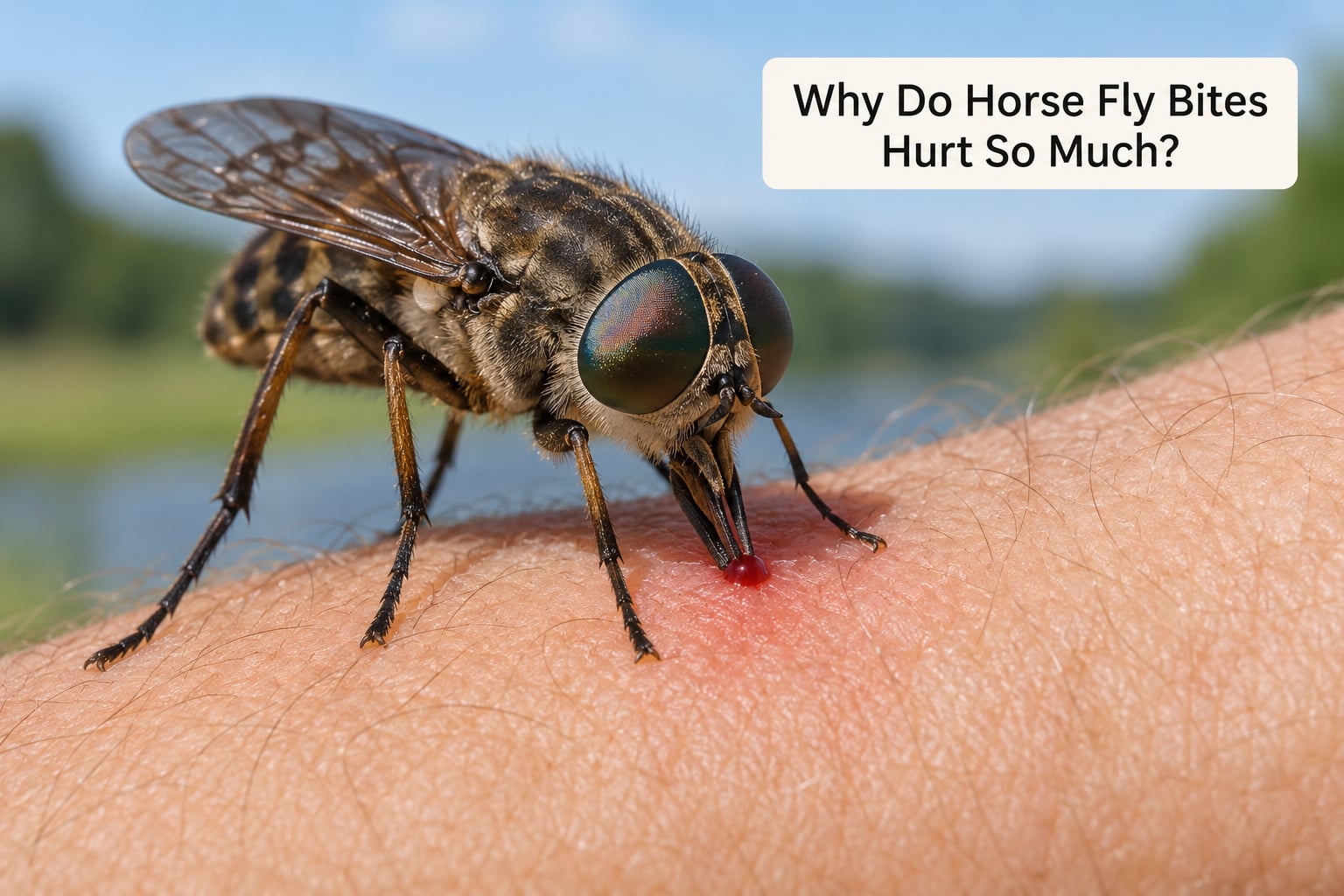
Four things stack up to make a horse fly bite hurt in a way a mosquito bite never does: the mouthparts are cutting tools rather than needles, the fly injects anticoagulant saliva, there is no local anesthetic, and the attack often repeats.
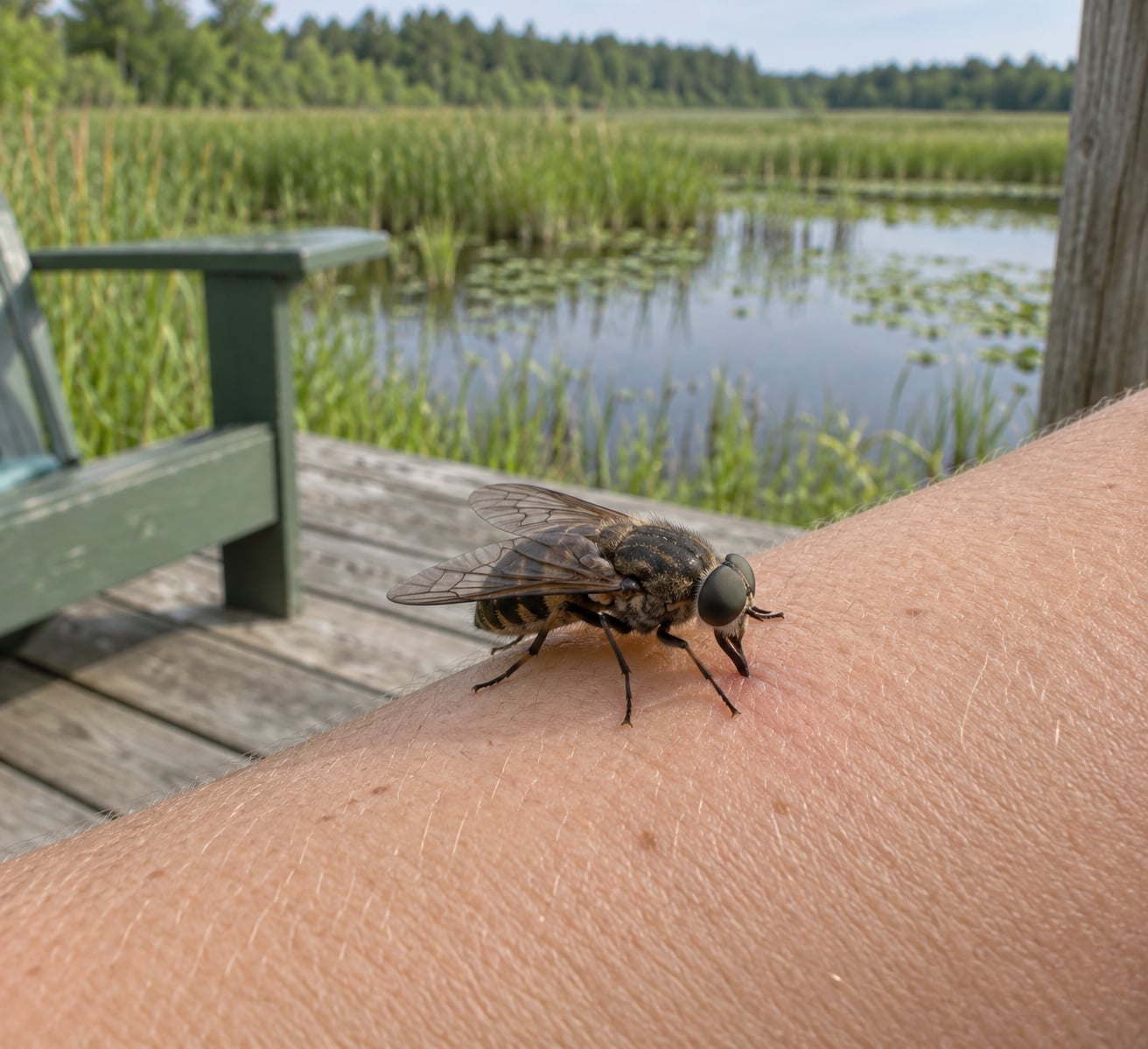
A saw, not a needle: how the mouthparts work
Horse flies belong to the family Tabanidae. Instead of a single hollow proboscis, a female has a pair of short, stout mandibles with saw-like edges, plus a sponge-tipped structure she uses to lap up what she opens.
Those mandibles work back and forth like scissors. The Natural History Museum describes them as cutting until small blood vessels break and blood begins to pool in the wound, and Cleveland Clinic notes the same tearing mouthparts paired with a sponge-like tongue. The fly does not need to find a vein, because the cut itself creates the pool she feeds from.
A mosquito has to work for the same meal. Her thin proboscis slips between cells and finds a capillary, which is why the sensation is a light scratch people often do not notice until the itching starts.
Why horse fly bites keep hurting after the fly leaves
Two after-effects carry on long after the initial cut. First, the saliva contains anticoagulant compounds that hold the wound open and keep blood from clotting, so a small cut can ooze or bleed more than you expect from something that size.
Second, your immune system reacts to that saliva as a foreign substance. Histamine release produces redness, swelling and itch, and a deeper cut usually means a bigger welt. Some people describe swelling the size of a cricket ball that expands over several hours, which matches what Cleveland Clinic reports about welts of roughly 10 to 30 millimeters and larger reactions on sensitive skin.
There is no anesthetic step. Mosquito saliva is comparatively mild and many people feel little at the moment of the bite, while a horse fly bite registers instantly as a sharp, burning or aching hit. Readers on insect and outdoor forums describe it in the same terms: pain felt on contact, unlike almost every other bite they get.
What makes a fly pick you in the first place
Horse flies hunt. Males feed on nectar and never bite. Females are hunting for a blood meal they need to develop eggs, and they find hosts by tracking carbon dioxide from your breath, body heat, moisture from sweat, movement and contrasting colors.
A few practical consequences follow from that. Dark clothing against light skin or a bright background makes you easier to spot, which forum users notice every season. Strenuous activity such as running, biking or yard work raises your heat, sweat and movement, which is why bites often cluster on people who are working hard outdoors rather than sitting quietly.
And the circling you notice before the hit is not random. Flies repeatedly circle a moving target, dart in, get swatted, and come back. Many people report multiple bites within minutes for exactly this reason.
What Do Horse Fly Bites Look Like?
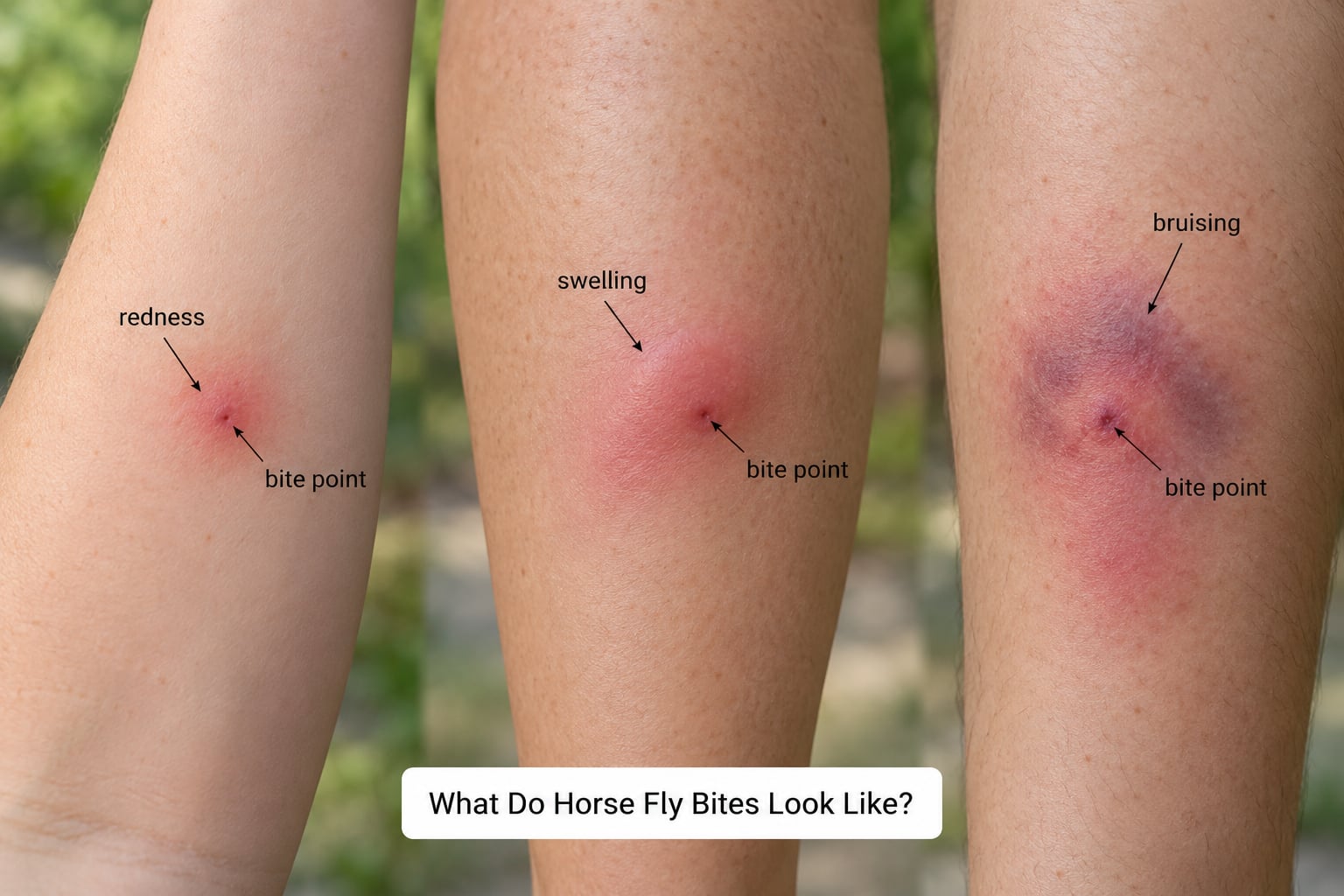
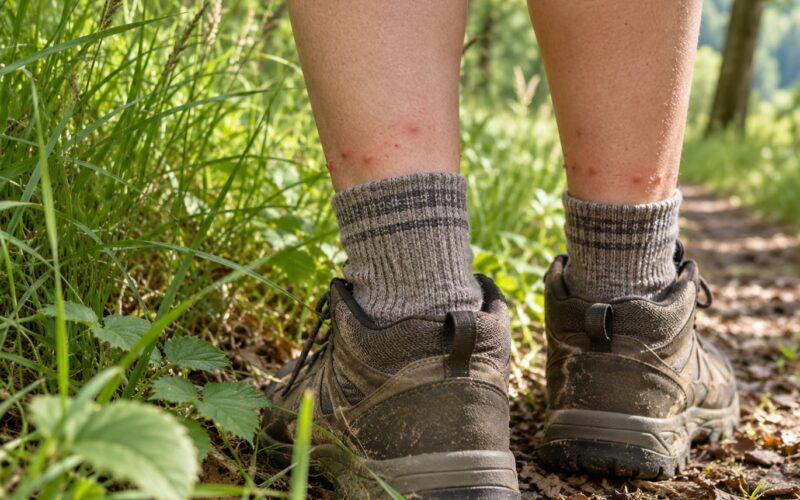
A horse fly bite usually shows a small central puncture or slit with redness around it, swelling that builds over several hours, and sometimes bruising or a light crust where the cut bled. Itching often starts later than the pain and can be the symptom that lasts longest.
Typical progression runs like this. In the first seconds you feel a sharp, hot or aching pain, and the spot is often a tiny dot or a short linear mark. Over the next hour or two, redness spreads and the area puffs up into a firm welt. Some bites darken into a bruise as the blood that pooled under the skin breaks down.
After that comes the itch, often the worst part. Cleveland Clinic describes discolored bumps, hives and swelling around the bite as common, and notes that scratches can open the skin. Once scratched, the site can crust, ooze or become tender, which is a different problem from the bite itself.
Reactions vary a lot between people and even between bites on the same person. One welt may stay the size of a pea while the next one on your ankle spreads across a few inches. The location matters too, and bites on thin skin and around joints tend to look and feel worse than the same bite on a forearm.
How to Tell a Horse Fly Bite Apart from Other Insect Bites
The most reliable clue is not the mark itself, it is the moment of the bite. Did you feel a sharp hit, and did the fly seem to circle and persist? A painful bite you can almost place in time points strongly toward a horse fly or a stable fly, because mosquitoes, midges and most other biters are stealthy.
Mosquito, stable fly and black fly compared
Mosquito: a fine scratch you may not feel, then small pink or red bumps that appear hours later, usually in clusters on exposed skin. They itch steadily rather than throbbing.
Stable fly: also a painful biter, with a bay horsefly look and a downward-pointing bite. Similar experience to a horse fly bite, which is why the two are often confused.
Black fly: bites most often around the hairline, ears, neck and ankles, and the marks tend to run with the flow of lymph rather than sit as a single welt. They can leave dark spots for weeks.
Deer fly: a smaller relative of the horse fly that lands several quick bites in a row rather than delivering one memorable hit.
Spider bites, ticks and what they leave behind
Spider bites are commonly over-diagnosed. Two small marks close together, a wound that appears days later, or necrosis that spreads are all reasons to stop guessing and get checked. Most “spider bites” turn out to be other insect bites or skin infections.
A tick is a different situation entirely. You will usually find the tick or a tick-bite mark and may feel nothing at all at the time. Any suspected tick attachment is worth a conversation with a clinician, since removal timing and identification matter.
Use context as a clue rather than a verdict. How many bites, where they landed, whether you were near water, marshy ground, livestock or a sweaty outdoor workout, and whether you felt the hit all narrow things down, but appearance alone cannot confirm what bit you.
What to Do After a Horse Fly Bite
Start with the basics, in this order, and stop there if the bite settles. The steps below are general first aid, not a treatment plan for a specific person, so follow the label on any product you use and ask a pharmacist if you are unsure.
- Get away from the area. Move out of the sun and away from tall grass or water where flies are feeding, and check for more. A second bite on the same leg doubles the swelling you will be dealing with.
- Clean the bite. Wash the area gently with soap and running water, then pat it dry. This matters more than it sounds, because most bite problems come from scratching dirt into an open cut.
- Use a cold compress. A wrapped cold pack for 15 to 20 minutes at a time narrows swelling and dulls the ache. This is the single most reliable comfort measure.
- Leave it alone. Avoid scratching, shaving or picking at the welt. If the itch is driving you crazy, that itch is the main reason these bites turn into cellulitis.
- Consider over-the-counter relief. An oral antihistamine or a topical anti-itch product may help some people. Use them only as the label directs, and ask a pharmacist first if you take other medicines or have health conditions.
- Watch it for a day or two. A bite that is improving on day two is normal. A bite that is getting worse, spreading red or turning hot to the touch is not.
Seek medical advice if you develop fever with a bite, joint pain, red streaks running from the wound, drainage, or an ulcer that keeps growing. Cleveland Clinic lists red streaking, fever and chills, and ulcer formation as signs of an infected bite such as cellulitis, and cellulitis is the recurring problem people describe in forums after a season of scratching.
Get emergency help right away for trouble breathing, swelling of the lips, tongue or throat, faintness, or a rapidly spreading reaction. Those are signs of a severe allergic reaction, and no home treatment is appropriate for them.
How Long Do Horse Fly Bites Last?
Most horse fly bites stop bothering people within a few days, but the pain, the itch and the swelling each run on their own clock. Treating the timeline as one lump is why so many people feel like their bite will never heal.
The sharp initial pain usually fades within minutes to an hour or two, which matches the pattern of a cut rather than an allergic reaction. Swelling is the slow part, typically peaking over the next several hours and then easing. Some welts take a week or more to flatten, and anyone prone to large reactions may see one linger closer to two weeks.
Itch tends to outlast both. Cleveland Clinic describes discomfort, redness and swelling that can linger for days, and forum readers report the same pattern, with itching lasting a week or more and bruising visible for several days after the itch fades.
Three things reliably extend the recovery. Scratching breaks the skin barrier and invites infection. Hot water and scented or harsh products on the area cause irritation that reads as worsening. And a deeper cut near a joint will bruise and stay tender longer than a shallow one on the forearm.
If a bite is still expanding or painful after a week, or if you have felt unwell since it appeared, book an appointment rather than escalating the home care.
How to Prevent Horse Fly Bites Outdoors
Prevention works better when you stack several layers instead of relying on one product. No approach is perfect, and horse flies are stubborn, so set your expectations accordingly. Understanding why horse fly bites hurt also tells you which layers matter: covering the skin stops the cut, and repellent buys you time while the fly looks for an easier target.
- Cover up. Long sleeves and long pants make you a much harder target. Fly-fishing shirts, gaiters and lightweight mesh veils work well in places where flies are dense, such as marsh edges and pasture.
- Wear light colors. Dark clothing is reported again and again as attracting more bites, because it gives the fly more contrast against grass and sky.
- Cover the gaps. Horse flies can bite through a thin t-shirt, so consider thicker fabric or mesh layers for the worst hours of the day.
- Use an EPA-registered repellent as directed. Follow the label for how much to apply and how often. Repellents also wear off and get washed off by sweat, so reapply on schedule.
- Expect partial protection. People report that standard mosquito sprays, including DEET products, are noticeably less reliable against horse flies than against mosquitoes. Treat repellents as one layer, not a shield.
- Manage screens and barriers. Intact window screens, door sweeps and mesh curtains cut down on the flies that follow light indoors.
- Do not disturb breeding habitat. Draining standing water, cutting back wet grass and keeping irrigation from pooling near high-traffic areas reduces the moist ground where larvae develop.
- Plan your timing. Peak activity is in the warmest months, with the worst pressure often in late afternoon and early evening. Shortening or shifting an outdoor task can help more than any gadget.
If you work around horses or livestock, the same fly pressure applies to animals, and veterinary guidance is the right place to start for fly masks, sheets and repellent products approved for use on animals.
Frequently Asked Questions
Do horse flies bite indoors?
Yes, though they are far more often outdoors. Horse flies can enter through open doors and windows and are drawn to bright light, warm skin, movement and perspiration. Check screens, door sweeps and gaps around windows, and keep bright lights off near open doors during peak season so you are not advertising yourself at the threshold.
Are horse fly bites dangerous?
For most healthy people, the bite itself is not dangerous, but it is painful and can bleed or swell into a large itchy welt. Rarely, a bite transmits a bacterial infection or triggers a severe allergic reaction. Urgent signs include trouble breathing, swelling of the face or throat, faintness, or a reaction that spreads quickly. Seek care if any of those appear.
Why do some people react more strongly to horse fly bites?
Reactions differ because skin sensitivity, allergies, inflammation and bite size and location all vary between people. A deeper cut produces a bigger welt and more bruising, and thin skin around joints and ankles tends to swell more. Someone who reacts strongly to one bite will usually react the same way to the next, so it is your individual pattern rather than anything the fly chose.
Can I use a household remedy on a horse fly bite?
Start with basic care: wash the area gently, use a cold compress, and resist scratching. Avoid concentrated chemicals, undiluted essential oils and homemade mixtures, since these can irritate or burn skin and make the reaction look worse. If you want to try a home remedy, ask a pharmacist or clinician first and keep the skin clean and dry underneath whatever you apply.
Can horse fly bites make you sick?
A bite can occasionally transmit an infection, most often bacterial. Tularemia is the best known example, and other bacteria including Staphylococcus and Streptococcus can infect a scratched bite. Watch for increasing pain, warmth, swelling, pus, red streaks or fever over the days after the bite. Most bites never progress past a welt, but these signs deserve a call to a clinician.
What to Do First If You Just Got Bitten
Walk away from the area, wash the bite with soap and water, and hold a wrapped cold pack on it for 15 to 20 minutes. That single routine covers most of what matters and stops a small cut from becoming a week of trouble.
After that, leave it alone and watch it for a day or two. If redness spreads, the area turns hot, pus appears or you feel unwell, get it looked at rather than treating harder. And if breathing is difficult or your face and throat are swelling, that is an emergency, not a home remedy.
That is the practical side of horse fly bites and why they hurt. Come 2026 and every year after it, light clothing, sleeves and a repellent used exactly as its label directs do more good than anything you can dab on the bite after the fact.