To treat a carpet for fleas, vacuum it every day, apply a flea treatment labeled for indoor carpet use, treat every pet in the home for at least 90 days, and schedule a follow-up treatment 10 to 14 days after the first one. Fleas spend most of their lives in the fibers, not on your pet, so carpet work alone will never finish the job.
That last point is where most people get stuck. One adult female flea can lay up to 50 eggs a day, and roughly nine out of ten fleas in an infested home live in carpet, upholstery and pet bedding rather than on an animal. Treat the carpet, ignore the pet, and the cycle keeps regenerating.
A realistic timeline is 8 to 14 weeks of steady work. Fast results on day three mean you killed the adults you could see, not the population.
Table of Contents
- What You Need
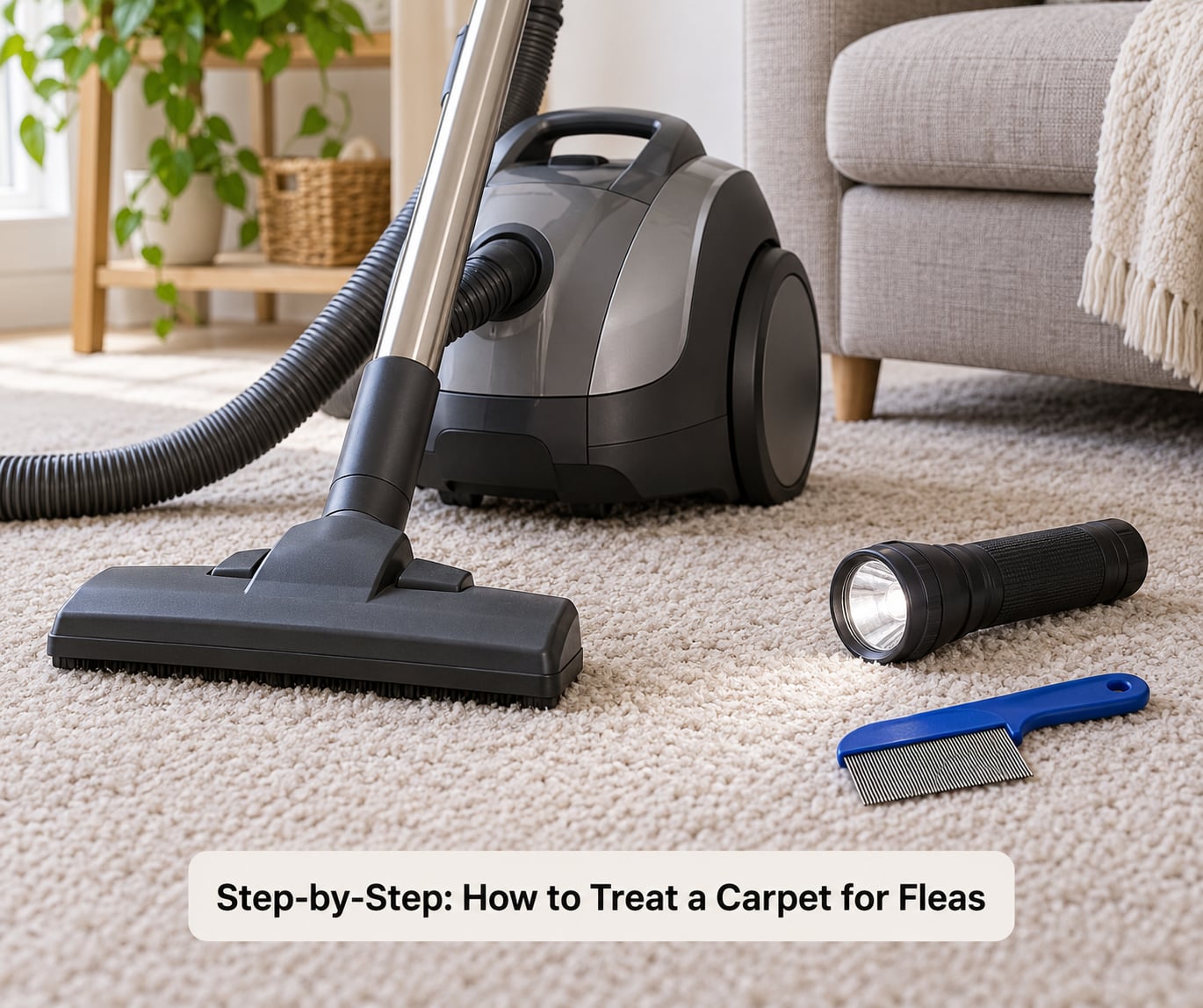
- Step-by-Step: How to Treat a Carpet for Fleas
- Common Mistakes
- Frequently Asked Questions
- How long does it take to get fleas out of carpet?
- Can I use flea spray directly on my carpet?
- Should I vacuum before or after treating the carpet for fleas?
- How soon can I let my pet back on the treated carpet?
- Do I need to treat furniture and pet bedding too?
- When should I call a professional for fleas in carpet?
- Conclusion
What You Need
Gather everything first, because the steps run in order and a mid-treatment trip to the store gives fleas time to lay a fresh batch of eggs.
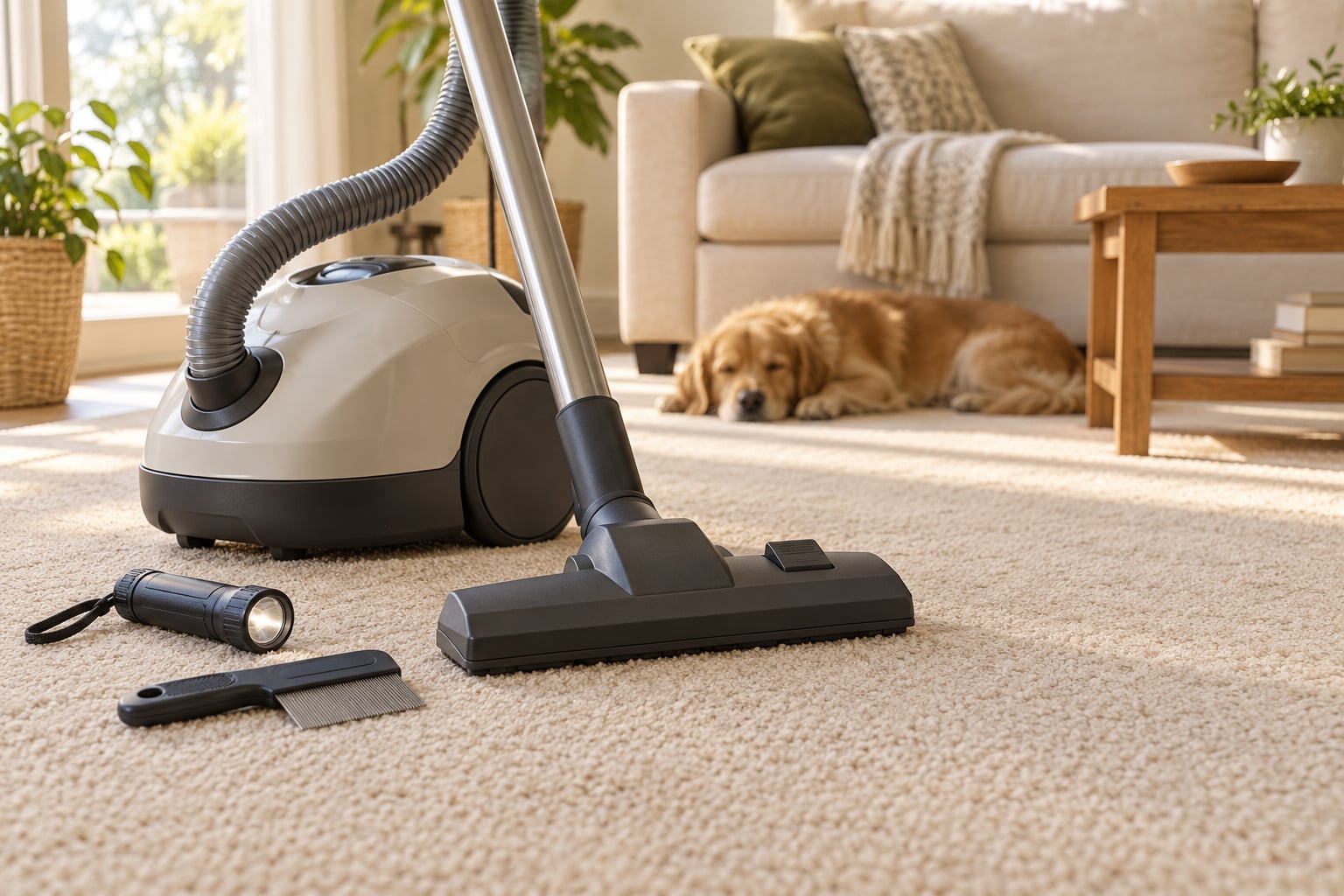
- A flea treatment labeled for carpet and indoor use. Look for an insect growth regulator such as methoprene or pyriproxyfen on the label. A contact spray alone kills adults and leaves the life cycle running.
- A vacuum with real suction and, ideally, a bag you can seal shut. Bagged is better than bagless for this job.
- Disposable vacuum bags or a bag you can tie off, plus a way to get the contents out of the house.
- A flashlight and a stiff brush so you can see under furniture and comb the nap of the carpet.
- A white towel or sheet of white paper for the flea dirt test, and a flea comb if you have pets.
- Pet-safe cleaning supplies, gloves and a laundry bag for bedding that goes in the wash.
If you have an aquarium, note it now. Cover it with a damp towel and shut off the bubbler before spraying, because most insecticides are lethal to fish.
Step-by-Step: How to Treat a Carpet for Fleas
How to Confirm Fleas Are in the Carpet
You rarely catch a jumping adult on day one, so look for the evidence. Sit on the carpet with the flashlight low and brush the pile briskly; fleas move toward light and warmth, and you will often see them scatter.
Put a damp white towel on the floor, have your pet or a seated person sit on it for a few minutes, then lift it. Reddish-brown specks that smear into a rusty halo when you wet them are flea dirt, which is digested blood passing through the animal. That means an infestation is feeding in your home.
The rest of the population is hidden. Here is where each stage sits and what reaches it.
| Life stage | Where it lives in carpet | What kills it |
|---|---|---|
| Egg | Deep in fibers and under furniture, not on the host | Vacuuming; most sprays barely penetrate the shell |
| Larva | Base of fibers, in cracks and along the wall junction | Contact sprays, insect growth regulators, boric acid, diatomaceous earth |
| Pupa | Woven cocoon, stuck to fiber tips, often in undisturbed rooms | Very little. Vacuum them out, or wait for them to hatch into treated carpet |
| Adult | Deep in fibers, emerging onto the pet or a person | Contact sprays on contact; vacuuming dislodges them |
Pet scratching at the lower back and thighs, and clusters of itchy welts on ankles and lower legs that show up in a line, both point the same way.
Prepare the Room and Treat the Carpet
Move people, children and pets out of the room. Push furniture away from the walls if you can and pull the cushions off upholstered pieces.
Then work by the label, in this order:
- Test a small hidden patch and wait the full label time to check for discoloration before you commit a whole room.
- Vacuum first. This lifts eggs, larvae, adult fleas and flea dirt out of the fibers so the treatment reaches the carpet underneath.
- Apply the treatment at the labeled rate, working from the far corner toward the door so you do not walk through wet product.
- Pay attention to edges. Baseboards, the wall-to-floor junction and under furniture hold the deepest pupae and get skipped by everyone.
- Respect the dwell time. Most carpet flea products need to sit between 60 minutes and 24 hours before you vacuum them up. Cutting that short is the single most common reason a spray seems to do nothing.
- Ventilate and wait for dry before pets, children or bare feet go back on the carpet.
Never mix two flea products or exceed the labeled rate. Overdosing leaves a chemical film in the fibers that pets absorb through their paws.
Foggers are worth skipping. They put insecticide into the air, where almost none of the population lives, and leave the carpet untouched.
| Method | What it kills | Dwell time | Pet considerations |
|---|---|---|---|
| Contact spray | Adults on contact, some larvae | Label time, often several hours | Keep pets out until fully dry |
| Insect growth regulator spray or powder | Eggs and larvae, prevents development into adults | Days to months of residual protection | Designed for use around pets when used per label |
| Carpet flea powder | Adults and larvae deep in fibers | Leave for hours, then vacuum | Keep pets off until vacuumed thoroughly |
| Diatomaceous earth | Adults and larvae by drying them out | Several hours to days | Use food grade only; dust is a respiratory hazard |
| Boric acid or borax | Larvae and some adults | A few hours to a couple of days | Safe once vacuumed; keep pets out while it sits |
| Steam or hot water extraction | Adults, some eggs, flea dirt | Immediate, wet | Carpets need hours to dry fully |
| Vacuuming alone | Eggs, larvae, some adults, all flea dirt | Daily for 7 to 14 days | No chemical risk |
Vacuum Thoroughly and Clean Up
Vacuuming decides whether the rest of the treatment works. Flea eggs are impervious to almost every pesticide, and spraying without daily vacuuming for 7 to 14 days fails.
- Move slowly. Slow passes with the suction at maximum pull more eggs and larvae out of the pile than three fast ones.
- Use the brush attachment on edges, stairs, under furniture and along baseboards.
- Overlap every pass by a few inches so no strip is skipped.
- Do it every day for two weeks, then at least three times a week for the rest of the 90-day window.
- Bag it and seal it. Tie the bag shut, carry it outside and put it in a sealed bin or bag in a plastic sack. Fleas that ride home in the canister or a loose bag re-seed the carpet you just cleaned.
- Bagless vacuums need extra care. Fleas can survive in the canister and hose. Empty it outdoors, and consider putting a flea collar or a dryer sheet in the bag or canister before you start as an improvised kill chamber.
Treat Nearby Areas and Prevent Reinfestation
One carpeted room is never the whole problem. Walk the home and treat the hotspots:
- Upholstery, especially sofa cushions and seams where the pet lies.
- Pet bedding, washed on the hottest cycle and dried fully, plus the surrounding floor.
- Baseboards, wall-to-floor junctions and floor cracks, where the largest share of larvae and pupae sit.
- Adjacent hard floors in the same room or hallway, since fleas do not respect flooring boundaries.
- The car, if your pet rides in it. Dog rugs and seat seams are a very common reservoir.
- Every pet in the home, on the same day. Use a veterinarian-recommended product on its own schedule and treat for at least 90 days. Talk to your vet for anything medical, and never apply human medication or household chemicals to an animal.
Renters should tell the landlord before spraying anything, especially in a building with shared pets or shared hallways.
Prevention is boring and it works: vacuum the carpet on a regular schedule even after the infestation ends, keep the grass short, treat pets year-round through warm months, and check a white towel after any new pet stays in your home.
Monitor for Signs That Fleas Are Gone
Most visible activity disappears within a few days, but you are not done when sightings stop. Pupa cocoons are resistant to nearly everything, and they can lie dormant for weeks before a vibration or a passing foot makes an adult emerge into carpet you already treated.
Use this schedule:
| When | What to do |
|---|---|
| Days 1 to 7 | Daily vacuuming, white towel check twice a week, keep pets treated |
| Days 10 to 14 | Second treatment application even if you see nothing |
| Day 30 | Flea comb or towel check; continue vacuuming three times a week |
| Days 60 and 90 | Continue pet treatment and vacuuming; confirm no new bites on people |
| Past 90 days | No adult fleas, no flea dirt on the towel, no new bites for two weeks |
New bites in week three usually mean a hidden reservoir, not a failed treatment. Check the pet first, then the sofa, then the carpet closest to an outside door.
Common Mistakes
Vacuuming only before treating, not after. Vacuuming removes the eggs, but leaving them in the pile lets the product sit on top of the problem. Vacuum before, apply, wait out the dwell time, then vacuum again and bag the contents.
Stopping too early. One spray application feels like victory because the adults you could see are gone. Technicians recommend a minimum of 90 days of continuous treatment and a follow-up application 10 to 14 days after the first, and that is what keeps new adults from arriving out of untouched pupae.
Treating the carpet and ignoring the pet. A single untreated animal in the house restarts the cycle within days. Treat all pets the same day.
Skipping upholstery, pet beds, baseboards and the car. That is where most of the off-carpet population lives, and untreated reservoirs quietly reseed the carpet.
Applying too much product or mixing products. More is not better. Overdose leaves a residue pets absorb through their paws, and mixing a contact spray with a powder can create fumes. Follow one label end to end.
Treating furniture or pet bedding with a product meant for carpet only. Upholstery and bedding have their own labels, and pet bedding has to be washed rather than sprayed.
On the folk remedies: borax sprinkled on the carpet, left a couple of hours and vacuumed is regularly reported by homeowners as helping with larvae, and diatomaceous earth dries adults and larvae out over days. Salt and baking soda, vinegar sprays, Dawn dish soap and essential oils get shared constantly online and have almost no reliable evidence behind them. A rented steam cleaner or hot water extraction is genuinely useful because the heat kills adults and washes flea dirt out, but it is an addition to vacuuming, not a replacement.
If you have no vacuum, borrow or rent one. Bagless-only households should empty the canister into a sealed bag outdoors after every single pass instead of walking it back to the room.
Frequently Asked Questions
How long does it take to get fleas out of carpet?
Most homes need 8 to 14 weeks of steady work. You will stop seeing adults within a few days of treating the carpet and the pet, but flea pupae can stay dormant and resistant for weeks. Plan on daily vacuuming for the first 7 to 14 days, a second treatment around day 10 to 14, and continuous pet treatment for at least 90 days before you call it over.
Can I use flea spray directly on my carpet?
Only if the label says it is for indoor carpet use. A product meant for furniture, for pet bedding or for the animal itself may stain, leave a toxic residue or dry differently on fibers. Apply it at the labeled rate, test a hidden patch first, and keep children and pets off the carpet until it is completely dry and ventilated.
Should I vacuum before or after treating the carpet for fleas?
Both. Vacuum before applying so the treatment reaches the fibers instead of sitting on top of packed debris and eggs. Then leave the product for its labeled dwell time, often 60 minutes to 24 hours, and vacuum thoroughly a second time. Seal the bag, carry it outside and bin it, because fleas that ride home in the canister or a loose bag will re-seed the carpet.
How soon can I let my pet back on the treated carpet?
Wait until the carpet is fully dry and the room is ventilated, which is usually a few hours for a spray and the label’s stated time. Do not shorten this because the carpet feels dry in one spot but is still damp at the base. Keep pets off during the whole dwell period, and ask your veterinarian when the animal can return if you are unsure.
Do I need to treat furniture and pet bedding too?
Yes, and it is where many infestations survive. Fleas prefer upholstery and pet beds almost as much as carpet, so spray or treat sofa cushions and upholstery seams, and wash pet bedding on the hottest cycle with detergent and dry it fully. Vacuum the furniture with a stiff brush attachment the same day you treat the carpet.
When should I call a professional for fleas in carpet?
Call one if you see fleas every day for more than two weeks after starting treatment, if the infestation is heavy from day one, if you have pets you cannot treat consistently, if you live in an apartment where neighbouring units keep reintroducing fleas, or if anyone in the home is being bitten repeatedly and reacting badly. A technician can identify the reservoir you are missing and set the follow-up schedule.
Conclusion
Start by confirming what you have, then remove the visible population: vacuum the carpet, bag the contents and get them out of the house. Apply a flea treatment labeled for carpet at the labeled rate, let it sit for its full dwell time, treat every pet in the home, and keep vacuuming daily for two weeks. From there, watch the carpet and the pet bedding for another 90 days before you declare it finished. That steady sequence is how to treat a carpet for fleas without watching the same infestation come back next month.