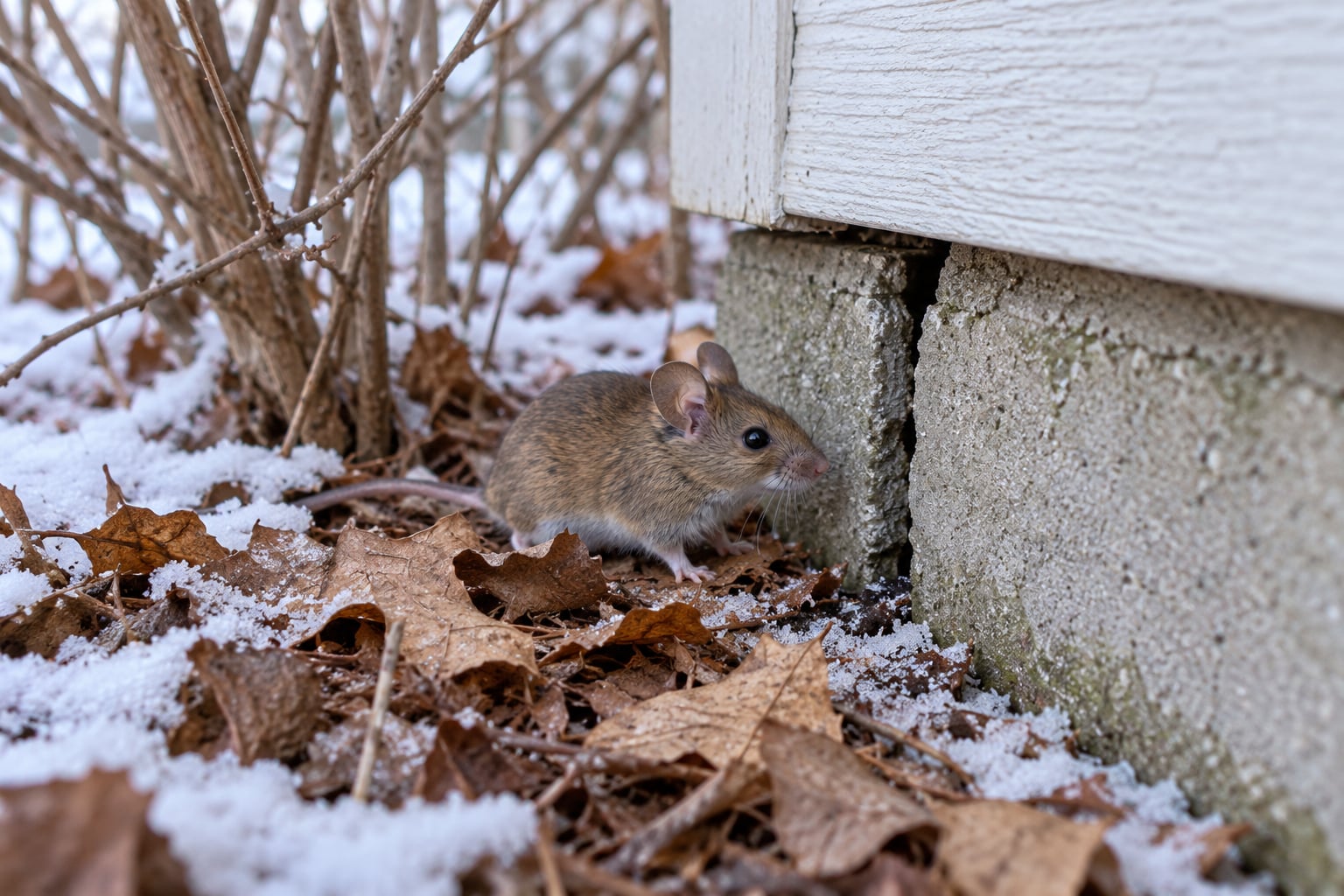
If you have wondered why mice come inside in the winter, the answer is short: mice do not hibernate, so they follow warmth, food, and shelter indoors as soon as the weather turns cold. Most start looking your way once outdoor temperatures fall below about 65°F. Any opening roughly a quarter inch wide is enough to let one through.
Table of Contents
- Why Mice Come Inside in the Winter
- 7 Common Reasons Mice Enter Homes in Cold Weather
- Cold Weather Pushes Mice Toward Shelter
- Easy Food and Water Sources Attract Mice
- Small Gaps and Damaged Screens Create Entry Points
- Why Mice Come Inside in the Winter: Openings Around the Home
- Signs That a Mouse Is Already Inside
- How to Stop Mice From Coming Inside
- When to Call a Pest Professional
- Frequently Asked Questions
- Conclusion
Why Mice Come Inside in the Winter

Mice are active year-round and simply relocate when winter removes their options outdoors. In the fall they cache seeds and nuts in shallow burrows, and those caches fail once the ground freezes solid. A heated structure then offers all three things a mouse needs at once, which is why a home with a few gaps becomes more attractive than a frozen field.
The seasonal part matters because it separates two very different situations. A mouse that walks in during the first cold snap and never returns is normal winter behavior, and sealing the opening ends it. Droppings behind the stove in March, gnawed insulation in the attic, and a trail along the baseboard say something different: those animals came in earlier, bred through the warm months, and are not leaving on their own.
7 Common Reasons Mice Enter Homes in Cold Weather
1. Warmth radiating through the structure
A heated building is a heat source a mouse can detect from outside, and they walk toward it rather than away from it. Once inside, the temperature difference decides where they settle: behind an appliance, inside a wall void, or along a baseboard where the air is still a few degrees warmer than the rest of the room.
2. Food that was left within reach
A mouse does not need a full pantry. A bag of dog food in the garage, spilled bird seed under the feeder, or a bin with a loose lid is a buffet that gets more attractive every week of winter. Food also brings them to the house in the first place, since they follow the same scent trail a person would.
3. Water from sources you never think about
Mice need water every day, and in winter outdoor sources freeze over. A dripping supply line, a humidifier, a pet water bowl, a floor drain that holds water, or condensation under a cold-water pipe gives them a reliable source. Houses with a plumbing leak see heavier activity than tidy houses nearby.
4. A protected place to build a nest
Breeding slows but does not stop in cold weather, and females still need a sheltered spot lined with shredded material. Wall voids, attics, crawl spaces, storage boxes, and the space behind a refrigerator all qualify. Mice chew cardboard and paper for it, which is one of the earliest signs you will find.
5. Openings smaller than you would notice
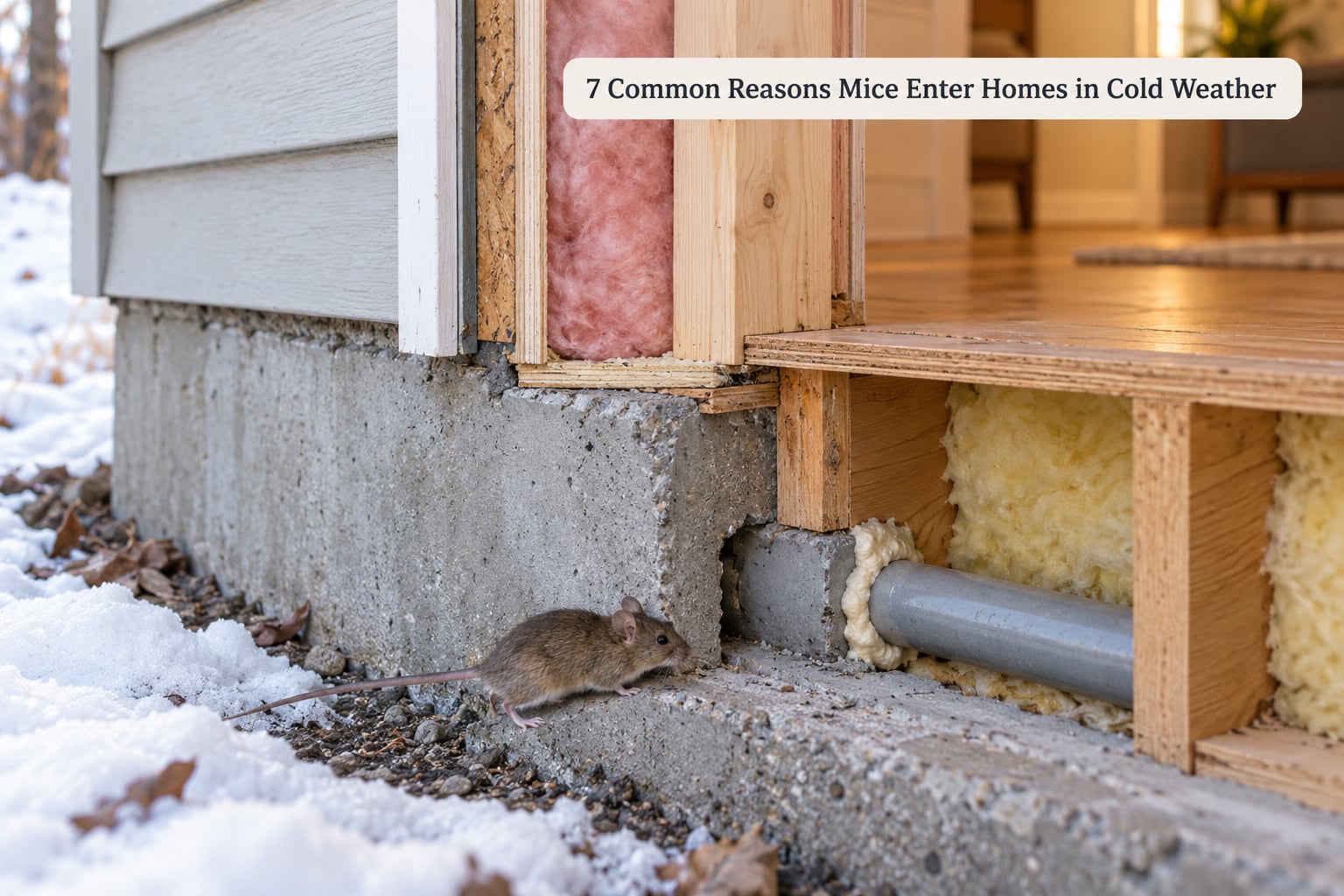
A hole the width of a dime passes a mouse. So do a cracked window sash, a gap under a door where a pencil slides, a hole around a dryer vent, and a mortar joint that opened up after a freeze-thaw cycle. A surprising number of entry points sit above grade, on siding edges, brick, and utility penetrations, where nobody thinks to look.
6. Shelter right next door
A shed, a woodpile, stacked firewood, a pile of mulch, or a garage full of cardboard gives a mouse a sheltered launching pad a few feet from your wall. Neighbors with mice, bird feeders, or stored grain increase pressure on every house in the area, including the clean ones.
7. Activity at your doors and bins
Garage doors opening, a back door left ajar while moving firewood, a trash can lid that does not latch, and package deliveries left near the door all leave brief openings. Nighttime is when this happens, which is exactly when mice are most active and least likely to be seen.
Cold Weather Pushes Mice Toward Shelter
Understanding why mice come inside in the winter starts with one fact: they were never trying to live outdoors in the first place. A mouse in a wall cavity is doing exactly what it was built to do, and the weather just made the alternative harder.
Mice huddle. In a nest shared by several animals they press together and pass body heat, which lowers how much energy each one burns to stay warm. That social behavior is also why a single sighting in December usually means more than one mouse, and why a quiet house in January can still have a small colony tucked into a wall.
Outdoors, the same logic runs in reverse. Burrows a foot or two down give some insulation, but a sustained freeze drives that option out, and snow cover removes the grass seed and insect layer they were foraging on. Freeze-thaw cycles make it worse by opening small cracks in soil, mulch, and masonry, and those cracks are the doorways mice use.
Species matters here too. House mice are the ones most often indoors, deer mice and field mice stay closer to vegetation and are more likely to enter through the lowest openings. Where deer mice are common, droppings and nesting material should be handled with gloves and a mask, because hantavirus is associated with deer mouse urine and saliva, not with house mice.
Easy Food and Water Sources Attract Mice
Even a sealed house becomes attractive once a mouse is inside, and the deciding factor is almost always what it can reach. Winter makes your food supply more predictable because everything spills less often outdoors and more often indoors.
- Pet food stored in the garage, basement, or mudroom, including the crumbs swept under the bowl
- Bird seed in a feeder or stored in a bag near the back door
- Trash and recycling bins with loose lids, especially after dark
- Dry goods in open bags or cardboard boxes rather than hard containers
- Pantry crumbs behind the stove, under the sink, and along the toe kick of cabinets
- Fruit from trees near the house, and windfall nuts cached in the fall
- Drips from supply lines, condensation on cold pipes, pet water bowls, and floor drains
Storage is what fixes this, not cleaning. Hard-sided containers with tight lids for anything dry, a metal trash can with a working latch, and pet food kept in a sealed bin inside the living space remove the reason to come in the first place.
Small Gaps and Damaged Screens Create Entry Points
A house mouse needs roughly a quarter inch of clearance to pass through, and a younger one needs less. That is the width of a dime and close to the diameter of a pencil, which gives you two fast field tests: can a pencil slide under the door, and can you see daylight through the gap?
Damaged window screens are the most common overlooked opening, because a 16-gauge screen tears around a single gnawed hole and the edge peels back. Vents and dryer exhausts matter for the same reason. Mice are strong climbers and nest in attics and garages far more often than most people expect.
| Opening | Why mice use it | What closes it |
|---|---|---|
| Gap around a pipe or wire | Warm, and the pipe is a handhold | Steel or copper wool packed in, sealed with exterior-grade caulk |
| Dryer or exhaust vent | Duct runs straight to a warm room | Hardware cloth or a louvered cap |
| Gap under an exterior door | Pencils wide, and it leaks cold air | Steel or vinyl sweep seated on the threshold |
| Garage door bottom edge | Widest opening on most homes, rarely checked | Threshold seal plus weatherstripping on the jambs |
| Crack in foundation or mortar | Straight shot into a crawl space | Mortar patch, mesh over larger gaps |
| Bottom edge of siding | Runs the length of the house, holds heat against the wall | Aluminum flashing and sealant over the joint |
| Torn window screen | Opens into a heated room | Replacement screen, sealed at the frame |
Steel or copper wool works because mice chew with their incisors and the sharp edges hurt their teeth, but it rusts and it must be covered with sealant to hold. Expanding foam alone is a temporary fix, not a permanent one, because a determined mouse will chew through cured foam.
Why Mice Come Inside in the Winter: Openings Around the Home
Walk the exterior before you open a single interior wall. Two people, one with a flashlight held low and one looking, cover more ground in an afternoon than an entire weekend of guessing from inside.
Basements, Garages, and Crawl Spaces
Start at the lowest level and work along the foundation line, checking the mortar, the sill plate area, and the ground where the wall meets soil. In garages, look at the bottom of the door, the gap around the man door, the threshold, and any hole where a cable or pipe enters. Crawl spaces are worth inspecting properly if you have them, because floor drains, foundation vents, and open pipe chases all connect to the house above.
Doors, Windows, and Vents
Check that the pencil does not slide under any exterior door, and look at the weatherstripping on garage doors for daylight. Window screens deserve a full walk around the frame rather than a glance from inside, and so do dryer and bathroom exhaust vents. Foundation vents should be screened or fitted with rodent-proof covers, not left open.
Siding, Roofline, and Utility Openings
Many entry points sit above ground level, which surprises people who only inspect the foundation. Look at the bottom edge of siding panels, at brick mortar, at where siding meets trim, and at the roofline, eaves, soffits, and roof vents. Cable, pipe, and hose penetrations are worth the same attention, as is the gap where siding meets the foundation on the uphill side of the house, where runoff and snow repeatedly work at the joint.
Signs That a Mouse Is Already Inside
One mouse seen in December is a test of your defenses, not a full infestation. The reliable signs show up over days or weeks, and they tell you where to look first.
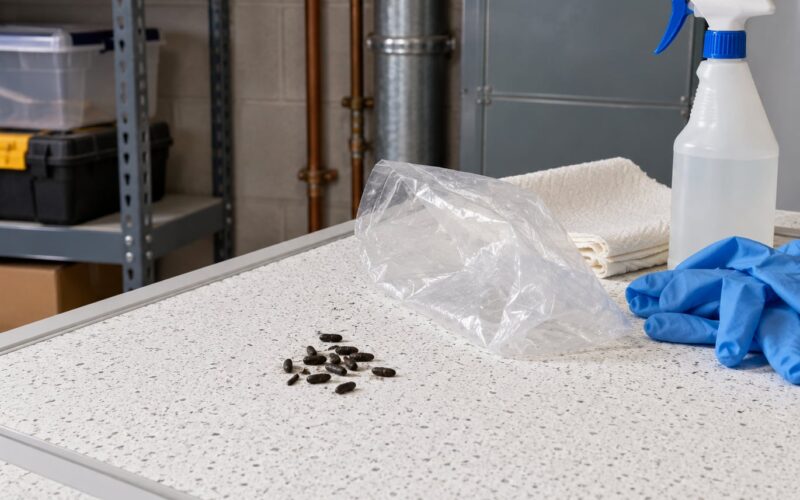
- Droppings about the size of a rice grain, found along baseboards, inside cabinets, under the sink, or in the attic insulation
- Nesting material shredded from paper, cardboard, insulation, or fabric, usually in a dark, sheltered corner
- Gnaw marks on food packaging, cardboard, baseboards, and electrical wiring
- Rub marks and dark grease streaks along walls and near openings, left by the fur and body oil of a traveling mouse
- Scratching and scurrying inside walls, above the ceiling, or in the attic after dark
- A musty odor in a closed room, which builds as urine accumulates
Mice are nocturnal and avoid people, so a mouse will not normally approach someone sleeping in a bed. It also will not sleep next to you. It uses the same walls and floors you do, and you will hear it before you feel it.
How to Stop Mice From Coming Inside
Exclusion is the standard method: remove the animals, then close every route so the next one cannot follow. Handling more mice without sealing anything produces a repeat visit every winter, which is the most common complaint homeowners bring after they trapped last year and forgot about the rest of the job.
- Seal every opening you can reach. Steel or copper wool packed into the gap, covered with exterior-grade sealant. Larger gaps get flashing, mesh, or a mortar patch.
- Add door sweeps and thresholds on any exterior door, and repair weatherstripping on garage doors and sliders.
- Replace torn screens and cover vents with hardware cloth or rodent-proof vent covers.
- Move the food. Pet food, bird seed, and dry goods in hard containers with tight lids, kept inside rather than in the garage.
- Manage waste. Lidded metal cans, and take bins in before dark if lids do not latch.
- Reduce exterior shelter. Move firewood away from the wall, clear clutter and cardboard, and pull mulch back from the foundation.
- Monitor. Droppings and rub marks are the early warning; check the garage and basement weekly through the cold months.
A few popular remedies do not work. Ultrasonic repellers emit sound at a level rodents quickly ignore, mothballs are a registered pesticide with legal limits on placement and are not a sensible exclusion tool indoors, and dryer sheets have never been shown to repel mice in any meaningful way. Poison without sealing works for a while and then fails, because rodents that do not eat bait move next door and come back, and any that die inside a wall leave an odor that is worse than the problem.
Trapping works well when you pair it with sealing. Snap traps along walls and inside cabinets catch more than open placement in the middle of a room, and a bite mark in a trap tells you the house is still active. A scented wooden trap with a live catch is useful when you have pets or small children around.
When to Call a Pest Professional
Some jobs reward patience and a weekend of caulking. Others are worth handing to someone with the equipment and the access.
- You cannot locate a single entry point after a serious inspection, or the openings are inside wall cavities, attics, or a crawl space you cannot safely reach
- You see fresh droppings inside wall voids, or you find dead rodents inside the walls, which usually means animals are nesting out of sight
- Activity continues for several weeks after you have sealed what you could find
- You live in an apartment, condo, or townhouse, where the route may run through a shared pipe chase, a utility closet, or an HVAC duct between units
- There is heavy gnawing on wiring, or damage near a wood stove, fireplace, or other heat source
- You suspect deer mice and want droppings and nesting material handled and removed safely
Professional rodent-proofing usually means a full exclusion inspection, sealing with the right materials for each opening, and a monitoring period to confirm the house is quiet. It costs more up front than a weekend of caulking, and in multi-unit buildings it is the approach most likely to hold, because the route often runs through space you do not control.
Frequently Asked Questions
Are mice more likely to come inside during winter?
Mice are active all year, but you notice them more from November through March because cold removes their outdoor options and heat pulls them toward houses. A hard freeze lasting a few days does more than a month of cold rain, because mice stop finding seed and insects above ground and start following warmth indoors.
How small of a gap can a mouse fit through?
About a quarter inch, which is roughly the width of a dime and close to the diameter of a pencil. Young mice need less. Two useful tests: slide a pencil under every exterior door, and look for daylight through window, vent, and garage-door gaps.
What attracts mice into a house in winter?
Warmth, food, water, and a sheltered place to nest. In practice that means pet food in the garage, bird seed, a bin with a loose lid, open dry goods, a dripping supply line, and any entry gap a quarter inch wide. Removing the food and the openings solves the problem faster than any repellent.
Where should I check first for mouse entry points?
Start at the lowest level: the foundation line, the garage door threshold and man door, crawl space vents, and pipe or cable penetrations. Then work upward to siding edges, brick mortar, window screens, and roof vents. Many entry points sit above grade, which is why foundation-only inspections come up empty.
Does seeing one mouse mean there are more inside?
Usually, yes. Mice huddle together for warmth in cold weather, and a female that came in before the cold can have produced a litter indoors. Treat one sighting as a failed seal rather than a finished problem: find and close the opening before the population builds through the winter.
How can I keep mice out of my garage?
Close the gap under the garage door with a threshold seal and weatherstripping, then check the man door, the gap around it, and every place a cable or pipe enters. Keep pet food, bird seed, and cardboard out of the garage, latch the bin lid, and run the interior door closed so the garage is not part of the house.
Conclusion
Start on the outside. Walk the foundation, the garage, and the siding edges with a flashlight, test every exterior door with a pencil, and pack anything a dime could pass with steel wool and sealant. Then take away the reason to stay: pet food and dry goods in hard containers, lidded bins, firewood moved off the wall.
Why mice come inside in the winter comes down to a short list of openings that a dime would pass through. One mouse in December is a gap you missed. Droppings behind an appliance in February mean an established colony, and at that point sealing is still the first job, not the last. If you cannot find the opening or you live in a building with shared walls, that is the moment to bring in a professional.