Centipedes in a basement are a moisture signal, not an infestation you need to spray away. To get rid of centipedes in a basement, drop the relative humidity to 40-50%, fix whatever water is coming in, seal the gaps they travel through, and clear out the clutter that holds both damp and their prey. Most people see the last one within two to three weeks of drying the space out.
House centipedes are fast, harmless predators that hunt silverfish, small roaches and spiders. They cannot multiply indoors in large numbers; the ones you see usually wandered in through a crack or dropped from an overhead opening. That is good news, because it means this is a home-maintenance job rather than a fumigation.
What You Need

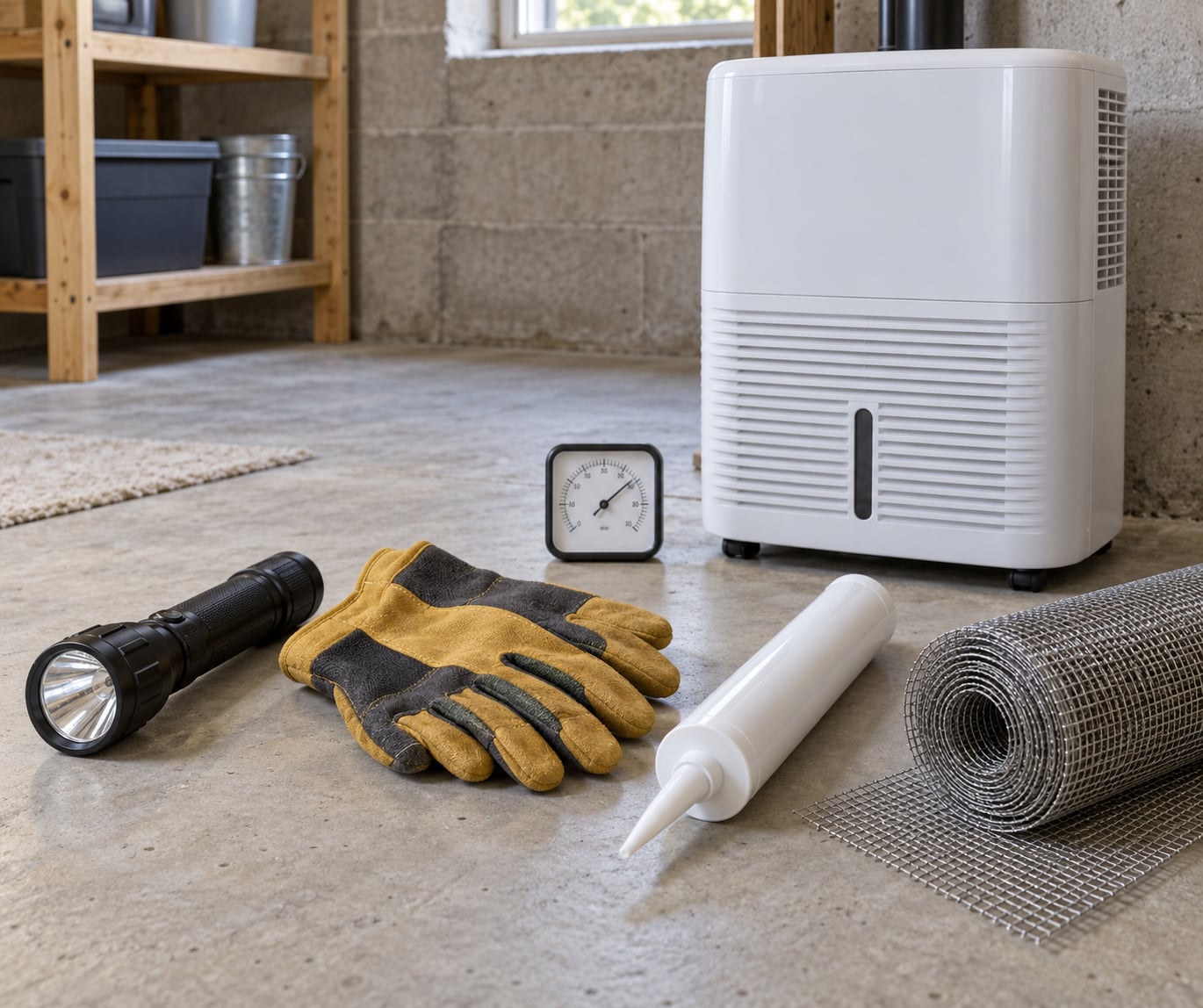
None of this is specialized. A bright flashlight, a pair of work gloves, and a clear container or wide-mouth cup handle the inspection and removal. Beyond that:
- A dehumidifier sized for your square footage, plus a cheap hygrometer so you can read the actual number instead of guessing.
- Caulk or polyurethane foam for cracks, along with stainless-steel mesh or copper mesh to cover openings too large to fill.
- A shop vac and a broom for clearing storage and pulling debris out of baseboard gaps and the wall-to-floor joint.
- Weatherstripping and a door sweep for the walkout door or stairwell entry.
- A fan to move air across a finished basement during work, and for drying out any wet area you find.
Step-by-Step
The order matters when you learn how to get rid of centipedes in a basement. Finding the water comes first, because every other step fails if the basement stays damp. Sealing and pesticide both address a symptom, and a symptom that keeps getting watered never goes away.
Step 1: Find the Moisture and Entry Points
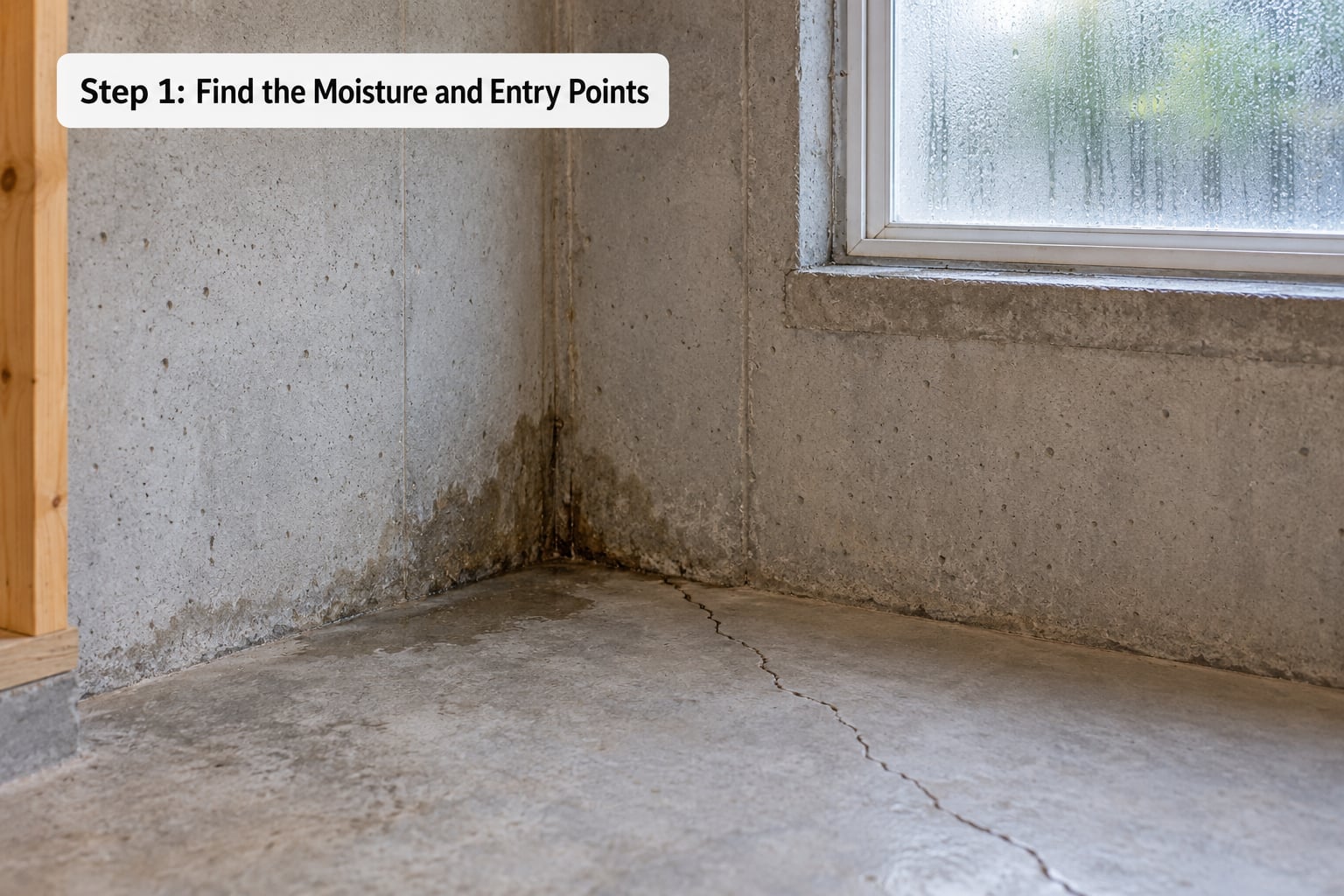
Walk the perimeter first, flashlight low to the ground, and look for damp concrete, white powdery efflorescence on walls, mineral crust near the baseboard line, and standing water marks that go above the sump pit. Efflorescence is salt carried to the surface by water moving through the foundation, and it is the clearest tell you have groundwater seepage rather than a spilled bucket.
Then check the mechanical suspects. A sump pump that runs constantly or never starts, a water heater with a damp base or a stain on the wall behind it, a sweating supply line under a utility sink, a floor drain that drains backward when you run water upstairs. Any of these explains a wet basement that returns every storm.
Entry points are usually obvious once you crouch. Look along the wall-to-floor joint, behind baseboards, around every pipe and cable penetration, at the top of the foundation where the sill plate sits, and around the stairs. In a finished basement, lift a ceiling tile and check the rim joist and the gap around each recessed light housing, since a centipede on the carpet with no visible trail came up there.
How do you tell it worked: you have found at least one specific water source and at least one specific gap, and you can point at both.
Step 2: Reduce Basement Humidity and Dampness
Set the dehumidifier to hold the basement between 40% and 50% relative humidity, and place the hygrometer on a wall at eye level, not on the concrete floor where readings run high. Run it continuously through the warm season and empty the tank or run a hose to a drain. In winter, running a dehumidifier below about 40% starts pulling moisture out of the wood framing and can cause mold where there was none.
Move air as well. A fan pointed across the space keeps condensation off cold walls and off window glass, and a dehumidifier in a closed room with no airflow works poorly. If you have a crawl space under the basement floor, cover the soil with a heavy vapor barrier and add ventilation there instead of trying to dry the basement from above.
Deal with the clutter too. Cardboard boxes stacked on the floor hold damp, hide silverfish and roaches, and give centipedes a covered highway along the baseboards. Get boxes onto plastic shelving at least six inches off the concrete, and vacuum the perimeter of the room where the wall meets the floor.
How do you tell it worked: the hygrometer reads 40-50% and stays there for a week, and the concrete is dry to the touch a day after rain.
Step 3: Remove Centipedes You Find
Put on the gloves, cup the specimen from below with the container, and slide it outside onto gravel or a path well away from the foundation. House centipedes move fast and can bite defensively when handled, which is uncomfortable but not medically serious. Never crush one indoors.
The reasoning is practical, not sentimental. A centipede’s job in your basement is eating the silverfish and cockroach nymphs that actually damage things. Kill it and you have removed a predator while leaving the food supply intact, then bought yourself a worse problem. Homeowners on pest forums repeatedly report the same result: centipedes kept showing up until the leak behind the water heater was fixed, and then stopped entirely.
Outdoors, removing them makes more sense. Centipedes are beneficial in the garden, but a pile of leaf litter or mulch banked against the foundation gives them a highway straight to your sill plate. Pull mulch and leaf litter back six to eight inches from the wall and keep a clear strip of gravel there.
How do you tell it worked: no new sightings indoors over the next two weeks, checked at night when they are most active.
Step 4: Seal Gaps and Seal Off Entry Points
Fill small cracks with caulk, backer rod or polyurethane foam, and cut a small hole in masonry, pipe and cable penetrations for the material to bond to. Anything a centipede could pass through but foam will not hold, cover with stainless-steel mesh or copper mesh secured in place, since the flexible kinds get pushed aside. Pay attention to the gap between the top of the foundation wall and the sill plate, the seam around the stairwell door, and the joint where two basement walls meet.
For the walkout door or any exterior door, add weatherstripping along the jambs and a sweep on the bottom. An exterior door that looks tight usually leaks at the top corner when the frame is warped. Window wells and foundation vents should be screened from the inside, and a hose bib or hose reel drain pipe should be sealed where it enters the wall.
Do not seal air vents for combustion appliances, and do not cap a dryer or furnace flue. If a crack is wider than about a quarter inch, running from the floor up through poured concrete, or if water enters whenever it rains, that is a structural or drainage issue rather than a sealing job. Have a contractor or waterproofing specialist inspect it before you start patching.
How do you tell it worked: hold a sheet of paper at the sealed joint and feel for airflow, and watch for a centipede appearing near a place you already sealed.
Step 5: Prevent a Return
Read the hygrometer monthly. Run a load of laundry upstairs and watch for a spike, since a dryer vent or an undersized exhaust fan is often what drives the number up. Keep the exterior graded away from the foundation and keep gutters clear so runoff does not pool at the wall.
Clean up the things centipedes eat. Vacuum corners, move storage off the floor, wipe down the utility sink and laundry area, and deal with any silverfish or small roach activity you find. Check the basement after heavy rain and after any plumbing work, and once a year look over the sump pump, the water heater and the wall behind them.
Common Mistakes
Spraying first and hoping. Aerosol bug spray kills the centipede you can reach and leaves the damp crack it came from untouched. Households report spraying repeatedly with the same sightings in a week. Fix the water, then judge the result after two to three weeks.
Sealing only the holes you can see. A centipede travels along the wall-to-floor joint and behind baseboards, so sealing the one visible gap does very little. Work the whole perimeter in one pass and check overhead openings in finished basements.
Using dusts and sprays carelessly. Food-grade diatomaceous earth is not safe to breathe, and it is hazardous to birds and small pets that groom themselves. Boric acid dust and pyrethroid sprays need the same respect. Read the label, wear a mask and gloves, keep children and pets out of the basement until the product has dried, and only apply a product registered for indoor use according to its label directions.
Crushing the ones you catch. You remove the predator and leave the silverfish and roaches feeding undisturbed. Carry them out instead.
Assuming one caught centipede means it is solved. A single specimen is often all a dry basement ever produces. Judge the fix with sticky traps set along the baseboards and counted weekly for three weeks, rather than by whether you happened to see one on a given night.
Frequently Asked Questions
Are centipedes dangerous to people?
House centipedes do not bite people unprompted, and they are not venomous in any way that matters to humans. They can nip defensively if you pick one up bare-handed, which feels like a bee-sting pinch and fades on its own. They do not sting, they do not burrow, and they do not damage wood, drywall or stored food. The genuine concern is what their presence points at: damp concrete and an active population of silverfish or cockroaches.
Do centipedes multiply in basements?
Not indoors. House centipedes need damp soil, leaf litter or similar outdoor conditions to complete their life cycle, and they lay a small number of eggs rather than producing dozens of offspring. A basement that seems full of them usually looks full because you are seeing the same three or four animals on different nights. That is why the fix is about moisture and entry points rather than treating a population.
Will a dehumidifier help get rid of centipedes?
It is the single most effective step. Centipedes need a humid microclimate to survive, so holding your basement between 40% and 50% relative humidity removes the reason they came. Run it continuously in the warm months with the discharge hose routed to a drain, and place a hygrometer at wall height to confirm the number. Owners report that dehumidification alone ended their sightings, though it works best alongside fixing the leak that keeps the floor damp.
Should I kill centipedes I find in my basement?
Better not to. They eat silverfish, cockroach nymphs and small spiders, which are the pests doing actual damage in a damp basement, so killing them takes the predator out while leaving the food supply behind. Carry each one outside in a container with gloves. If you have a genuine concern about allergies or an elderly person living in the home, removal is still reasonable, but a spot treatment is an option only after the moisture is fixed.
What attracts centipedes into a basement?
Three things together: moisture, dark undisturbed hiding places, and prey. Common sources are a failing sump pump, a leaking water heater, a sweating supply line, groundwater seepage through the foundation, and condensation on cold walls in summer. Cardboard boxes on the floor and clutter along the baseboards supply the hiding places, while silverfish, small roaches and spiders supply the meal. Remove any one of the three and sightings drop sharply; remove all three and they stop.
When should I call a pest control professional?
Call one when water enters every time it rains, when efflorescence keeps coming back after cleaning, when the foundation shows cracks wider than a quarter inch, or when centipedes keep appearing after two to three weeks of dehumidification and sealing. Look for a licensed applicator and ask about integrated pest management, which leads with exclusion and moisture rather than routine spraying. Avoid anyone who wants to treat your basement on a recurring schedule without first looking at the water problem.
Conclusion
Start where the light and the water disagree: walk the basement perimeter, find the damp spot or the failing sump pump, and get a hygrometer on the wall. Once you know your number, set a dehumidifier to hold 40-50%, carry out any centipede you find instead of crushing it, and seal the whole joint line rather than the one gap you can see.
Give it two to three weeks before you judge the result. If water still comes in with every storm, the cracks keep growing, or sightings continue after the basement is genuinely dry, that is a waterproofing or structural question worth a professional inspection, and no amount of spraying will answer it.