Pill bugs and sowbugs in a basement come down to one thing: damp. They are land-dwelling crustaceans that breathe through gills and cannot hold onto moisture, so they follow water into your basement through foundation cracks, window wells, and pipe penetrations. Fix the water, drop the humidity, and they leave on their own.
Most people reach for a spray first. That is the expensive way to do this. A broadcast insecticide kills the ones it reaches, and then a fresh wave walks in through the same crack a week later because the crack is still there and the wall is still wet.
The good news is that this is a do-it-yourself job for most homeowners, and it is mostly cleaning and weatherproofing rather than chemistry. Most people need a weekend and a dehumidifier, not a can of spray. Here is the order that works.
What You Need
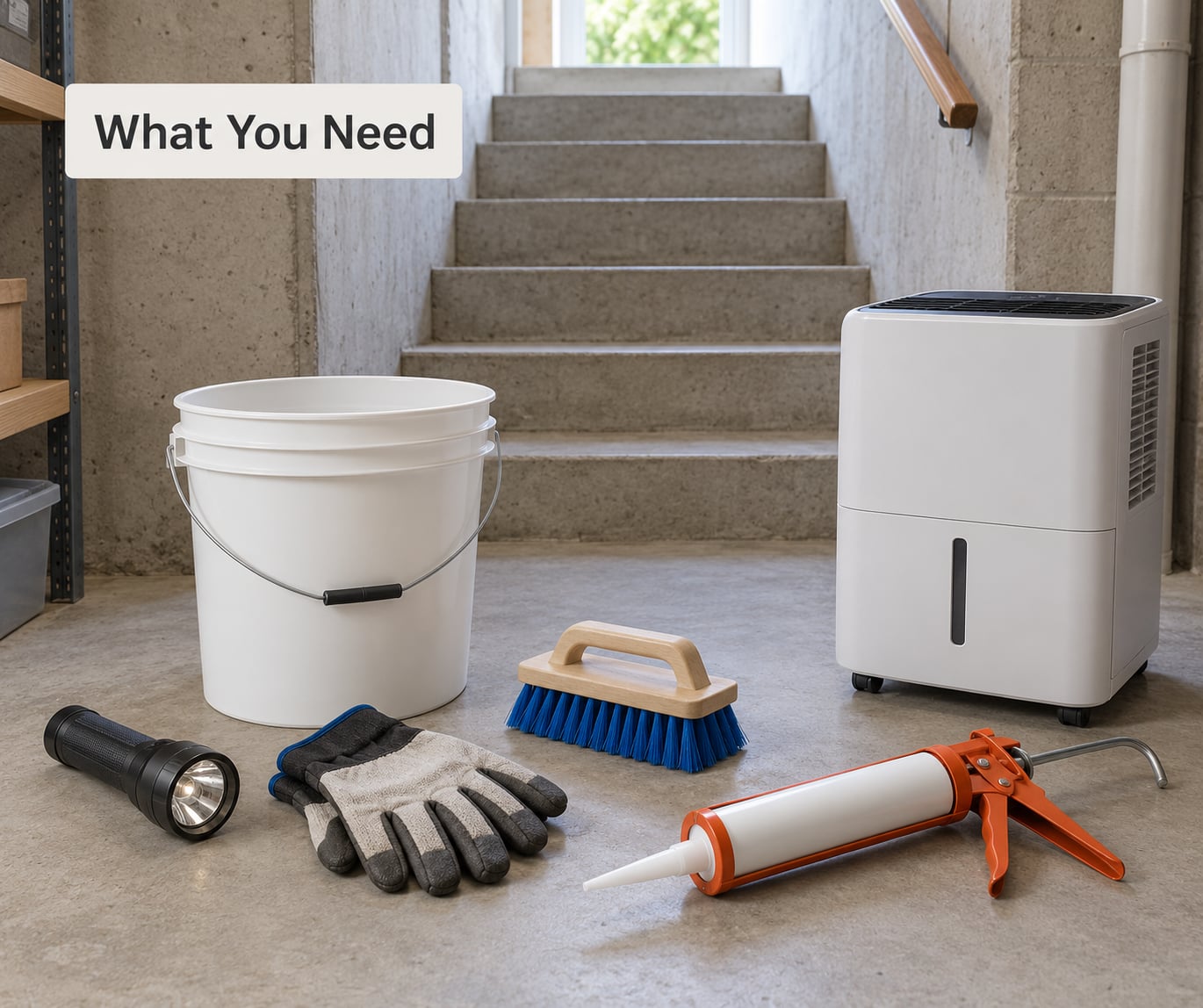
Gather your gear before you start, because the inspection and the fix pull from the same kit. Nothing here is exotic.
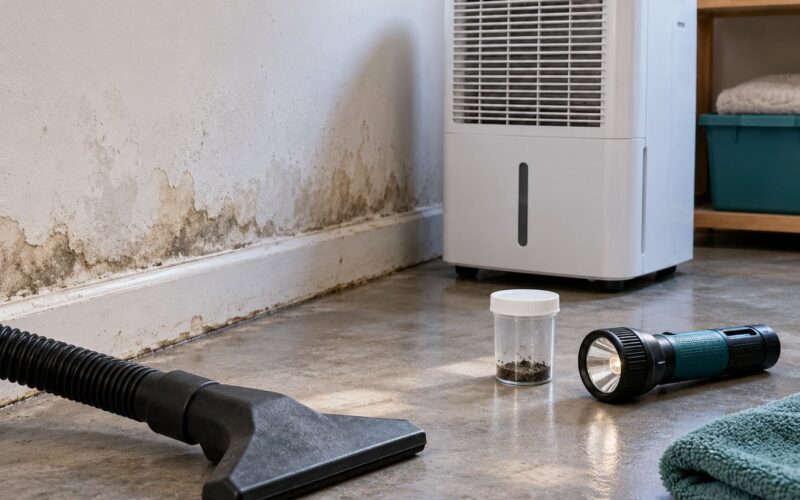
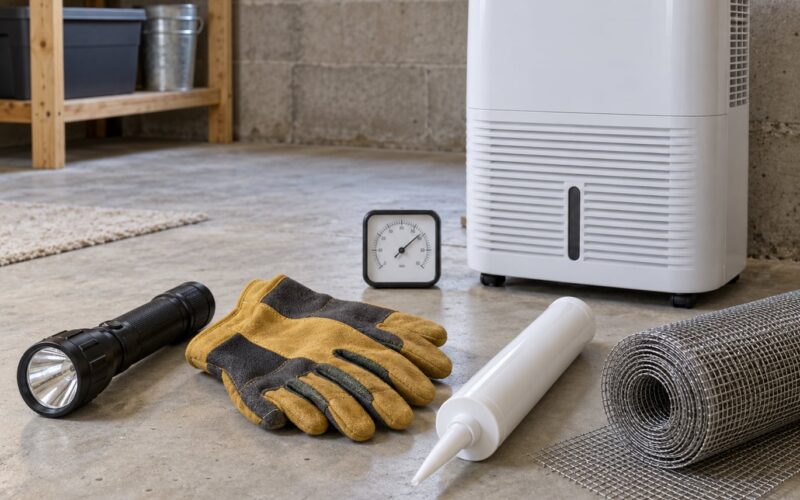
- Flashlight — a headlamp beats a handheld when both hands are full. You will be looking along wall bases and into floor cracks.
- Work gloves and a knee pad — the damp corner is always the least pleasant spot in the room.
- Bucket, stiff scrub brush, and detergent — for washing down the wall bases and floor edges where the activity concentrates.
- Shop vac or strong vacuum — the fastest way to cut the visible population while you fix the cause.
- Dehumidifier — a compressor or desiccant model rated for the square footage of your space. This is the single most effective tool in the whole plan.
- Drain hose — for the dehumidifier. Draining into a floor drain or a utility sink beats carrying a bucket every few days.
- Caulk, weatherstripping, door sweeps, and window well covers — for sealing entry points.
- Sticky monitoring traps — cheap, and they tell you where the bugs are coming from.
- Food-grade diatomaceous earth — optional, and only if the non-chemical steps have already been done.
What to skip: broad-spectrum aerosol sprays and foggers. They give you a satisfying ten minutes and solve nothing.
Step-by-Step
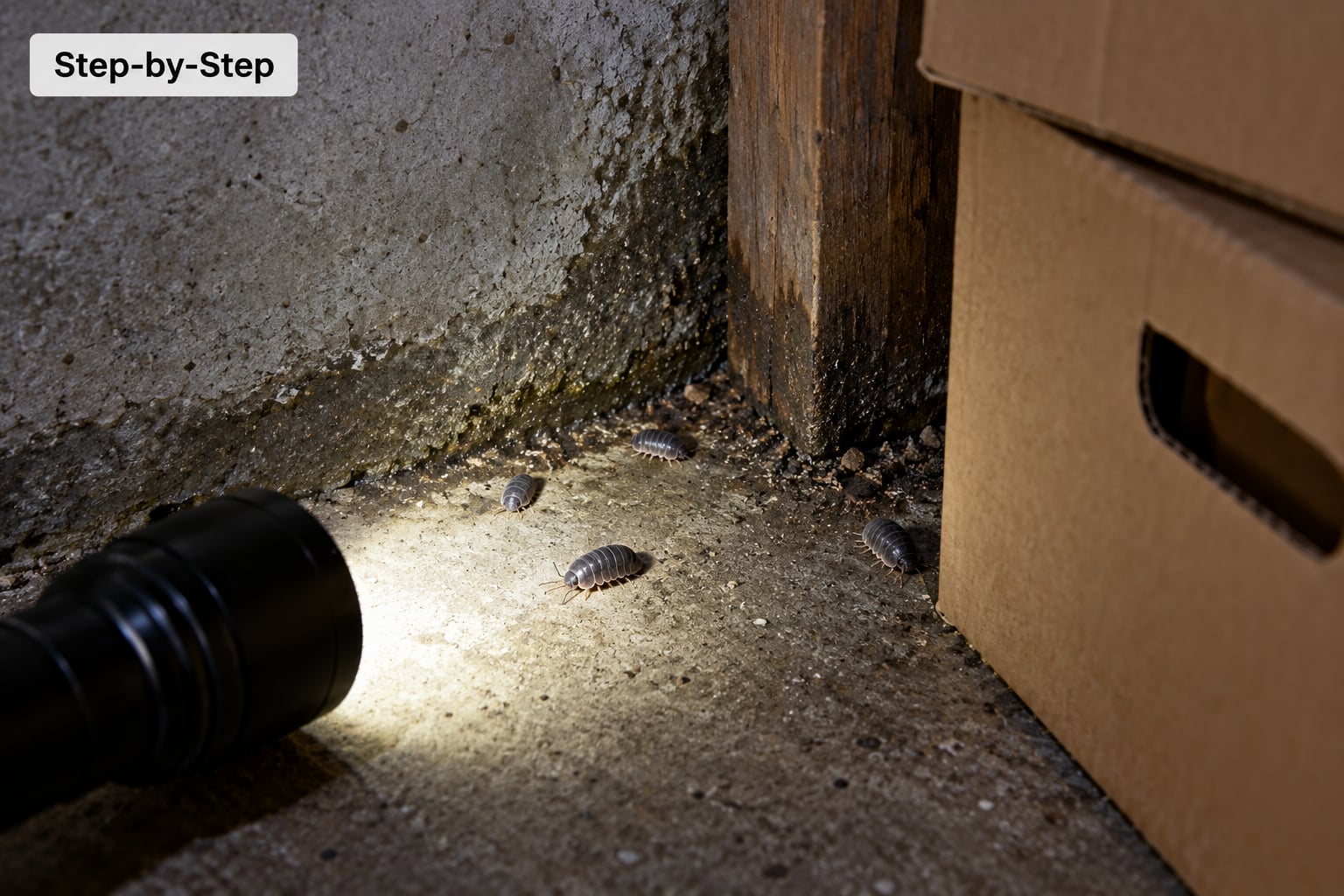
Step 1: Identify the insects and locate the problem
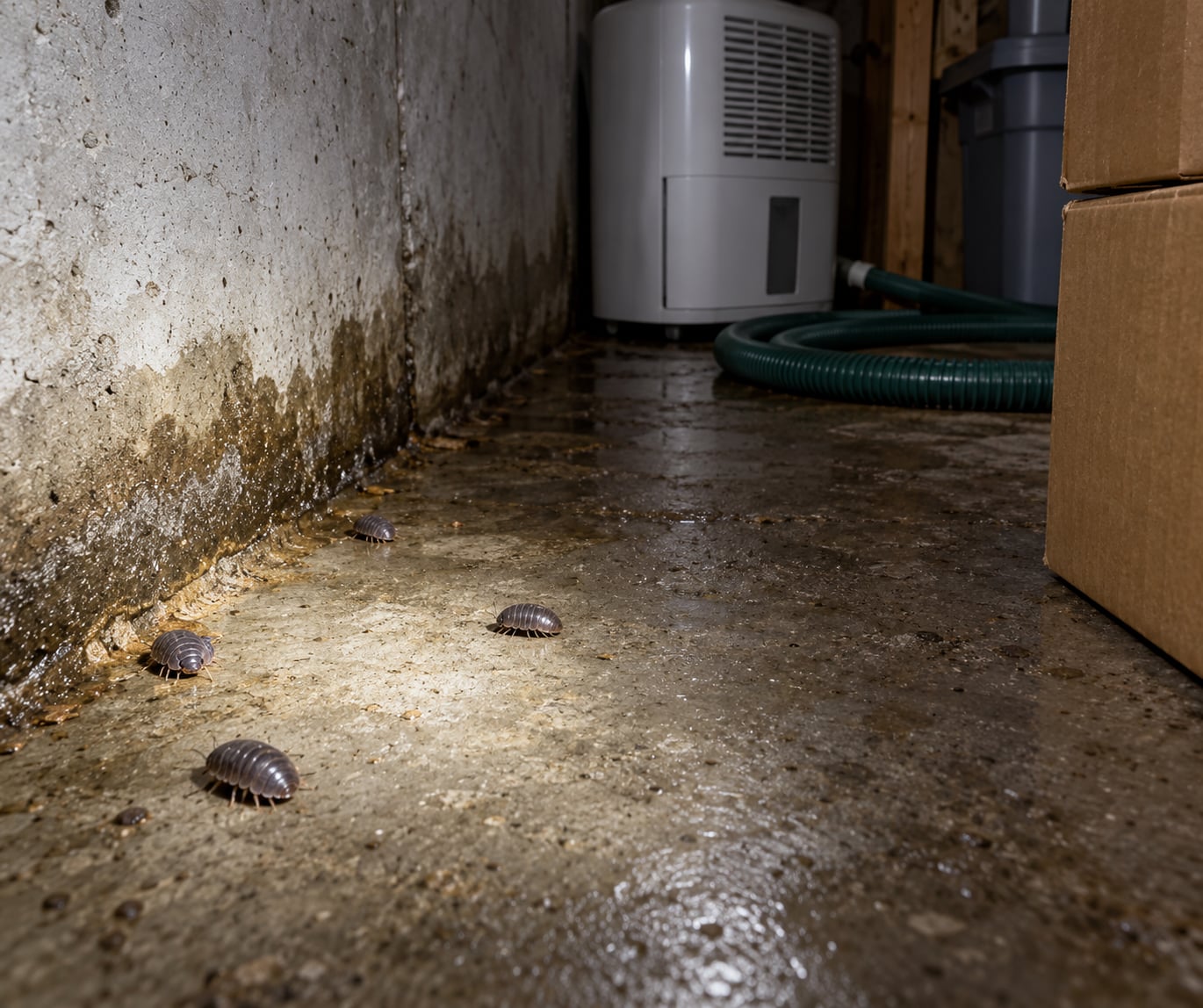
Confirm what you are looking at before you buy anything. Pill bugs belong to the family Armadillidiidae and roll into a tight ball when touched. Sowbugs and woodlice are Porcellionidae — flatter, with two small tail-like points at the rear, and they cannot roll. Both are harmless to people and to your house.
| Feature | Pill bug (roly poly) | Sow bug (woodlouse) |
|---|---|---|
| Rolls into a ball | Yes | No |
| Body shape | Rounded, domed | Flatter, elongated |
| Rear end | Rounded, no points | Two small tail-like points |
| Typical size | About 1/4 to 3/8 inch | About 1/2 inch |
| Hangs around | Damp, sheltered spots | Drier spots than pill bugs |
Now find the source. Walk the perimeter of the basement with the flashlight and look for these five things:
- Musty smell, strongest in one corner
- White powdery streaks on the wall (efflorescence) or damp patches on a wall base
- A cold, damp carpet or rug that has not dried since the dehumidifier ran
- Standing water in a window well, or a wall that is cool to the touch
- Bugs appearing right after rain or right after the sump pump switches on
That last one is diagnostic. If activity spikes after rain or after the sump pump runs, the water is coming from outside. Sticky traps placed along the wall base, around floor drains, and beside the sump will show you where the traffic is concentrated within a day or two.
Step 2: Dry the basement and fix moisture sources
Get the relative humidity below 50 percent and hold it there. That is the single change that ends this problem faster than anything you can spray. Run a dehumidifier with its drain hose running continuously, close exterior doors and windows, and run the basement furnace or a fan to move air across the space.
Then track down the water itself. Match what you see to the likely cause:
| What you see | Likely cause | The fix |
|---|---|---|
| Damp base of a wall, often in a horizontal line | Groundwater seeping through the foundation | Grade the soil 6 inches down and 6 feet away; extend downspouts 6 to 10 feet from the wall |
| White powdery residue (efflorescence) | Water moving through concrete or masonry | Same as above; for persistent seepage, talk to a foundation or waterproofing specialist |
| Musty smell in warm months, wet windows | Condensation from humid air meeting a cool slab | Dehumidifier and continuous air movement |
| Damp carpet in one corner only | A foundation crack, or a plumbing drip under the slab | Seal the crack from inside; call a plumber if the damp persists in dry weather |
| Standing water at a window well | Rain pooling against the foundation | Install a window well cover and regrade the soil |
| Damp crawl space with exposed soil | Ground moisture evaporating upward | Lay a vapor barrier over the soil and add ventilation |
Run the dehumidifier for several days before you judge the result. When the moisture source is gone, the visible population should drop sharply within two to four weeks.
Step 3: Remove hiding places and food sources
Isopods eat decaying organic matter, and that is exactly what a basement full of cardboard boxes, paper storage, and damp fabric gives them. Move what you can outdoors or into a sealed tote, and take the rest out.
Start with the floor. Vacuum along the wall bases and behind stored items. Lift or roll back the carpet if it is damp — that underlay is a harbourage area, not a floor.
Then work outward from the foundation. Pull mulch, leaf litter, compost, and firewood back at least 12 inches (30 cm) from the foundation wall, and scrape debris out of the gutters and window wells. That 12-inch gap removes the cool, damp, sheltered strip the isopods travel along to reach the house.
Wash the concrete and the bottom 6 inches of every wall with detergent and a scrub brush. A clean surface means nothing for them to eat and nowhere for eggs to sit.
Step 4: Seal cracks and entry points
Seal after you have fixed the moisture, not before. Patching a leak in a damp corner first just traps water against the wall.
Work through the usual list. Fill foundation cracks and the gaps where pipes, wires, and drain lines pass through the wall, using polyurethane caulk for small gaps and hydraulic or mortar-based sealant for wider ones. Add door sweeps to the exterior door and weatherstripping to any basement window. Fit covers over window wells, and check that the stair door to the basement closes fully at the bottom.
On a finished basement where you cannot get to the wall cavities, focus on the penetrations that stay visible: sill plates, pipe stubs, drain covers, and the stair door. A tight door sweep and a sealed floor drain cover will cut off most of the traffic.
If the basement was poured as a monolithic slab with no cracks and still has a heavy load, suspect the sump or the drain line rather than the wall.
Step 5: Use bait or pesticides only if needed
Give the dry, clean, sealed basement two to four weeks before reaching for anything. Most infestations end there.
If activity continues, food-grade diatomaceous earth is the gentler option. Apply it as a thin line in cracks, along the wall base, and around entry points, and keep it dry — moisture makes it useless. Reapply as needed. It works by drying the insect out, so it is slow and it takes contact.
Bait stations labeled for isopods can be set along the wall base in a finished basement where you cannot sweep dust. Whatever you choose, read the label before opening it and follow its directions exactly. Keep children and pets out of the treated area until the product says it is safe.
Do not broadcast spray across the whole basement. It reaches the open floor, misses the cracks where the animals actually shelter, and puts a pesticide into the air of a living space. And do not seal entry points while creatures are still inside; that simply encloses a population that then finds another way out.
Spraying is a wipe-the-counter cleanup on top of real work. It is never the fix.
Step 6: Check for returning activity
Set a few sticky traps in the corners and along the wall base, then check them weekly. Replace them as they fill.
Re-measure humidity the same time of day, twice a week, so you know whether the number you fixed is holding. Look for fresh damp patches, new efflorescence, or a carpet that never fully dries — those tell you the water source is not solved yet.
Call a pest professional if you are seeing large numbers and nothing changes after a month of dry, clean, sealed conditions. That pattern points to a structural or drainage problem. A foundation contractor, waterproofing specialist, or plumber is a better first call than an exterminator in that case. If you do bring in a pro, ask what they are treating and why, and expect the answer to be about moisture.
Common Mistakes
Fogging the whole basement. Aerosol reaches the open air and the visible floor, then dissipates. The animals that survive are the ones already inside a crack or under a box. You will see dead ones and find live ones the next day.
Treating without fixing the damp. This is the big one. As long as there is water, more animals come through the same gap. Every forum thread I have read on this follows the same pattern: spraying worked for a week, then the basement was as bad as before.
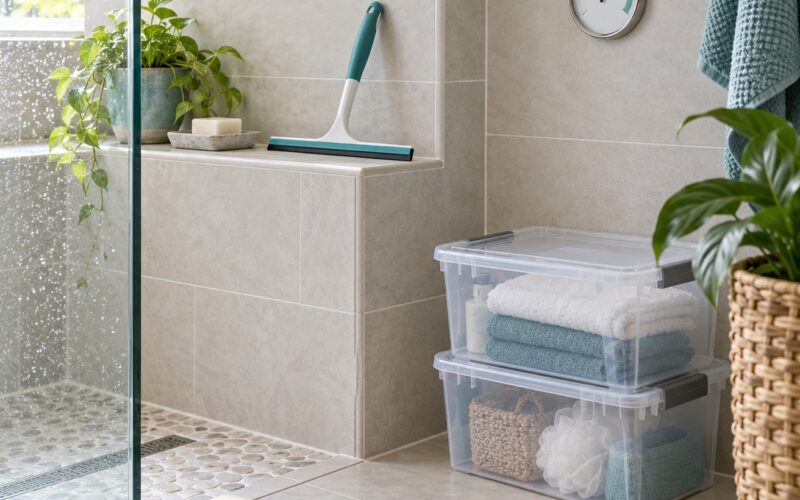
Storing cardboard in the basement. Dry, cool storage turns the basement into a warehouse of pressed wood pulp and paper — ideal bedding and food for isopods. If they must live down there, plastic totes on pallets beat cardboard every time.
Sealing before inspecting. If you seal without locating the source, you lock in the dampness and give the animals a sealed pantry. Inspect, fix the water, then seal.
Killing the ones outdoors. Woodlice and pillbugs are decomposers that recycle dead plant material in your mulch beds. They are part of the yard’s clean-up crew. The goal is to make the basement unattractive to them, not to wipe them out of the garden.
Believing one spray application solves it. If the humidity is still above 50 percent, you are doing the same job again in three weeks.
A few prevention habits carry the fix forward. Run the dehumidifier on a humidistat rather than switching it on by memory. Check the sump pump and the drain line twice a year. Keep that 12-inch clearance at the foundation, sweep the perimeter of the house when you are already outside, and keep leaf litter out of the window wells.
Two other pests usually show up in the same damp basement: centipedes and silverfish. They follow the same water, so fixing the moisture addresses them at the same time.
Frequently Asked Questions
Do pill bugs and sowbugs damage the house?
No. Pill bugs and sowbugs eat decaying plant material, not wood, drywall, carpet, or structural members, and they do not chew through anything in a home. They are scavengers that strip soft dead material off leaf litter and mulch outdoors. Seeing them indoors is not a sign of an unsanitary house or structural damage. What they do indicate is damp conditions, which are worth fixing because damp leads to mold and wood rot.
Do pill bugs bite or harm people and pets?
No. These isopods have no biting mouthparts and no sting. They will curl into a ball when handled, and some people find the skin contact mildly irritating, but they do not bite, feed on blood, or carry venom. They also do not bite pets. The only real caution is that you should not eat anything you have handled them with, and wash your hands afterward, mostly because they are scavengers that live in decaying matter.
Are pill bugs in the basement a sign of a moisture problem?
Yes, and they are one of the more useful early warnings a house can give you. These crustaceans breathe through gills and cannot hold moisture in their bodies, so they only stay where the air is humid and surfaces are damp. A large indoor population almost always traces back to a leaking pipe, a foundation seepage, a failed window well, or basement condensation. Treat them as a diagnostic: look for the water, and they disappear.
How long do sowbugs live, and when are they most active?
Sowbugs typically live about one year, and they are nocturnal. You are far less likely to see them during the day because they hide in the dark, moist gaps where they will not dry out. Peak activity shows up in the evening, overnight, and in early spring or fall when damp ground conditions are strongest. In a basement this means checking corners at night with a flashlight, not glancing at them at noon and assuming the area is clear.
Do coffee grounds, citrus peels, or essential oils keep pill bugs away?
They do not. Coffee grounds and citrus peels show up in a lot of home remedies because they are safe and smell strong, but there is no good evidence they repel isopods, and decaying citrus peels actually add the damp organic matter these animals feed on. The same applies to bay leaves, coffee, and peppermint oil. Reduce humidity below 50 percent, remove cardboard and clutter, and seal entry points instead. That is what keeps them out.
Conclusion
Pill bugs and sowbugs in a basement are a moisture symptom, not an infestation worth panicking over. Start by confirming which one you have, then walk the perimeter with a flashlight and match what you see to the cause. Get the relative humidity below 50 percent with a dehumidifier that drains continuously, fix the water source you find, pull mulch and debris 12 inches back from the foundation, and clear the cardboard and stored paper off the floor.
Seal cracks, pipe penetrations, window wells, and the stair door once the space is dry. Vacuum out what is already inside and monitor with sticky traps. Hold off on any pesticide until the dry, clean, sealed conditions have had two to four weeks to work. If the numbers are still high after that month, the answer is a foundation, waterproofing, or plumbing fix rather than a stronger spray.