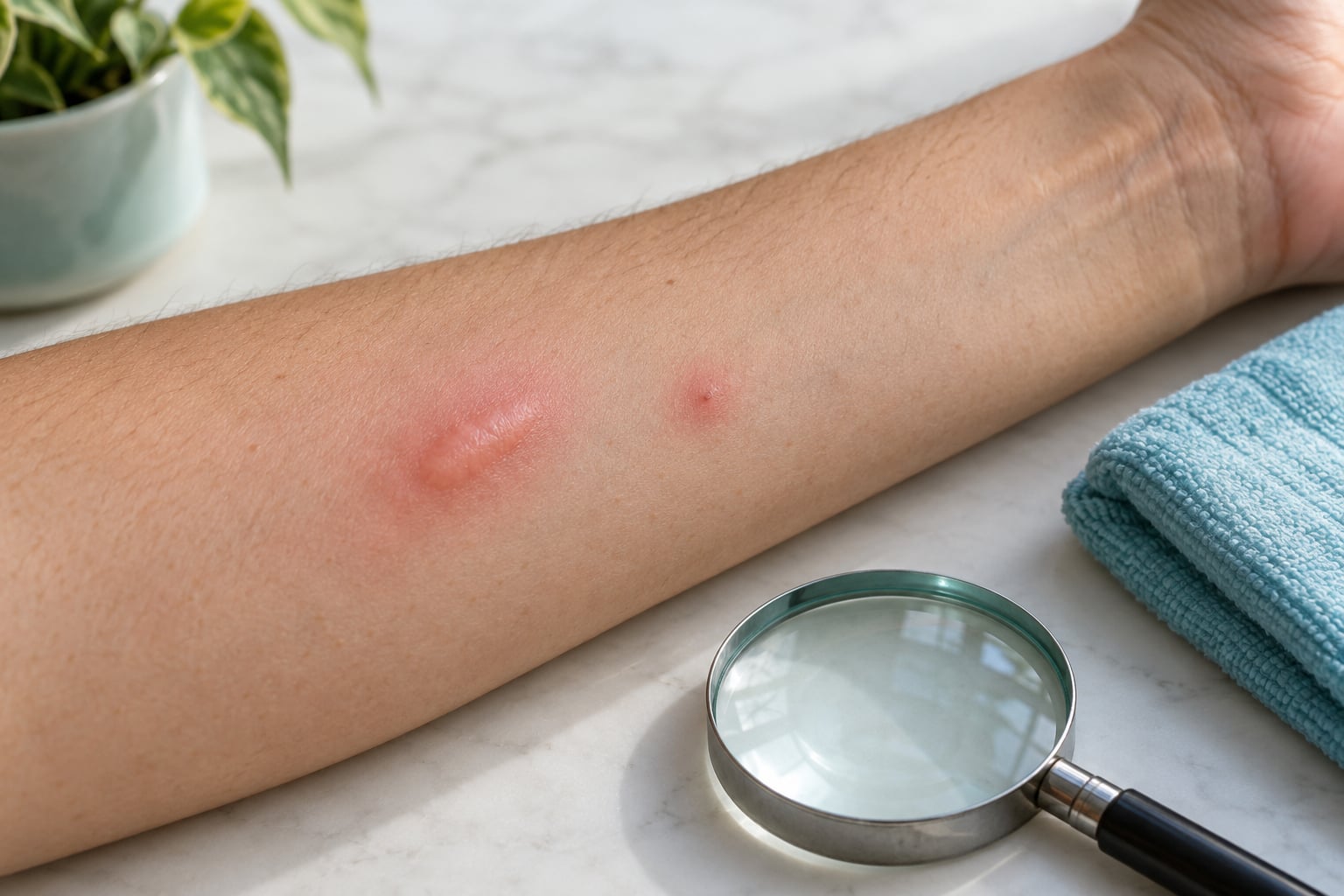
Short answer: why some bug bites turn into welts comes down to your immune response, not the insect itself. A welt is a raised, hardened patch of skin where your body over-reacts to injected saliva or venom, so the redness, heat and itching spread well past the bite mark. Most people get a small bump. A smaller group gets a coin-sized or hand-sized reaction called a large local reaction, or skeeter syndrome.
That reaction looks alarming and it feels miserable, but it is usually an immune variation rather than something dangerous. What matters is telling a big immune welt apart from a secondary bacterial infection or a systemic allergic reaction, because only those two need medical treatment.
This guide is written for adults, parents, and anyone who notices their own reactions being bigger than the people around them. It covers what is happening under the skin, which insects tend to leave welts, what you can safely do at home, and the specific signs that should end the guessing.
Why Some Bug Bites Turn Into Welts
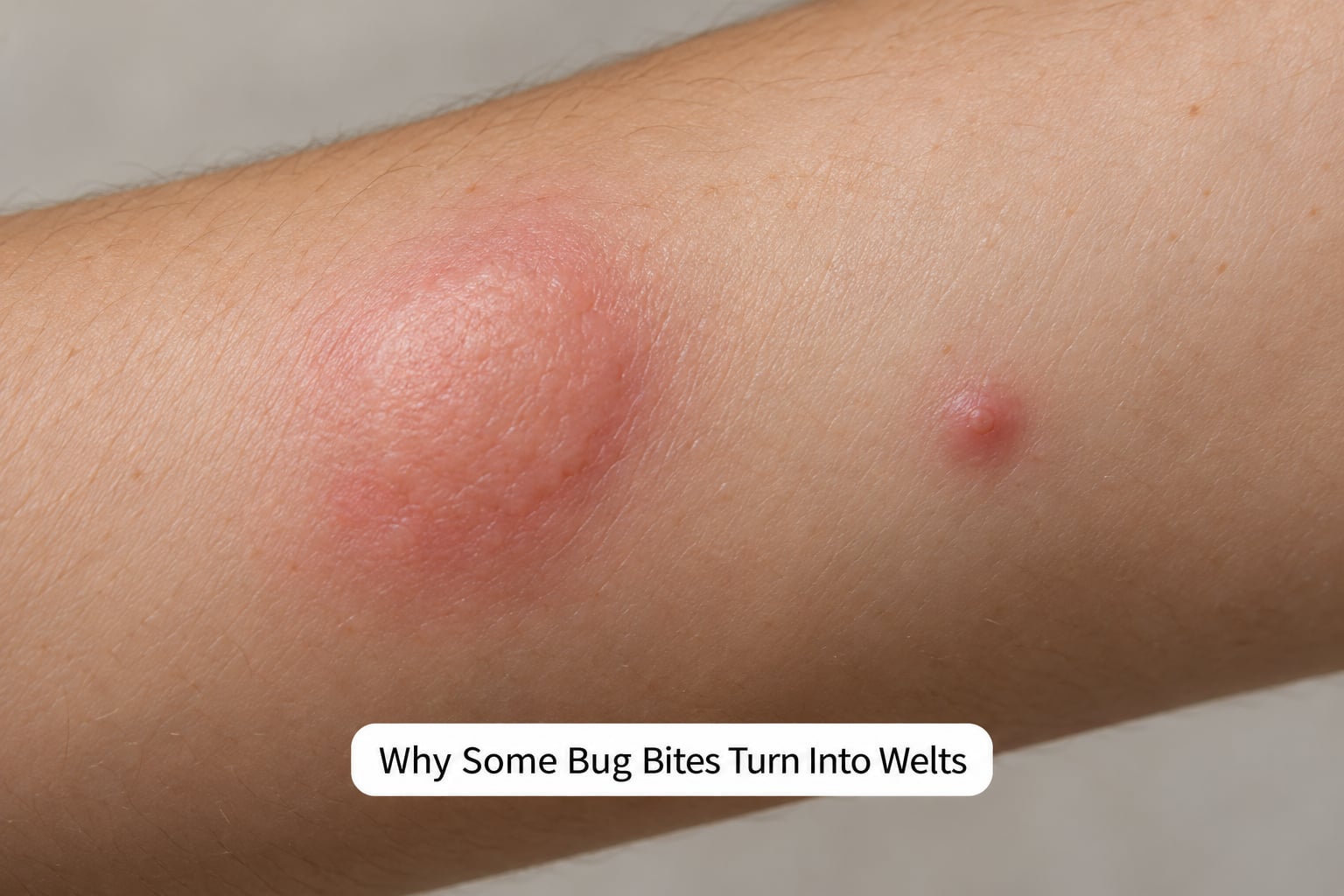
A bite becomes a welt when your immune system treats the insect’s saliva as a bigger threat than it is and floods the area with inflammatory chemicals. Those chemicals widen the nearby blood vessels and let fluid leak into the tissue, which is why the skin puffs up, hardens and itches rather than staying a flat red dot.
How big that welt gets, and how long it stays, comes down to three things: which insect bit you, how much it injected, and how your particular immune system answers. Two people can get the same mosquito bite on the same afternoon and end up with completely different skin.
Welt size is measured in familiar steps rather than lab numbers: a bump the size of a pea, something coin-sized, a patch the size of your palm, and eventually swelling that a whole limb feels tight and hard. On the r/SkeeterSyndrome forum, people describe exactly this, with limbs that feel super hard rather than merely puffy.
What Makes a Bite Become a Welty?
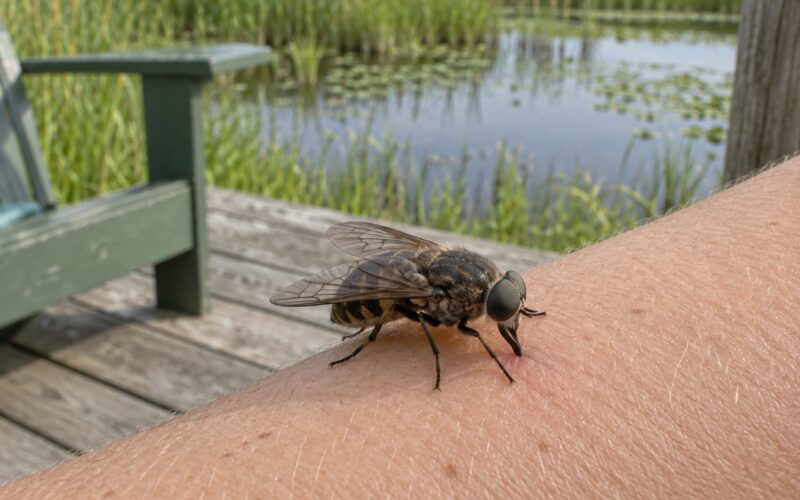
When a mosquito, fly, or other blood-feeding insect pierces the skin, it injects saliva so the blood keeps flowing while it feeds. Most people barely register those proteins. If your immune system has been sensitized to them, it releases histamine and other inflammatory messengers, which is the same basic pathway involved in hives and allergic reactions.
Five mechanisms account for nearly every welt you will meet on your own skin:
- Oversized local inflammation. A large local reaction stays anchored to one bite site but extends several inches past it. Cleveland Clinic describes this as a large, local inflammatory reaction to mosquito bites that causes redness, warmth, swelling and itching.
- Histamine-driven hives. These show up as multiple raised patches, not one. They migrate, change shape, and fade within a day even while new ones appear elsewhere.
- Scratching that opens the skin. Itching leads to scratching, scratching leads to breaks in the skin, and bacteria already on the surface move in. That is a second problem layered on top of the first.
- Venom and irritants. Stinging insects, fire ants, blister beetles and some plant contacts cause a direct tissue reaction, often with blistering rather than a simple welt.
- Your personal sensitivity. Prior sensitization, eczema, age, and immune conditions decide how loud the response is. The same bite that gives one person a pink dot gives you a patch the size of a dinner plate.
A single fixed welt is a local problem. Widespread hives are a systemic one. Keeping those two apart is the single most useful thing you can learn from this article.
Common Bug Bites That Can Cause Welts
Appearance alone never identifies the insect, but the pattern of a reaction is a decent clue. Use the table as a starting point, not a diagnosis.
| Insect | Typical reaction | Timing | Worth noting |
|---|---|---|---|
| Mosquito | Small bump, or a firm coin-to-palm-sized welt in sensitive people | Bump in hours; strong welts can peak 8 to 10 hours later and sometimes appear late | The classic skeeter syndrome bite |
| Sand flies and biting flies | Itchy welt that can blister and darken for weeks | Within a day | Common in warm, sandy, humid areas |
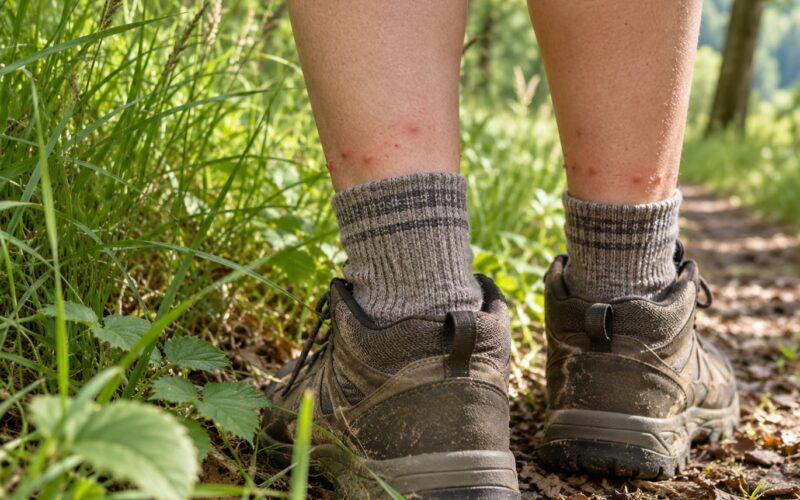
| Fleas | Clusters of intensely itchy bumps, often on ankles and lower legs | Within hours to a day | Usually several in a row, not a single spot |
| Bed bugs | Flat red marks that can swell into raised welts when scratched | One to several days | Often line up on exposed skin |
| Ants | Small pimple-like stings, sometimes with a white center | Immediately | Fire ant stings can blister and pustule |
| Spiders | Two nearby puncture marks, redness that spreads | Hours to days | Most spider bites stay minor. Widening redness, fever or severe pain needs a clinician. |
| Ticks | Itchy bump or welt at the attachment site | Hours to days | Save or photograph the tick if you can, and mention the bite if a rash develops |
| Bees and wasps | Immediate swelling, sometimes a firm welt that lasts days | Within minutes | Reaction size is not a measure of sting risk. Breathing trouble is. |
Why Some Bug Bites Turn Into Welts Instead of Just Red Dots
There are really four distinct things people call a lump, and telling them apart is more useful than guessing the insect. A small red bump stays under roughly a quarter inch and fades within a couple of days. A firm raised welt is the same spot, but the skin has thickened, feels hot and holds the mark for days or a week or more.
A sting can produce a large area of swelling centered on one point, usually within minutes. Widespread hives are different again: multiple patches, often on both sides of the body, that move and fade inside 24 hours.
None of these can tell you what bit you, and none of them tell you on their own whether you need care. What they do tell you is how fast things are changing, which is the part worth watching.
How Bite Size, Allergic Reactions, and Skin Type Change the Response
Why you swell and your neighbor does not comes down to immune history. Every exposure teaches your immune system a little about that insect’s proteins. Someone who has been bitten repeatedly may stay at the small-bump level, while someone sensitized in one season can cross into large welt territory quickly. Plenty of adults report never reacting badly until one season, then never going back to the small bump.
Age matters in both directions. Children often react harder, and parents on r/Mommit describe a child’s limb swelling to roughly twice its normal size. Skin thickness and location matter too: ankles, joints, fingers and the face have thin skin and lots of movement, so any swelling there is more obvious and interferes with shoes, walking or vision.
Some conditions amplify the whole cascade. Eczema and atopic skin, mast cell activation syndrome, and connective tissue disorders such as Ehlers-Danlos all show up again and again in forum threads about oversized welts. People living with mast cell disorders report that welts are common for them and that bites turn into a hot, blistery mess rather than a clean bump.
Skin tone changes how all of this looks. On darker skin, the redness of a welt may read as deep red, purple, brown or gray, and the firm texture can be easier to feel than to see. Bruising is more common once a large welt fades, which is why some people are left with a dark mark for weeks.
One reassuring detail: many long-suffering users on r/SkeeterSyndrome and r/mildlyinteresting report fewer severe reactions over years of exposure. Repeated exposure does not always escalate. Sometimes it settles.
How to Soothe a Bug-Bite Welt Safely
Start with what is boring, because the boring things are the ones that actually help.
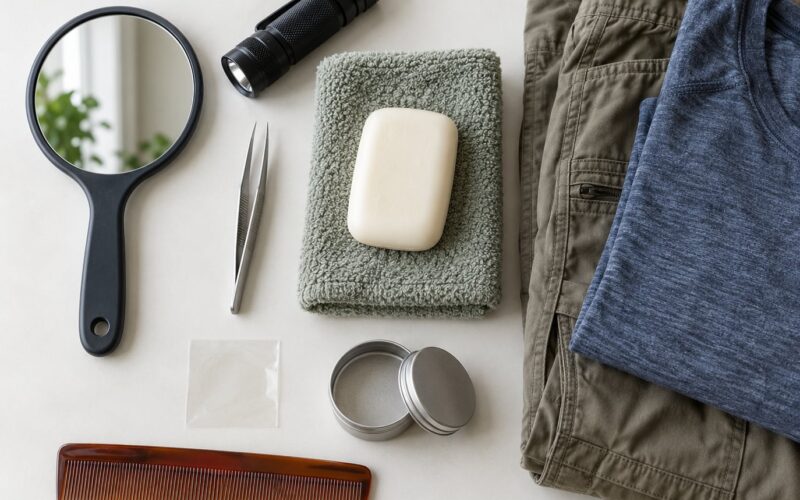
- Clean the area gently. Wash with soap and lukewarm water and pat dry. This lowers the chance of bacteria being pushed under the skin.
- Use a cold clean compress. Fifteen minutes on, fifteen minutes off, a few times a day. Cold reduces the itch signal and the swelling together.
- Elevate the area if you can. A welt on an ankle or lower leg calms noticeably when the limb is raised above heart level, especially for the first day.
- Do not scratch, squeeze or pop blisters. This is the step people skip and the one that most often turns a welt into a week-long problem. Intact skin is the best protection you have.
- Ask a pharmacist about over-the-counter options. Antihistamines, hydrocortisone and calamine-type products help some people and do nothing for others. What is safe for you depends on your health history and anything else you take, so get individual advice before adding a product.
- Stop anything that burns. If a product stings or burns when you apply it, wash it off. Tingling that turns into burning is not healing.
Forum threads are blunt about this: many people report that nothing topical helped at all. Cold compresses and, where appropriate, an oral antihistamine are the workhorses, and taking an antihistamine before expected exposure is a tactic some people use. Talk to a clinician before you start taking anything regularly for that.
Photographing the welt on the day it appears and again every day or two gives you an honest record. If you need to describe it to a doctor later, memory is a poor witness.
When a Bug-Bite Welt Needs Medical Attention
A welt on its own, staying put, slowly shrinking and never spreading past the original area is usually just a large immune reaction. Call a doctor or urgent care if you notice any of these:
- Redness or swelling that keeps expanding past the welt after a day or two, or that crosses a joint
- Warmth, tenderness, pus, yellow crusting or drainage
- Red streaks running from the bite toward the body
- Fever or chills alongside the bite
- Pain that is out of proportion to how hard the skin feels
- Swelling near the eye, on the face or throat, or in the mouth
- A welt that hardens, darkens or blisters and then refuses to settle after about ten days
- A suspected tick bite followed by fever, fatigue, muscle aches or a rash that was not there before
Call emergency services right away for trouble breathing, wheezing, swelling of the lips, tongue or throat, dizziness, fainting, or hives all over the body at once. That pattern is different from a welt, and it is the one emergency that matters.
A useful rule of thumb from clinicians: a normal bite starts to improve within 24 to 48 hours. If it is getting worse instead of settling, that is the point to get it looked at.
One more myth worth dropping. Not every lump that follows an outdoor afternoon is an allergy. Contact dermatitis from a plant or chemical, a reaction to a new detergent, and early infection all produce raised, itchy marks. The distinguishing feature is the trend line, not the lump itself.
Frequently Asked Questions
Does a big welt from a bug bite mean I am allergic?
Usually not. A welt that stays in one place, feels firm and hot, and fades over several days is a large local reaction, meaning your immune system over-responded at that one spot. A true allergy usually shows up as hives that move around the body, plus symptoms like trouble breathing or swelling of the face and throat. Those need urgent care.
How long do welts from bug bites last?
A normal bite settles within 24 to 48 hours. A large local reaction, often called skeeter syndrome, typically peaks within about 10 hours of the bite and can last 3 to 10 days, sometimes leaving a bruise or a dark mark for weeks after the swelling goes. If a welt is still expanding at 48 hours, or has not improved after about ten days, have it checked.
Can a bug bite welt be a spider bite?
Possibly, and you usually cannot tell from the mark alone. Most spider bites stay minor, and appearance alone does not identify the insect. What matters is behavior: redness that spreads, severe pain out of proportion to the skin feeling, fever, pus or red streaks. Two puncture marks close together are worth mentioning to a clinician, but neither confirm nor rule out anything on their own.
Why do my bug bites blister and bruise?
Large welts put a lot of fluid and pressure into one small area of skin. The surface can blister from that pressure alone, and blistering is common in strong large local reactions. Bruising happens as the inflamed area weeps fluid and small vessels leak, leaving dark red, purple or brown color as it heals, especially on darker skin. Avoid popping blisters, since that is the main route to infection.
What can be mistaken for a skeeter syndrome welt?
Bacterial cellulitis is the big one. A welt peaks early, stays in one spot and shrinks over several days, while cellulitis tends to spread outward, comes with heat, tenderness and sometimes fever. Contact dermatitis from a plant, sap or chemical also raises itchy marks, and some people confuse bites with shingles, which is painful and blistering. When anything is spreading or worsening past 48 hours, get it looked at.
Can I stop welts from forming before I get bitten?
You can reduce both the number of bites and the odds of ending up in heavy mosquito areas by emptying standing water in buckets, gutters and tires, and by using an EPA-registered repellent containing DEET, picaridin, or oil of lemon eucalyptus. Long sleeves and netting do more than people expect. Preventing the bite is far more reliable than trying to calm the welt afterwards.
Start here: clean the bite, put a cold compress on it, and keep your hands off it. Photograph it today so you have a baseline, and then watch the trend line. If it shrinks and settles over the next few days, it was a large immune reaction and nothing more. If it spreads, drains, hurts more each day or stays hard past ten days, that is a bacterial problem worth a clinician’s look. And if breathing, throat or facial swelling ever shows up, call emergency services rather than waiting to see what it becomes.
This article is general information about skin reactions to insect bites. It is not a diagnosis and it does not replace advice from your doctor or pharmacist. For anything that spreads, worsens or worries you, get individual medical advice.