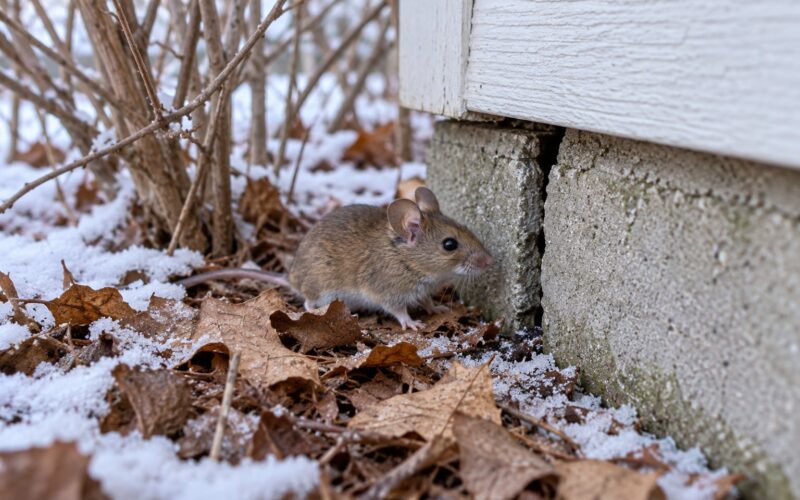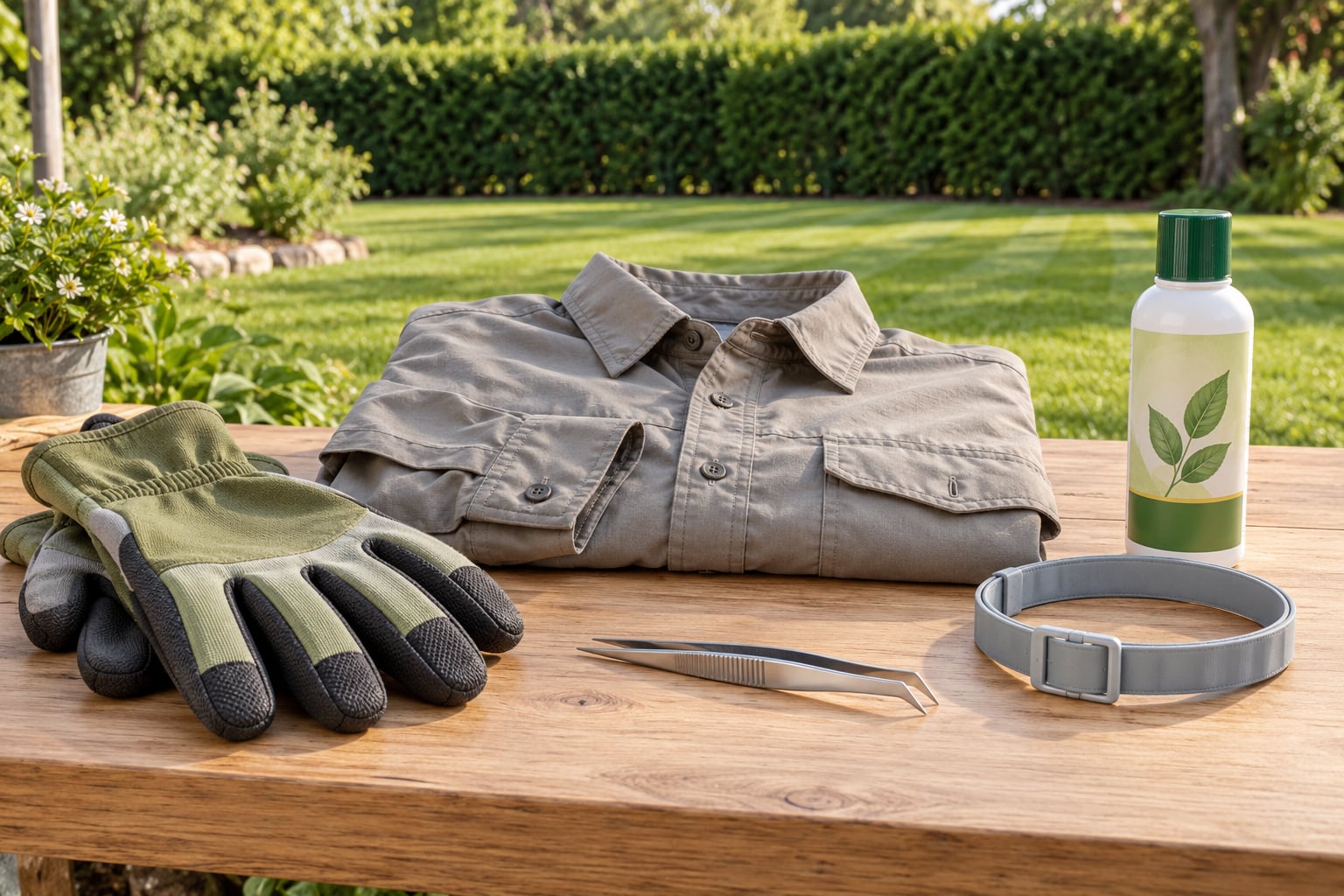
Learning how to tick proof a backyard for kids and pets comes down to three things: shorten the grass, clear out leaf litter and brush, and treat the shaded yard edges where ticks actually wait. Nobody can make a yard tick-free, because deer and mice keep bringing new ones in, but a well-run yard cuts encounters dramatically. Most of the work takes a weekend, and the cheaper steps do most of the heavy lifting.
That last point surprises people. Owners on lawn care and home improvement forums keep telling each other that the free steps, mowing short and pulling leaves back from play areas, beat anything they sprayed. The sprays help, but only along the edges, and only for a few weeks at a time.
What You Need
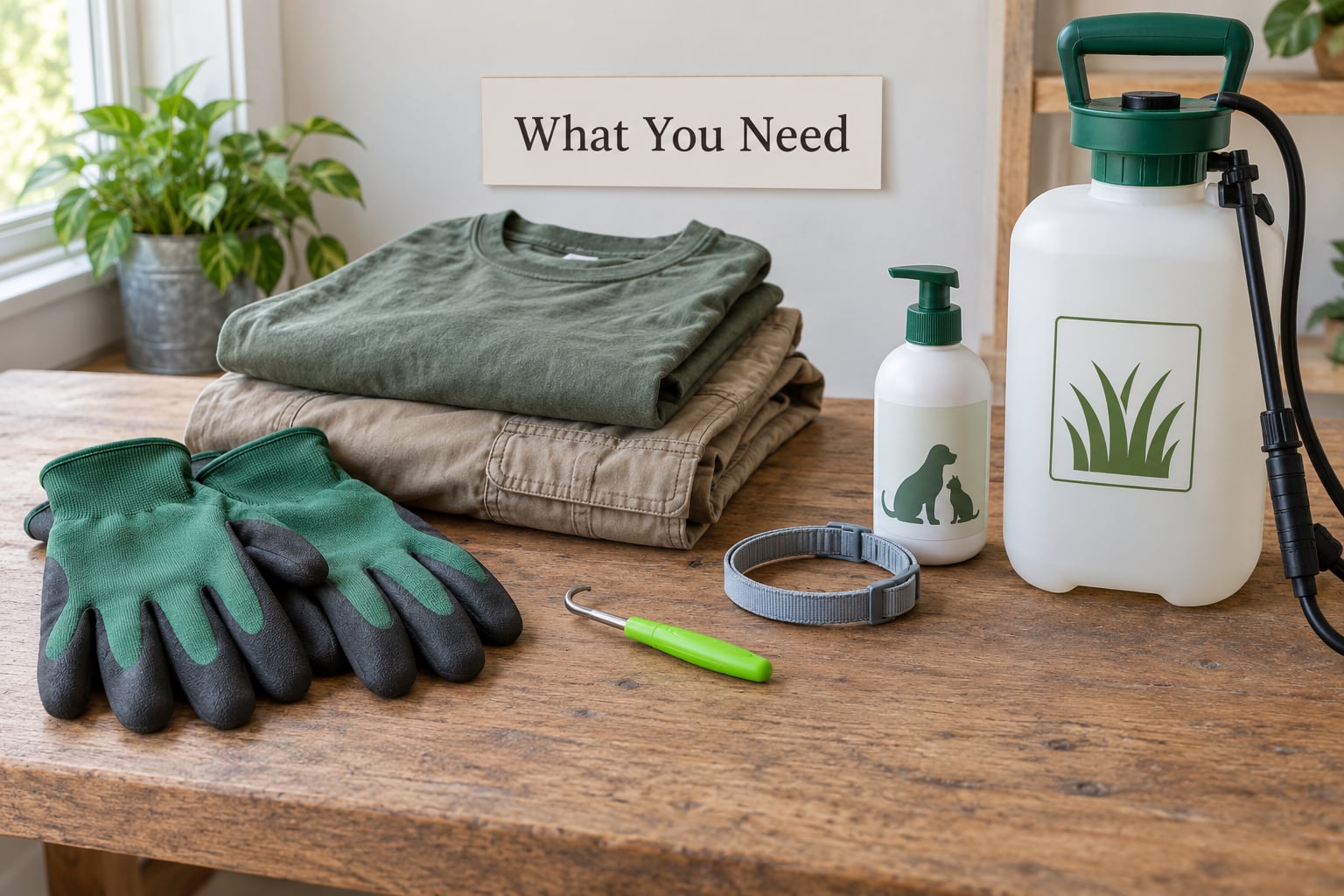
Gather these before you start, so you are not halfway through Saturday with no idea where the shears went.
- Long clothing and sturdy gloves for the cleanup work itself. Long pants tucked into socks, closed shoes, and a long-sleeved shirt cut down how many ticks reach your skin while you are working in the brush line.
- A tick-check routine already decided on. Pick a time that happens after yard time every single day, not a plan you intend to start in June.
- Fine-tipped tweezers or a tick removal tool for the moment you find one attached.
- Your vet’s recommended tick prevention for every pet that uses the yard. Do not substitute a product you found online.
- An EPA-registered tick control yard product, only if you decide after cleanup that you want one. Read the label before it is open, not after.
- A way to mark high-risk spots, even if it is a phone photo or a stick pushed into the ground at each corner.
Skip the mask-and-respirator gear and the foggers. Ticks do not fly, and they do not live inside your walls, so indoor-style sealing and spraying the whole lawn accomplish very little.
Step-by-Step: How to Tick Proof a Backyard for Kids and Pets
Seven steps, in order. The first four are free and permanent. The last three protect people and animals in the meantime.
1. Map the yard’s highest-risk areas before you change anything
Walk the property line at dusk and note where the shade and the cover are. The risk concentrates in a predictable set of places: the edge where lawn meets woods or a stone wall, leaf litter and compost piles, brush piles and woodpiles, low shrub borders, shaded fence corners, and any spot where your dog likes to lie down.
Ticks cannot jump and they cannot fly. They wait on low vegetation and leaf litter with their front legs out, a behavior scientists call questing, and they grab onto an ankle, a sock, or pet fur as it passes. That is why the places where people and pets move through matter far more than the middle of an open, sunny lawn.
Mark at least four spots on your map. If your yard backs onto woods or you have seen deer crossing, expect more pressure there and plan the most work at that edge.
2. Cut vegetation and clear yard clutter
Mow to three inches or shorter and trim shrubs back off the fence line, at least where kids and pets cut through. Pull leaf litter out of the play area and away from the base of structures. Clear brush piles, move stored firewood off the ground and away from the house, and bag anything rotting in the corner.
Short grass and dry airflow are what ticks cannot deal with. They need humidity, and a shaded edge with leaf litter holds it for weeks.
Be thoughtful about the rest of the property. Check for bird nests, squirrel nests, and burrows before you cut into heavy brush, and leave a few mature trees alone even when a limb reaches over the lawn. Trimming the canopy is fine; wholesale clearing of a tree line is not, and it does more harm than the ticks ever did.
3. Create a tick-resistant play zone
Put the playset, sandbox, patio furniture, dog bed, and dog run on ground that is open, sunny, and already cleared, as far from the woodline as your lot allows. Then connect them. A paved patio, a gravel path, or a three-foot band of wood chips or mulch along the buffer turns the middle of the yard into a route that does not go through tick habitat.
That three-foot buffer matters more than it looks. It gives you a visible line between the mown zone and the tick zone, and it makes the edge easy to find every time you spray. Store planters, firewood, and kids’ outdoor toys off the ground and away from the edge, and keep the play area mown and raked through the season.
Once a week, walk the play zone and the path and look again. Habitat regrows faster than most people expect, especially after rain.
4. Manage wildlife and pet access
Deer, white-footed mice, and chipmunks are the hosts ticks depend on, so the goal is to reduce how easily they move through your yard. Move bird feeders away from the house and out of the play area, seal entry points under decks and porches with wire mesh, and trim branches that overhang the roof or fence line.
Skip the poisons and the traps. They create a hazard for pets and kids and solve nothing on their own. A tall fence helps with deer over time, but it needs to be a real perimeter fence, not a decorative short one, and it will not stop mice.
On the animal side, keep every pet on the prevention your veterinarian recommends and on a consistent schedule, since protection lapses quietly. If your pet sleeps outdoors, move the bed back into the tick-resistant play zone.
5. Use pesticides only as part of a broader plan
Treat the edges, not the middle. A perimeter barrier along the woodline, fence line, shrub border, and shaded corners covers the places your map flagged, and it avoids the pollinators working the flowering lawn. Applying more product across the whole yard does not protect anyone better; it just adds chemical load and kills insects you would rather keep.
| Approach | What it actually does | How long it holds | Kid and pet notes |
|---|---|---|---|
| Food-grade diatomaceous earth | Desiccates ticks in dry conditions along edges and under structures | Until rain or heavy dew compacts it | Use food grade only, keep it out of pet food areas, and dust while kids are elsewhere |
| Botanical spray (cedar, peppermint, lemongrass, geraniol) | Short-lived knockdown and a smell people dislike | Days to about two weeks, often shorter | Apply per label, expect modest results, never spray a pet directly |
| EPA-registered minimum-risk pesticide | Kills ticks on contact in treated zones | One to two weeks | Follow label re-entry and dry-time directions exactly |
| Concentrate or granular barrier product | Longer residual protection along a treated edge | Roughly two to three weeks before reapplication | Keep everyone off the lawn until fully dry; reapply after heavy rain |
Here is the warning that almost nobody tells you: if you own a cat, permethrin is a deal breaker. It is safe for dogs in labeled dog products but highly toxic to cats, including when it is dry on a lawn, and cats groom themselves through treated grass. Skip permethrin products entirely in a home with cats, and ask a veterinarian before any product goes down while cats have yard access.
Read the label like a contract. It lists the EPA registration number, which means the EPA reviewed it, and the active ingredient, which tells you what is doing the work. Products labeled as minimum-risk under 25(b) generally use ingredients already exempt from review and still carry use directions. The words Caution, Warning, and Danger are signal words, and Danger means it is not for you to apply without a license. The National Pesticide Information Center answers label questions free of charge.
Apply on a dry day with no wind, follow the water volume and coverage rate on the label exactly, and treat early morning or evening when pollinators are not working. Keep kids and pets off the treated area until the label’s stated dry time has passed. When in doubt, the label wins.
6. Protect exposed skin and clothing
Long sleeves and long pants, light colored so you can spot a dark tick against the fabric, with the shirt tucked in and pants tucked into socks. That last detail does more than most people expect, because questing ticks grab the lowest thing they can reach first.
Use an EPA-registered repellent on exposed skin and follow the label, including the age limits and the reapplication directions. Parents should check the label for the youngest child present rather than assuming a family product is appropriate, and never apply a concentrated repellent to a child’s hands or face.
7. Check kids and pets after yard time
This is the step that actually prevents illness, and it takes about three minutes. For people, check the scalp and hairline, behind the ears, the neck, underarms, waistband, groin, behind the knees, ankles, and between the toes. Nymphs are pinhead-sized and cause most human infections, so a quick glance is not a check.
For dogs and cats, run your hands through the neck and collar area, under the front legs, the belly, the groin, between the back legs, along the tail, and between the pads of all four paws. Check right at the collar line, since that is where ticks often ride in unnoticed.
To remove an attached tick, grab it with fine-tipped tweezers as close to the skin as you can, pull straight up with steady pressure, and dispose of it in a sealed container or the trash. Do not twist, do not smother it with petroleum jelly, and do not burn it. Wash your hands and the bite area afterward, and keep an eye on the spot for a few weeks.
Ask a doctor if the tick was on for more than a day, if you cannot identify it, if you develop fever, chills, headache, fatigue, or a rash that is not the classic expanding bull’s-eye, and note that some people never get a rash at all. Call your vet if a pet is listless, feverish, or reluctant to move, and ask your vet about a tick-prevention plan for animals that spend time in tall grass.
Common Mistakes
Most failed tick-proofing attempts come down to one of these eight errors.
- Spraying the sunny middle of the lawn. The center of an open, regularly mown lawn is the safest part of your property. Correction: treat the shaded edges and the woodline instead, and use the lawn as your tick-free play area.
- Mowing once and forgetting. Tall grass returns within a couple of weeks in warm weather. Correction: keep a mowing rhythm that holds three inches or shorter through the season.
- Leaving leaf litter stacked against the fence and the playset. Leaf litter is ideal tick habitat and stays damp for weeks. Correction: bag it or run it through a hot pile, and rake it back off the play area after every storm.
- Applying a product without reading the label. Over-application causes runoff into drains, kills pollinators, and can leave the lawn unsafe longer than you planned. Correction: read the coverage rate, dry time, and re-entry directions first, and apply the labeled amount.
- Forgetting the cat. Dog products containing permethrin can kill a cat that walks on treated grass. Correction: skip permethrin if you have cats and confirm every product with your vet.
- Treating repellent as the whole plan. Repellent on skin does nothing about the forty ticks waiting at the edge of the yard. Correction: pair protection on skin and fur with habitat work and edge treatments.
- Checking only the head. Ticks rarely end up on the scalp of an adult, and most human bites land low on the body, near the waist, groin, and ankles. Correction: check the full list of zones every time.
- Pulling a tick with a twist or smothering it in jelly. Twisting can break the mouthparts off in the skin, and suffocation sometimes makes the tick release into the wound. Correction: steady, straight-up pressure with fine-tipped tweezers, then wash.
Frequently Asked Questions
How do I get rid of ticks in my yard without harming pets?
Start with habitat work rather than chemicals: mow to three inches or shorter, clear leaf litter and brush from the shaded edges, and move play areas away from the woodline. If you add a product, choose one labeled safe for pets, treat the perimeter instead of the whole lawn, keep everyone off the grass until the label’s dry time has passed, and reapply on the schedule the label states.
What to put in the backyard to prevent ticks?
Wood chips, gravel, or mulch work well as a three-foot buffer between the woods and the lawn, because they are dry and hard to hide in. A paved patio or gravel path from the house to the play area keeps foot and pet traffic off grass. Move firewood, planters, and bird feeders off the ground and away from the edge zones.
Is permethrin safe to use if I have a cat?
No. Permethrin is toxic to cats, and they can be exposed by walking on treated grass and grooming themselves, even after the product has dried. If your home includes a cat, choose products without permethrin, keep the cat off treated areas until the label’s re-entry window has passed, and ask your veterinarian about which products fit your household.
How often should I treat my yard for ticks?
Most perimeter products hold for roughly two to three weeks, and heavy rain shortens that. Reapply on the interval printed on the label rather than on a calendar assumption, and spot-treat the shaded edges again as vegetation regrows. Consistency across the season matters far more than a heavy single application, since new ticks arrive with wandering hosts all spring and summer.
Do cedar oil and essential oil sprays really work on ticks?
Botanical sprays containing cedar, peppermint, lemongrass, or geraniol give short-lived results and are far less reliable than a registered barrier product, but they are useful as an added layer near doors and pet paths. Users on lawn forums consistently report that essential oil blends fade within days. Always follow the label, keep children and pets away during application, and never spray an animal directly.
Can I make my yard tick-proof?
No treatment makes a yard tick-free, and any article claiming otherwise is overselling. Ticks ride in on deer, mice, and chipmunks all season, so the realistic goal is fewer encounters: shorter grass, cleared litter, a defined play zone, treated edges, and daily tick checks. That combination is what makes a family yard workable even in heavy tick country.
Start This Weekend
Mow the lawn short, rake the leaves out of the play area, and walk the perimeter to find your three riskiest spots. Those two free chores do more for how to tick proof a backyard for kids and pets than any spray, and they take an afternoon.